


Aurora occupies the north-eastern edge of Turin’s historic centre, beyond Porta Palazzo and close to the Dora Riparia.
Its history is inseparable from the city’s 19th-century transformation and from a specifically Turinese response to industrialisation: organisation through education and care.
While other districts developed around court life, commerce or industry, Aurora became the place where Turin addressed the social consequences of rapid urban growth. For visitors interested in how the city managed youth, education, migration and poverty, Aurora offers one of Turin’s clearest and most distinctive narratives.
From Peripheral Land to Social Infrastructure
Until the early 19th century, Aurora lay outside the compact city. Mills, workshops and modest housing clustered near the river, attracting workers and migrants arriving from the countryside. As factories expanded and the population grew, the district became one of the more socially fragile areas of Turin.
Rather than being reshaped through monumental planning, Aurora became defined by large, structured institutions dedicated to education, youth, and assistance. These institutions shaped the district’s identity as much as (and often more than) architecture alone.
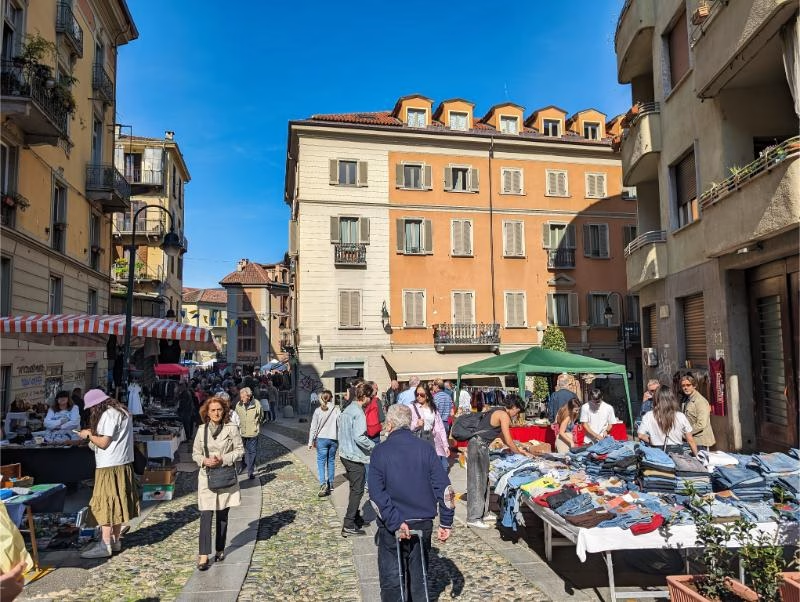
Aurora at street level: market stalls, local chatter, and the warm colours of everyday Turin between tall, lived-in façades.
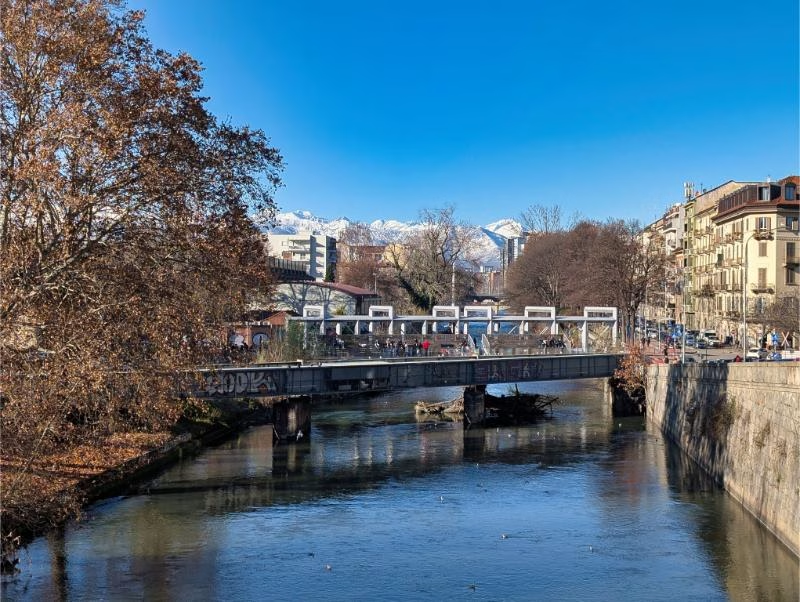
The Dora Riparia skimming through Aurora, framed by winter trees and a distant line of snow-capped Alps.
Don Bosco and the First Oratory
Aurora is closely linked to John Bosco, known as Don Bosco. In the mid-19th century, he began working in the area with young apprentices, orphans and boys employed in workshops and factories.
His key innovation was the oratorio — not simply a church, but a multifunctional place combining:
- Education and vocational training
- Play and sport (especially football)
- Music, shared meals and everyday social life
- Religious instruction integrated into daily routine
The oratory offered structure without exclusion, discipline without isolation. From this experience grew the Salesians of Don Bosco, founded in Turin in 1859. What began in Aurora became one of the world’s most extensive educational networks, active today in schools, technical institutes and youth centres across more than 130 countries.
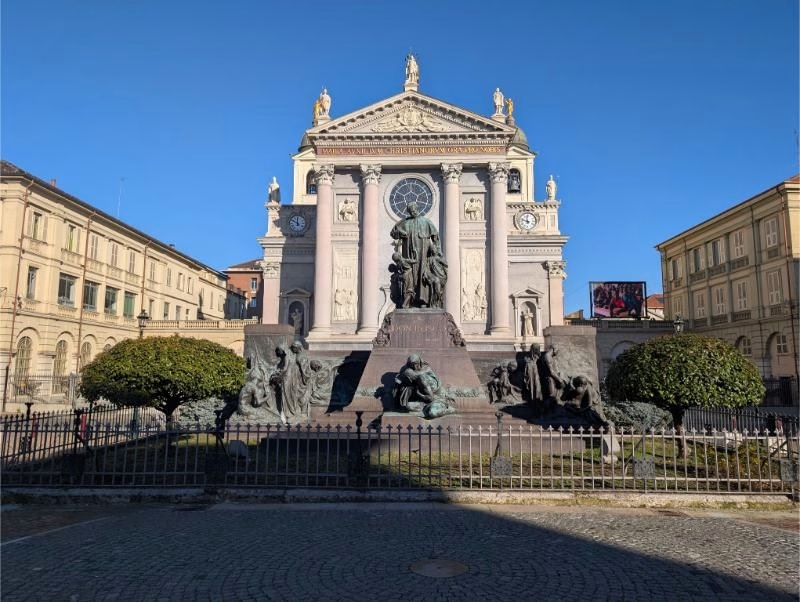
The Don Bosco monument before Maria Ausiliatrice, presenting education, care, and moral guidance as public civic values.
Maria Ausiliatrice: The Urban Centre of the Salesians
The heart of this presence is the Basilica of Mary Help of Christians (Maria Ausiliatrice), built between 1865 and 1868.
Rather than standing alone, the basilica anchors a wider complex of courtyards, workshops, schools and residences.
It functions as the centre of an active educational campus — integrated into the surrounding neighbourhood rather than set apart from it — and remains one of the most revealing places in Turin to understand the city’s civic faith in education as social stability.
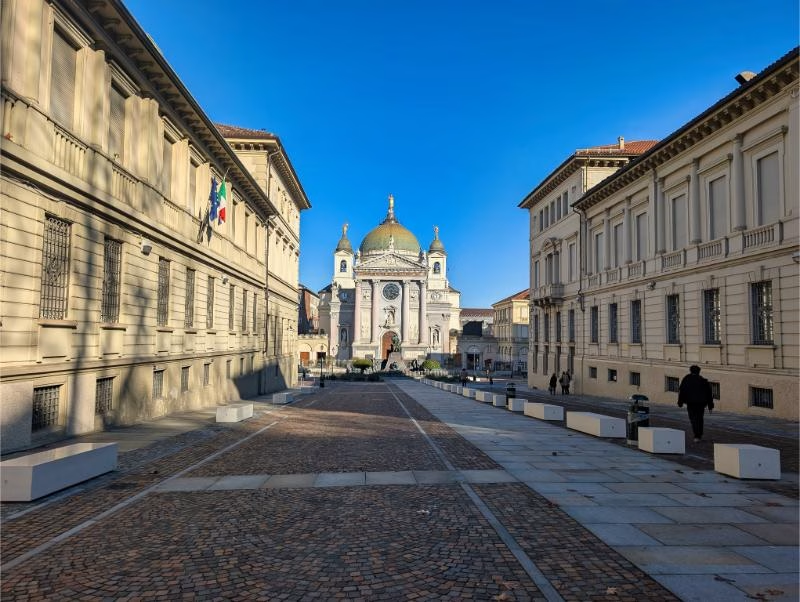
The axial approach to the Basilica of Maria Ausiliatrice, revealing how Don Bosco’s centre was conceived as part of an ordered civic ensemble rather than an isolated church.
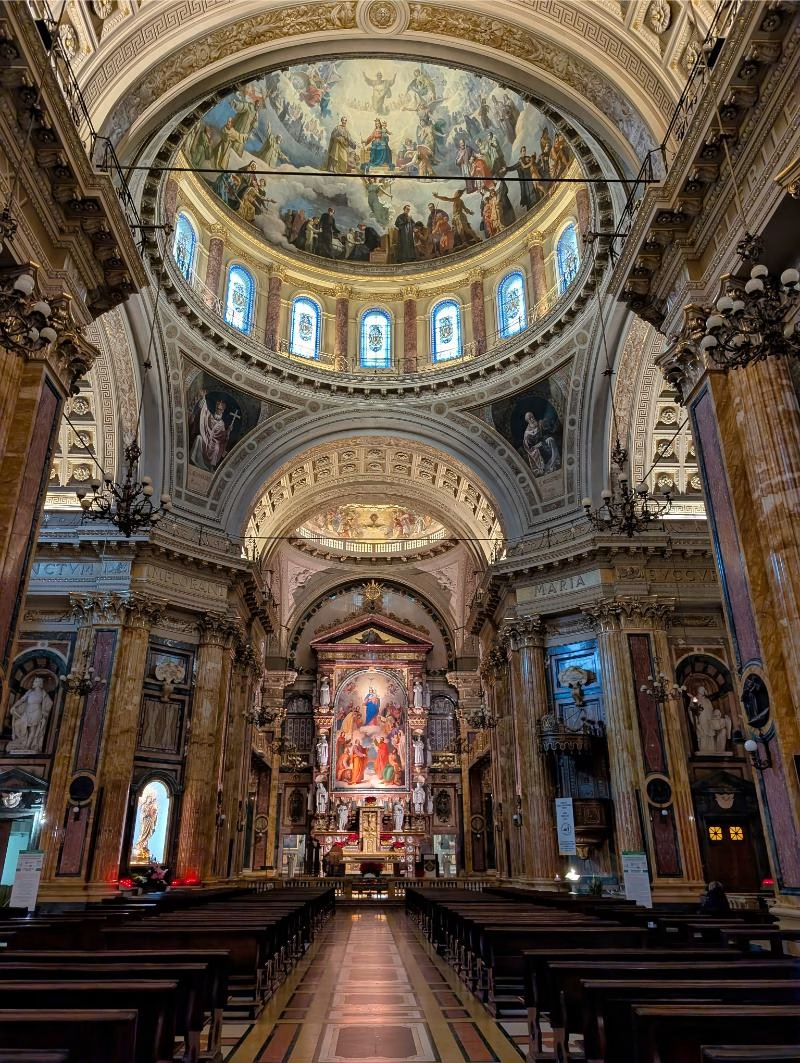
The richly decorated interior of Maria Ausiliatrice, where splendour serves pedagogy: faith made legible, uplifting, and communal.
The Cottolengo: Care Embedded in the City
A short distance away stands the Cottolengo, formally the Piccola Casa della Divina Provvidenza, founded by Giuseppe Benedetto Cottolengo. Created to care for the sick, disabled and excluded — many of whom were rejected by hospitals of the time — it developed as a self-contained urban village.
Wards, chapels, workshops and housing were organised to function alongside the district, not apart from it. Together with the Salesian institutions,
it reinforced Aurora’s role as a place where social order was maintained through proximity, care and continuity.
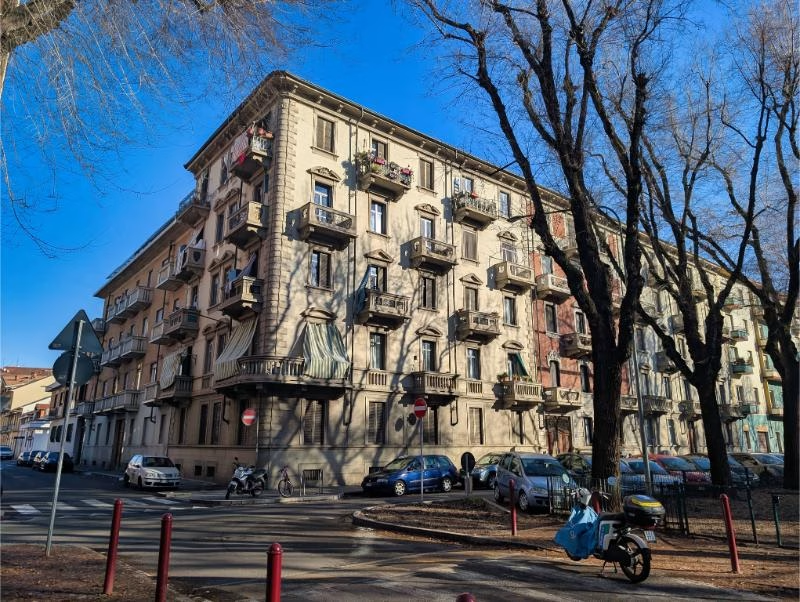
Aurora’s residential texture: handsome early 20th-century blocks, compact balconies, and long winter shadows under a bright Turin sky.
Aurora Today: A Living District, Not a Museum
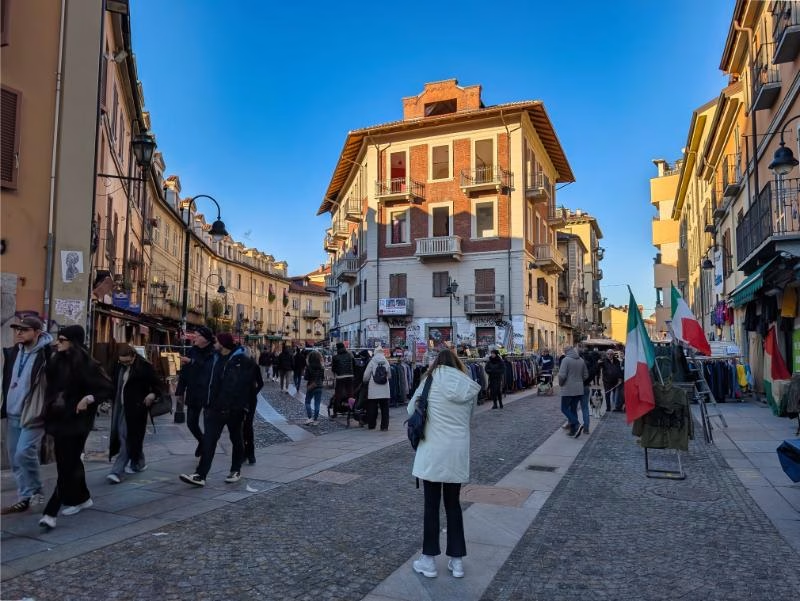
A classic Aurora street scene: vintage stalls and slow browsing, with bold colour, hard light, and a neighbourhood that stays resolutely local.
Aurora remains one of Turin’s most layered districts. It reflects successive waves of migration and change, yet its foundational institutions — Salesian schools, the Basilica of Maria Ausiliatrice, the Cottolengo — continue to operate much as they were conceived.
This is not a district defined by monuments alone, but by institutions that still function. Aurora reveals a Turin shaped not only by industry and planning, but by ideas that proved durable.
You’re in good hands
Clients often mention what matters most — care, precision, and the sense of travelling with someone who knows the way.
STAY CONNECTED WITH US (it’s free!)
Unlock insider tips on Italy’s hidden gems, free every month!
👍 Follow us on Facebook – Stay inspired with daily updates, travel ideas, and a community of fellow Italy lovers.

📲 Join our WhatsApp channel 🟢 – Get instant updates, behind-the-scenes insights, and connect directly with our team.

We’ll always treat your details with the utmost care and will never sell them to other companies. See our privacy policy
Package holidays are sold by ExpertoItaly Ltd (Reg. 12035194)
Call us on +44 (0) 77 3838 5790
Registered office: 33 Miles Close, London, SE28 0NJ

Business Hours
Monday – Thursday 9am to 6pm
Friday 9am to 5:30pm
Saturday – please send us an enquiry form
Sunday – please send us an enquiry form