


Discover Chianti Classico – Tuscany’s Ridge-Top Vineyards & Timeless Villages
A land of medieval hilltowns, white-road views, olive groves and vineyards that shift with the seasons. Let us help you design a Chianti journey that moves at your pace.
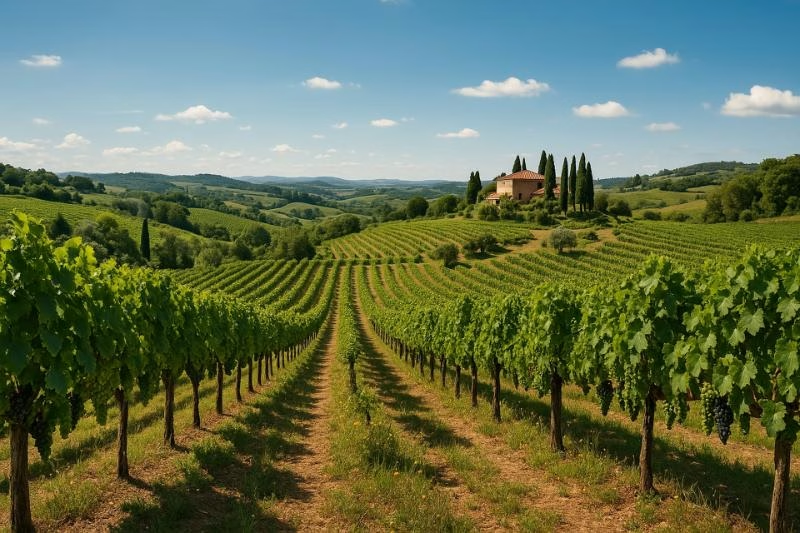
Endless rows of Sangiovese vines roll towards a cypress-lined farmhouse: the quintessential Chianti Classico landscape that sets the rhythm for your journey.
Introduction to Chianti
What is it?
Chianti is a historic rural region of Tuscany, renowned for its Sangiovese-led wines and a timeless patchwork of vineyards, olive groves, oak woods and cypress-lined ridges. The wine name “Chianti” covers a broad DOCG area, while Chianti Classico denotes the original heartland (marked by the black-rooster emblem) with its own identity and rules.
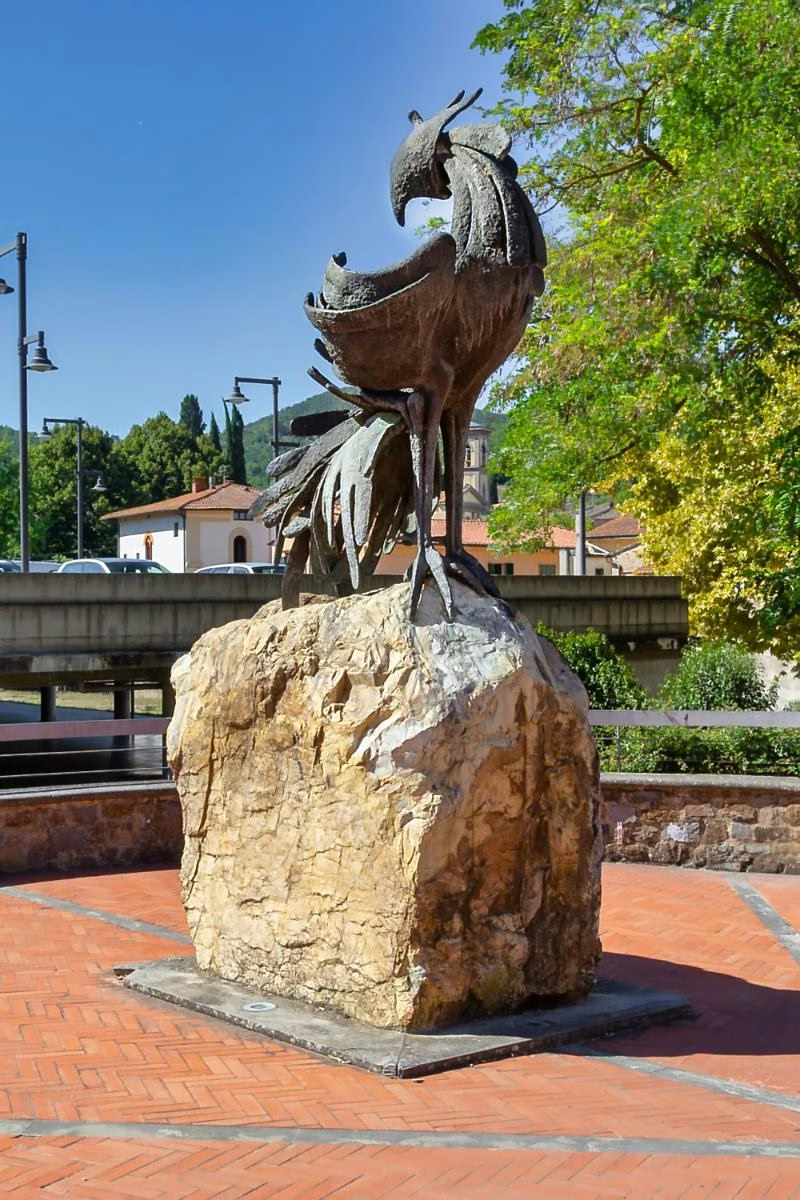
The Gallo Nero statue in Greve in Chianti — a proud reminder of the black-rooster emblem that has defined Chianti Classico for centuries.
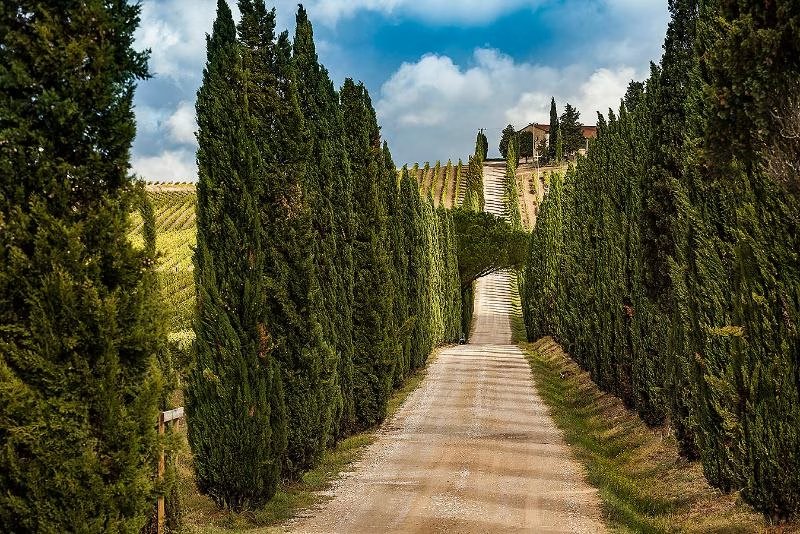
A classic Chianti approach — a long cypress-lined avenue rising through the vineyards towards a farmhouse bathed in Tuscan light.
Where is it?
Between Florence and Siena, Chianti fans east towards the Arno and west towards the Elsa and Pesa valleys. Its classic hill towns — Greve, Panzano, Castellina, Radda and Gaiole — form a necklace along the scenic SR222 “Chiantigiana, with side roads running to farmhouses, castles and working wineries.
Why is it famous?
Wine heritage: centuries of viticulture refined into today’s DOCG standards, expressive Sangiovese, elegant Riserva and Gran Selezione.
Landscape & light: harmonious, human-scaled scenery made for slow travel and photography.
Stone villages & castles: Etruscan roots, medieval fortifications, Renaissance farm estates and storied houses.
Tuscan table: robust cucina contadina — grilled meats, handmade pasta, pecorino, olive oil, truffles — paired with local wines.
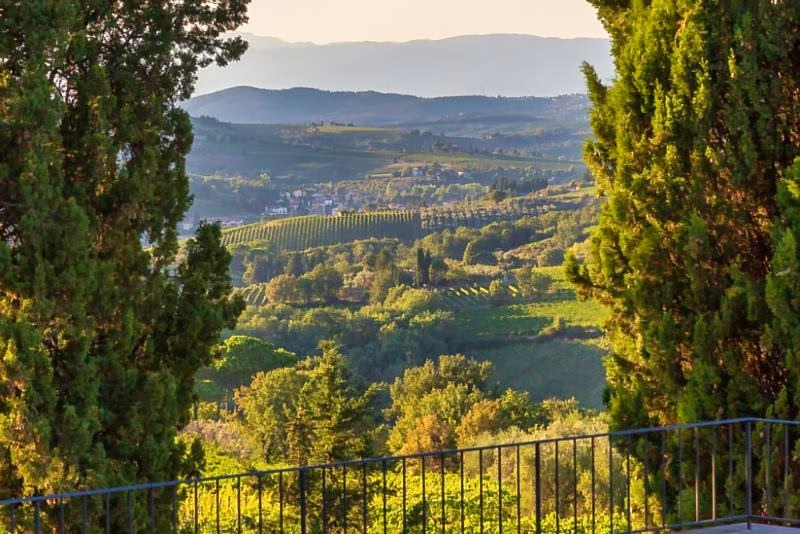
A late-afternoon glow settles over Chianti’s vineyards — a quiet frame of cypress and hills stretching towards the distant Apennines.
What to do?
Taste & tour: cellar visits, guided tastings, estate walks and olive-oil mills.
Scenic drives & cycling: the Chiantigiana for vistas; gravel byways for e-bikes and the spirit of L’Eroica.
Walks & gentle hikes: vineyard loops and ridge paths linking hamlets, churches and viewpoints.
Village time: Greve’s triangular piazza, butchers in Panzano, the lanes of Radda and Castellina’s vaulted walkways.
Culture & craft: Romanesque abbeys, small museums, artisans in ceramics, leather and woodwork.
Table experiences: farm lunches, cookery classes, seasonal food fairs and truffle hunts (in season).
ExpertoItaly Insight
Chianti looks small on a map, but the ridge-top roads make travel wonderfully slow. Distances are short, yet every bend gives you a new viewpoint and a new village rhythm.
Chianti looks small on a map, but the ridge-top roads make travel wonderfully slow. Distances are short, yet every bend gives you a new viewpoint and a new village rhythm.
Geography & Sub-Zones of Chianti
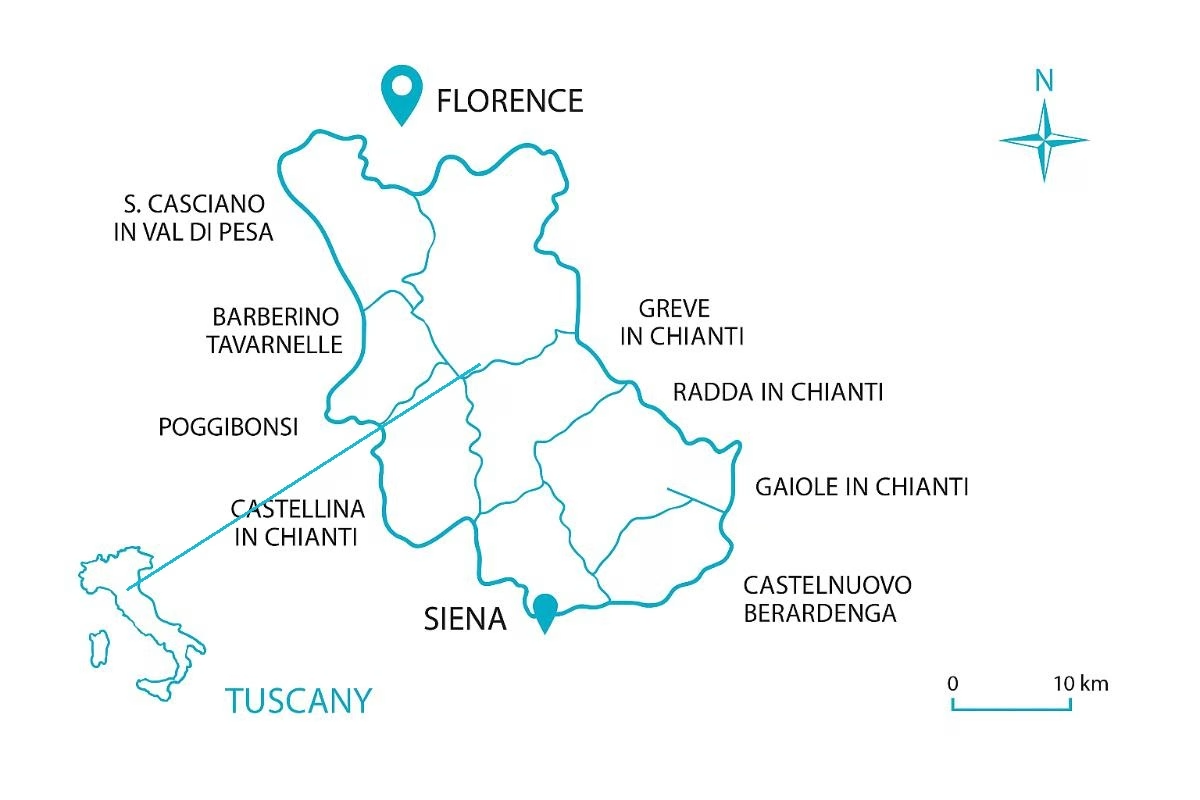
Understanding the landscape
Chianti is not a single valley but a mosaic of rolling hills between the Arno basin in the north and the Ombrone in the south, framed by oak forest and dotted with stone hamlets, vineyards and olive terraces. Altitudes from ~200 to 800 metres** bring subtle shifts in climate and soil that shape both the scenery and the wines.
It feels timeless — vine rows, cypress avenues and ochre farmsteads at every turn — yet it’s a living countryside: growers pruning, winemakers opening cellar doors, and small trattorie anchoring village life.
Chianti vs Chianti Classico
“Chianti” today names a wide DOCG zone across central Tuscany, but the historic core lies within Chianti Classico, the territory between Florence and Siena that forged the wine’s reputation.
Chianti Classico
Heartland: Greve to Castelnuovo Berardenga.
Symbol: the Gallo Nero (Black Rooster).
Character: finely structured reds with freshness and clarity, shaped by hillside vineyards and stony, limestone-rich soils.
Key villages: Greve, Panzano, Radda, Castellina, Gaiole.
Other Chianti sub-zones
Beyond Classico, several sub-zones have their own nuance:
Chianti Colli Fiorentini: gentle hills south of Florence; approachable, food-friendly reds.
Chianti Colli Senesi: around Siena; often riper and rounder thanks to warmer exposures.
Chianti Rufina, Montalbano, Colli Aretini, Colli Pisani, Montespertoli: each reflects its own local character — from the fresh, fragrant style of Rufina to the more rustic feel of Montalbano.
All share Sangiovese at their core, with differences arising from altitude, exposure and soil.
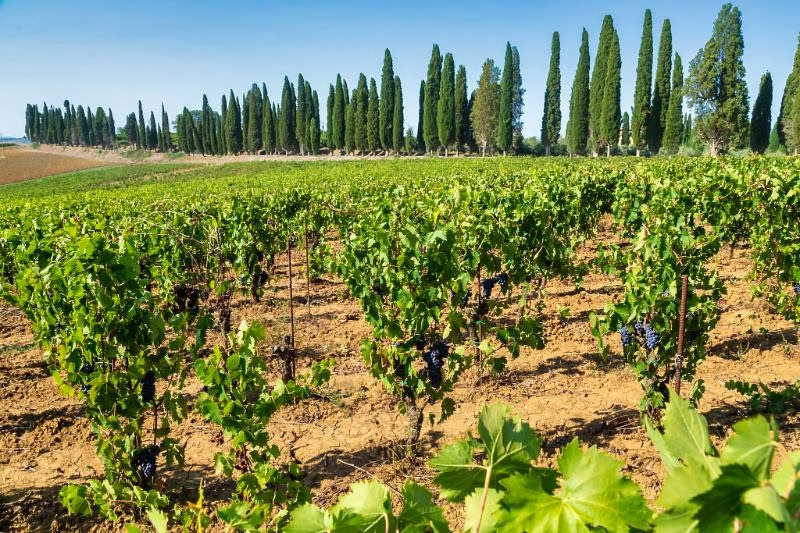
Sun-soaked Sangiovese rows stretching towards a classic cypress-lined ridge — the quiet geometry that defines Chianti’s working landscape.
Looking to experience Chianti like a local?
Palazzo Leopoldo, Radda in Chianti – Tuscan Village Stay
A former noble residence on Radda in Chianti’s quiet main street, Palazzo Leopoldo is ideal if you want to
wake up in the heart of an authentic Tuscan village and step straight out to cafés, wine bars, and hillside walks.
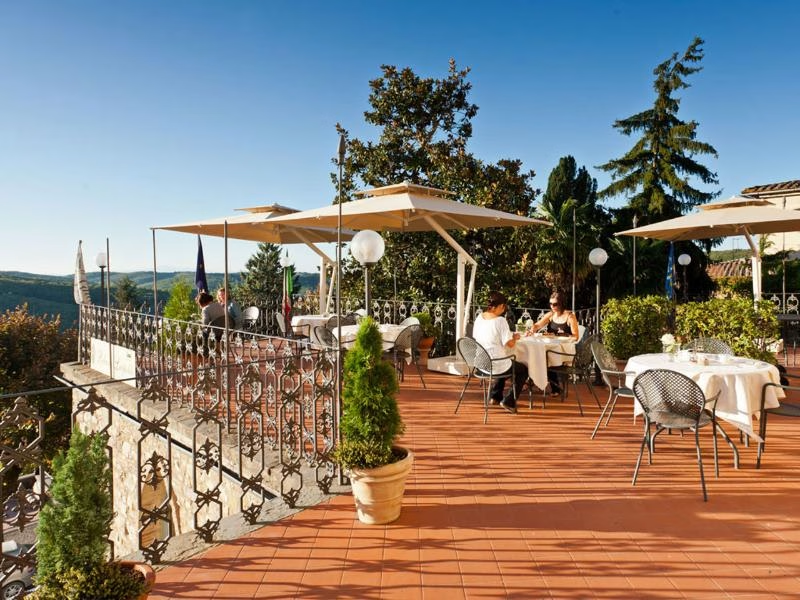
Wine & Flavours of Chianti
The flavour of a landscape
In Chianti, taste begins in the soil and light. The countryside seasons everything it produces: the tilt of a vineyard, the warmth held in stone, the day’s rhythm of sun and mist. Wine and food are parallel crafts — patient, balanced, and tied to place.
A glass of Chianti Classico mirrors the hills: generous but never heavy, vivid with red fruit and a sense of the earth after rain. On the table, the same balance appears in dishes that keep ingredients few and honest.
A sense of balance
Chianti’s cooking is about precision, not luxury. Bread becomes ribollita, beans carry a meal, and grilled meat reaches poetry with little more than salt and fire. Today’s chefs refine tradition with quiet confidence — a drizzle of new oil on handmade pasta; a lighter take on peposo or wild-boar stew — while letting local produce speak.
Beyond the vineyard
To understand flavour here, go to the source. In late autumn, mills hum as the first olio nuovo flows — bright, peppery, alive. Markets show wheels of pecorino on straw, jars of chestnut honey, seasonal vegetables and cured meats. Encounters are unhurried and personal: a cellar tasting with the winegrower, lunch on a terrace that leisurely becomes the afternoon.
The taste journey
ExpertoItaly arranges flavour as a sequence, not a schedule: a vineyard stroll, a quiet tasting, a family lunch in a shaded courtyard; or two contrasting estates — one heritage, one new-generation — linked with time to wander a village in between. Olive-oil mills, cookery workshops and farm kitchens complete the picture: food and wine shared, not performed.
When the land teaches taste
In Chianti you learn through contrast — the same grape from neighbouring hillsides; oil tasted at the press and again weeks later; one recipe cooked in two kitchens a valley apart. Those subtleties sharpen the senses and become the souvenir that matters: an understanding of how time and care turn simplicity into something extraordinary.
Wine & Olive-Oil Tastings
For a true sense of Chianti’s craftsmanship, pair a cellar visit with an olive-oil experience. These estates balance heritage, innovation and hospitality:
- Badia a Coltibuono — a former Benedictine abbey where wine and extra-virgin oil share monastic calm; tastings amid frescoes and old casks.
- Castello di Fonterutoli — the Mazzei family’s elegant estate near Castellina: state-of-the-art cellars, terraces, and pairings of wine, oil and local dishes.
- Castello Vicchiomaggio — guided tastings in a Renaissance castle above the Greve Valley; a classic, beautifully sited stop.
We stitch these into your day with ease — transfers, a garden lunch, or time for a scenic walk between tastings.

Hand-painted barrel signs mark the way to the Montefioralle winery — a charming glimpse of Chianti’s artisanal spirit.
ExpertoItaly Insight
You don’t need to be a wine expert to enjoy Chianti. Estates offer relaxed tastings, sensory paths, picnics in olive groves, and vineyard walks ideal for beginners and enthusiasts alike.
You don’t need to be a wine expert to enjoy Chianti. Estates offer relaxed tastings, sensory paths, picnics in olive groves, and vineyard walks ideal for beginners and enthusiasts alike.
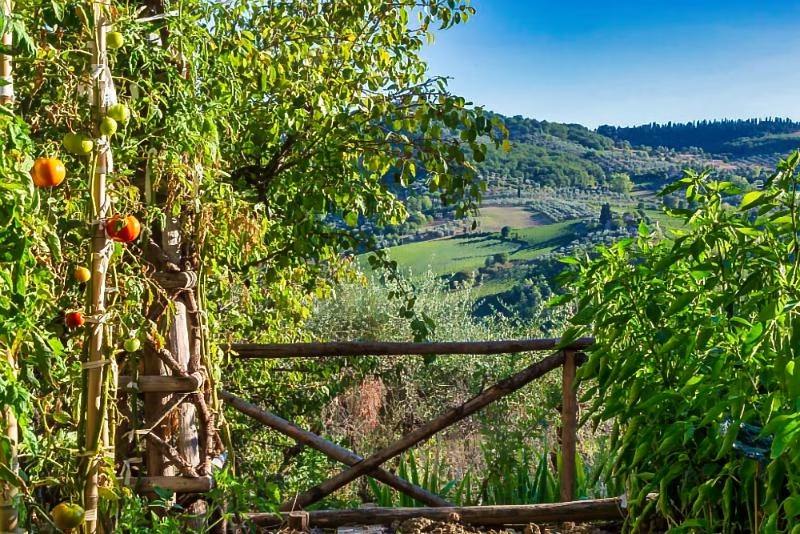
A quiet corner of Chianti where tomatoes ripen in the sun and the hills open into a tapestry of vineyards, orchards and olive groves.
Villages & Routes of Chianti
Chianti reveals itself as a chain of soft ridges and secretive valleys linked by the SR222 “Chiantigiana”. Between Florence and Siena, each village has a distinct personality — traces of trade and rivalry, monasteries and markets — while small hamlets give the intimacy and charm that reward slow travel.
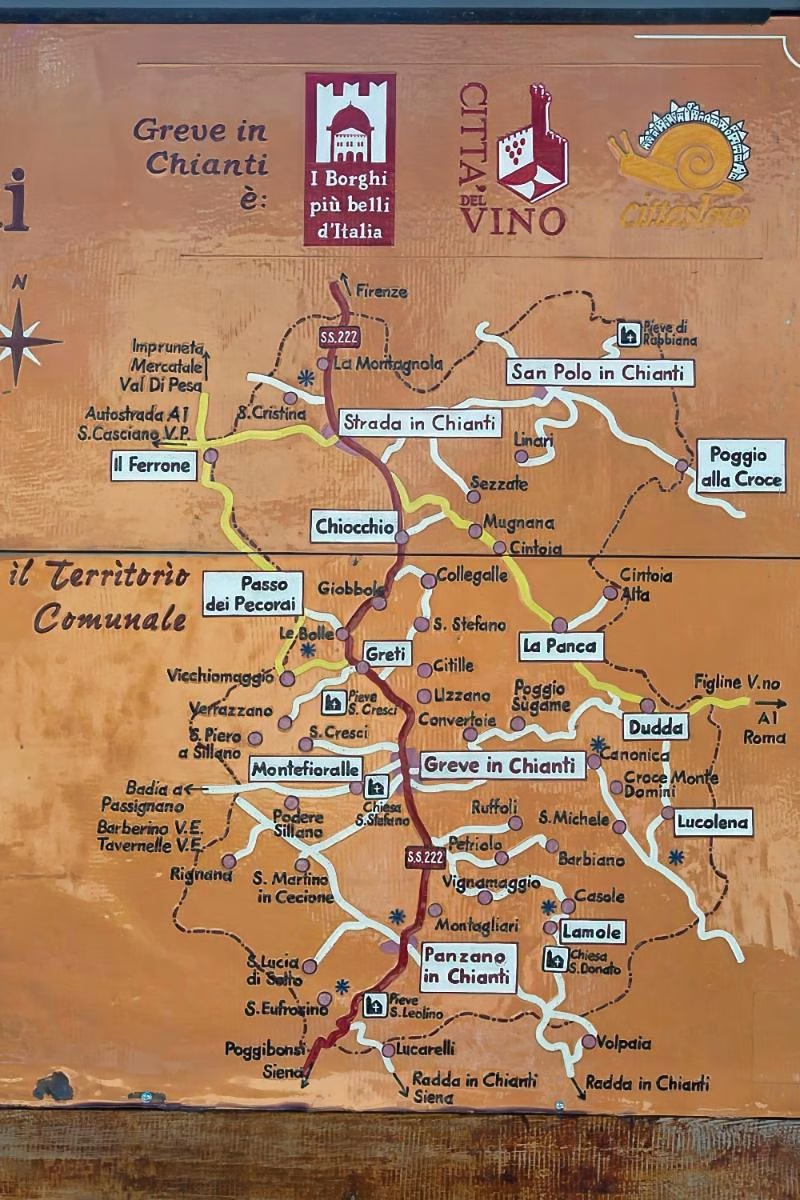
A hand-drawn map of the Chiantigiana — a charming reminder that SR 222 is best explored slowly.
Greve di Chianti
Northern gateway to Chianti Classico, Greve sits in a generous valley that has fed Florence for centuries. Triangular Piazza Matteotti, ringed with porticoes, is the natural meeting place: wine shops, butchers and artisan stores under the arches; café tables in the sun. A small wine museum tells the area’s story, but Greve’s real appeal lies just beyond the centre, where lanes drift into vineyards, olive mills and fortified farms. It is Chianti at its most approachable and lived-in.
Montefioralle
One of Italy’s most beautiful hamlets, Montefioralle perches above Greve like a stone crown. A circular lane slips past flowered balconies and family crests; one doorway belonged to the Vespucci. Come for the measured pace, stay for small village feasts such as Frittelle per San Giuseppe and I Vini del Castello — quiet proofs that community still anchors these hills.
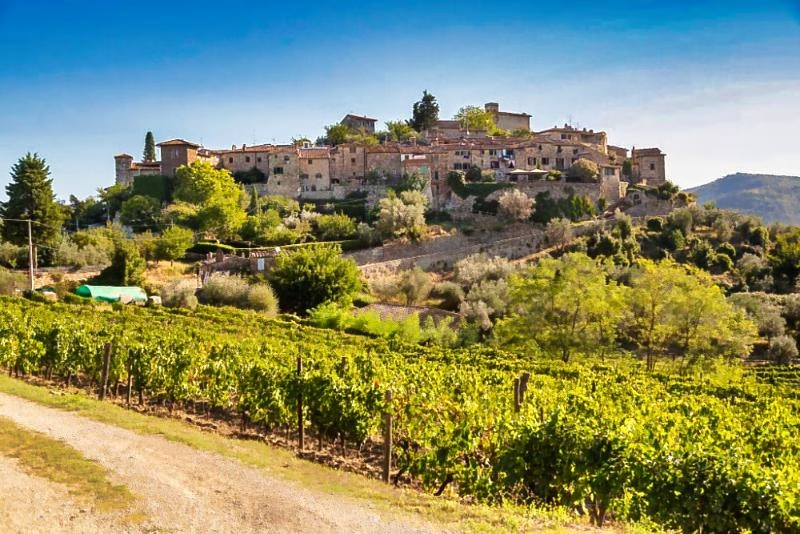
Montefioralle, one of Italy’s most beautiful hamlets, rising above the vineyards just outside Greve in the heart of Chianti Classico.
Panzano in Chianti
Midway between Florence and Siena, Panzano rests on a photogenic ridge with views that seem to travel for miles. Medieval lanes converge on a compact piazza and parish church; around them, a cheerful knot of workshops, trattorie and the famed butcher whose theatre is now part of local ritual. Paths drop from the ridge into vine-striped valleys, and the surrounding slopes host small, thoughtful estates. Panzano feels energetic yet properly village in manner.
Castellina in Chianti
At the old crossroads for Florence, Siena and Val d’Elsa, Castellina blends daily life with deep history. The covered Via delle Volte runs beneath the main street like a shadowed corridor with arrow-slit views to the vineyards — once lookout and refuge, now a cool passage of doors and arches. Small galleries and family restaurants animate the centre; the terrace above town delivers a slow-unfolding panorama, best when the stone glows at sunset.
Fonterutoli
Just south of Castellina, Fonterutoli grew on the ruins of a medieval stronghold and earlier Roman stop. Peace treaties here in the 1200s tied these lands to Florence; centuries later, Giorgio La Pira found quiet to write within its walls. Today the village keeps its medieval plan while the castle — the Mazzei family estate — hosts tastings, outdoor gatherings and refined stays among the vines.
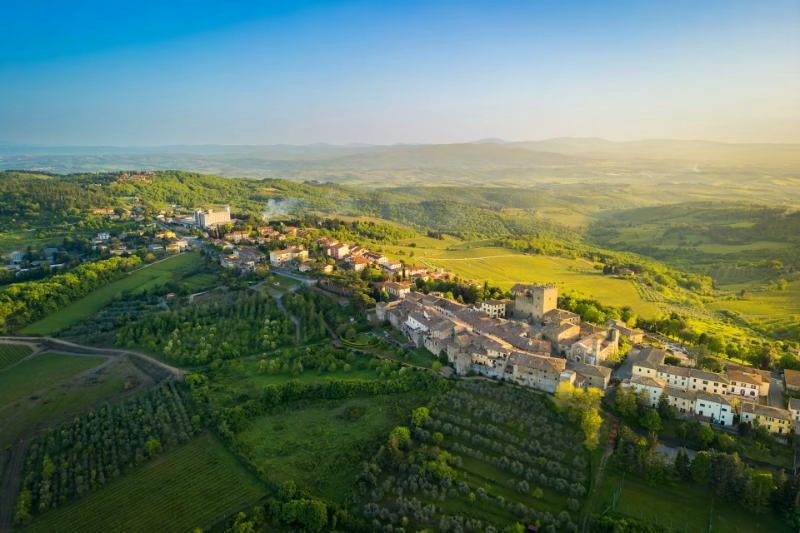
An aerial view of Castellina in Chianti, where medieval stone streets meet vineyards and long Tuscan horizons bathed in evening light.
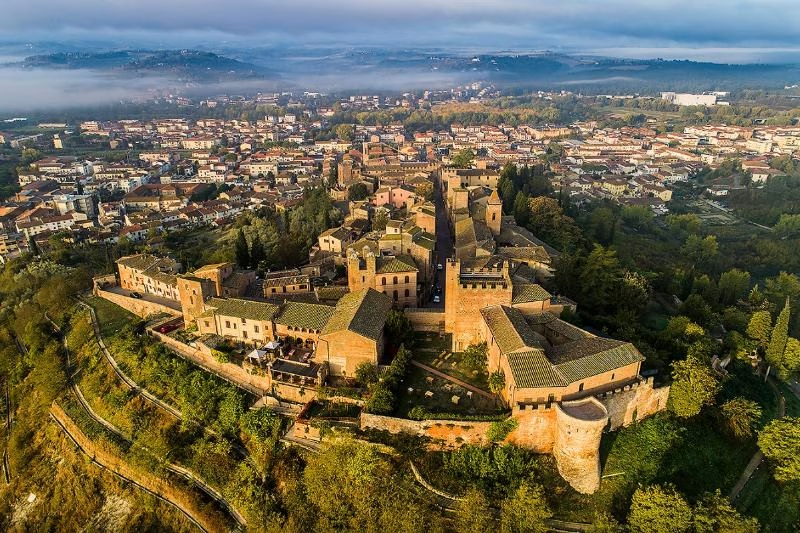
A fortified Tuscan hill town rises above the patchwork of fields, woods and distant hills.
Radda in Chianti
Encircled by fragments of its walls, Radda sits high between the Pesa and Arbia valleys, surveying some of Tuscany’s gentlest scenery. Once the seat of the Lega del Chianti it still feels composed: loggias and narrow lanes, neat façades, cool corners opening to views of forest and vine. Quiet roads and footpaths loop to churches and hamlets where time moves by season.
Volpaia
Above Radda, Volpaia seems paused between centuries: a compact, fortified cluster around a slender tower, all stone, light and vine. The little square, the church of San Lorenzo and an old well form its calm heart. Cellars open by appointment, and the place reads like a lesson in how historic architecture and contemporary craft coexist without fuss.
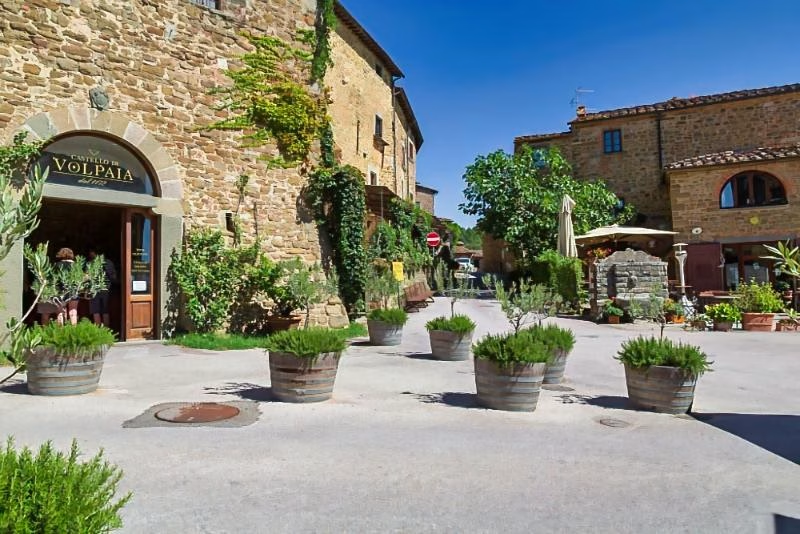
Volpaia’s quiet square, framed by honey-coloured stone and family cellars, captures the gentle rhythm of Chianti Classico’s most atmospheric hamlet.
Gaiole in Chianti
Unlike the ridgeline towns, Gaiole developed along a stream, giving it a more open, working feel. The countryside is studded with castles — Brolio, Meleto, Vertine — that once guarded the frontier between Siena and Florence. Today Gaiole lends its name to L’Eroica, the beloved vintage cycling event on the white roads. Off-season, it settles back into a peaceful patchwork of woods and vines ideal for easy exploration.
Volpaia
Above Radda, Volpaia seems paused between centuries: a compact, fortified cluster around a slender tower, all stone, light and vine. The little square, the church of San Lorenzo and an old well form its calm heart. Cellars open by appointment, and the place reads like a lesson in how historic architecture and contemporary craft coexist without fuss.
Castelnuovo Berardenga
Southern sentinel of Chianti Classico, Castelnuovo Berardenga stands where vineyards soften into the wilder curves of the Crete Senesi. A medieval tower and civic palace rise above olive groves and grain fields; nearby villas and monasteries hint at Siena’s influence. The view widens — longer horizons, bigger skies — and the landscape feels a touch more elemental while staying rooted in farm and village life.
San Gusmè
Looking towards Siena, San Gusmè is a small, fortified gem with fragments of walls, two old gates and cobbled lanes made for wandering. The church of Saints Cosma and Damiano anchors the skyline, while the whimsical statue of Luca Cava adds Tuscan self-irony. A light-hearted festival in September keeps the tradition alive.
San Donato in Poggio
Between Barberino Tavarnelle and Castellina, San Donato in Poggio preserves the calm proportions of a 13th-century borough. Two gates — Porta Senese and Porta Fiorentina — lead to Piazza Malaspina, framed by the Church of Santa Maria della Neve and the Palazzo Pretorio. The “Torrino” watchtower still surveys rows of vines that have defined the view for centuries.
Montefiridolfi
Near San Casciano Val di Pesa, Montefiridolfi gathered around the Buondelmonti family’s castle and keeps its original footprint: a terracotta-paved square, a 14th-century house-tower, and the simple church of Santa Cristina. Around it, vines and woodland patch the slopes at the threshold of Chianti Classico — a quiet introduction to the region’s character.
Monteriggione

Monteriggioni from above — a perfectly preserved crown of medieval walls set amid Chianti’s vineyards, one of Tuscany’s most iconic silhouettes.
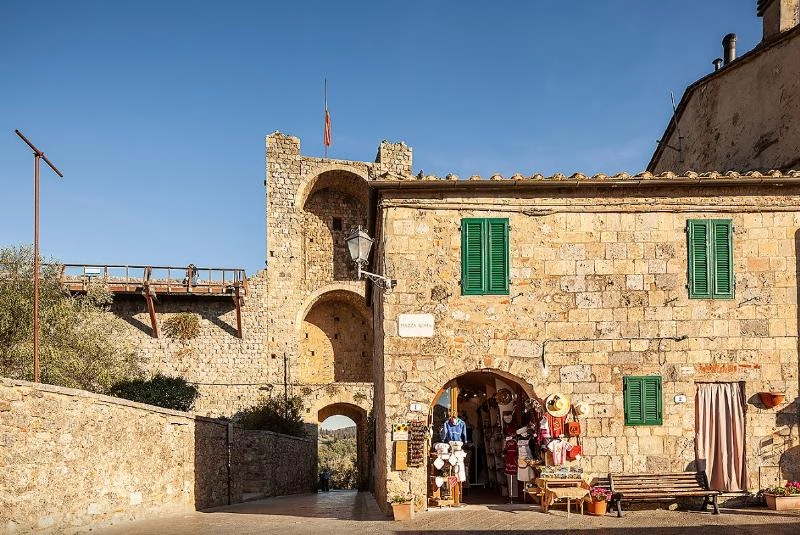
Everyday life unfolds beneath ancient stone arches in a sunlit Tuscan village.
Monteriggioni rises like a perfect ring of stone, towers pricking the skyline just as Dante described. Built by Siena in the early 1200s to guard the northern approaches and the old Via Cassia, it remains one of Italy’s most intact medieval silhouettes. Within the gates, a small piazza gathers taverns and workshops; short stretches of rampart walk reveal views over olive groves and the Val d’Elsa. Come towards evening, when the stone turns honey-coloured and day-trippers thin out — it feels less like a sight and more like a memory recovered.
Planning a day in Monteriggioni? We’ll build your Chianti route around the hilltop villages you’ll love most.
Prefer a Tuscan Hideaway with Spa & Views?
For travellers who enjoy the Chianti countryside but prefer a stay with world-class wellness, panoramic terraces and impeccable design, COMO Castello del Nero offers a sophisticated base close to Florence and Siena. A perfect choice for a slower, more indulgent rhythm.

Walking and Cycling the Chianti Hills
Chianti was made for movement. Not the hurried kind, but the kind that lets you breathe with the landscape — to glide through vineyards, follow white gravel roads, or trace an ancient pilgrim path where the air smells of thyme and crushed vine leaves.
Whether you’re here for the physical joy of cycling or the quiet discovery of a slow walk, Chianti rewards every traveller who meets it at eye level.
Exploring on two wheels
Chianti’s rolling ridges, forest tracks and vineyard lanes make it a natural playground for cycling enthusiasts. From gentle scenic loops to more ambitious circuits, the region’s Rete Cicloturistica del Chianti Classico offers a mix of paved and Strade Bianche (White Roads) suitable for every level.
Two classic routes stand out: the Grand Tour del Chianti Fiorentino, a 150-km ring through Greve, Radda, Barberino Tavarnelle and San Casciano Val di Pesa; and the Grand Tour del Chianti Senese, 106 km across Radda, Gaiole and Castellina, where wine, history and landscape merge at every bend.
Those who prefer a softer approach can pair countryside cycling with cultural immersion. Starting from Florence, you can join our Electric Bike & Vespa Tours, a relaxed introduction to Tuscany’s rhythm, gliding through olive groves and stone hamlets before returning to the city’s Renaissance skyline.
Autumn brings the Ecomaratona del Chianti Classico and La Gallo Nero — two celebrated gravel and running events that combine sport with scenery, proving that endurance here is more about pleasure than speed.
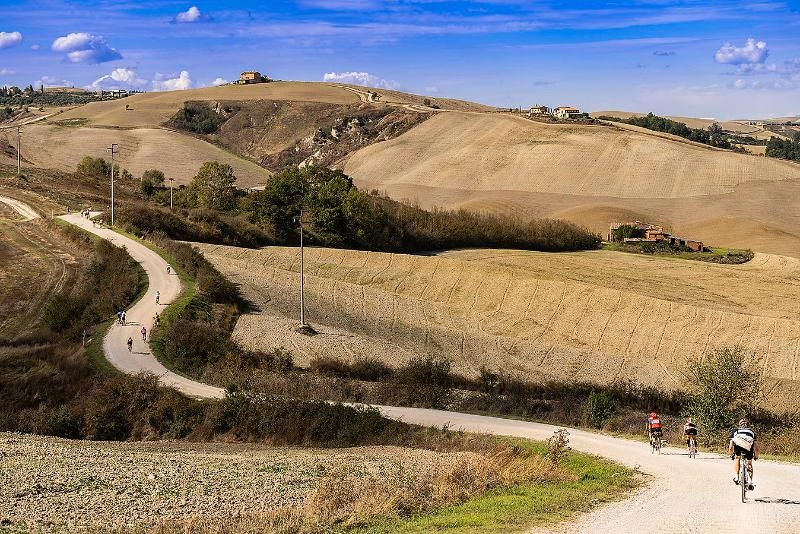
Riders on Chianti’s iconic strade bianche — the winding white roads that make cycling here feel both timeless and exhilarating.
Walking through times
Walking in Chianti means tracing centuries-old pathways between parish churches, abbeys and farmsteads. The best-known route is the Via Romea Sanese, once linking Florence to Siena. Its mixture of backroads and dirt tracks crosses vineyards, woodlands and Etruscan sites, occasionally intersecting the Via Francigena — the ancient pilgrimage road to Rome.
For gentler exploration, the Rete Escursionistica del Chianti Classico (Chianti Classico Footpath Network) offers dozens of loops and linear trails through small valleys and ridges. Among the most scenic are:
The Strada dei Vigneti di Castellina, a fragrant route between vineyards and the cypress grove of the Sant’Agnese Reserve.
The Anello del Passignano, starting at the Badia a Passignano monastery, weaving through landscapes painted by Domenico Cresti.
Radda’s Sentiero Leo Lionni, blending art and nature in a setting of oaks and vines.
The Terzona Valley paths near San Casciano, following the tributaries of the Pesa and Greve rivers.
Events for the Active Traveller
Each season brings new reasons to lace up your shoes or mount your bike. March opens with the Chianti Ultratrail, a weekend of trail running around Radda’s hills. In May, the Chianti Classico Marathon crosses the vineyards of San Casciano, Barberino Tavarnelle and Greve. September’s La Gallo Nero cycling event celebrates the black-rooster emblem with scenic rides across the Classico heartland. And October’s Ecomaratona del Chianti Classico in Castelnuovo Berardenga closes the year in perfect Tuscan fashion — running (or walking) through vineyards, past olive mills and into tasting tents.
How to Visit Chianti
Chianti moves to its own rhythm — blossoms, harvests and winter kitchens. Travel with the seasons and the land will do the pacing.
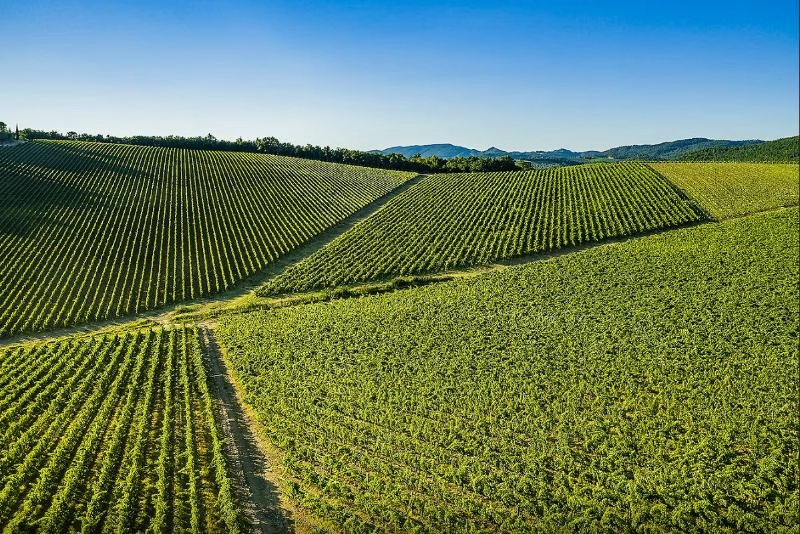
Sunlit rows of vines ripple across the Tuscan hillsides under a flawless blue sky.
Spring — The Awakening of the Hills (March–June)
Spring paints Chianti in soft greens and wildflowers — ideal for walkers, wine enthusiasts and easy food festivals.
Radda in Chianti: Chianti Ultra Wine alongside the Chianti Ultra Trail — tastings at Casa del Chianti Classico and the Sensory Wine Museum.
Città dell’Olio towns (Barberino Tavarnelle, Castellina, Greve, Radda, San Casciano, Castelnuovo Berardenga): Merende nell’Oliveta — open-air picnics and gentle walks through the groves.
Spring calendar highlights
Panzano — Festa della Stagione Bona • San Casciano — Alla Corte del Vino (Villa Le Corti) • San Polo — Festa del Giaggiolo (iris, new oil and wine) • Impruneta — Festa dell’Antiquariato • Chiocchio — Sagra del Cinghiale • Montespertoli — Mostra del Chianti & Sagra del Polliglio • San Donato in Poggio — Infiorata del Corpus Domini (first Sunday in June) • San Gimignano — Granfondo della Vernaccia & 1000 Miglia rally pass-through.
Greve — Vetrina delle Città Slow (2nd weekend of May) • Montefioralle — I Vini nel Castello • Pianella (Castelnuovo Berardenga) — Maggiolata (threshing re-enactment).
Across Tuscany in May — Cantine Aperte (open-cellar weekend).
ExpertoItaly Insight
The “Chianti Classico” label isn’t only a wine distinction — it marks the historic heart of the region, where medieval leagues shaped boundaries still respected today.
The “Chianti Classico” label isn’t only a wine distinction — it marks the historic heart of the region, where medieval leagues shaped boundaries still respected today.
Summer — Evenings of Stars and Flavour (July–August)
Summer is the season of late dinners, hilltop festivals and nights under open skies.
Radda in Chianti: Chianti Ultra Wine alongside the Chianti Ultra Trail — tastings at Casa del Chianti Classico and the Sensory Wine Museum.
Città dell’Olio towns (Barberino Tavarnelle, Castellina, Greve, Radda, San Casciano, Castelnuovo Berardenga): Merende nell’Oliveta — open-air picnics and gentle walks through the groves.
Spring calendar highlights
San Pancrazio: Due Paesi in Festa (Sagra della Brioche con Gelato). • Lamole: I Profumi di Lamole. • Chianti Festival: music, theatre and dance across Castellina, Gaiole, Radda, Castelnuovo Berardenga. • Monteriggioni: Festival Medievale (Di Torri si Corona). • Colle Val d’Elsa: Il Rinascimento di Colle & Sagra della Miseria. • San Gimignano: Ferie delle Messi. • Greve, San Casciano, Tavarnelle: Calici di Stelle around 10 August (starlit tastings). • Gaiole: Festa di San Sigismondo. • Montespertoli: Sagra del Cinghiale & Sagra della Pappardella. • Badesse (Monteriggioni): Sagra del Pesce. • Castellina: Fiera del Cocomero (24 August). • Staggia Senese (Poggibonsi): Sagra della Rana. • Radda: Radda 1527.
Clear nights belong to the stars: Calici di Stelle and Lamole sotto le Stelle pair skies with glasses.
Autumn — The Golden Season (September–November)
Autumn is Chianti’s golden hour — harvests, new oil, and landscapes turning amber.
Greve (2nd weekend of September): Expo Chianti Classico under the porticoes of Piazza Matteotti.
Across the region: Chianti d’Autunno; Cantine Aperte in Vendemmia (crush and fermentation in progress).
Autumn highlights
Castelnuovo Berardenga — Festa dell’Uva di Vagliagli • Villa Sesta — Dit’Unto (street food; chefs included) • Gaiole — L’Eroica (vintage cycling on white roads) • Strada in Chianti — Strada in Fiera & Sagra d’Autunno • Impruneta — Festa dell’Uva then Festa di San Luca • Mezzomonte — Sagra della Fettunta (new oil & toasted bread) • Impruneta — Pane, Vino e Olio Novo • Montespertoli — Sagra della Ranochiocciola & Sagra della Ficattola • Strove — Sagra del Marrone della Montagnola Senese • Castelnuovo Berardenga — Ecomaratona del Chianti • San Gimignano — Medioevo in Rocca.
Clear nights belong to the stars: Calici di Stelle and Lamole sotto le Stelle pair skies with glasses.
Ready to Explore Chianti Classico with ExpertoItaly?
Chianti Classico is not simply a place — it is a rhythm of villages, vineyards and seasons that reveals itself one road, one glass and one small discovery at a time. If this corner of Tuscany has sparked an idea for your next trip, I would be delighted to help you shape it into something effortless and memorable.
Whether you prefer a quiet base among the vines, a multi-centre holiday pairing Florence with the countryside, or a week spent walking, tasting and taking the slow roads, I can design a holiday that feels personally curated — because it is.
Tell us what you have in mind, and we’ll take care of the rest.
You are in good hands




Tailor-made Italy holidays, designed personally by Antonio Cresce.
Characterful places to stay, thoughtful routes and well-planned travel between them — across one region or several.
We arrange your accommodation, transport and experiences in Italy. Flights are booked separately.
Meet Antonio & discover ExpertoItalyPlan with ExpertoItaly
Tell me where you would like to go, when you can travel and what matters to you.
Start planning your Italy holidayMonday–Thursday: 9am–6pm
Friday: 9am–5.30pm · UK time
At weekends, please send an enquiry.
Your holiday protection

Travel Trust Association
Member Q8055
Read how your holiday payments are protected through our TTA membership.
How your holiday is protectedItaly ideas and travel advice by email
Subscribe for destination ideas, places to stay and practical advice from ExpertoItaly.
We will never sell your details. Read our privacy policy.
Follow ExpertoItaly
 Facebook
 WhatsApp channel
Follow our travel updates. For help planning your own holiday, contact Antonio directly.
ExpertoItaly Ltd · Company registration no. 12035194 · TTA membership Q8055
Package holidays are sold by ExpertoItaly Ltd. Registered office: 33 Miles Close, London, SE28 0NJ.