Salina: The Island That Rewards Staying

Where island life unfolds through rhythm, grounded in natural spectacle

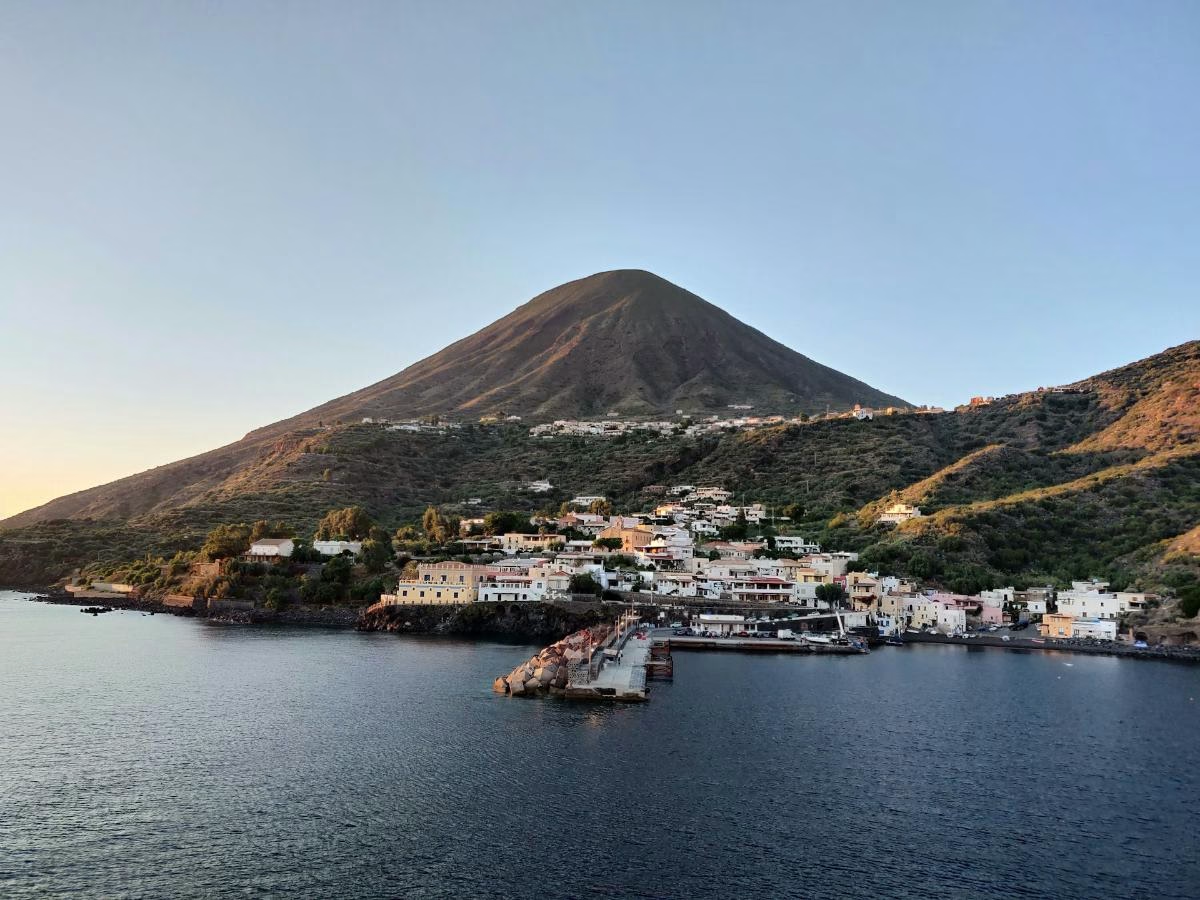
Salina is the most balanced and quietly confident of the Aeolian Islands. Defined by twin volcanic peaks, fertile slopes, and a deeply lived-in landscape, it offers an island experience shaped by agriculture, light, and time — not by display.

This is an island that reveals itself gradually. Days follow weather and inclination rather than plans; evenings are shaped by light, food, and the natural silence of the place.

Salina isn’t an island you visit to be entertained. It is one you choose when you are ready to live somewhere, briefly but fully — allowing repetition, familiarity, and rhythm to take hold.

Whether experienced on its own or as part of a wider Aeolian journey, Salina rewards travellers who slow down enough to stay. It is a place that deepens with time.

A panoramic view of Monte dei Porri, surrounded by green vegetation and fluffy white clouds floating above, under a deep blue sky.
 
The tranquil beauty of Monte dei Porri, captured from a scenic vantage point.

Credit: Vittorio Sciosia

A wooden signpost pointing towards Malfa, with Monte dei Porri in the background under a bright blue sky, surrounded by lush greenery.
 
Hiking trails to Malfa, with Monte dei Porri as a stunning backdrop.

Credit: Vittorio Sciosia

A stunning aerial view of Salina’s coastline, with Monte Fossa delle Felci towering over a peaceful village, a saltwater lagoon, and the blue Tyrrhenian Sea.
 
A breathtaking view of Salina, framed by Monte Fossa delle Felci and the tranquil Tyrrhenian waters.

Credit: Vittorio Sciosia

Why Salina Feels Different

Salina’s appeal lies as much in what it does not try to be as in what it is.

Unlike some of its neighbours, the island is not driven by nightlife, fashion, or seasonal performance. Villages feel lived in rather than staged; hospitality is personal, understated, and rooted in everyday life. Vineyards, caper fields, and gardens are not decorative — they are working landscapes that shape the island’s culture and pace.

The result is a destination that feels grounded and coherent, particularly appealing to travellers who already know Italy and are now seeking places that feel real rather than rehearsed.

A picturesque view of Pollara Bay at sunset, with golden light casting a warm glow over the cliffs and the village nestled along the coastline.
 
Golden hour at Pollara Bay, the iconic setting of *Il Postino*.

Credit: Vittorio Sciosia

A pristine pebble beach on Salina’s coast, with crystal-clear turquoise waters meeting the rocky shoreline, dotted with kayaks.
 
Salina’s tranquil pebble beaches, where adventure meets serenity.

Credit: Vittorio Sciosia

Salina for Couples & Quiet Romance

Salina’s romance is shaped by rhythm and shared time rather than by display. Without nightlife or spectacle to organise the day, couples naturally settle into simple routines: a morning swim before the heat rises, an unhurried lunch in a village square, an evening walk as the light softens.

Certain places on the island lend themselves naturally to this quiet intimacy. Lingua, with its flat seafront and slow pace, encourages lingering rather than moving on. Pollara, set within a dramatic volcanic amphitheatre, offers sunsets that feel elemental and shared rather than staged. In Santa Marina Salina, evenings unfold gently between a short passeggiata and a relaxed dinner, without pressure to continue elsewhere.

What distinguishes Salina for couples is not isolation, but continuity. You return to the same places, recognise faces, and fall into a shared tempo that allows conversation and presence to take precedence over planning. Romance here is not about doing more together, but about needing less.

Best for: couples who value intimacy, calm, and a sense of living somewhere together, even briefly

Less suited to: those seeking glamour, nightlife, or a socially driven romantic atmosphere

A collection of Salina wines, including Malvasia delle Lipari, Rosato, and Bianco, displayed on a rustic wooden barrel.
 
A showcase of Salina’s celebrated wines, perfect for any connoisseur.

Credit: Vittorio Sciosia

A verdant vineyard in Salina with neat rows of grapevines glowing in the sun, and a sign promoting Malvasia delle Lipari wine.
 
Salina’s lush vineyards, home to the iconic Malvasia delle Lipari wine.

Credit: Vittorio Sciosia

Salina for Slow Travel & One-Island Stays

Salina works best when you stay. Distances are short, days are unstructured, and there is little pressure to accumulate experiences. Travellers who remain on the island for a week or more often discover a rare sense of continuity — returning to the same café, beach, or path until familiarity replaces novelty.

Here, slowness is not a concept but a natural outcome of place.

Best for: slow travellers, repeat visitors to Italy, one-base holiday.

Less suited to: fast-paced island hopping or tightly scheduled itineraries.

A panoramic view of Monte dei Porri surrounded by lush vegetation and drifting clouds, with the Tyrrhenian Sea in the distance.
 
Monte dei Porri, a beacon of Salina’s natural beauty and charm.

Credit: Vittorio Sciosia

A cobblestone path leading to Pollara Bay at sunrise, surrounded by rugged cliffs and views of the shimmering Tyrrhenian Sea.
 
A scenic cobblestone trail to Pollara Bay, perfect for a morning stroll.

Credit: Vittorio Sciosia

Salina for Food & Wine Lovers

Salina’s food culture is rooted in agriculture, but it is far from rustic or simplistic.

The island is the agricultural heart of the Aeolian archipelago, shaped by fertile volcanic soil and a long tradition of small-scale, quality-driven production.

Two of Salina’s defining products — capers and Malvasia delle Lipari — are recognised as Slow Food Presidia, protected not for volume or trend, but for their link to place, traditional methods, and cultural identity. Caper plants cling to dry stone terraces across the island, while Malvasia vineyards occupy some of the most scenic slopes, overlooking the sea.

This strong agricultural foundation supports a level of gastronomy that surprises many first-time visitors. Salina is home to Hotel Signum, whose Michelin-starred restaurant offers a refined interpretation of Aeolian cuisine, built around local produce, seasonality, and restraint rather than excess.

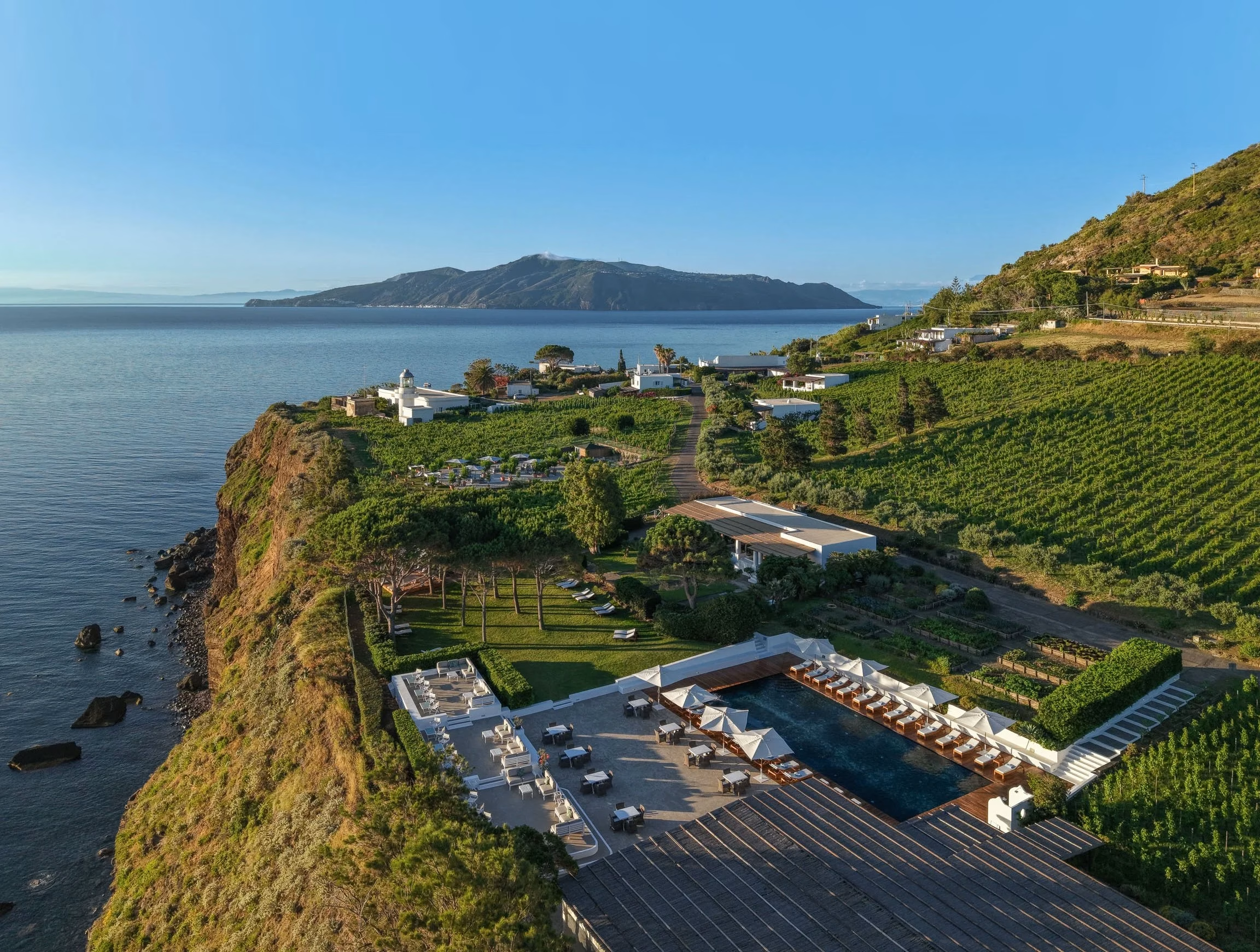
Alongside this, Capofaro Malvasia & Resort explores the island’s food and wine identity from a different angle, pairing gourmet dining with active viticulture. Here, Malvasia is not treated as a souvenir wine, but as an expression of landscape, climate, and work.

What makes Salina distinctive is that high-level gastronomy does not replace everyday food culture — it exists alongside it. Simple meals based on the day’s catch, local vegetables, and island staples remain part of daily life, while fine dining offers a deeper, more thoughtful reading of the same ingredients and flavours.

Each summer, this identity is celebrated during the Festa del Cappero a Salina, when the island’s most emblematic product takes centre stage through tastings, village events, and shared tables — a moment that captures Salina’s food culture at its most open and communal.

Best for: travellers interested in provenance, Slow Food culture, and regional wine

Less suited to: those seeking a wide international dining scene or trend-led gastronomy

A colourful display of hand-painted ceramic plates and bowls, featuring vibrant Mediterranean designs in blue, red, and green.

Salina for Nature, Walking & Open Space

Salina’s landscape is defined by two extinct volcanic cones — Monte Fossa delle Felci and Monte dei Porri — which give the island a rare sense of height, depth, and openness for its size. Their presence shapes both the views and the way people move through the island.

Walking on Salina is varied but never extreme. Inland trails rise gradually through vineyards, chestnut woods, and caper terraces, while coastal paths connect small villages, swimming spots, and viewpoints without demanding technical ability. Routes are often short, but rewarding, with constant shifts between sea and land.

One of the island’s most striking natural settings is Pollara, where volcanic cliffs drop dramatically into the sea, creating sunset views that feel elemental rather than arranged. Elsewhere, areas such as Lingua combine open coastal walking with easy access to the water, encouraging days shaped by movement, swimming, and rest in equal measure.

What distinguishes Salina is that nature is not presented as an activity to be scheduled. Walking, swimming, and time outdoors are simply part of daily life — woven into how people move between villages, meals, and hours of the day, rather than treated as separate pursuits.

Best for: travellers who enjoy gentle walking, open landscapes, swimming, and outdoor days guided by light and weather

Less suited to: adrenaline sports, technical hiking, or highly organised outdoor programmes

A charming coastal village on Salina with pastel-coloured houses, a black sand beach, and small fishing boats lining the shore.
 
Salina’s picturesque village life, where tradition meets the Mediterranean sea.

Credit: Vittorio Sciosia

A panoramic view of Malfa’s historic rooftops, with the twin volcanic islands of Stromboli and Panarea visible in the distance across the Tyrrhenian Sea.
 
Malfa’s timeless charm, set against the dramatic backdrop of Stromboli and Panarea.

Credit: Vittorio Sciosia

When to Go & How Long to Stay

Salina is best enjoyed between late spring and early autumn, when the island’s walking paths, swimming spots, and outdoor dining come into their own.

A stay of 5–7 nights allows time to settle into the island’s rhythm. Shorter stays tend to skim the surface, while longer ones reveal Salina’s true appeal: familiarity, routine, and ease.

Salina Within an ExpertoItaly Journey

At ExpertoItaly, Salina is often recommended as:

a single-island stay for travellers seeking calm, depth, and continuity

a counterpoint to more animated destinations elsewhere in Sicily

part of a selective Aeolian pairing, rather than a rushed island-hopping circuit

We favour journeys that allow time to absorb place. Salina is one of the Aeolian Islands that most naturally supports this approach.

Salina is the kind of island we recommend when the aim is not to see more of Italy, but to experience one place properly.

Let ExpertoItaly help you script your perfect island escape.