


EXCELLENT Based on 78 reviews
 Posted on Google

 Kay Wade27 September 2026We can’t thank ExpertoItaly enough for the wonderful trip to northern Italy organized for us in August. We really appreciated that Antonio took time and effort to get to know the kind of travelers we are so as to create an imaginative, personalized travel plan and detailed guide packed with tips and information about the places we visited. His vast insider knowledge of his country contributed to our smooth and stress-free train journeys and to all that we learned and enjoyed about the cities we visited; about their respective histories, cultures, infrastructures, public spaces, peoples and more. We would recommend ExpertoItaly in a heartbeat!Posted on Google
 Catherine Day16 July 2026We’re recently home after a wonderful holiday in Puglia arranged with Antonio. Great pace, a range of always excellent accommodation and an interesting suggested itinerary. We would highly recommend Expert to Italy and look forward to planning our next getaway with Antonio.Posted on Google
 Mike Girling (No nickname)16 June 2026Just back from another delightful holiday organised from start to finish by the Italian "Expert" Antonio. After several discussions with him we decided to have an eleven day trip to the Amalfi coast and Ischia and thanks to his intimate knowledge of the area we had a most enjoyable and memorable time. Ischia in particular was absolutely wonderful. Antonios advice on the boutique hotels, guided tours, and places to visit were exemplary as were the drivers he booked to ferry us around. In addition to all the knowledge and advice he provides, this time, we encountered a couple of problems of our own making, but a quick WhatsApp to Antonio and within 24 hours both problems were solved. So if you are looking for an independent holiday in Italy along with great support we have no hesitation in recommending Antonio Mike & DianePosted on Google
 Daniel Hockman9 June 2026ExpertoItaly is a brilliant company, and Antonio organised a wonderful holiday for us in Puglia a region we did not know. His suggestions were all fantastic. He listens to what you want to do and works your holiday around that. I wouldn’t hesitate to recommend him to anyone contemplating a holiday in Italy. Thank you so much, Antonio!Posted on Google
 Elaine Yeoh6 June 2026We engaged Antonio Cresce to plan and manage our 3 week holiday in Italy - covering towns in the regions of Puglia, Basilicata ,Calabria and Campania. Our holiday was seamless and exceeded all our expectations, and I would highly recommend Antonio / Expert to Italy for all your holiday planning and needs. From the point of choosing destinations, Antonio was collaborative and listened to everything on our wishlist . The towns he chose for us were exactly the places that we loved .. off the beaten track, charming and authentic Italy ! He picked our accomodation and again there was a lot of collaboration over our needs and we loved the choices . The tours he organised were exceptional. I wanted to see wildflowers and orchids and he engaged experts to take me around the national parks . I would never have been able to source the contacts and organise the excursions as perfectly as it was done . Some of the best moments of our travels , ever! Transfers were professional and seamless. Antonio remained fully contactable throughout our trip for questions , help and any details we needed. We felt fully secure and confident that we had an agent travelling along with us at every step! It was a huge benefit as well having him in the rough time zones as Italy where he is based in the UK, so that any questions were promptly answered and sorted . This could have been more problematic if we had engaged someone from home in Australia with the big difference in time zones . We appreciated his travel advice and recommendations, his work ethics , his professionalism and how he went over and beyond to make our holiday truly exceptional!Posted on Google
 Judith Warren29 April 2026Antonio is super helpful and efficient and he knows Italy. He arranged our three centre Italian holiday, booked all train tickets, taxis and hotels and suggested places we wouldn't have thought of. You can have an independent holiday without problems, even in a less touristy area, because he's organised everyone for you and he's a back up if anything goes wrong. Thanks Antonio, be in touch next time!Posted on Google
 Anne Fenton22 September 2025Antonio was a delight to deal with. He was knowledgable, friendly and very patient when we changed our plans several times! His choices of hotels were exceptionally good and he was very responsive when we had a little hiccup with the car rental. Highly recommend his services.Posted on Google
 Teresa Oliveira25 August 2025We used ExpertoItaly to help us with our two-week holiday in Sicily. We had a couple of interactions with Antonio, and were very fast to close on our itinerary and hotels. Everyting was very well organized and suitable to our requirements. Antonio chose very good accommodations: small beautiful, full of character and well located. He also booked our bus trips as we did not want to rent a car. That worked really well. It was a great help and gave us great confidence for our trip. We strongly recommend ExpertoItaly if you want customised holidays in Italy. We will use it again for future traveling in Italy!Posted on Google
 IzzieD21 August 2025Antonio is an expert on Italy so if you are planning a trip then you should definitely use ExpertoItaly. He helped us plan the perfect family trip and we cannot fault any of his recommendations. From car hire, to the perfect hotels and apartments, he is highly knowledgeable and it doesn't stop with planning. He was on hand to be available if we needed his help while on the trip. His customer service is first class. Thank you so so much and we look forward to planning our next trip with you.Posted on Google
 David Wise12 August 2025Antonio was really helpful in planning our trip to Italy. We wanted to visit 3 locations, he provided recommendations on accomodations which were great - really good locations for each booking. He also coordinated taxis and trains and provided a load of suggestions for each location for places to eat and sites to visit. He was readily available to answer any questions we had by email or WhatsApp. His assistance really helped us in planning this trip and saved us a lot of stress in trying to coordinate this ourselves. All in all we had a great holiday
From Domodossola to Locarno
This route board, which I photographed on the train, shows how the line links the Valle Vigezzo with the Swiss Centovalli. Find Santa Maria Maggiore, Re and Intragna along the way, then use the stop-by-stop guide below to decide where to spend your time.
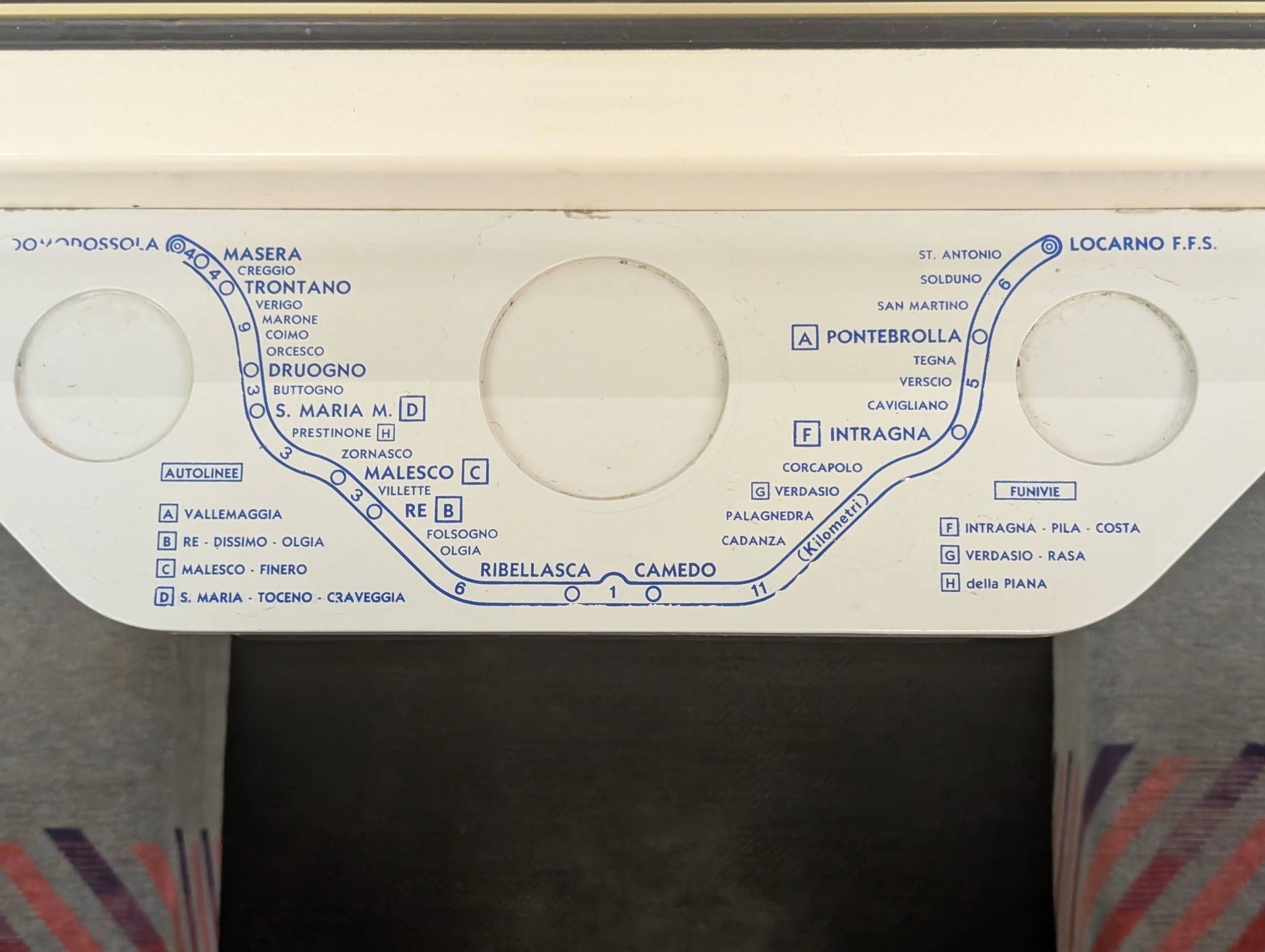
DomodossolaSanta Maria MaggioreReIntragnaLocarno
A railway worth leaving the train for
Woodland, rivers, stone villages and a great pilgrimage church give the Vigezzina–Centovalli journey its variety. The pleasure is in watching the landscape change, then stepping off to explore a small part of it.
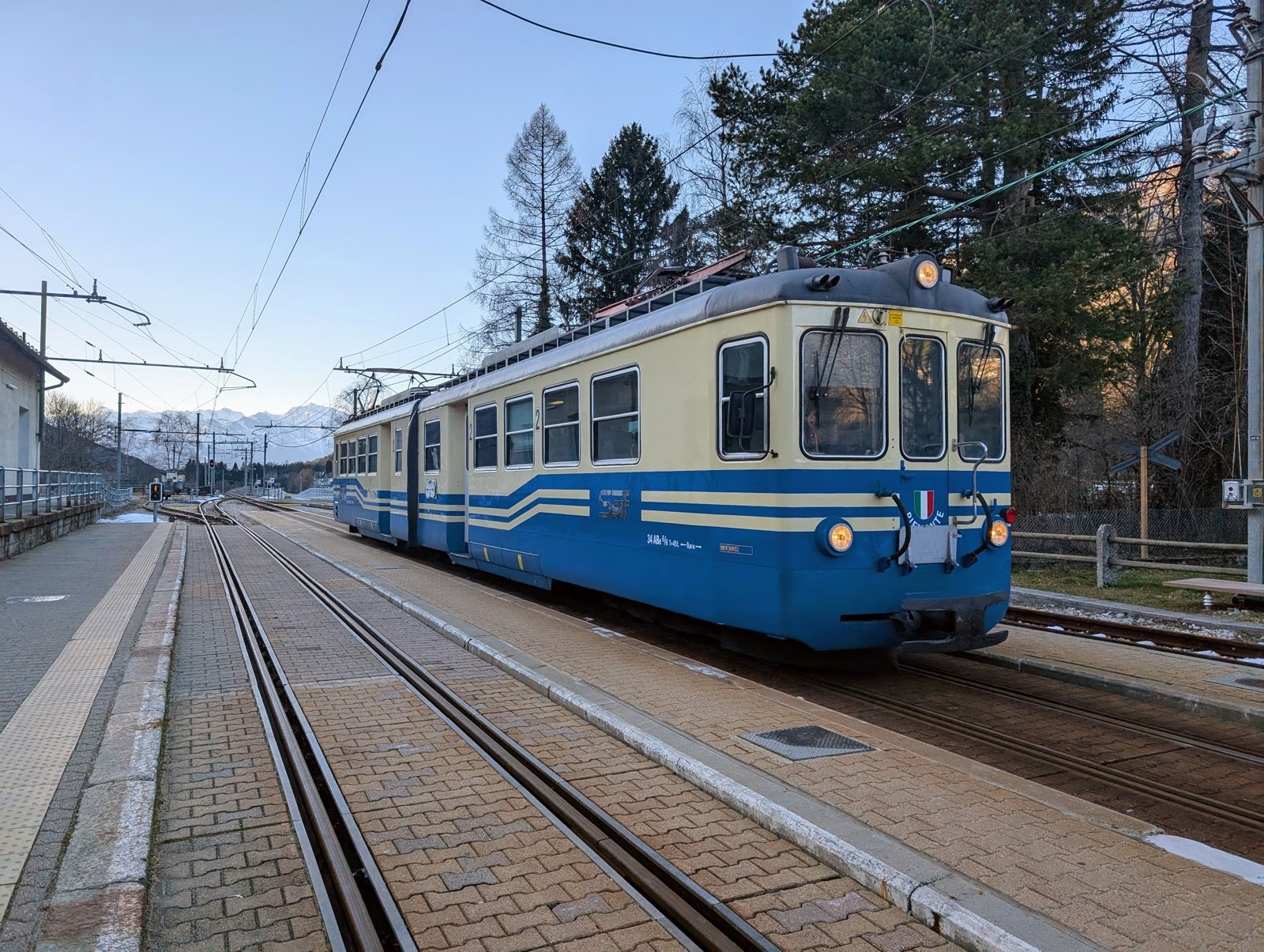
The line links Domodossola in Piedmont with Locarno in Switzerland, crossing the Valle Vigezzo and the Centovalli. From Stresa, a mainline train to Domodossola brings this mountain journey within reach as a day trip. Allow a full day if you want to travel the length of the line and visit places along the way.
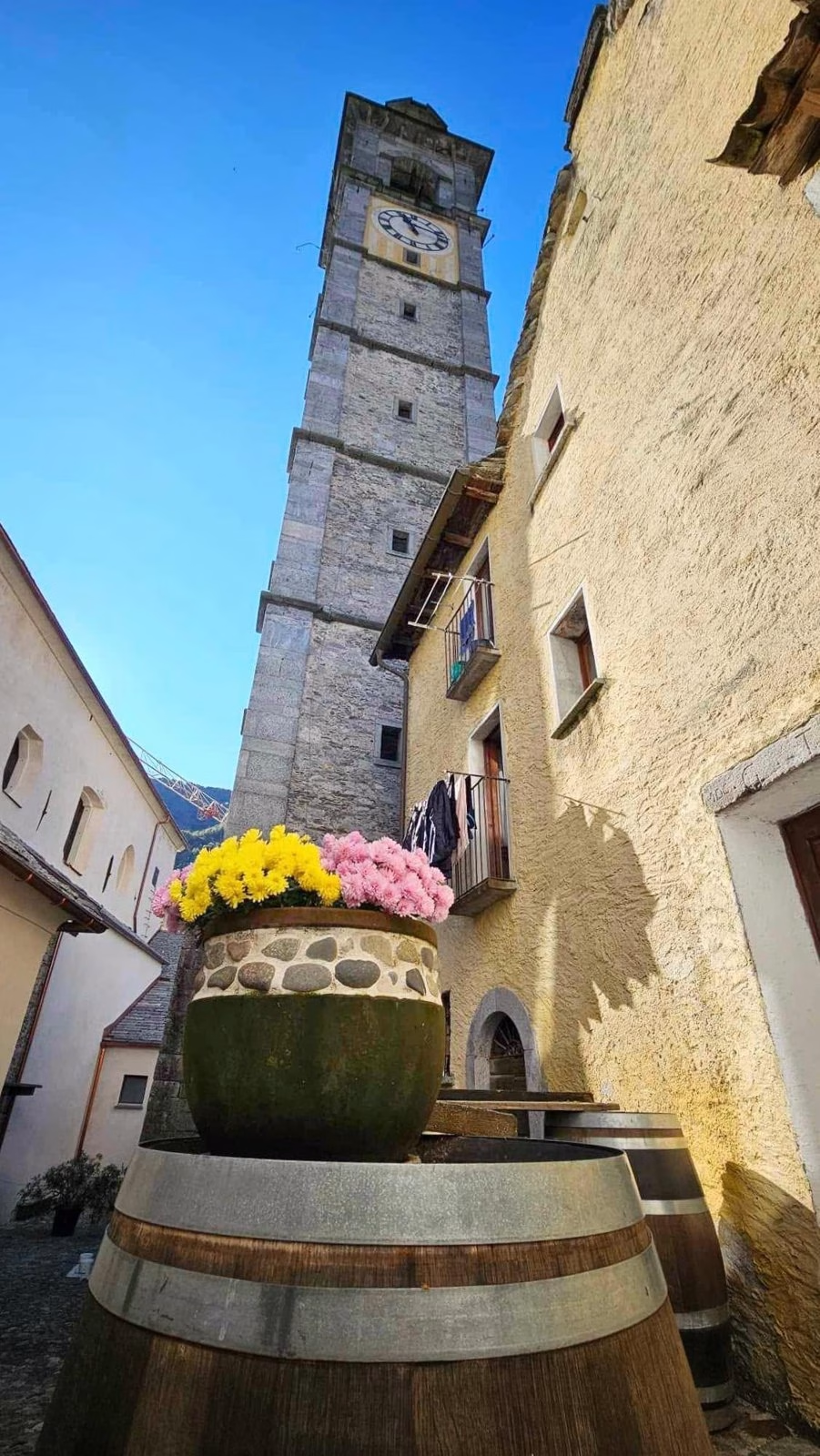
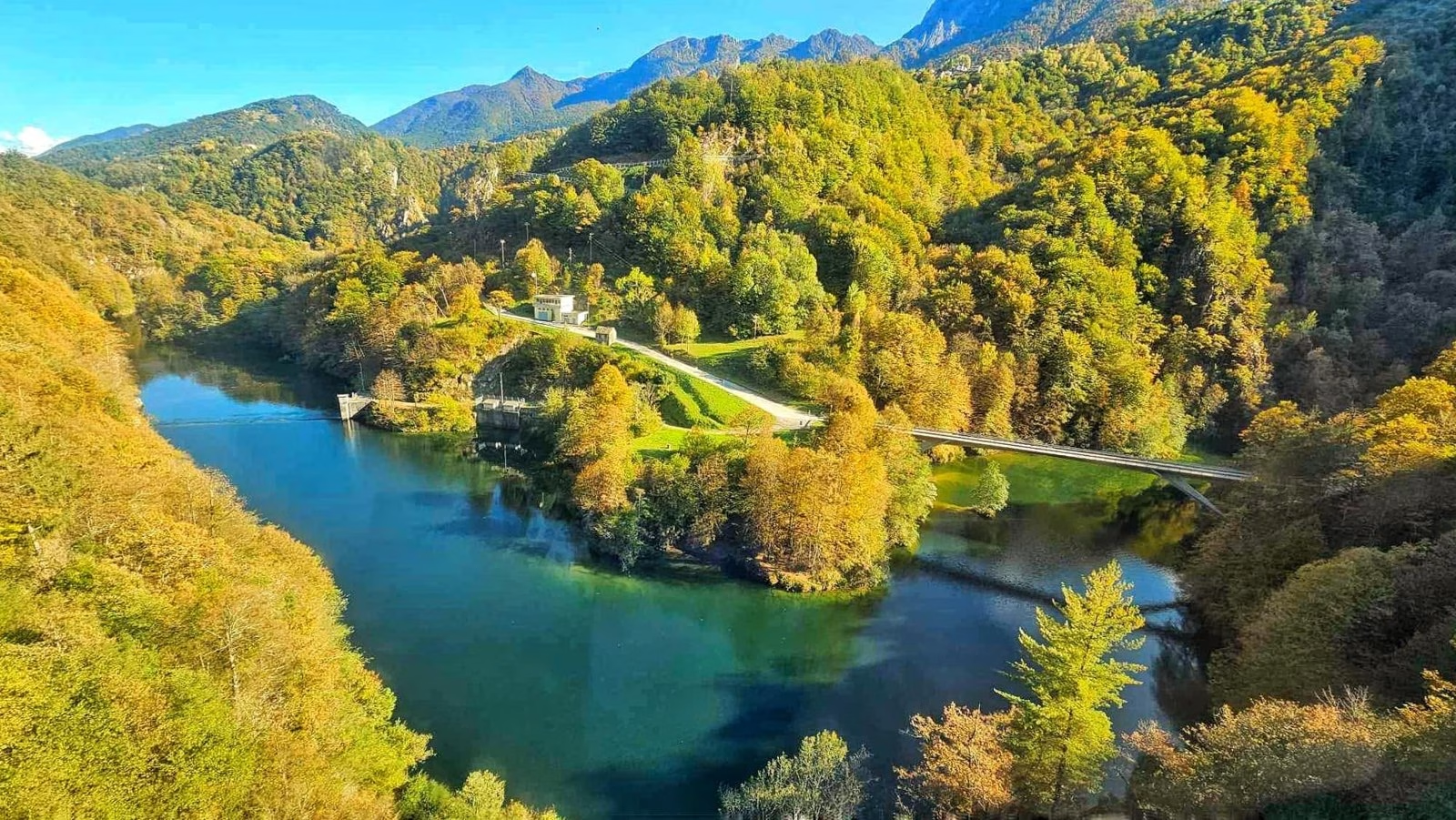
These photographs bring together two different experiences of the railway: Elaine’s October day trip from Stresa during a wider holiday in Northern Italy, and a winter trip I enjoyed with my parents.
Elaine’s autumn day trip
From Stresa into the valleys
Elaine is an ExpertoItaly client with a particular interest in nature. Her October day trip from Stresa, via Domodossola, was part of a wider holiday in Northern Italy. She stopped at Re and Intragna, photographing woodland paths, rivers and the small seasonal details beyond the train window.
My winter trip with my parents
A family day on the Vigezzina
I’m Antonio, founder and owner of ExpertoItaly. I enjoyed this winter trip with my parents, stopping at Santa Maria Maggiore to explore its painted buildings, church and chimney-sweep heritage. My photographs show the valley in a different season.
The routeDomodossola–Locarno, approximately 52 km
On the trainAbout two hours each way, without visits
For a first visitSanta Maria Maggiore, Re or Intragna
From StresaChange trains at Domodossola
Autumn colour and winter village life
Elaine’s October journey
Autumn is particularly rewarding for travellers who want to combine the train with time outdoors. Elaine’s photographs show yellow and copper leaves mixed with green woodland, clear water below the paths and the sanctuary at Re rising above the trees. The interest continues at a smaller scale: fallen leaves beside a footbridge and clusters of fungi on old wood.

A stop changes the experience. From the carriage, the woodland becomes a succession of views; on foot, you can pause beside a river or take a path towards a village viewpoint. Re and Intragna offer different versions of this day: a sanctuary and wooded valley on the Italian side, then a compact hillside village and the opening of the Centovalli towards Locarno.
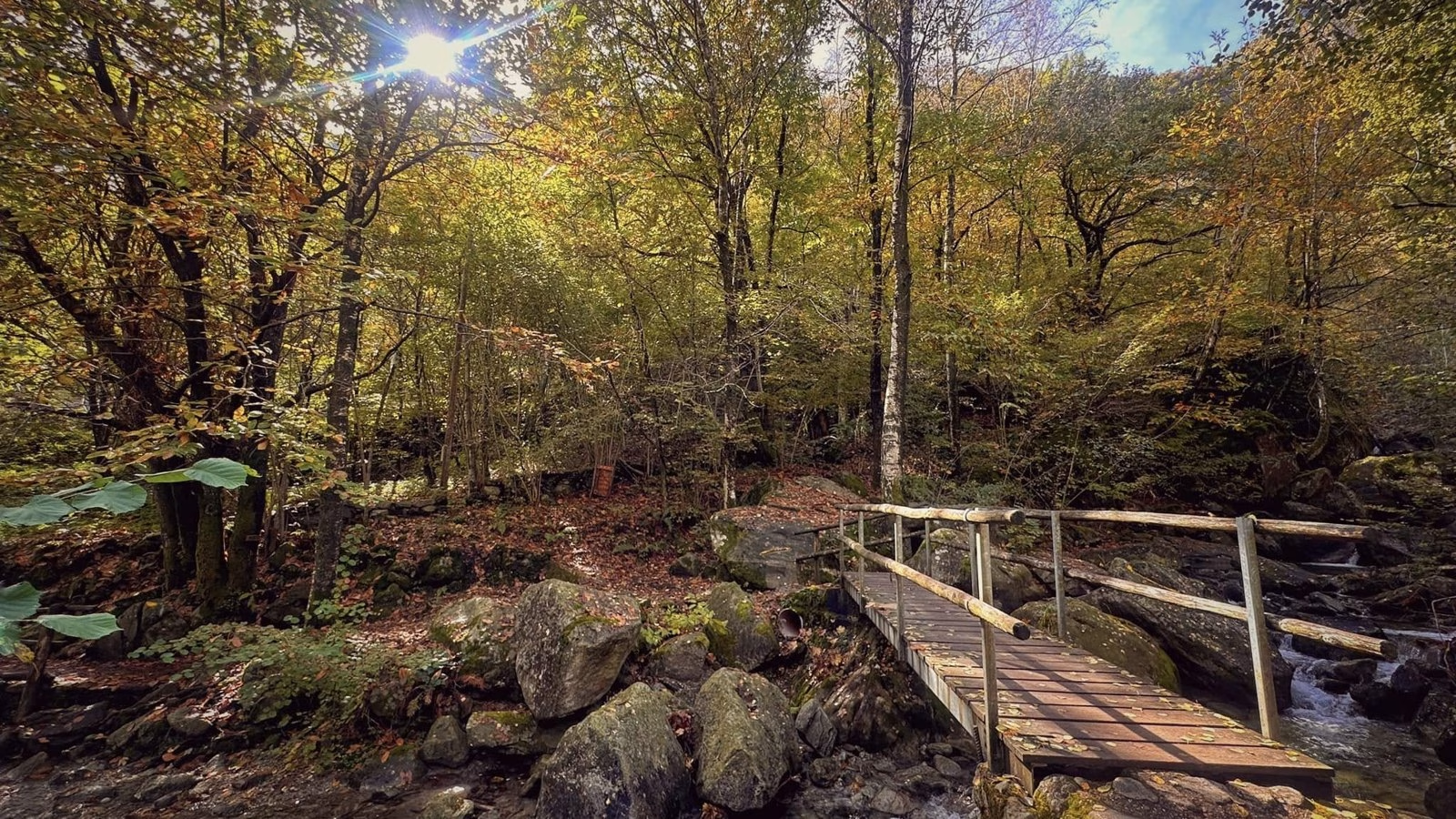

The timing of the colour varies with altitude and weather. October and early November can be excellent, but the seasonal Treno del Foliage is a ticket offer on a railway that runs throughout the year. Its booking conditions matter as much as its name.
My winter visit
Winter reveals more of the valley’s structure. Bare branches frame the church and painted façades of Santa Maria Maggiore, while snow on the higher ridges contrasts with the village streets below. My photographs show why snow need not cover the whole valley for the journey to feel distinctly wintry.
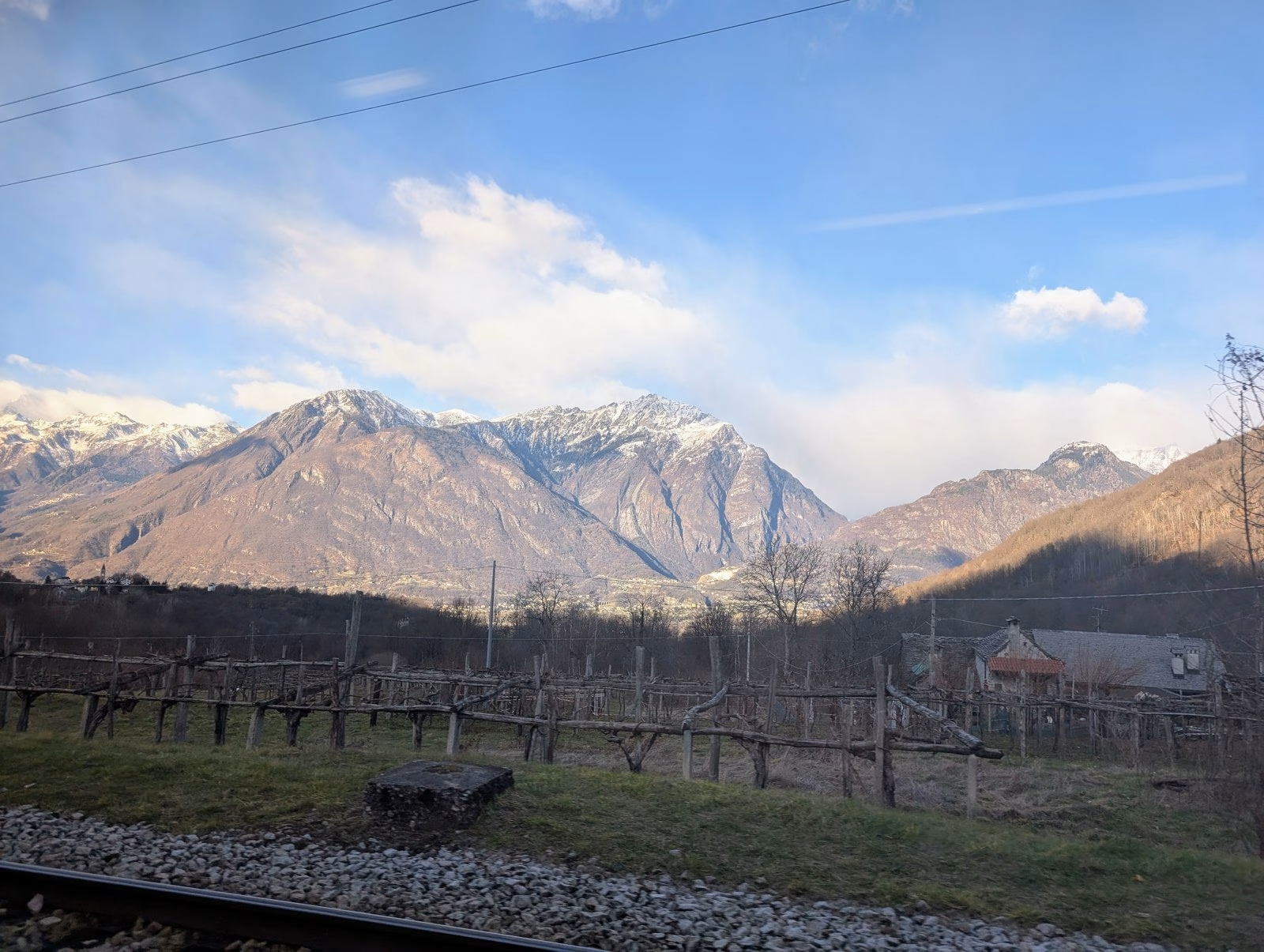
A winter day can revolve around one village: a walk through Santa Maria Maggiore, its church, lunch and a museum when open. Shorter daylight makes a concentrated visit especially satisfying. There is no need to reach Locarno simply to make the journey worthwhile.
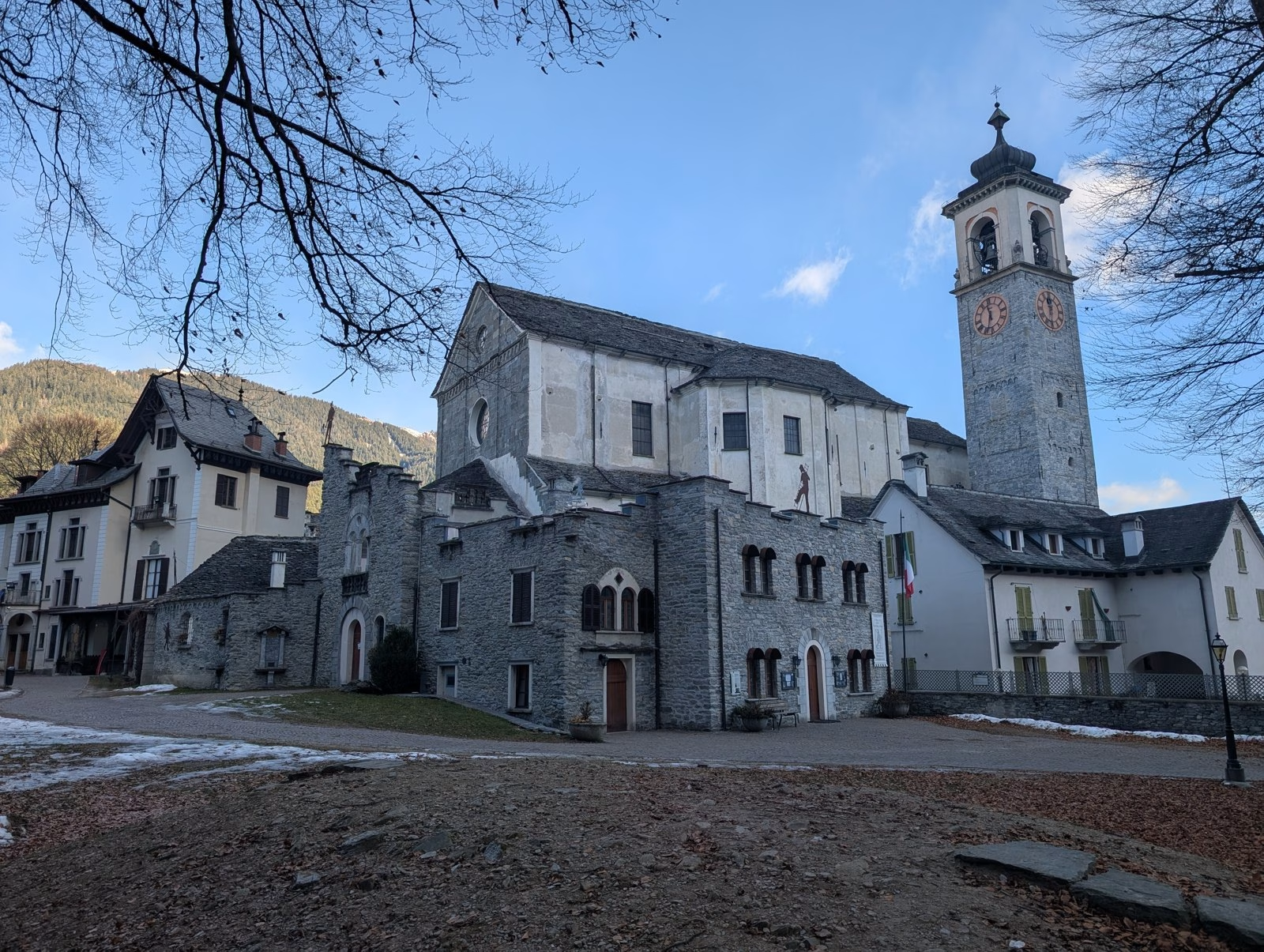
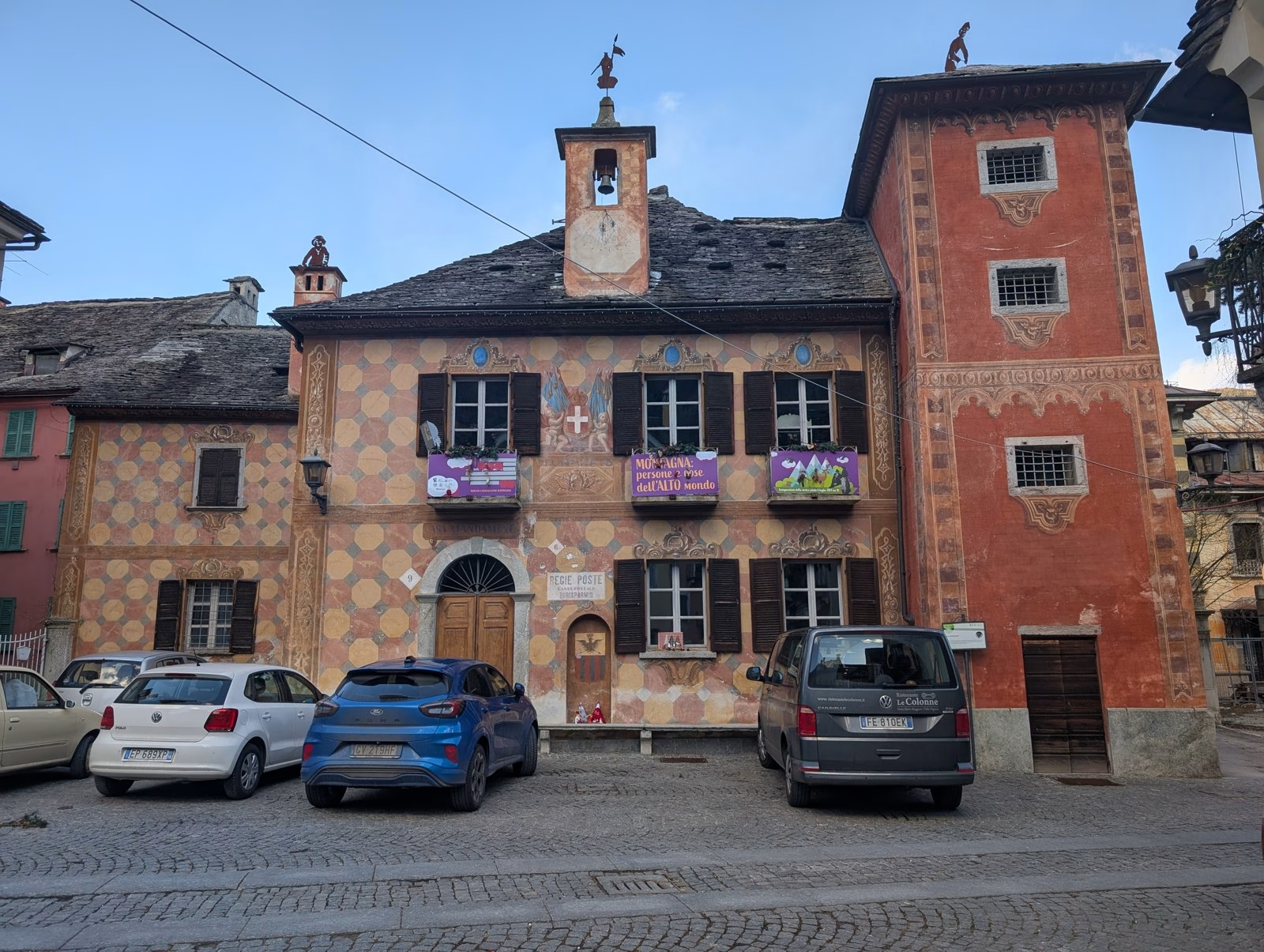
Spring and summer bring greener scenery and longer days for walking. Choose the season around the kind of day you want: autumn for woodland colour, winter for village atmosphere and mountain views, or the warmer months for a longer outing on foot.
Three particularly rewarding stops
Santa Maria Maggiore: chimney sweeps, painters and village life
Santa Maria Maggiore is the natural choice for a first introduction to the valley’s culture. The centre is close to the station, with painted buildings, cafés and the parish church within a manageable walking area. Allow two to three hours for a village visit and one museum; longer if you want lunch and several interiors.
The Museo dello Spazzacamino, in the park of Villa Antonia, tells a history of work and migration. Men and boys left the valley to earn their living cleaning chimneys. Tools, clothing and personal objects explain the trade, while the museum addresses the hardship of the young chimney sweeps and the later success of some emigrant families. It gives the attractive village a deeper social context.

The international gathering of chimney sweeps, normally held on the first weekend of September, keeps those connections alive. For an ordinary visit, the museum is around five minutes’ walk from the station. Consult its opening calendar before choosing your trains: winter access is limited, with a published closure from 7 January to the end of February, apart from arrangements available to qualifying pre-booked groups.
The Rossetti Valentini School of Fine Arts adds another strand to the story. Founded in 1878, it trained artists whose work helped establish the valley’s reputation for painting. The parish church, meanwhile, rewards looking upwards at its richly painted interior. For a longer visit, read our Santa Maria Maggiore guide.
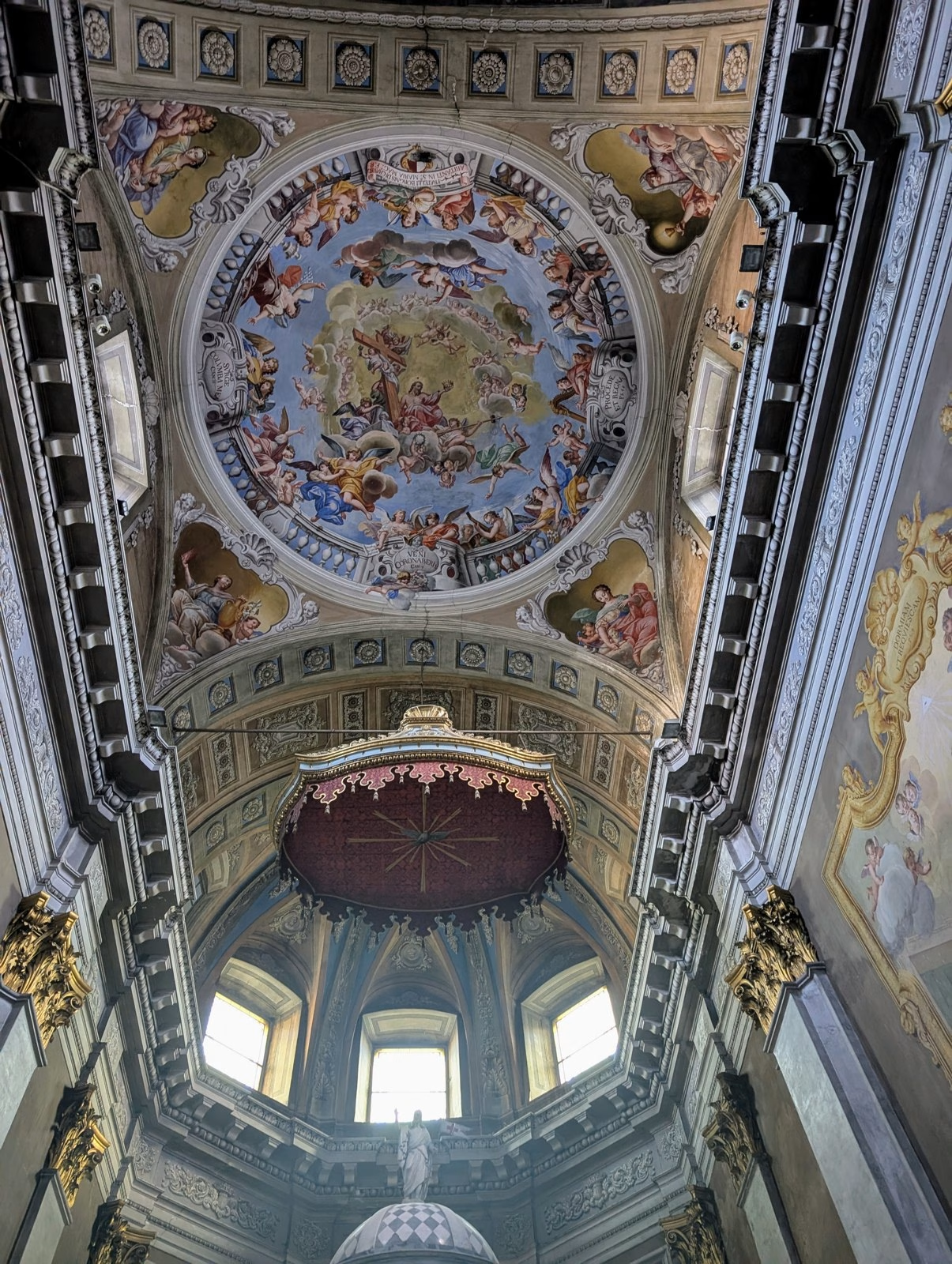

Re: the Madonna del Sangue and paintings of gratitude
The sanctuary is the defining sight at Re, its large dome rising above a much smaller village. It is an easy place to understand why a railway stop can deserve time of its own: visit the church, then look back at it from the surrounding landscape. Allow roughly an hour for a focused sanctuary visit, or two hours or more if you want a walk as well.
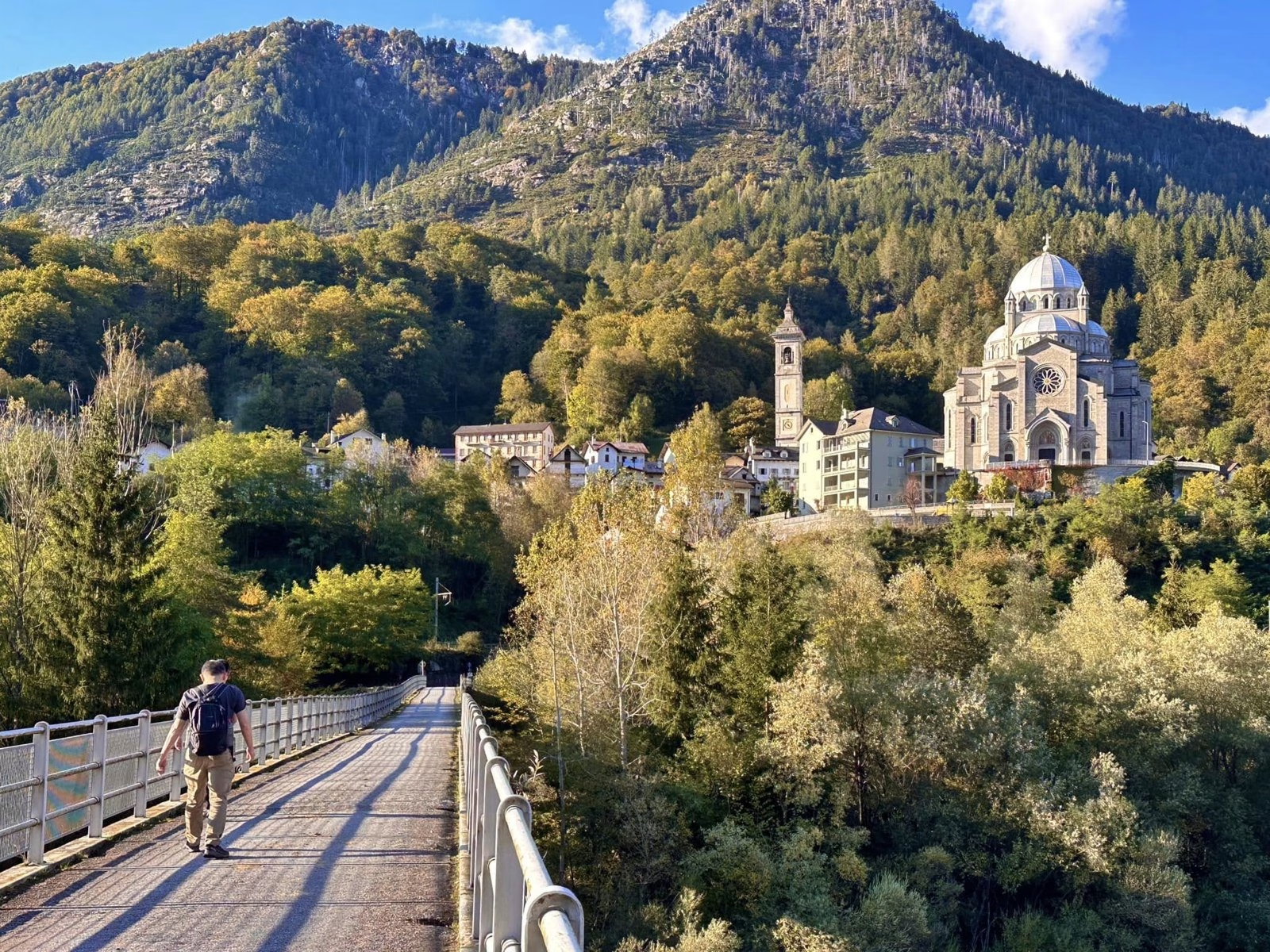
According to the religious tradition, on 29 April 1494 a stone thrown at an image of the Madonna caused the fresco to bleed. The event made Re a place of pilgrimage. The original image survives within the older part of the sanctuary, incorporated into the larger complex seen today.
Devotees offered ex voto paintings in gratitude for a grace received or a danger survived. These pictures are compelling records of ordinary lives: illness, accidents, work and family circumstances represented alongside divine protection. The sanctuary’s collection includes work by painters who specialised in such commissions.
This devotional art belongs within the wider story of the “Valley of the Painters”. The name also reflects generations of local portraitists and landscape painters, and the influence of the Rossetti Valentini school. Re’s paintings of gratitude and Santa Maria Maggiore’s artistic teaching are complementary ways into that history. Ask locally about access to the separate ex-voto museum; do not assume that its hours match those of the church.
Intragna: a village above the meeting of the valleys
Intragna offers narrow lanes, old houses and the conspicuous bell tower of San Gottardo, the tallest in Ticino. Its regional museum introduces the Centovalli and Terre di Pedemonte. The village’s elevated setting makes it rewarding for photographs, but exploring involves slopes and steps.
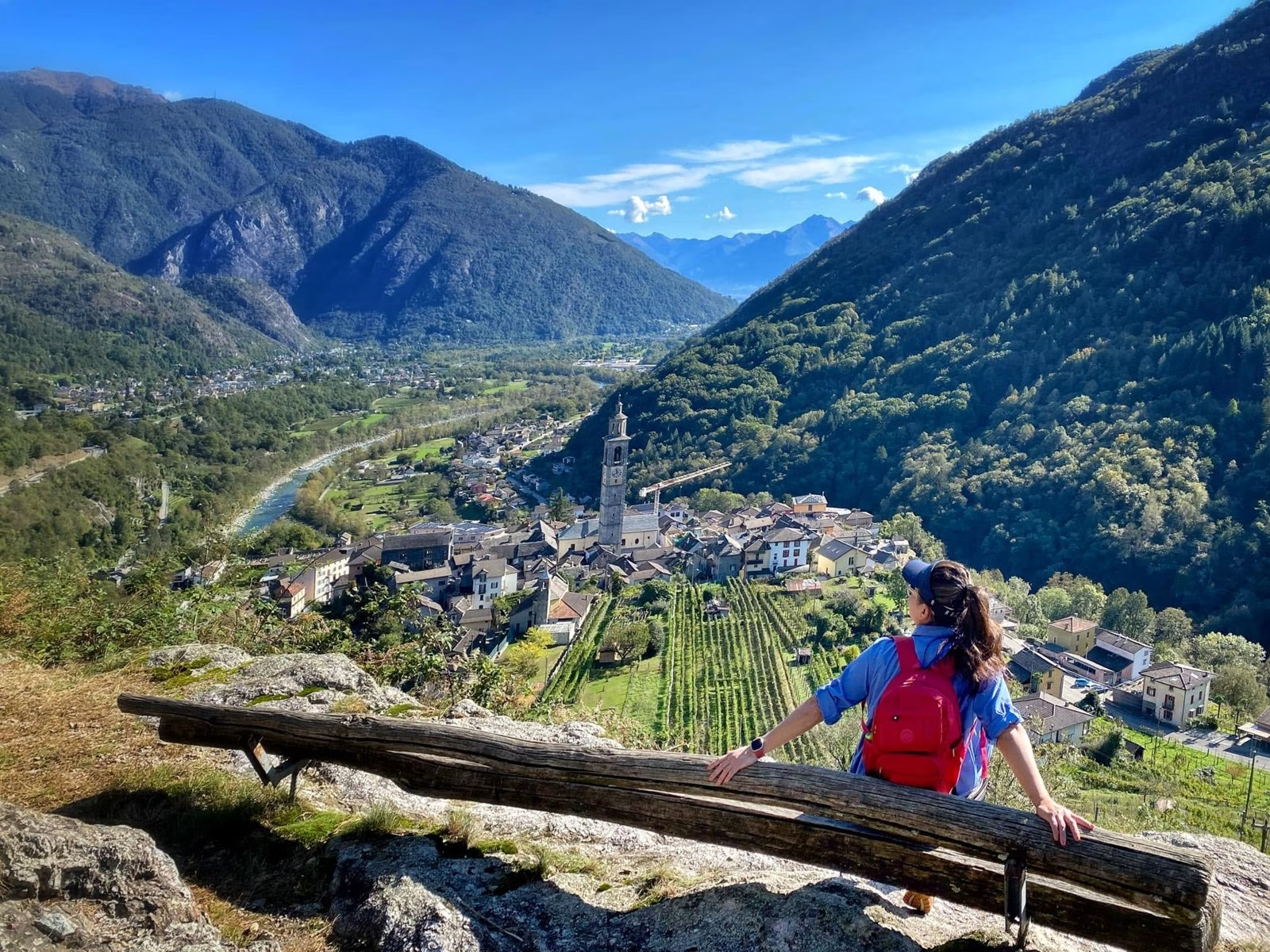
Allow around one to two hours for the village. A longer woodland or hillside walk needs additional time and a chosen route. Elaine’s photographs show both the village’s close detail and the wider view from above; they should not be read as a single level stroll straight from the platform. Museum and tower visits depend on seasonal opening.
The stops from Domodossola to Locarno
Use these introductions to choose where to break the journey. They describe the places along the line, not a promise that every train calls at every station. Faster international trains serve selected stops; smaller halts may require a regional service or a request stop. Coimo and Ribellasca also appear in route descriptions but have no usable stopping times in the operator’s published 2026 international/Italian timetable.
Section 01
The climb from Domodossola
Domodossola
The Italian terminus is a town to visit as well as an interchange. Its old centre and Piazza Mercato make a good start or finish to the day. If coming from Locarno, allow time here for lunch and a walk before returning into the valleys.
Masera
Still on the Domodossola plain, Masera introduces the valley’s churches, country houses and history of emigration. The oratory of Sant’Abbondio, with its Romanesque bell tower, is a distinctive local landmark.
Creggio
A small halt on the climb towards Trontano, Creggio belongs to the quieter opening section of the route. It is more useful for a specifically planned local walk than as a first-time sightseeing stop; selected regional trains call on request.
Trontano
Vineyards and stone-built hamlets distinguish Trontano, overlooking the Domodossola plain. It suits travellers interested in rural architecture and walking, with mushrooms, wine and chestnuts part of the area’s food traditions.
Verigo
This small hamlet rewards attention to vernacular buildings, including a late-medieval carved lintel noted by the railway’s local guide. Treat it as a walking destination with a planned regional-train connection.
Marone
The railway continues through woodland on the mountainside to this small halt. Marone is an option for travellers who have selected a local path in advance, rather than somewhere to expect a compact collection of visitor attractions beside the platform.
Coimo
Coimo belongs to the wooded approach to the upper valley and appears in the railway’s destination material. It is not shown as a calling point in the current published timetable used here, so arrange access separately rather than building a stopover around it.
Section 02
The villages of the Valle Vigezzo
Orcesco–Gagnone
Also listed as Gagnone–Orcesco, this stop comes as the railway approaches the broader, more open part of the Valle Vigezzo. It is a quieter choice for a village-and-countryside visit, served by selected regional trains.
Druogno
On the edge of the Santa Maria Maggiore plateau, Druogno connects rural history with local art. Its church of San Silvestro and the UniversiCà museum offer cultural interest, while surrounding hamlets contain mills and small oratories.
Santa Maria Maggiore
Choose this for the strongest combination of village atmosphere and museums: chimney sweeps, painting and the history of perfume. It is one of the easiest places to make a substantial visit without planning a hike.
Prestinone
The birthplace of Divisionist painter Carlo Fornara is a small settlement with a church dedicated to San Gottardo. It adds a more intimate connection with the valley’s artists; check which regional trains call.
Zornasco
The historic mill is the particular attraction here, close to the railway halt. Its machinery recalls the processing of grain and hemp and offers a practical counterpoint to the valley’s churches and paintings. Check opening arrangements before making it the purpose of a stop.
Malesco
Malesco brings together stone streets, a historic washhouse and local heritage associated with the wider Val Grande area. It also belongs to the chimney-sweep story. Choose a village visit or plan a longer walk separately.
Re
The Madonna del Sangue sanctuary is the principal reason to stop. Its scale, pilgrimage history and setting give Re a different character from Santa Maria Maggiore; allow extra time if you want woodland and riverside scenery too.
Folsogno–Dissimo
Beyond Re, this small halt serves the area of hillside settlements approaching the border. It is suited to a specific village or walking plan, with only selected services calling, rather than an impromptu stop on a fast international train.
Ribellasca
This is the Italian border locality before Camedo. It helps explain the route’s geography, but the published timetable does not offer stopping times here. For a planned stop near the frontier, look at Camedo’s services instead.
Section 03
Across the border into the Centovalli
Camedo
The Swiss border station connects the Italian and Swiss sections of the railway. It is also a starting point for the historic Via del Mercato towards Intragna, an old trading route that deserves a separate walking plan.
Palagnedra
The reservoir and wooded slopes make this a scenic part of the journey. The village lies above the station, around three kilometres away by the route described by the operator, so visiting it requires appreciably more time than stepping off for a photograph.
Verdasio
The station provides access to the cable cars for Rasa and Monte Comino, subject to their operating calendars. Verdasio village itself sits higher up the slope. A cable-car excursion is a substantial outing, best given a half-day rather than squeezed between several villages.
Corcapolo
Corcapolo is another walking access point within the Centovalli. Around it, tunnels, steep gradients and the Val d’Ingiustria viaduct reveal how the railway negotiates the terrain. Use a stopping service if this is your chosen departure point for a walk.
Intragna
The bell tower, regional museum and lanes make this a rewarding Swiss village stop. For a short visit, stay within the village; for views from higher paths, allow time for the climb and return to the station.
Cavigliano
As the landscape opens into the Terre di Pedemonte, Cavigliano offers a village square and an old wine press. It is a quieter alternative for travellers interested in everyday rural history.
Section 04
The approach to Locarno
Verscio
Verscio is associated with the Teatro Dimitri and the performing arts. It can suit a deliberately planned cultural visit or form part of a walk through the neighbouring villages; check the programme if theatre is your reason for coming.
Tegna
Tegna combines village life with the river landscape near the Maggia and the higher archaeological site of the Castelliere. The latter involves a walk uphill, so distinguish a village pause from a more active excursion.
Ponte Brolla
The Maggia gorge and rock formations give Ponte Brolla its character. It is a good location to consider for river scenery and a meal, using a service that stops here rather than assuming an international train will call.
Solduno San Martino
This stop marks the approach to urban Locarno and the underground section of the line, opened in 1990. For most first-time visitors it is an access point rather than a separate sightseeing destination.
Solduno
Solduno serves a district on Locarno’s western side. It may be useful for a particular address or local walk, but passengers aiming for the lakefront and central sights will usually continue towards the terminus.
Locarno Sant’Antonio
An intermediate urban stop on the approach to the main station, Sant’Antonio is useful when it matches your destination within Locarno. Check the Swiss regional timetable for services.
Locarno
The Swiss terminus brings a change of scale: the lakefront, Piazza Grande and the old town rather than another mountain village. Two hours gives time for lunch and a central walk. The Madonna del Sasso sanctuary above town needs extra time, particularly if combined with other uphill excursions.
How the intermediate stops work
The international tourist return ticket is valid for two days and allows one optional intermediate stop on the outward journey and one on the return. This makes it possible to visit three places: one village travelling out, the opposite terminus, and a different village coming back. The same principle applies whether you begin in Domodossola or Locarno.
For example: Domodossola → stop at Re → visit Locarno → stop at Intragna → Domodossola. Starting in Locarno, you could stop at Santa Maria Maggiore, visit Domodossola and stop at Intragna on the return. These are two intermediate stops in total, plus the destination—not three intermediate stops.
The 2026 Treno del Foliage ticket, advertised for 10 October–15 November, has a different rule: one intermediate stop in total, either outward or return. Do not book that product expecting the two-stop allowance. For two village visits during the foliage period, confirm the available fare and reservation arrangements with the railway.
A seat is guaranteed only when reserved. Where reservations apply, book the separate train legs around your chosen stops; a ticket’s validity does not reserve space on every departure. Some panoramic trains also carry a supplement. Stresa–Domodossola travel is a separate part of the journey.
From Stresa: connections, timings and pace
Travel from Stresa to Domodossola on the main railway, then follow signs for the Vigezzina–Centovalli platforms at the station. Choose the Stresa service around your booked scenic train and leave a sensible interchange margin: around 20–30 minutes is a useful planning allowance, rather than aiming for the shortest possible connection.
Check Trenord or Trenitalia for the actual Stresa connection. Engineering work can change the approach even when the Vigezzina is running normally. For October 2026, replacement buses are announced on the Domodossola–Arona route over the weekends of 2–4, 16–18 and 23–25 October; consult the dated service notice when planning those dates.
A full day: Re, Locarno and Intragna
The following example uses the operator’s timetable valid until 12 December 2026. It illustrates what fits into a day; it is not a reconstruction of Elaine’s exact trains. Use a fare permitting both intermediate stops and recheck availability for your date.
| Leg | Example time | Time to explore |
|---|---|---|
| Domodossola → Re | 09:26–10:24 | About one hour at Re |
| Re → Locarno | 11:24–12:20 | About two and a half hours for lunch and a walk |
| Locarno → Intragna | 14:51–15:09 | About two hours in and around the village |
| Intragna → Domodossola | 17:09–18:40 | Then a separately checked connection to Stresa |
This is a long outing from Stresa. The hour at Re suits a focused sanctuary visit; for a substantial nature walk, shorten the time elsewhere or choose fewer destinations. In late autumn, organise outdoor visits around the available daylight.
A slower winter day: Santa Maria Maggiore
The same timetable shows Domodossola 09:26 → Santa Maria Maggiore 10:12, with a return at 13:55 arriving in Domodossola at 14:40. That gives almost four hours for the centre, church and lunch, with a museum if its opening hours fit. It also leaves room to see Domodossola before the onward journey to Stresa. Choose a ticket for the journey you actually intend to make.
Starting in Locarno
Reverse the principle: visit one village on the way to Domodossola and another on the way back. Allow roughly two hours for the full railway journey in each direction, then add your visits. Use the official timetable and SBB journey planner to check individual calls, especially for the smaller Swiss stations.
Walking, lunch and the return
Santa Maria Maggiore is the simplest cultural stop for a compact visit. Intragna and many smaller settlements involve slopes; a station and its namesake village are not always next to each other. Choose a specific walking route and allow time to return to the platform. Museum visits, cable cars and longer hikes should determine the timetable you book.
A rail return via Domodossola is the approach described here. A circuit returning from Locarno by boat on Lake Maggiore is a different plan, dependent on seasonal sailings and the time of the last suitable boat.
Give the railway a place in your Lake Maggiore holiday
A day in the valleys makes a rewarding contrast to Stresa’s lakefront and the Borromean Islands. Compare it with our other day trips from Stresa, or explore our Lake Maggiore holidays for places to stay and ways to combine the lake with a wider journey.
Tell us whether you prefer village culture, gentle walks or a more active day. We can help fit the railway into the pace of your holiday. Plan with ExpertoItaly.

 Facebook
 WhatsApp channel