


Caserta and San Leucio: A Bourbon Palace and a Silk Colony
Read the Bourbon story through Caserta’s palace and park, then visit the looms and workers’ settlement of San Leucio.
In this article
Two sides of Bourbon Caserta
I went to San Leucio on the morning of 29 October, then visited the Royal Palace before heading to Salerno. I visited the cathedral and St Matthew’s crypt there, then continued to Paestum and checked in. The silk works made me look at the palace differently. One visit showed what it took to produce a luxury textile and how a king tried to organise the lives of the people who made it. The other showed how the court expressed its authority through architecture, ceremony and landscape.
Vanvitelli’s palace and park
Charles of Bourbon commissioned Luigi Vanvitelli to plan a new royal complex in the eighteenth century. Caserta gave the dynasty the space to build on a scale difficult to achieve in Naples. The designs joined the residence to a formally ordered park, with the Caroline Aqueduct supplying water to a project that extended far beyond the palace façade.
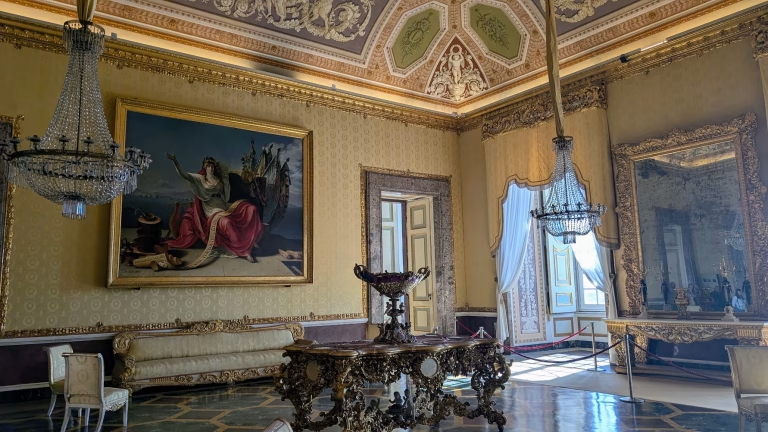
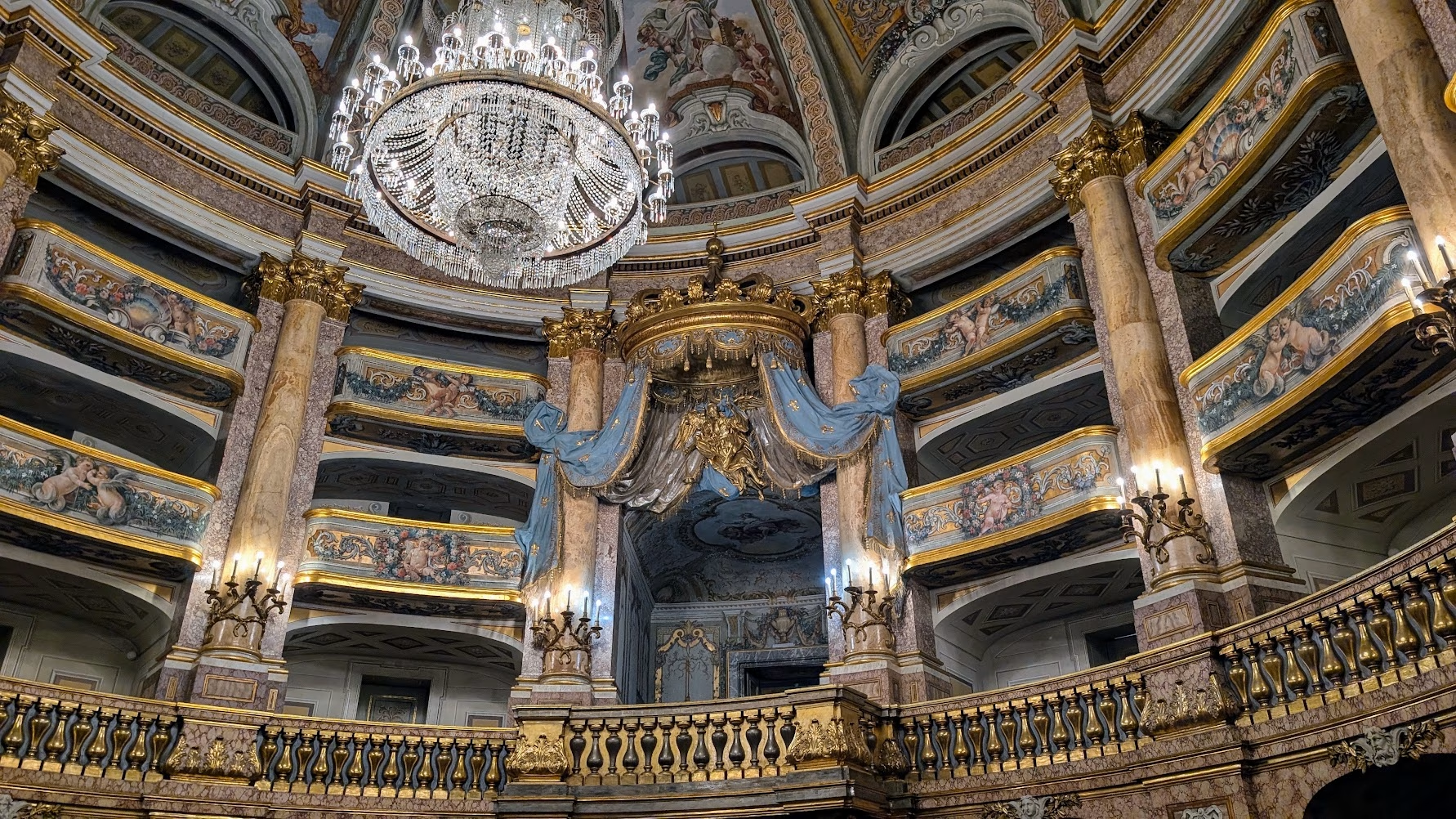
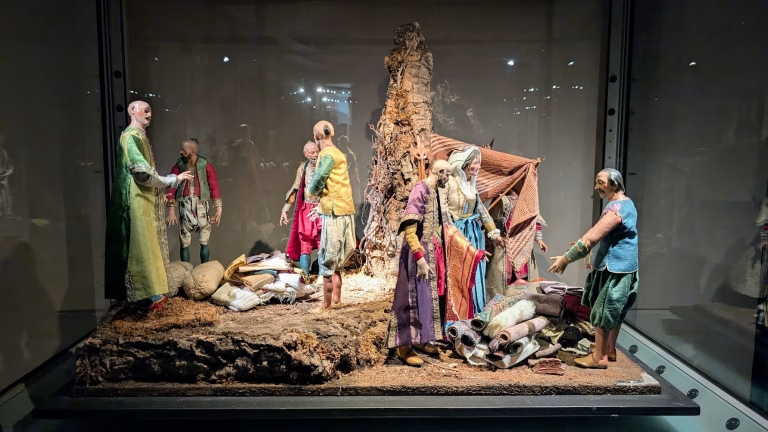
Inside, the great staircase makes the approach to the royal apartments a ceremony in itself. The arrangement of rooms tells you how visitors could be received and how access to the monarch was graduated. The court’s public life is legible in the scale of its ceremonial rooms. Objects such as the Neapolitan nativity display offer a more intimate interest, through the clothing, trades and street life represented in miniature.
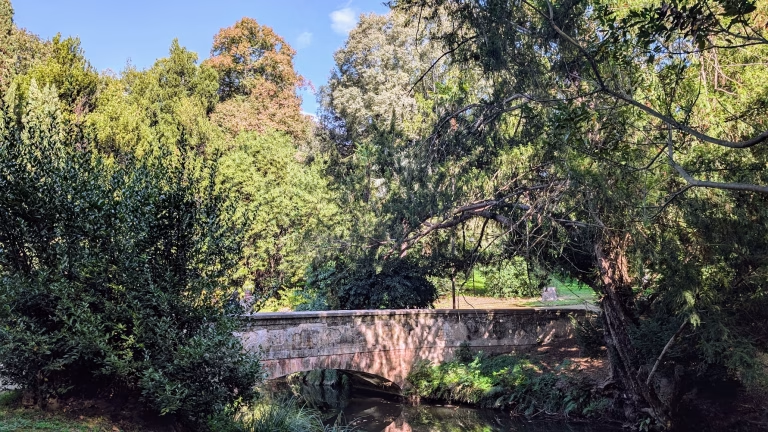
Outdoors, follow the central line of basins, fountains and cascades and turn back to see the long view towards the palace. The English Garden adds a deliberately varied landscape of paths and planting. Allow it its own time if gardens are a priority.
Maria Carolina and one of Italy’s earliest bidets
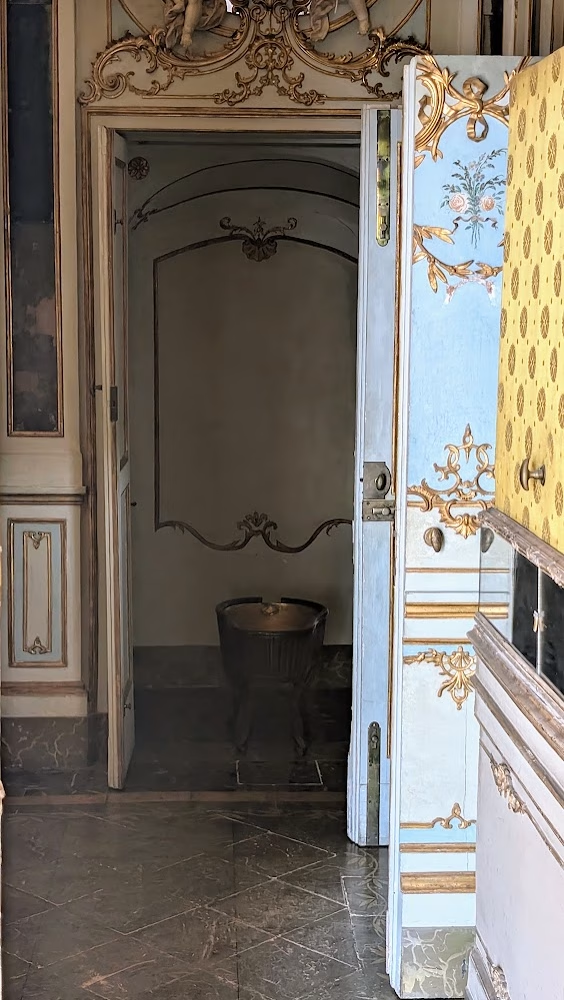
Look into the little alcove in Queen Maria Carolina’s private rooms and you’ll see a mahogany bidet with gilt-bronze fittings. The Royal Palace describes it as one of the earliest in Italy. The boudoir was fitted out between 1780 and 1782 under Carlo Vanvitelli and included a bath with hot and cold taps. The bidet was a separate piece of furniture for washing, with a basin set into a stand.
A story told about the inventory taken after Italian unification has a Piedmontese official puzzling over this unfamiliar, guitar-shaped object. The Campania visitor brochure recounts it as an anecdote. Look at the shape in the photograph and you can see how the comparison came about.
How silk was made at San Leucio
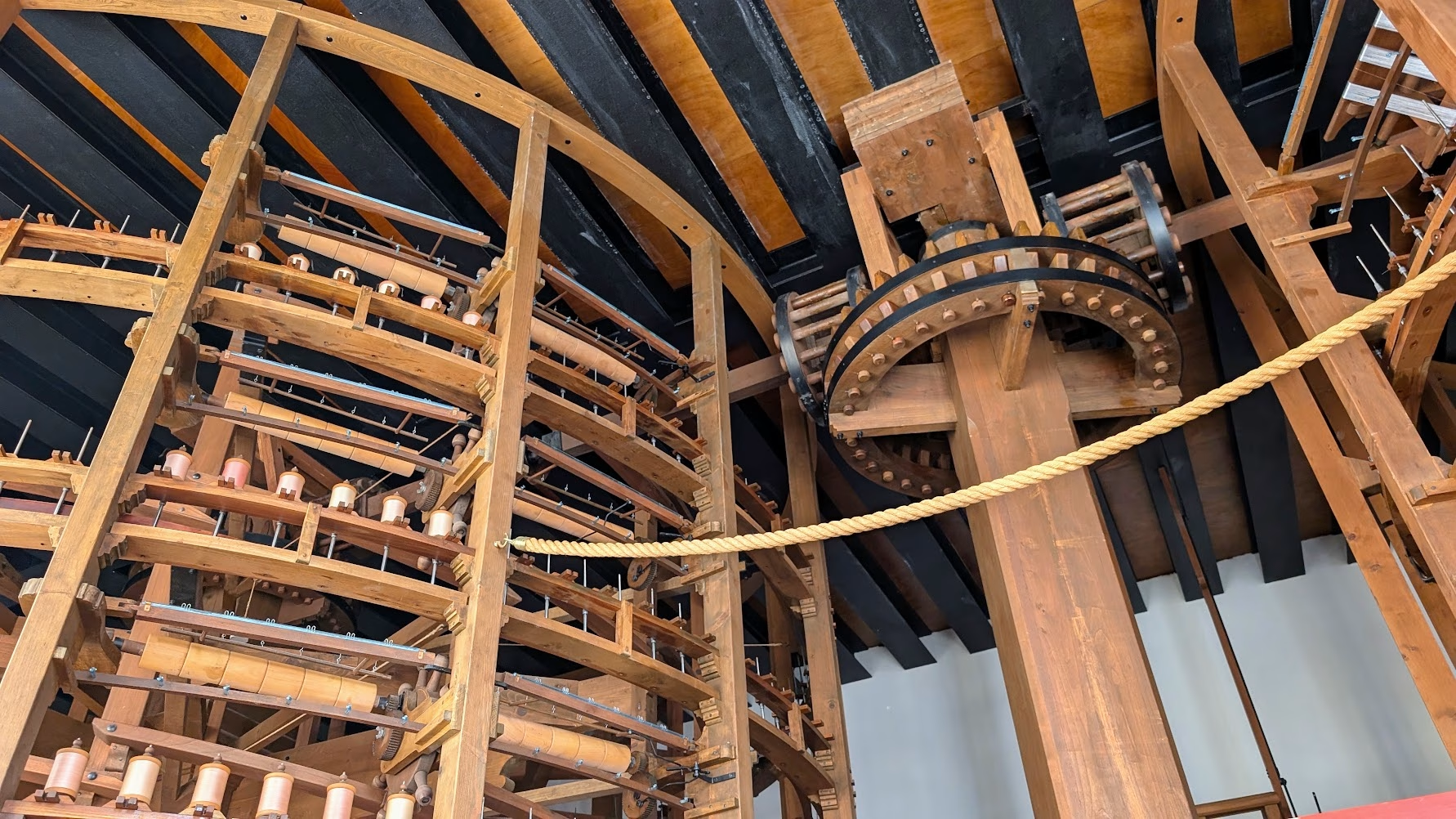
At the Belvedere of San Leucio, Ferdinand IV developed a royal silk manufactory alongside a planned settlement. Follow the work from the preparation of the thread through to the loom. For a figured fabric, the pattern depends on controlling which warp threads lift at each pass of the weft. The looms make clear how much planning sat behind every length of cloth, and why skilled workers were central to the operation.
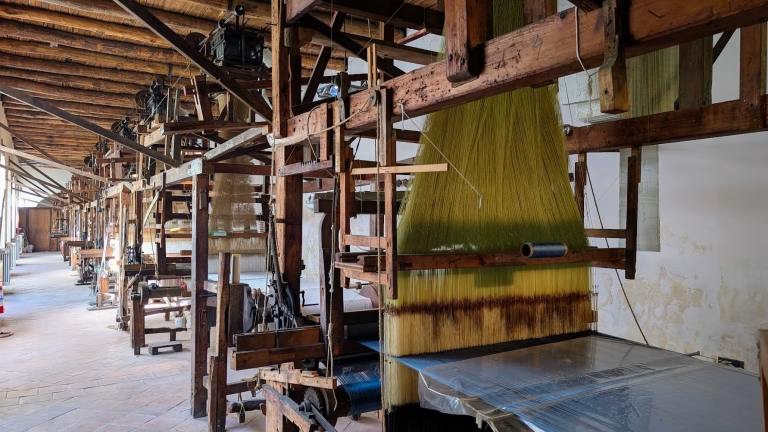
Silk had a place in court furnishing and dress because it could carry colour, pattern and a visible sheen. The royal associations of San Leucio helped establish the reputation of its luxury textiles. The museum lets you explore the machinery and the ambitions of the enterprise in the same building.
The workers’ settlement and its rules
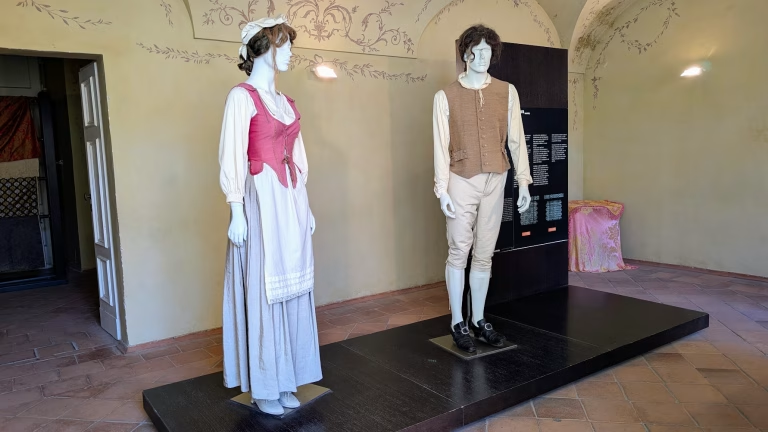
Ferdinand’s 1789 statute addressed education, work and family life as part of the colony’s organisation. Children were to receive schooling, and training was built into the way the settlement reproduced its skills. The code also addressed marriage and established a Cassa di Carità for workers unable to support themselves. The colony’s household heads elected five local magistrates for annual terms. Those details, recorded in the Ministry of Culture’s account, give some idea of how the settlement operated. These measures gave workers and their families forms of support unusual for their time.
The rules came from a monarch who retained authority over the colony. Looking at the factory, housing and royal rooms together makes that relationship clear. The fortunes of a family could be tied to the same enterprise that provided its livelihood, housing and education.
Planning time for both
For a holiday, I’d allow longer than I did if you want to see the palace interiors, walk the park and visit the English Garden. San Leucio is a separate outing from the station and palace.
Check the Royal Palace’s visitor information and the UNESCO description of the whole complex when planning how much to see. Confirm the silk museum’s visit arrangements independently of the palace.



 Facebook
 WhatsApp channel