


Why I would give Alta Badia a week
On my visit to Alta Badia, I walked beside streams, crossed meadows below the Dolomite cliffs and joined a cooking class in La Villa. The pleasure was in having different ways to spend the day, with the mountains always close.
You can come for demanding walking, but you do not need an ambitious hiking programme to enjoy being here. A village stroll, a lift to a higher viewpoint and lunch in a mountain hut can make a satisfying day. Another might involve a longer walk, followed by time back at the hotel.
I would suggest seven nights if the mountains are the main purpose of your holiday. That gives you six full days, room to alternate longer outings with easier ones, and some flexibility when cloud obscures the views. Three or four nights can work within a wider northern Italy journey, but you will need to choose more selectively.

This is my account of the experiences that make the week worthwhile. Our destination guide brings together the hotel choices; the separate car-free Alta Badia guide covers the transport planning in more detail.
Where Alta Badia sits in the Dolomites
Alta Badia occupies the upper part of Val Badia in South Tyrol, in northern Italy. Its six villages — Corvara, Colfosco, La Villa, San Cassiano, Badia and La Val — sit among meadows and wooded slopes, with the Sella massif and the mountains of the Puez–Odle and Fanes–Sennes–Braies areas around them.
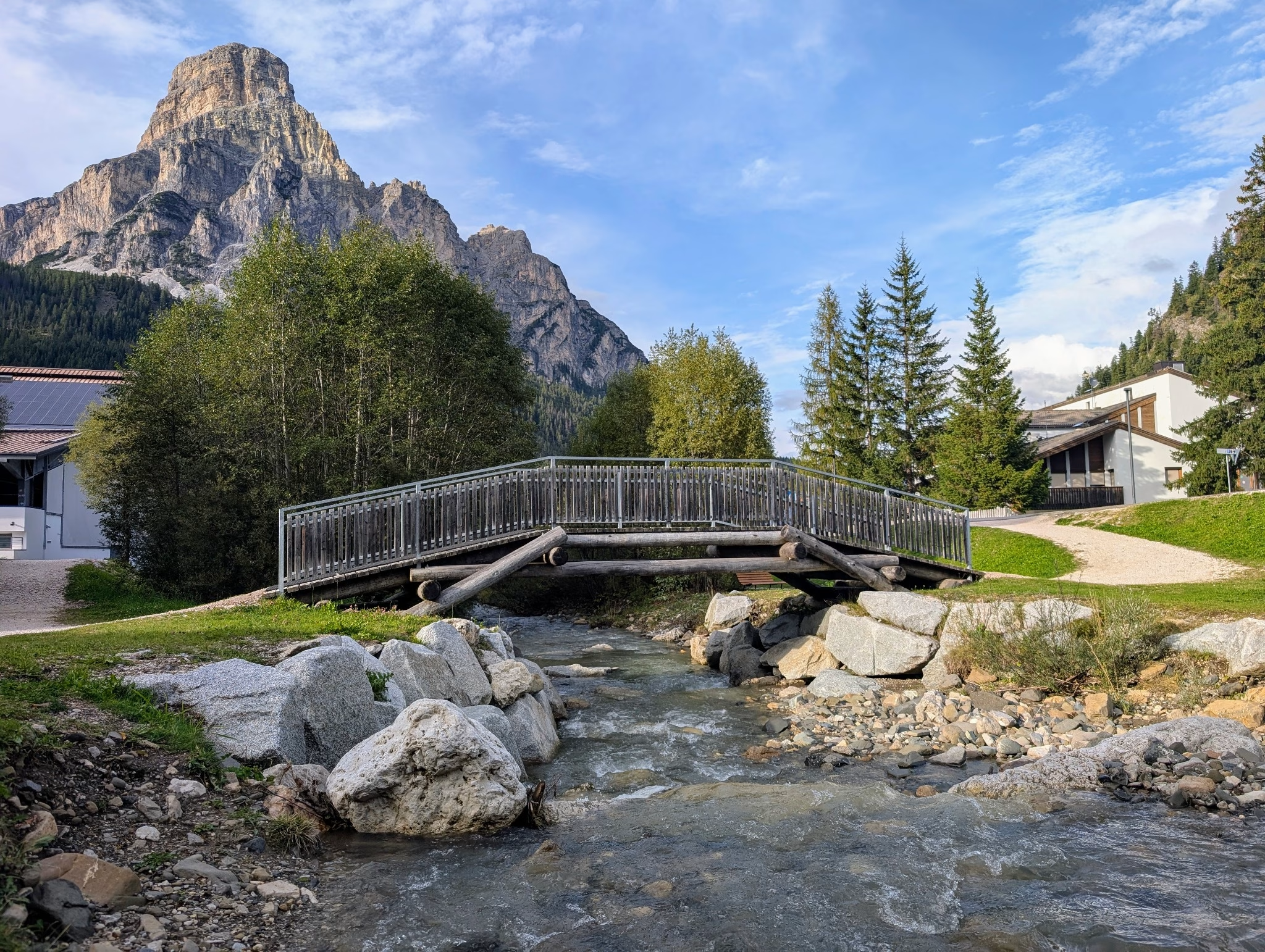
Corvara’s most recognisable landmark is Sassongher, the steep mountain rising above the village in the opening photograph. It is a useful introduction to the landscape: gentle-looking valley ground immediately below much more serious mountain terrain.
The pale rock has a much older story. Ancient tropical seas produced the carbonate platforms from which these mountains developed; later uplift and erosion exposed the cliffs we see today. The Dolomites’ UNESCO World Heritage designation recognises both their scenery and their geological importance. Looking up from a meadow, you can see why the contrast matters.

Walks that begin close to village life
The paths around Corvara and La Villa were an important part of my visit. Streams, small bridges and woodland give the walks variety, while openings between the trees bring the mountains back into view. These are the outings I would use to settle into a holiday before deciding how much higher or further to go.


From a centrally located hotel, exploring your own village and its nearby paths can be done on foot. Allow an hour or two for an unhurried first outing, including stops; that is a suggestion for the pace of the day, rather than a timed route. For a longer walk between villages, choose a marked route with your hotel and check its distance, ascent and return options.
Within walking distance
Your village’s cafés, church and nearby meadow or riverside paths, depending on your hotel. A central address makes short outings easier.
Plan a connection
A walk beginning in another village, a higher trail reached by lift, or an outing beyond Alta Badia. Allow for the bus, lift or transfer as part of the day.
Easy-looking scenery does not guarantee a level or surfaced path. If step-free access, a pushchair or limited walking distance matters, ask about the particular route and hotel location before choosing a base.
A day above the valley
The summer lifts make a higher outing possible without beginning with a long uphill walk. Piz La Ila from La Villa, Piz Sorega from San Cassiano and Col Alto from Corvara are useful starting points for exploring the uplands. Above the villages, the open country around Pralongià gives a broader sense of how the mountain groups fit together.

I would keep half a day free for a lift-assisted outing with a short walk and a hut lunch, and most of the day for a longer circuit. Choose the walking section to suit your fitness: reaching a high starting point by lift does not make every path beyond it easy.
On my trip, mountain stops included I Tablá and Club Moritzino. Lunch is worth allowing time for, rather than fitting it between two hurried walks. Ask your hotel about opening and reservations for the hut you choose, particularly if you have a specific table or day in mind.
Plan high-level days around the mountain forecast, trail conditions and the last descent. The official summer lift information gives the operating dates for individual lifts and the available passes. Keep an easier valley day flexible if the weather changes.
Getting to know Alta Badia at the table
At La Majun in La Villa, I joined Natalie Mellauner for a cooking class and tried my hand at folding Schlutzkrapfen, the filled pasta associated with South Tyrol. It was a useful way to connect the food on the menu with the work that goes into it.


Alta Badia is part of the Ladin-speaking Dolomites. Ladin is a Romance language with roots in the Latin spoken in the Alpine region; it remains part of everyday life, alongside Italian and German. Village names, menus and local traditions make more sense once you recognise that this valley has its own cultural identity.
For a cooking session during your stay, ask about La Majun’s summer experiences and arrange availability in advance. It is an activity to plan around the hotel’s programme, rather than assume will run every day.


Alpacas, and the option of something more active
My visit also included an alpaca walk. It provided a lighter change of pace between the mountain outings, and is an option I would consider for families or anyone who enjoys spending time with animals. It is a guided activity to book, rather than a walk you can simply turn up and join.


For current arrangements, the local tourist office lists Dolomites Farm’s alpaca activities. Confirm meeting place, age suitability and availability with the organiser; the photographs here record my own visit.
For experienced mountain visitors
Alta Badia also has more demanding walking and via ferrata routes. Les Cordes, above La Villa, is an equipped climbing route: its cables and exposed rock make it a different undertaking from the meadow paths. It requires suitable equipment and experience; newcomers should arrange a qualified mountain guide. The official Les Cordes description sets out the route and approach.
You can leave that kind of outing entirely out of the week and still see a great deal. The useful choice is how much walking and elevation you want each day.
How I would plan a seven-night stay
This is the rhythm I would suggest after my visit, rather than a record of a fixed itinerary. Keep the order flexible so the clearest days can go to the higher viewpoints.
- Settle into the valley. Explore your village, take a short nearby walk and establish where the lifts and bus stops are.
- Go higher. Use a summer lift for a manageable walk and a mountain lunch, with time for the descent.
- Follow a valley path. Choose a longer meadow or riverside outing; arrange transport if the start or finish is in another village.
- Make it a lighter day. A cooking class or alpaca activity, when available, leaves time for the village and hotel.
- Choose the main walking day. Pick a route to match your ability and the forecast, with a local guide if appropriate.
- Leave some room. Revisit a favourite viewpoint, enjoy another hut lunch, or use this as the spare clear-weather day.
If you prefer to explore further afield, San Vigilio di Marebbe offers a different base for the northern Dolomites. An outing there needs transport and a separate plan; it is not a walk from the Alta Badia villages.
Where to stay and when to go
For a first stay, I would choose the hotel and village together. Corvara suits a holiday with village facilities and lift access close by; La Villa is a good option if La Majun’s hospitality and food appeal. A hotel above a village may offer a wider view, but the walk back can be uphill. Check the location against the way you expect to spend your days.
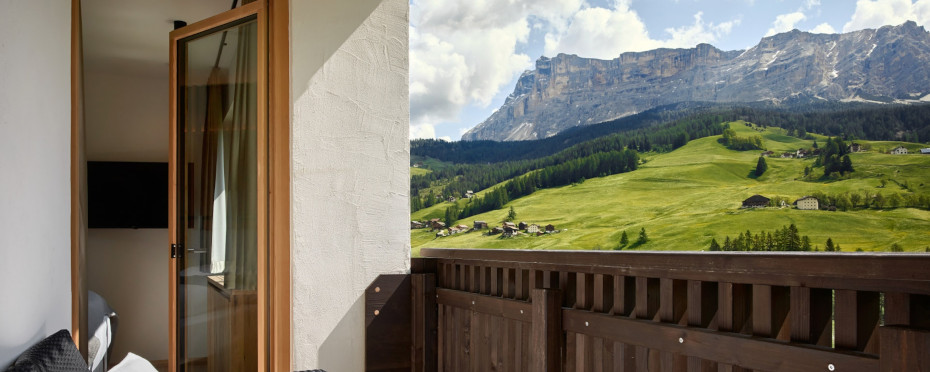
Hotel La Majun, La Villa
The setting for my cooking experience, and a hotel to consider if food and time in the village are part of your mountain week.
Our Alta Badia holidays page also includes Hotel Marmolada and Sporthotel Panorama in Corvara, and Kolfuschgerhof in Colfosco, with more detail to help you choose a base.
Plan around the summer season
For the combination of walking, lifts and mountain lunches described here, plan within the summer operating season. June and September can suit a quieter trip, but openings vary at either end of the season; July and August usually offer a broader choice of operating lifts and services. Check the dates of the particular hotel, lifts and activities before fixing the holiday.
A car can be useful for wider touring, but a well-chosen village base can also work with transfers, local buses and lifts. Our car-free guide explains the practical choices. Summer lift passes and local public-transport arrangements are separate, so check what your accommodation includes.
For a longer journey, our Venice, Alta Badia and Lake Garda holiday combines time in the mountains with a city stay and the lakes. I would protect several nights here rather than treat the Dolomites as a single scenic stop.
Tell us about your holiday
Let us know how much walking you enjoy, whether you would like a car and how long you have. We can help choose a village, hotel and pace of travel to suit you.
ExpertoItaly arranges land-only holidays. Flights are booked separately.
Trip photographs: Antonio, ExpertoItaly. Hotel photograph: Hotel La Majun.



 Facebook
 WhatsApp channel