


Ancient Capua and Spartacus
Visit the amphitheatres at Santa Maria Capua Vetere and discover the remarkable stone mothers of the Museo Campano in modern Capua.
In this article
Two places called Capua
I took the train to Caserta on 28 October and spent part of the day following the story of Capua through two towns. The Roman city lay where Santa Maria Capua Vetere stands today. Modern Capua grew separately on the Volturno and houses the Museo Campano. Keep both names handy when planning the day. They lead to different places, and each supplies part of the story.
The revolt and the two arenas
In 73 BC Spartacus and fellow gladiators escaped from a training school at Capua. The revolt drew in thousands of enslaved people and forced Rome to commit armies against them. A gladiatorial school trained fighters for public spectacles, and the revolt began among people whose skill with weapons belonged to an institution that controlled their lives.
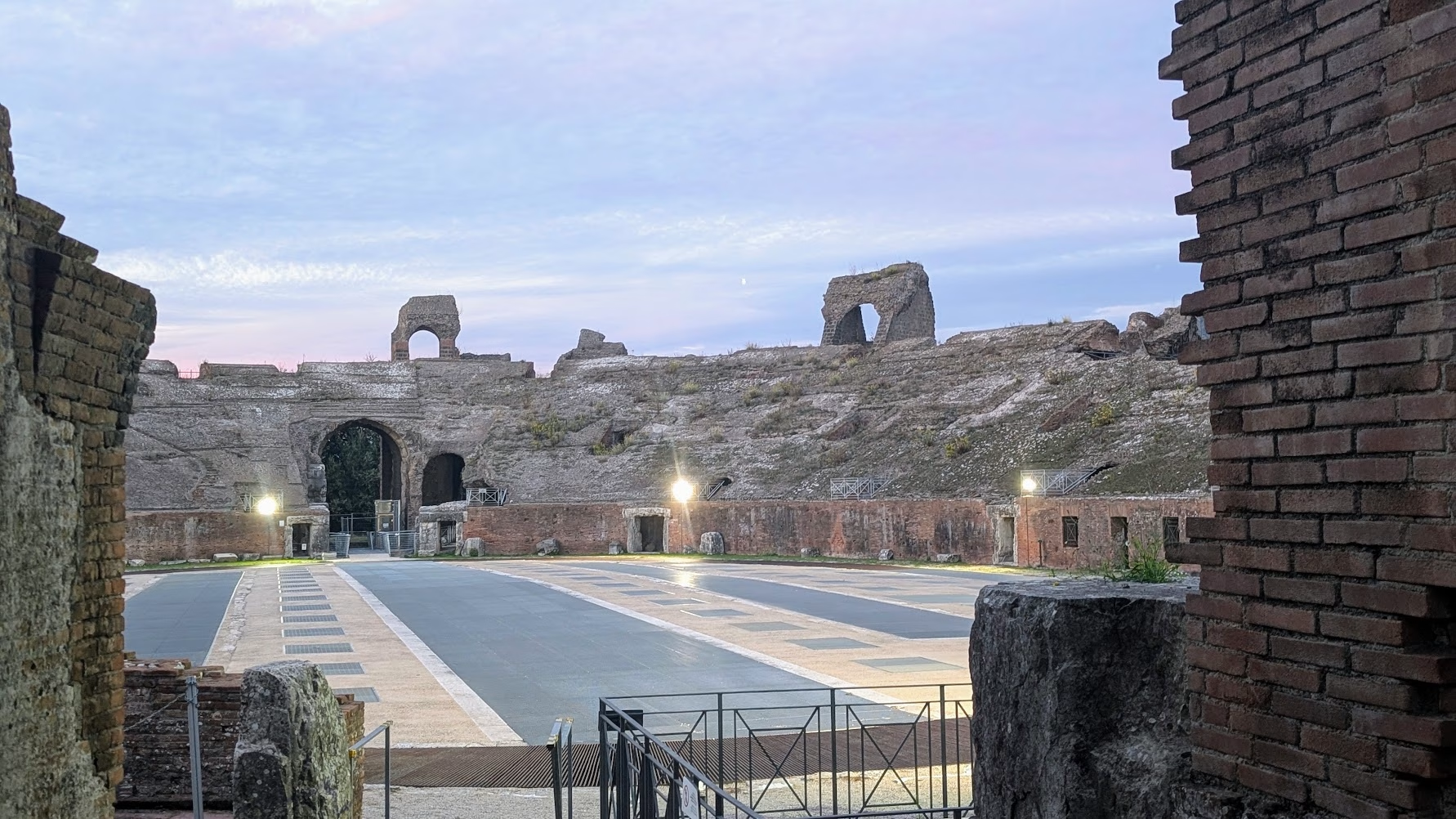
Look for the distinction between the Republican amphitheatre and the much larger Imperial arena. The surviving Imperial building is later than Spartacus. The traces of its Republican predecessor put the much smaller scale of the earlier arena into perspective. The school itself is part of the historical story, rather than an identifiable room in the surviving Imperial complex. The adjacent museum helps explain how the games were staged.
What the masonry tells you
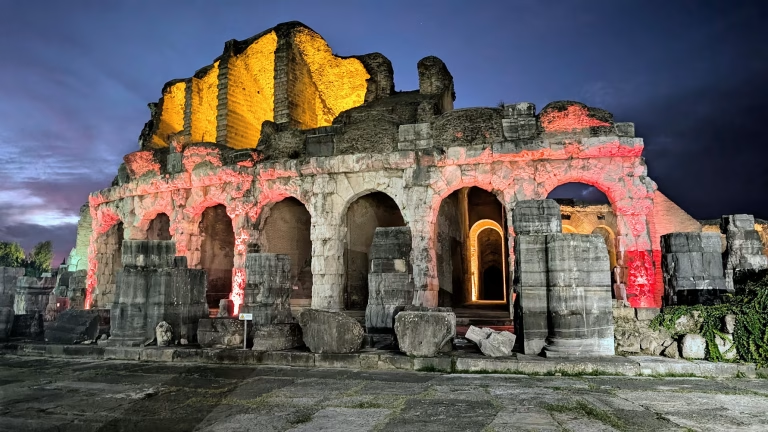
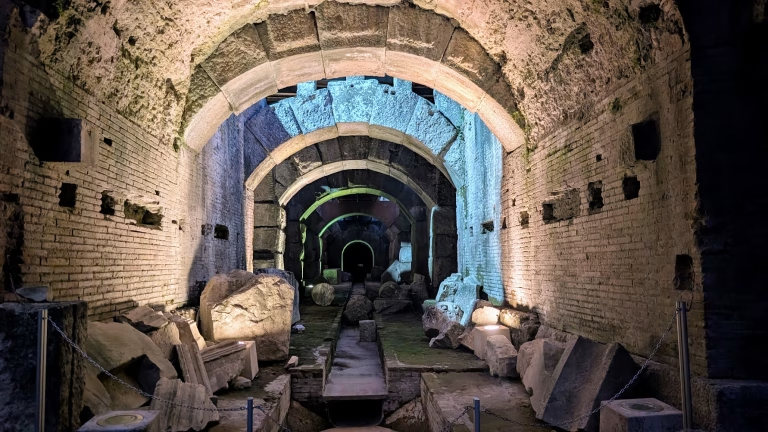
Walk around the outer wall before approaching the arena. The repeated arches reveal how spectators could be channelled through the building towards different parts of the seating. The arena floor concealed service spaces where equipment and people could be kept out of sight. Even from above, where you can see into the surviving substructures, the division between the spectacle and the work that made it possible is clear.
The fragments of decorative carving are worth a closer look. An amphitheatre was a civic monument as well as a place of entertainment. Its size and ornament told visitors something about the city that could afford to build and maintain it.
The stone mothers of the Museo Campano
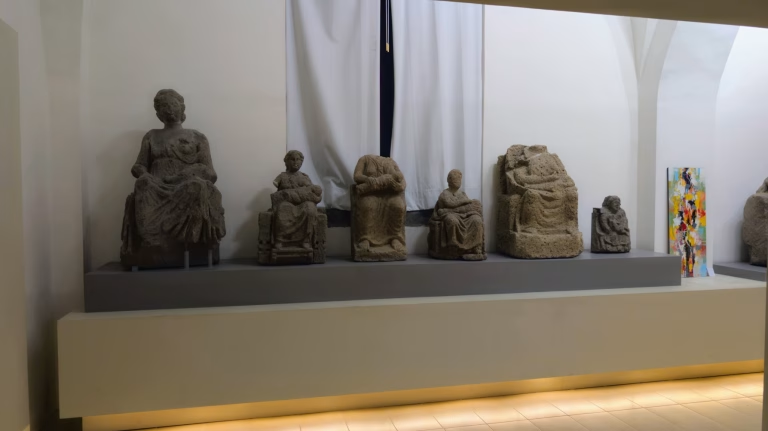
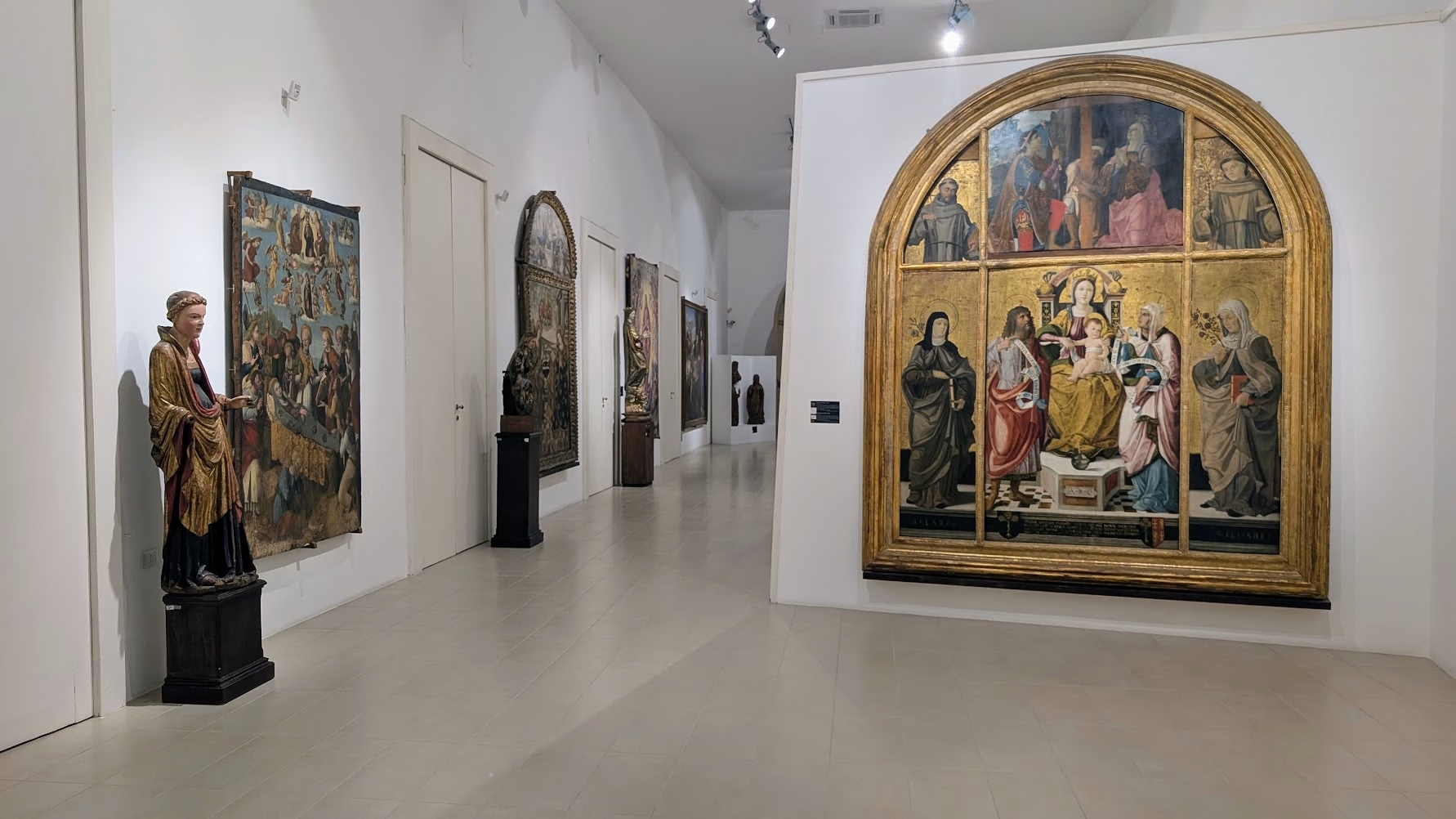
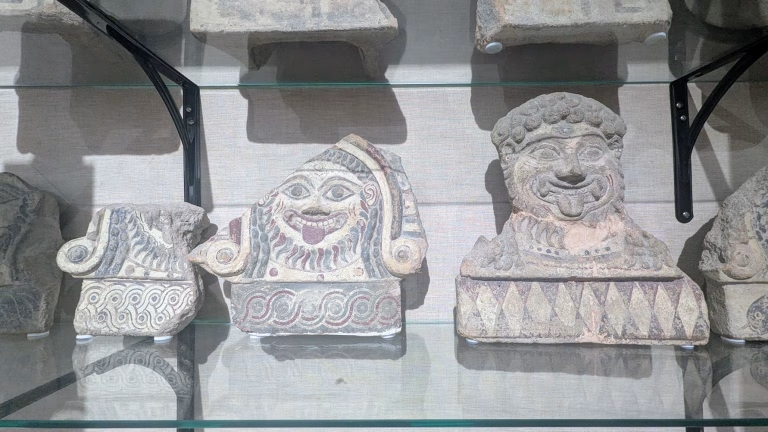
Continue to the Museo Campano in modern Capua. Its Matres Matutae are stone figures seated with infants in their arms, sometimes with several children arranged across a single lap. The carving is wonderfully direct. Look at the different ways the sculptors balanced the children on the figures’ knees and used the compact shape of the stone.
The figures came from a sanctuary in the area of ancient Capua. Their conventional name evokes the Roman deity Mater Matuta, though the precise identity of the figures and the intentions behind each offering are harder to reconstruct. They open a window onto family life, childbirth and worship in a place most visitors first encounter through Roman spectacle.
How to combine the visits
Allow the better part of a day for both towns and give the museum time of its own. Check the Ministry of Culture’s amphitheatre listing for access and ticketing, and the Museo Campano listing for the separate museum visit. Caserta makes a natural base if you also want to see the Bourbon palace and San Leucio.
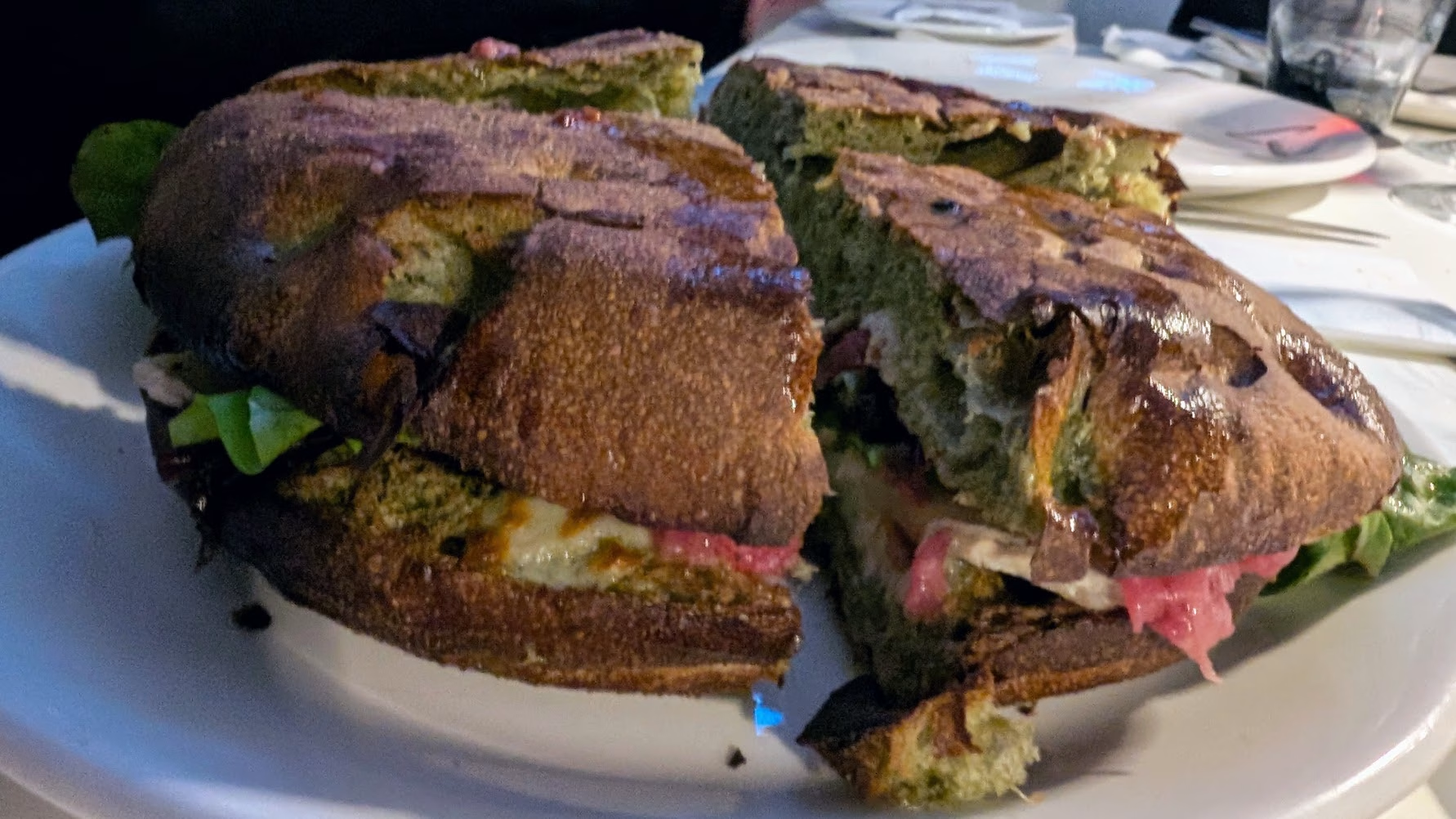
After visiting the two Capuas, I had dinner at Ciccio Vitiello’s Cambia-Menti in San Leucio. I returned to San Leucio the following morning for the silk works.



 Facebook
 WhatsApp channel