


Matera Travel Guide: Understanding the Sassi and Planning Your Stay
A city shaped by the rock beneath it, with neighbourhoods to walk, interiors to understand and evenings worth staying for.

In this article
Why Matera deserves a stay
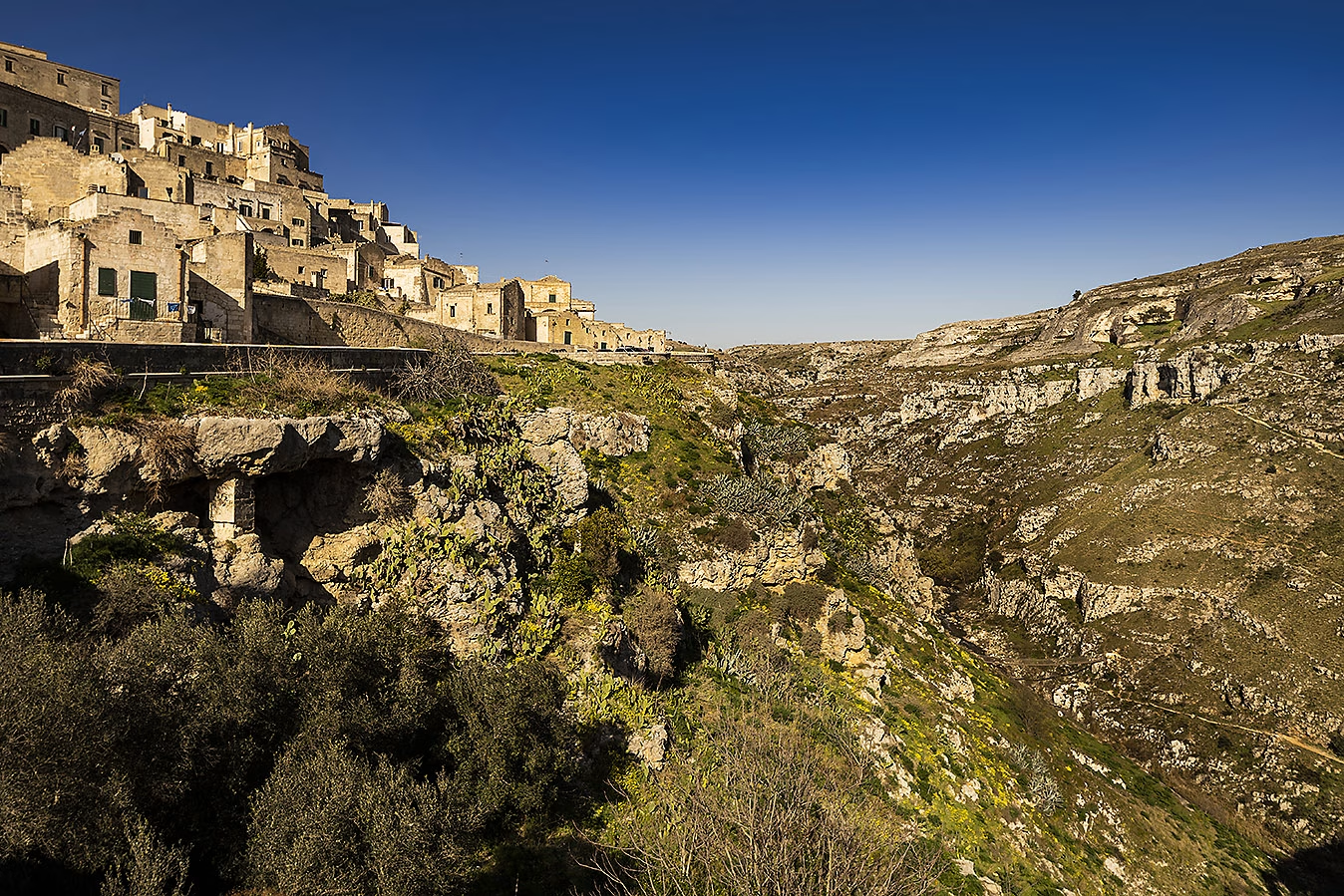
Matera is built into the edge of a ravine in Basilicata, close to the border with Puglia. Its two Sassi neighbourhoods descend below the cathedral, combining rooms cut into the rock with houses, churches and stairways constructed above them. Across the Gravina, the open Murgia plateau makes the density of the city all the more striking.
The first panorama is impressive, but it tells only part of the story. A modest doorway may lead into a deep excavated room; a lane may pass over another home. Inside, a cistern, a painted church or the arrangement of a former household explains something that a distant view cannot.
Stay long enough to move between these scales. Walk through the Sassi, spend time in their interiors, then return to the upper streets for a café or a leisurely dinner. Matera is also a living city beyond its historic quarters, and its contemporary art, workshops and restaurants give a stay variety. After sunset, the same streets offer another reason to be here.
An ancient place, with a history of change
Matera is often described as “continuously inhabited”. The phrase needs a little explanation. Archaeological evidence records prehistoric occupation of the surrounding area, including caves used in the Palaeolithic. That is not the same as saying that today’s city already existed then, or that each dwelling has remained occupied ever since.
The urban settlement developed over many later centuries. The Civita formed its elevated core; the Sassi expanded around it, particularly during the medieval period. Excavation and construction worked together. The local calcarenite, a relatively workable limestone often called tufo locally, could be hollowed out for rooms and cut into blocks for walls and vaults.
A house could therefore have a built façade and rooms extending into the hillside behind it. Homes opened onto shared courtyards, or vicinati, while churches, workshops and stores formed part of the same neighbourhood fabric. Water collection was integral to this arrangement: channels and cisterns gathered and retained supplies, and the relationship between roofs, terraces and the rock was practical as well as architectural.
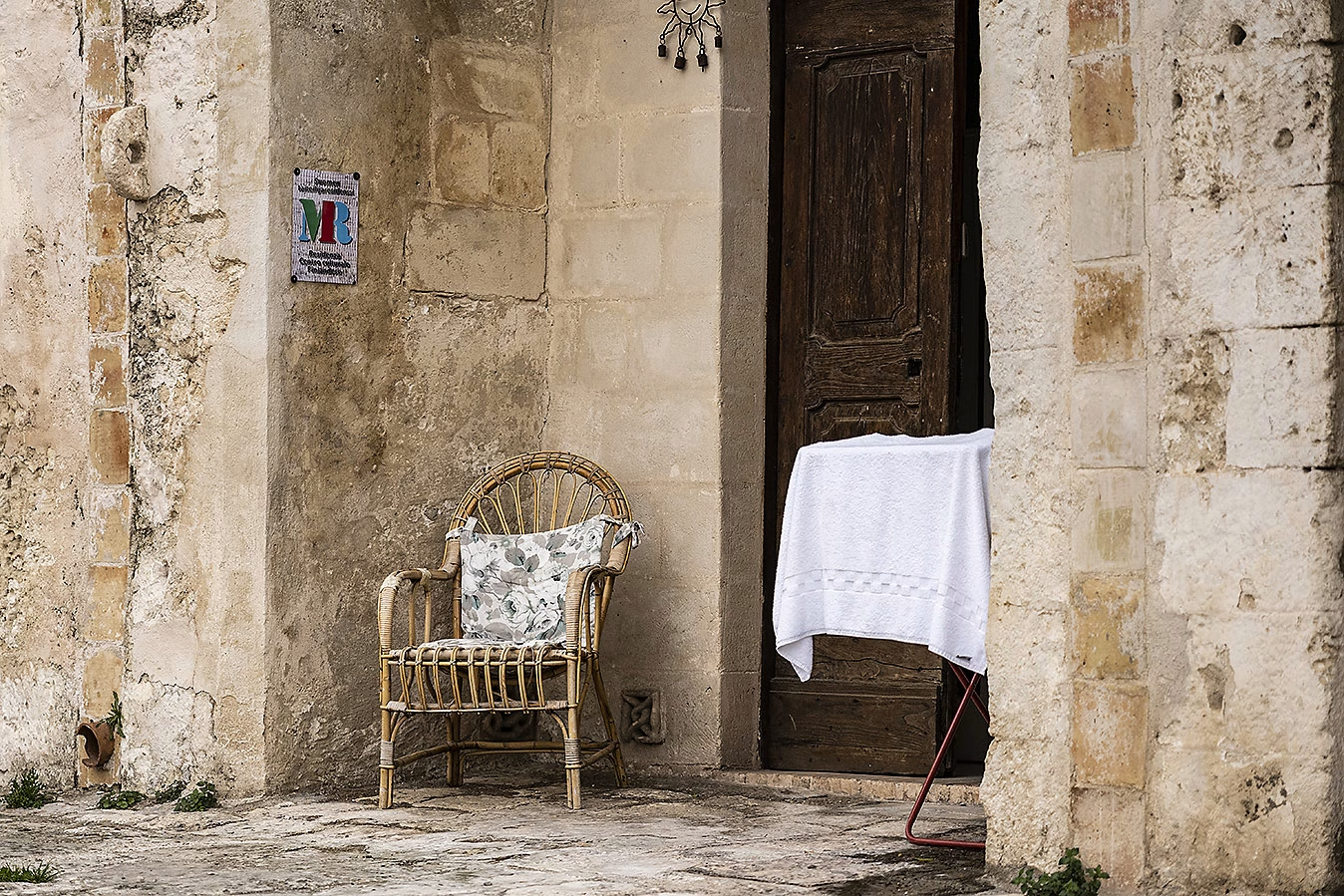
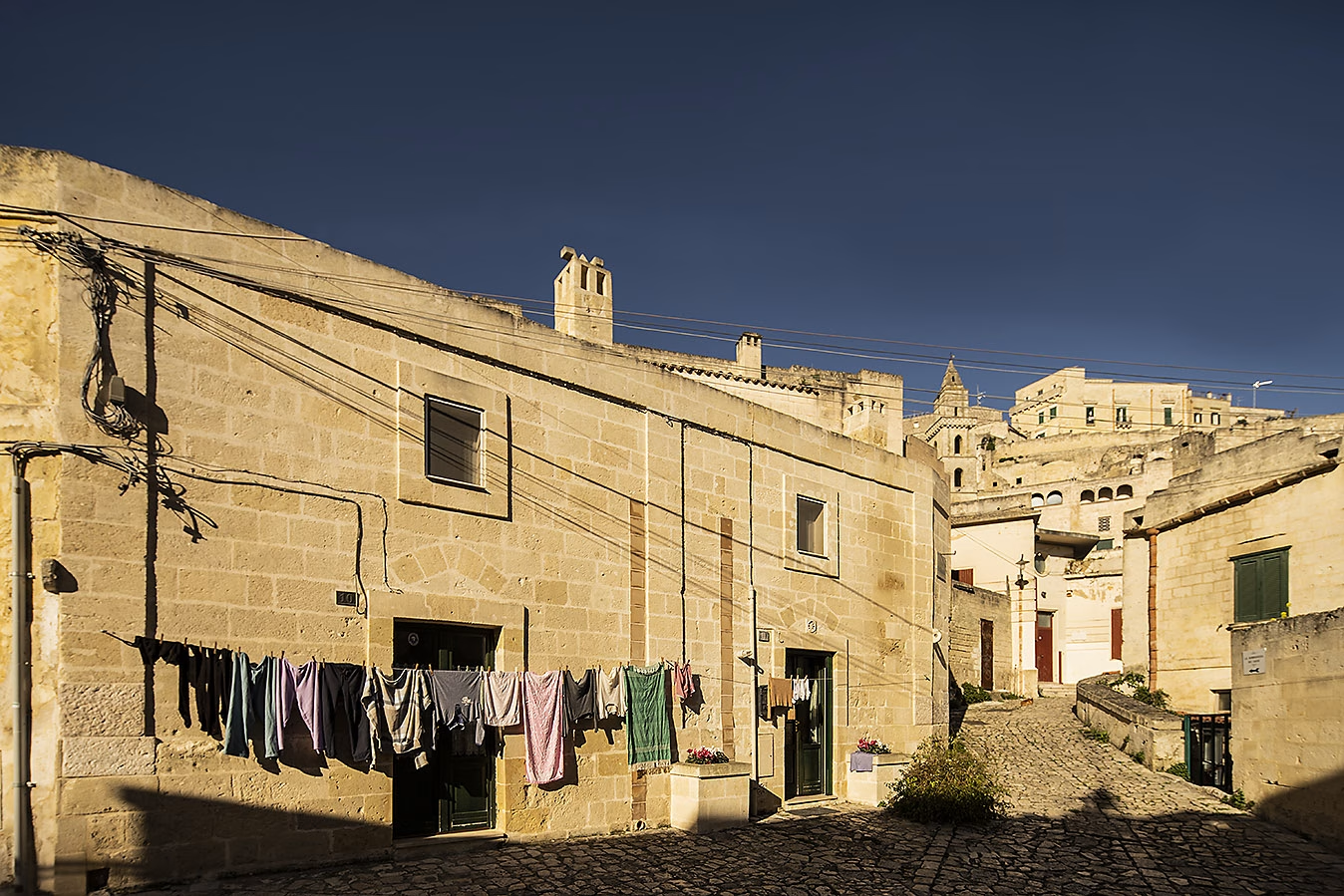
By the twentieth century, poverty, overcrowding and inadequate sanitation had made many Sassi homes deeply unhealthy. Families and animals could share cramped spaces. The 1952 law for the rehabilitation of the Sassi began the relocation of residents to new housing, and much of the old settlement was subsequently left empty. The beauty visible today should not obscure those difficult conditions.
Matera as a city continued to live and grow, but habitation within the Sassi was interrupted. Conservation campaigns, restoration and the return of residents from the 1980s changed their course again. The 1986 recovery law supported this process; UNESCO inscription followed in 1993, and Matera became a European Capital of Culture in 2019.
Today’s Sassi contain homes, accommodation, cultural spaces and businesses. Their interest lies in this long history of adaptation. Notice the joins between cut rock and masonry, the traces of former uses and the way old rooms have found new purposes.
Two nights, three nights — or longer?
Two or three nights make a rewarding first stay. The choice depends on arrival time and how much you enjoy entering places, rather than simply walking past them.
Two nights
With a useful afternoon on arrival, you can settle in, take a first walk and enjoy the evening. A full day then allows an introduction to the city’s history, a cave-house visit and one or two carefully chosen interiors, with time for lunch and the Sassi after dark.
Three nights
Two full days give the city more room. Explore the Civita and Caveoso on one day; use another for Barisano, the water story and contemporary sculpture. There is time to return to a favourite view, shop thoughtfully and enjoy a long dinner without watching the clock.
Four nights or more suit travellers with a particular interest in architecture, sacred art, photography or the city’s social history. You can compare interiors in greater depth and walk the same neighbourhood in different light. A longer stay also works well if you prefer one substantial visit each day, followed by time to read, eat and explore at your own pace.
The Civita, Barisano and Caveoso
Begin with the shape of Matera. The Civita is the high ridge crowned by the cathedral. Sasso Barisano spreads to its north-west; Sasso Caveoso lies to the south. Above and behind them, the Piano contains the broader streets and squares of the later city, including Piazza Vittorio Veneto.
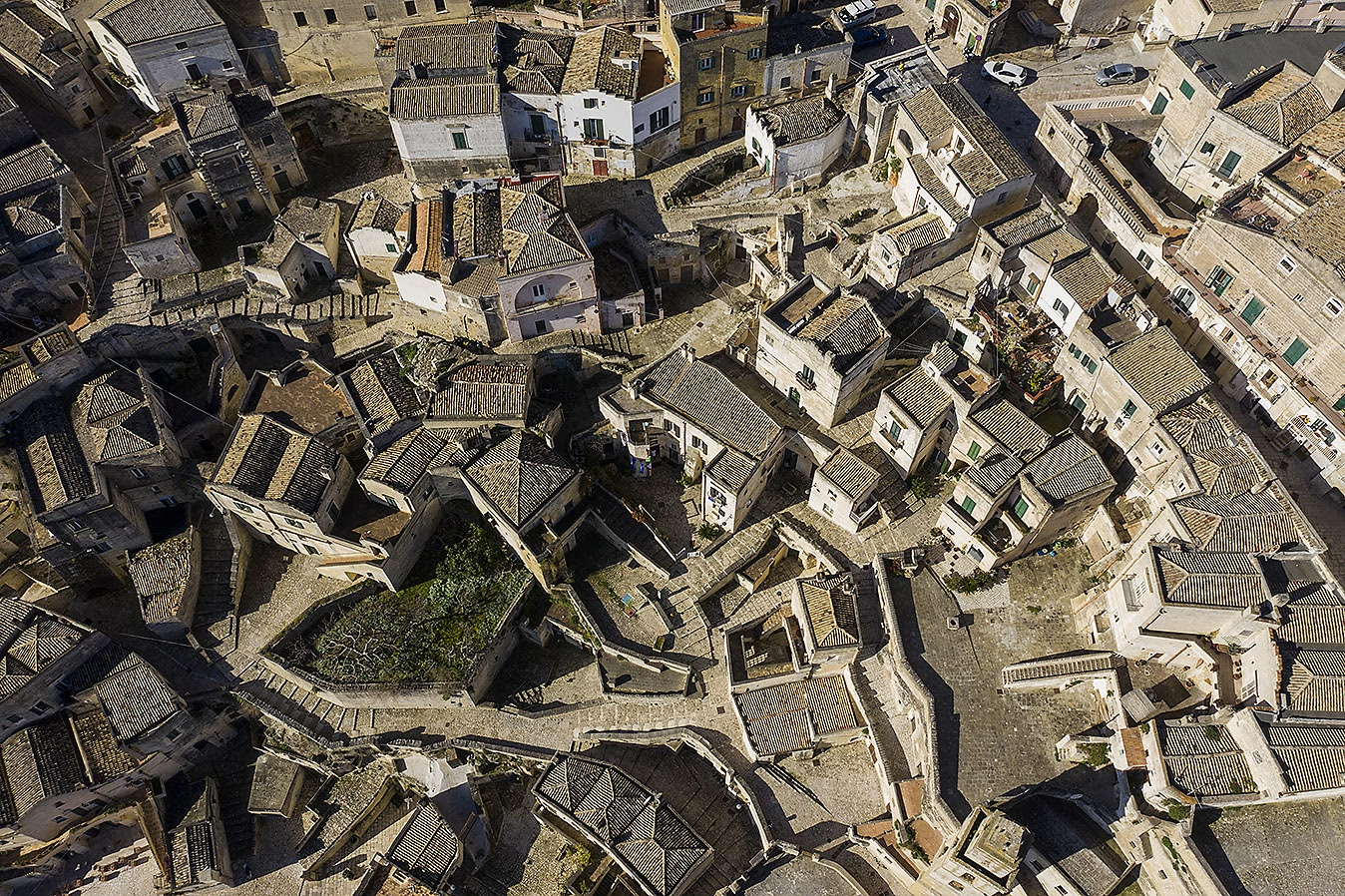
The aerial view is useful because the Sassi are organised in three dimensions. On foot, follow how one doorway sits below a terrace, how a stairway climbs between roofs, and how a constructed arch meets the excavated rock. Small distances can involve several changes of level.
Piazza Vittorio Veneto makes a convenient first orientation point. Later, climb towards the cathedral, then choose a route down through one Sasso rather than crossing repeatedly between districts. A local guide can make the relationship between the buildings, water system and former households much easier to read. ExpertoItaly can arrange a private introduction shaped around your interests and walking pace.
A rewarding way to explore Matera
Begin with the story at Casa Noha
Close to the cathedral, Casa Noha uses an immersive film to explain the city’s development and the transformation of the Sassi. It gives the views outside a human context, particularly the events of the twentieth century. Allow around 30–40 minutes for the visit, and choose an entry time through its official visitor page.
The cathedral and the Civita
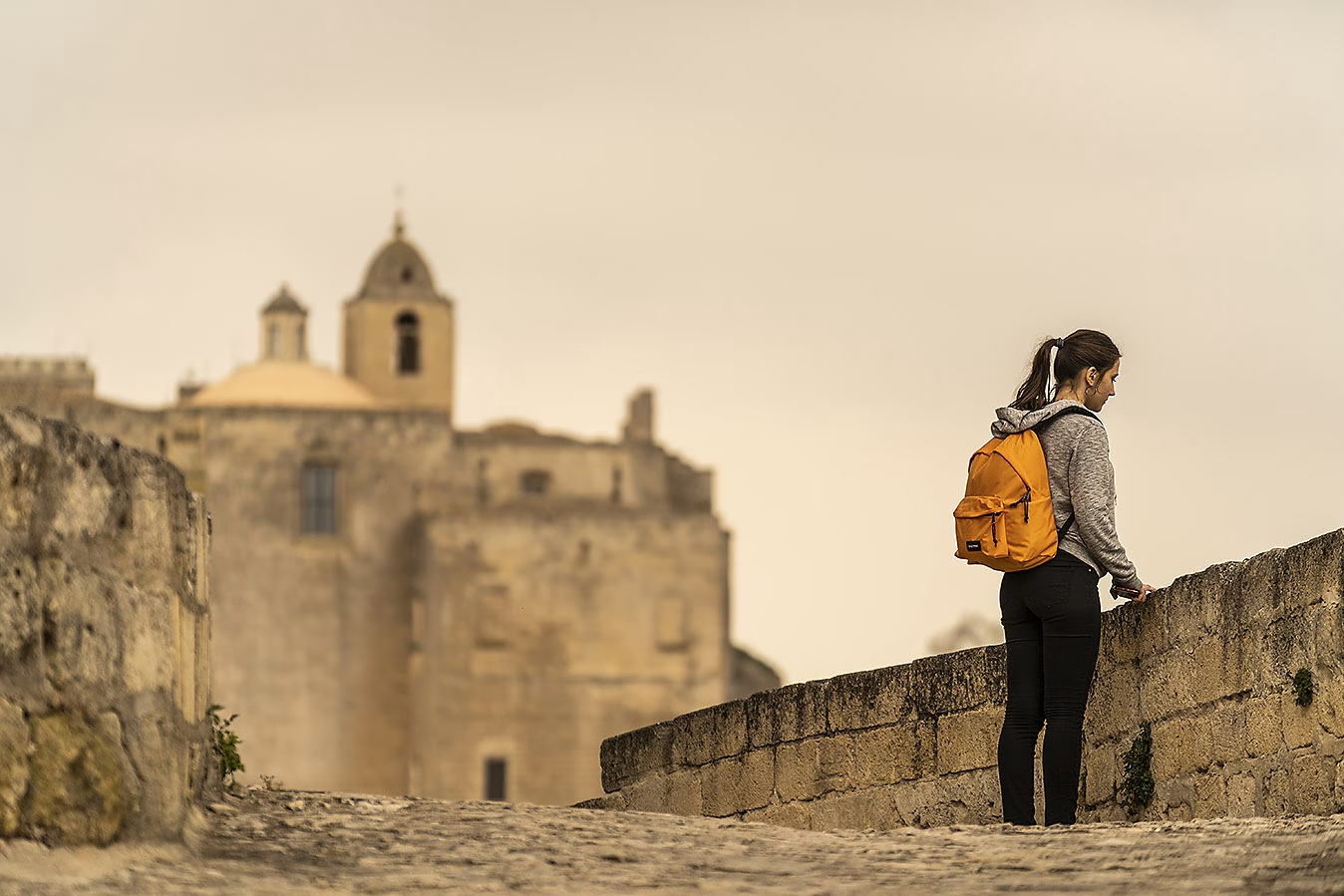
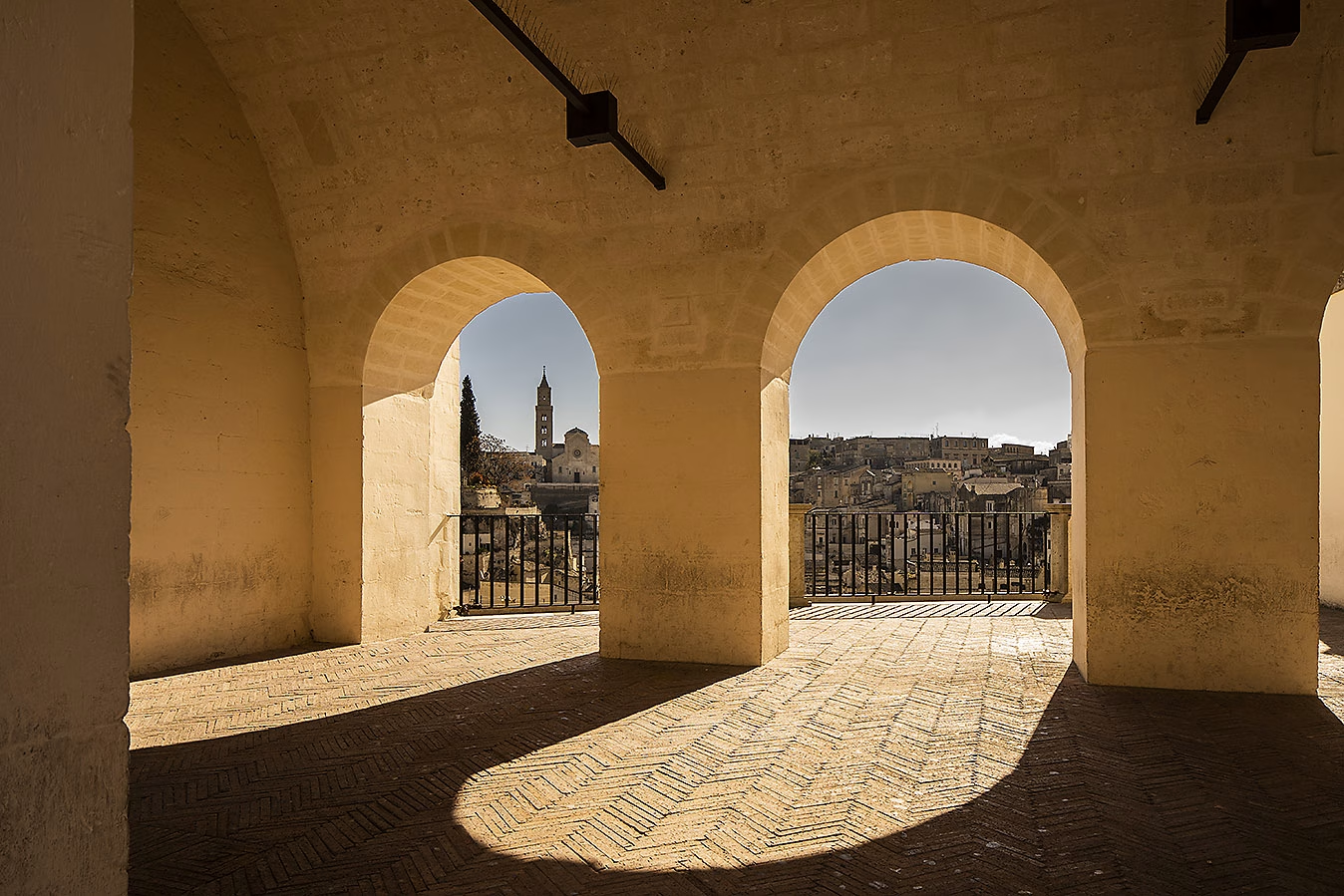
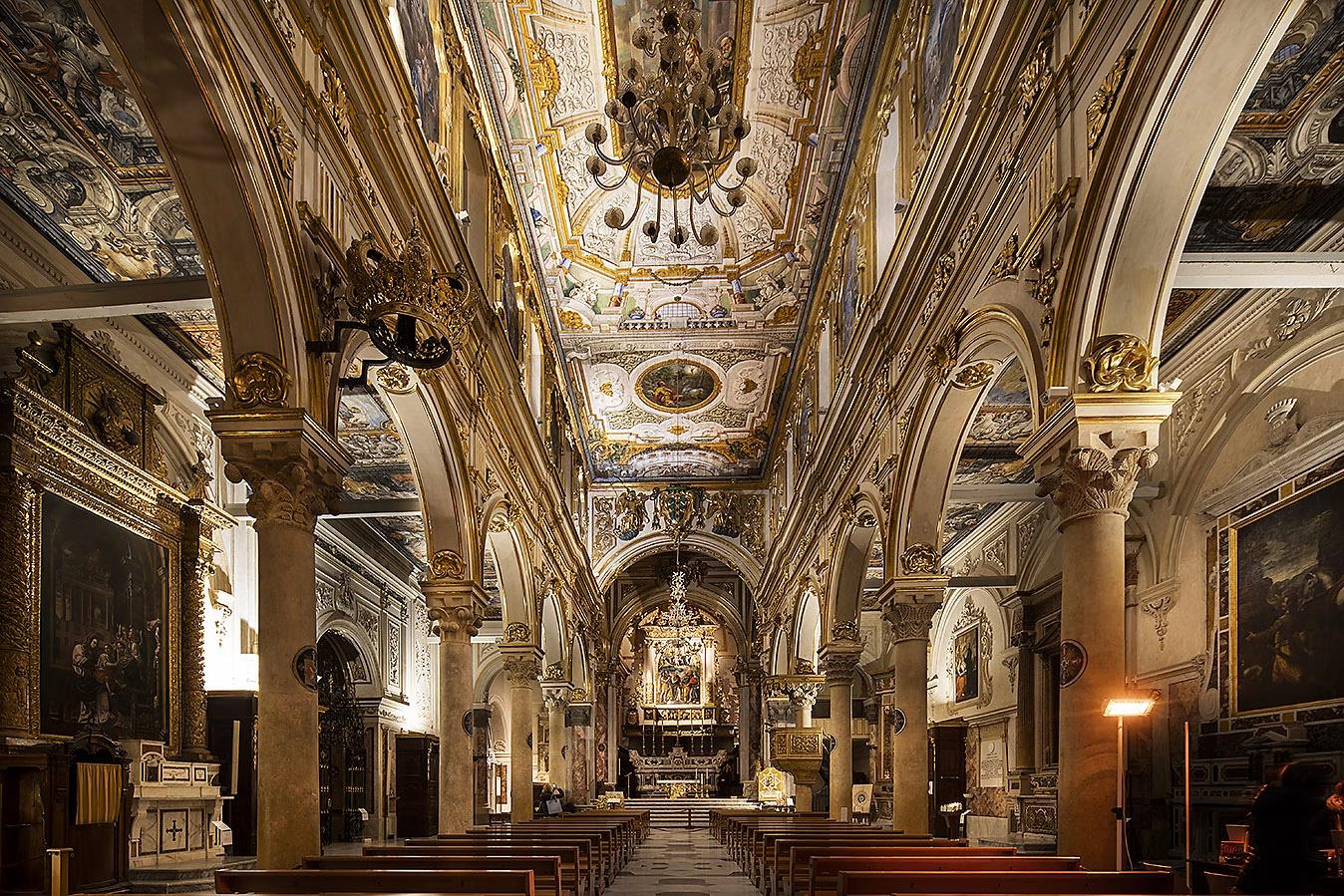
The cathedral, completed in 1270, marks the highest part of the old city. Its Romanesque exterior and richly decorated later interior show that Matera’s history includes substantial built architecture as well as excavated spaces. Step inside to see how taste and worship changed over the centuries, then look back across the Sassi from the surrounding streets.
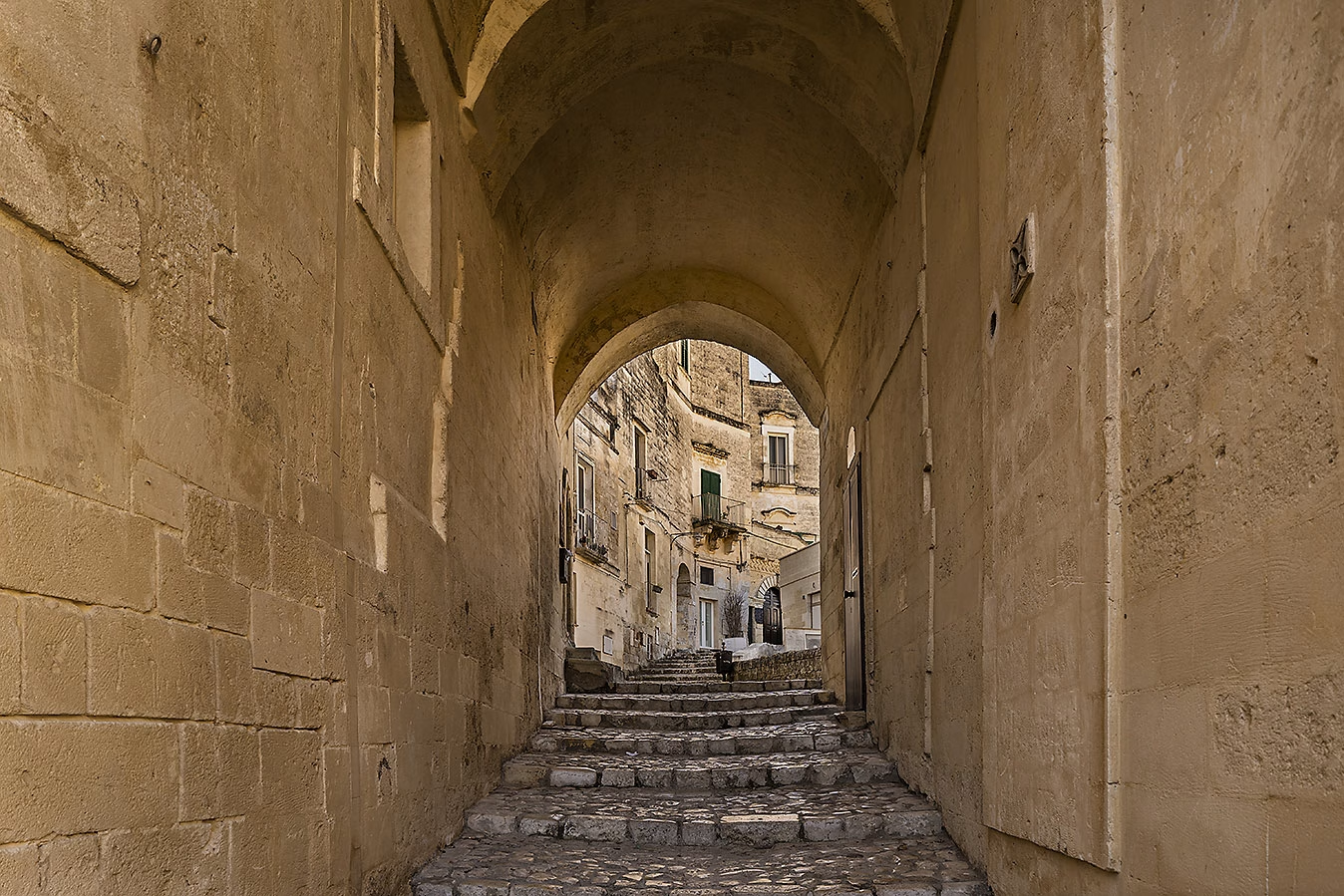
From the Civita, a descent towards Sasso Caveoso introduces the close relationship between built streets and the hillside beneath them. Let the route itself take time: passages, thresholds and changes of level are part of what you have come to see.
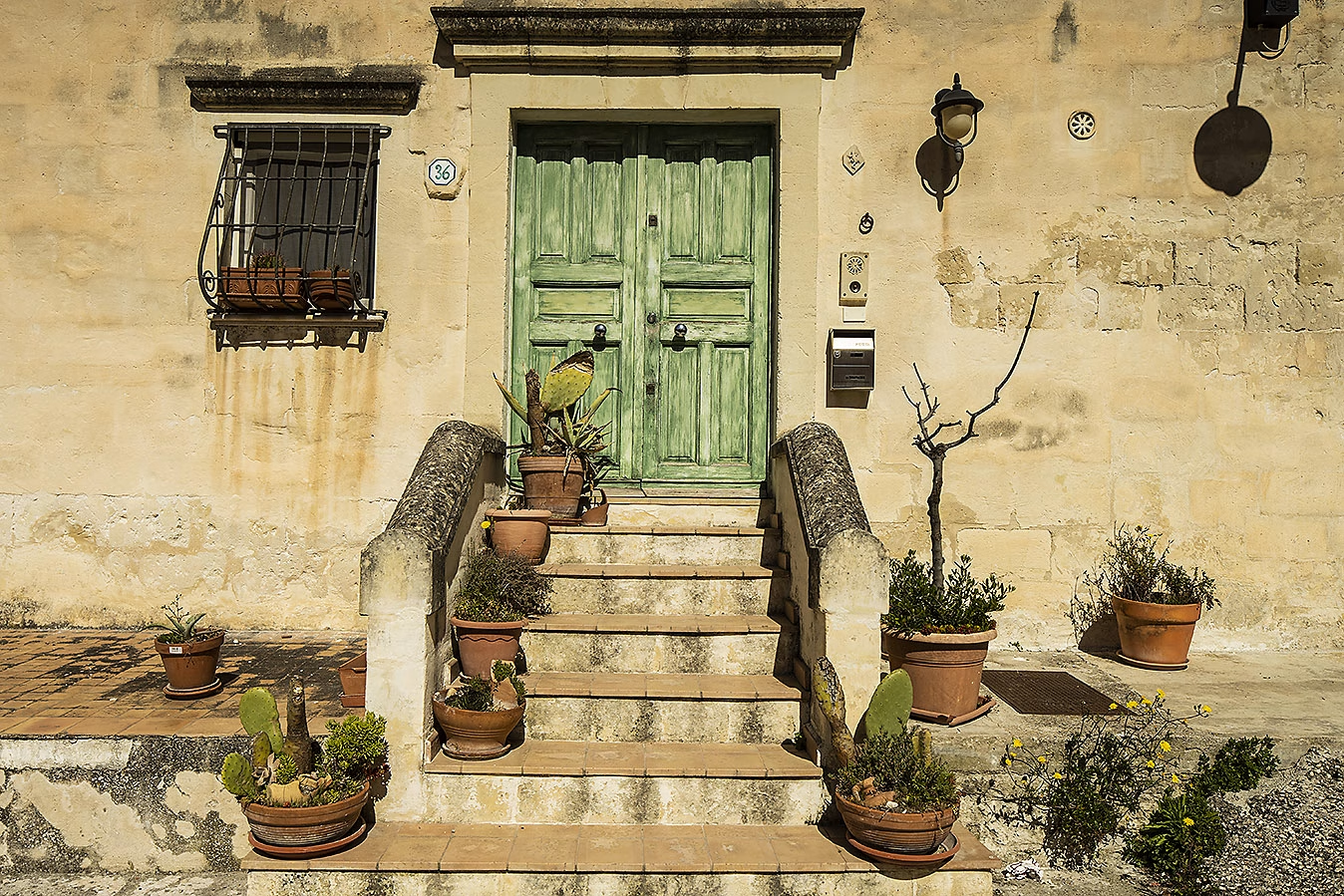
One cave house, considered properly
The Storica Casa Grotta di Vico Solitario in Sasso Caveoso is a useful choice for understanding domestic life before the evacuation. Period furnishings, household tools and the arrangement of sleeping, cooking and animal spaces make the constraints of the dwelling tangible. The water channels and cistern also connect daily life with the city’s wider engineering.
Approach it as an interpretation of a former household, rather than a model of every home in Matera. One thoughtful visit is more illuminating than a succession of similar cave-house interiors. Pair it with a walk through the surrounding neighbourhood, where the relationship between private rooms and shared space becomes clearer.
Rock churches: architecture made by excavation
Around the Monterrone outcrop in Sasso Caveoso, Santa Maria de Idris and San Giovanni in Monterrone introduce the close relationship between the rock, worship and painted imagery. Nearby, Santa Lucia alle Malve adds the history of a Benedictine community of women and a different group of frescoes. Look at how an excavated space becomes a church through its divisions, altars and images.
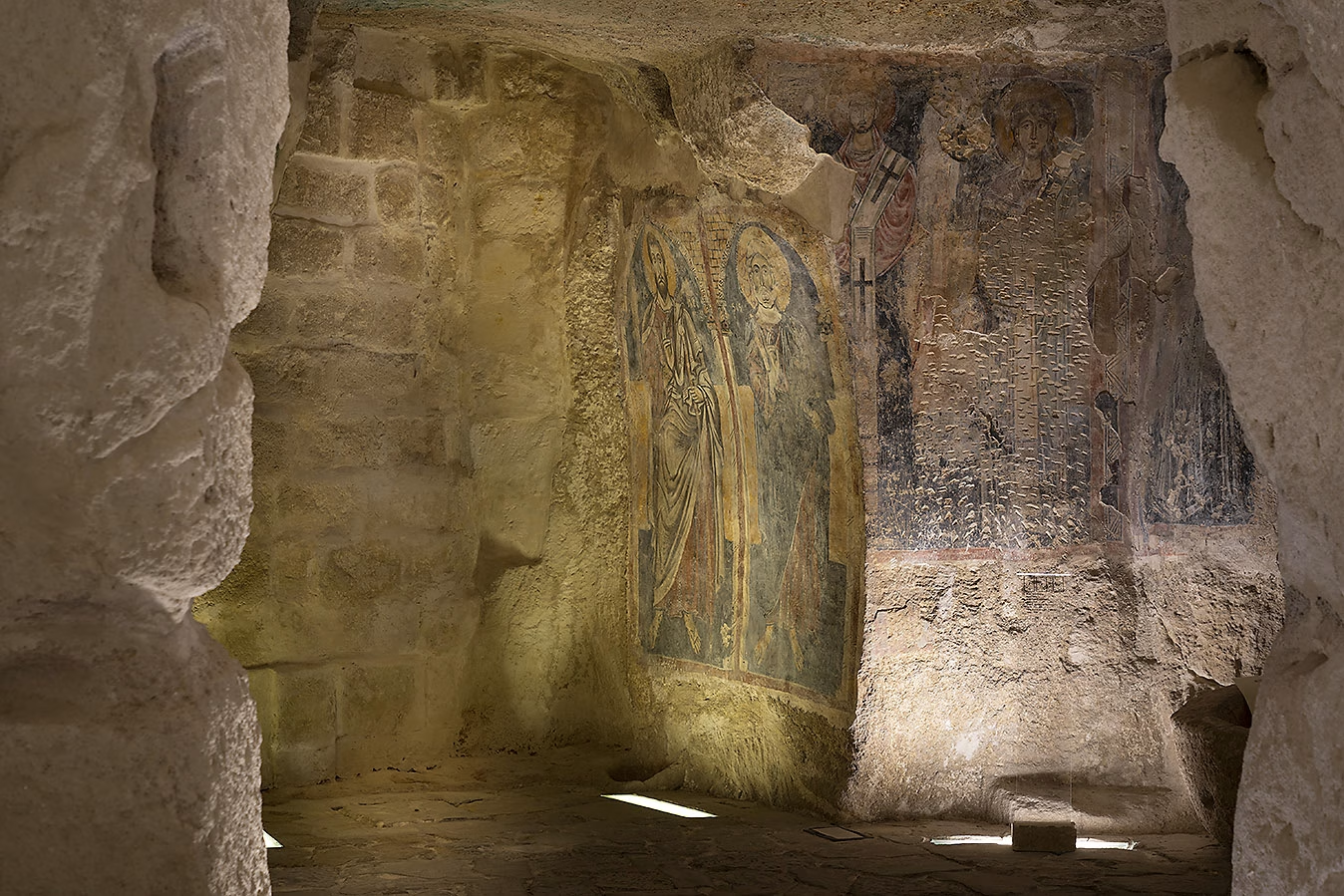
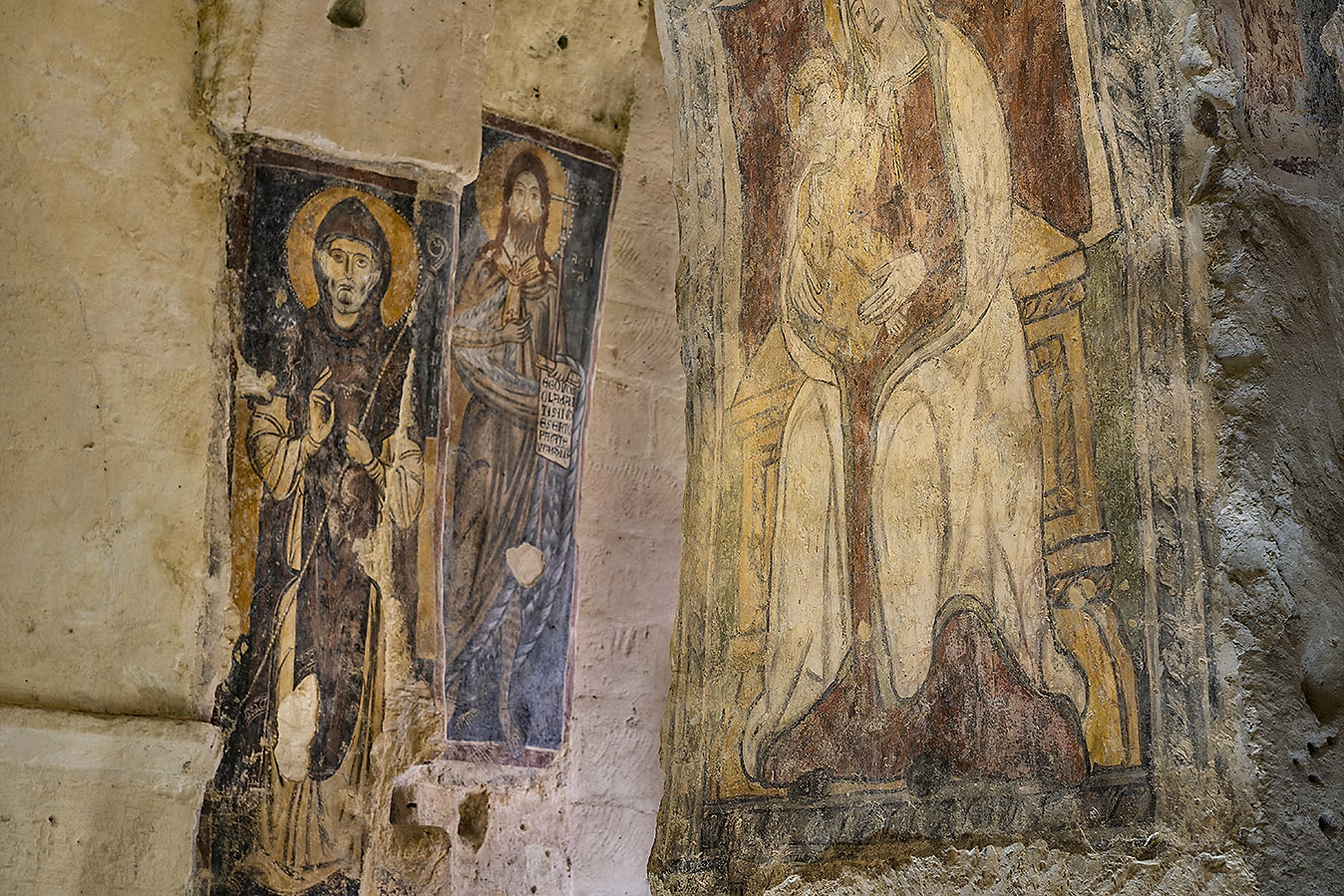
On a separate walk through Barisano, San Pietro Barisano offers another expression of rock-cut architecture. Its excavated interior is especially useful for noticing the spaces shaped within the stone. Choose two contrasting church visits for a first stay, leaving time to understand each rather than trying to cover the whole circuit.
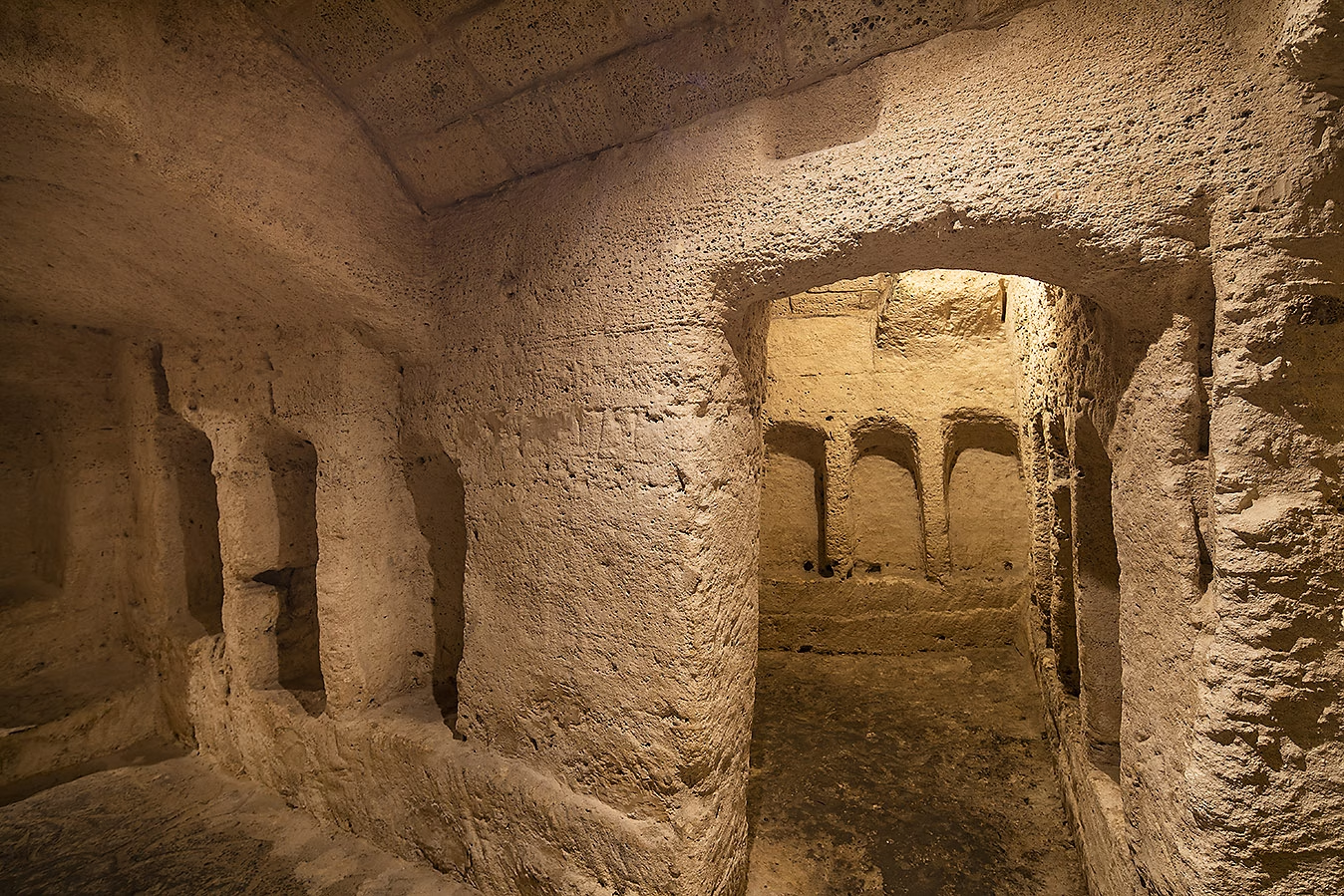
The urban sites are managed within the Oltre l’Arte visitor circuit, whose website lists opening times and ticket options. Visits to the cathedral fit around worship. The churches scattered across the wider Murgia are a different undertaking from this walk through the city.
The Palombaro Lungo: understanding the water
Beneath Piazza Vittorio Veneto, the Palombaro Lungo changes the scale of the story. This vast communal cistern was enlarged over several centuries, reaching a capacity of about five million litres. Its waterproof lining and high water marks make the task of gathering and storing water visible.
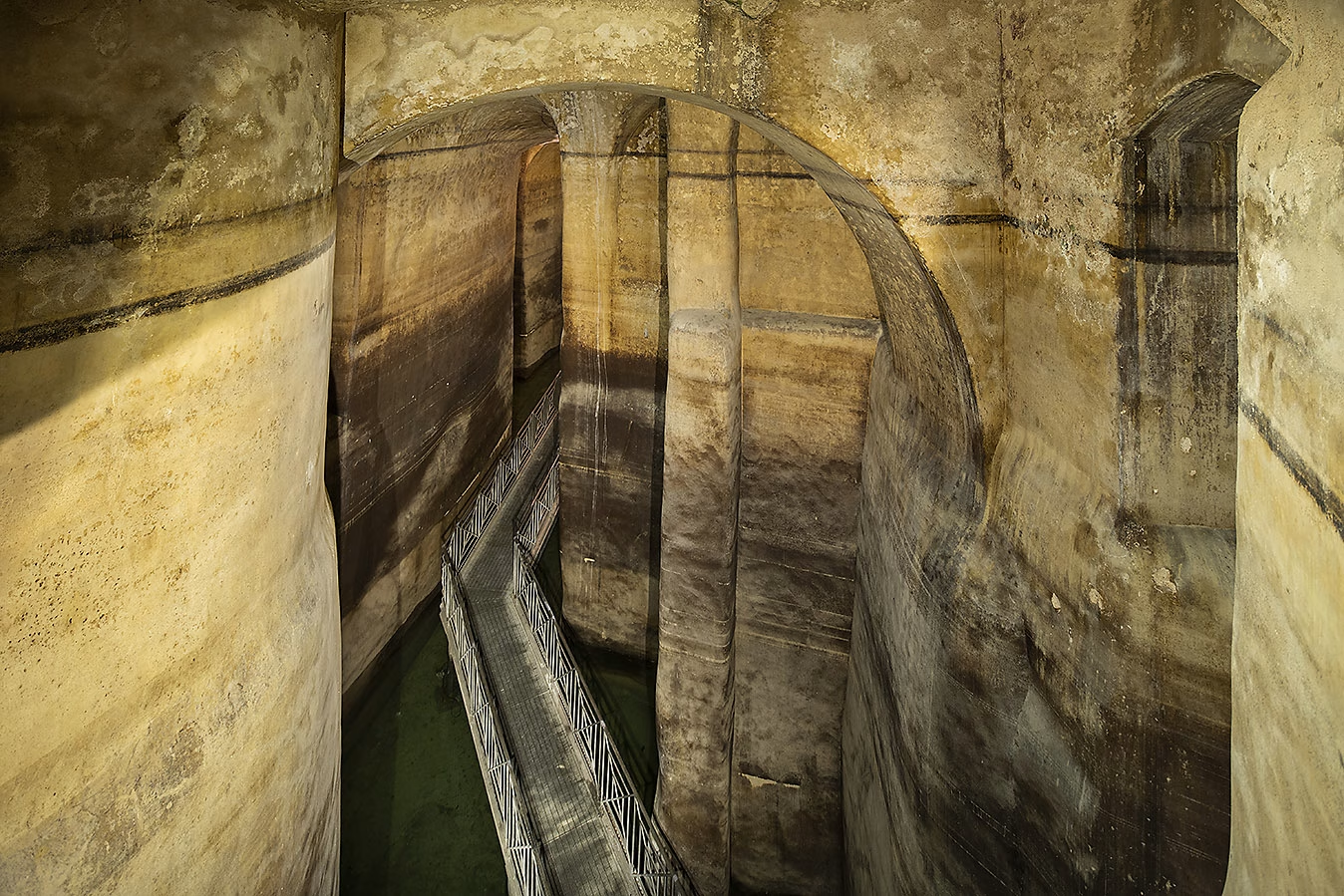
It is a short visit with a clear purpose: after seeing domestic cisterns and the city’s tightly arranged roofs and courtyards, you can appreciate water management as part of Matera’s architecture. Allow around 15 minutes for the visit; the official visitor information covers entry and booking arrangements.
Make room for contemporary sculpture
For a different kind of interior, visit MUSMA, the Museum of Contemporary Sculpture in Palazzo Pomarici. Works from the late nineteenth century onwards occupy both the palazzo and underground spaces. The contrast between the sculptures and their setting gives the historic rooms a contemporary role.
This is a good choice for a second day, when you already have some understanding of the Sassi. Allow an unhurried hour or longer according to your interest, then return to the streets for lunch or a café.
Food, craftsmanship and time to enjoy the city
The city’s stone, on a smaller scale
The local calcarenite used in Matera’s buildings also lends itself to smaller carved objects. Miniature houses, doorways and stairways echo details seen on a walk through the Sassi, giving the craft a direct connection to the city around it.
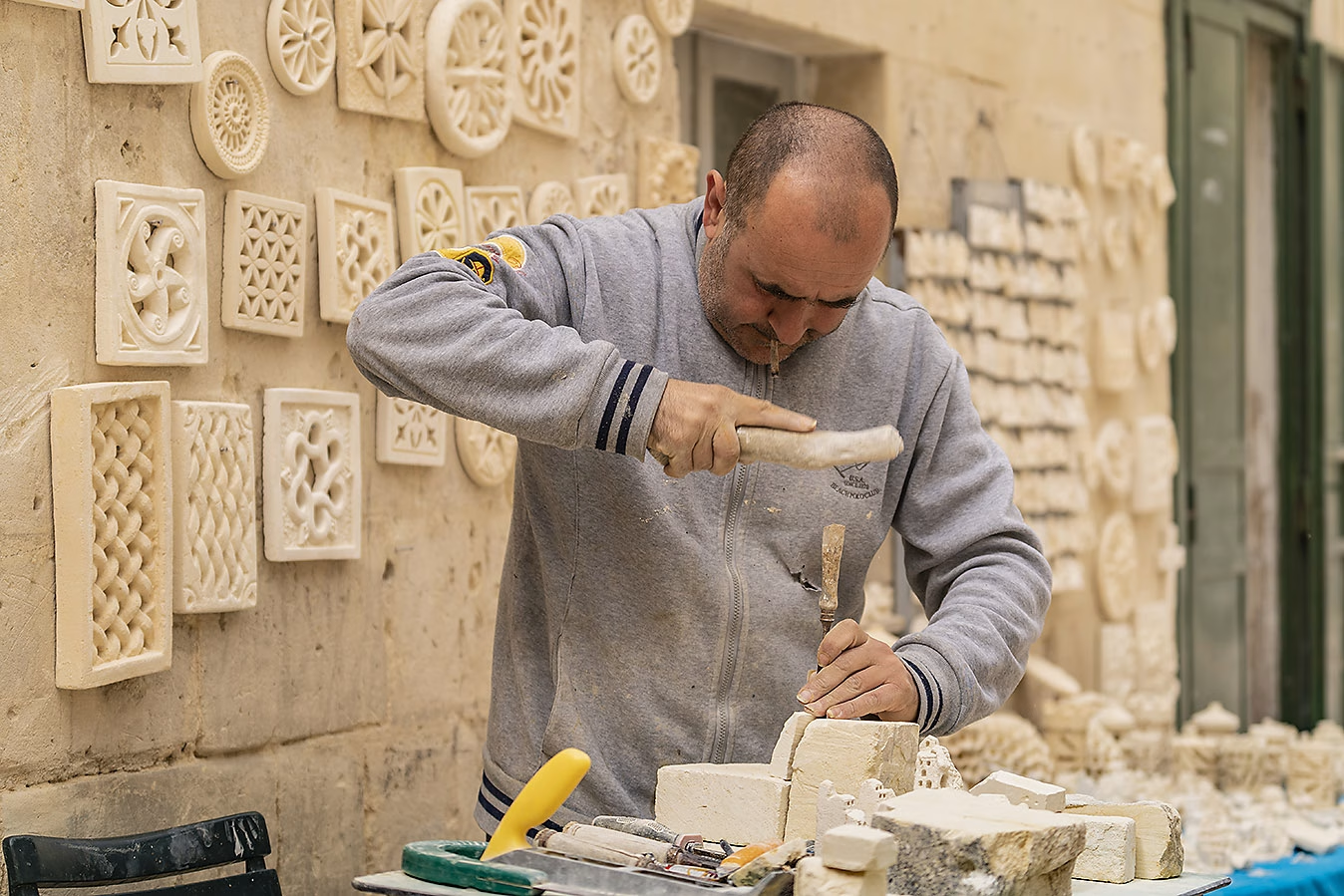
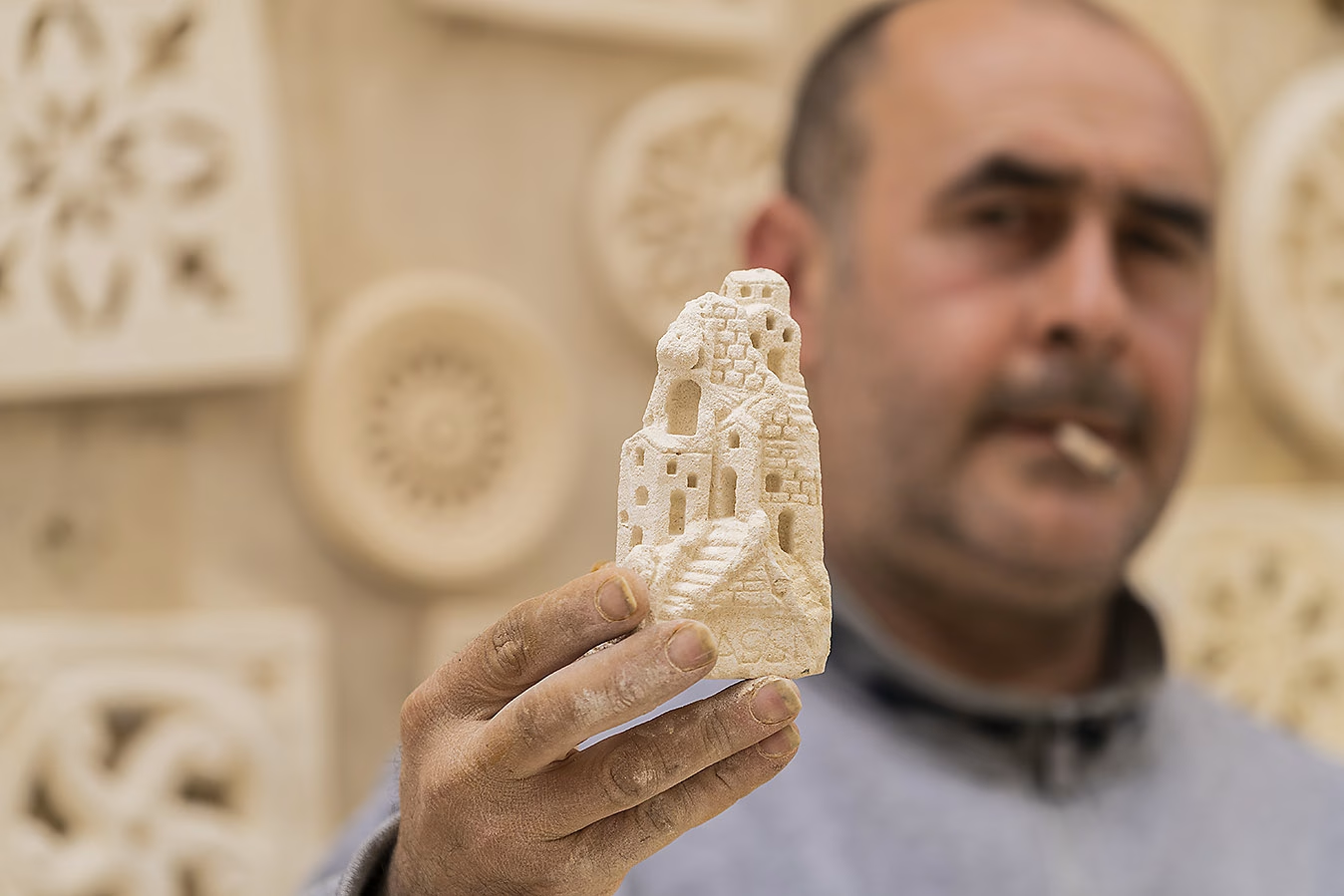
For shopping, look for the maker as well as the object. A well-made stone piece, ceramic vessel or carved bread stamp can carry something of the city’s material culture home. Il Bottegaccio, Mario Daddiego’s craft workshop in Via Madonna dell’Idris, is a useful address for locally made work; contact the workshop to arrange a visit to its craft cave.
What to taste
Pane di Matera is a good starting point: durum-wheat bread with a substantial crust and a yellowish crumb. Try it simply with olive oil, or in cialledda, a bread-based dish whose ingredients vary with season and kitchen. Its flavour and texture explain why bread deserves more attention here than a passing place beside the main course.
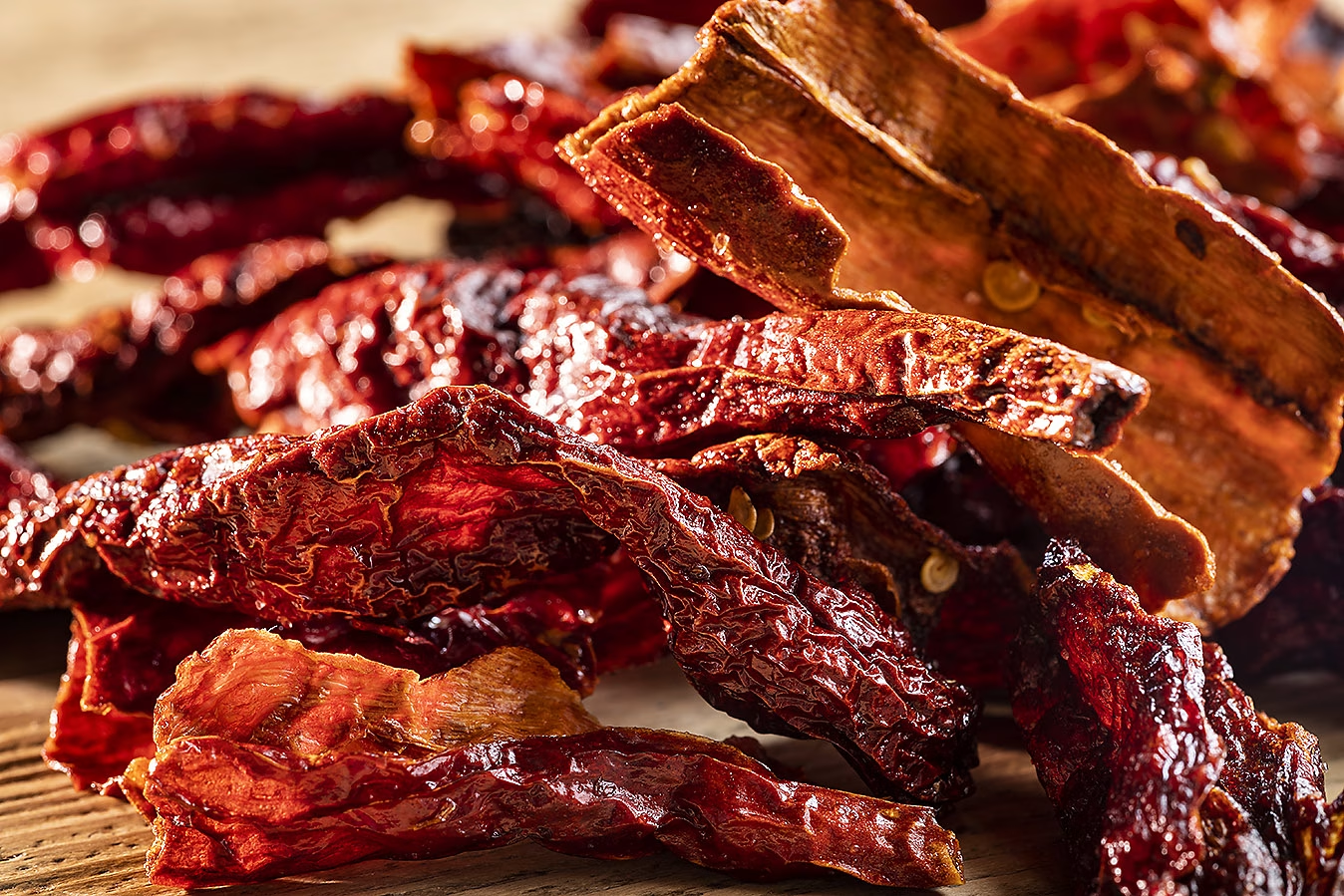
Peperoni cruschi bring a different texture. These sweet dried peppers are briefly fried until crisp, then served on their own or scattered over other dishes. They are a Basilicata speciality rather than a hot chilli. Handmade pasta, pulses, local cheeses and seasonal vegetables give plenty of scope for a lunch built around regional ingredients.
Leave some of the afternoon open
A café on the Piano, a browse through small shops and a return to a favourite viewpoint can be as welcome as another ticketed visit. The broader streets around Via Ridola and Piazza Vittorio Veneto offer a change from the stairways below; later, an aperitivo in the Sassi gives you time to watch the light shift before dinner.
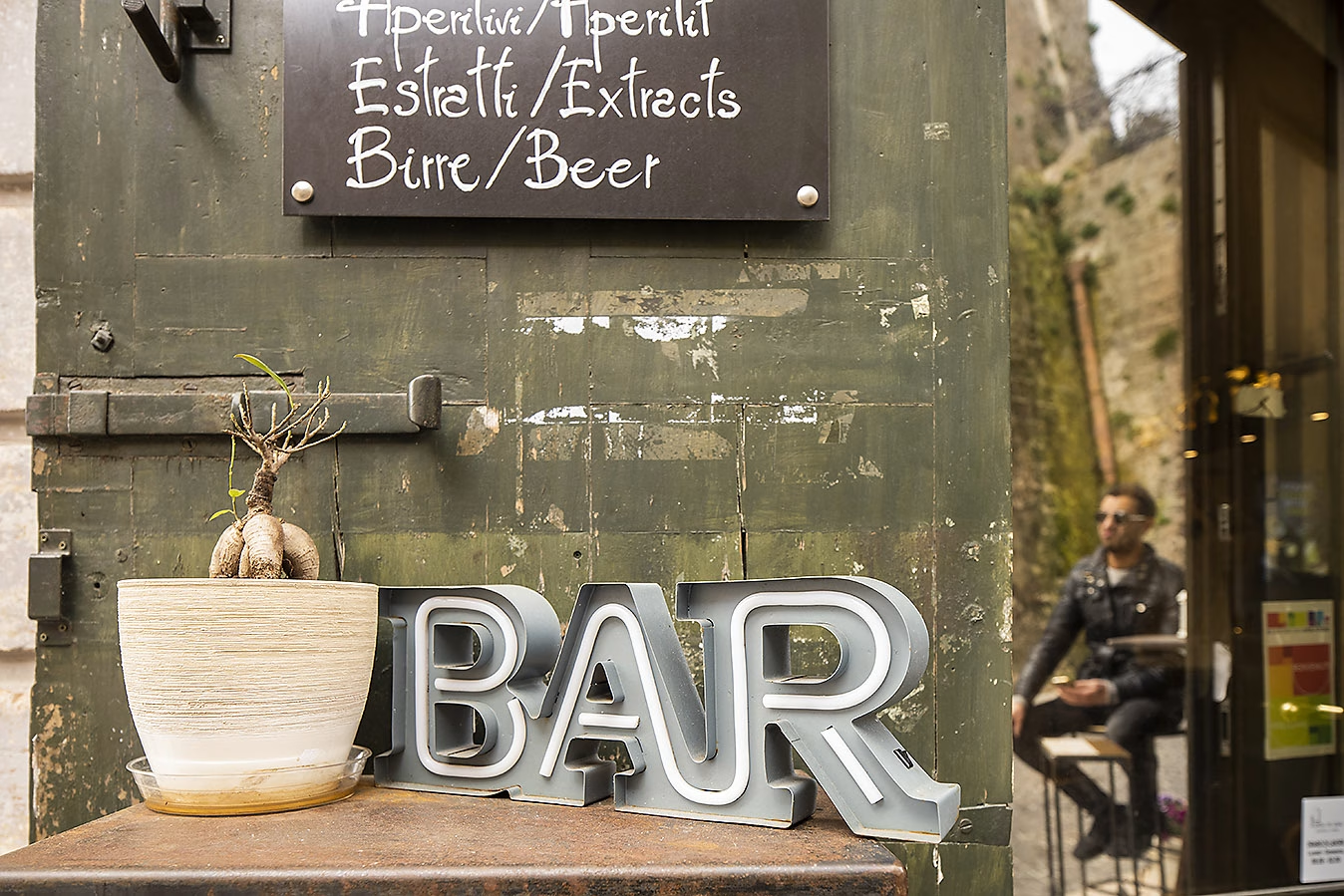
Choose the evening meal for the experience you want: a regional kitchen for traditional dishes, or a more contemporary interpretation of Lucanian ingredients. Spread these pleasures across the stay. There is little need to turn every meal, purchase and walk into a scheduled activity.
Matera after dark
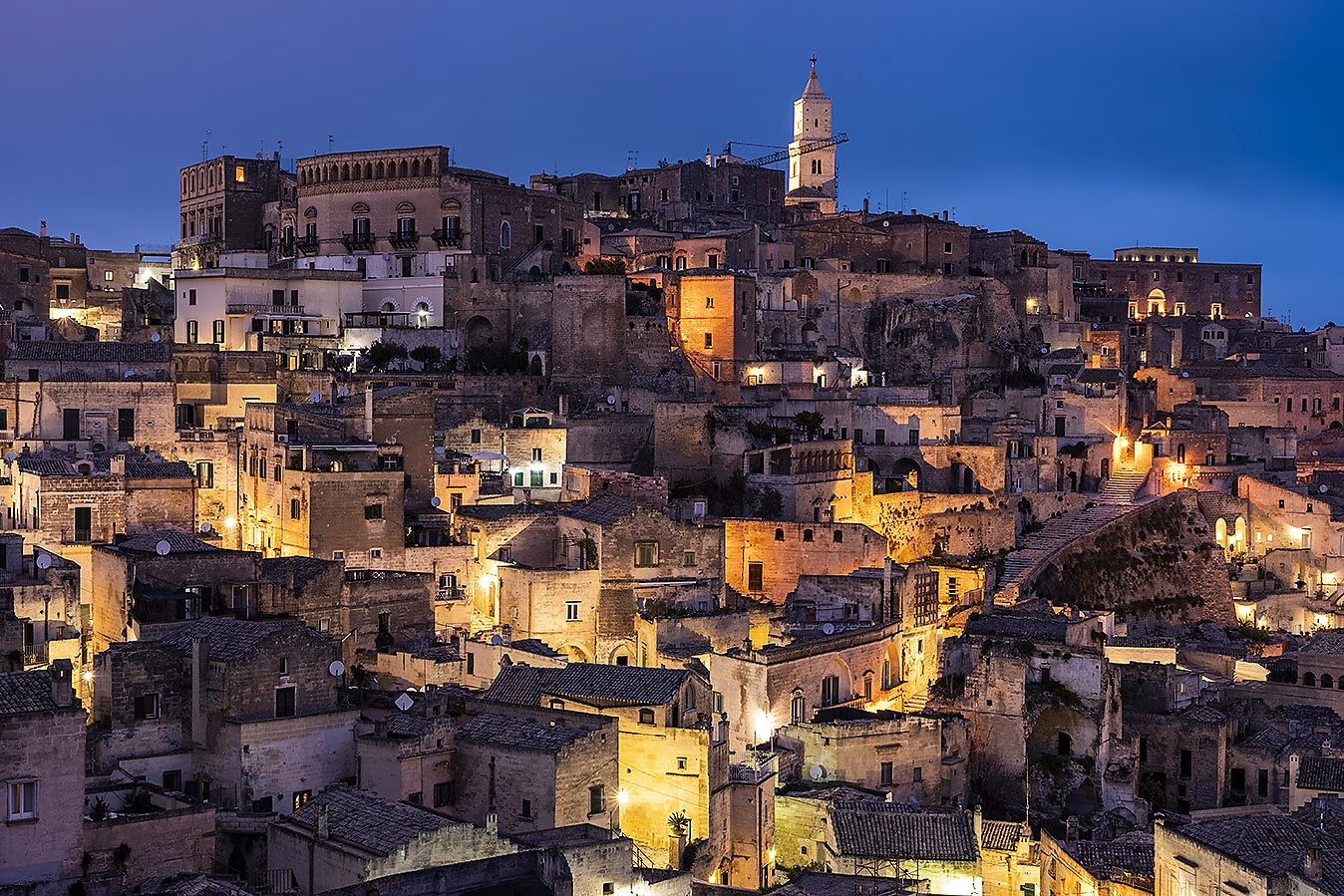
At dusk, the relationship between the cathedral, rooftops and lower streets changes. The pale surfaces lose their daytime brightness, and lights begin to pick out terraces, doorways and stairways. Choose a viewpoint before sunset, then stay as the detail of the city gradually gives way to a pattern of illuminated spaces.
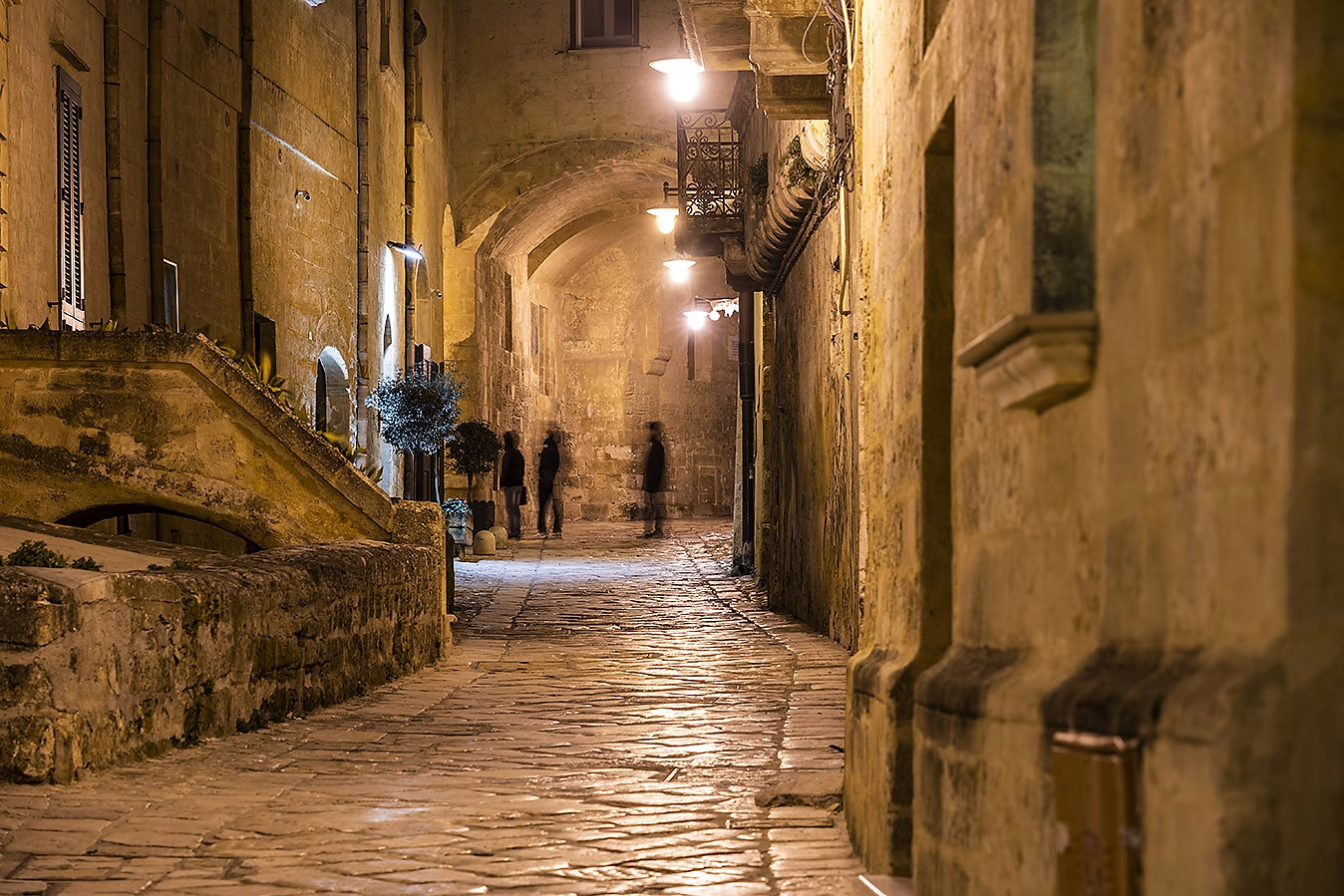
After dinner, take a short walk through a part of the Sassi you have already explored by day. In Barisano, a lit passage or a small courtyard can hold your attention as much as the broad panorama. There is pleasure in recognising the route and seeing it differently, with your room close enough to return whenever you wish.
These are evenings to include within the stay itself. An aperitivo before dusk, dinner and an unhurried walk give Matera a rhythm that a brief daytime stop cannot provide.
Car-free or part of a self-drive holiday
A comfortable car-free stay
Matera works well without a hire car. ExpertoItaly can arrange a private transfer from an airport, railway station or your previous accommodation, followed by a stay centred on walking. Bari is a useful gateway for arrivals by air or national rail, with the onward journey to Matera planned separately.
For independent travel, Ferrovie Appulo Lucane operates the local connection between Bari and Matera. This is a separate regional railway; its published service distinguishes weekday trains from Sunday and public-holiday replacement buses. Check the journey for your actual date. A private transfer is particularly convenient when you have luggage or are continuing directly from another hotel.
Within the Sassi, the important consideration is the walking route. Start higher and work downhill where it suits the day, with pauses between visits. If you would prefer fewer steps, ExpertoItaly can consider the precise accommodation access, room location and daily routes when planning the stay. You can see how transfers connected several bases in our Southern Italy without a hire car story.
Put Matera at the beginning or end of a driving route
For a self-drive holiday, Matera makes particular sense as an opening or closing stay. Begin with two or three nights in the city, then start the hire-car period for the countryside and coast; or finish your touring first and spend the final nights exploring on foot.
The arrangement depends on the available collection and return locations. Local car hire may fit some journeys; others work better with a transfer to or from the hire office. ExpertoItaly can check that sequence before confirming the route, so that the car is hired for the part of the holiday in which it is useful. If the car remains with you during the stay, parking and the final approach to the accommodation can be arranged in advance.
Stay in the Sassi, then continue the holiday
Staying within the Sassi makes the architecture part of the visit. A restored room may combine an excavated chamber, a stone vault and a built frontage, while breakfast and the evening walk place you within the neighbourhood. Rooms vary considerably in daylight, outlook and access, so choose the setting and layout as carefully as the hotel itself.
Matera pairs naturally with a longer stay in Puglia: the Valle d’Itria for its towns and countryside, or the Adriatic coast for time by the sea. Two or three nights here followed by four or five in one Puglia base can make a satisfying week. With 10–14 nights, there is room to give both areas longer or add a carefully chosen third base.
Travellers drawn further inland can continue through Basilicata, allowing a separate stay for its smaller towns, landscapes and slower roads. The right combination depends on whether the next chapter should bring countryside, walking, a different town or the coast.
Our Matera holiday page brings together places to stay and ideas for combining the city with Puglia. Tell us what interests you, and ExpertoItaly will shape the accommodation, transfers or car hire and selected visits around it.
Photography © Vittorio Sciosia



 Facebook
 WhatsApp channel