


Padula Charterhouse and the Pertosa-Auletta Caves
Discover the Carthusian monastery at Padula and the underground river and archaeology of Pertosa-Auletta on a day inland from the Cilento.
In this article
From the coast to the Vallo di Diano
From my base in Paestum, I spent a day inland at Padula and the Pertosa-Auletta caves. Allow a full day for the pair. The Charterhouse deserves time to walk through its different spaces, and the cave visit runs to a guided departure. The two stops work well together by car or with a private driver.
Padula and the Carthusian way of life
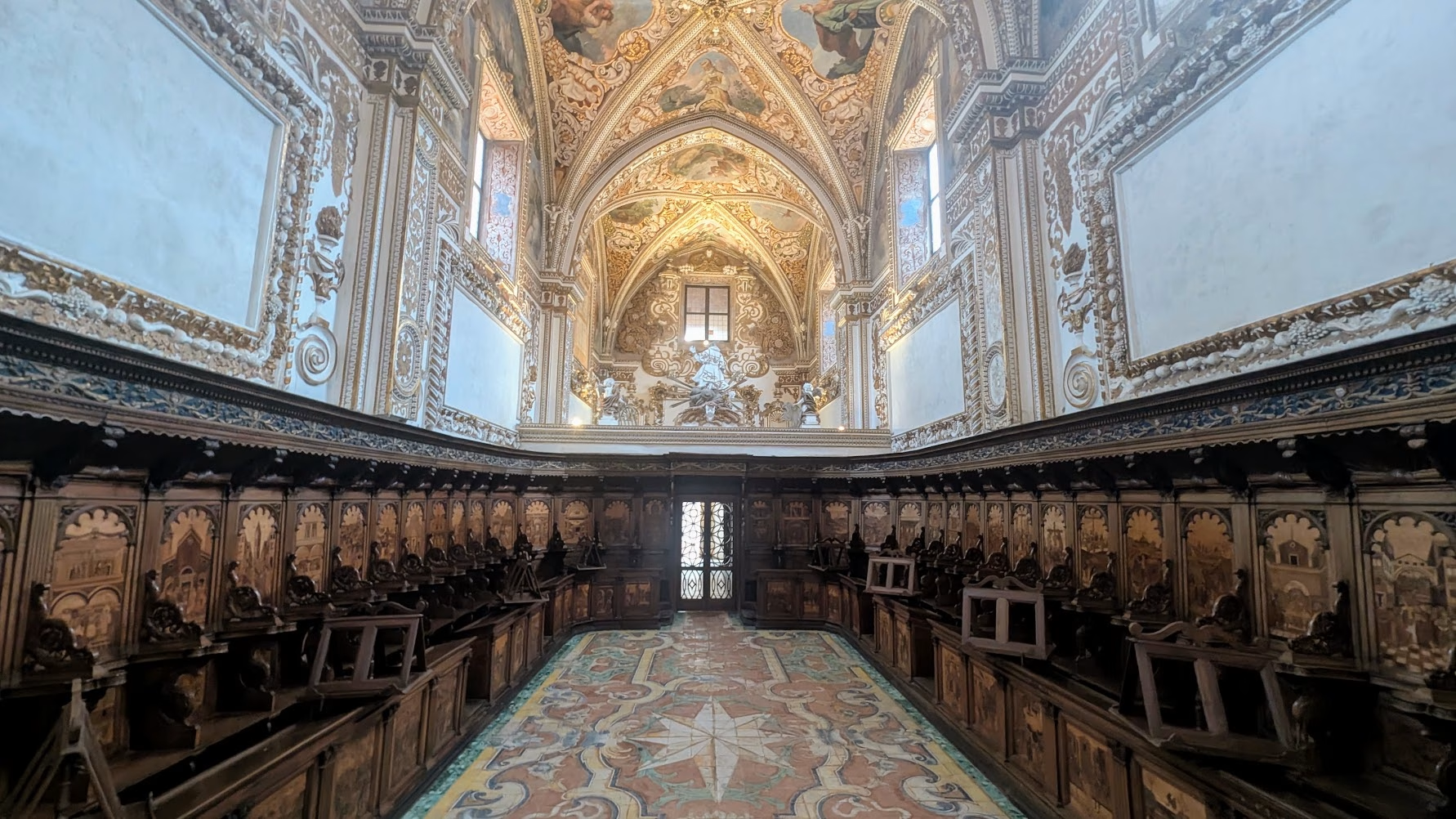
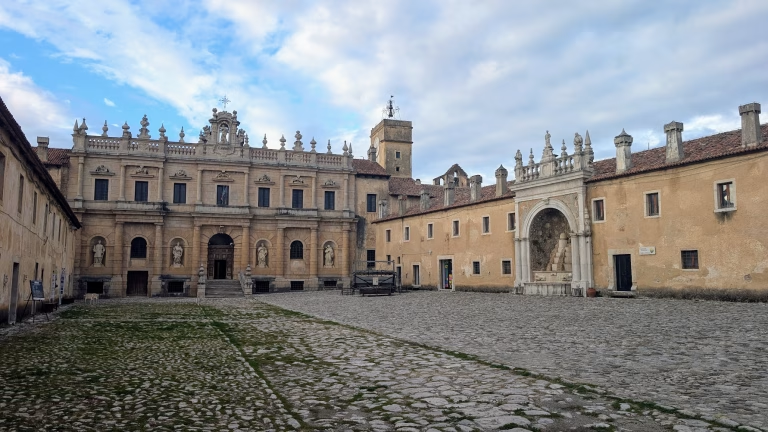
Tommaso Sanseverino, Count of Marsico and lord of the Vallo di Diano, founded the Charterhouse of San Lorenzo in 1306. Much of what you see today reflects later enlargement and remodelling. Its size tells you about the resources of the institution, while the layout tells you how the monks used them.
The Carthusians combined solitude with shared worship and a limited amount of communal life. As you move through the complex, look for the distinction between the church and communal rooms, spaces for work and service, and the individual cells grouped around the great cloister. The cell was the setting for much of a monk’s daily life, so the repeating doorways tell a story beyond the symmetry of the architecture.
The great cloister and its monumental stair belong to the grand architectural language that developed over centuries. Compare that scale with the smaller spaces of individual devotion. In 1807, during the French administration of the Kingdom of Naples, the monks lost their holdings and left. The buildings outlasted the system of land and labour that had sustained them.
A river beneath the rock
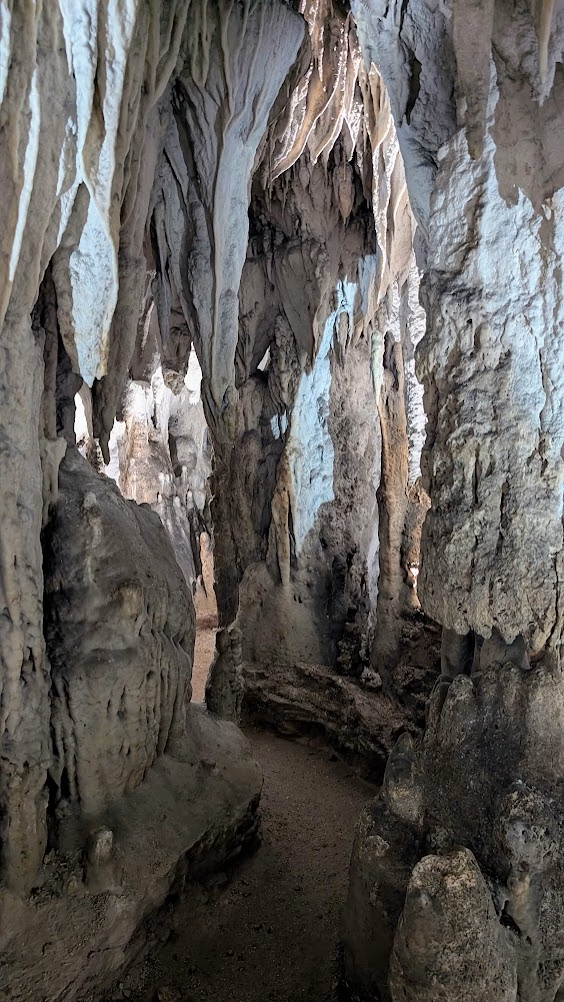
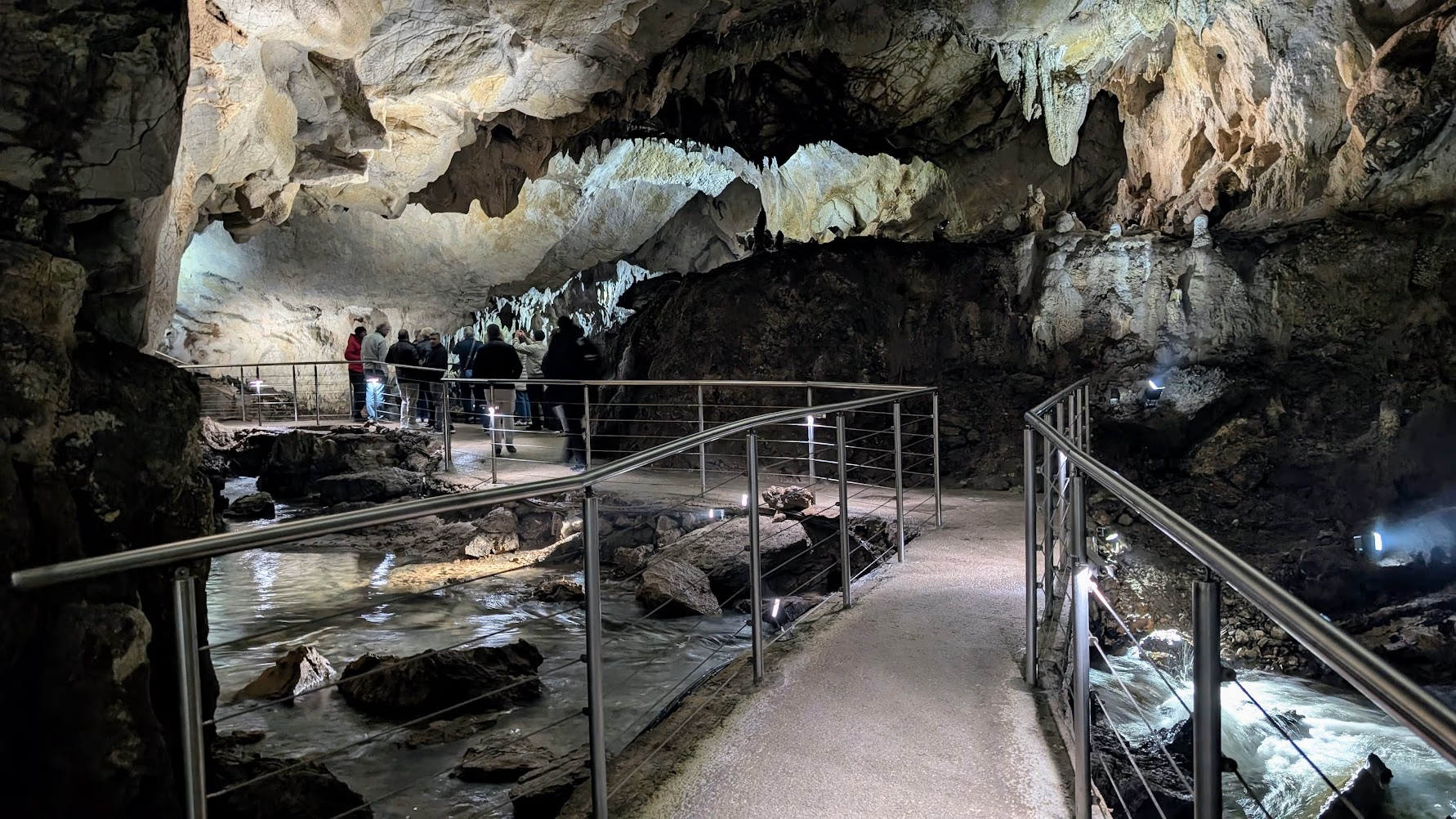
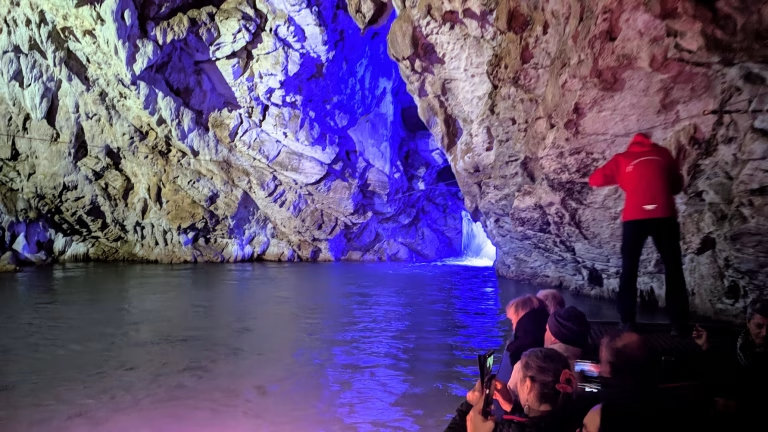
At Pertosa-Auletta the guided route begins with a boat crossing on the underground waterway. That is an unusually direct way to see that the caves belong to a living drainage system. Water moving through soluble rock enlarges openings over long periods. Where mineral-bearing water drips in air-filled chambers, it can leave deposits behind and create the forms that hang from the roof or rise from the floor.
The caves also preserve evidence of people using the entrance area in prehistory. Archaeologists have found wooden remains associated with a Bronze Age structure built over water. Waterlogged conditions help explain the survival of wood that would usually decay. Ask the guide about the finds, and consider the nearby speleo-archaeological museum if you want the evidence explained in more depth.
Arranging the day
Check the Charterhouse visitor information and Fondazione MIdA’s cave routes before you choose which stop to visit first. Build the day around the cave departure, allowing time for the drive and a break between the visits. Castelcivita offers another cave outing, and the Gole del Bussento is a separate walking day for those who want to see a river landscape above ground.



 Facebook
 WhatsApp channel