


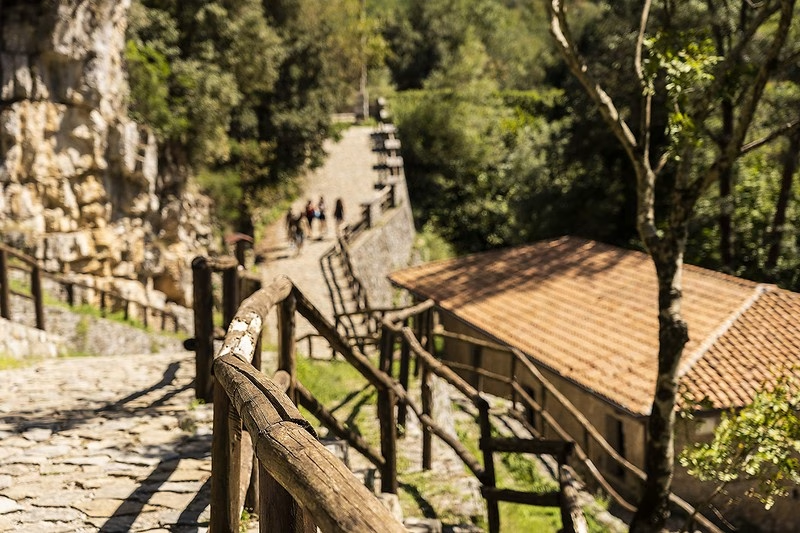
The cobbled path and wooden railings guide visitors down to the old mill at Morigerati, the starting point for exploring the Gole del Bussento.
Exploring the Gole del Bussento and the WWF Oasis of Morigerati
In southern Cilento, where the hills turn to forest and the air smells faintly of moss and limestone, the Bussento River performs one of nature’s quiet miracles — it disappears.
Vanishing beneath the mountains near Caselle in Pittari, the river travels underground for several kilometres before resurfacing at Morigerati, carving its way through a deep gorge of ancient rock. This is the Gole del Bussento, one of Italy’s most enchanting natural sanctuaries — part canyon, part oasis, part whispering secret.
Here, the world feels hushed. The path into the gorge winds through chestnut trees and olive terraces, past a handful of stone houses that once belonged to the monks who guarded the valley. A wooden gate marks the entrance to the WWF Oasi di Morigerati, a protected reserve where time slows to the rhythm of water.
The descent follows the sound of the river — distant at first, then clearer, until you glimpse flashes of turquoise between ferns and limestone walls. A 30-minute walk brings you to the heart of the gorge, where suspended bridges and stone steps lead to an abandoned mill built directly above the torrent. Inside, the sound is a roar wrapped in darkness; outside, the canyon narrows to a ribbon of light where kingfishers dart across the pools.
Every corner seems sculpted with intent. The cliffs rise in rippling folds, moss creeps over the stones, and waterfalls veil the rock in constant motion. Unlike grand Alpine scenery, this is intimacy, not drama — nature reduced to a whisper. It’s the sort of place that asks you to stay still for a while, to listen.
Did You Know?
The Gole del Bussento form part of an underground karst system that stretches for more than 40 km beneath the Monti del Cilento. The river disappears near Caselle in Pittari and re-emerges at Morigerati, creating one of southern Europe’s most fascinating geological phenomena — a “vanishing river” that resurfaces in a natural amphitheatre of rock and forest.
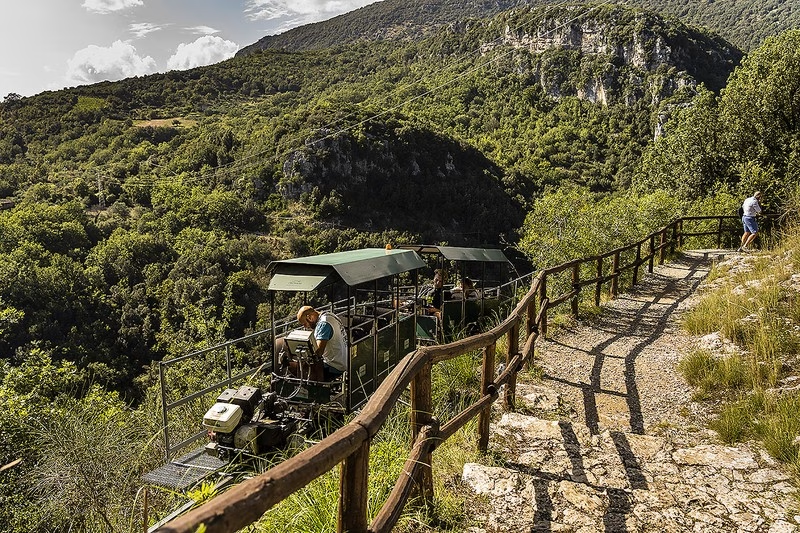
A small train once carried visitors along the hillside paths towards the Gole del Bussento. Today, it stands as a reminder of how Morigerati has long welcomed those drawn to its hidden canyon.
Inside the WWF Oasis of Morigerati
The Oasi del Bussento safeguards over 600 hectares of pristine wilderness within the Cilento and Vallo di Diano National Park — recognised internationally as a UNESCO Geopark for its remarkable karst system. It protects biodiversity, Mediterranean landscapes and a delicate balance between water, forest and stone.
🌿 Flora
The slopes are cloaked in macchia mediterranea — evergreen shrubs and trees adapted to long, dry summers and mild winters. Holm oak (Quercus ilex) dominates, alongside ash, hornbeam, arbutus, heather, mastic, myrtle and several types of broom that perfume the hillsides in spring.
🦦 Fauna
The crystal-clear waters host Italy’s richest otter population, together with trout, crayfish and freshwater crabs. In cooler stretches live the rare salamandra dagli occhiali, the Italian frog and the Dalmatian frog. The surrounding forests shelter porcupine, wildcat and wolf, while overhead soar kestrels, goshawks, black and red kites, and the imposing raven.
🚶 Trail & Access
The excursion through the Oasis follows a 3-km circular trail descending via an ancient mule path (800 m, 130 m altitude difference, max gradient 14%). Along the way you’ll encounter:
- the Grotta della Risorgenza – where the Bussento resurfaces in a spectacular karst chamber;
- a vast moss and lichen station, the largest in southern Italy;
- and the historic water mill, powered by a horizontal wheel beside the river.
🎒 Practical Info
Wear light hiking or sports shoes and bring water. The walk is not recommended for visitors with severe heart or respiratory conditions, prostheses, or serious mobility issues.
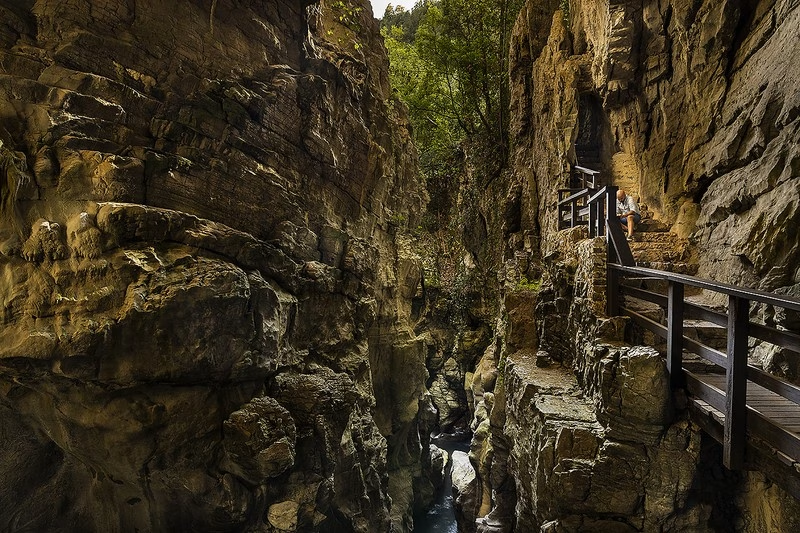
A narrow wooden walkway winds between the towering cliffs of the Gole del Bussento, guiding visitors above the underground river that carved Cilento’s most secret canyon.
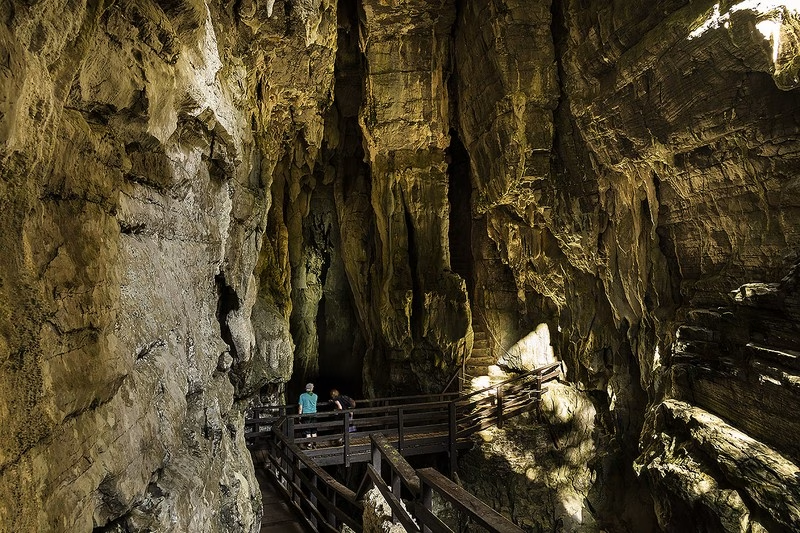
Visitors walk along wooden platforms inside the Bussento caves, where sunlight and shadow reveal the immense limestone walls sculpted by time and water.
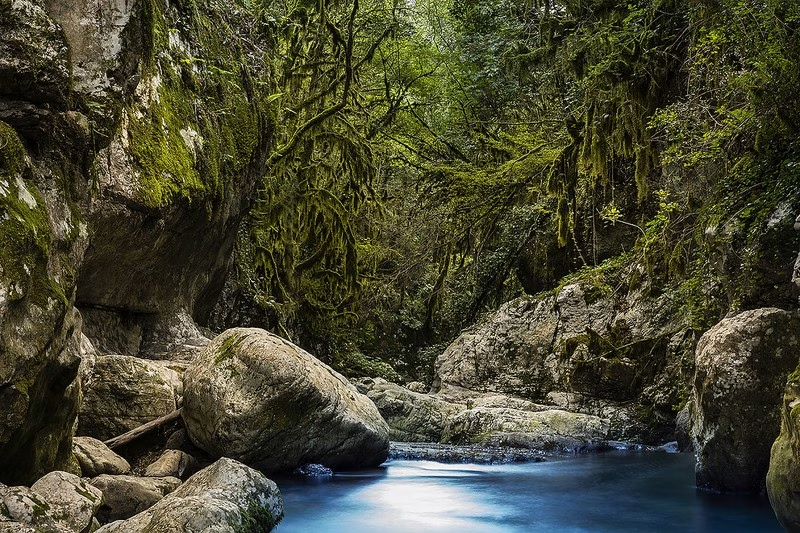
The Bussento River re-emerges in a shaded gorge beneath Morigerati, winding through moss-covered rocks and ancient forest – the living heart of Cilento’s green canyon.
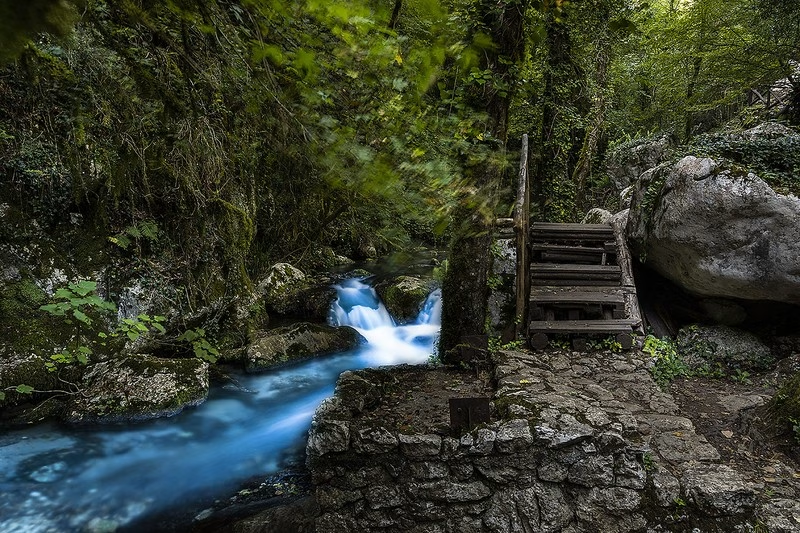
The old mill of Morigerati stands beside the Bussento River, where turquoise waters once powered the grindstones that sustained village life deep in the Cilento hills.
A Day Among Water and Stone
The walk through the WWF Oasis of Morigerati takes about two hours round-trip, though most visitors linger longer to sit by the water or picnic under the trees. At the top, the medieval village of Morigerati awaits with its stone alleys, a small ethnographic museum, and sweeping views across the Bussento valley. From here, it’s an easy drive to Casaletto Spartano, home to the Cascata del Capello di Venere — a veil-like waterfall framed by moss and fern, one of the most photogenic corners of the Cilento National Park.
To round off the day, continue to Scario, a graceful seaside village where forested hills meet the Tyrrhenian Sea. Whether for a leisurely seafood lunch, an ice cream on the marina, or simply to pause with your feet in the water, Scario is the perfect restorative stop — the kind of quiet coastal beauty that reminds you how seamlessly Cilento moves from mountain to sea.
Suggested Day Itinerary
Morning: Explore the WWF Oasis of Morigerati — descend through chestnut woods and visit the old water mill by the Bussento River.
Midday: Drive to Casaletto Spartano and walk to the Capello di Venere Waterfall, where clear pools invite a refreshing pause and photo stop.
Afternoon: Continue to Scario, one of Cilento’s most elegant coastal villages. Enjoy a seafood lunch or evening aperitivo overlooking the harbour before returning inland.
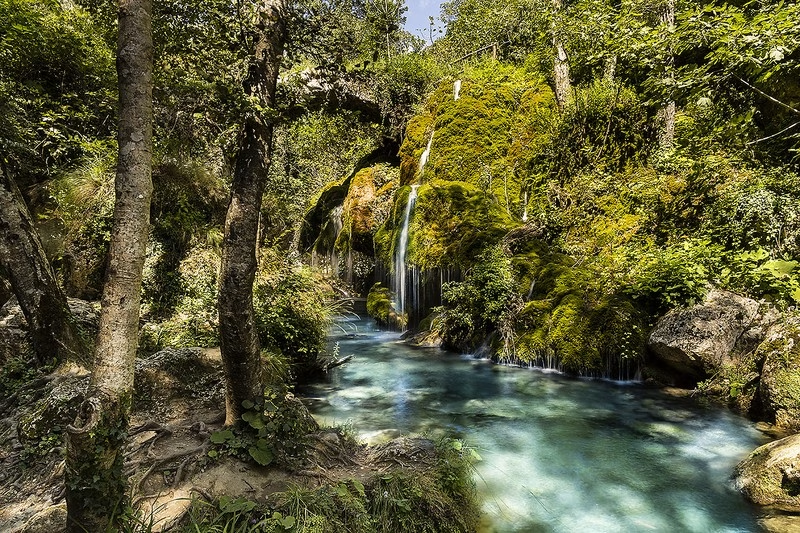
The Venus Hair Waterfall in Casaletto Spartano, where crystal-clear water cascades over moss-covered rocks to form natural turquoise pools.
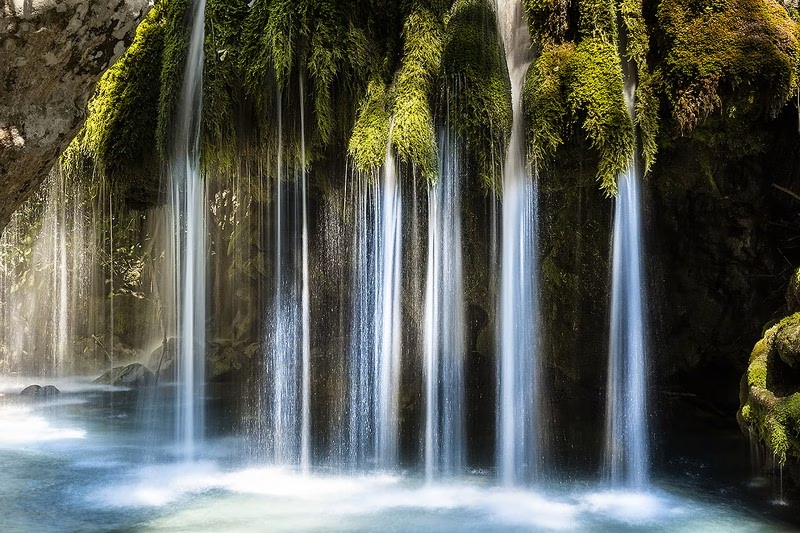
A closer look at the Venus Hair Waterfall reveals the fine strands of water falling like silky threads through lush moss and limestone.
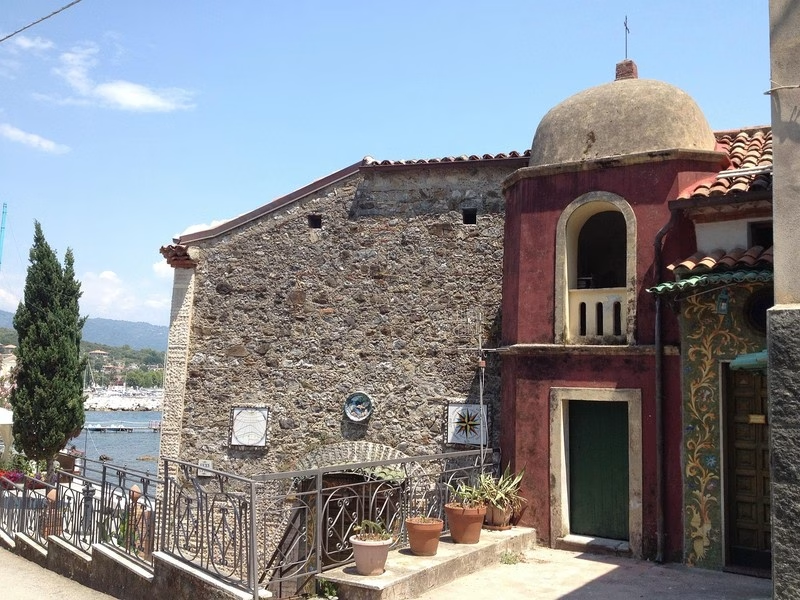
The small seaside chapel of Scario overlooks the marina and the tranquil waters of southern Cilento — a timeless stop between sea and hills.
The Palio del Grano – A Celebration of Work, Memory and Community
Every July, Morigerati gathers around its fields in a ritual that turns manual labour into shared joy. The Palio del Grano revives the ancient cycle of wheat — from harvest to threshing to milling — as both spectacle and act of belonging.
Born in nearby Caselle in Pittari in 2005 and soon embraced by villages like Morigerati, it restores the link between the land and its people through games, theatre, and work performed by hand.
Teams from more than twenty Cilento communities compete in the Corsa delle Spighe, a symbolic race through golden fields that ends, fittingly, at the old water mill by the Bussento River. Here, wheat once powered life; today it inspires reflection on how food, rhythm and cooperation shape rural identity.
The event is less about winning than about remembering — the hum of scythes, the laughter in the heat, and the rediscovery of time measured not by clocks but by seasons. For visitors, it offers a glimpse of a countryside that still sees agriculture as culture — and where tradition evolves not in museums but in movement, music and shared bread.
Palio del Grano – In Numbers
- Founded: 2005 in Caselle in Pittari (Cilento), now celebrated across several villages including Morigerati
- When: Mid-July – main race and festivities held over two days
- Participants: Over 200 volunteers and 14 teams (“Paranze”) representing different Cilento communities
- Audience: More than 2,000 spectators each year
- Central Event: The Corsa delle Spighe – a wheat-field relay celebrating skill, endurance and teamwork
- Supporting Events: Workshops, open-air concerts, local-food tastings, theatre performances and the traditional “grano blessing”
- Linked Sites: The historic water mill of Morigerati and community-run granaries used during demonstrations
- Philosophy: “Nunni pirdimu” – *we don’t lose ourselves to find each other again around grain* – a Slow Food ethos promoting memory, mutual care and rural resilience
- Organisers: Slow Grains network and local associations with support from the Parco del Cilento e Vallo di Diano

The restored water mill of Morigerati stands beside a crystal stream and waterfall in the Gole del Bussento — a timeless meeting of nature and human craft.
From River to Grain
In Morigerati, everything flows — water, grain, memory. The same force that carved the Gole del Bussento once powered the village’s water mill and, through it, the rhythm of rural life.
Today, that current lives on in the Palio del Grano, where the people of Cilento gather not just to compete, but to remember how land and community still move in harmony.
From the depths of the gorge to the shimmer of ripening fields, Morigerati remains what it has always been — a meeting point between nature and culture, silence and song.
Plan Your Cilento Holidays
Whether you seek coast, mountains or silence, the Cilento National Park holds them all. Combine the Gole del Bussento with Paestum’s temples, the caves of Castelcivita, or the mountain trails of the Monti Alburni for an itinerary rich in contrasts and authenticity.
Explore more of the Cilento with ExpertoItaly and discover where Italy still feels wild.
You’re in good hands
Clients often mention what matters most — care, precision, and the sense of travelling with someone who knows the way.
STAY CONNECTED WITH US (it’s free!)
Unlock insider tips on Italy’s hidden gems, free every month!
👍 Follow us on Facebook – Stay inspired with daily updates, travel ideas, and a community of fellow Italy lovers.

📲 Join our WhatsApp channel 🟢 – Get instant updates, behind-the-scenes insights, and connect directly with our team.

We’ll always treat your details with the utmost care and will never sell them to other companies. See our privacy policy
Package holidays are sold by ExpertoItaly Ltd (Reg. 12035194)
Call us on +44 (0) 77 3838 5790
Registered office: 33 Miles Close, London, SE28 0NJ

Business Hours
Monday – Thursday 9am to 6pm
Friday 9am to 5:30pm
Saturday – please send us an enquiry form
Sunday – please send us an enquiry form