


EXCELLENT Based on 78 reviews
 Posted on Google

 Kay Wade27 September 2026We can’t thank ExpertoItaly enough for the wonderful trip to northern Italy organized for us in August. We really appreciated that Antonio took time and effort to get to know the kind of travelers we are so as to create an imaginative, personalized travel plan and detailed guide packed with tips and information about the places we visited. His vast insider knowledge of his country contributed to our smooth and stress-free train journeys and to all that we learned and enjoyed about the cities we visited; about their respective histories, cultures, infrastructures, public spaces, peoples and more. We would recommend ExpertoItaly in a heartbeat!Posted on Google
 Catherine Day16 July 2026We’re recently home after a wonderful holiday in Puglia arranged with Antonio. Great pace, a range of always excellent accommodation and an interesting suggested itinerary. We would highly recommend Expert to Italy and look forward to planning our next getaway with Antonio.Posted on Google
 Mike Girling (No nickname)16 June 2026Just back from another delightful holiday organised from start to finish by the Italian "Expert" Antonio. After several discussions with him we decided to have an eleven day trip to the Amalfi coast and Ischia and thanks to his intimate knowledge of the area we had a most enjoyable and memorable time. Ischia in particular was absolutely wonderful. Antonios advice on the boutique hotels, guided tours, and places to visit were exemplary as were the drivers he booked to ferry us around. In addition to all the knowledge and advice he provides, this time, we encountered a couple of problems of our own making, but a quick WhatsApp to Antonio and within 24 hours both problems were solved. So if you are looking for an independent holiday in Italy along with great support we have no hesitation in recommending Antonio Mike & DianePosted on Google
 Daniel Hockman9 June 2026ExpertoItaly is a brilliant company, and Antonio organised a wonderful holiday for us in Puglia a region we did not know. His suggestions were all fantastic. He listens to what you want to do and works your holiday around that. I wouldn’t hesitate to recommend him to anyone contemplating a holiday in Italy. Thank you so much, Antonio!Posted on Google
 Elaine Yeoh6 June 2026We engaged Antonio Cresce to plan and manage our 3 week holiday in Italy - covering towns in the regions of Puglia, Basilicata ,Calabria and Campania. Our holiday was seamless and exceeded all our expectations, and I would highly recommend Antonio / Expert to Italy for all your holiday planning and needs. From the point of choosing destinations, Antonio was collaborative and listened to everything on our wishlist . The towns he chose for us were exactly the places that we loved .. off the beaten track, charming and authentic Italy ! He picked our accomodation and again there was a lot of collaboration over our needs and we loved the choices . The tours he organised were exceptional. I wanted to see wildflowers and orchids and he engaged experts to take me around the national parks . I would never have been able to source the contacts and organise the excursions as perfectly as it was done . Some of the best moments of our travels , ever! Transfers were professional and seamless. Antonio remained fully contactable throughout our trip for questions , help and any details we needed. We felt fully secure and confident that we had an agent travelling along with us at every step! It was a huge benefit as well having him in the rough time zones as Italy where he is based in the UK, so that any questions were promptly answered and sorted . This could have been more problematic if we had engaged someone from home in Australia with the big difference in time zones . We appreciated his travel advice and recommendations, his work ethics , his professionalism and how he went over and beyond to make our holiday truly exceptional!Posted on Google
 Judith Warren29 April 2026Antonio is super helpful and efficient and he knows Italy. He arranged our three centre Italian holiday, booked all train tickets, taxis and hotels and suggested places we wouldn't have thought of. You can have an independent holiday without problems, even in a less touristy area, because he's organised everyone for you and he's a back up if anything goes wrong. Thanks Antonio, be in touch next time!Posted on Google
 Anne Fenton22 September 2025Antonio was a delight to deal with. He was knowledgable, friendly and very patient when we changed our plans several times! His choices of hotels were exceptionally good and he was very responsive when we had a little hiccup with the car rental. Highly recommend his services.Posted on Google
 Teresa Oliveira25 August 2025We used ExpertoItaly to help us with our two-week holiday in Sicily. We had a couple of interactions with Antonio, and were very fast to close on our itinerary and hotels. Everyting was very well organized and suitable to our requirements. Antonio chose very good accommodations: small beautiful, full of character and well located. He also booked our bus trips as we did not want to rent a car. That worked really well. It was a great help and gave us great confidence for our trip. We strongly recommend ExpertoItaly if you want customised holidays in Italy. We will use it again for future traveling in Italy!Posted on Google
 IzzieD21 August 2025Antonio is an expert on Italy so if you are planning a trip then you should definitely use ExpertoItaly. He helped us plan the perfect family trip and we cannot fault any of his recommendations. From car hire, to the perfect hotels and apartments, he is highly knowledgeable and it doesn't stop with planning. He was on hand to be available if we needed his help while on the trip. His customer service is first class. Thank you so so much and we look forward to planning our next trip with you.Posted on Google
 David Wise12 August 2025Antonio was really helpful in planning our trip to Italy. We wanted to visit 3 locations, he provided recommendations on accomodations which were great - really good locations for each booking. He also coordinated taxis and trains and provided a load of suggestions for each location for places to eat and sites to visit. He was readily available to answer any questions we had by email or WhatsApp. His assistance really helped us in planning this trip and saved us a lot of stress in trying to coordinate this ourselves. All in all we had a great holiday
A private palace in the historic centre
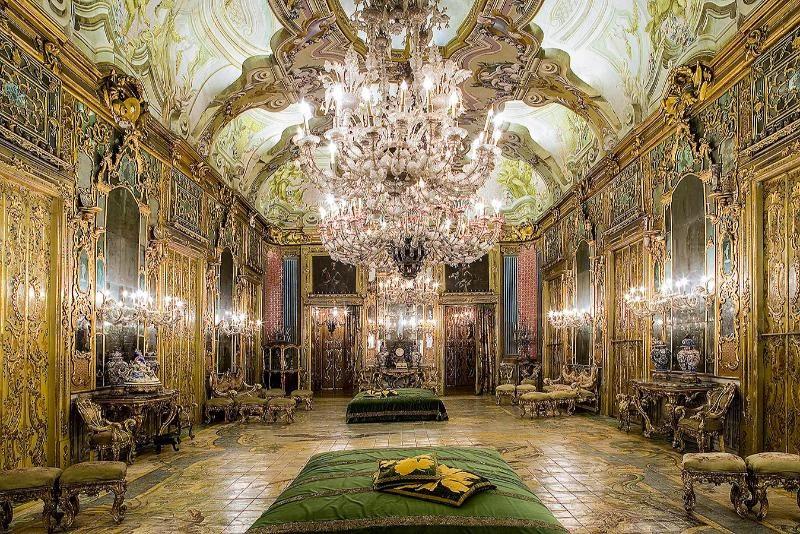
Palazzo Valguarnera Gangi brings together the rooms, furnishings and collections of an aristocratic Palermo home. Painted ceilings rise above patterned floors; mirrors extend the views through adjoining salons; cabinets invite a closer look at the objects within them.
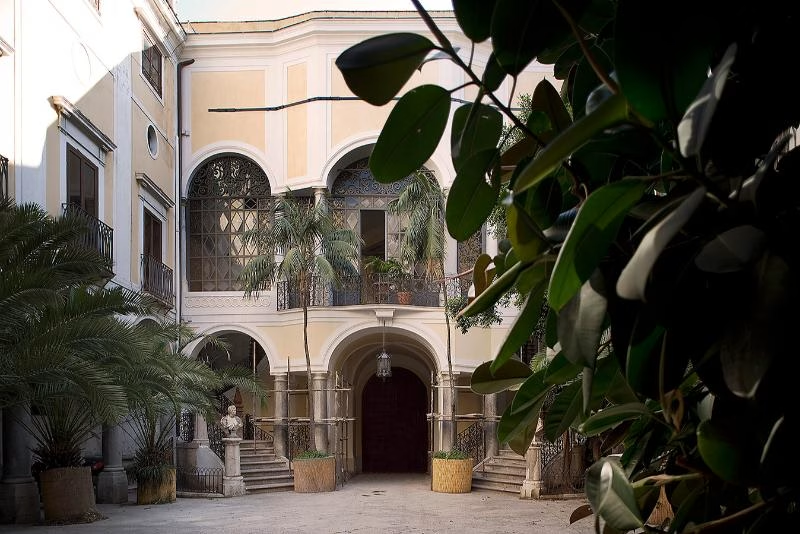
The palace stands on Piazza Croce dei Vespri, in the Kalsa quarter. Its present character owes much to the eighteenth-century transformation of an earlier residence by Pietro and Marianna Valguarnera. The result is a particularly rich expression of Sicilian Rococo, with decoration designed to convey the family’s standing as well as its taste.
It remains a private residence, visited by prior arrangement. For travellers interested in interiors, decorative arts or cinema, it offers a focused encounter with Palermo’s aristocratic history. Our Palermo guide places it within the wider city.
From the courtyard to the principal rooms
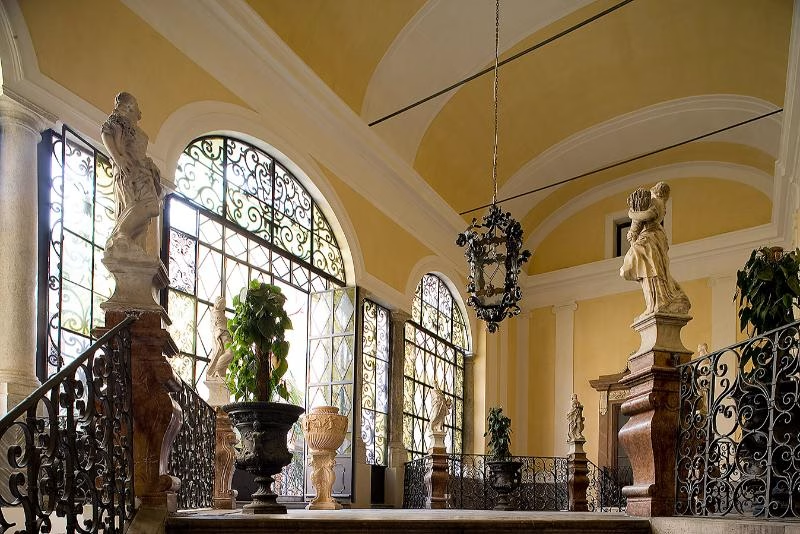
The approach is part of the experience. The courtyard introduces the palace’s scale, before the staircase leads upwards towards the piano nobile, the principal reception floor. Daylight, sculpture and the open ironwork of the balustrades give this transition its character.
The palace and The Leopard
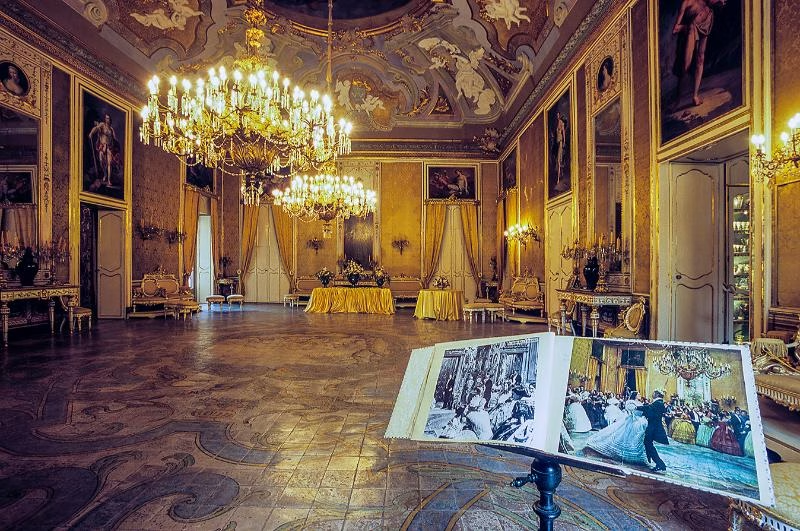
Luchino Visconti used Palazzo Gangi for the celebrated ball sequence in his 1963 film The Leopard, adapted from Giuseppe Tomasi di Lampedusa’s novel. Set during the upheavals of Italian unification, the story follows an aristocratic world adjusting to a changing social order.
The rooms give that story a physical setting: formal spaces for gathering, observing and being seen. Recognising the film adds another pleasure to the visit, but the palace also rewards anyone drawn to the design and craftsmanship of its interiors.
Mirrors, ceilings and adjoining salons
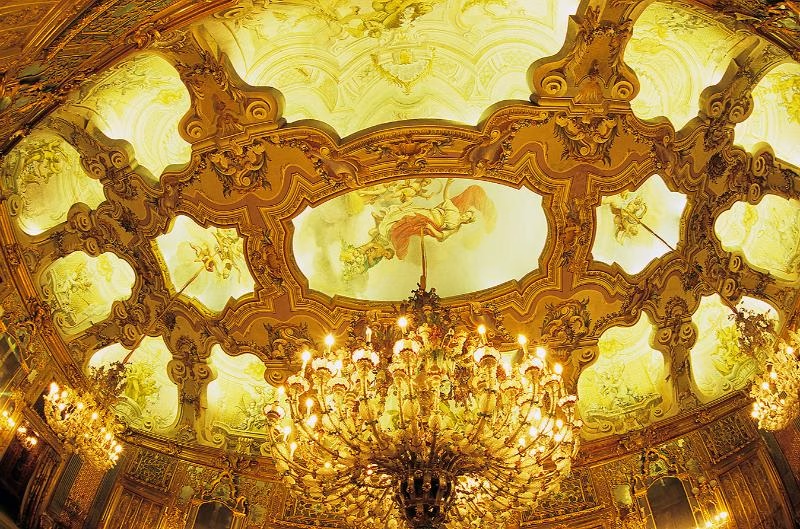
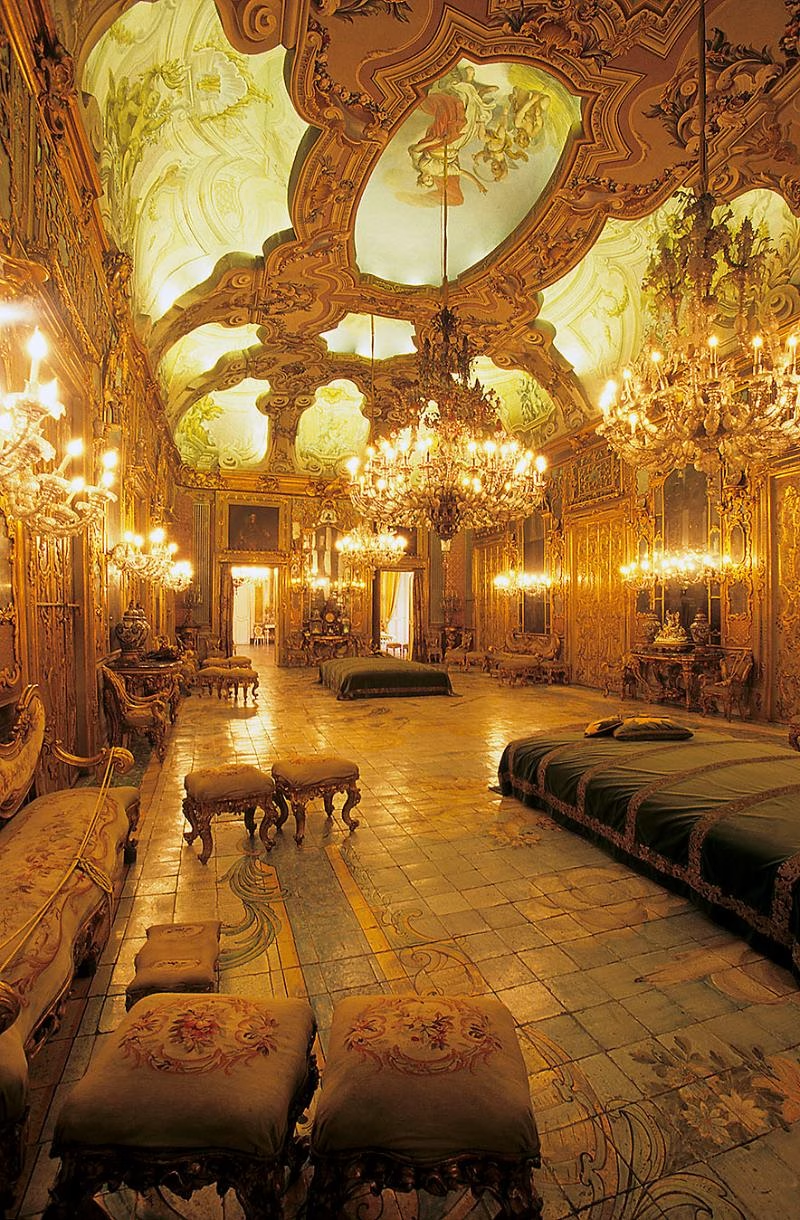
In the Gallery of Mirrors, the decoration works in several directions at once. Mirrors repeat the chandeliers and gilded surfaces, while openings in the lower ceiling reveal painted decoration above. Looking upwards is as rewarding as looking along the room.
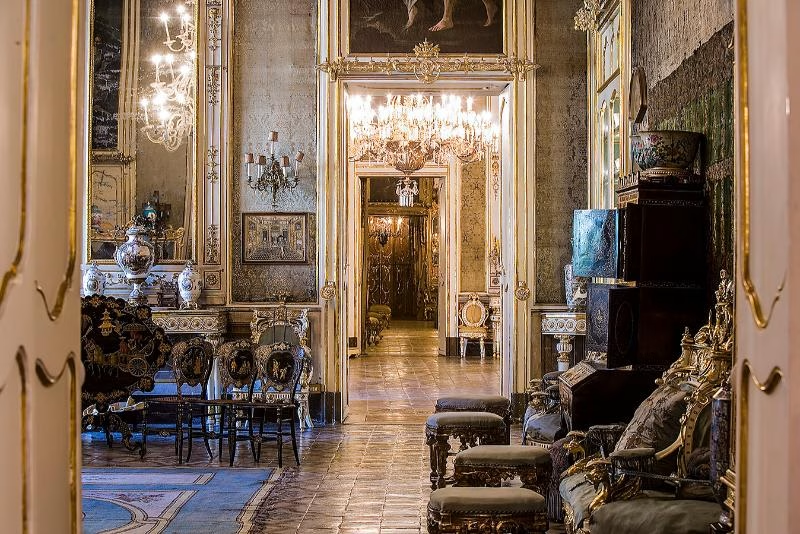
Vittorio’s wider views show how floors, ceilings and furnishings belong to a complete composition. His photographs through doorways then reveal the sequence of rooms: changes of colour and proportion become apparent as the eye moves from one salon to the next.
Glasswork, furniture and collected objects
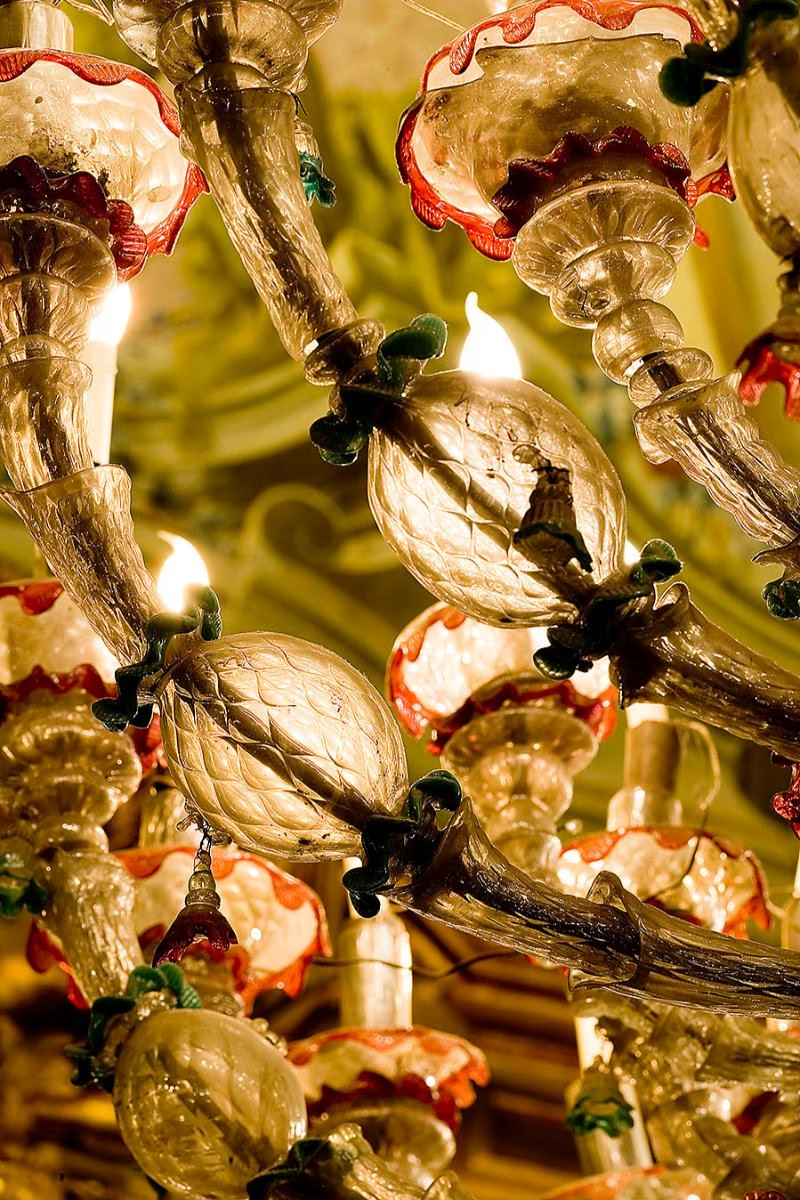
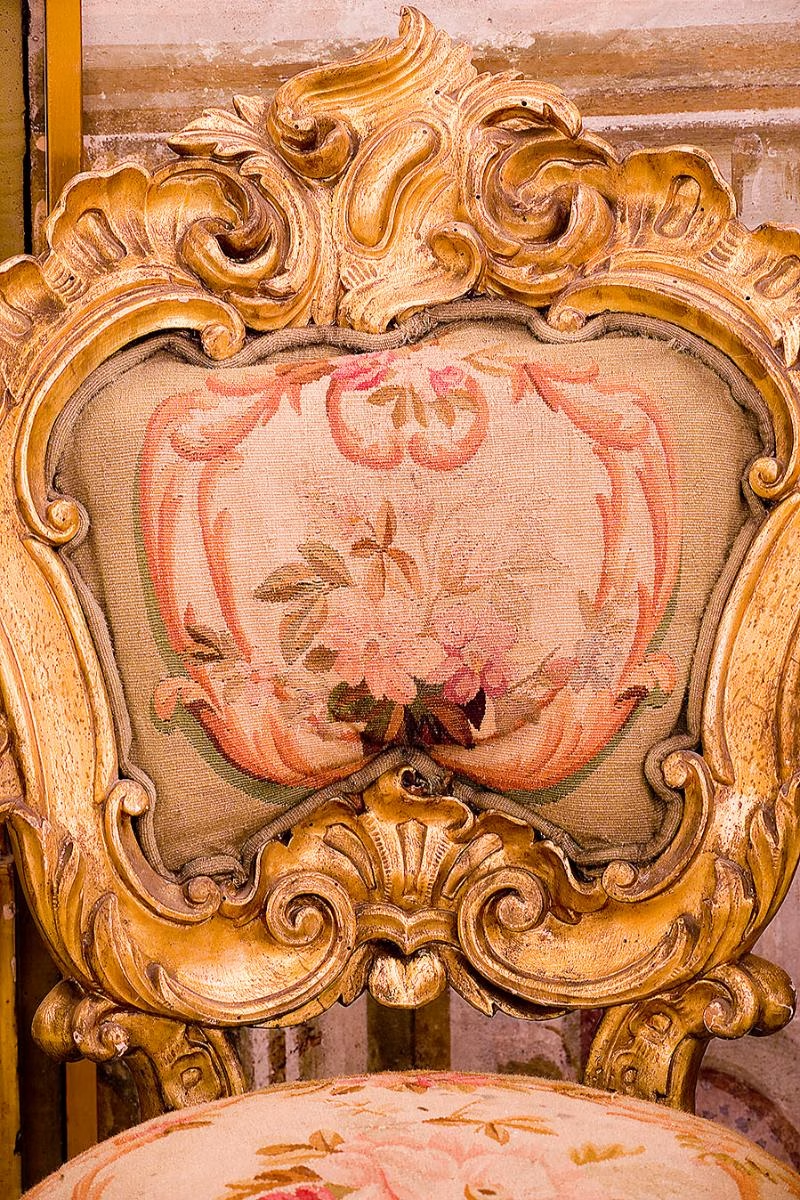
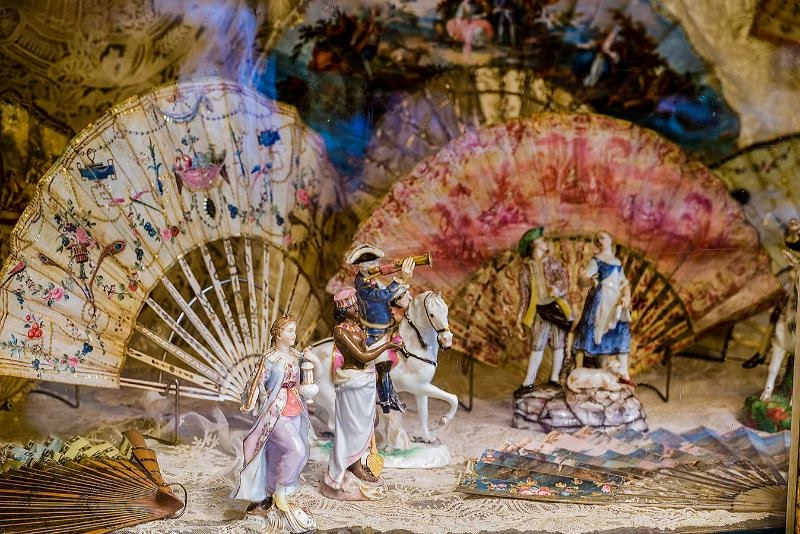
The closer views change the pace. A chandelier becomes an arrangement of coloured glass flowers; a chair reveals the relationship between carved wood and patterned upholstery. Fans, figures and decorative objects give the rooms another scale beyond their architectural grandeur.
These photographs are worth lingering over. They draw attention to surfaces and workmanship that can be absorbed into the overall effect when looking across a large room.
The terrace and the surrounding city
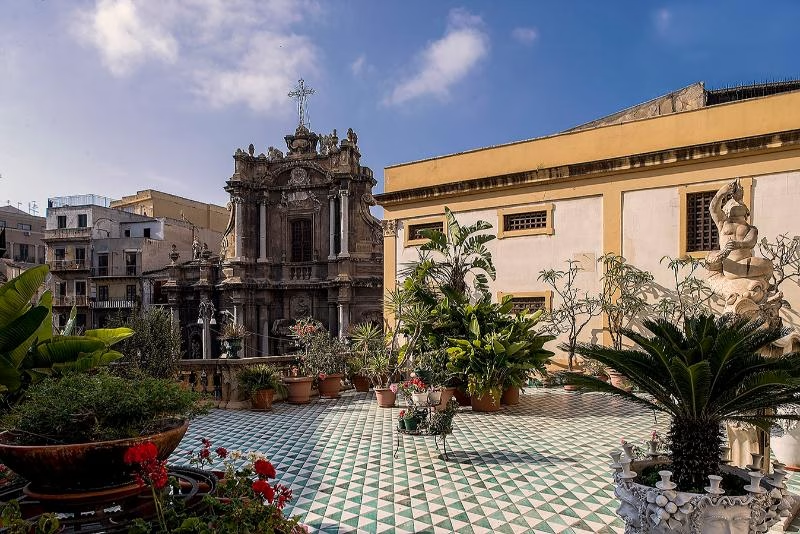
The terrace photographs place the residence back within Palermo. Potted plants, sculpture and patterned paving occupy the foreground, with the façade of Sant’Anna beyond. After the densely decorated interiors, this view makes the relationship between the palace and its neighbourhood especially clear.
Build the rest of the day around the historic centre, with time for lunch and walking between visits. The Stanze del Genio house-museum provides a complementary perspective on collecting and decorative arts, through its display of historic ceramic tiles.
How to visit Palazzo Gangi
Palazzo Gangi is visited by advance booking. If it is a priority for your holiday, start with the available visit dates and arrange the rest of your Palermo stay around them.
Join a scheduled visit
Local organisers offer guided visits on selected dates. Terradamare publishes a booking calendar and allows individual tickets to be purchased online. Its visits last approximately an hour and a half. Check the visit language and available dates when booking.
See Terradamare’s calendar and booking details.
Arrange a private visit
Private visits can be requested from the palace administration, with the date and time agreed in advance. This is a separately arranged group visit, so ask for a quotation for your party rather than assuming the price of an individual ticket applies.
When planning your holiday with ExpertoItaly, tell us if you would like to include the palace. We can enquire about arrangements and fit the visit around your accommodation and other interests in Palermo.
Useful details
- Address: Piazza Croce dei Vespri 6, Palermo.
- Time: allow around 90 minutes for a scheduled visit, plus time to reach the meeting point.
- Photography: the palace’s supplied visiting conditions prohibit photographs and filming in the salons of the piano nobile. The images in this feature should not be taken as an indication that visitor photography is permitted.
- Access: Palermo’s municipal tourism listing marks the palace as not wheelchair accessible. Discuss any mobility requirements before booking.
A photographer’s attention to place

Vittorio Sciosia collaborates with ExpertoItaly, photographing Italian locations and properties and sharing observations from his travels with ExpertoItaly. Here, his photographs move between the scale of the palace and the detail of its furnishings, helping readers understand both the rooms and what to look for within them.
Discover more about the people behind ExpertoItaly, or explore Vittorio’s photographic work.
Palazzo Gangi photographs: Vittorio Sciosia.
Include Palazzo Gangi in your Palermo stay
ExpertoItaly creates tailor-made holidays combining distinctive places to stay with the experiences that interest you. Explore our Palermo holidays to start planning a city stay or a longer journey through Sicily.

 Facebook
 WhatsApp channel