


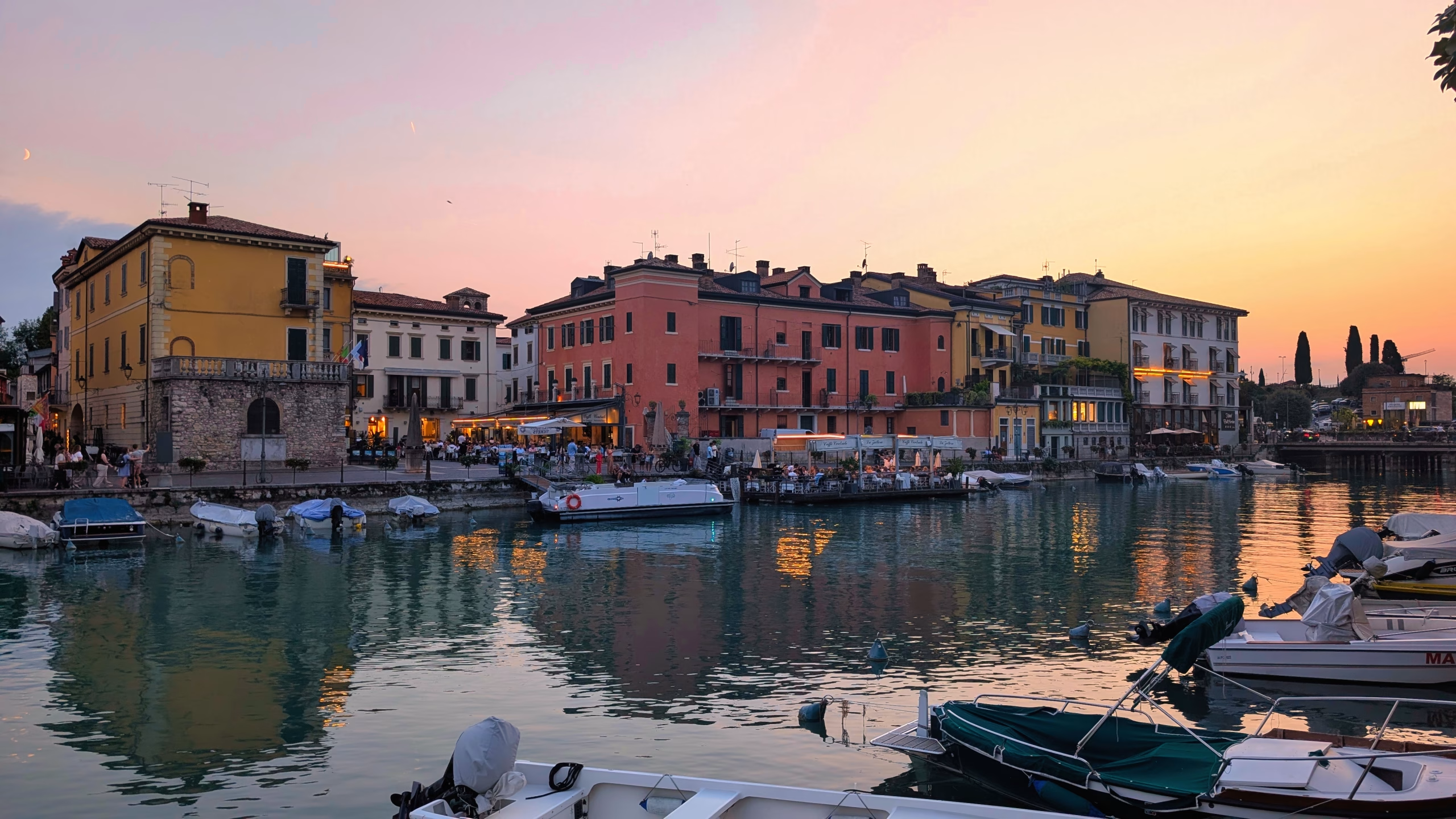
Peschiera del Garda: a fortress town on the water
Venetian bastions, bridges and a compact old town where Lake Garda becomes the River Mincio. Come for a few hours on foot, or make a day of it with a ride towards Borghetto.
In this article
Why Peschiera is worth a visit
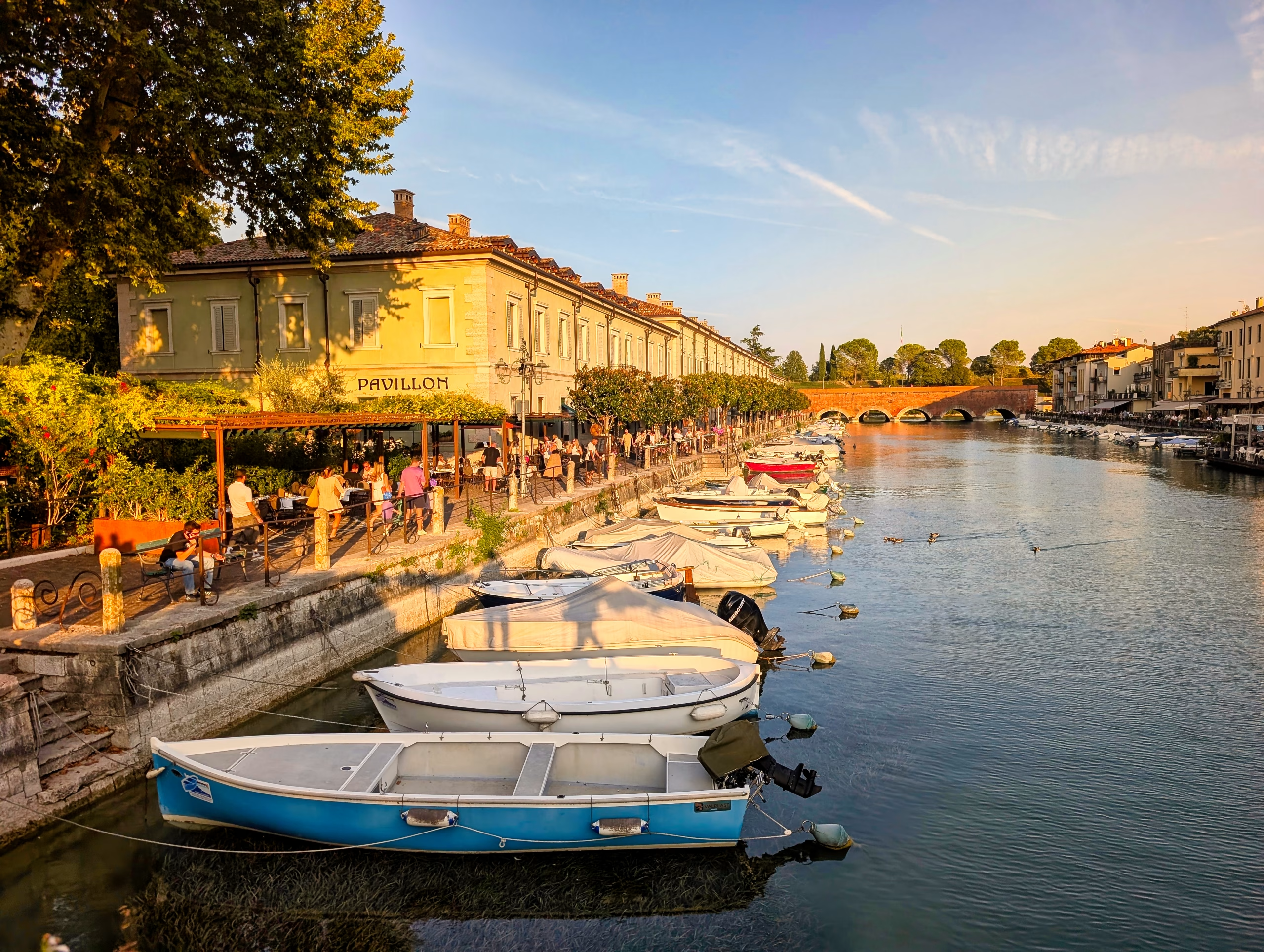
Peschiera’s distinctive feature is its relationship with water. At Lake Garda’s south-eastern corner, the Mincio flows through and around the historic centre, separating streets and squares with canals and outlining the old fortress.
The pleasures are close together: a view along the walls, a bridge over clear water, a café beside the canal and a short walk to the open lake. Much of the interest is outdoors, making Peschiera particularly suitable for visitors who enjoy history through the shape of a town and the details of its buildings.
It is also straightforward to reach by train from Verona: an excellent outing during a Verona holiday, with the option of hiring an e-bike to explore towards Borghetto or Sirmione. You can see the historic centre without a car or a demanding programme of museum visits. Expect a lively holiday town, with busy shopping streets and restaurant terraces in summer; the quieter waterside stretches and the broad defensive channels provide a different pace.
Why a fortress was built here
Control of Peschiera meant control of a strategic meeting point: the southern end of Lake Garda, the Mincio corridor and routes across northern Italy. Water carried people and goods, but it could also protect a defended settlement. That geography explains why successive powers fortified the same small town.
From Roman Arilica to the Venetian fortress
The settlement was known to the Romans as Arilica, and the Scaliger rulers of Verona strengthened it during the Middle Ages. The most striking defences seen today belong to a later phase: the Republic of Venice’s sixteenth-century transformation of Peschiera into a bastioned fortress.
Its roughly pentagonal perimeter has projecting bastions, thick walls and surrounding channels. This was military architecture adapted to artillery. Angled bastions let defenders cover the approaches and neighbouring stretches of wall, while water made the perimeter harder to reach. Look at the relationship between the walls, bridges and channels to understand the design.
Since 2017, the fortified town has formed part of UNESCO’s Venetian Works of Defence, a shared World Heritage site across Italy, Croatia and Montenegro. The designation recognises this system of Renaissance military engineering.

The Austrian Quadrilateral
In the nineteenth century, Peschiera became one corner of the Austrian Quadrilatero, together with Verona, Mantua and Legnago. These strongholds formed a regional defensive system organised around the Mincio and Adige rivers.
The substantial barracks and military buildings around the eastern side of the town belong to this later story. They help explain why Peschiera feels different from a simple lakeside fishing village: generations of soldiers, engineers and administrators shaped its streets as well as its walls.
Three things to notice: the bastions projecting out from the perimeter; the bridges concentrating access into narrow approaches; and the larger, more formal buildings of the former Austrian military quarter.
A walk through gates, canals and squares
Begin at Porta Verona
If arriving from the railway station, Porta Verona makes a useful introduction to the fortress. Pause outside to take in the bridge, channel and monumental gateway together. On the town side, the former military quarter and Parco Catullo introduce the Austrian layer of Peschiera’s history.

Cross towards Ponte dei Voltoni and San Martino
Continue towards Ponte dei Voltoni, the five-arched bridge built in 1556 as part of the Venetian fortress. From here, the canals and the contrasting buildings on either side are easy to appreciate.
Piazza Ferdinando di Savoia and the Church of San Martino provide the next pause. The Roman archaeological area beside the church is a reminder that the town’s history began well before its Venetian walls. Allow time for the square and surrounding lanes rather than treating each landmark as a separate attraction to tick off.
Finish at Porta Brescia and the lakefront
Work through the central shopping streets to Porta Brescia on the western side. Its plainer appearance contrasts with Porta Verona; the bridge gives a particularly useful view of the wide channel and the thickness of the defences.
Return through the centre towards the harbour at Piazzale Betteloni, then continue along the lakefront if you would like a longer walk. This gives the visit a natural progression from enclosed channels and military architecture to the open lake.
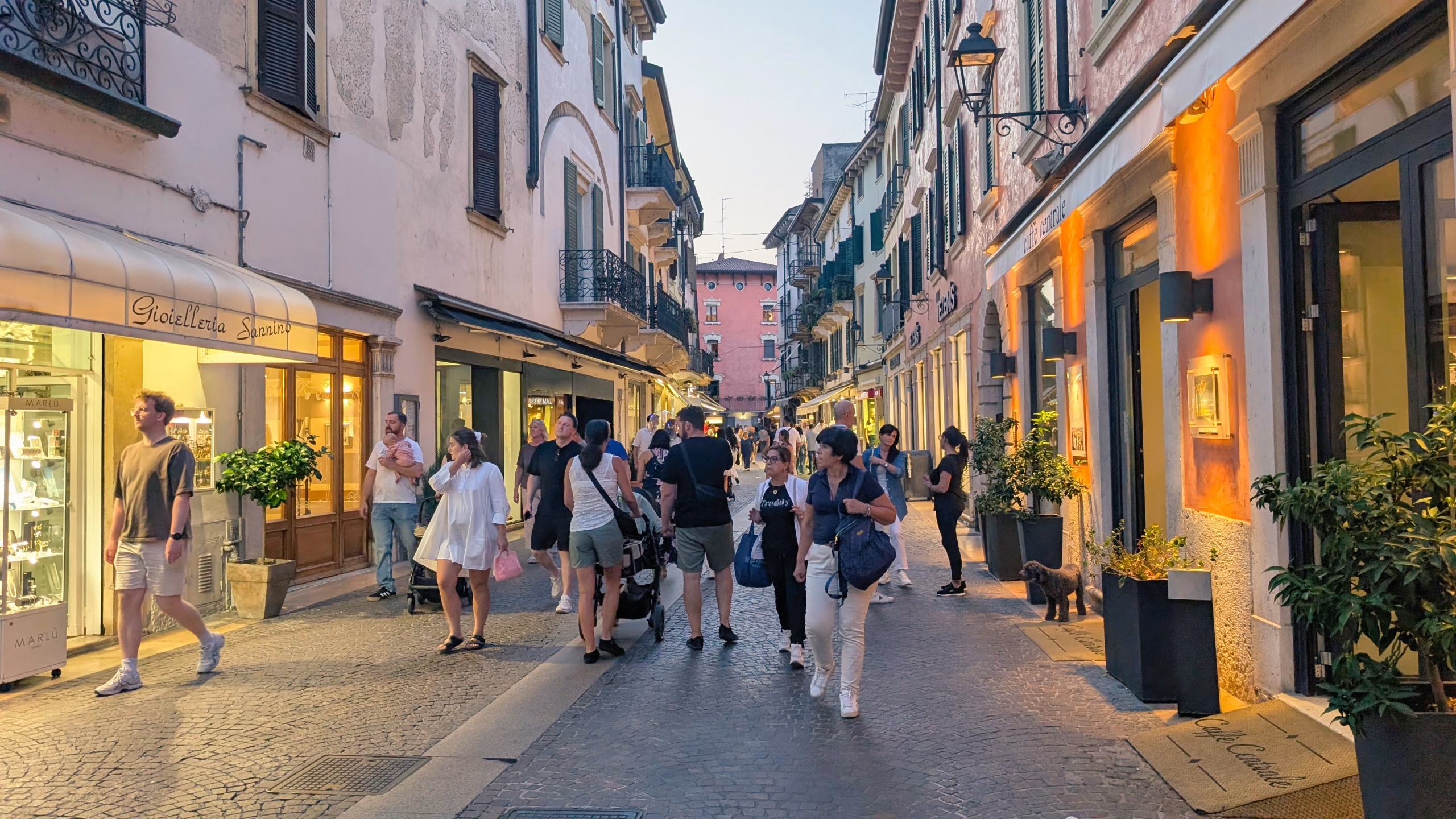
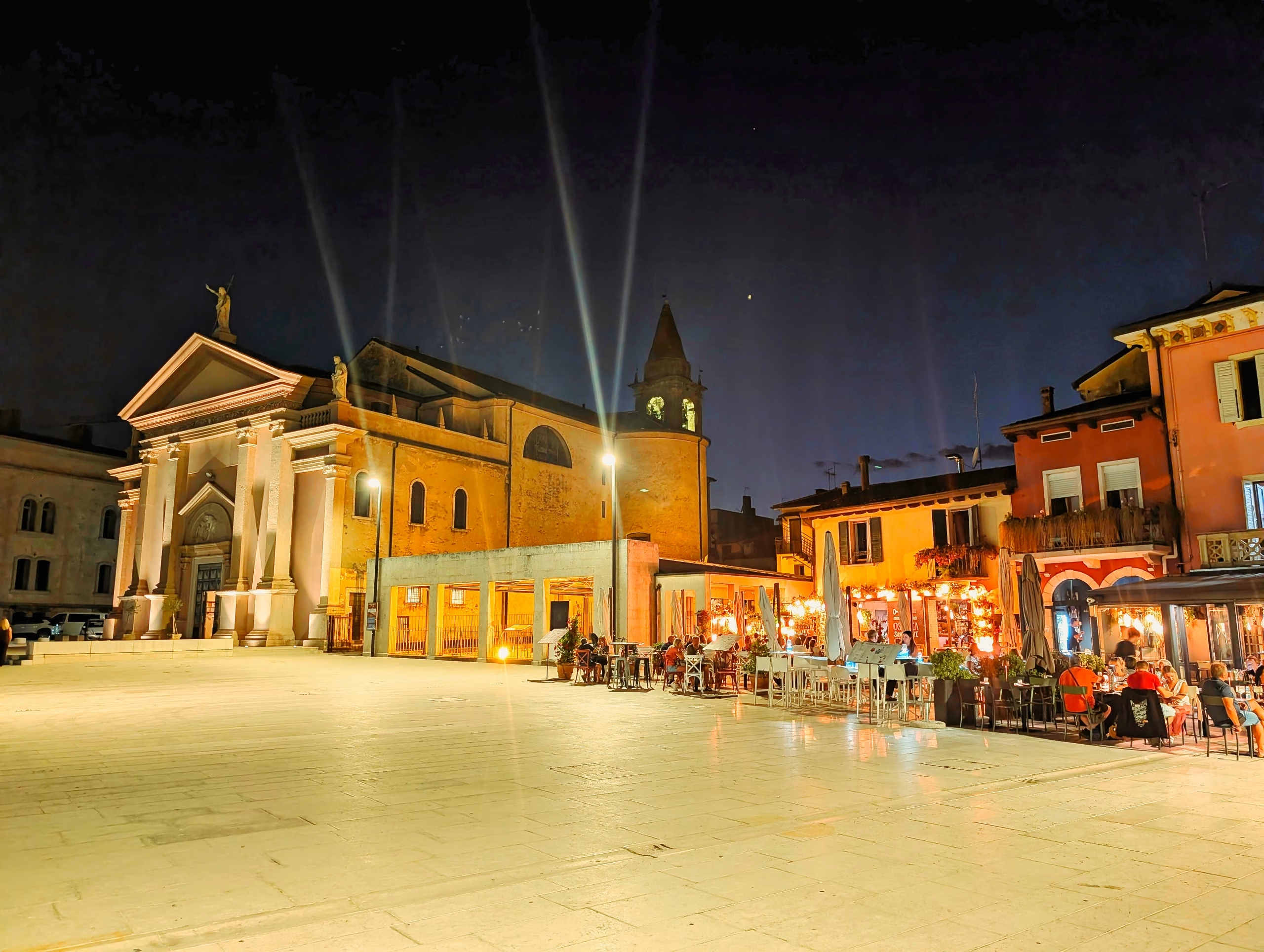
The central walk is mostly gentle, but paving, kerbs and bridges vary. Access to raised ramparts can involve steps; visitors who prefer to avoid them can enjoy the town from street level. For guided visits and current access information, use the official Peschiera visitor service.
How long is enough?
Two hours gives a brief introduction to the gates, canals and central streets. Three to four hours is a more comfortable allowance for the walk above, photographs and a café or lunch stop. These are suggested visiting times, excluding the journey to Peschiera.
A full day suits a slower visit with a longer lakefront walk, a booked boat experience or cycling along the Mincio. Choose one substantial addition: a return ride to Borghetto, a leisurely lunch and a detailed fortress walk can easily fill the day.
For a day trip from elsewhere on Garda, Peschiera is strongest when the town itself is the focus. Combining it with another southern-lake stop can work, but check the journey in both directions before committing. See our Sirmione guide if you are comparing the two.
From Verona: train to the lake, then explore by e-bike
A stay in Verona makes this an excellent day out. Take a direct train from Verona Porta Nuova to Peschiera del Garda, collect a locally hired e-bike and choose between a ride beside the Mincio and an outing towards Sirmione. You can be back in Verona for dinner after a day of water, countryside and small towns.
E-bikes are readily available to hire in Peschiera. For example, Rent & Ride offers electric city and trekking bikes from Via Milano. Reserve ahead in busy periods and check the collection point and return time; allow for the walk from the railway station. Hiring here keeps the train journey simple, with no bicycle to carry on board.
Choose Borghetto for the river landscape
Follow the Mincio south to Borghetto sul Mincio, with time to explore the former mill village and stop for lunch before riding back. This is the natural choice for a day centred on cycling, river scenery and a village visit. The route and suggested timings are explained below.
Choose Sirmione for lake views and the old town
Alternatively, ride west towards Sirmione for views across southern Garda and a visit to the castle-side historic centre. Ask the hire shop for its recommended cycle route: the journey includes roadside stretches and busier approaches. Park the bicycle where permitted and explore the old town on foot.
Choose one destination for an unhurried day. Leave time to enjoy Peschiera’s canals, return the bike and walk back to the station. Check the current train timetable for your date, including any engineering changes.
The Peschiera–Mantua cycle path starts here
Peschiera is the northern starting point of the Ciclabile del Mincio, the cycle route south towards Mantua, or Mantova in Italian. It follows the river and, farther south, artificial channels through the Mincio landscape, changing the scene from lakefront town to farmland, trees and riverside villages.
From the historic centre, a convenient approach is via Porta Brescia and Via Campo Sportivo, following signs for the Mincio cycle route. The national tourism board also identifies an access from Via Valeggio. Pick up a current route map locally so you join the intended riverside section.
Borghetto makes a practical turning point
For an outing from Peschiera, Borghetto sul Mincio is a particularly appealing destination: former mills, water channels and the great Visconti bridge provide a clear reason to stop. Allow roughly 15 km each way, depending on your starting point and chosen approach, so approximately 30 km for the return ride.
At an unhurried pace, plan around one to one-and-a-half hours of riding each way, plus time for lunch and a walk. The route has gentle gradients, but the return distance still matters. A shorter out-and-back ride along the first riverside section is a good alternative if you want only a taste of it.
Continuing all the way to Mantua
Mincio Park lists its Mantua–Peschiera itinerary as 43.5 km one way; the distance you actually ride depends on your start, finish and diversions. Treat the full journey as a cycling day with a planned return arrangement. Riding back as well roughly doubles the distance, before any sightseeing.
Arrange bicycle hire and any one-way collection or return transport in advance. If using trains, check the specific service’s bicycle rules and connections before setting off. Ask locally about any temporary route works, and allow extra time for shared sections and busy approaches to villages.
Our Mincio Park guide explains the wider river landscape; the Borghetto article covers the village in more detail.
Getting to Peschiera for the day
By train
Peschiera del Garda has its own station on the Milan–Venice railway corridor. Verona is an especially convenient starting point, while direct regional services also connect Peschiera with Milan. Check your date and departure station through Trenord or Trenitalia.
The station is outside the fortress. Allow approximately 15–20 minutes on foot to reach the historic centre, depending on your route and pace. You do not need a car for the town walk.
By boat or bus from Lake Garda
The harbour is close to the centre, so arriving by boat can make the journey part of the outing. Consult Navigazione Laghi’s current Garda timetable for your date and return sailing. Journeys from the northern lake can be lengthy.
Buses connect Peschiera with other southern and eastern lakeside towns. Services vary by season; the official local transport page helps identify the appropriate operator and route.

By car
Peschiera has its own exit from the A4 motorway. Choose a signed car park outside the historic core and continue on foot. Roads and parking are busy during summer weekends, so an earlier arrival makes the visit easier.
Make Peschiera part of your Lake Garda holiday
Peschiera works well as an outing during a stay around southern Lake Garda, in Verona or near the Mincio villages. Explore our Lake Garda holidays for accommodation and combinations, or tell us your dates, interests and preferred pace.
Useful links
- UNESCO: Venetian Works of Defence
- Peschiera visitor service: Ponte dei Voltoni; Porta Verona; Porta Brescia
- Mincio Park: the western side of the Quadrilateral
- Mincio Park: the 43.5 km cycle itinerary; Italia.it: joining the cycle path
Visiting and riding times are planning estimates. Recheck transport timetables and local cycling conditions for your travel date.



 Facebook
 WhatsApp channel