


Remarkable frescoes, a living university and a Renaissance botanical garden, with Venice, Vicenza, the Euganean Hills and thermal pools within reach.
In this article
A cultural city worth making your base
What I like about Padova is how easily substantial culture becomes part of an ordinary day. You can spend the morning with Giotto, have lunch around a working market and return in the evening to a square full of people who live and study here. Tourism is less dominant than in nearby Venice, and the choice of cafés, food shops and restaurants makes a longer stay both enjoyable and good value.
Padova — Padua in English — stands on the Veneto plain, west of Venice and east of Vicenza. Its arcaded centre is walkable, while the railway makes both neighbouring cities straightforward days out. To the south-west, the Euganean Hills add vineyards and Arquà Petrarca; Abano and Montegrotto Terme offer thermal pools and time away from sightseeing.
Give the city several days of its own. Spread the frescoes, university and botanical garden across different mornings, then add the outings that appeal to you. With a day in the hills and a thermal interlude, there is good reason to stay longer than a conventional weekend.
Ancient Patavium, a medieval court and a university city
Padova’s origins predate Rome. Ancient tradition linked its foundation to Antenor, a Trojan exile: a founding legend rather than a documented biography. Roman Patavium became an important city, and the Roman historian Livy was born here. The medieval commune and, later, the Carrara rulers made Padova a centre of political power and artistic patronage.
The fourteenth century is the crucial period for its painted interiors. Giotto’s innovations were followed by other artists working for religious communities, wealthy families and the ruling court. Venice conquered Padova in 1405, adding another layer to a city whose university, founded in 1222, continued to attract scholars from across Europe.
This is why “Renaissance city” only tells part of the story. Its two UNESCO inscriptions recognise specific achievements: the fourteenth-century fresco cycles across eight religious and civic complexes, and the botanical garden founded in 1545. They are separate World Heritage sites within a much broader historic city.
Giotto and the painted city
The Scrovegni Chapel is the visit around which to organise your cultural days. Painted by Giotto in the early fourteenth century, its scenes from the lives of Mary and Christ unfold beneath a blue, star-filled vault. Figures have weight, rooms suggest depth and grief, tenderness and surprise become recognisable human expressions. These are changes that helped redirect European painting.
Look at the gestures and the exchanges of glances, then turn towards the Last Judgement on the entrance wall. Enrico Scrovegni, the patron, appears there offering a model of the chapel. His presence makes the commission personal as well as religious; the often repeated explanation that it was simply an act of repayment for his father’s usury is too neat to be the whole story.
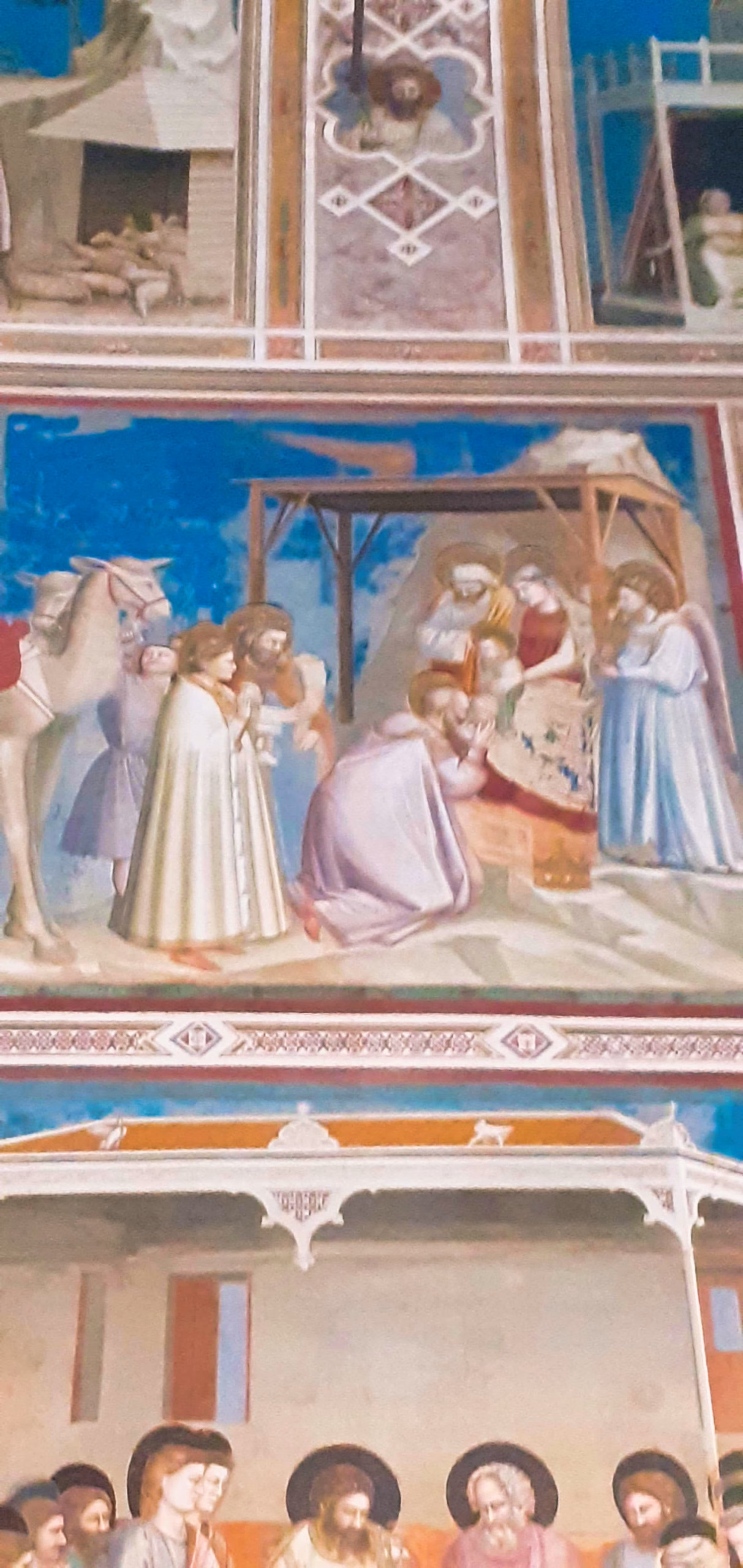

Scrovegni must be booked in advance. Admission is timed and the standard visit inside lasts 15 minutes. Treat it as a fixed point in the holiday rather than something to fit in when passing. ExpertoItaly can build the surrounding visits around your reserved entry.
Why it is also called the Arena Chapel
Giotto painted the cycle between 1303 and 1305. The chapel originally stood beside Enrico Scrovegni’s family palace, within the area of Padova’s Roman amphitheatre: hence its other name, the Arena Chapel. The palace has gone, but the name preserves that earlier setting.
How to read the painted story
The whole interior presents the Christian story of salvation. Three tiers of narrative scenes move from Joachim and Anne, Mary’s parents, through Mary’s life to Christ’s ministry, Passion and Resurrection. Read the episodes in successive bands around the room, rather than treating each wall as a separate story.
The blue, star-covered vault creates a heavenly setting above them. Below the narrative scenes, fourteen figures represent moral choices through seven Vices and seven Virtues. The Last Judgement fills the entrance wall, bringing the biblical story and the choices of human life to their conclusion.
Look for three things as you move between the scenes: emotion in faces and gestures; space suggested by buildings, rocks and overlapping bodies; and human contact through hands, embraces and exchanged glances. Giotto’s figures make sacred events feel physically present and emotionally recognisable.
Three scenes worth finding
The Meeting at the Golden Gate. Joachim and Anne embrace after their separation. Notice their faces, the hands drawing them together and the figures witnessing their reunion. An episode in sacred history becomes an intimate encounter between two people.
The Kiss of Judas. Judas’s yellow cloak wraps around Christ as the two faces meet. Torches, weapons and tightly grouped figures surround them, but the exchange of looks holds the centre of the scene. Betrayal is conveyed through proximity and the contrast between Christ’s stillness and the crowd’s movement.
The Lamentation. Mary bends towards the dead Christ while the surrounding mourners express grief in different ways. Above them, angels twist and gesture in distress. Follow the sloping rock towards the faces of Mary and Christ: the landscape helps direct your attention to their encounter.
The Vices and Virtues: the story at eye level
The lower figures are painted in monochrome to suggest sculpture. Their opposed qualities form a moral route towards the Last Judgement. The seven pairings help make sense of the sequence:
| Vice | Opposing virtue |
|---|---|
| Foolishness | Prudence: discernment and sound judgement. |
| Inconstancy | Fortitude: steadiness and moral strength. |
| Wrath | Temperance: restraint and self-command. |
| Injustice | Justice: fair judgement and an ordered community. |
| Unbelief | Faith: trust in God. |
| Envy | Charity: generous love in place of resentment. |
| Despair | Hope: confidence in salvation. |
Justice and Injustice occupy the centre of their respective sequences. These civic qualities are particularly striking in a chapel commissioned by a prominent financier. The chapel’s collection guide to the Vices and Virtues offers a closer look at the individual figures.
Finish with the Last Judgement
Turn towards the entrance wall before leaving. Christ presides at the centre, with the blessed and the damned arranged on either side. Lower down, Enrico kneels with the model of his chapel. The patron places his gift within the very scene of judgement that surrounds the visitor.
That is the connection to carry away: the narrative walls show salvation made possible; the lower figures show moral choices; the Last Judgement shows their ultimate consequences. Begin with a moment taking in the room, give most of your time to a few scenes, then look at the lower figures and the entrance wall. This is a manageable approach to the standard 15-minute visit, without trying to identify every episode.
Photography is permitted for personal use without flash, lamps or tripods. With limited time inside, a few considered photographs leave more of the visit for looking.
Why the Urbs Picta Card is useful
The Padova Urbs Picta Card makes particular sense when you want to follow the fresco story beyond Giotto. It covers the eight UNESCO complexes and local Busitalia Veneto public transport. The tourist versions currently cost €28 for 48 hours or €35 for 72 hours (October 2026). The longer version gives more breathing space between interiors; Scrovegni still needs its own reserved slot, arranged with the card.
The route links the Scrovegni Chapel and Eremitani church with Palazzo della Ragione, the Carraresi Chapel, the Cathedral Baptistery, the Basilica of Saint Anthony, the Oratory of San Giorgio and the Oratory of San Michele. You need not turn the card into a race to see all eight. Choose several contrasting interiors and let the rest of the city sit between them.
The Baptistery: a different vision of Paradise
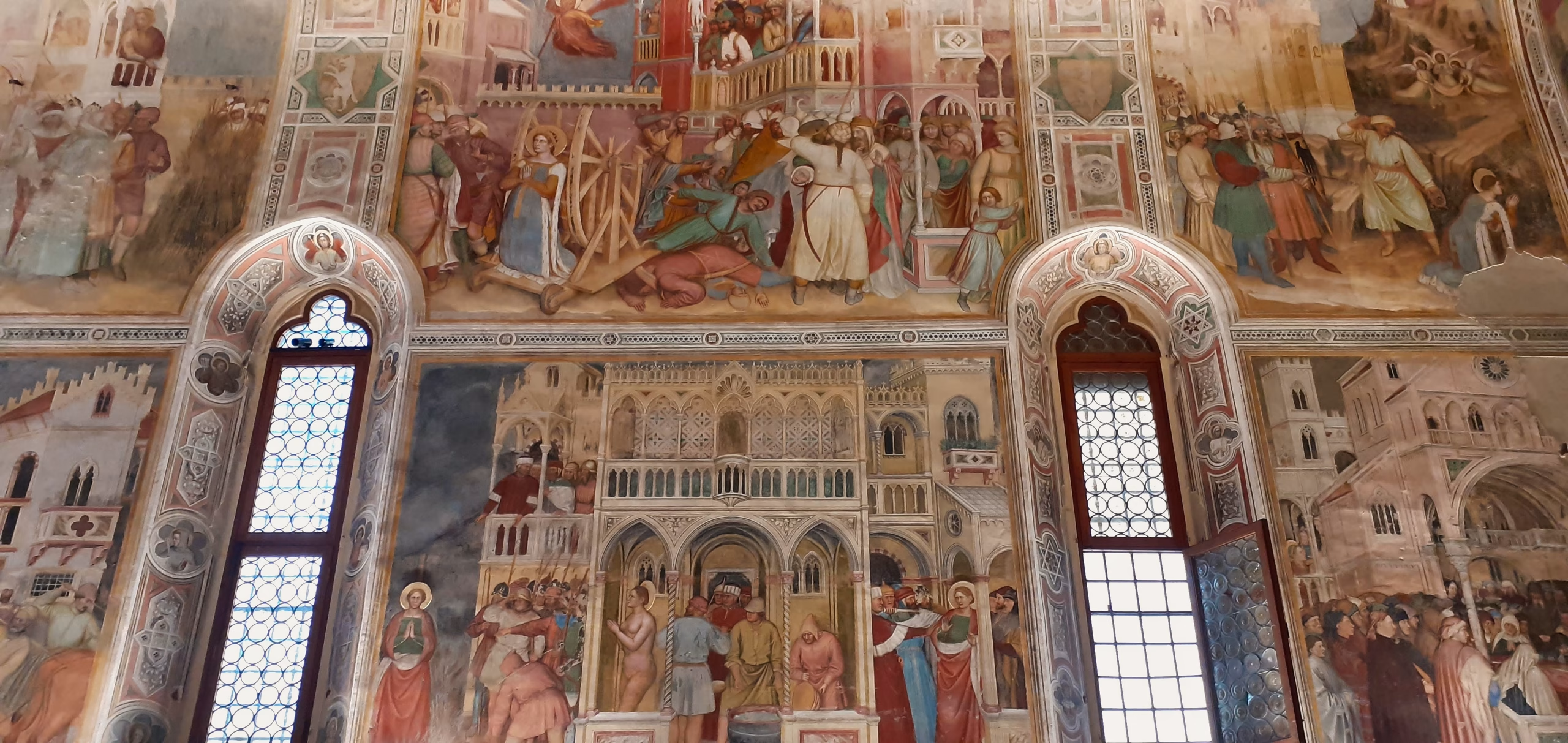
Beside the cathedral, Giusto de’ Menabuoi’s frescoes create a particularly concentrated experience. In the dome, rings of saints and angels gather around Christ. Seeing this after Giotto brings the differences between artists into focus, rather than reducing “Padova’s frescoes” to a single visit.

Market squares beneath a painted hall
Piazza delle Erbe and Piazza della Frutta give Padova its everyday centre. Market stalls, food shops and café tables surround Palazzo della Ragione, once the city’s law court. Beneath it, the covered food shops of Sotto il Salone make a good place to browse cheeses, cured meats and provisions for an apartment stay.

Go upstairs for the scale of the Salone, its high timber roof and walls divided into many painted scenes. The imagery joins astrology, occupations and daily life in a building that once administered civic justice. Giotto’s original decoration was lost in the fire of 1420; much of the cycle visible today belongs to the reconstruction that followed.


Coffee, smaller streets and the evening
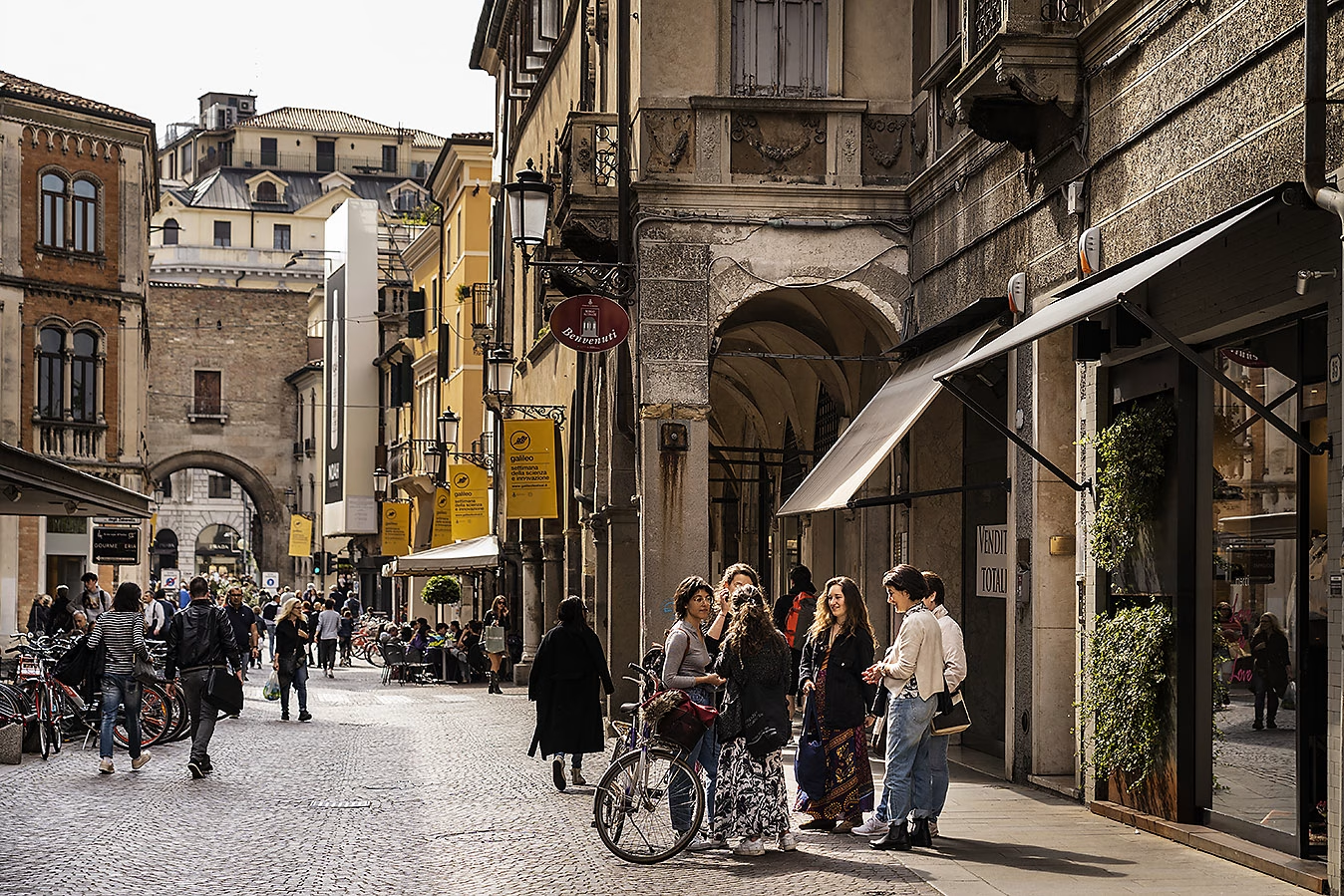
Continue towards Piazza dei Signori for the clock tower and a more formal civic setting. The lanes of the former Jewish ghetto, south of Piazza delle Erbe, offer a smaller scale of shops and places to eat. Near Palazzo del Bo, Caffè Pedrocchi adds a historic café stop; its mint-and-cocoa coffee is a distinctive house speciality.
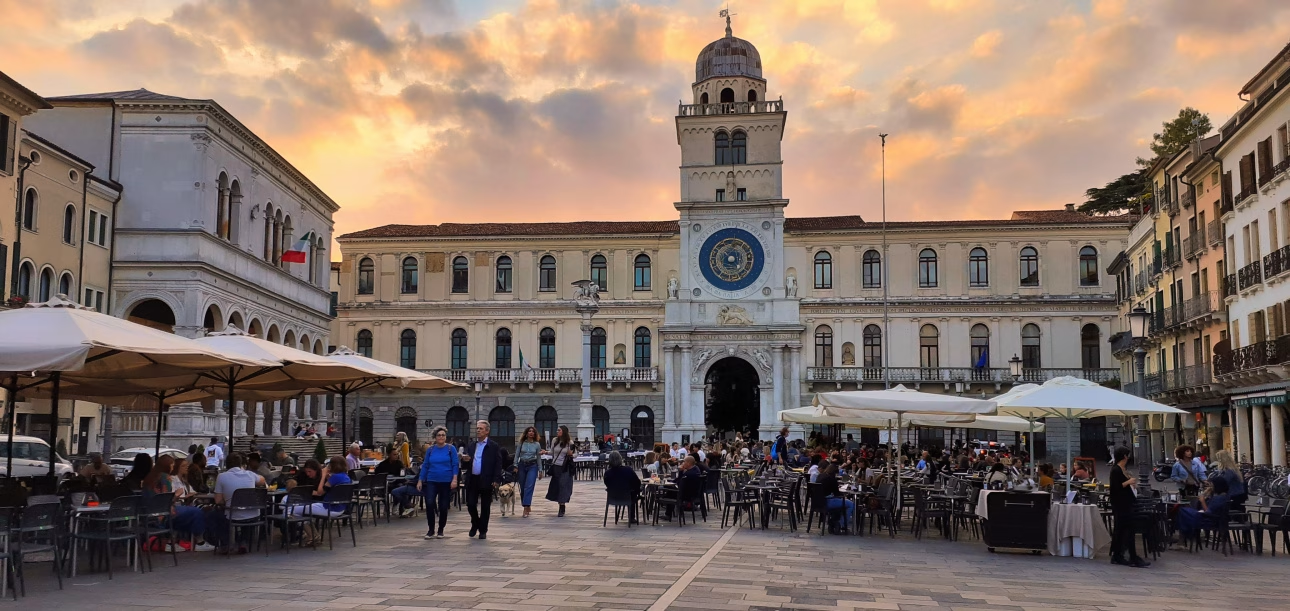


Staying in town lets you enjoy this part of Padova without keeping an eye on a return train. Leave an afternoon for shopping under the porticoes, then choose dinner around the squares or in the neighbouring streets. The city is lively rather than uniformly quiet; that university atmosphere is part of its appeal.

Who was Saint Anthony, and why does he matter here?
Anthony was born Fernando in Lisbon around 1195. He became a Franciscan friar, took the name Anthony and became known for his learning and preaching in Italy and France. Padova was especially important in the final period of his life. He died nearby in 1231 and was canonised the following year; the basilica built to house his remains became a major place of pilgrimage.
This explains why Padovans call him simply Il Santo — “the Saint”. The basilica is a working sanctuary, with worshippers coming to his tomb, as well as an extraordinary building to visit for its architecture and art. Anthony is also widely invoked by Catholics seeking lost things, which helps explain his familiarity far beyond Padova.
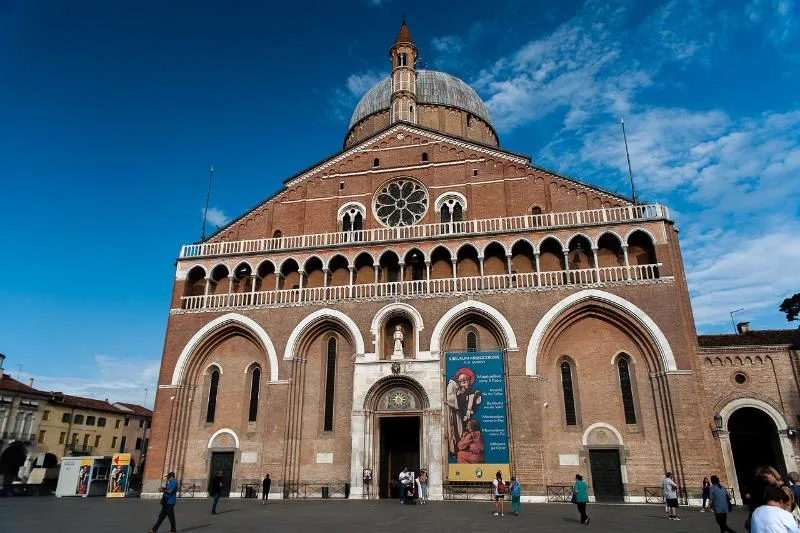
Give the interior time beyond the tomb. The Chapel of Saint James contains fourteenth-century frescoes by Altichiero da Zevio and Jacopo Avanzi; the neighbouring Oratory of San Giorgio continues the painted-city story. Donatello’s bronze equestrian monument to Gattamelata stands outside in the square. These works belong to different periods and settings, brought together by the importance of the sanctuary.
Galileo and a city built around learning
The university was founded in 1222, and its presence still shapes Padova’s streets. Palazzo del Bo, its historic headquarters, makes that long history tangible through courtyards, heraldic decorations and rooms associated with teaching. A guided university visit is the best way to understand the building rather than simply walking past its entrance.
Galileo Galilei taught mathematics in Padova from 1592 to 1610. These were the years in which he developed his telescopic observations, including the Moon’s surface and Jupiter’s moons, published in the Sidereus Nuncius in 1610. His significance here is therefore much more than a famous name attached to a lecture room.

The university’s permanent anatomical theatre, inaugurated in 1595, tells a parallel story of direct observation in medicine. Its steep wooden tiers were designed for students to watch anatomical demonstrations. The historic tour brings together the theatre and rooms linked with Galileo; we can choose the visit that fits your interests and available dates.
Remembering Jewish lecturers and students
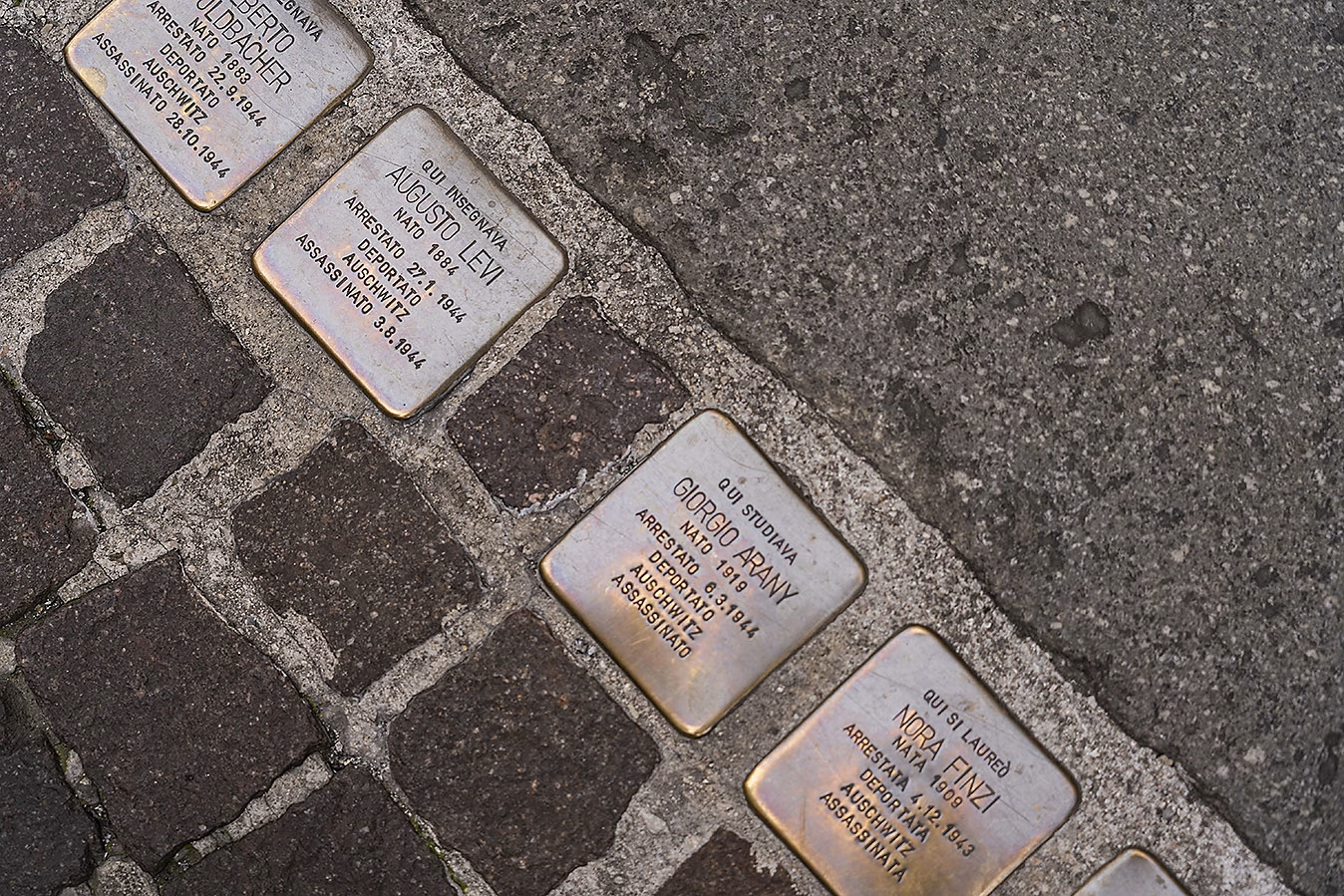
Outside Palazzo Bo, look down at the brass pietre d’inciampo, or “stumbling stones”, set into the pavement. They commemorate members of the university’s Jewish community who were deported and murdered at Auschwitz. The names visible here include lecturers Augusto Levi and Alberto Goldbacher, alongside Giorgio Arany and Nora Finzi, who studied at the university. These individual lives belong to its history as much as its celebrated scholars.
A botanical garden with a scientific purpose
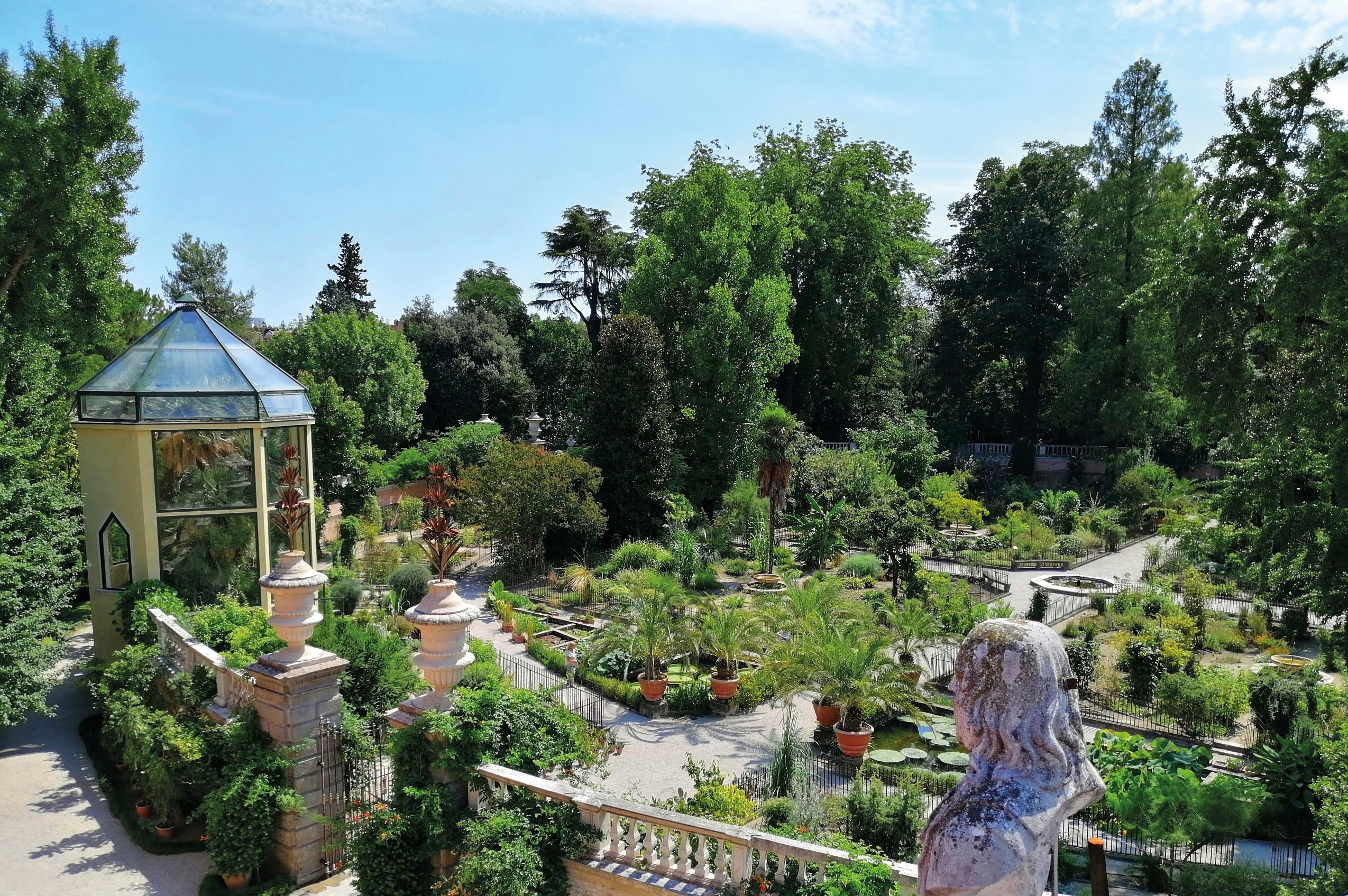
Founded in 1545 to cultivate medicinal plants for study, Padova’s Orto Botanico is the world’s oldest academic botanical garden still in its original location. Its historic enclosed plan belongs to the Renaissance, but its work continues: this is a place of research and education as well as a garden to enjoy.
The contrast between the ordered historic garden and the modern Biodiversity Garden greenhouses gives the visit substance. Plant habitats, climate and the relationship between people and plants sit alongside the pleasure of looking closely at leaves, flowers and mature trees. Allow an unhurried couple of hours, longer if botanical history is a particular interest. Admission is separate from the fresco card.
Combine it with Prato della Valle
The garden lies near Saint Anthony’s basilica and Prato della Valle, making the southern part of the centre a sensible area for one day. Prato’s canal, bridges and ring of statues frame a broad open space, with the domes of Santa Giustina beyond. After several painted interiors, it offers a welcome change of scale and light.

Padova’s unique curiosities
A palm that became part of literary history
In the botanical garden, look for the fan palm planted in 1585, now known as Goethe’s Palm. Goethe examined it during his Italian journey in 1786; it helped inform his thinking about plant forms, later developed in The Metamorphosis of Plants. A particular living specimen connects the garden’s science with the history of ideas.
A landmark degree in 1678
Elena Lucrezia Cornaro Piscopia received a degree in philosophy from the University of Padova in 1678 and is recognised as the first woman to gain a university degree. Her achievement did not immediately open the universities to women: its importance becomes clearer when set against the barriers that remained. It is another reason to look at the university as a history of people, as well as architecture.
The astronomical tower that Galileo did not use
La Specola’s tower is an appealing sight beside the water, but it became an observatory in the eighteenth century, long after Galileo’s time in Padova. His telescopic work belongs elsewhere in the city. Keeping those histories separate makes both the medieval tower and Padova’s later astronomy easier to understand.
Venice and Vicenza: two contrasting days by train
Padova’s position on the main east–west railway is a practical advantage. Direct trains connect it with Venice Santa Lucia and Vicenza, so neither outing needs a hire car. Allow separately for getting from your accommodation to Padova station, which is north of the historic core.
Venice: a day on the water
Travel to Venezia Santa Lucia, on the island, where you step out beside the Grand Canal. Choose one principal cultural visit and leave the rest of the day for walking, a vaporetto journey and lunch in a neighbourhood that suits your interests. Padova works well if you want to experience Venice during the day and return to a different city atmosphere in the evening.
Vicenza: Palladio at a different scale
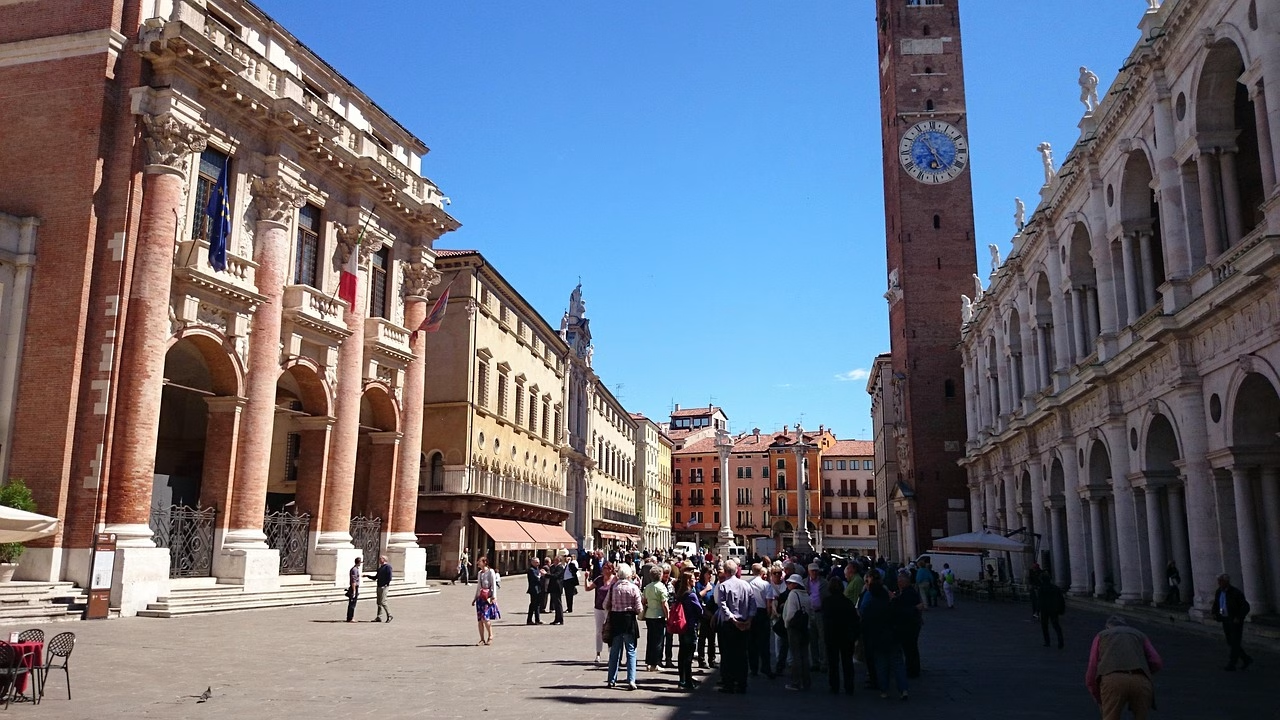
Vicenza offers a concentrated day of architecture. Walk from the station towards Piazza dei Signori and the Basilica Palladiana, then make Teatro Olimpico the principal interior visit. The theatre’s permanent perspective scenery is a rewarding counterpart to the painted illusion seen in Padova. La Rotonda and other country villas lie outside this compact central route and need their own allowance for travel.
A day in Vicenza
A focused introduction to Palladio, the city squares and the Teatro Olimpico.

Make Verona a second base
For the Arena, Roman streets, museums and evenings in Verona, consider a separate stay.
Verona is also on the railway west of Padova. Our twin-centre holiday gives each city its own evenings and time to explore, rather than treating every destination as a day trip.
Il Burchiello: from Padova to Venice through the villas
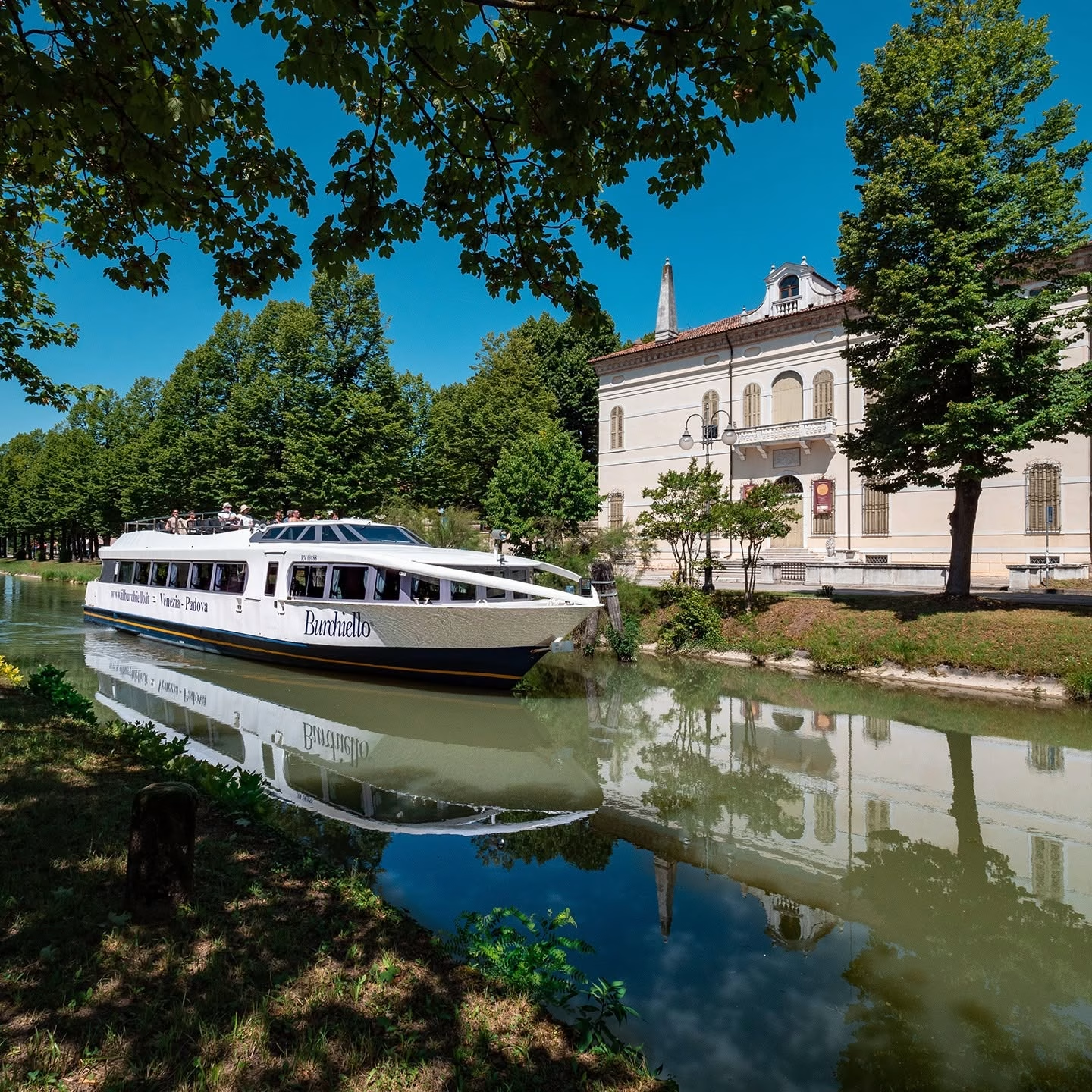
A journey with Il Burchiello gives Venice a different approach. You travel through the mainland landscape of the Venetian aristocracy, where country houses face the water and painted reception rooms express the ambitions of their owners. It is a cultural excursion in its own right, with time aboard and guided villa visits.
The name recalls the passenger boats that carried travellers between Padova and Venice in the eighteenth century. Today’s service uses modern motorboats, following the historic waterway through a succession of locks and opening bridges. Watching the boat change level in a lock is part of understanding how this connection between the inland city and the lagoon works.
The route from Portello to the lagoon
From Padova’s historic Portello landing, the cruise follows the Piovego towards Noventa Padovana, passing Villa Giovanelli. At Stra it joins the Brenta Riviera, continuing through Dolo, Mira and Oriago towards Malcontenta. Beyond the Moranzani lock and Fusina, the journey crosses into the Venetian lagoon and reaches the waterfront by San Marco.
The landscape changes throughout the day: Padova’s waterways and old defences, villages and villa façades, then the wider lagoon. Many houses are seen from the boat; the named villa stops are the opportunities to go inside. The full itinerary links Villa Pisani at Stra, Villa Widmann in Mira and Palladio’s Villa Foscari, known as La Malcontenta.
Villa Widmann in Mira: look closely at the “stucco”
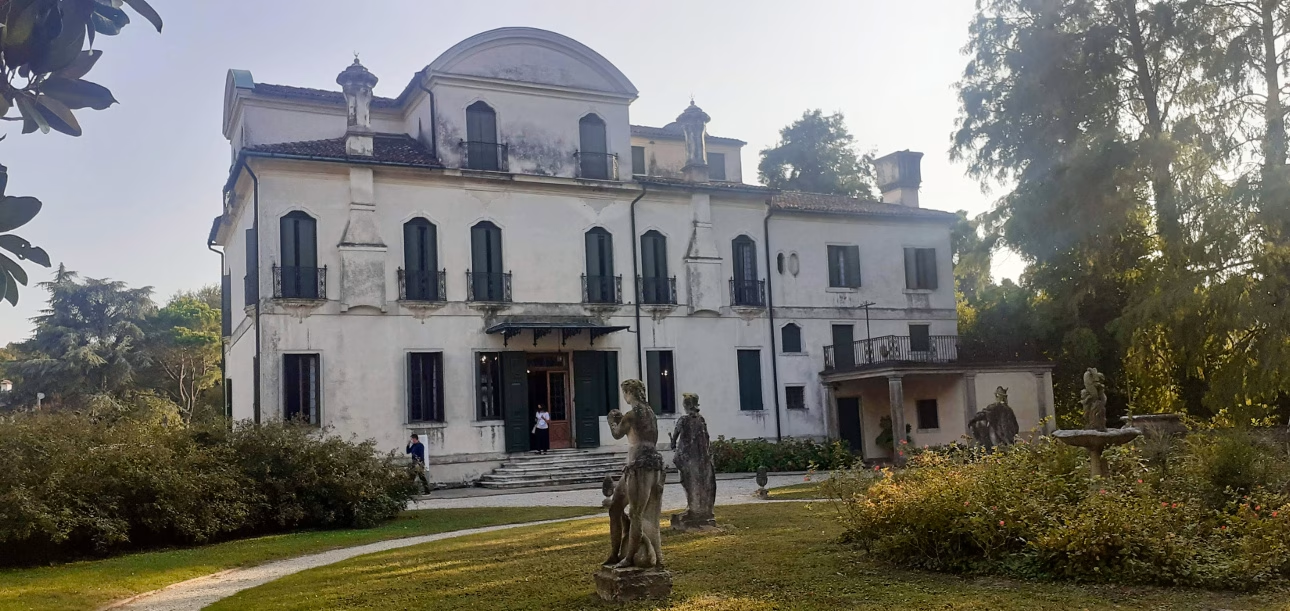
The villa in the photographs is Villa Widmann Rezzonico Foscari, in Mira. Its garden façade and relatively compact scale introduce a different kind of country residence from the much larger Villa Pisani. Inside, the double-height ballroom and its surrounding gallery create the setting for an elaborate painted interior.
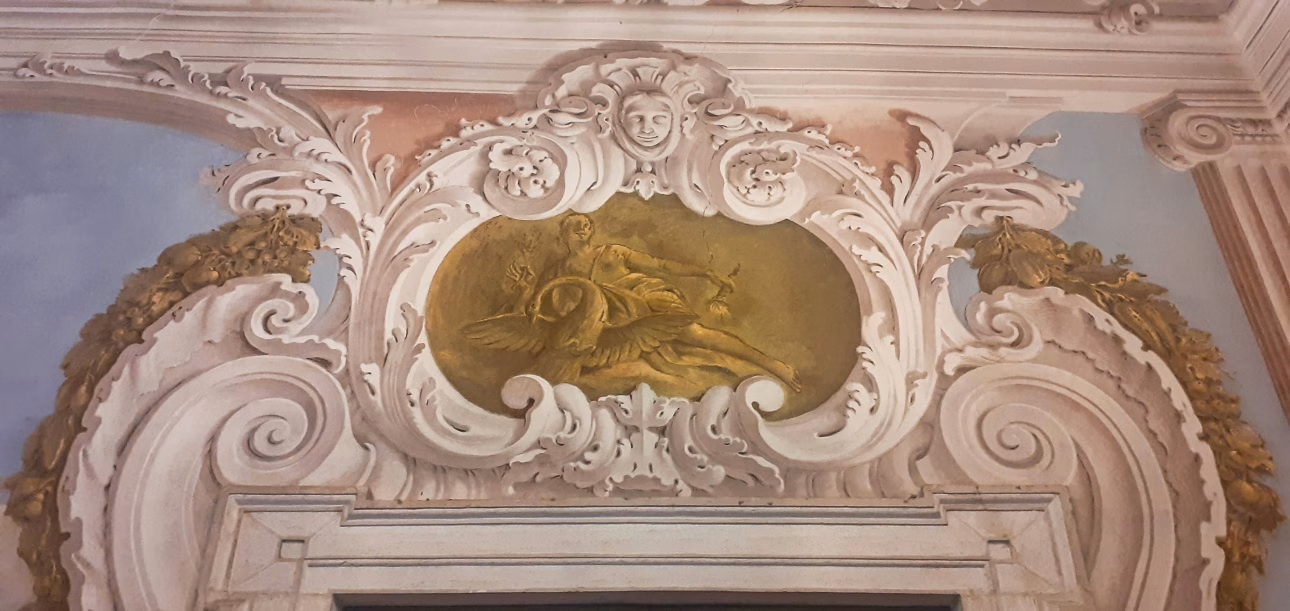
The detail to enjoy is the illusion of sculpted decoration. White scrolls, shells, frames and monochrome figures seem to project from the walls, yet the painted highlights and shadows supply much of that apparent depth. This is trompe-l’œil, literally a deception of the eye: painting makes a surface appear to carry three-dimensional architectural ornament.
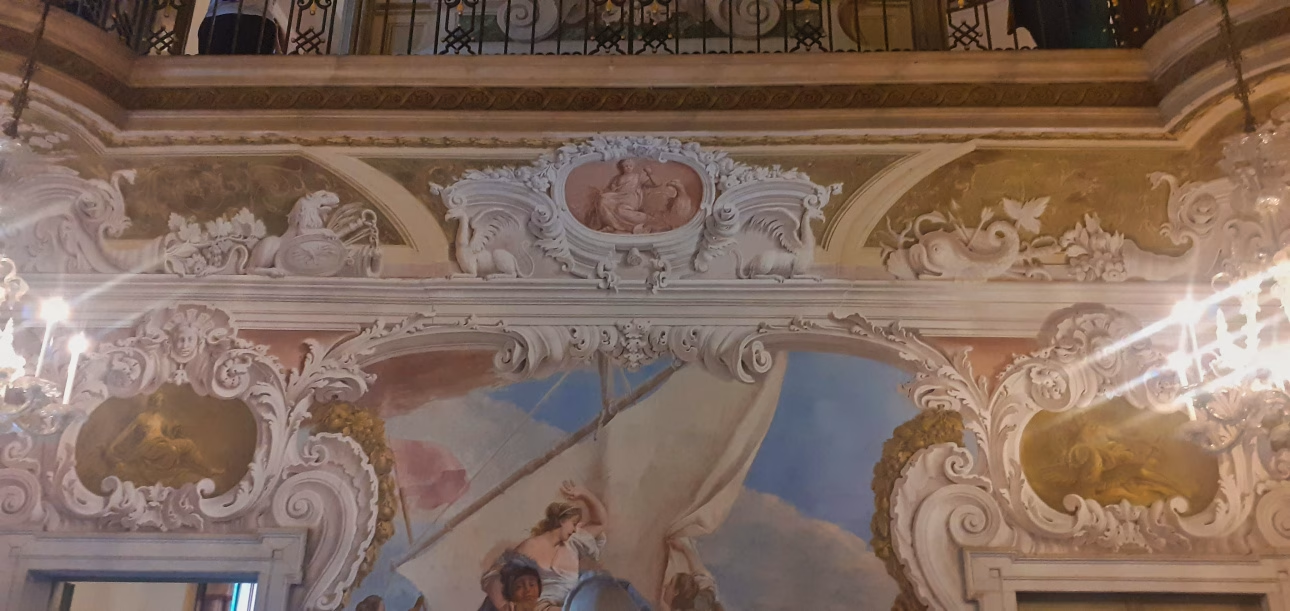
The villa’s own account associates the figurative frescoes with Giuseppe Angeli and the decorative architectural painting with Gerolamo Mengozzi Colonna. Look between the mythological scenes and their surrounding ornament: the relationship between painted figures, imagined mouldings and the real gallery is what gives the room its theatrical effect.
Two other villas, with quite different characters
Villa Pisani, Stra: a much grander eighteenth-century residence, with a monumental façade and a ballroom ceiling painted by Giambattista Tiepolo to celebrate the Pisani family. The cruise’s guided interior visit has its own timetable; a leisurely exploration of the extensive park is better treated as a separate visit.
Villa Foscari, La Malcontenta: Palladio’s sixteenth-century villa stands on a raised base, its temple-like entrance facing the water. Its frescoed rooms offer a different balance of classical architecture and painted illusion from Villa Widmann’s Rococo ballroom.
Full-day and half-day options
The service is seasonal, and the direction varies with the sailing day. These are the six standard choices, grouped by the stretch of waterway covered:
| Cruise | Route | Villa visits |
|---|---|---|
| Full day, either direction | Padova–Venice | Villa Pisani, Villa Widmann and Villa Foscari. |
| Half day, either direction | Padova–Oriago | Villa Pisani and Villa Widmann. |
| Half day, either direction | Venice–Oriago | Villa Foscari, La Malcontenta. |
Choose Padova–Oriago for Pisani and Widmann, or the full route for all three villas. Shortened arrangements joining at Stra or Malcontenta can also be considered.
Bike & Boat: four ways to add independent cycling
The programme also combines a half-day cruise with cycling:
- Padova to Oriago, own bicycle: your bicycle travels aboard.
- Padova to Oriago, hired bicycle: collect it in Oriago after the cruise.
- Venice to Oriago, hired bicycle: continue exploring from Oriago.
- Oriago towards Padova, own bicycle: the advertised package returns the bicycle at Villa Pisani in Stra; onward cycling is separate.
These suit travellers who would enjoy exploring under their own steam after, or around, the guided sailing. We can help choose a combination that fits your cycling confidence, available time and return journey.
How to include the cruise in your holiday
Each sailing is one way. After a full cruise to Venice, return to Padova by train, allowing time to reach Santa Lucia station from the San Marco waterfront. Alternatively, travel to Venice first and cruise back towards Padova, or make the sailing the link between stays in the two cities. Luggage space needs to be arranged in advance for that last option.
Lunch is an optional stop ashore in Oriago, with fish, meat and vegetarian choices; it is not a meal served aboard. The boats have covered cabins and toilets, while the villa visits add walking and stairs. Tell us about any mobility needs so we can judge the whole excursion, including the landings and interiors.
We will bring together the sailing, chosen visits, lunch and return travel as part of your Padova stay. The Il Burchiello excursion programme shows the available formats; we will confirm the calendar and inclusions for your dates.
Arquà Petrarca, vineyards and the Euganean Hills
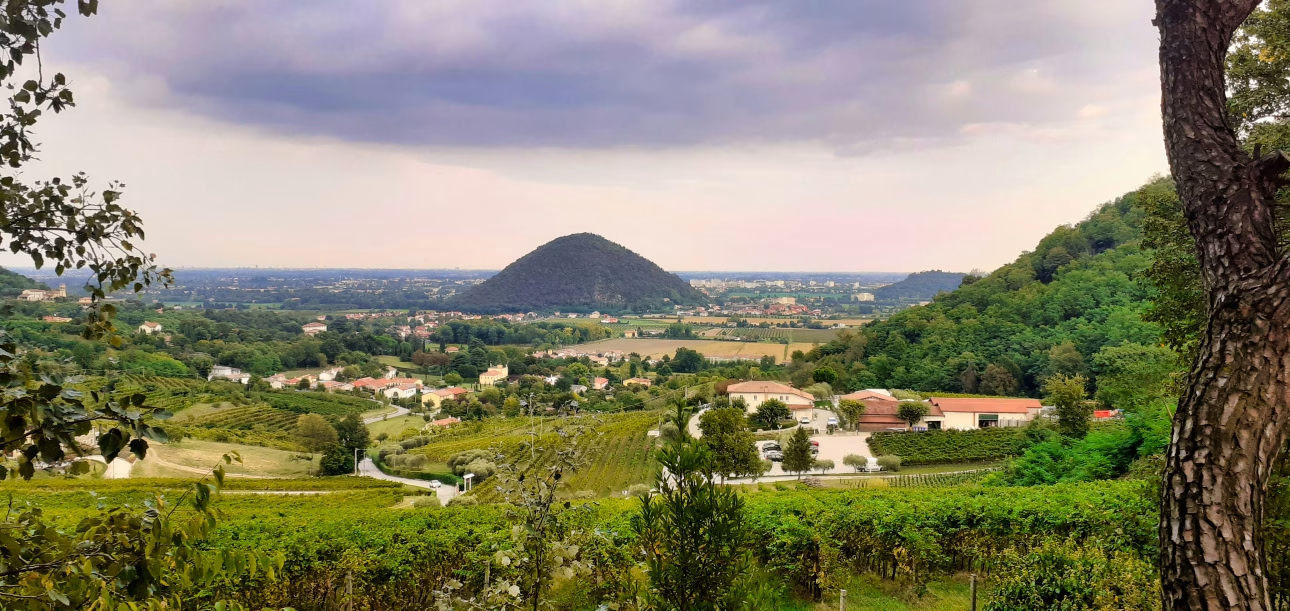
South-west of Padova, the Colli Euganei rise abruptly from the plain. Ancient volcanic activity helped create their distinctive domes; vineyards, olive groves and wooded slopes now give them a verydifferent character from the city. This is a separate countryside outing, best enjoyed with a driver when wine tasting is part of the day.
A driven day with a literary centre
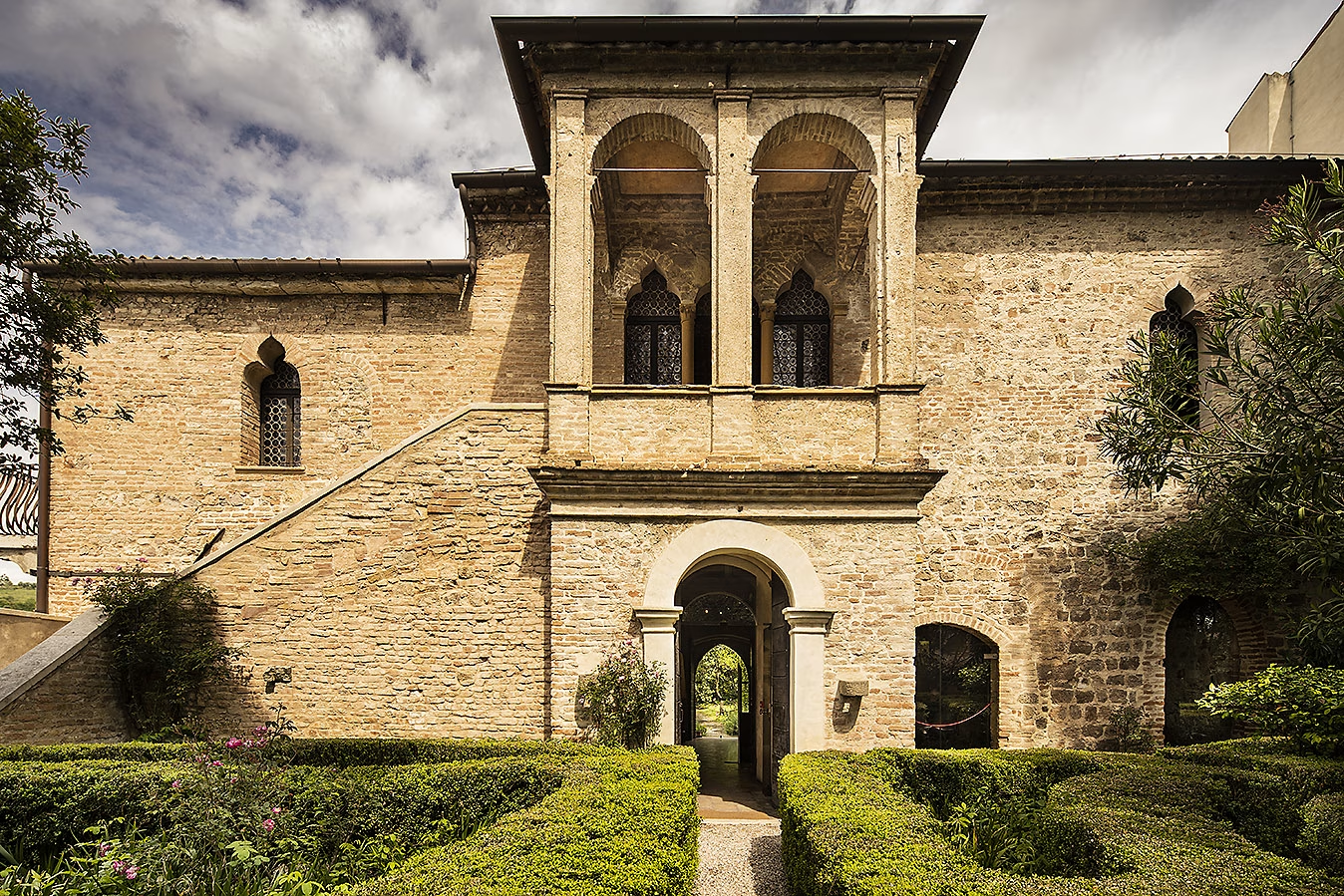
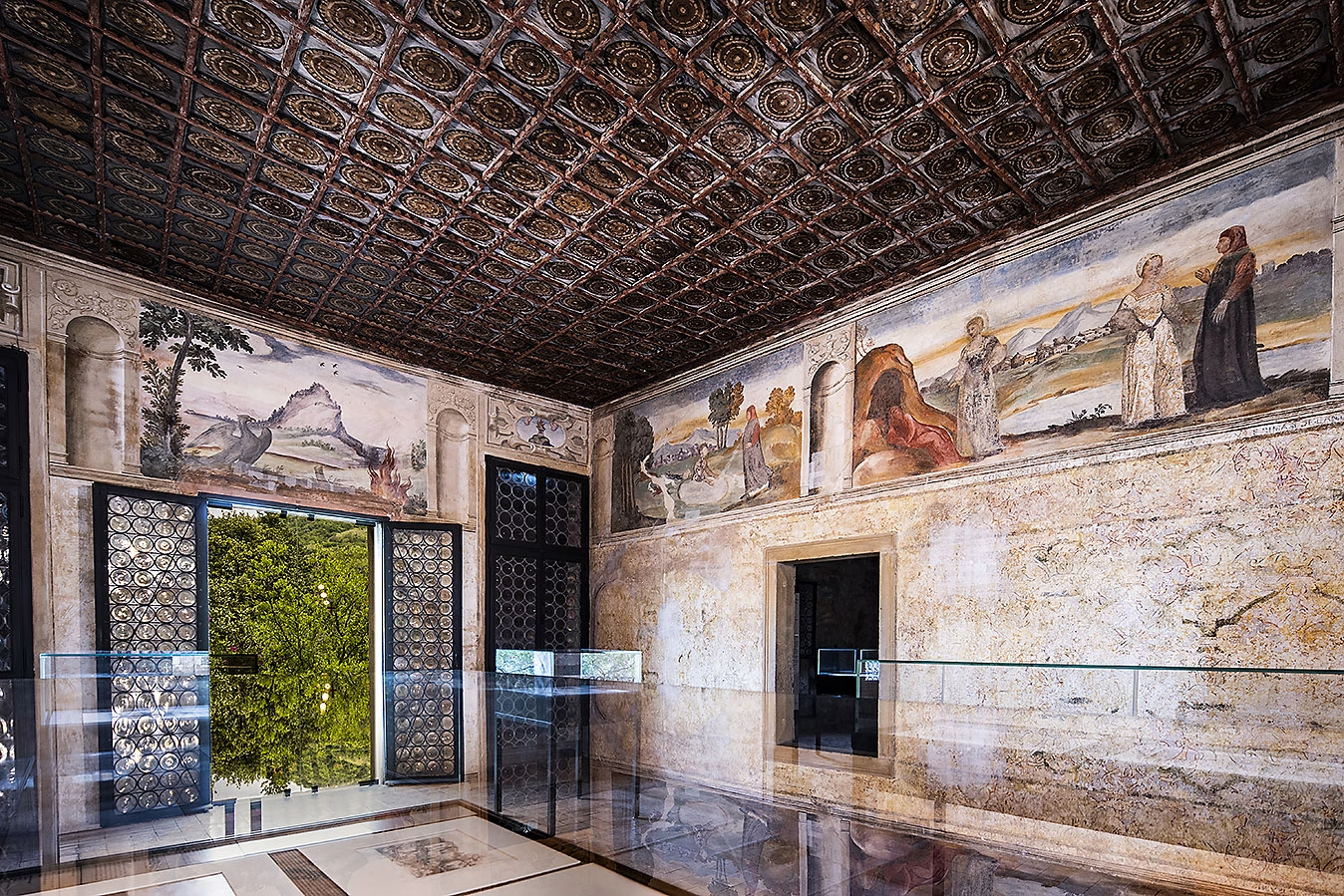
Arquà Petrarca is a natural focus. The poet Francesco Petrarca — Petrarch — lived here during his final years, from 1370 until his death in 1374. His poetry and humanist scholarship helped shape later European literature. The village’s lanes rise between stone buildings, with his tomb by the parish church and his house higher up the slope.
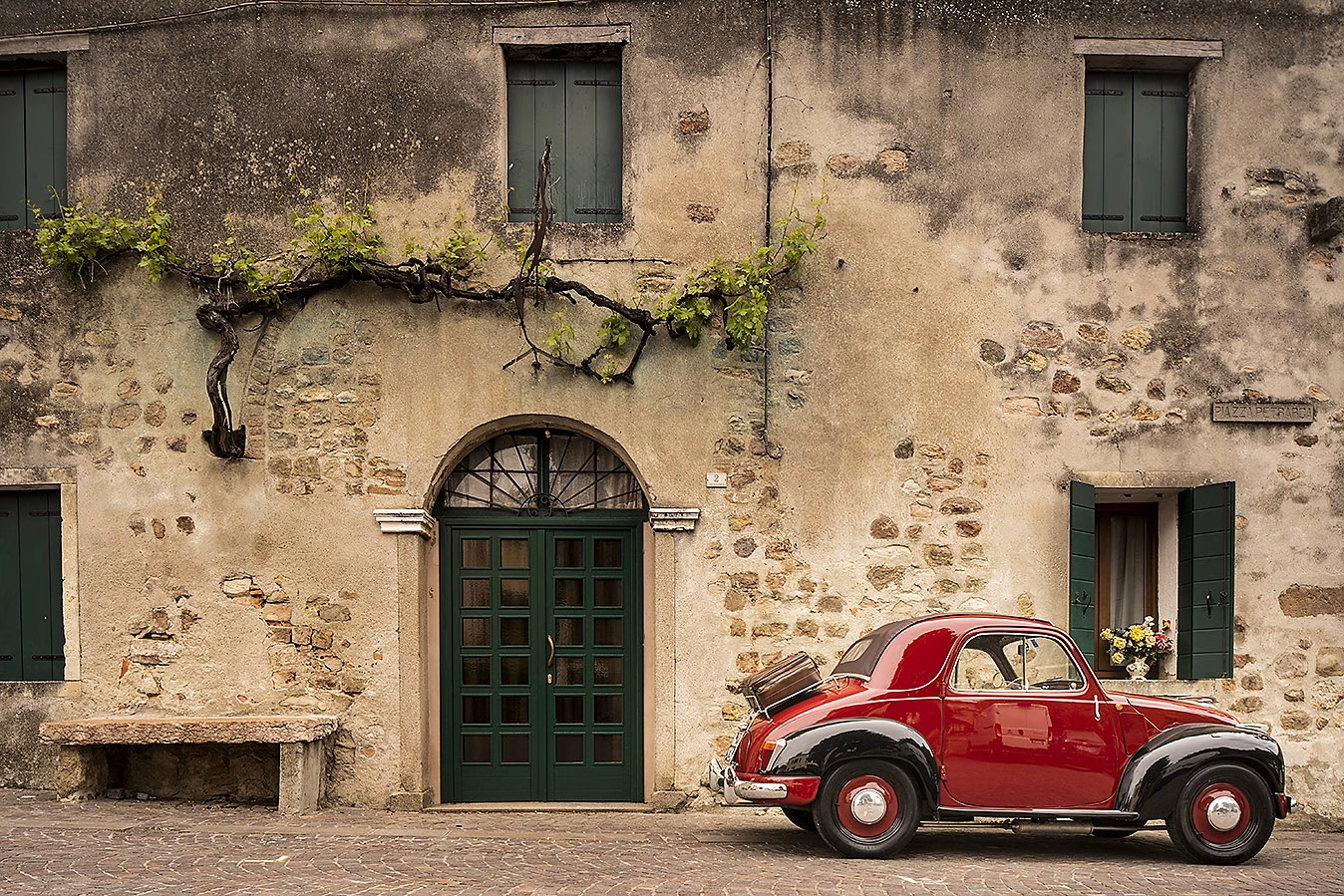
We suggest combining the village with a pre-arranged wine tasting at Cantina Terra Felice and lunch at Tavern di Arquà Petrarca. The winery gives the landscape a flavour through its local wines; Tavern adds regional cooking and a panoramic setting. A driver allows the day to flow between them without making anyone responsible for driving after the tasting.
Leave room for a separate garden outing
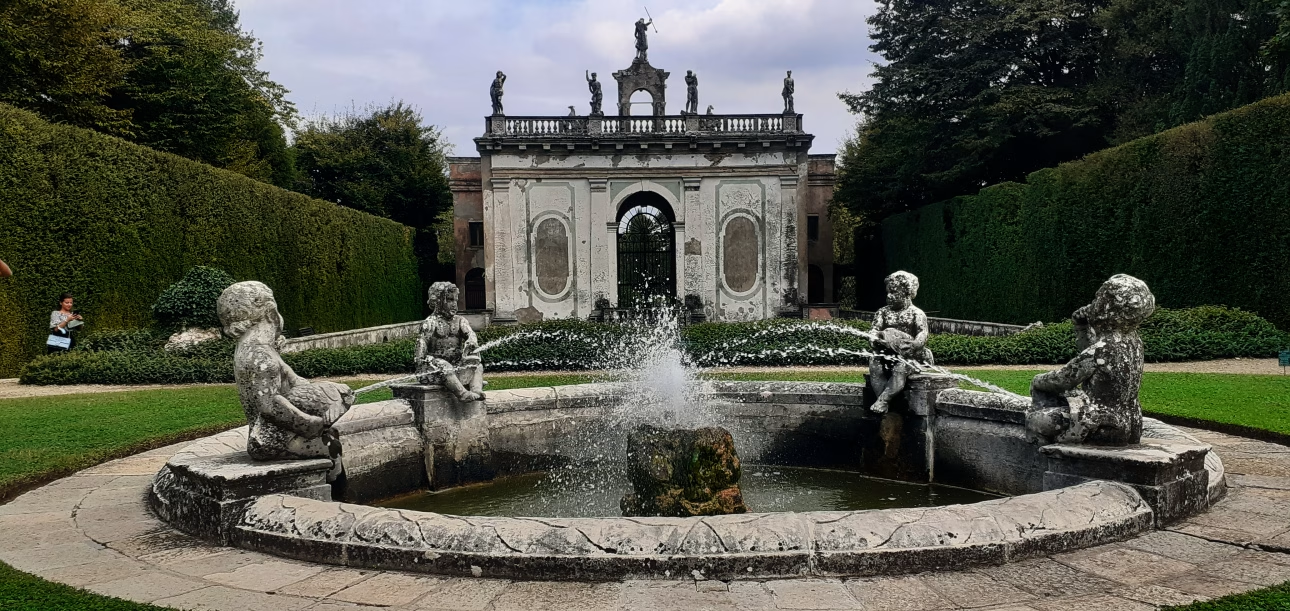
The historic garden of Villa Barbarigo at Valsanzibio is another good reason to return to the hills. Its long axes, water features and clipped planting offer a formal contrast to Padova’s scientific garden. Give it a proper part of a day; it need not be squeezed into the wine-and-village excursion.
Abano and Montegrotto: time for the thermal pools
Abano Terme and Montegrotto Terme lie south-west of Padova, near the foot of the Euganean Hills. They are separate spa towns rather than part of the walkable historic centre. Their hotels combine indoor and outdoor thermal pools with treatments and gardens, offering a very different day after churches, galleries and city pavements.
The water’s heat comes from its deep underground circulation, rather than from a still-active volcano beneath the hills. For a holiday, the immediate attraction is simpler: warm water, a comfortable place to rest and the chance to spend a day without a programme of visits.
Grand Hotel Trieste & Victoria, Abano Terme
For a change of pace, ask us to include one night at Grand Hotel Trieste & Victoria. Its Belle Époque rooms and public spaces, White Spa and large park make it a worthwhile stay in its own right. A thermal afternoon, dinner and a slower morning add something different to the city break.
The hotel has five thermal pools in total: three outdoors, an indoor pool and the Crystal Pool for separately reserved private use. Dining ranges from the park and poolside setting in season to the hotel’s historic interiors. We can bring together your overnight accommodation, spa access and any chosen massage or meals as one part of the holiday.
If you prefer to return to Padova that evening, the Day Spa option offers pool, spa and fitness access, a sunbed and umbrella, bathrobe, towel and slippers, with a room for daytime use from 10am to 6pm. A 50-minute massage, lunch or dinner can be added; drinks are separate. The daytime room does not include an overnight stay.
A spa day can sit between cultural outings, while an overnight addition suits those who would enjoy dinner and a slower start the next day. We will confirm the hotel’s available arrangement for your dates.
Stay in the city, then shape the wider holiday
A central apartment gives a longer Padova stay a useful independence. Shop at the market, walk out for breakfast and return between visits. For a holiday combining the city with Venice and Vicenza by rail, a car adds little; a private driver is more useful for the day in the Euganean Hills.

Palazzo Bovio
A one-bedroom apartment in a historic palazzo, with a kitchen, living space and air conditioning. A practical base for couples who value space and independence in the city centre.
More art, if you have the time
The Eremitani museums near Scrovegni and the university’s Museum of Nature and Humankind give you alternatives for another cultural morning. Current exhibitions at Palazzo Zabarella can add a different period of art. Choose around your interests rather than treating the city as a checklist.
Spring and early autumn are particularly appealing for combining city walks, gardens and countryside lunches. In summer, leave the warmer part of the afternoon for a rest or the pools. Cooler months can work well for art and university visits, with a thermal stay giving the holiday another focus.
Two ways to continue beyond Padova

Padova & Verona
Two city bases joined by rail, combining Padova’s frescoes and university with Verona’s Roman monuments and evenings around its squares.
A longer Northern Italy holiday
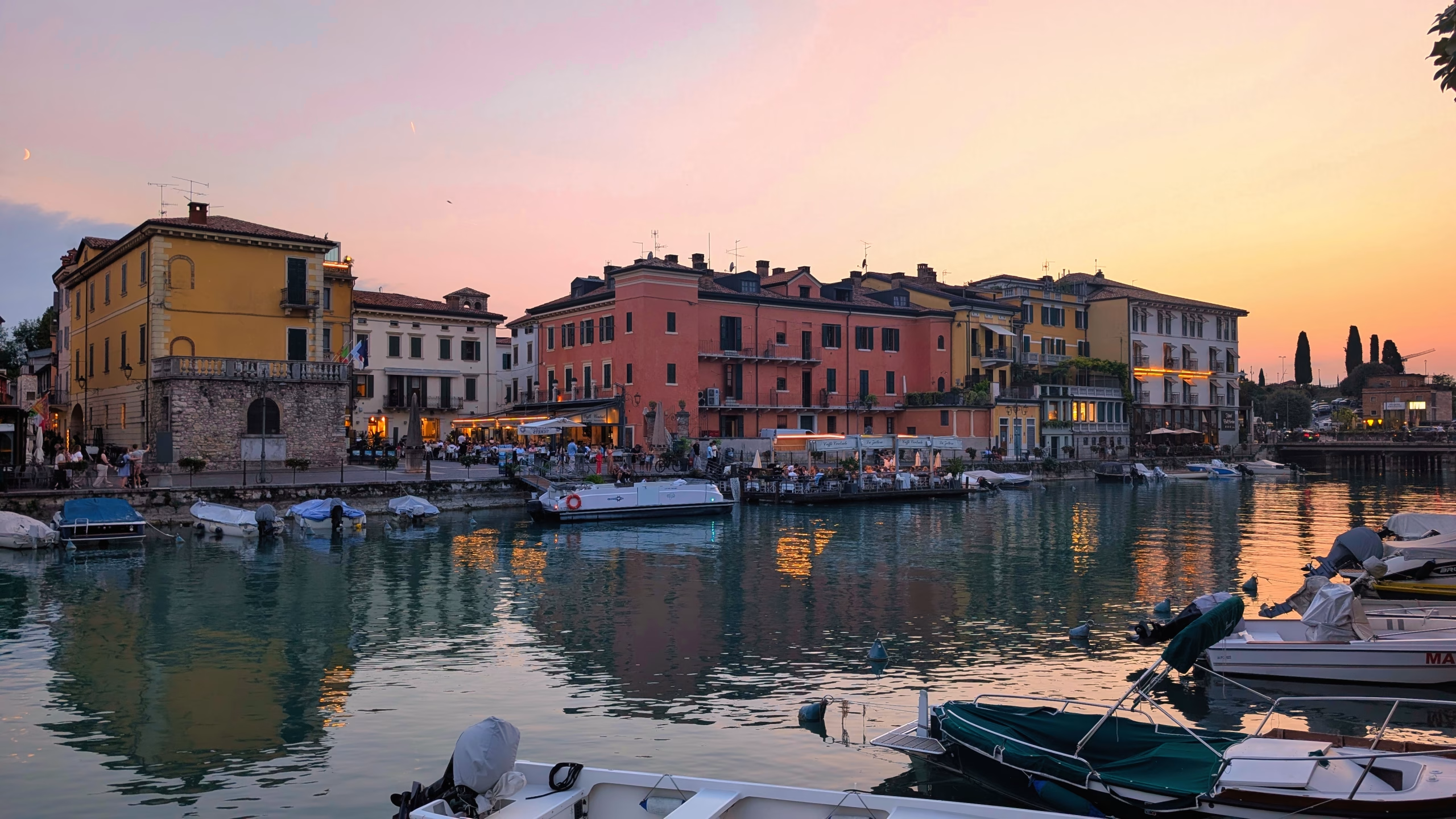
Continue through Borghetto sul Mincio, Malcesine on Lake Garda and the Prosecco Hills, with contrasting places to stay.
Tell us what you would enjoy in Padova
Tell us your dates, the art you would like to see and how much time you would enjoy in Venice, the countryside or the thermal pools. We will bring together your accommodation, travel in Italy and chosen experiences, with Scrovegni planned from the outset.
Selected Padova and Arquà Petrarca photographs © Vittorio Sciosia. About Vittorio Sciosia. Additional photographs from the ExpertoItaly collection.



 Facebook
 WhatsApp channel