


Travellers’ stories · Southern Italy
In Search of Wild Orchids: A Journey Through Southern Italy
A 22-night family journey in May, shaped by a love of wild orchids and the people who know where to find them.
In this article
A holiday that began with an orchid
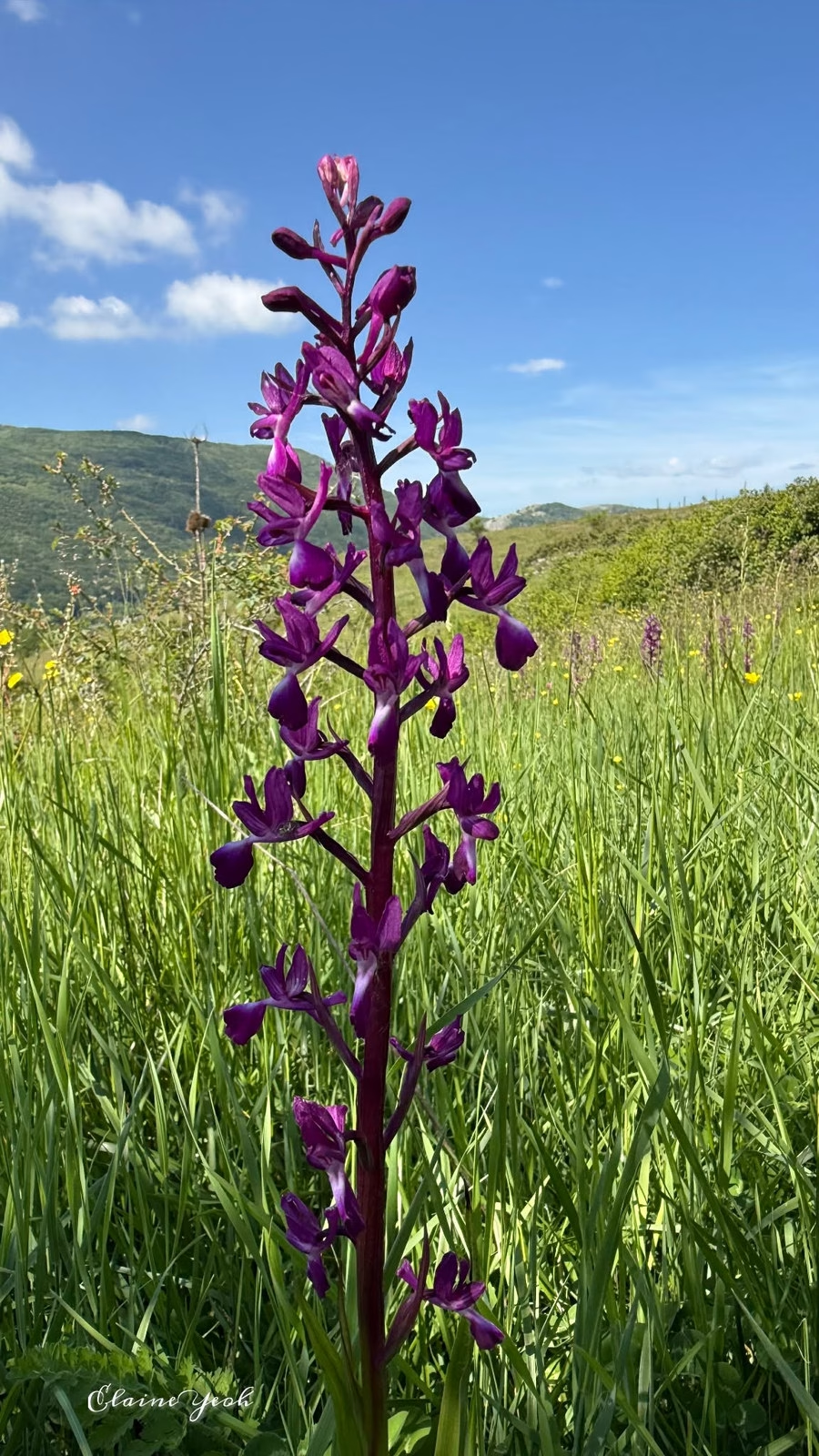
Some holidays begin with a famous city or a stretch of coastline. Elaine’s family arrived with a more particular interest: wild orchids. Their May journey would take them from the limestone hills of the Gargano to the mountains of Cilento, with two specialist botanical outings as its anchors.
For 22 nights, Elaine, Stephen and Matthew travelled between Puglia, Basilicata, Calabria and Campania without hiring a car. The plan was not to race between landmarks. It was to give their interests room: time in the countryside, conversations with people who know the land, atmospheric towns and several days by the sea.
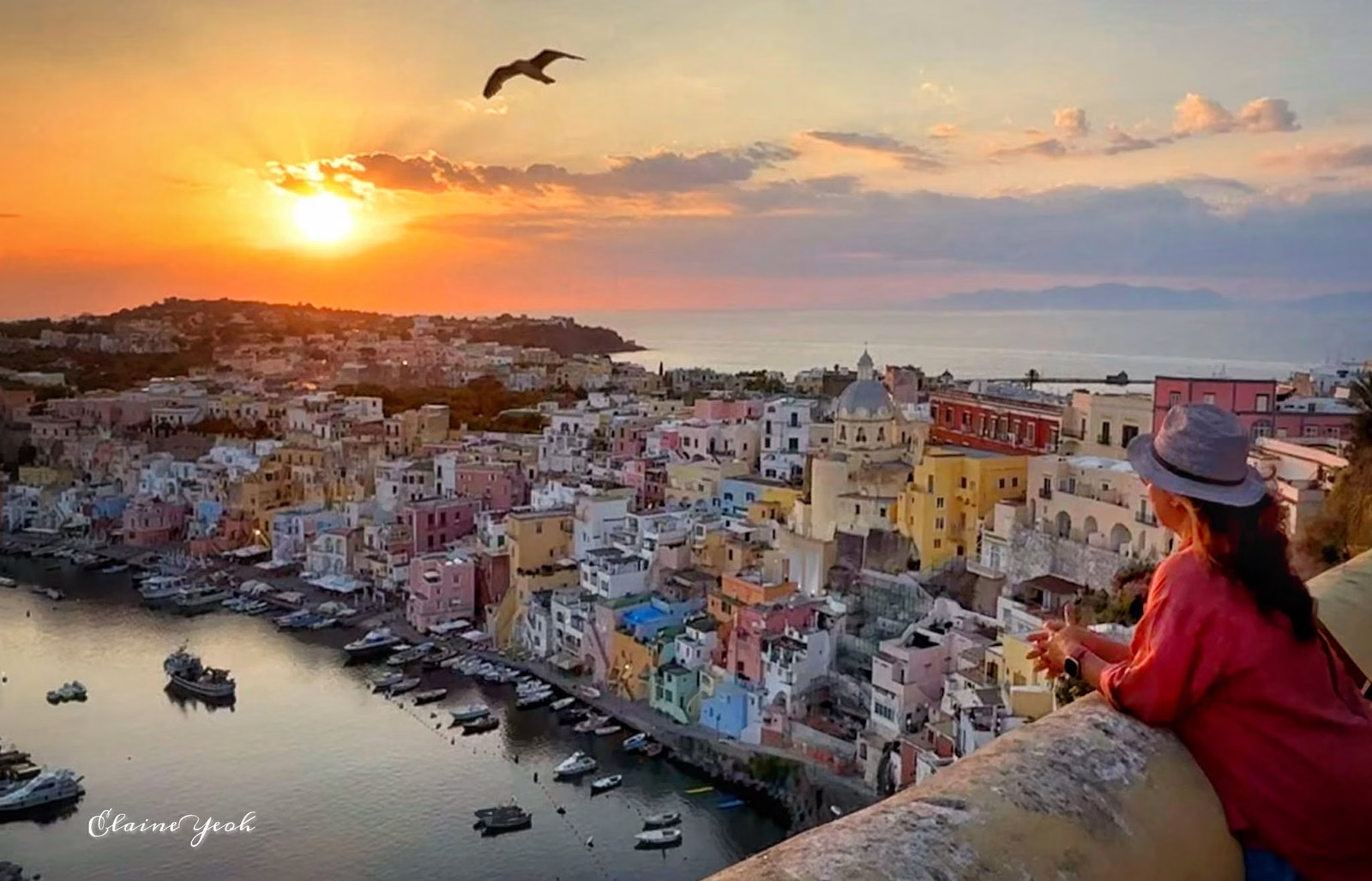
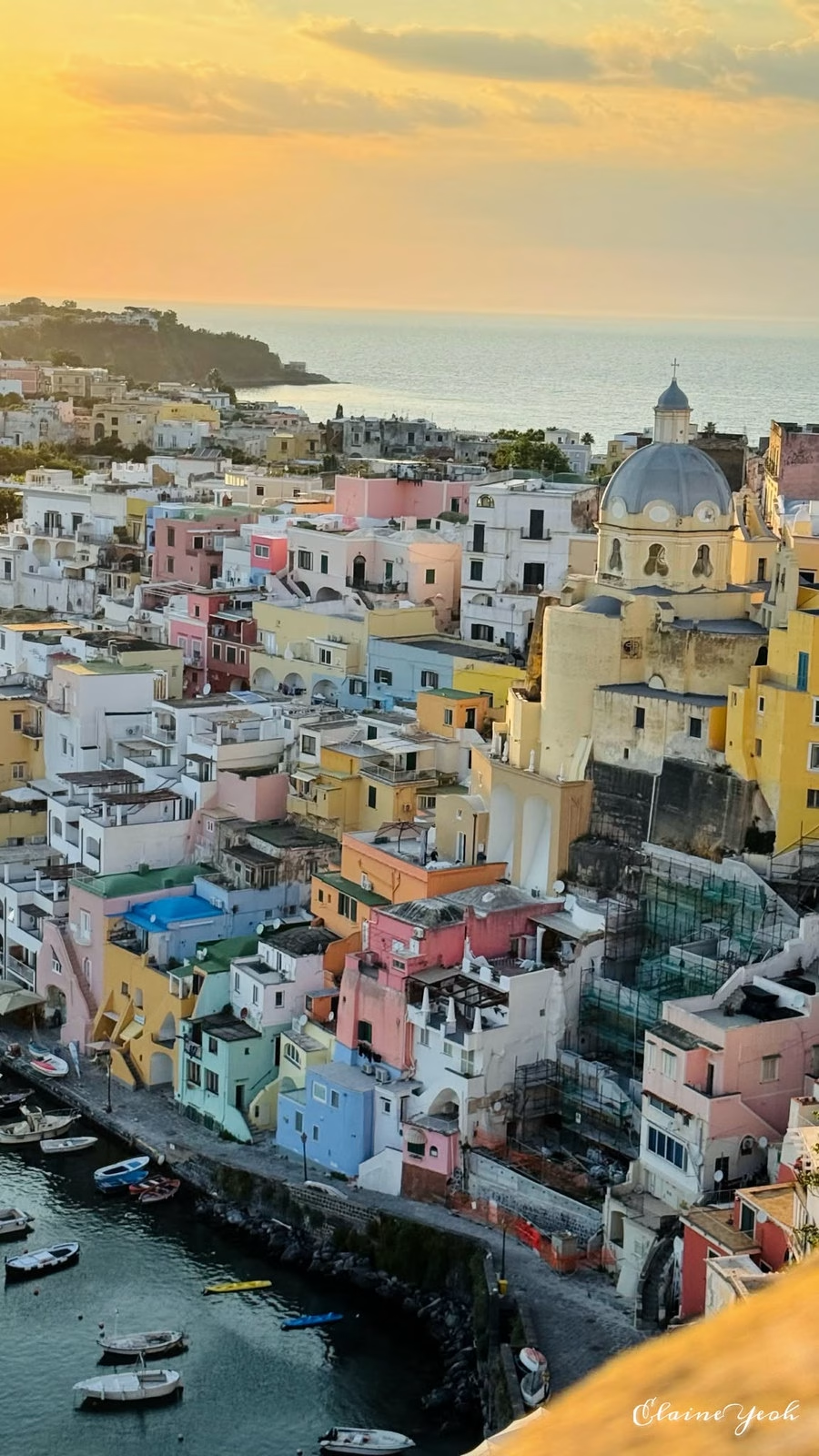
Elaine’s photographs offer the best record of that mixture. Alongside close studies of flowers are mountain paths, stone houses, market scenes, lunches, sea crossings and the last light above Procida. This article follows those images and the experiences behind them.
Meeting the people who wrote the orchid book
The family’s first base was Mattinata, beneath the wooded limestone slopes of the Gargano National Park. Elaine immediately noticed the sociable rhythm of the town. In her account, even a short drive with Mimmo, the local driver, meant stopping repeatedly to greet people along the way.
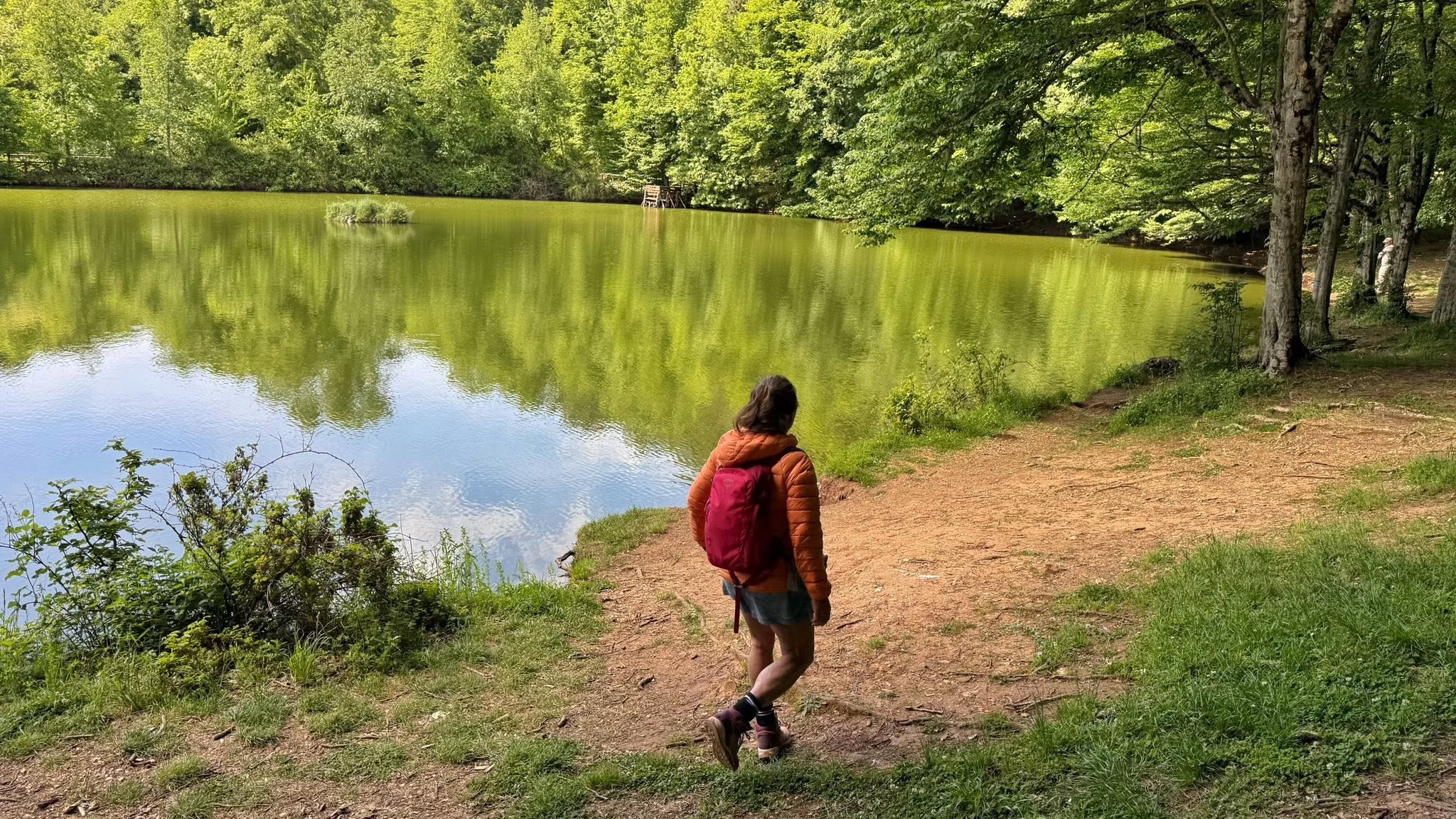
The Gargano has a woodland character that surprises visitors expecting only the Adriatic coast. In the Foresta Umbra, beech trees, shaded tracks and a quiet woodland lake offered Elaine a contrast to the dry limestone slopes where many of the orchids grow. The forest is also associated with fallow deer: a dedicated wildlife area near the visitor centre allows visitors to see them at close quarters, while the indigenous Gargano roe deer is much more elusive in the surrounding woods. These changes of habitat and the chance to appreciate the forest’s wildlife help explain why several nights in Mattinata were worthwhile.
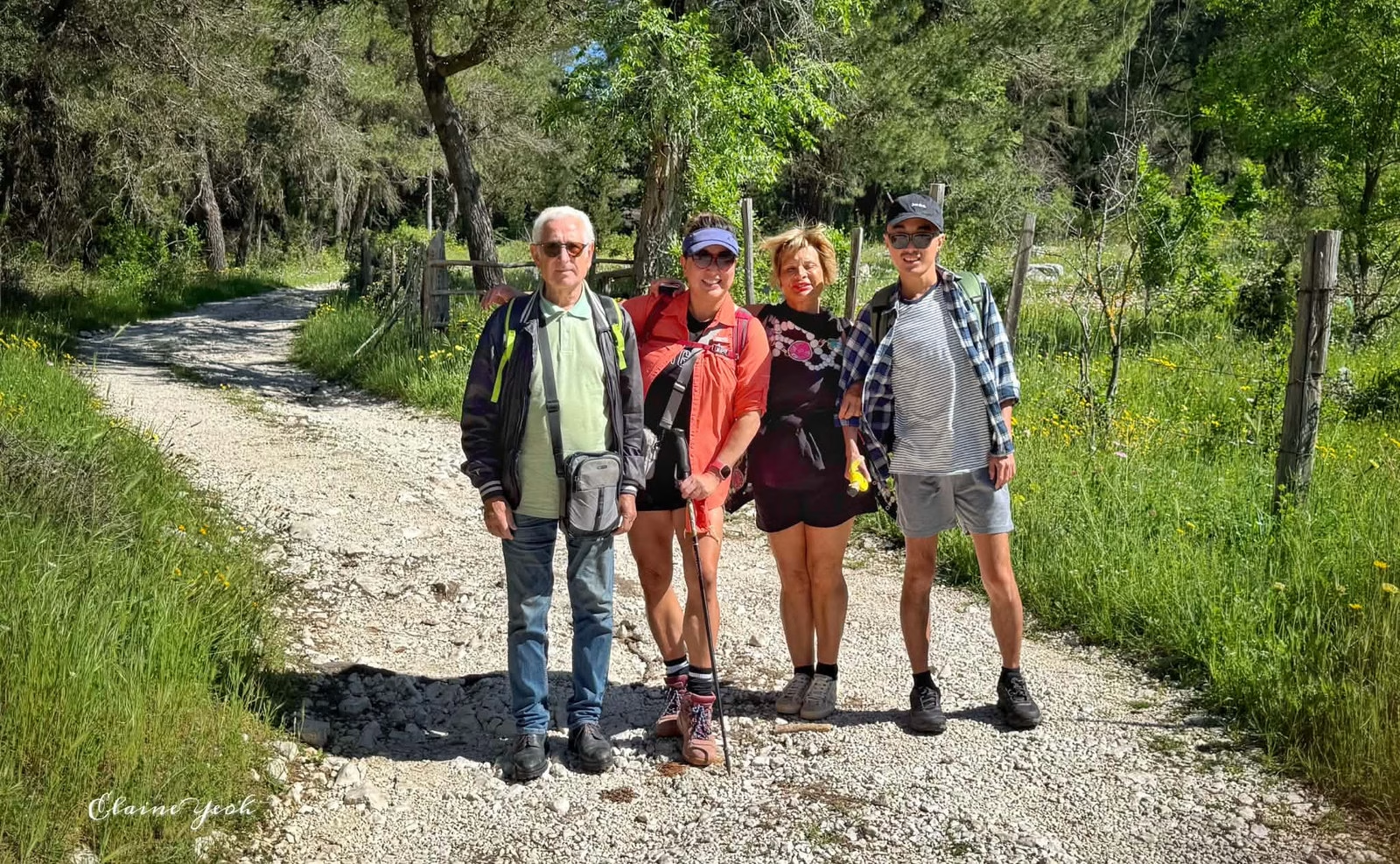
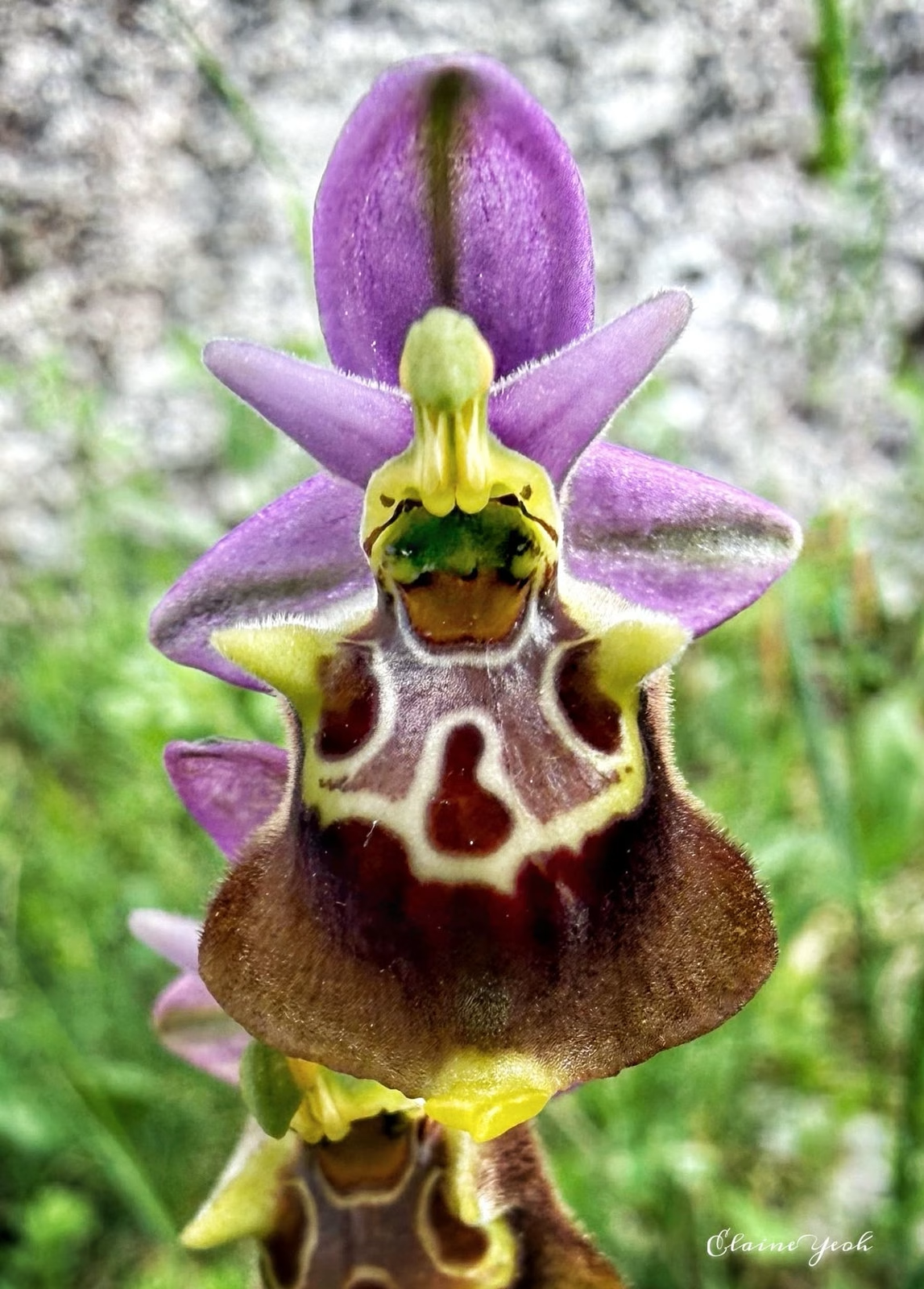
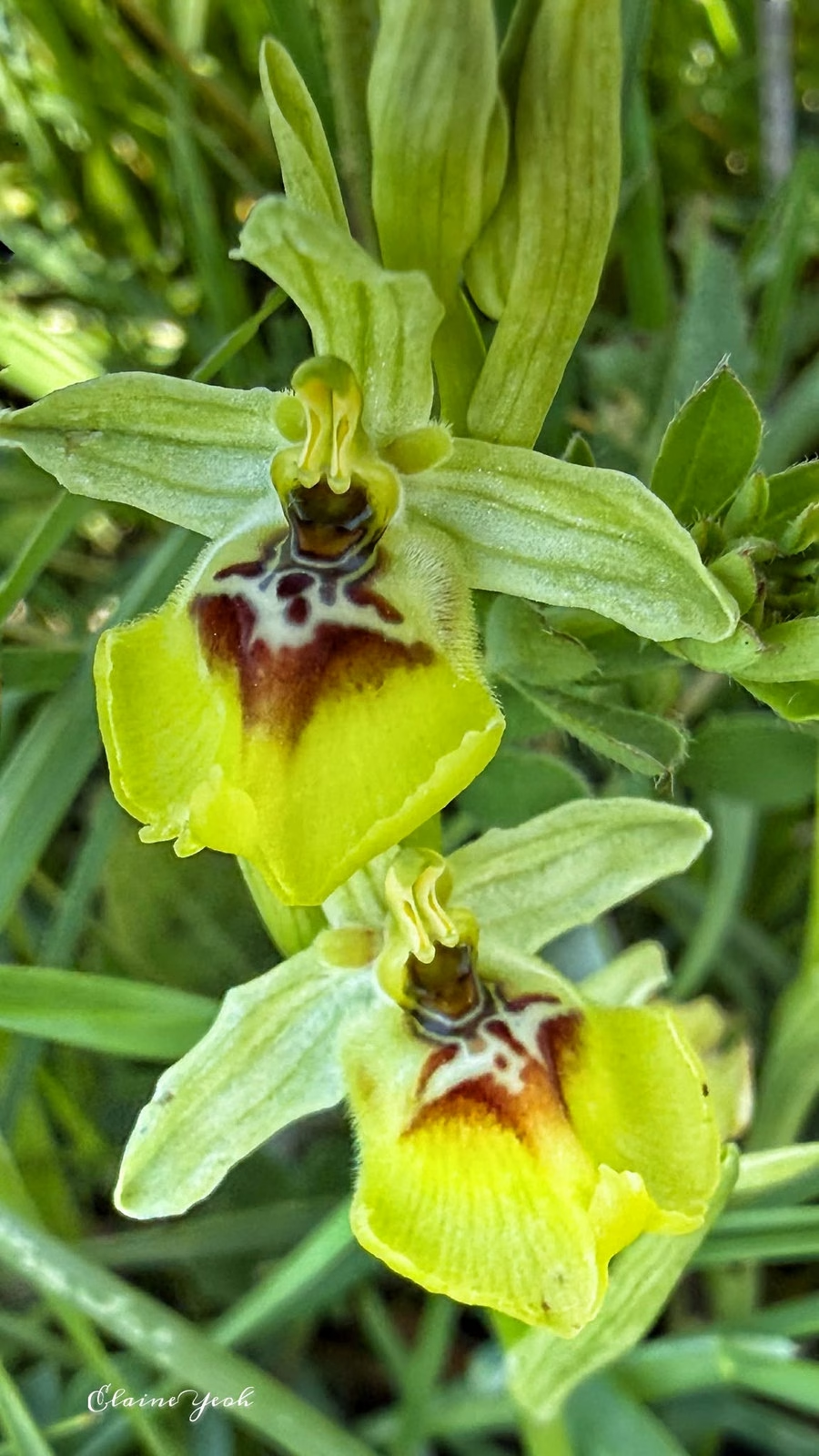
The most anticipated day was 12 May. ExpertoItaly had arranged for Angela Rossini and Giovanni Quitadamo to accompany Elaine in the Gargano countryside. Together they are the authors of Orchidee Spontanee nel Parco Nazionale del Gargano, a detailed photographic field guide. The meeting was meaningful precisely because Elaine already knew their work.
Their knowledge changes the way a walk is experienced. A flower scarcely visible beside a track suddenly becomes the focus; differences in markings, shapes and habitat start to make sense. On Facebook afterwards, Elaine was delighted that both authors had taken her orchid hunting.
Mattinata was followed by two nights in Vieste, where the harbour, old streets and sea cliffs offered a contrasting view of the peninsula. Read our separate story about the Gargano orchid specialists for more on the guides and the landscape.
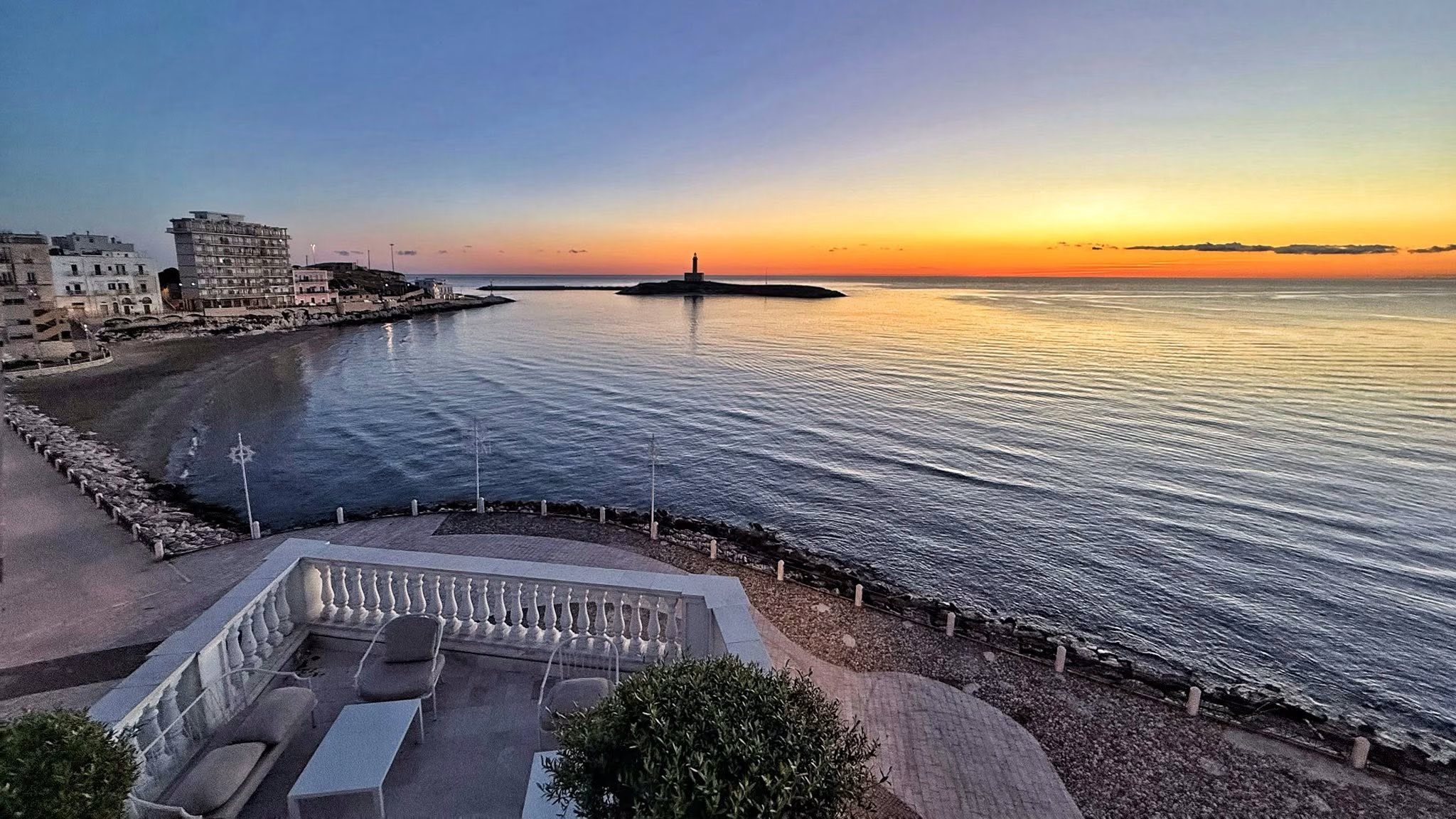
The Vieste stay was deliberately different. Rather than continue searching for orchids every day, the family could explore the medieval streets above the harbour, the limestone shoreline and, when conditions suited, the coast by boat. Their room at Tra il Cielo e il Mare faced the harbour: the lighthouse and sea were as much a part of the stay as the town itself.
“And I had BOTH authors take me on an orchid hunt today!” — Elaine, 12 May 2026
Stone cities, mountain villages and a change of scale
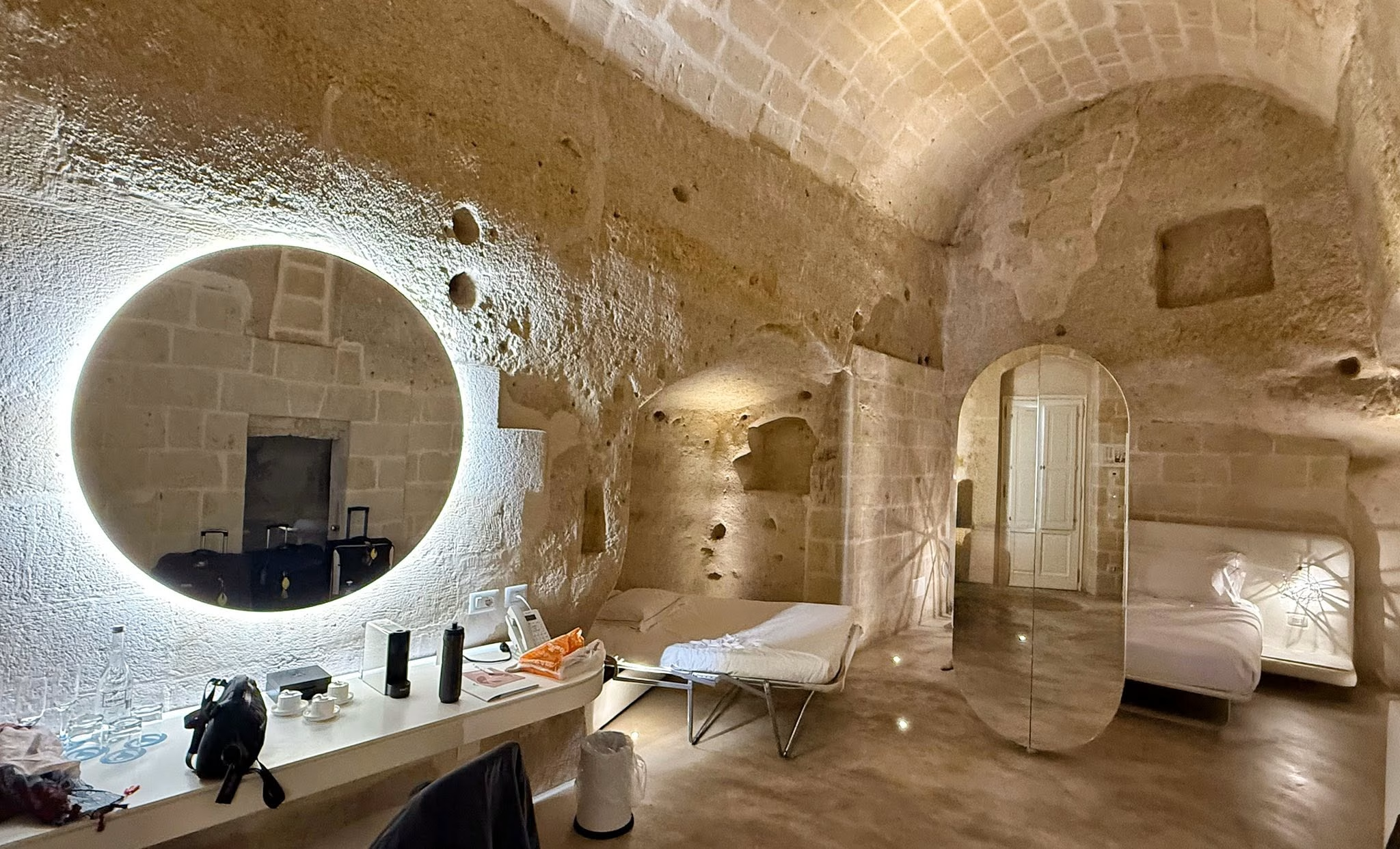
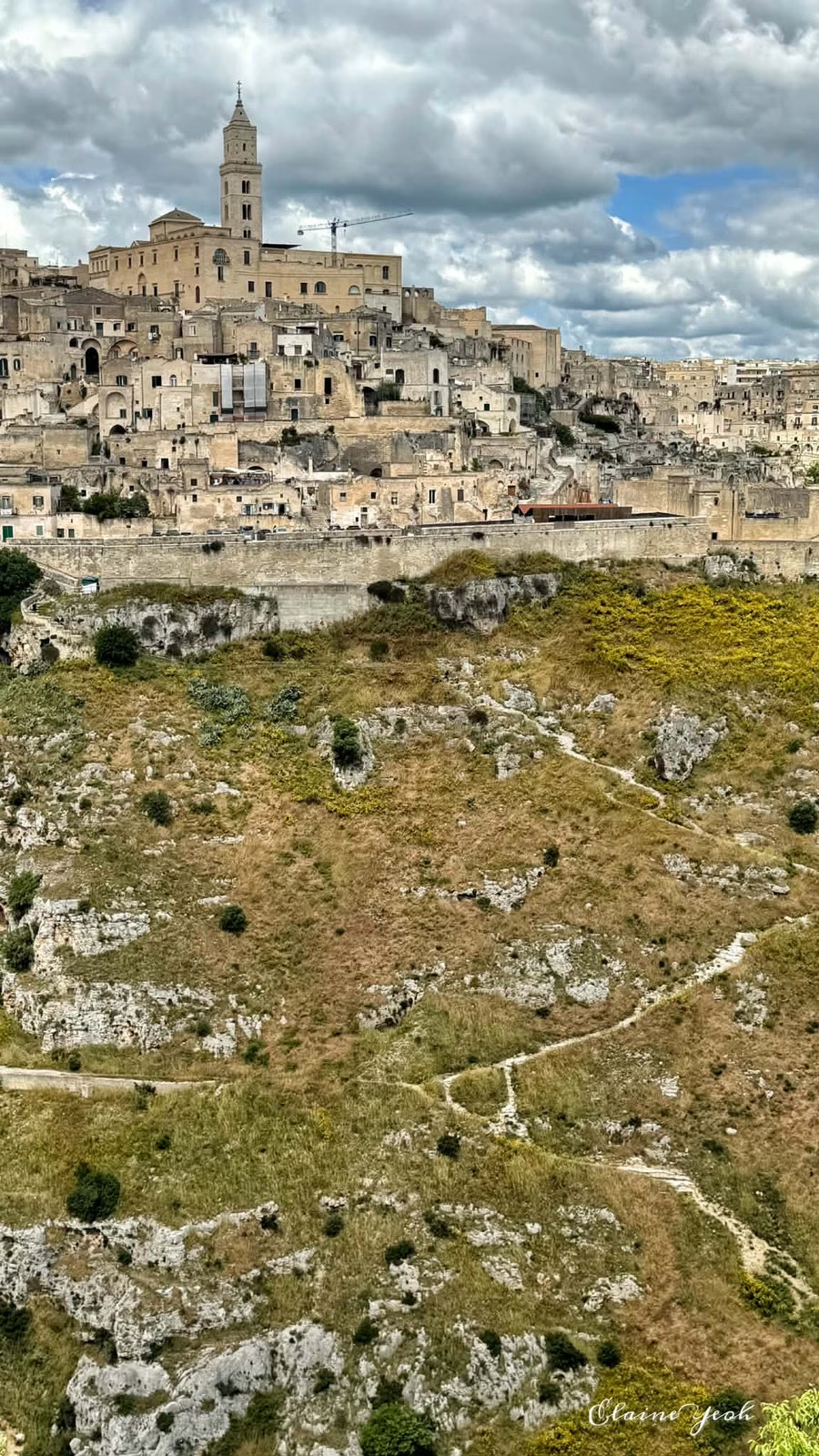
From Vieste, the route turned inland to Matera. The Sassi occupy a ravine cut into soft limestone, where houses, churches and passageways have accumulated over centuries. The family stayed at Aquatio Cave Luxury Hotel, where contemporary hospitality is set within the historic stone fabric.
The Sassi are not simply a picturesque cluster of caves. Their rooms, courtyards, passages and rock churches form an inhabited landscape adapted over many centuries to the limestone ravine. At Aquatio Cave Luxury Hotel, the family slept within that environment, in accommodation where the old stone vaults remain visible alongside contemporary comforts.
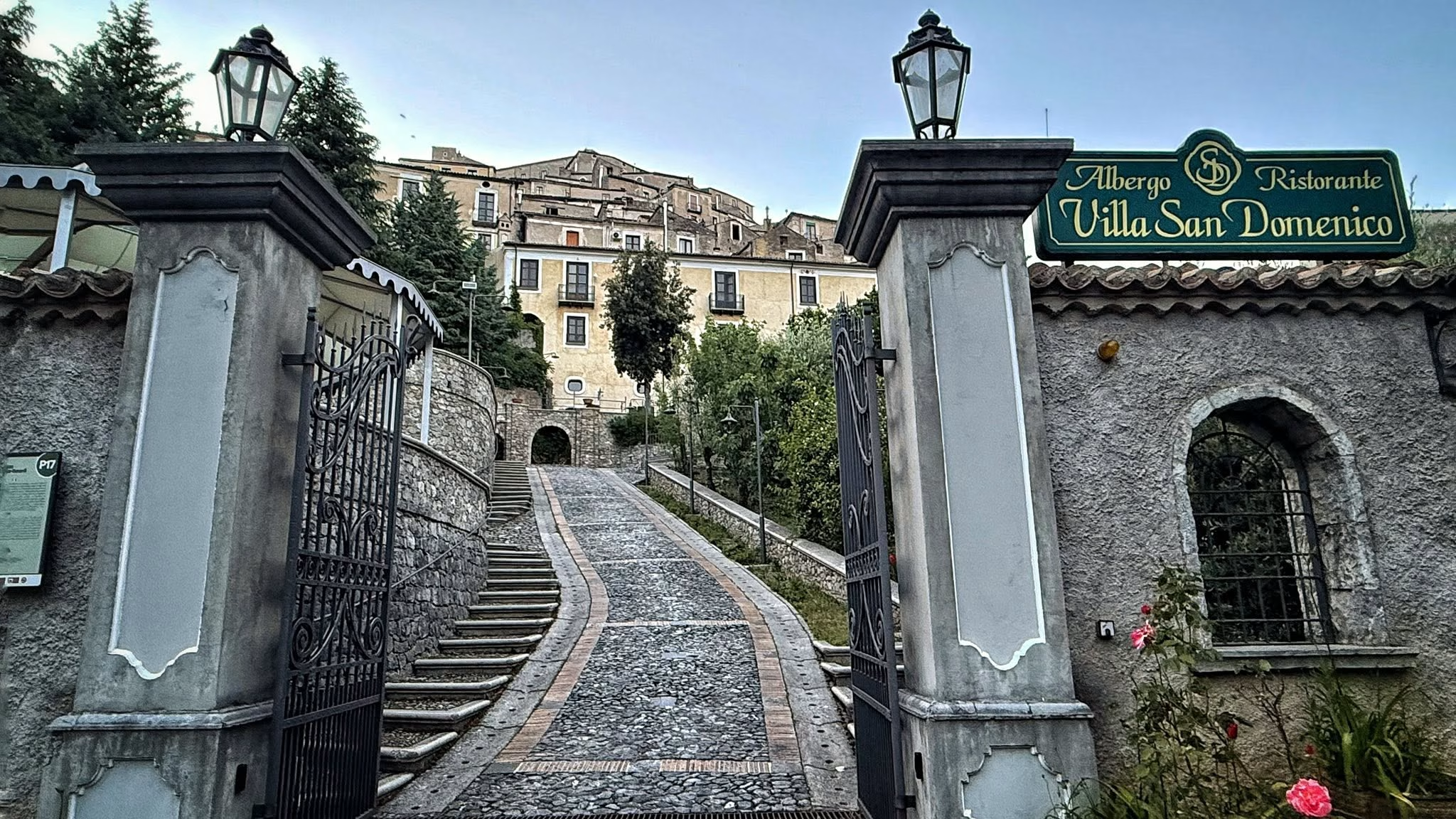
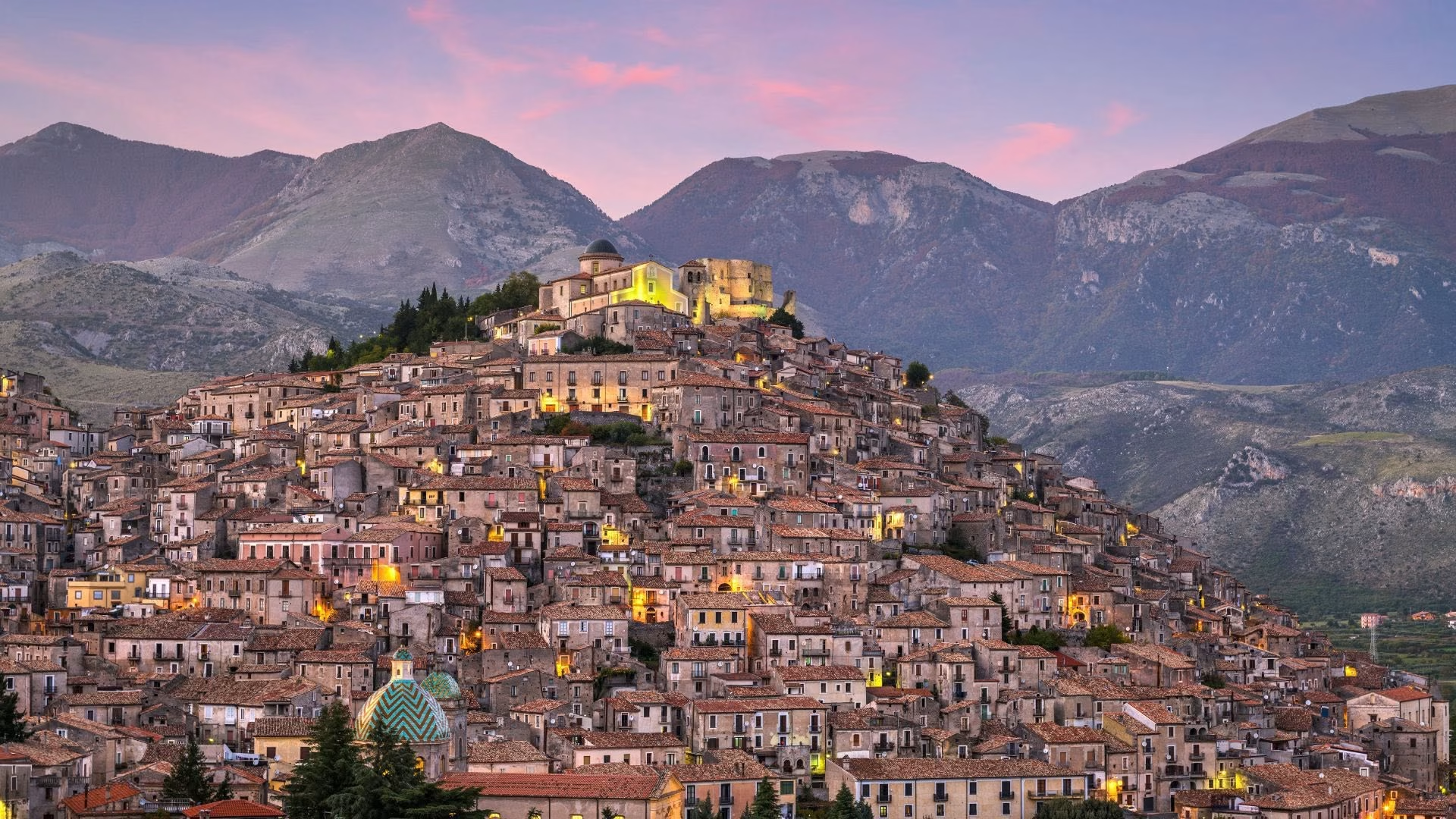
The next move was south towards Morano Calabro, an old settlement gathered on a hill below the Pollino mountains. Three nights here were intended for the landscape as much as the town. Footpaths, wooded hills and open mountain views give this stage a very different character from the Adriatic coast.
Morano Calabro makes a useful base for the Pollino National Park, where the landscape shifts from cultivated hillsides to woodland, high pastures and limestone mountains. Three nights gave the family a chance to spend time outdoors rather than use Calabria only as a point between Matera and Cilento.
These were not hurried stops en route to somewhere else. With three nights in Matera and three in Morano Calabro, the family had time to absorb their surroundings. Our related article explains how this route worked without a hire car across a journey of this length.
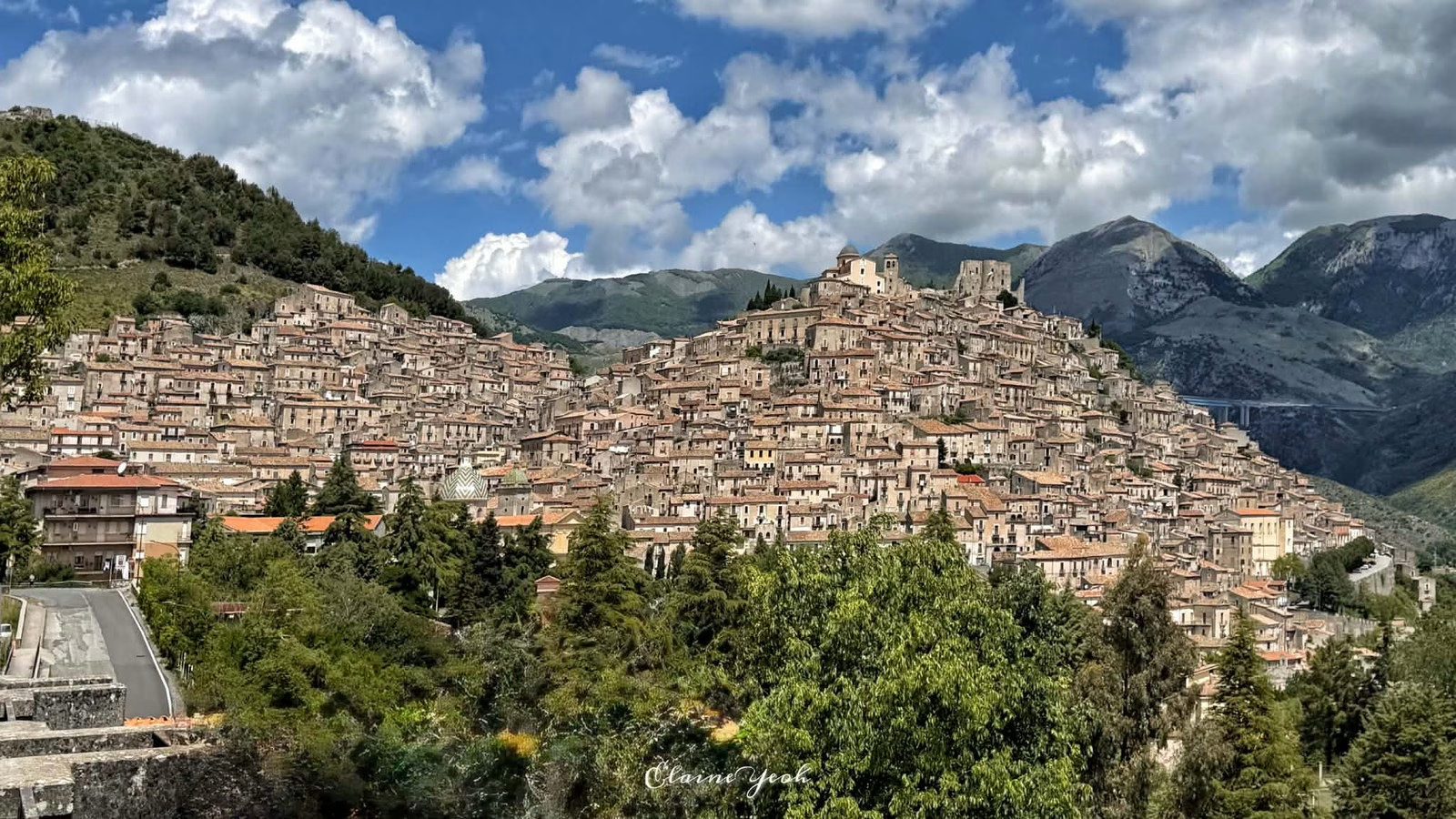
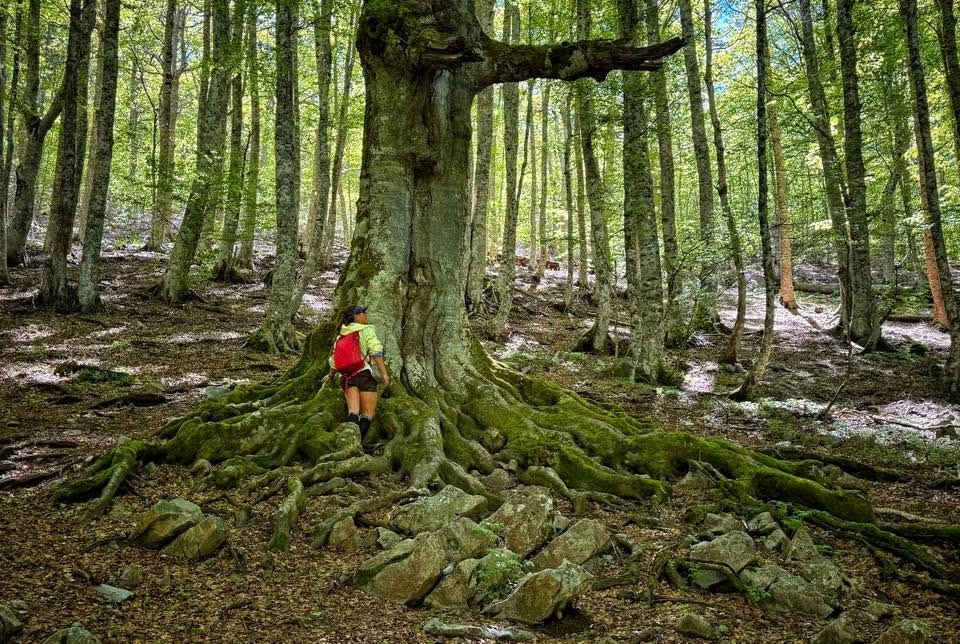
From Morano Calabro, the Pollino landscape could be appreciated in two directions: the carefully built hill town and the expansive mountain countryside beyond. Spring flowers spread across the high pastures, while mature beech woods provide an entirely different setting for walks. The shift between these environments was as memorable as the change from Matera’s architecture to the mountains.
From Pisciotta to Sassano’s Valle delle Orchidee
After Morano Calabro, the family travelled to Pisciotta, a hillside village overlooking the Cilento coast, and stayed at Hotel Marulivo. Its narrow stone streets and terraces offered a peaceful base between excursions.
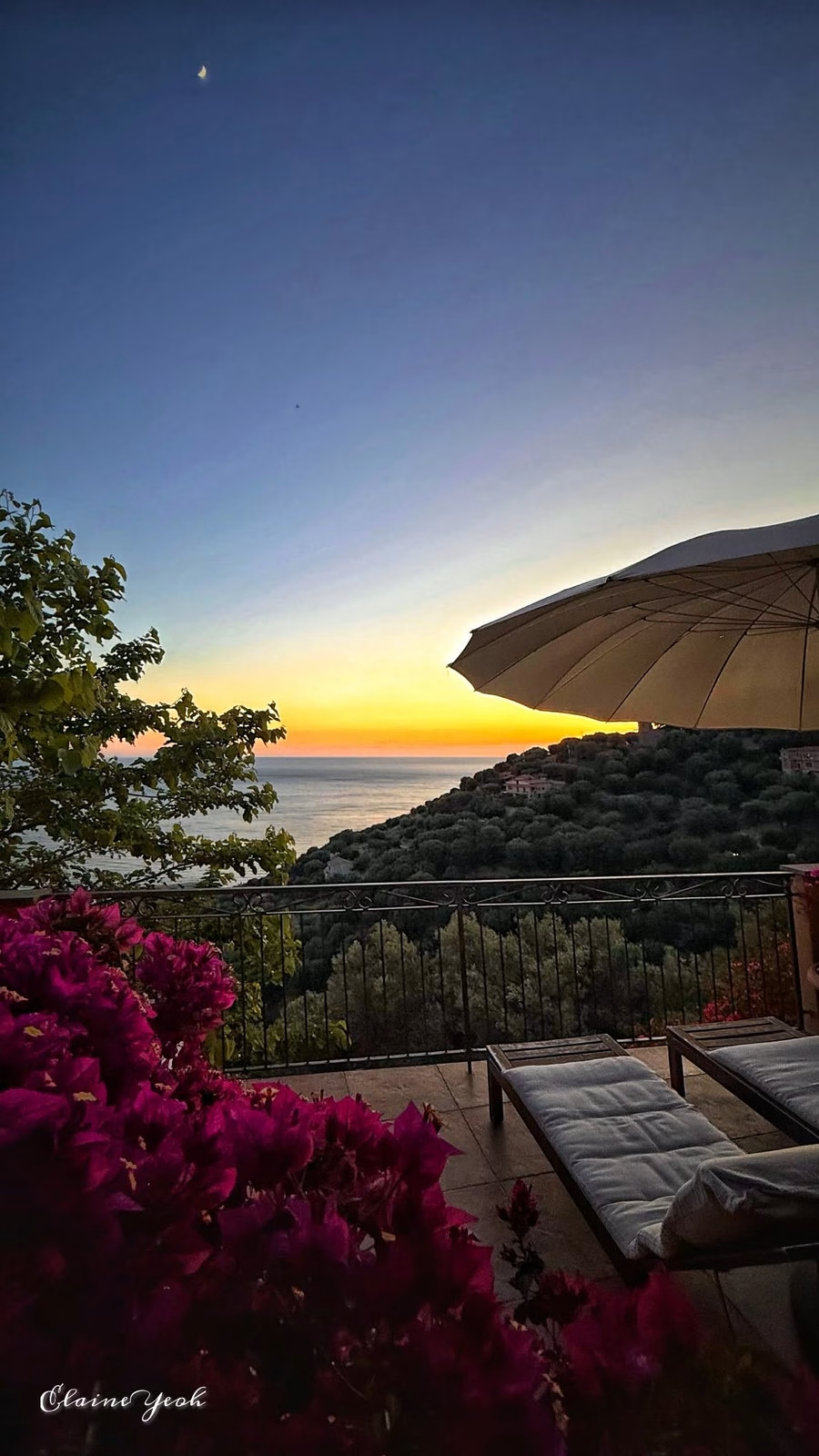
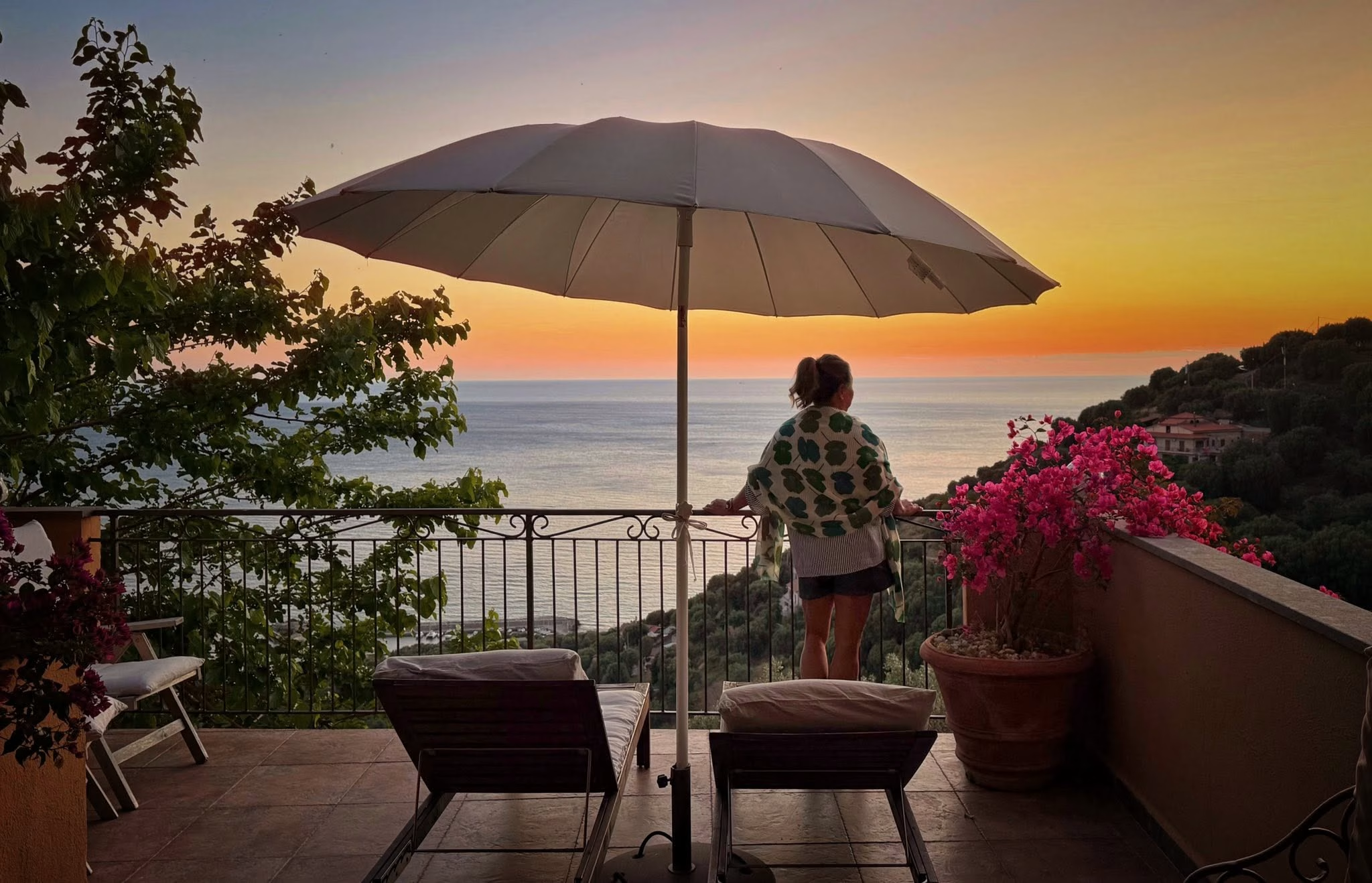
The family’s Casa Bougainville accommodation at Marulivo added a more domestic rhythm to the Cilento stay. Between the visit to Sassano and time in the village, the terrace became part of the experience: sea, olive-covered slopes and the changing light above the coast.
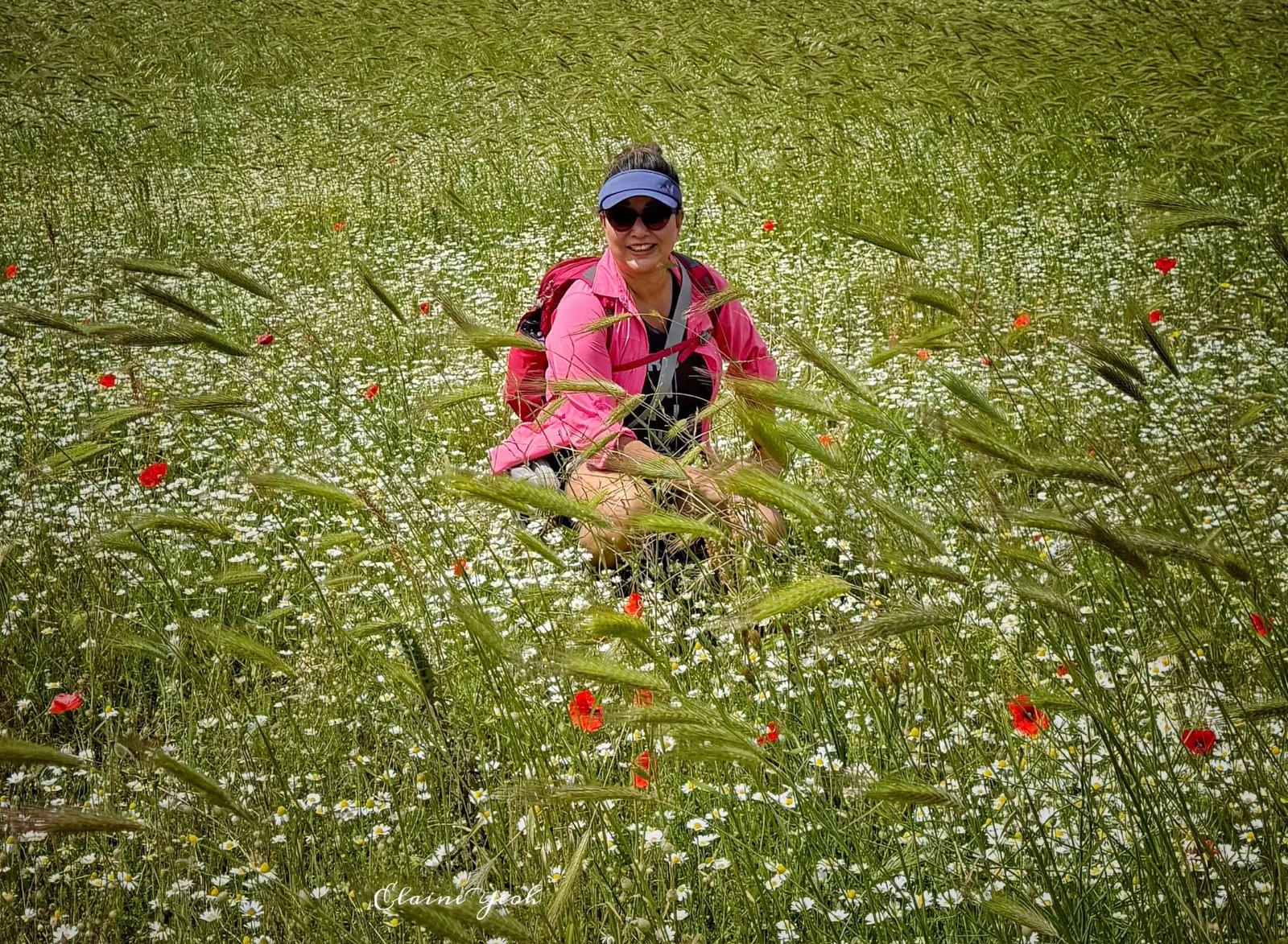
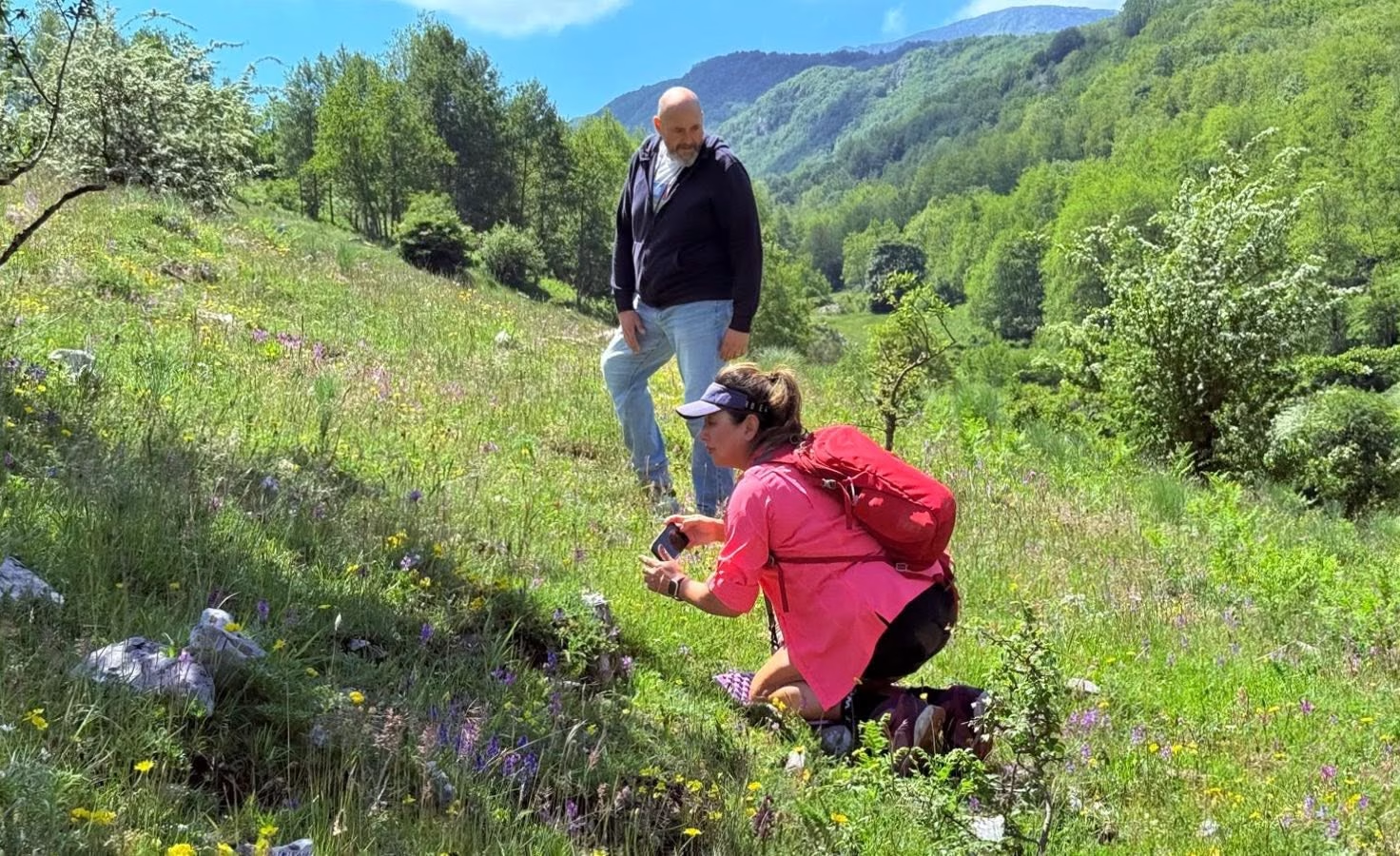
On 23 May came the second orchid outing, this time inland at Sassano in the Vallo di Diano. The specialist was Riccardo Di Novella, the Ecomuseo della Valle delle Orchidee’s scientific director and a co-author, with his father Nicola and brother Diego, of Guida ai Fiori Spontanei del Monte Cervati. Riccardo also gave Elaine a personally inscribed copy of the Di Novella family’s Guida illustrata alle orchidee spontanee, which she proudly showed in a Facebook post. The living part of the ecomuseum is the valley itself: slopes, meadows and cultivated land where plant life changes with height and season.
Elaine’s photographs show just how close the encounter was. Riccardo stood beside her as she crouched to photograph flowers in the grass, bringing his knowledge of the valley’s orchids to the places where they actually grow. Her signed book afterwards was a tangible reminder of an excursion arranged around her interests.
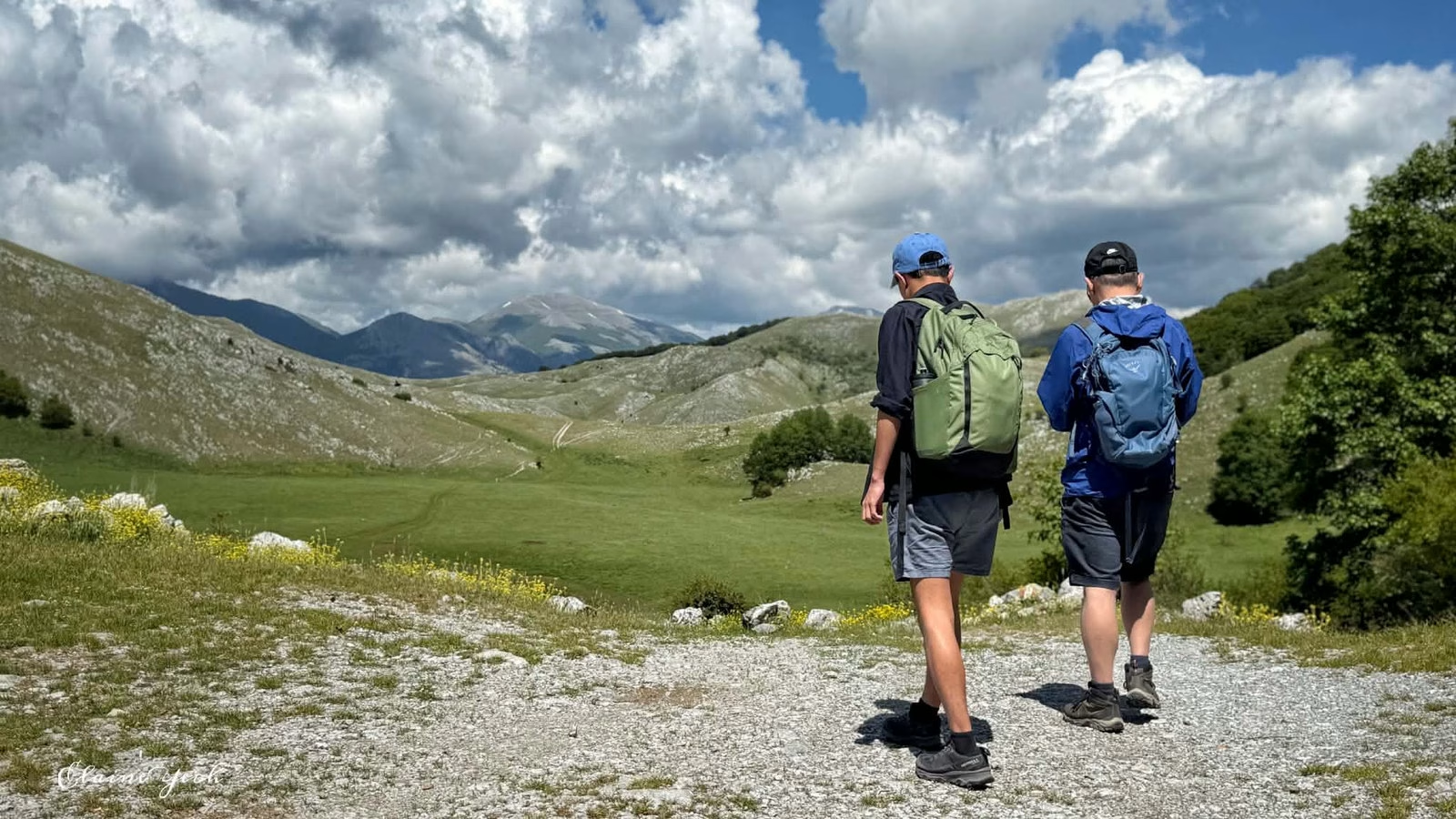
This was not a repetition of the Gargano day. The habitats and landscape were different, and Riccardo brought his own knowledge of the valley. A companion article explores the Valle delle Orchidee and Riccardo Di Novella, including why it deserves a separate excursion from a coastal base.
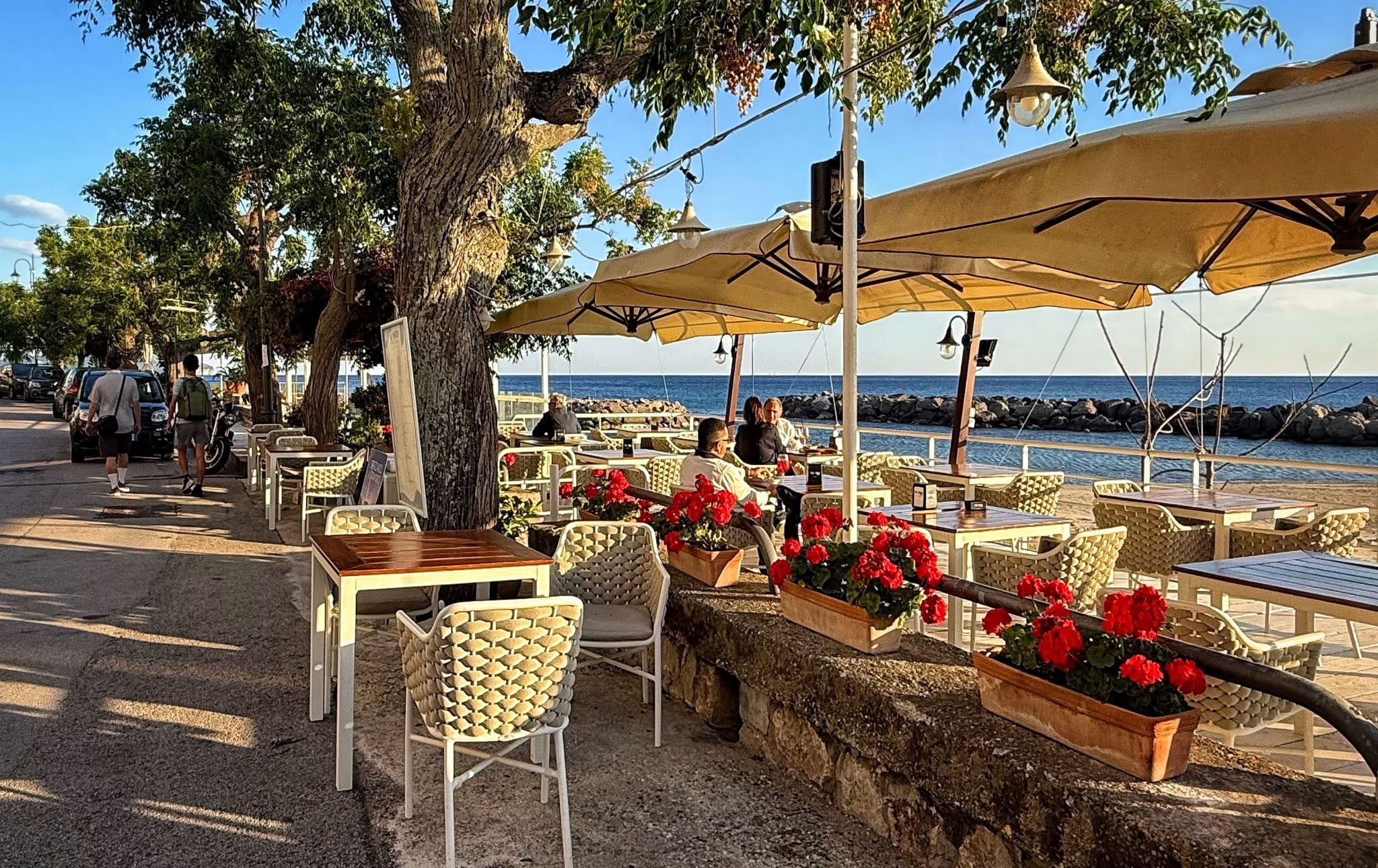
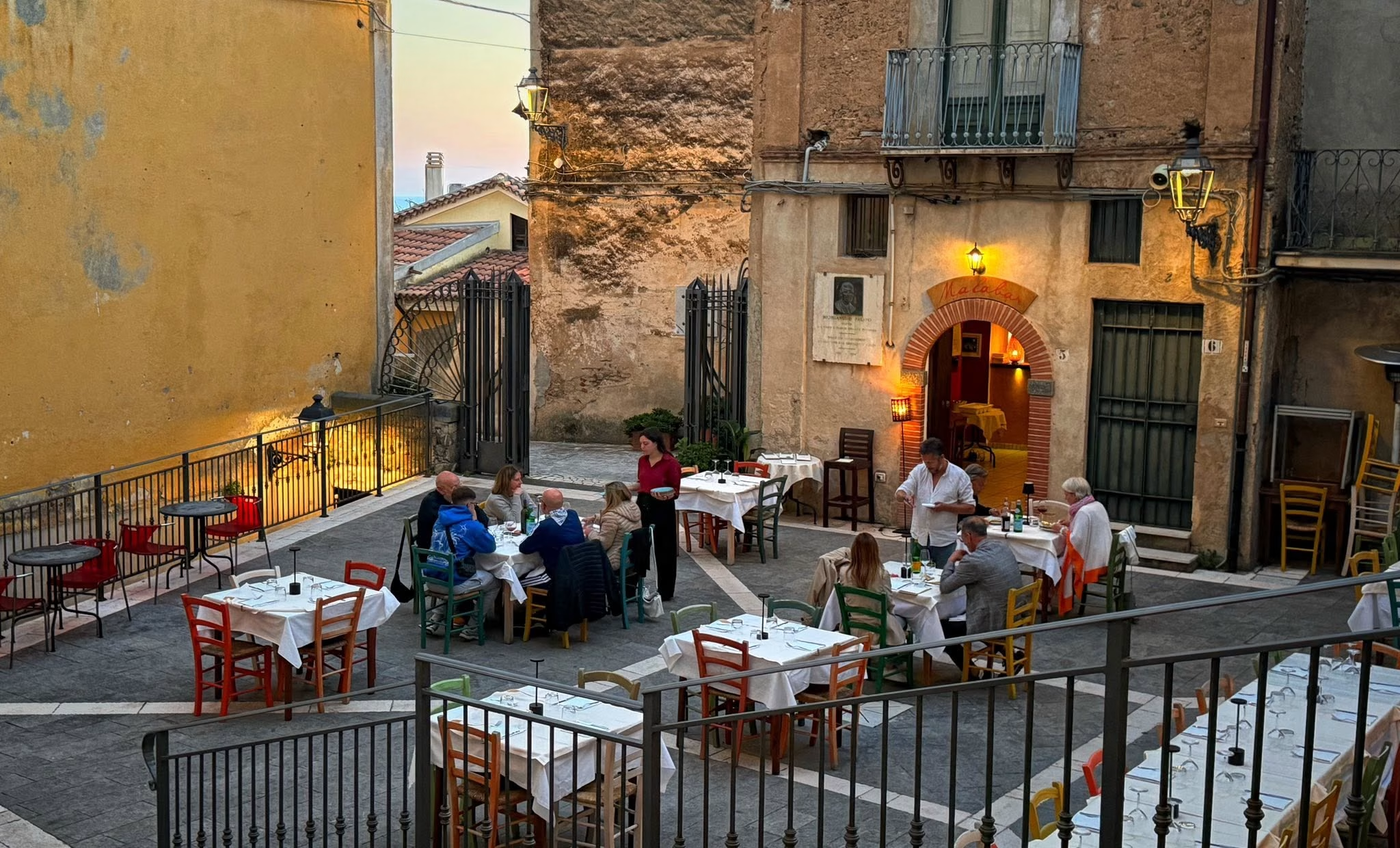
Beyond the terraces and steep lanes of Pisciotta’s old centre, Marina di Pisciotta offered a very different perspective: a low waterfront, café tables beside the sea and boats in the harbour. At dusk, the hill village’s small dining spaces became part of the character of this stage, alongside the planned orchid outing inland.
Procida, Ischia and one final night in Pozzuoli
The family then crossed from Naples to Procida for three nights. Colourful harbour façades, small lanes and evening views were a natural change of pace after days spent walking inland. Elaine’s photographs capture a softer, maritime chapter of the holiday.
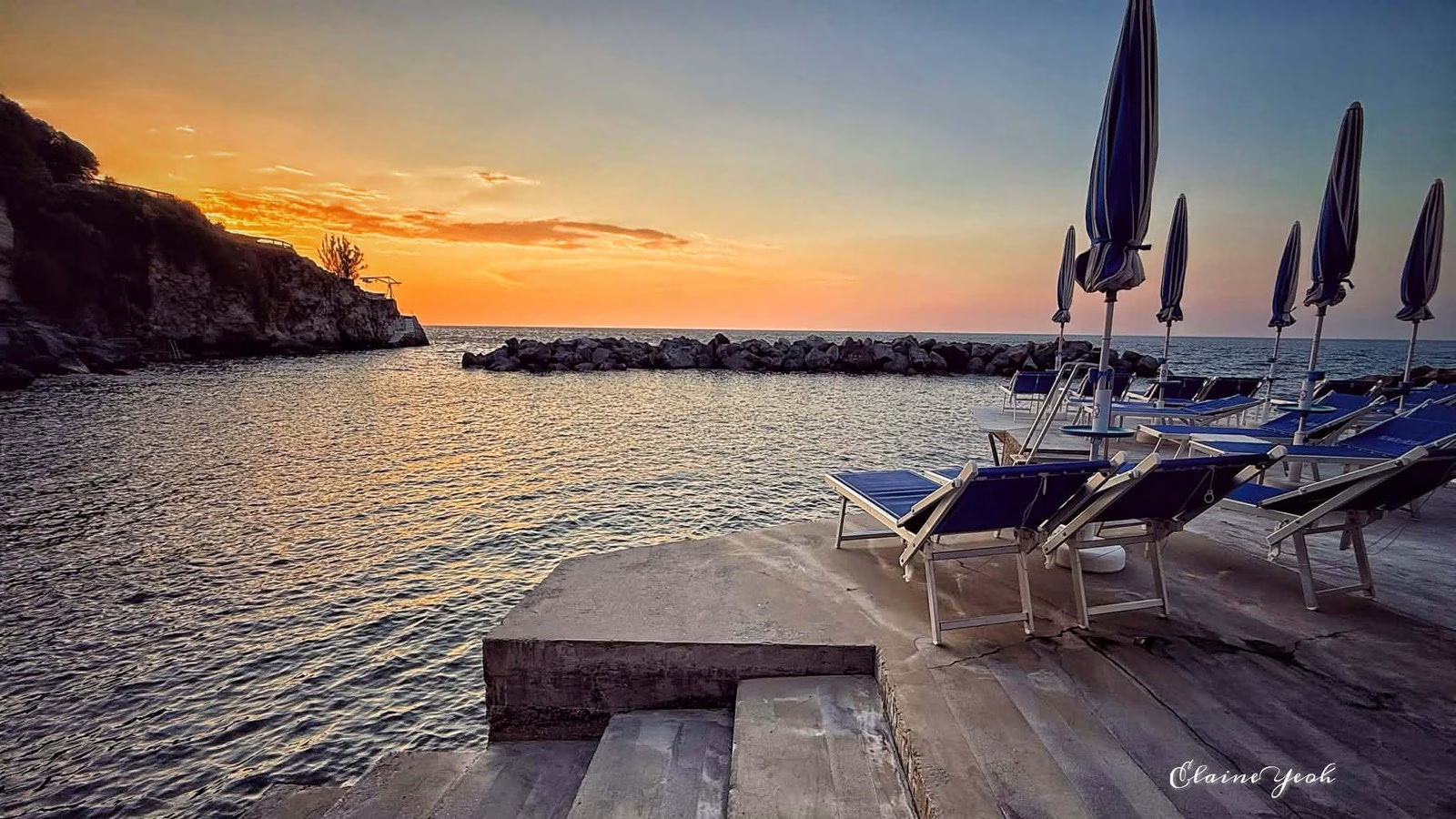
Three nights on Ischia followed, based at Ischia Blu Resort near the port. The island offers gardens, coastal towns and volcanic landscapes, as well as the simple pleasure of staying beside the water. The last night was spent at Palazzo Donna Iulia in Pozzuoli, ahead of their flight home. This was a fittingly different final setting: the Roman port of Puteoli and the volcanic Campi Flegrei lie beside the same waters as the islands, with Rione Terra, the Flavian Amphitheatre and the Macellum providing reasons to return for a longer exploration.
On Ischia, Ischia Blu Resort suited the family’s preference for space and independence: an apartment close to the harbour, with a separate living area, kitchen and a terrace overlooking the sea. It meant that the last part of the journey could be enjoyed without another demanding programme of excursions.
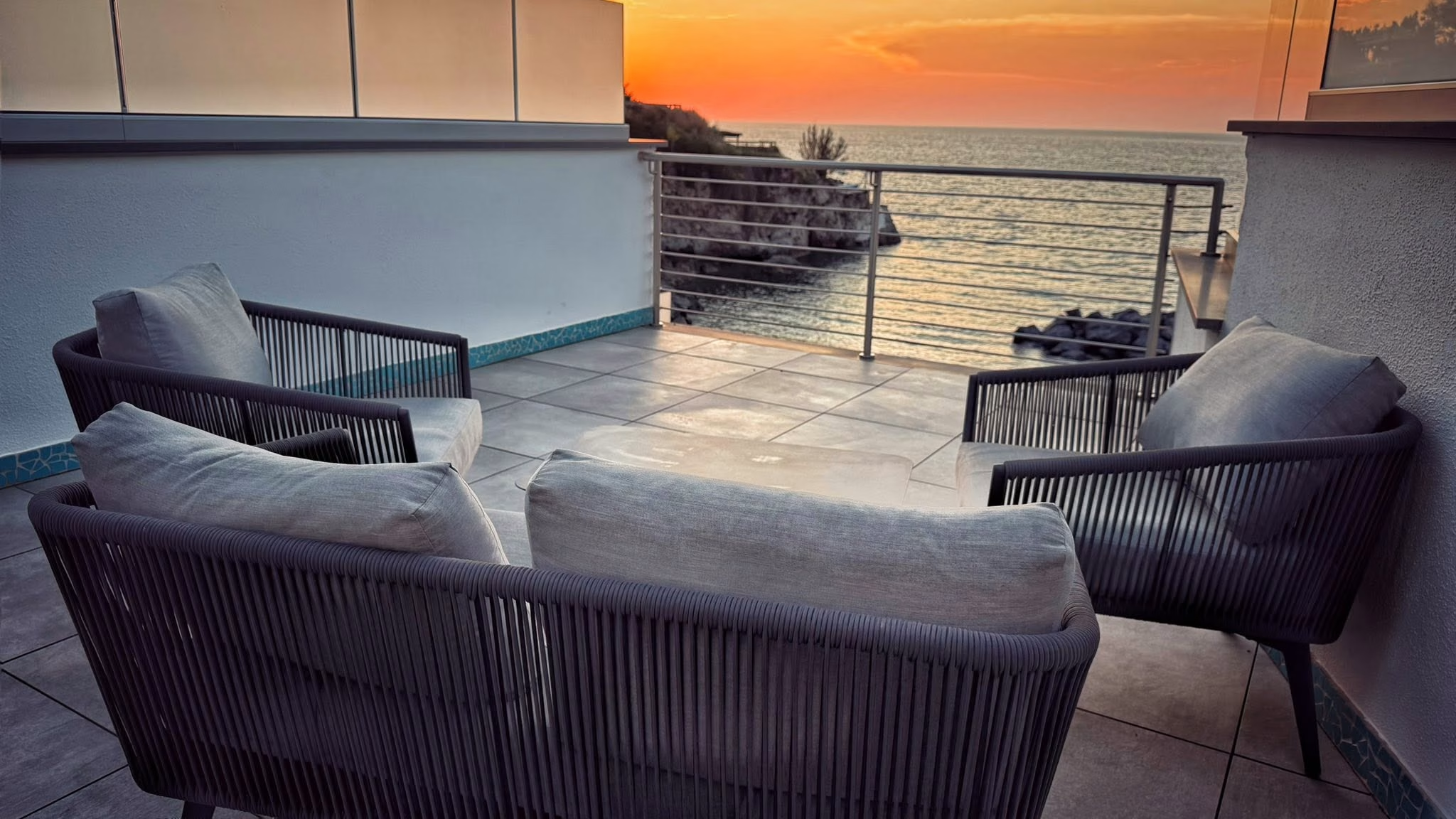
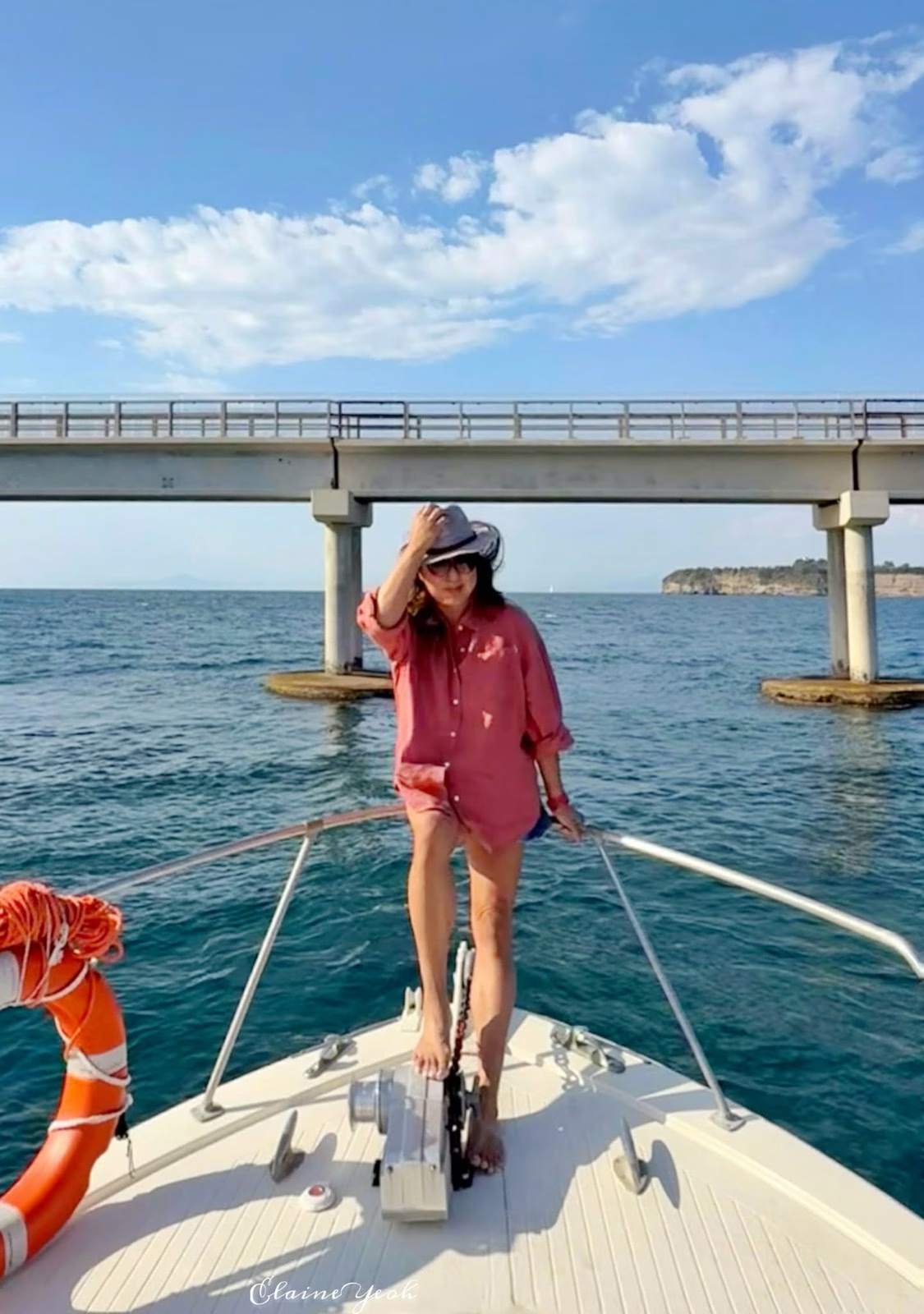
In a journey this long, the islands worked as a conclusion rather than an afterthought. See the photographic companion on the Procida, Ischia and Pozzuoli finale and how the ferry journeys fit together.
The arrangements that made an unusual route work
A journey through several regions without a hire car takes careful organisation. Here, private drivers linked accommodation across long stretches of the mainland, while booked ferries made the transition to Procida and Ischia. The hotel choices balanced the family’s preferences for character, comfort and the freedom to explore.
The most personal elements were the two botanical encounters. Neither was a standard sightseeing excursion: each required the right specialist, the right season and an itinerary with enough flexibility to accommodate the countryside.
In her Google review after the holiday, Elaine praised the collaboration involved in planning the route and singled out the specialist wildflower outings as among the best moments of their travels. The article is not a model to replicate stop for stop. It is an example of what becomes possible when a holiday starts with a traveller’s own curiosity.
A traveller’s photographs, not a checklist
The images in this collection belong to Elaine. They include the small things that a more formal destination guide might omit: a village street in evening light, a wild orchid almost concealed by grass, a hillside lunch and the view from a ferry.
These details are the point of the story. The orchids were the inspiration, but local people and the variety of places made the holiday memorable. For a similar journey, plan with ExpertoItaly: tell us what you particularly enjoy and we can propose a route around it.
Plan a journey around what interests you
Tell us the places, landscapes or specialist experiences you most want to explore. ExpertoItaly can arrange accommodation, private transfers and local guides as part of a tailor-made land-only holiday.
Photographs © Elaine Yeoh, reproduced with permission. Travel undertaken in May 2026. Botanical excursions arranged with Angela Rossini, Giovanni Quitadamo and Riccardo Di Novella.
Explore Southern Italy
Puglia & Basilicata guideGargano orchids with local expertsThe Valle delle Orchidee in SassanoSouthern Italy without hiring a carProcida, Ischia and Pozzuoli: the bay finaleSouthern Italy travel articlesTailor-made multi-centre holidays
Explore the Italy Blog
Browse all articlesSicily articlesAmalfi Coast articlesTurin travel guide



 Facebook
 WhatsApp channel