


Explore the Phlegraean Fields with Maria Chiocca
Follow the stories behind the ancient sites with a knowledgeable cultural guide. Private visits shaped around Greek and Roman history, classical myths and your family’s interests.
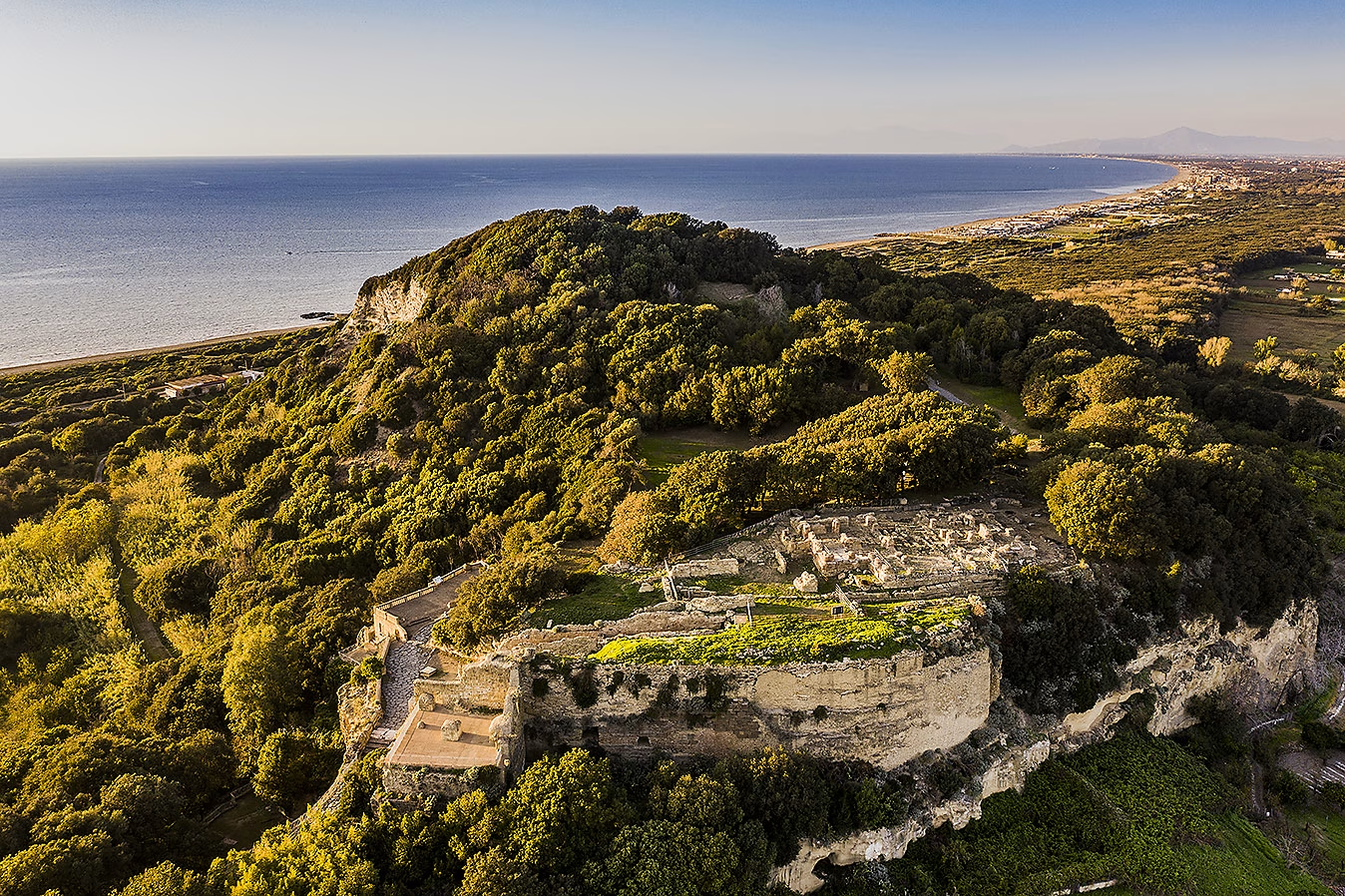
Cumae’s acropolis rises above the coast. The Greek settlement and the tradition of the Cumaean Sibyl provide a natural starting point for a cultural visit with Maria.
In this article
Meet Maria Chiocca
A day with Maria gives you time to understand what you are looking at, follow the connections between places and ask the questions that interest you.
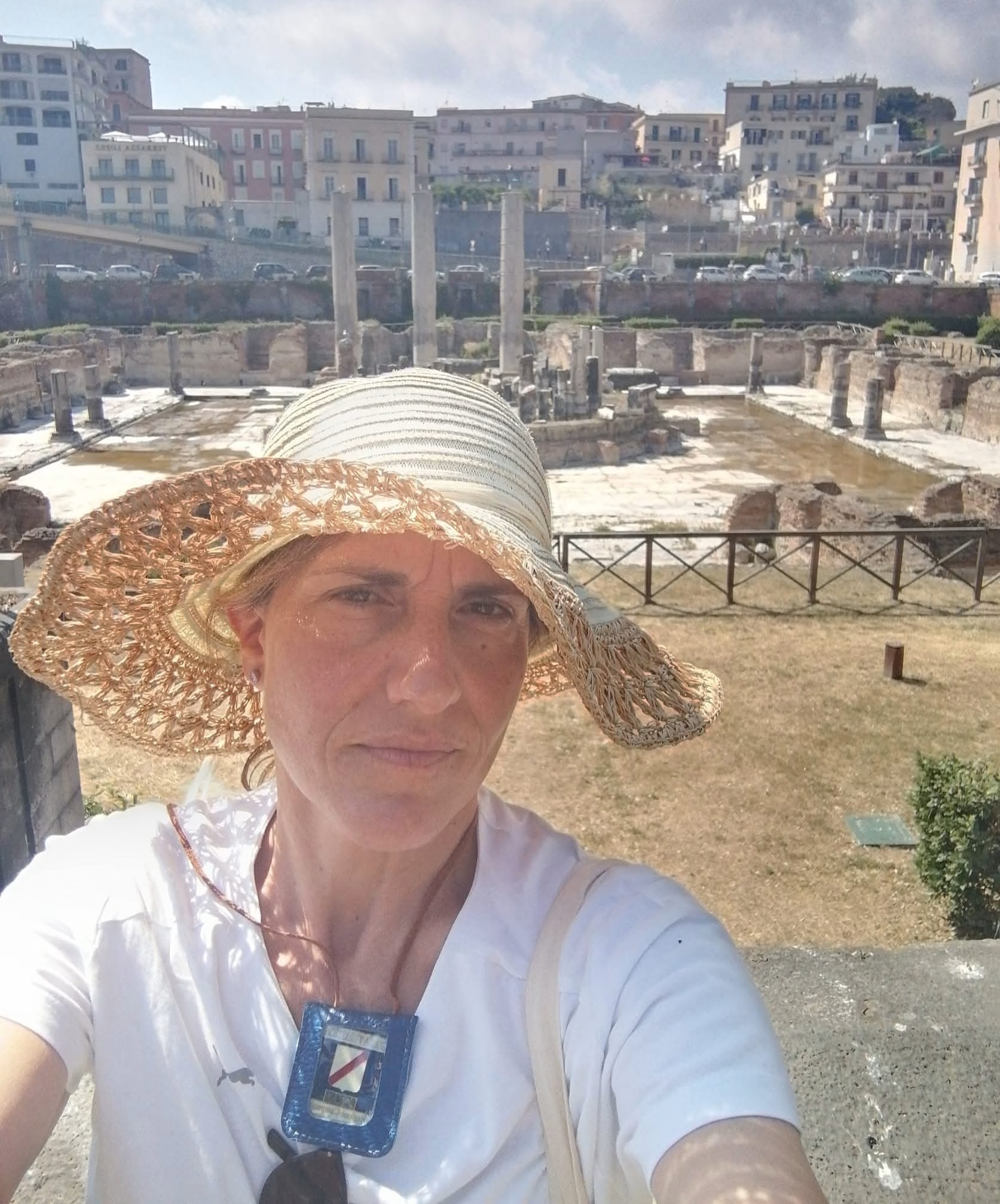
Maria Chiocca is the cultural guide we recommend for the Phlegraean Fields, west of Naples and known in Italian as the Campi Flegrei. Her writing on local history explores archaeology alongside beliefs, customs and the everyday traditions of Bacoli and Monte di Procida. It is a useful perspective in a place where ancient remains still form part of an inhabited landscape.
“The guide was excellent and a passionate local who grew up here.”
Elaine Yeoh · ExpertoItaly client
ExpertoItaly can arrange a private visit with Maria around a subject you would like to explore: the Sibyl and Aeneas, the engineering behind Roman naval power, or everyday life in ancient Pozzuoli. Leave time to follow the stories, explore the sites and ask questions along the way.
For an overview of the places, transport and options for a longer stay, read our Pozzuoli and Phlegraean Fields area guide. Read on for the stories you can explore in Maria’s company.
For history enthusiasts and curious families
For travellers with a strong interest in the ancient world
The area offers a connected account of Greek settlement, Roman trade, imperial leisure and naval power. Cumae, Puteoli, Baia and Miseno each played a different role. A private visit gives room to follow those differences, examine what survives and ask more detailed questions.
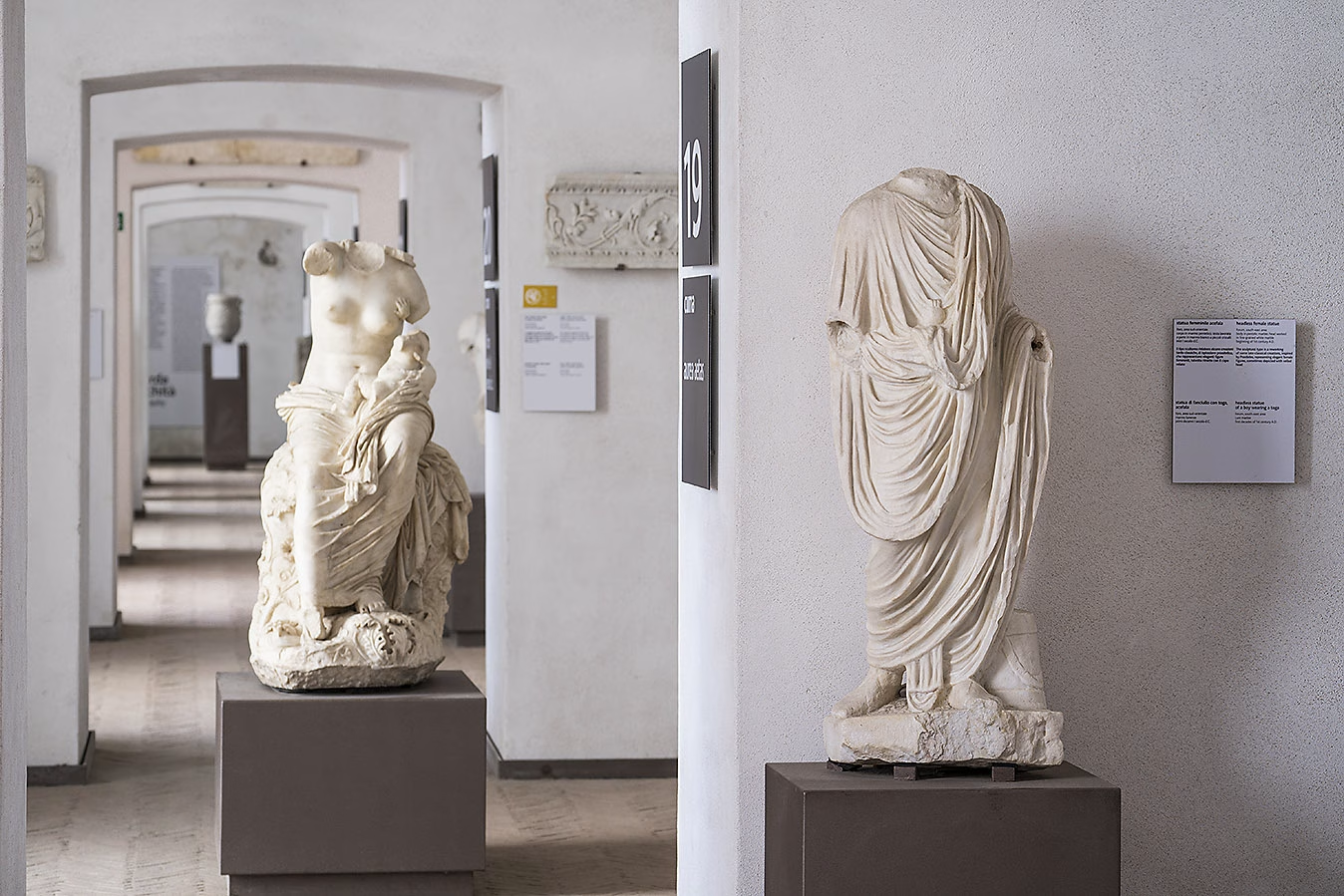
Let us know if your particular interest is Greek colonisation, mythology, Roman engineering or daily life. Maria can explore that subject with you at the ancient sites or among the finds in the archaeological museum at Baia.
For families who learn through stories and questions
Who was the Sibyl? Why did Aeneas need a golden bough? How did the Romans bring fresh water to their fleet? The Phlegraean Fields give children concrete places in which to explore these questions.
A family day combines a few contrasting stops with time to look, talk and pause. Mythology at Cumae and Avernus suits one kind of interest; the scale of a Roman cistern or amphitheatre suits another. Tell us your children’s ages, interests and walking confidence so we can arrange a day they will enjoy.
Younger children will usually benefit from a shorter, simpler visit. Older children and teenagers with an interest in classical stories may enjoy following a theme in greater depth. Leave space for the questions and discoveries that catch their imagination.
Cumae: understanding the Sibyl’s story
At Cumae, the question is how the Greek settlement, its religious traditions and the story of the Sibyl relate to the remains before you. This is a useful starting point for a visit with Maria: there is room to explore what archaeology establishes and what comes from classical literature.
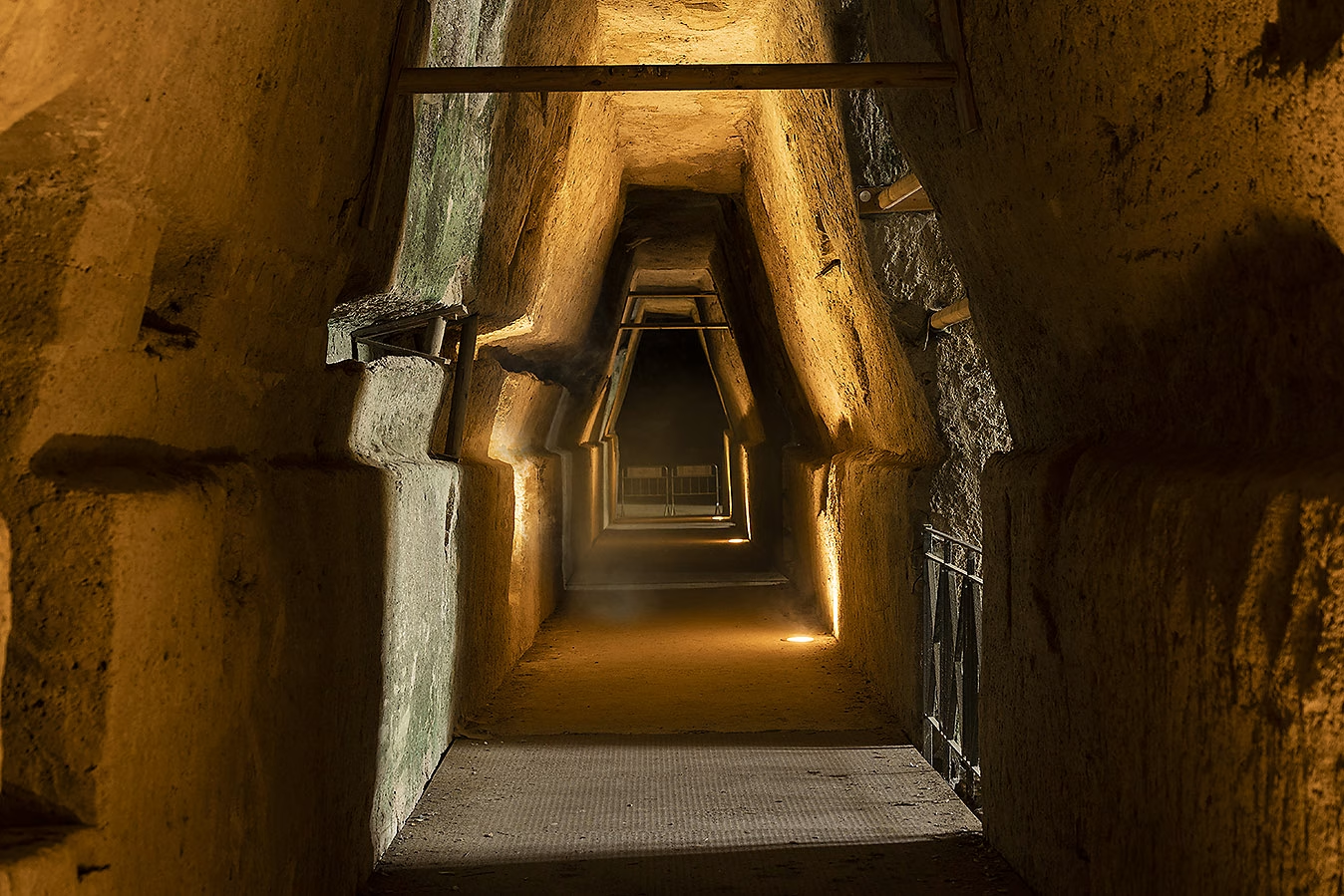
In Virgil’s Aeneid, the Sibyl is the prophetess Aeneas needs to guide him into the world of the dead. The gallery traditionally associated with her makes that story tangible, while its debated original purpose gives a guide something more to explain than its familiar name.
For history enthusiasts, the interest lies in the relationship between belief, literature and the ancient city. For families, a simpler question opens the conversation: who was the Sibyl, and why did a hero need her help?
Avernus: reading the landscape through Aeneas
At Lake Avernus, the story becomes a journey with a purpose. In Book VI of the Aeneid, Aeneas must obtain a golden bough before descending with the Sibyl to meet his father, Anchises. Their meeting looks ahead to the future of his descendants and Rome.
A mythology-focused visit with Maria can give time to discuss why Virgil placed the episode here and how the lake’s setting affects our reading of it. You do not need to have read the poem: the family relationships, difficult choices and questions about the future offer ways into the story at different ages.
Cumae and Avernus work together as one theme. The first introduces the Sibyl and her setting; the second develops Aeneas’s journey. We allow for the transfer between them when planning the day.
Miseno and Bacoli: how did the fleet function?
The coast around Miseno provides a link between epic poetry and Roman history. In the Aeneid, Misenus is Aeneas’s companion whose death and burial give the headland its name. Its later role as a naval base opens a different discussion: what did it take to maintain a fleet here?
Piscina Mirabilis: water for the Roman fleet
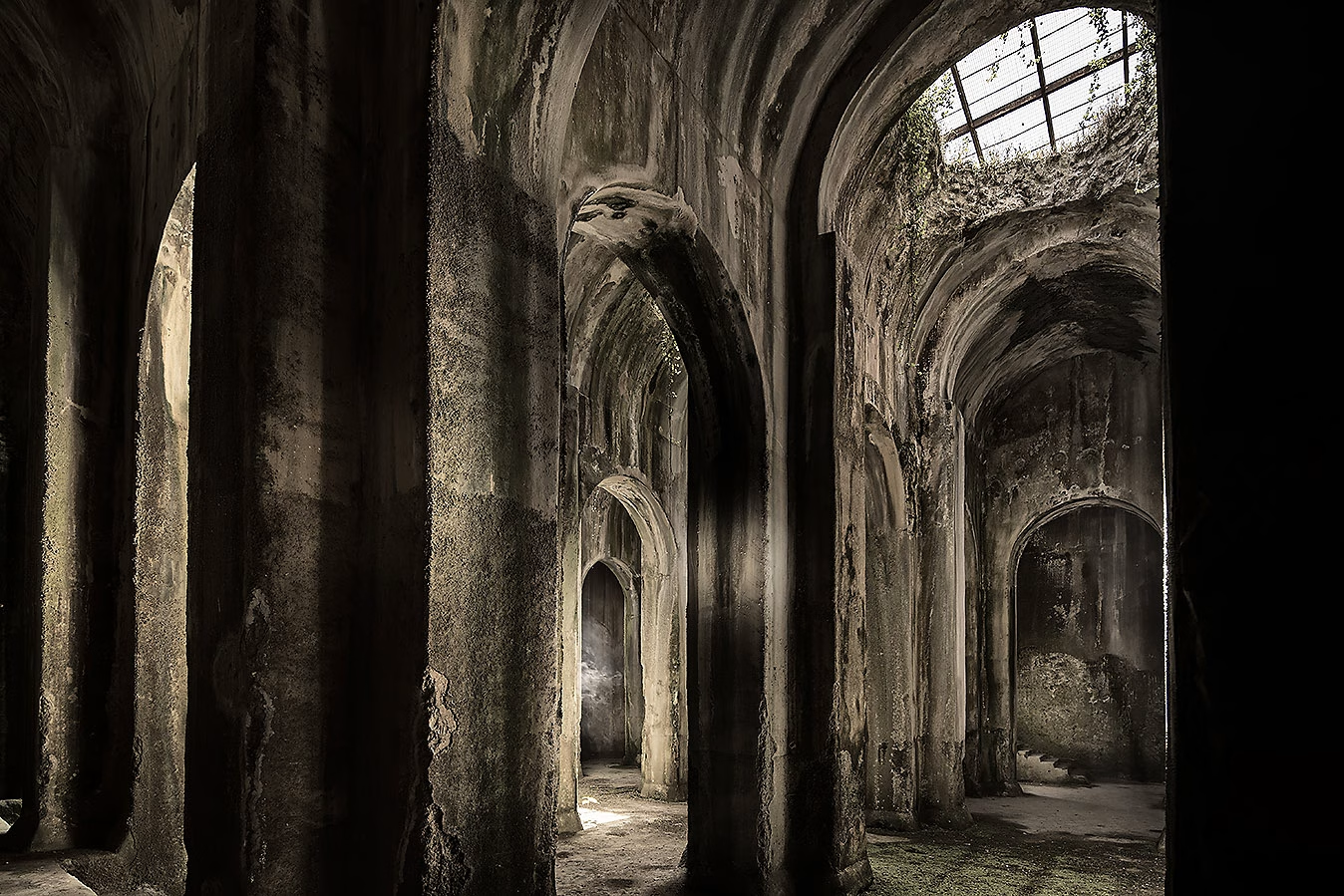
Inside Piscina Mirabilis, the rows of piers are immediately impressive. Understanding the cistern’s purpose adds another dimension: where the water came from, why storage mattered and how this structure fitted into the supply of the naval base.
Explore these questions with Maria as you walk through the cistern. Travellers interested in engineering can follow the connection between aqueduct, reservoir and harbour; children can begin with the more immediate problem of how to provide fresh water for so many people.
Baia: what did Roman wealth make possible?
A chosen stop at Baia can extend the discussion from military needs to private comfort, through the villas and baths of the Roman elite. Alternatively, time in the museum can help connect objects and sculpture with the sites already visited. Choose the ancient buildings or the museum according to what interests you most.
For the separate boat, snorkelling and diving experiences offshore, see our guide to the submerged city of Baia.
Rione Terra: everyday life and a changing city
Rione Terra gives a visit with Maria a more domestic focus. Here, the remains of ancient Puteoli invite questions about the people who lived and worked in the town, and how later generations adapted its buildings.
Where did people buy their bread?
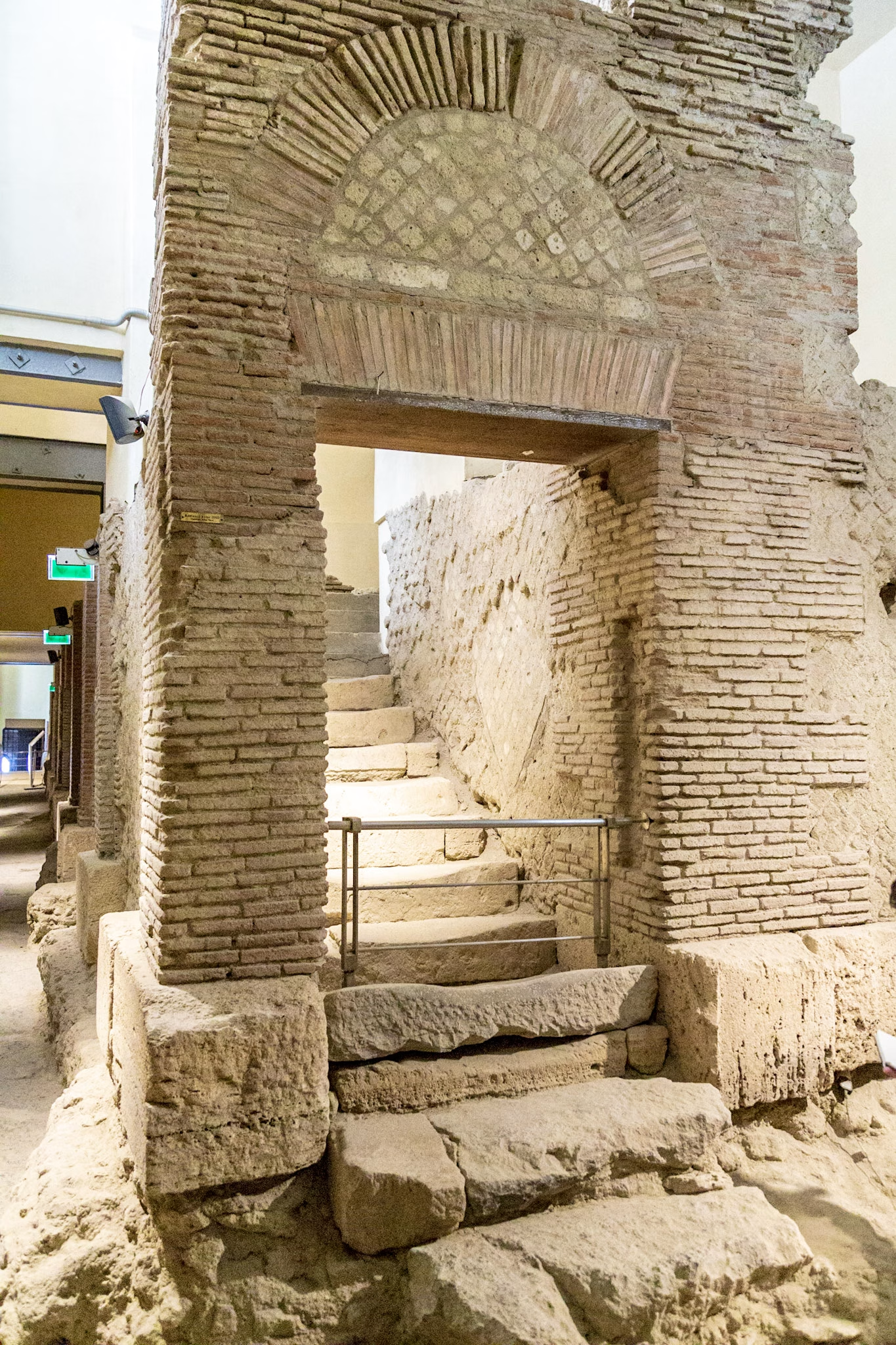
The excavated quarter contains streets, shops, grain stores and a bakery with stone millstones. A doorway or staircase offers a manageable detail to examine before considering the wider life of a Roman port.
Where did people buy bread? How did goods reach the shops? These questions can give families a way to relate the remains to familiar routines. Maria can also explain how these everyday details fit within the commercial life of a busy Roman port.
How does a temple become a cathedral?
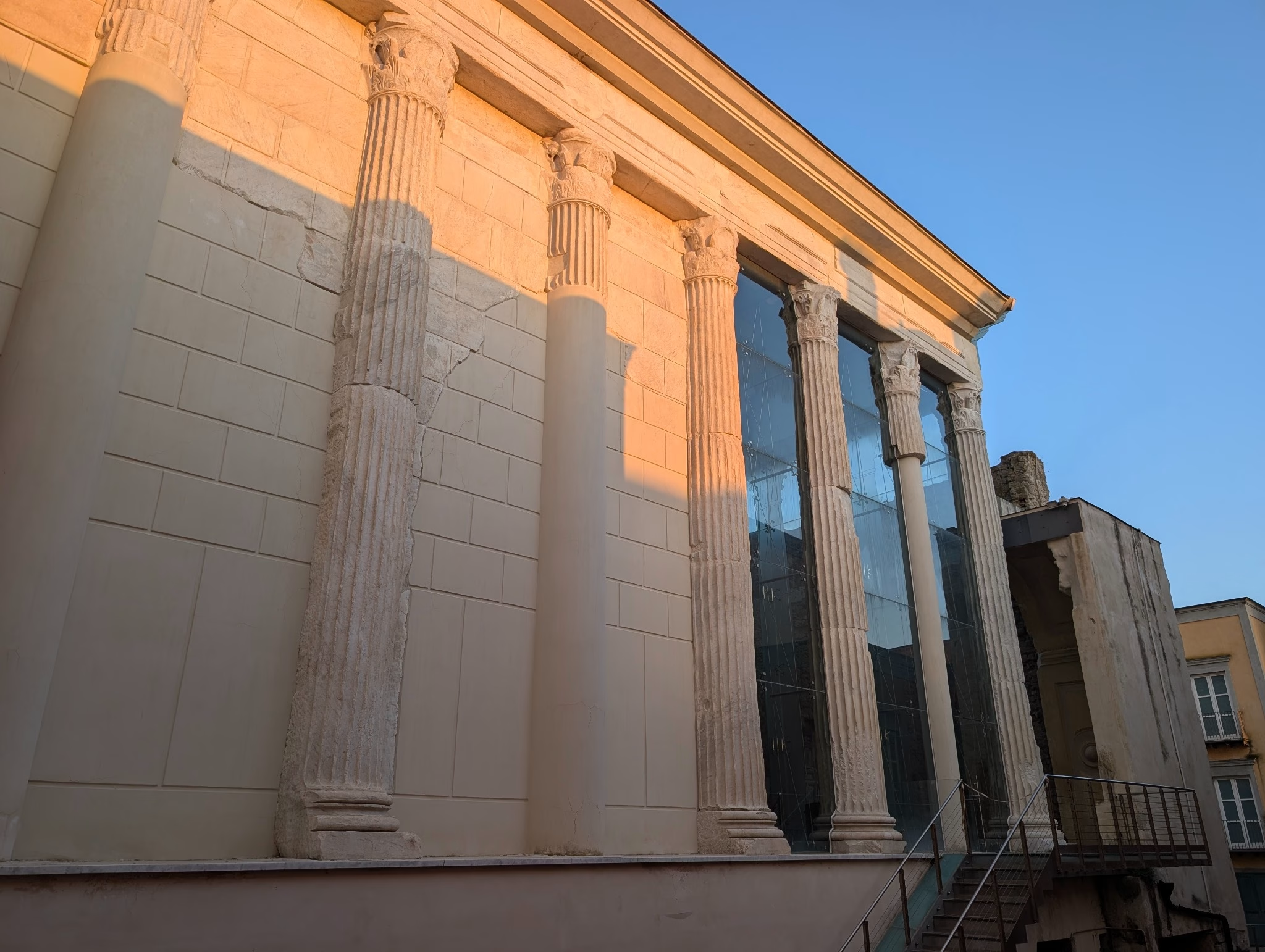
The Tempio-Duomo preserves the marble Temple of Augustus within the Cathedral of San Procolo. Looking at the columns beside the later church fabric gives the conversation a visible starting point: which elements were retained, what changed and how the same building served different religious communities.
Explore that transformation with Maria, taking time to look closely at the surviving fabric. The upper quarter, cathedral and underground route have separate access arrangements; an underground visit is included only when access is confirmed.
Ideas for your day with Maria
Choose a theme for your private visit, with the route tailored to your interests, pace and the sites open on your dates.
Cumae and Lake Avernus
Our first suggestion if the Sibyl, Aeneas and classical stories are the main attraction. Allow a substantial half-day for the visits, with travel time added according to your base. A full day leaves more room for lunch and a carefully chosen additional stop.
Bacoli, Piscina Mirabilis and Miseno
Build the day around the cistern and the naval coast, with one Baia visit if the timing works. This brings together the practical demands of Roman power and the coastal setting of its wealthy residents. Plan on a full day if combining several sites.
Pozzuoli, Rione Terra and ancient Puteoli
A half-day centred on the town can suit a shorter stay. Build the visit around Rione Terra and one principal interior, such as the Tempio-Duomo, then allow time for the historic district and waterfront. The underground archaeological route is a separate possibility when access is confirmed; the amphitheatre can provide another focus if you have more time.
We would choose one main theme for a day, leaving room for questions and pauses. If you would like to explore both mythology and Roman life in depth, two visits with different focuses give each subject more time.
Arranging your visit with Maria
Tell us your dates, where you will be staying, your interests and the amount of walking that suits you. For families, include your children’s ages and what already catches their imagination. Enquire early for your preferred date so we can check Maria’s availability and arrange your visit.
ExpertoItaly can arrange private transfers from your accommodation, including from Naples, Pozzuoli, Sorrento or the Amalfi Coast. Guiding, transport and admission are separate elements, which we set out in the proposed arrangements. From Sorrento or the Amalfi Coast, allow for a longer road journey; a Naples or Pozzuoli stay usually gives more time at the sites.
Let us know about any difficulty with steps or uneven ground. We check the selected visits and booking requirements when arranging the day and again before travel, including whether underground areas are available.
Arrange a cultural visit with Maria
Tell us your travel dates, where you plan to stay and what interests you most: mythology, Greek settlement, Roman engineering or the history of the coast. We can discuss Maria’s availability and shape the guiding, visits and transport around your holiday.





 Facebook
 WhatsApp channel