Greek Naples & Posillipo — where myth meets the waterline

Begin where Naples truly began. On Megaride, a siren’s legend meets a working harbour, and the city opens like a fan: Castel dell’Ovo on its rock, Posillipo rising to the west, Vesuvius holding the horizon. From here our stroll traces the Greek heart that became the Neapolitan soul—lanes of Borgo Santa Lucia, the everyday balcony of Pizzofalcone, the easy theatre of the Lungomare, and the beautiful, unfinished drama of Palazzo Donn’Anna.

Climb to Parco Virgiliano for the panorama that edits your thoughts; step through the cool of the Seiano Grotto into Pausilypon’s sunlit terraces; float above Roman walls in the clear water of Gaiola; linger over seafood at Marechiaro, where tables all but touch the tide. Along the way, Villa Rosebery whispers of statecraft and gardens, Borgo Marinari pours a perfect spritz, and Piedigrotta’s shady park nods to Virgil and the Roman road cut through rock.

Whether you’re two, a circle of friends, or a family moving at different speeds, this coastline makes time feel generous: pram-friendly paths, photo-happy piers, simple plates done well, and sunsets that do the work for you. Follow the height-to-harbour rhythm and you’ll carry Naples with you—salt on your lips, stories in your pocket.

Megaride & Castel dell’Ovo — Where a Siren Found the Shore

Megaride is the rocky cradle of Naples, bridged to the city by a short causeway and crowned by Castel dell’Ovo. It feels purpose-built for first wanders: pushchairs roll easily, friends peel off for photos on the low piers, couples linger on the ramparts as the bay blushes pink. The fortress overlays centuries—Roman villas once speckled these shores; mediaeval and Aragonese phases left the keep and bastions. From the walls, the whole story opens out: Posillipo to the west, the Centro Storico behind, the Sorrento Peninsula adrift on the horizon.

The name “of the Egg” nods to a mediaeval tale that the poet Virgil hid a magical egg in the foundations, its safety bound to the city’s fate. Neapolitans enjoy the story for what it is: a wink to the idea that place and destiny are forever entangled. Down at Borgo Marinari, the little harbour cocooned behind the causeway, glasses clink, toddlers point at boats, and dinner tables catch the last light. Seafood here is straightforward and fresh; you are paying for the view, and the view earns its keep. Shops are few—save browsing for nearby Chiaia—but there’s enough craft and gelato to keep a gentle loop alive before or after the castle.

Come late afternoon if you can. The breeze is kind, the parapets can be blustery, and the light does the heavy lifting. It’s a soft opening to Naples: easy, legible, and already memorable.

Quick facts

  • Best for: easy first strolls, sunset views, light history
  • Time needed: 45–90 mins
  • Don’t miss: castle ramparts, Borgo Marinari harbour
  • Good to know: Castel dell’Ovo entry is free; upper ramparts can close in strong wind. Best pram route is the causeway + courtyard (skip tower stairs).
Castel dell’Ovo on Megaride with the Certosa di San Martino and Castel Sant’Elmo rising on the Vomero hill behind.
 

Carved from tufa and sea-spray, Castel dell’Ovo anchors Megaride while Sant’Elmo and the Certosa watch from the hill—Naples layered in stone, sea and storyline

 
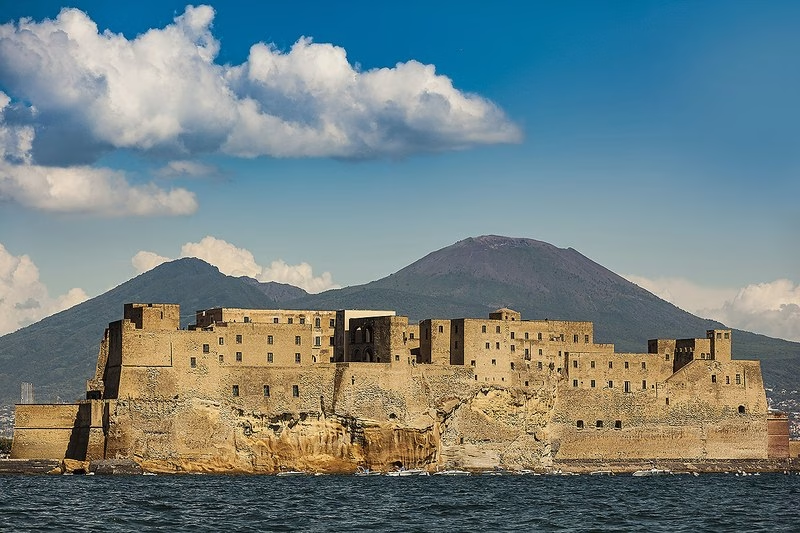
Full façade of Castel dell’Ovo on Megaride with Mount Vesuvius aligned on the horizon across the bay.
 

The siren’s shore meets the volcano’s silhouette: from Megaride, the whole city opens like a fan—castle, bay and Vesuvius holding the horizon

 
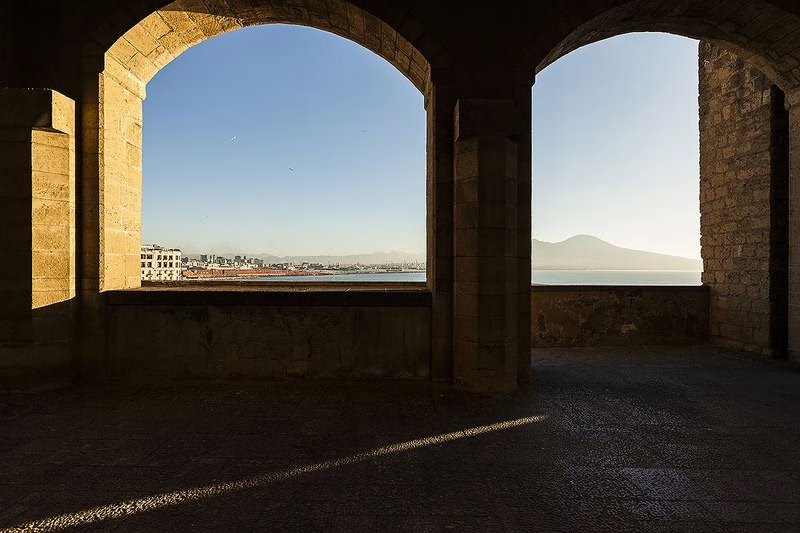
View of Naples and Vesuvius framed by stone arches inside Castel dell’Ovo.
 

Step inside the fortress and the city edits itself: arches turn sea and Vesuvius into a triptych—an instant prologue to Greek Naples.

 
Riviera di Chiaia and the seafront seen through a stone arch at Castel dell’Ovo.
 

From the castle’s shade the Riviera glows—pastel façades, the curve of the Lungomare, and the easy theatre of Naples at the waterline.

 
Sunlit parapet with old cannons on the ramparts of Castel dell’Ovo, Posillipo skyline beyond.
 

Herringbone bricks warm in the sun while the cannons sleep—today the ramparts serve a gentler purpose: first wanders, sea air and wide-open views.


Borgo Santa Lucia & Pizzofalcone — The Cradle Between Sea and Sky

Between the castle and Mergellina, Borgo Santa Lucia keeps a maritime rhythm: fishermen’s boats, narrow lanes, pavement cafés, and the little church of Santa Lucia a Mare with echoes of Greek monks in its past. Above it rises Pizzofalcone (Monte Echia), a compact residential hill whose belvedere frames Vesuvius, Capri and the castle in one sweep. This is the geography of early Partenope—the slope where the Greek settlement stepped from Megaride and found air, light and a short hop to the water.

Families like it for pram-friendly pavements and easy gelato bribery; friends drift up the rampe (photogenic stairways) for views that look stolen from a film; couples often discover that the famous 19th-century song “Santa Lucia” was born on this very shoreline. Dining is disarmingly honest—fried anchovies, pasta alle vongole, grilled catch—served late for date-nights, early for bedtimes. The façades are a Posillipo quirk in miniature: modest from the street, theatrical towards the sea.

If you’ve an hour to spend, take the waterfront lanes first, then climb (or taxi) to the belvedere for golden hour. It is not a showpiece, and that’s the charm: an everyday balcony for the city that still feels local.

Quick facts

  • Best for: Greek Naples atmosphere, harbour strolls, sunset viewpoints, simple seafood
  • Time needed: 60–120 mins
  • Don’t miss: Belvedere di Monte Echia, Church of Santa Lucia a Mare, Fontana del Gigante, the rampe stairways
  • Pair with: Megaride & Castel dell’Ovo (5–10 mins on foot) or Chiaia boutiques (10–15 mins)
  • Good to know:  West-facing views are best at golden hour;
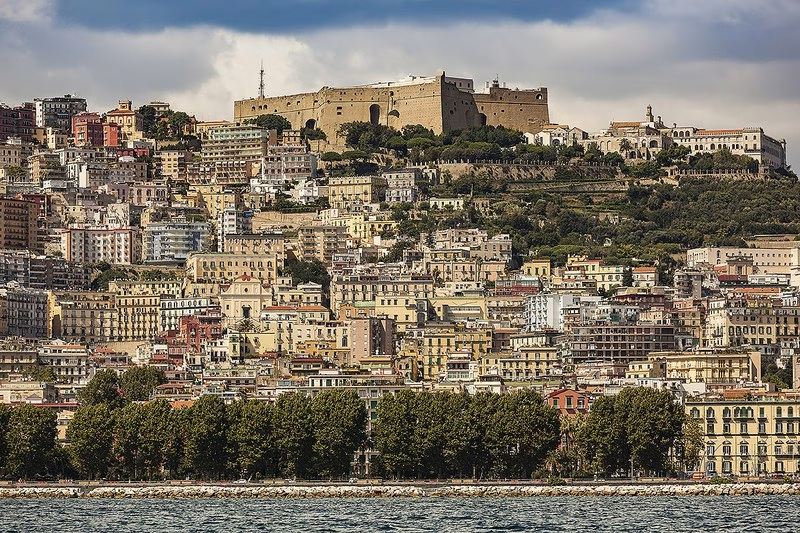
Vomero hill with Castel Sant’Elmo and the Certosa di San Martino above the layered houses of Borgo Santa Lucia, seen from the waterfront.
 

Santa Lucia’s pastel maze rises towards Pizzofalcone and up to Vomero, where Sant’Elmo and the Certosa keep watch—sea at your feet, history on the skyline.

 
The small marina of Borgo Santa Lucia and the seafront hotels glowing at golden hour, with boats moored along the quay.
 

As the sun tilts, boats settle and façades turn honey-coloured—Santa Lucia becomes a living postcard, perfect for an aperitivo before the climb to Monte Echia.

 
Twilight over Borgo Santa Lucia’s marina with Castel dell’Ovo to the right and the silhouette of Capri on the horizon.
 

When the sky slips to mauve, Capri appears like a promise beyond the breakwater and the harbour lights up—date-night Naples in one quiet frame.

 
Baroque Fontana del Gigante near Santa Lucia, with statues and arches seen from above.
 

A flourish of marble on the waterfront, the Fontana del Gigante adds theatre to Santa Lucia—mythic figures, bubbling water and the sea just a few steps away.


Lungomare Caracciolo & Mergellina — Naples’ Living Room on the Waterline

The Lungomare is where Naples takes its daily pulse: runners at dawn, scooters and prams by day, hand-in-hand strolling at dusk. Mergellina’s harbour still lands fish early; by evening, buskers tune up and gelato queues drift towards the balustrade. The promenade traces the ancient shoreline of Greek–Roman Neapolis, so a single glance nets Castel dell’Ovo, Posillipo and Vesuvius—useful for first-timers and still magic for returners.

Slip inland for a 15-minute classical pause at Parco Vergiliano a Piedigrotta: a shady pocket with Virgil’s symbolic tomb, a corner for Leopardi, and the portal of the Roman Crypta Neapolitana—poetry and engineering in one calm detour. Back by the water, the 19th–20th-century façades along Riviera di Chiaia add a low, elegant hum without stealing the stage. Couples share a bench and watch the light change; friends rent bikes or stage a gelato crawl; families tick off safe photo spots on the little piers. If Naples has a living room, this is it.

Quick facts

  • Best for: relaxed walk/cycle, gelato, people-watching
  • Time needed: 45–120 mins
  • Don’t miss: piers for photos, view to Vesuvius
  • Good to know: Public loos at Rotonda Diaz; drinking fountains along the promenade; dedicated cycle lane. Nearest station: Mergellina (Line 2), 5–7 mins on foot.
Aerial view of the Lungomare Caracciolo and Mergellina promenade with Castel dell’Ovo glowing at sunset and Mount Vesuvius on the horizon.
 

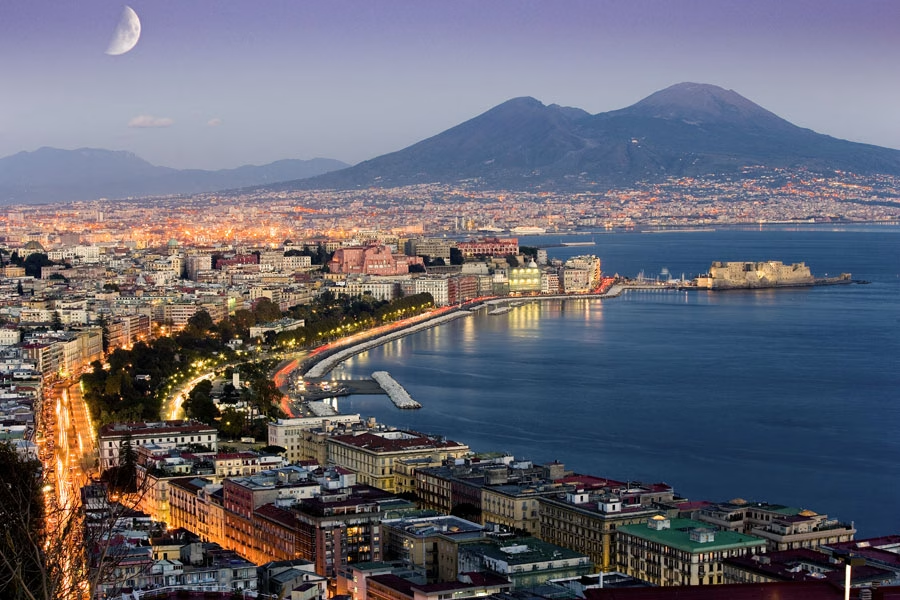
Naples’ living room in one sweep: the Lungomare curves past Mergellina towards Castel dell’Ovo, while Vesuvius steadies the skyline—perfect for an unhurried evening stroll with gelato in hand.


Palazzo Donn’Anna — The Beautiful Unfinished

At Posillipo’s threshold, Palazzo Donn’Anna rises like a baroque cliff, arches and staircases theatrically sliced open to the sea. Begun in the 17th century for Anna Carafa, designed by Cosimo Fanzago, never quite finished—yet all the more compelling for it. Goethe admired the melancholy grandeur; painters of the Grand Tour took it home in oils. Naples understands the charm of the unfinished: not every story needs a tidy bow to be unforgettable.

You “visit” Donn’Anna with your eyes. Viewed from nearby coves or from a small boat, it is cinematic—waves answer the arches; light reveals cavities and vaults. Around the headland, cafés and seafood places tuck into rock pockets; the vibe is neighbourhood rather than grand. Children remember the way the sea seems to talk back to the walls; couples tend to stand longer than they meant to; friends compare photos and swear none of them capture the feel. Keep to public viewpoints—parts are private residences—and let the façade do the talking.

Quick facts

  • Best for: photography, scenic stops, boat views
  • Time needed: 15–30 mins (viewpoint)
  • Pair with: Posillipo viewpoints or coastal boat loop
  • Good to know: Best photo angle from the small public strip by Bagno Elena/Lido Ideal at Largo Sermoneta, or from a short coastal boat loop; interiors are private.
Palazzo Donn’Anna in Posillipo at golden hour, its arches and sea-cut walls opening directly onto the water.
 

Half palace, half cliff: Donn’Anna’s baroque shell stands open to the waves, its unfinished arches catching the last light—mystery and sea air in the same frame.

 
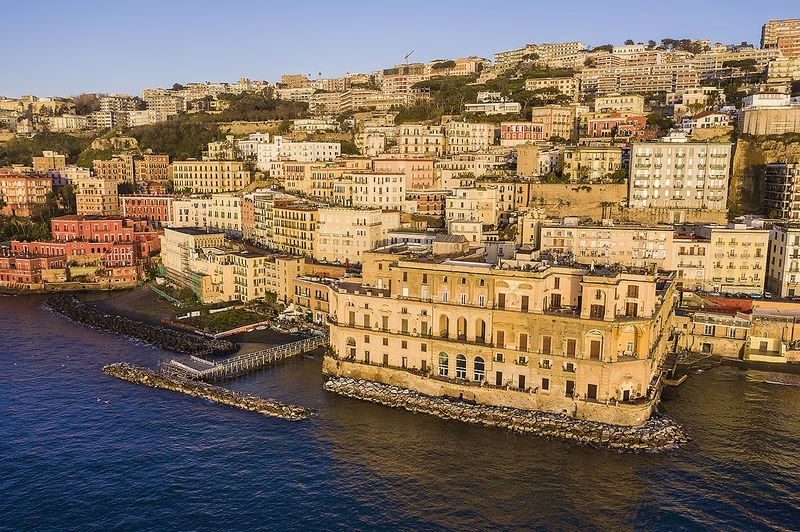
Aerial view of Palazzo Donn’Anna jutting into the sea at Posillipo, with bathing platforms and the hillside houses of Naples glowing at golden hour.
 

From above you see the paradox: a baroque shell thrust into the bay, Posillipo rising behind in terraces of colour—an unfinished palace that still steals the shoreline.


Posillipo & Parco Virgiliano — The Balcony That Resets the Day

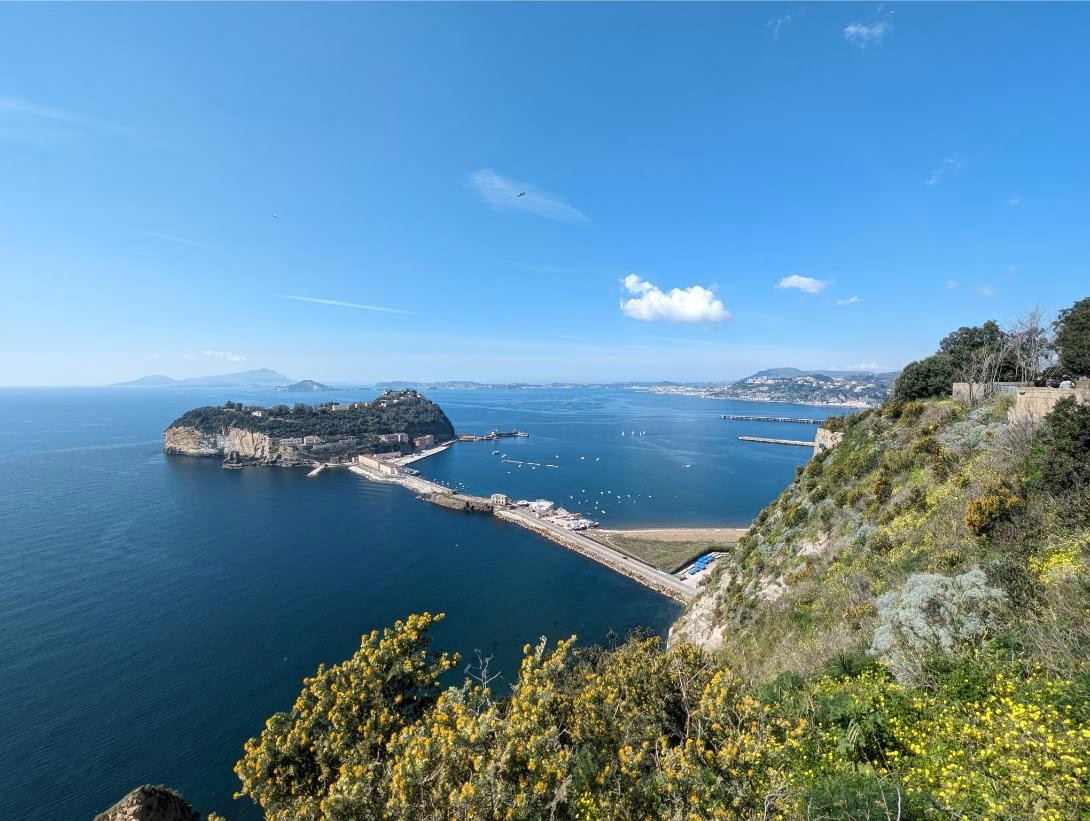
Posillipo is Naples’ most coveted hillside: quiet lanes, discreet villas, sudden lungfuls of sky. At its crown sits Parco Virgiliano, a terraced park that functions as the city’s open-air balcony. Stand on the top platform and the panorama gathers Vesuvius, Capri, Ischia, Procida, Sorrento and the Phlegraean Fields into one legible sweep. The name remembers the Greek Pausilypon—“respite from pain”—and the feeling arrives on cue.

Up here, families bring kites and footballs, teenagers practise unhurriedness, and couples lean on railings until the horizon tidies the mind. Down on the ridge, cafés and pizzerie feed a low-key neighbourhood scene; lower still, at the waterline, seafood rules. Posillipo has a trick with façades: modest to the street, theatrical to the sea—houses that perform for the water first. Time it for golden hour if you can, then drift downward towards dinner. The sequence—height to harbour—rarely misses.

Quick facts

  • Best for: big panoramas, golden hour, quiet neighbourhood feel
  • Time needed: 60–90 mins (park only)
  • Pair with: dinner at Marechiaro
  • Good to know: Easiest drop-off/pick-up is the Viale Virgilio gate (Parco Virgiliano – Ingresso Viale Virgilio);
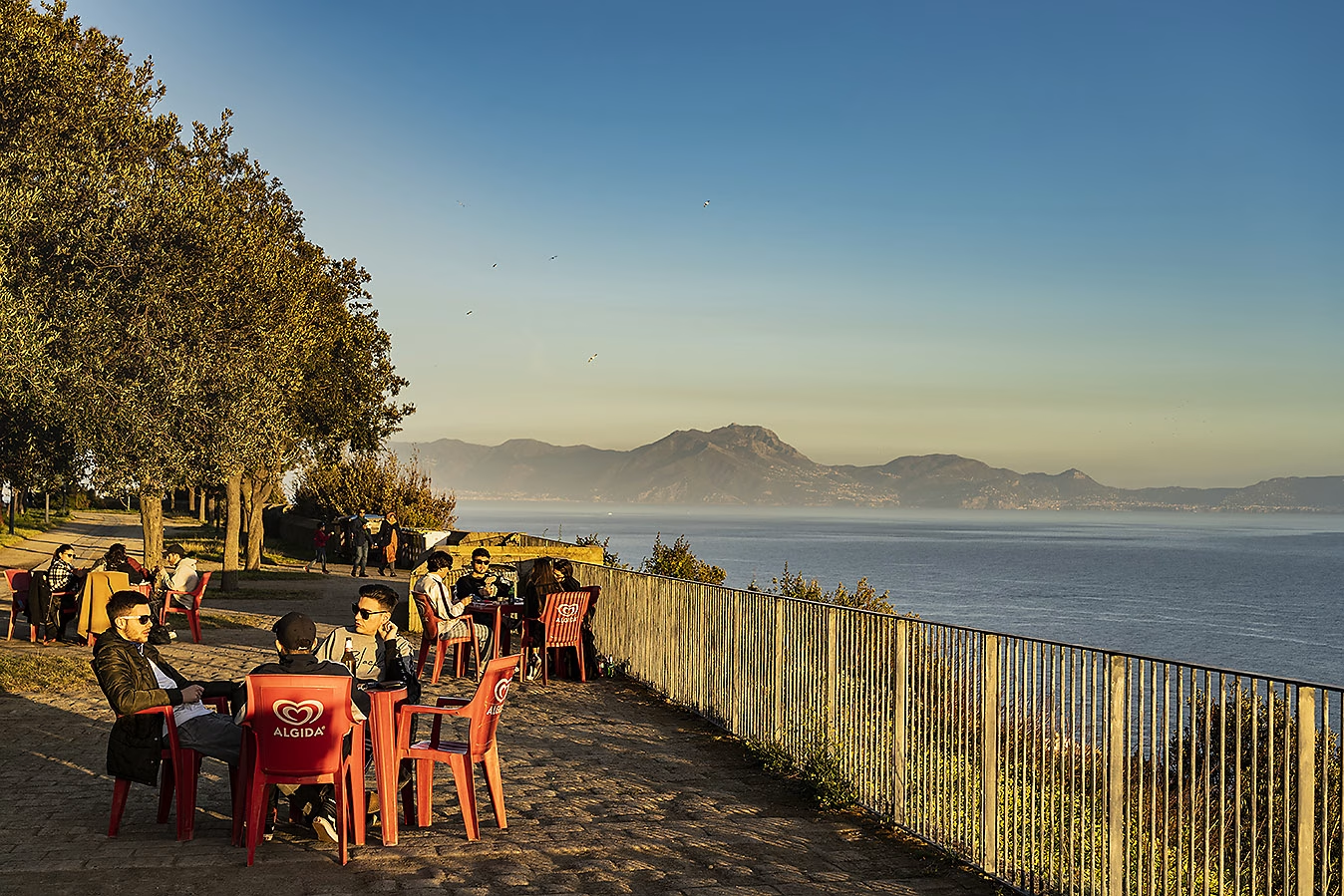
People relaxing on a café terrace at Parco Virgiliano with wide sea views towards the Phlegraean coast.
 

Sunlit benches, a simple coffee, and miles of blue: Virgiliano shows why Posillipo has always been Naples’ open-air balcony for couples, friends and families.

 
Couple silhouetted at Parco Virgiliano with Nisida below, Ischia on the horizon and Mount Vesuvius at blue hour over the Bay of Naples.
 

From Posillipo’s railing, Nisida sits like an ink blot beneath you; beyond, Ischia and Vesuvius draw the bay’s outline—an evening pause that resets the day.


Parco del Pausilypon & the Seiano Grotto — From Shadow to Sunlight

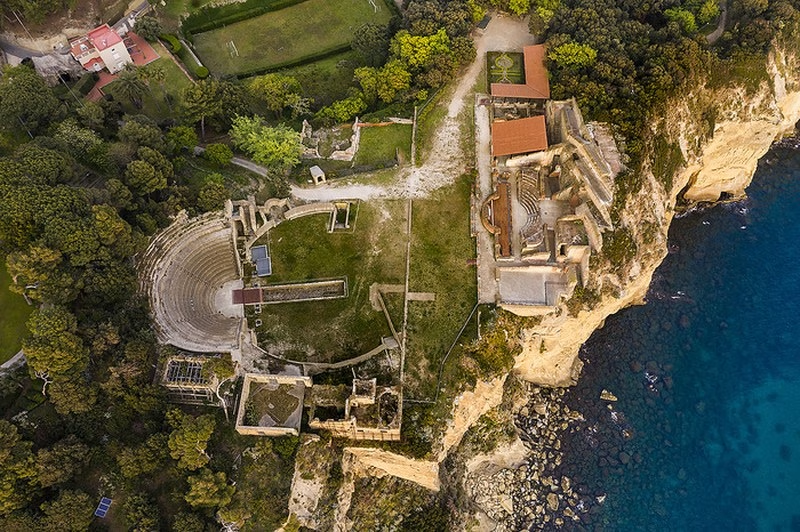
Here, Roman engineering serves a Greek prescription. A cool tunnel, the Seiano Grotto, bores through tufa and opens onto terraces, porticoes and a small theatre suspended above emerald coves—the remains of an estate associated with Publius Vedius Pollio, later annexed by Augustus. You move from darkness to light, from hush to horizon, and the bay answers in colour.

This is archaeology you feel in your body: footsteps echo, salt air presses gently on your face, children count steps to the theatre, and a guide’s whisper ricochets off the stone to prove the acoustics still behave. There are no shops, and that’s part of the magic—bring water, wear trainers, and fold the visit into a Posillipo day. Go mid-morning or mid-afternoon for slanted light, then reward the senses with a lazy seafood table by the water.

Quick facts

  • Best for: archaeology with a sea view, soothing walk
  • Time needed: 60–90 mins (timed entry)
  • Don’t miss: tunnel “reveal”, theatre terrace
  • Good to know: Entrance is via Discesa Coroglio (Grotta di Seiano); timed slots are required.
Aerial view of the Parco del Pausilypon in Posillipo, showing the Roman theatre, terraces and cliff edge above clear blue water; access via the Seiano Grotto tunnel.
 

From the cool Seiano Grotto you emerge into light: Pausilypon’s theatre and terraces cling to the cliff, looking straight onto the bay—a Roman answer to a Greek idea.


Gaiola Marine Park — A Mask, a Myth, and Clear Water

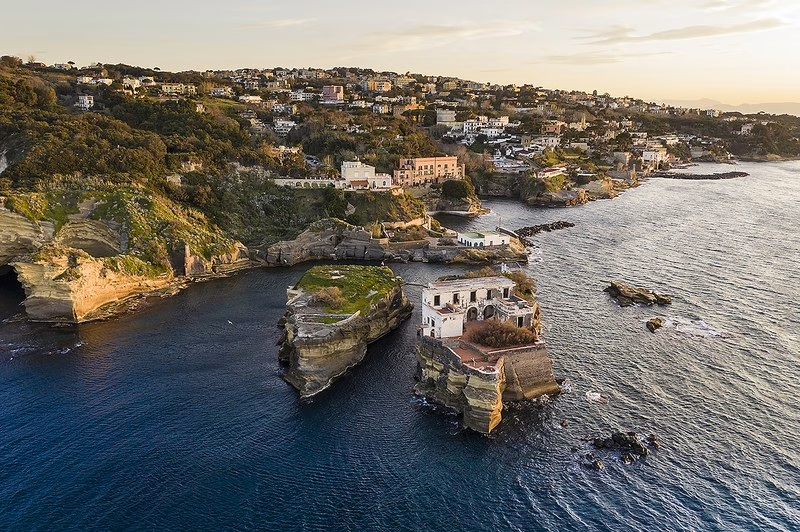
Parco Sommerso di Gaiola protects a crystalline strip of coast where submerged Roman walls sleep on the seabed and twin islets link by a toy-like stone arch. Access is regulated to keep the water as it looks in your dreams, so expect rock entries, simple kit and a quietly respectful mood. A mask is enough to glimpse fishponds and villa lines; a glass-bottom boat adds the running commentary.

Families with strong swimmers love the sense of discovery; friends book a small boat with a marine-biologist guide; couples go early, float, and call it therapy. The 20th-century “cursed island” stories add a frisson; the sea itself removes it. There’s no shopping, and refreshments are scant—eat before or after in Posillipo or Marechiaro. Sunlight draws shifting grids on the sand that echo the city’s ancient street plan—a happy accident that makes the place feel even more Naples.

Quick facts

  • Best for: snorkelling, clear water, quiet coves
  • Time needed: 60–120 mins
  • Don’t miss: submerged Roman walls (mask essential)
  • Good to know: Summer entry to Area A is quota-controlled—book online and arrive 10–15 mins early. Rock entries are deep (no sand); bring reef shoes and a dry bag.
Aerial view of the twin islets of Gaiola off Posillipo, linked by a stone arch, with caves and the rocky coast of the marine reserve.
 

Where myth meets marine science: the twin islets of Gaiola sit in glass-clear water, joined by a tiny arch. Snorkellers drift above Roman remains; Posillipo frames the scene in golden light.


Marechiaro — Tables on the Tide

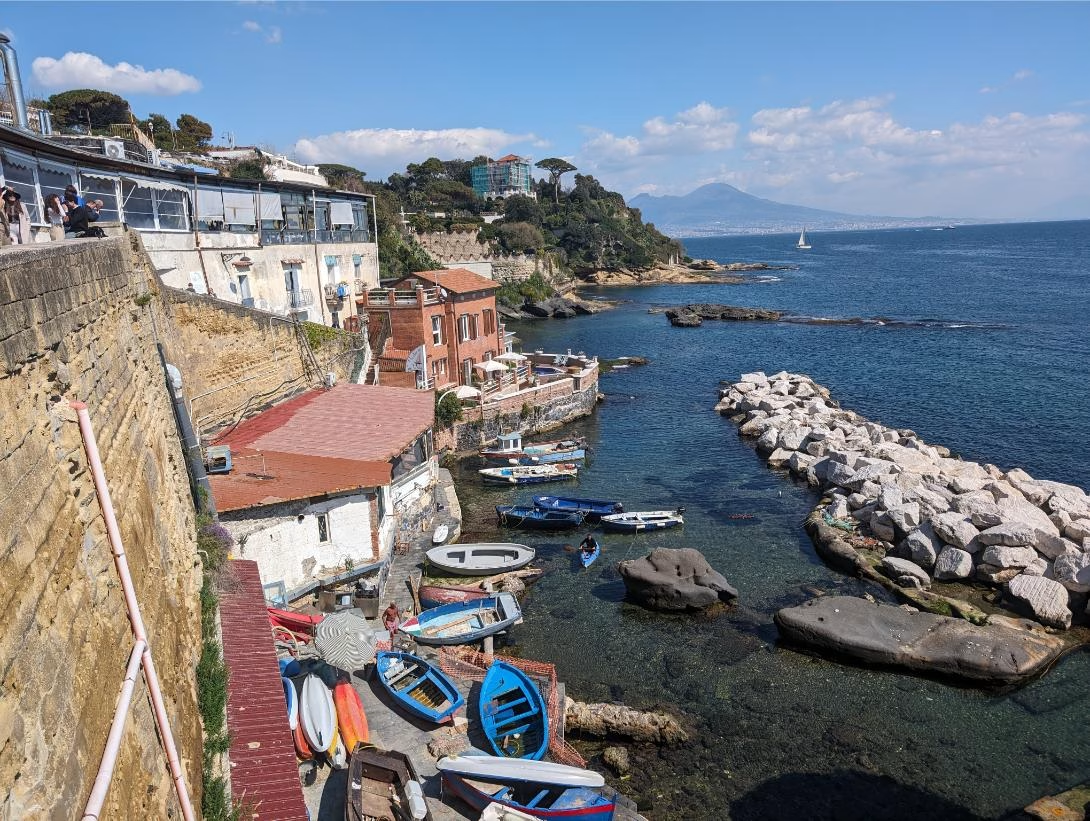
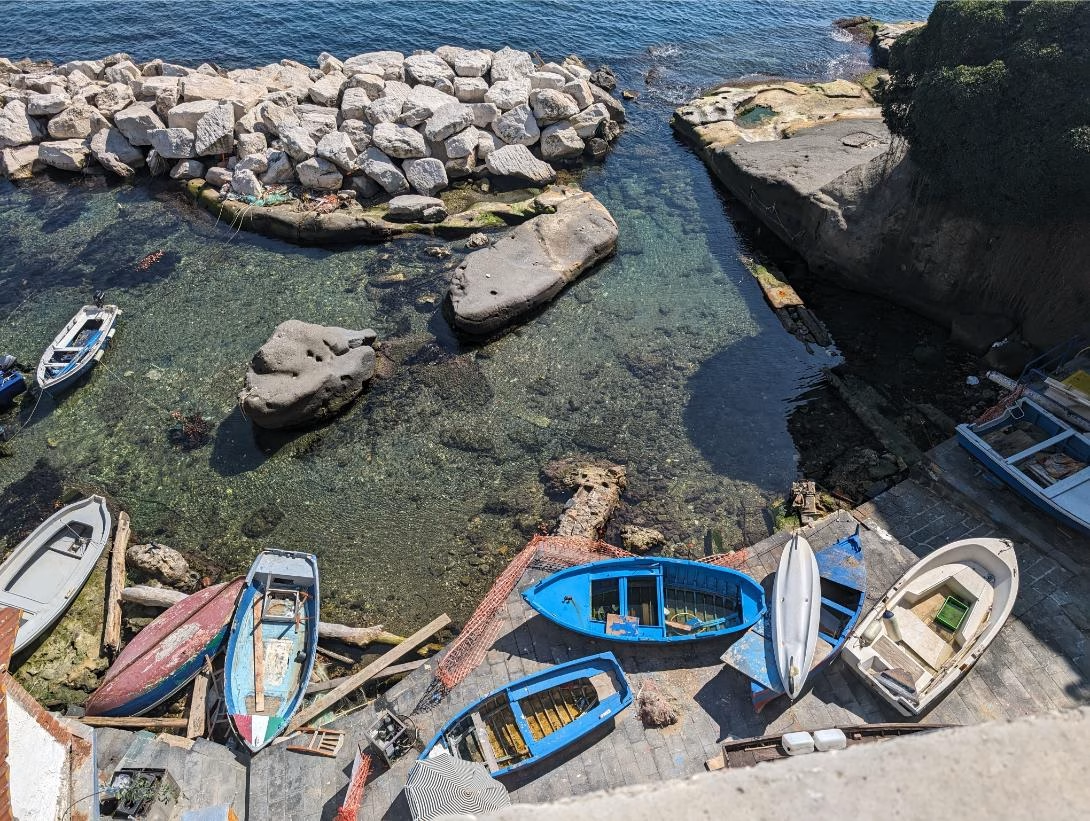
Marechiaro is a little theatre of appetite: moored boats, stone landings, narrow lanes and restaurants setting tables inches above the water. The name means “clear sea”, and it is. A plaque marks the balcony made famous by Salvatore Di Giacomo’s song A Marechiaro; serenades still happen if the night is warm and someone feels brave.

Order simply and locally—crudi, grilled catch, pasta alle vongole, white wine on ice—and let the kitchen lead. Couples tend to share forks and silences; friends pass plates until the sun gives up; families come early, pack water shoes for paddling, and negotiate dessert for good behaviour on the steps. Space is finite, so reservations help at peak times. Watch the waiters cross wet rock with balletic poise and claim it as your favourite kind of Naples: graceful, unforced, slightly salt-kissed.

Quick facts

  • Best for: long lunches, sunsets, serenely simple seafood
  • Time needed: 90–150 mins (meal)
  • Don’t miss: the famous balcony, tiny bathing platforms
  • Good to know: Taxi drop-off is Calata Ponticello a Marechiaro; many micro-platforms charge a small fee (often cash). On breezy days, outer tables can get splashy—ask for the inner row with children.
Terraced houses and arches of Marechiaro above the sea, with the bell-tower of Santa Maria del Faro and umbrella pines at golden hour.
 

Stone arches nibble the tide, pastel houses stack up the slope and the little church keeps time—Marechiaro is Naples at its most lyrical and lived-in.

 
View from Marechiaro’s headland towards Mount Vesuvius, with villas and pines on the Posillipo cliff in warm evening light
 

From Marechiaro’s rocks the bay opens like a fan: villas and umbrella pines in the foreground, Vesuvius steady on the horizon—a classic Neapolitan postcard.

 
Hydrofoil crossing the Bay of Naples at sunset with the silhouette of Capri beneath dramatic clouds.
 

A silver wake stitches Marechiaro to Capri as the sky turns theatre—proof that island days and waterside dinners belong in the same Neapolitan story.


Villa Rosebery — A Whisper of State, A Symphony of Gardens

Villa Rosebery sits within gardens that terrace to the sea, one of the official residences of the President of Italy. It opens only on select days; the rest of the year it’s a cameo you admire from the water or nearby terraces. Built in the 19th century by a Scottish aristocrat, later owned by Lord Rosebery, gifted to the Italian state in 1897, it shows how Posillipo has long been where people come to breathe and think clearly.

Quick facts

  • Best for: scenic “sighting” on a boat loop
  • Time needed: 10–20 mins (view only)
  • Pair with: Donn’Anna & Gaiola from the water
  • Good to know: Best public viewpoints are from Via Ferdinando Russo and from the sea. Open days (Quirinale/FAI) are pre-book only and sell out quickly.
Sea-level view of Villa Rosebery, the presidential residence in Posillipo, Naples—white façades against pine woods and a stone seawall.
 

Quiet power by the water: Villa Rosebery’s pale façades front the bay while terraced gardens rise into the pines—usually glimpsed from a boat, occasionally opened to visitors.


Kayak Excursions in Naples – see Posillipo from the water


Glide past Marechiaro, the Gaiola Marine Park and hidden coves on a guided kayak—perfect for couples, friends and families.
No experience needed; all safety kit provided.

  • Flexible outings: 90 minutes to half-day
  • Calm, clear waters with snorkelling stops (weather-permitting)
  • Family-friendly options; photo moments built in
  • Easily combined with a waterside lunch at Marechiaro


View Kayak Excursions