


Bay of Naples · Island travel
Procida, Ischia and Pozzuoli: A Bay of Naples Finale
After the wild orchids and mountain towns, Procida and Ischia brought island days before a final night amid the Roman and volcanic heritage of Pozzuoli.
In this article
From mountain paths to the sea
For the first two weeks of their Southern Italy holiday, Elaine’s family had been moving through the Gargano, Matera, Calabria and Cilento. Wild orchid outings and hill towns set the rhythm. The last seven nights were different: ferries, island lanes and time beside the water.
A private transfer took the family from Pisciotta to Naples on 24 May. From there, they crossed to Procida for three nights before travelling onwards to Ischia. The islands are close to one another geographically, but each deserves time in its own right.
Harbour colours and everyday island life
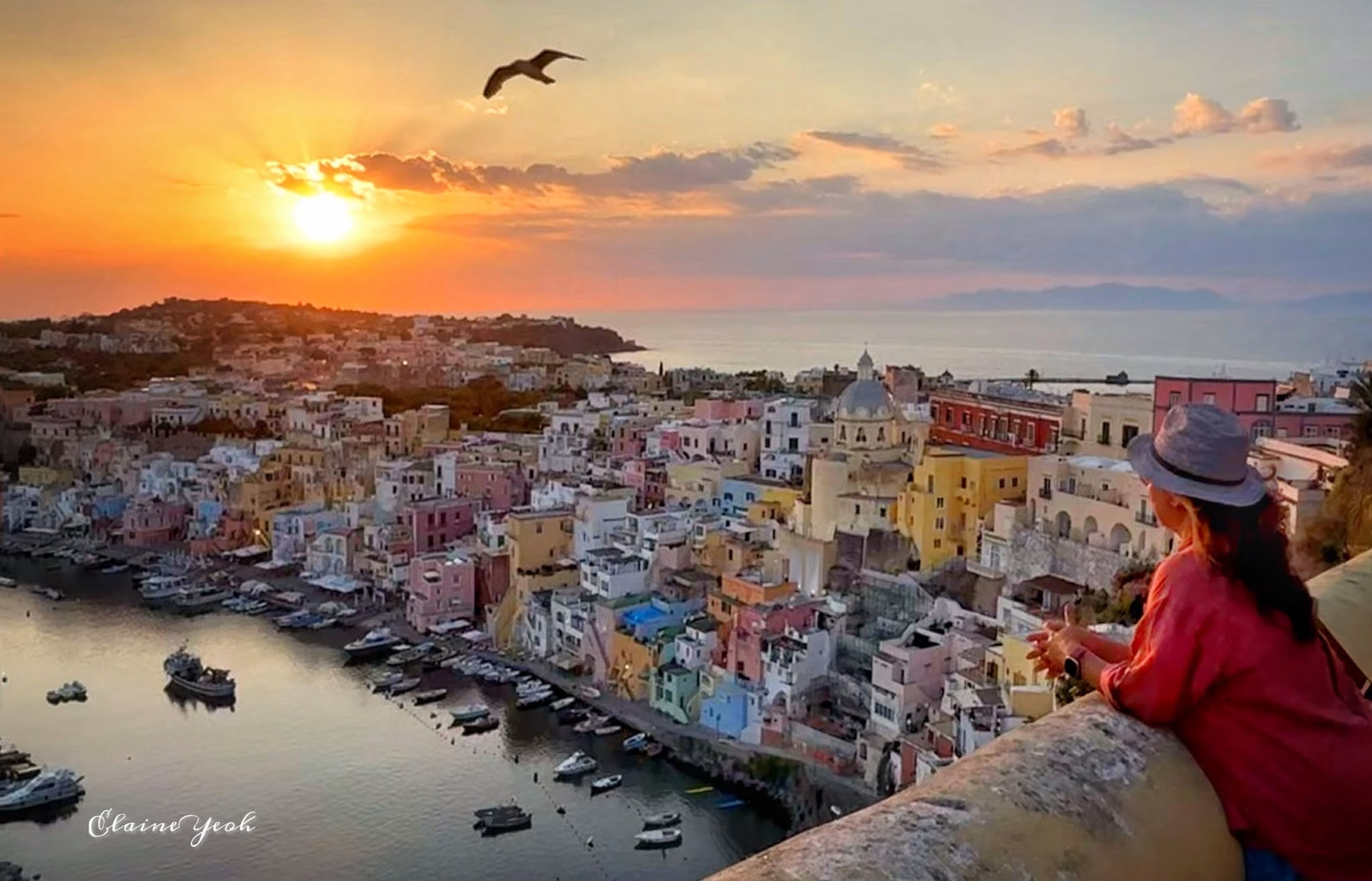
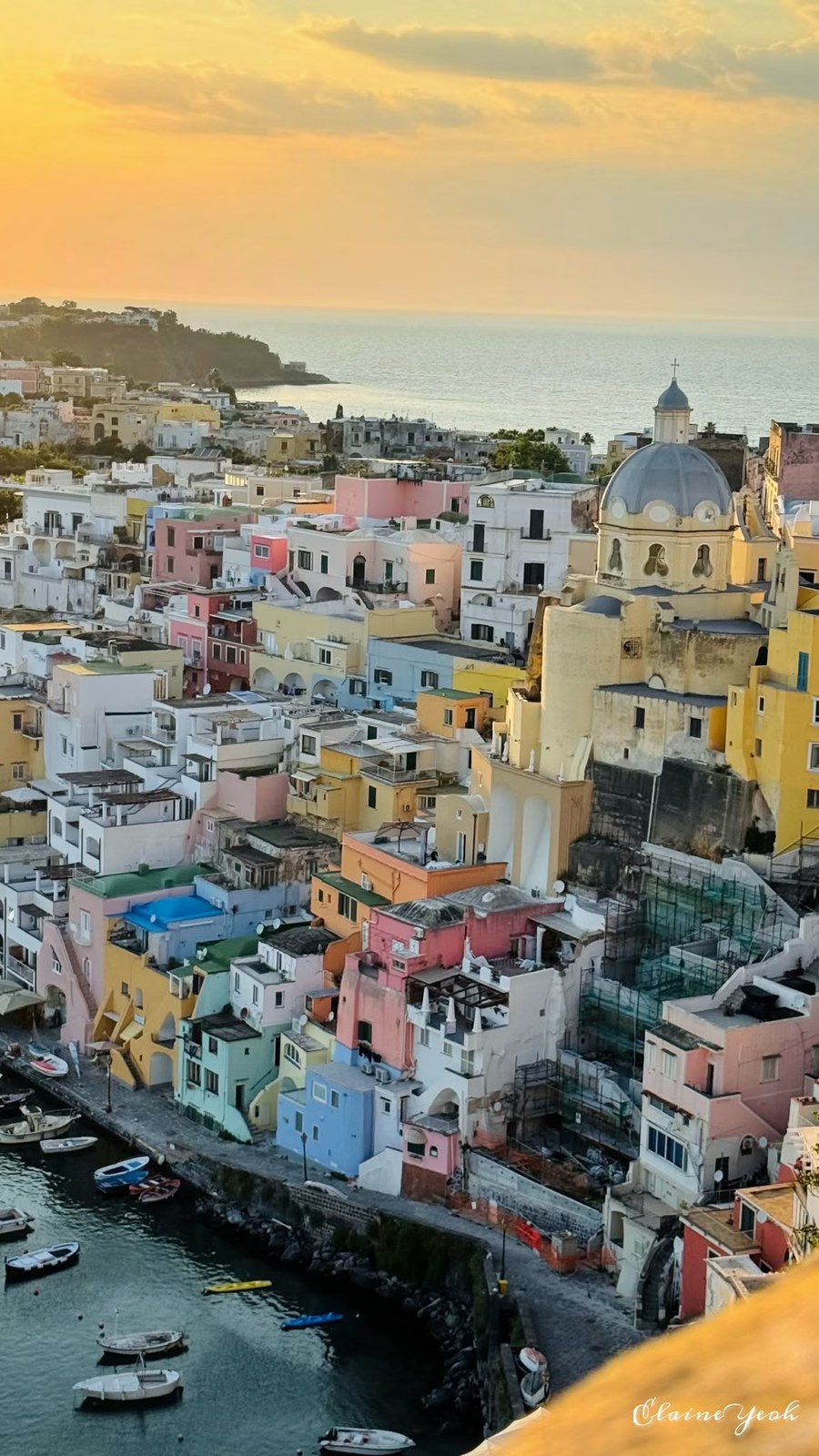
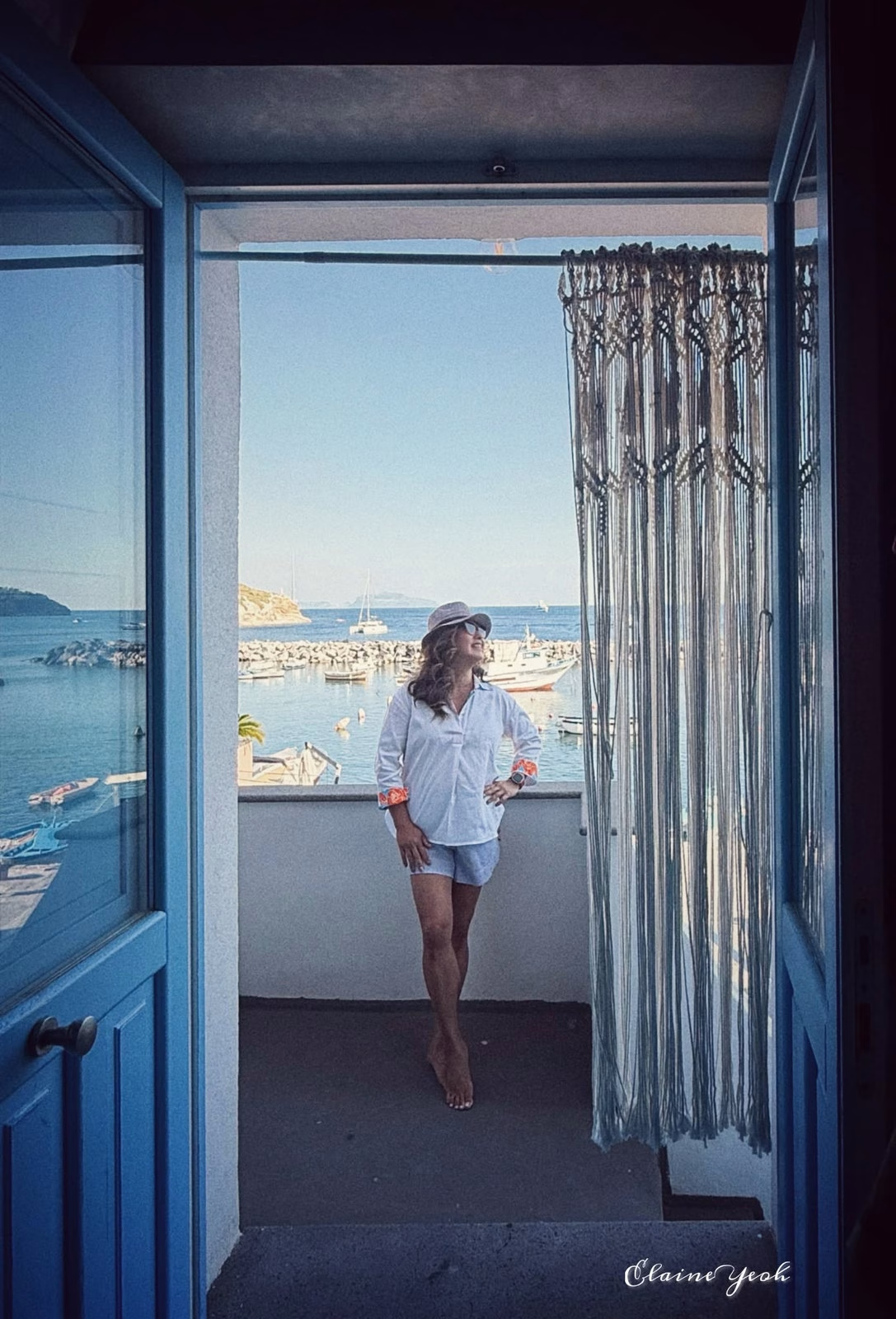
Procida’s appeal is closely tied to its scale. The fishing harbour of Marina Corricella, narrow streets, steps and tightly packed houses create scenes that reward a camera without requiring a long excursion every day.
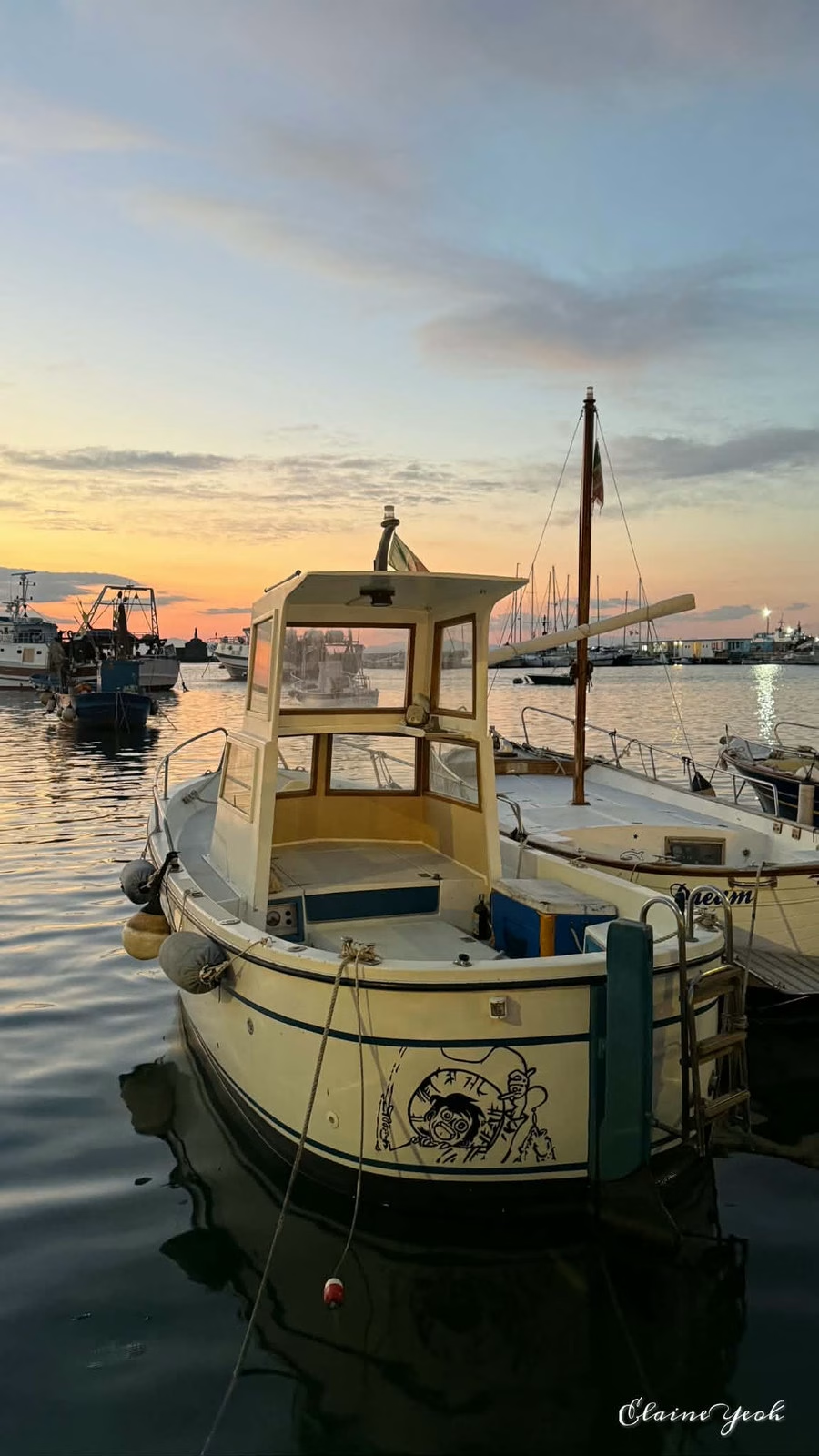
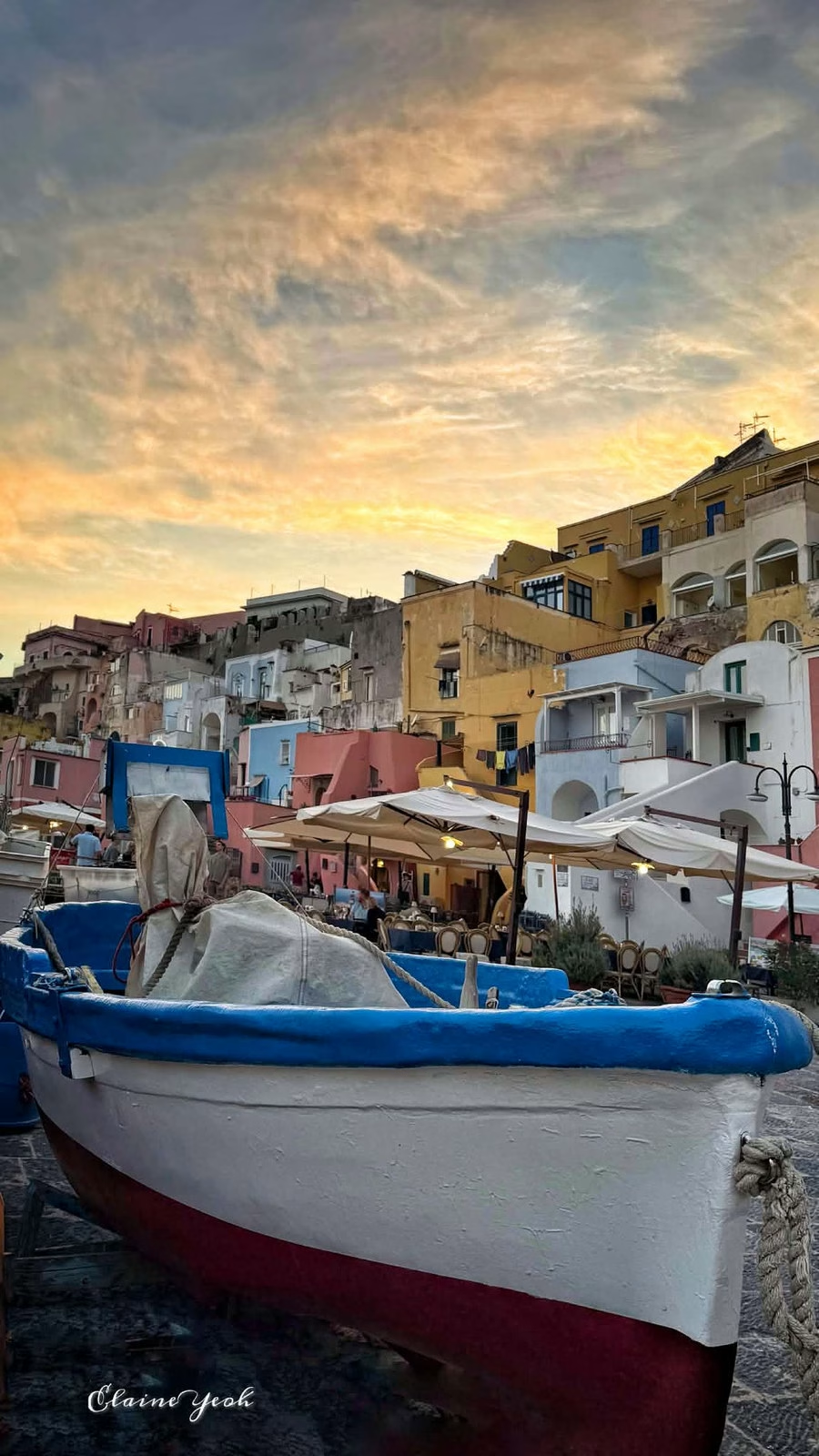
Elaine’s photographs of the harbour, old doorways and evening light give this stage a distinctive warmth. The island’s colourful façades are not merely decorative: they belong to a lived-in fishing town, with boats and working waterfronts still part of its identity.
Three nights allowed the family to settle into the place rather than treat it only as a short crossing from Naples.
The pleasure of Procida is that its main harbour, the smaller fishing waterfront of Marina Corricella and the historic streets rising towards Terra Murata offer different perspectives within a compact island. There are steps and slopes, so it is worth allowing time rather than attempting to see everything in one continuous walk. Boats arriving and leaving remain part of the scene, rather than merely the means of getting there.
A larger island with room to explore
On 27 May the family continued to Ischia, staying at Ischia Blu Resort near the harbour. After Procida’s compact townscapes, Ischia offers a larger territory shaped by volcanic geology, cultivated slopes and contrasting coastal settlements.
The family’s Ischia Blu Resort apartment provided more independence than a conventional hotel room. The booked executive suite included a separate bedroom, living area with sofa bed, kitchen and a sea-facing outdoor space; the resort sits beside the water within reach of Ischia Porto. This was a fitting base for three nights in which a morning outing could be followed by a quiet afternoon overlooking the sea.
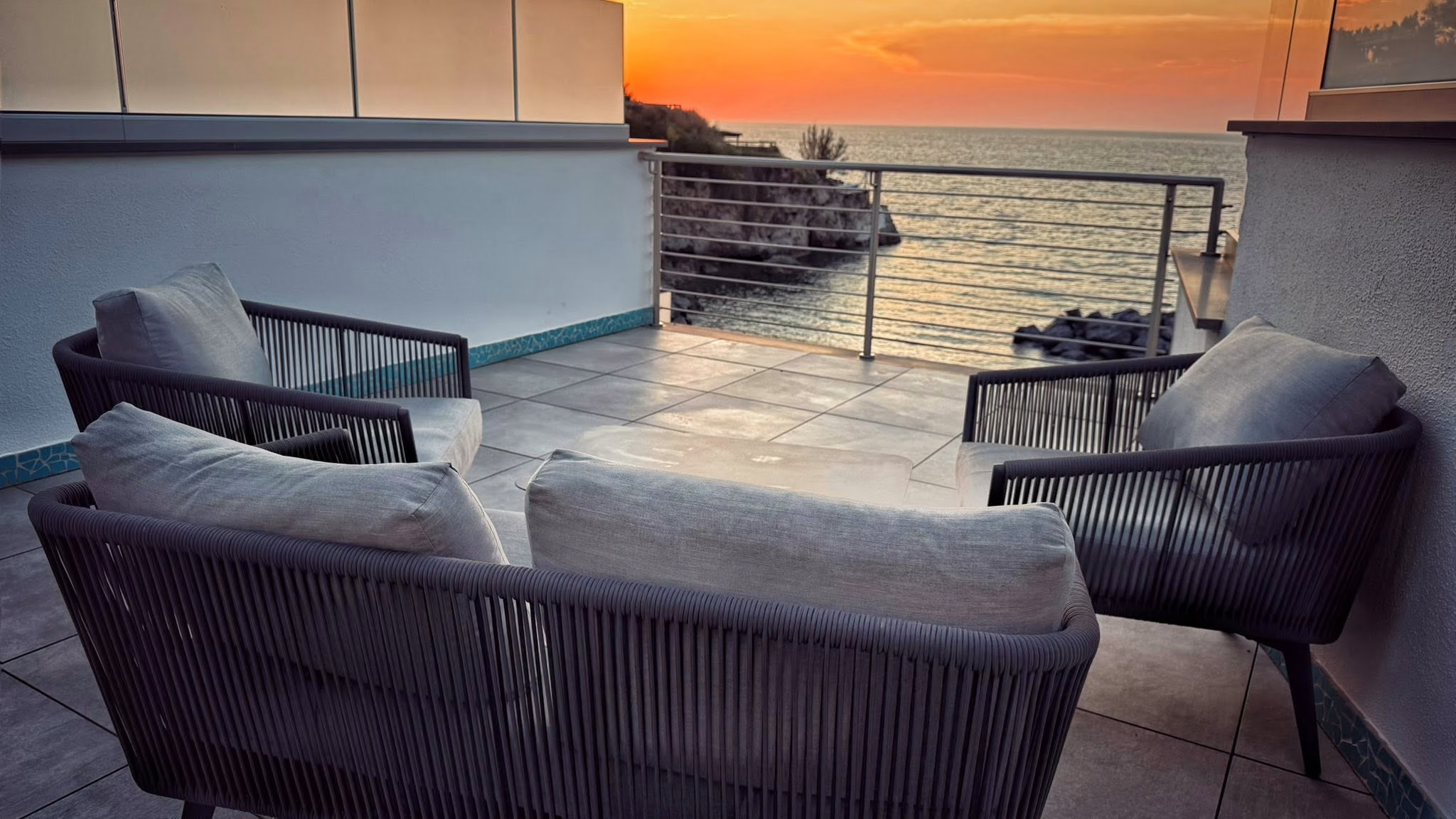
The island can be enjoyed in several ways: gardens such as La Mortella and Giardini Ravino, the Aragonese Castle at Ischia Ponte, thermal bathing, walking or simply time on a terrace overlooking the water. Those are possible experiences for a stay, not a claim that Elaine visited every one.
Our Ischia travel guide explains the different areas, while La Mortella guide looks more closely at one of the island’s most significant gardens.
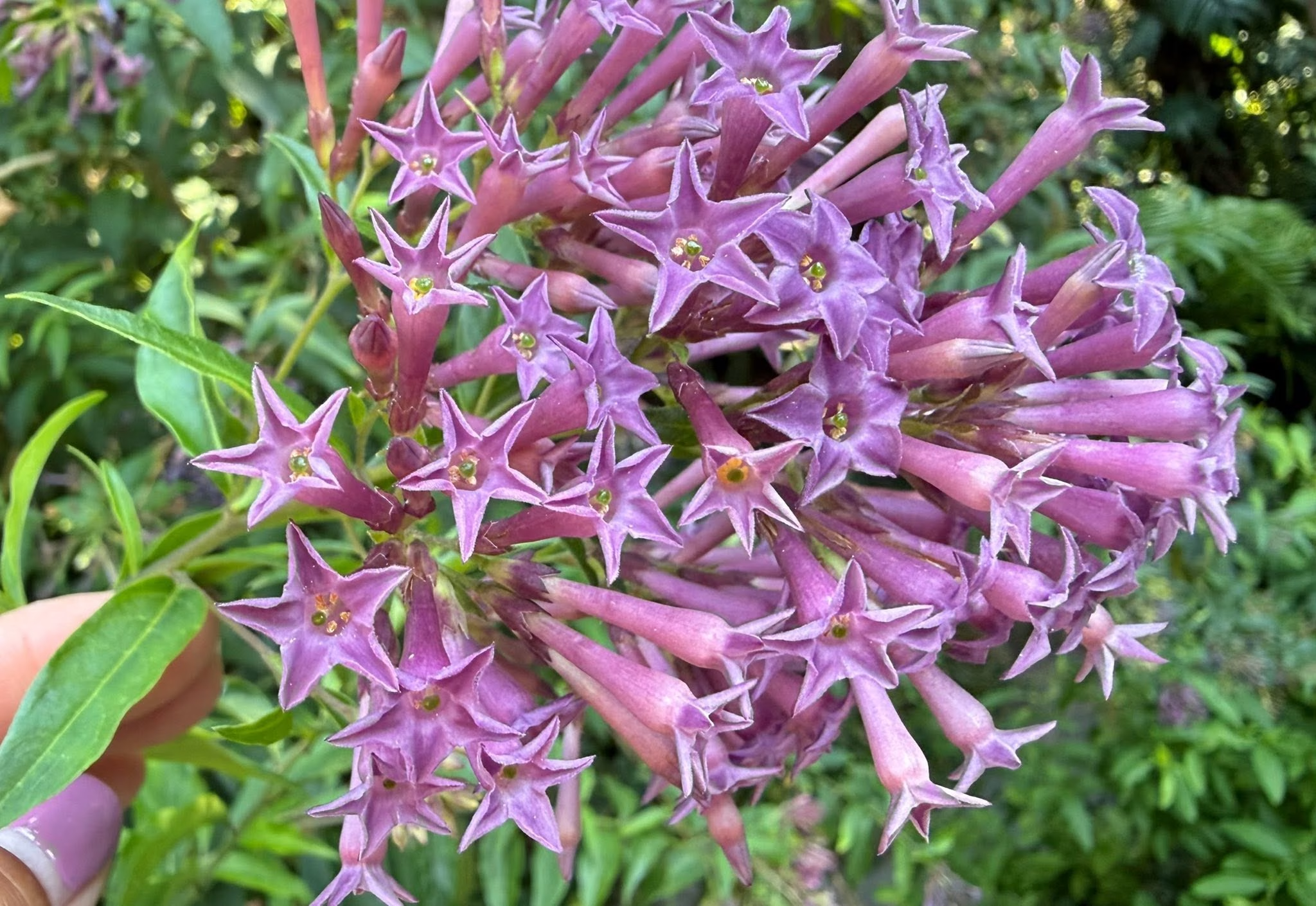
The volcanic island is also a place for gardens: at La Mortella, the Walton family transformed a steep hillside into an international botanical collection. Elaine’s photograph of lilac-coloured flowers provides a different kind of botanical ending to the holiday, after the wild orchids of Gargano and Sassano. The garden belongs to a separate visit from Ischia Porto rather than being a short stroll from the harbour.
The coast through Elaine’s camera
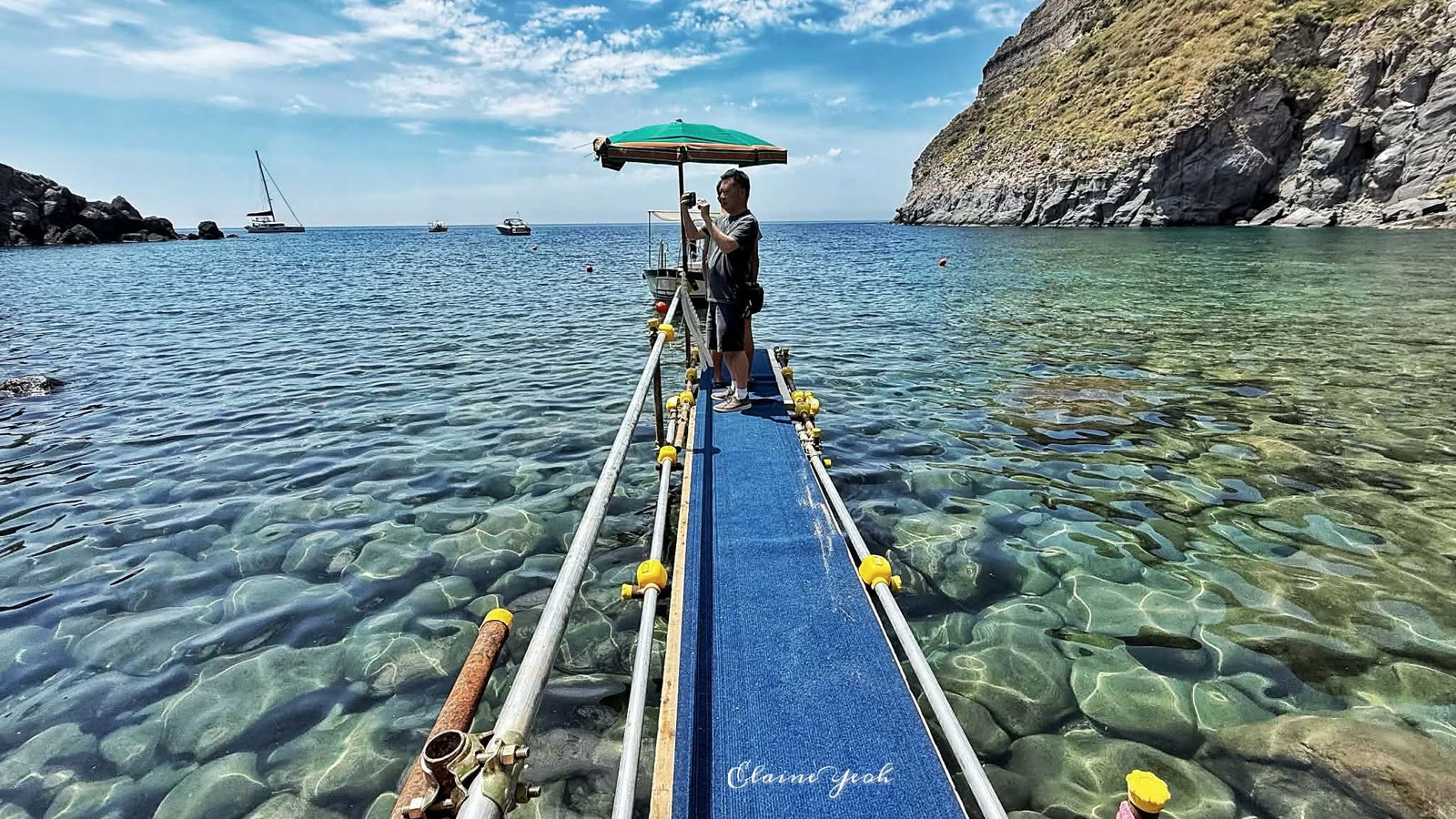
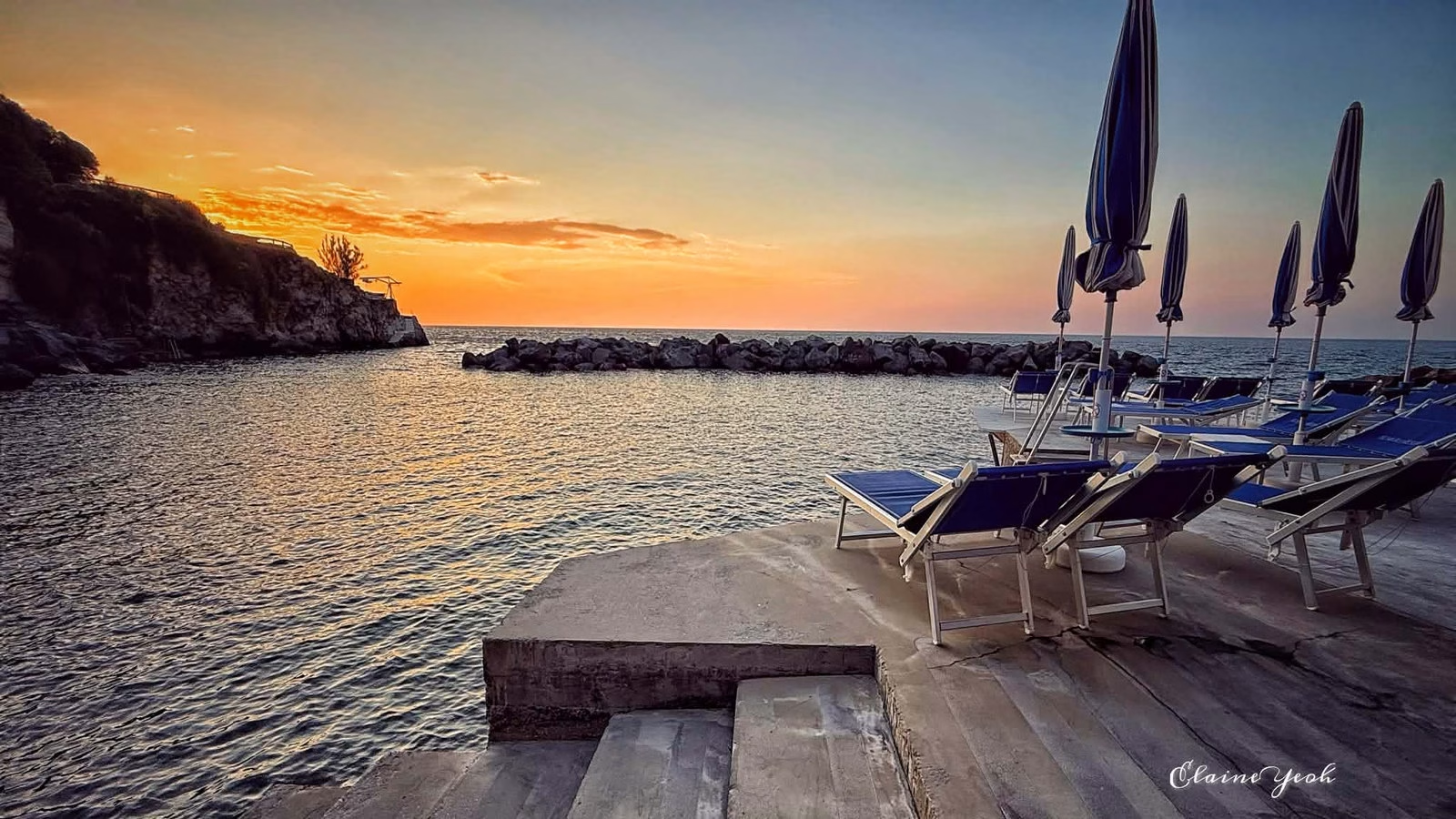
Elaine’s coastal photographs are striking for their changes of light. Boats drawn up at the waterfront, colourful houses seen from above, sunlit coves and evening skies give these last days a very different character from the orchid close-ups.
These photographs show why several days make a difference. A harbour is more than a gateway between destinations: it is a place to walk, eat and return to at different hours of the day.
Pozzuoli: Rome’s port on a volcanic bay
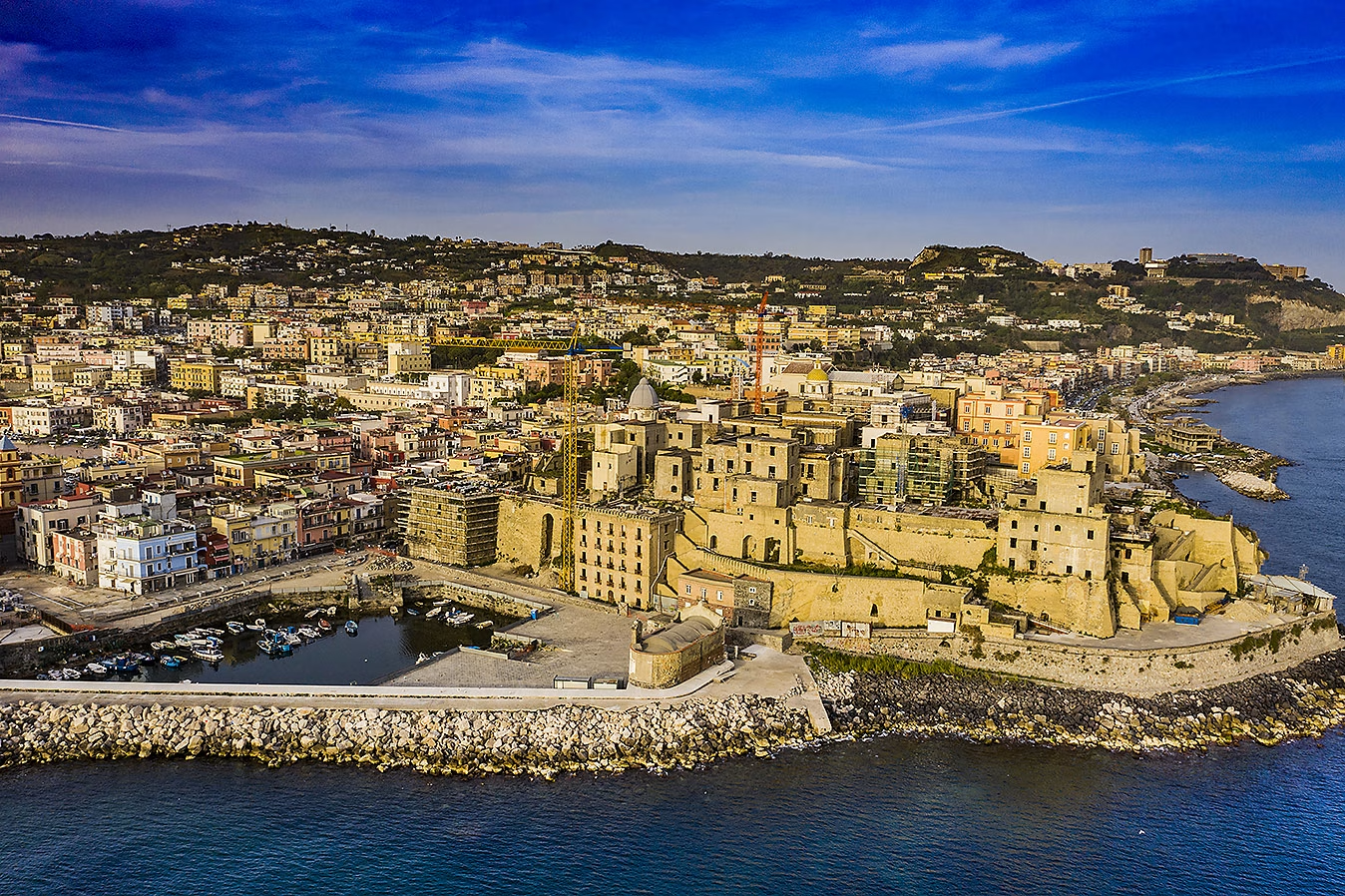
On 30 May, Elaine’s family crossed from Ischia to Pozzuoli for a final night at Palazzo Donna Iulia. The stop simplified the journey to the airport, but Pozzuoli is more than a convenient departure point. It stands beside a volcanic bay at the heart of the Campi Flegrei, with Roman history visible alongside its modern harbour and the streets of Rione Terra. Their short stay was an overnight stop: the heritage described here offers context for the journey and ideas for a longer visit, rather than a claim that Elaine explored each site.
Roman Puteoli: the harbour that supplied Rome
In Roman times, Puteoli developed into one of the Mediterranean’s great commercial ports. Grain and other goods arriving from across the empire passed through the town before continuing towards Rome. That maritime importance helps explain the scale of its surviving monuments.
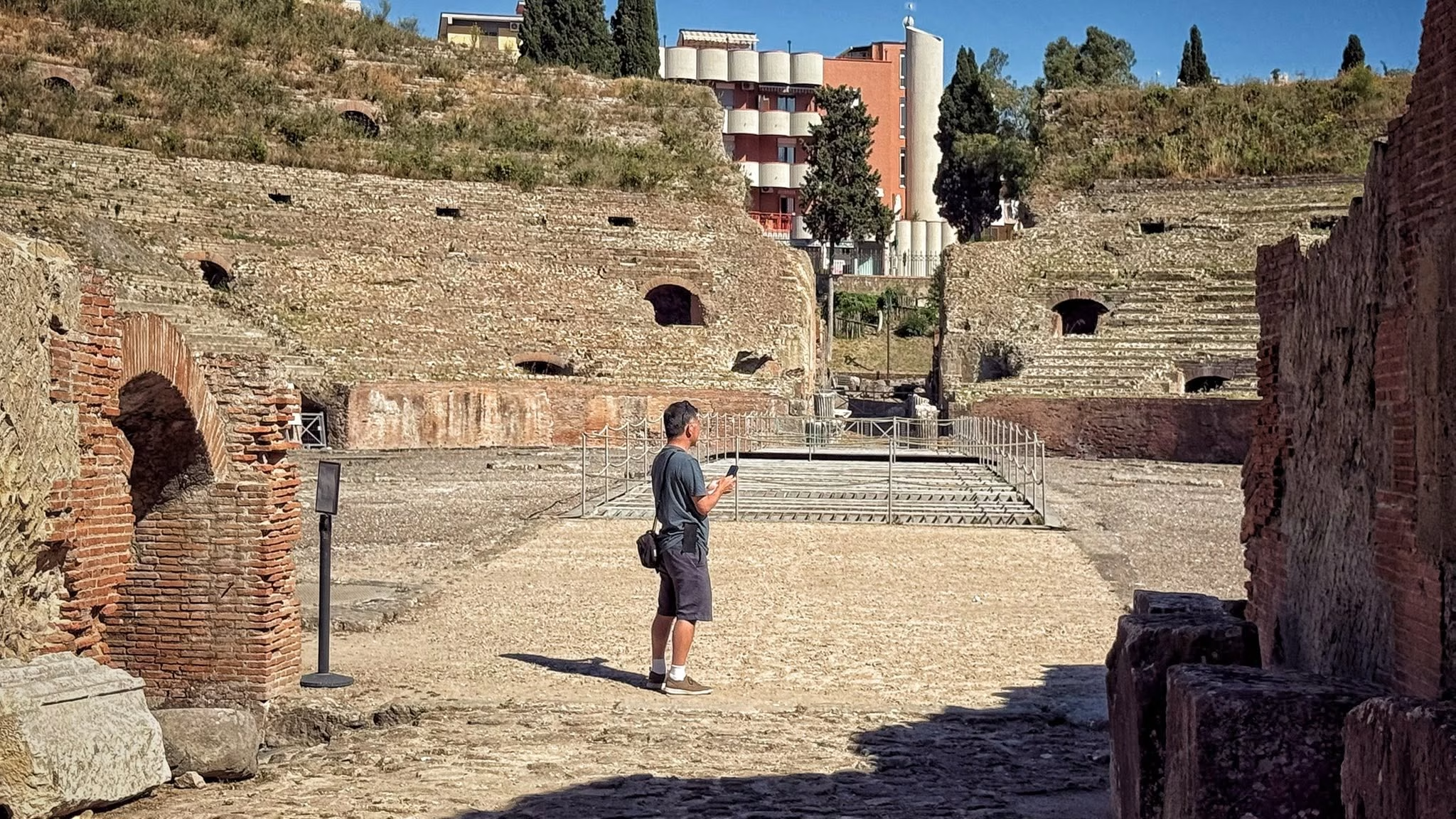
High above the modern harbour, Rione Terra preserves the oldest nucleus of the town. Beneath later streets and buildings lie Roman roads, shops and the remains of the ancient settlement. The Flavian Amphitheatre, a short distance inland, is especially notable for the vaulted service corridors below its arena, which once supported the staging of public spectacles.
Where geology becomes part of the history
Near the port stands the Roman Macellum, an ancient market long misidentified as the Temple of Serapis. Its tall marble columns bear holes made by marine organisms when part of the structure lay below sea level. They are a remarkable physical record of bradyseism — the slow raising and lowering of the ground in this volcanic landscape.
Pozzuoli lies within the Campi Flegrei caldera, not beside a single cone like Vesuvius. The surrounding territory contains craters, thermal phenomena and volcanic lakes, including Lake Avernus. The caldera’s geological character is visible in the landscape as well as in the archaeological remains.
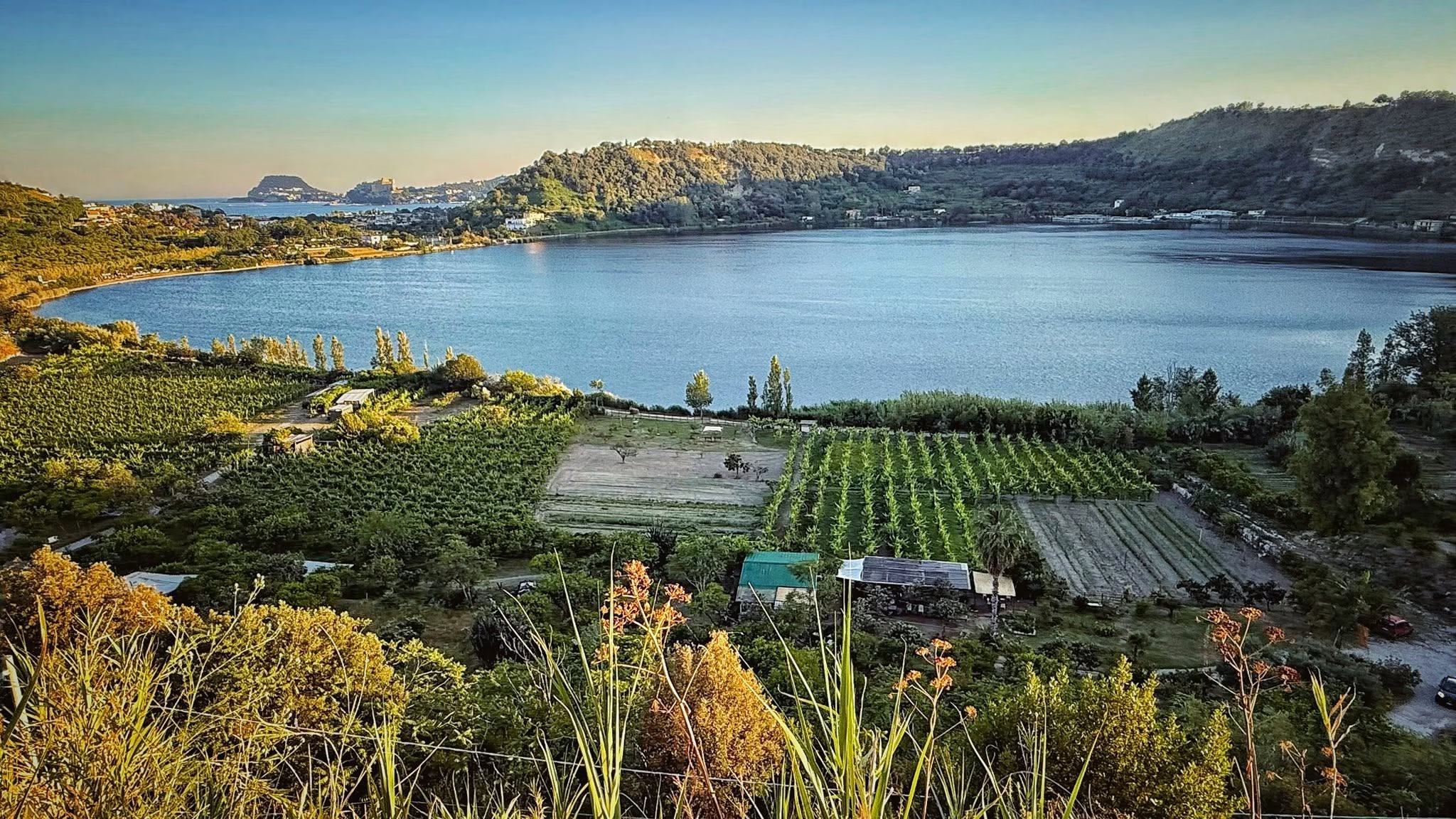
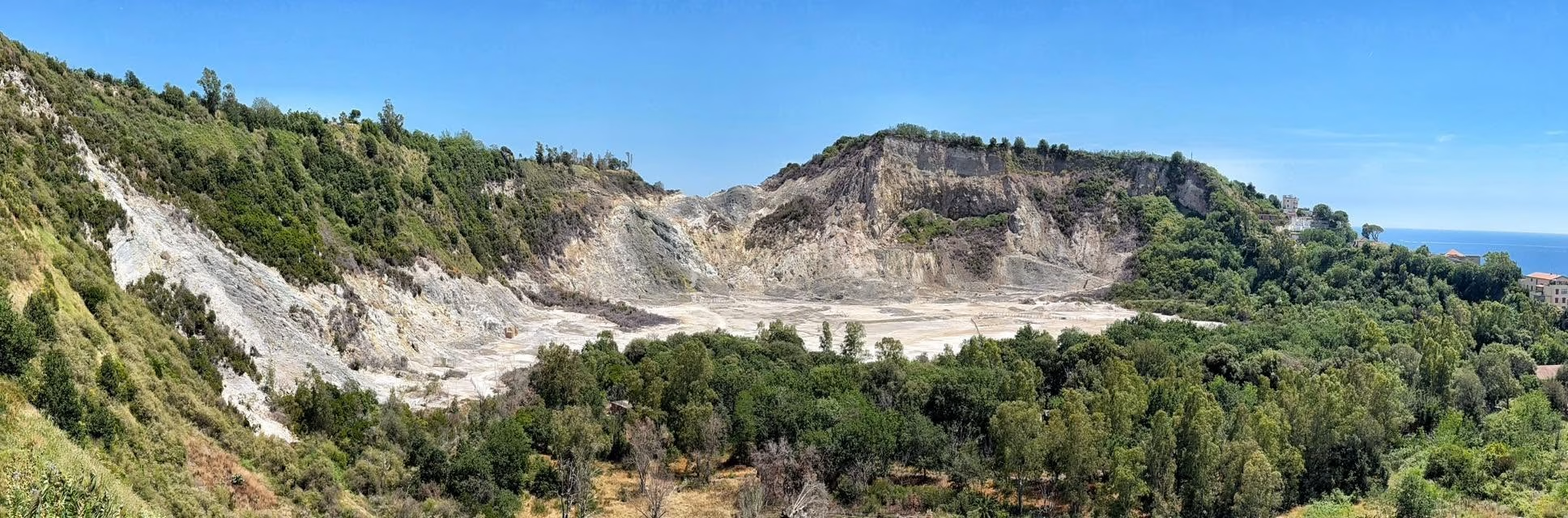
A longer stay would allow time for the Roman sites and for separate outings towards Baia, Cuma or the volcanic countryside; these places are not all within a short walk of the harbour. For a fuller introduction, see our Pozzuoli and Campi Flegrei guide. Check individual archaeological visiting arrangements with the park before setting out.
For the complete journey, including the two specialist orchid excursions that inspired it, read Elaine’s complete Southern Italy story. We can also plan a gentler Naples and Ischia holiday for travellers who want the islands to be the main focus rather than the finale.

Plan a journey around what interests you
Tell us the places, landscapes or specialist experiences you most want to explore. ExpertoItaly can arrange accommodation, private transfers and local guides as part of a tailor-made land-only holiday.
Traveller photographs © Elaine Yeoh, reproduced with permission. Pozzuoli archaeological photographs from the ExpertoItaly media collection. Travel undertaken in May 2026. Botanical excursions arranged with Angela Rossini, Giovanni Quitadamo and Riccardo Di Novella.
Explore the Bay of Naples
Ischia travel guideElaine’s orchid journeyGargano orchids with local expertsThe Valle delle Orchidee in SassanoSouthern Italy without hiring a carIschia articlesNaples & Ischia holiday
Explore the Italy Blog
Browse all articlesSicily articlesAmalfi Coast articlesTurin travel guide



 Facebook
 WhatsApp channel