


EXCELLENT Based on 77 reviews
 Posted on Google
 Catherine Day16 July 2026We’re recently home after a wonderful holiday in Puglia arranged with Antonio. Great pace, a range of always excellent accommodation and an interesting suggested itinerary. We would highly recommend Expert to Italy and look forward to planning our next getaway with Antonio.Posted on Google
 Mike Girling (No nickname)16 June 2026Just back from another delightful holiday organised from start to finish by the Italian "Expert" Antonio. After several discussions with him we decided to have an eleven day trip to the Amalfi coast and Ischia and thanks to his intimate knowledge of the area we had a most enjoyable and memorable time. Ischia in particular was absolutely wonderful. Antonios advice on the boutique hotels, guided tours, and places to visit were exemplary as were the drivers he booked to ferry us around. In addition to all the knowledge and advice he provides, this time, we encountered a couple of problems of our own making, but a quick WhatsApp to Antonio and within 24 hours both problems were solved. So if you are looking for an independent holiday in Italy along with great support we have no hesitation in recommending Antonio Mike & DianePosted on Google
 Daniel Hockman9 June 2026ExpertoItaly is a brilliant company, and Antonio organised a wonderful holiday for us in Puglia a region we did not know. His suggestions were all fantastic. He listens to what you want to do and works your holiday around that. I wouldn’t hesitate to recommend him to anyone contemplating a holiday in Italy. Thank you so much, Antonio!Posted on Google
 Elaine Yeoh6 June 2026We engaged Antonio Cresce to plan and manage our 3 week holiday in Italy - covering towns in the regions of Puglia, Basilicata ,Calabria and Campania. Our holiday was seamless and exceeded all our expectations, and I would highly recommend Antonio / Expert to Italy for all your holiday planning and needs. From the point of choosing destinations, Antonio was collaborative and listened to everything on our wishlist . The towns he chose for us were exactly the places that we loved .. off the beaten track, charming and authentic Italy ! He picked our accomodation and again there was a lot of collaboration over our needs and we loved the choices . The tours he organised were exceptional. I wanted to see wildflowers and orchids and he engaged experts to take me around the national parks . I would never have been able to source the contacts and organise the excursions as perfectly as it was done . Some of the best moments of our travels , ever! Transfers were professional and seamless. Antonio remained fully contactable throughout our trip for questions , help and any details we needed. We felt fully secure and confident that we had an agent travelling along with us at every step! It was a huge benefit as well having him in the rough time zones as Italy where he is based in the UK, so that any questions were promptly answered and sorted . This could have been more problematic if we had engaged someone from home in Australia with the big difference in time zones . We appreciated his travel advice and recommendations, his work ethics , his professionalism and how he went over and beyond to make our holiday truly exceptional!Posted on Google
 Judith Warren29 April 2026Antonio is super helpful and efficient and he knows Italy. He arranged our three centre Italian holiday, booked all train tickets, taxis and hotels and suggested places we wouldn't have thought of. You can have an independent holiday without problems, even in a less touristy area, because he's organised everyone for you and he's a back up if anything goes wrong. Thanks Antonio, be in touch next time!Posted on Google
 Anne Fenton22 September 2025Antonio was a delight to deal with. He was knowledgable, friendly and very patient when we changed our plans several times! His choices of hotels were exceptionally good and he was very responsive when we had a little hiccup with the car rental. Highly recommend his services.Posted on Google
 Teresa Oliveira25 August 2025We used ExpertoItaly to help us with our two-week holiday in Sicily. We had a couple of interactions with Antonio, and were very fast to close on our itinerary and hotels. Everyting was very well organized and suitable to our requirements. Antonio chose very good accommodations: small beautiful, full of character and well located. He also booked our bus trips as we did not want to rent a car. That worked really well. It was a great help and gave us great confidence for our trip. We strongly recommend ExpertoItaly if you want customised holidays in Italy. We will use it again for future traveling in Italy!Posted on Google
 IzzieD21 August 2025Antonio is an expert on Italy so if you are planning a trip then you should definitely use ExpertoItaly. He helped us plan the perfect family trip and we cannot fault any of his recommendations. From car hire, to the perfect hotels and apartments, he is highly knowledgeable and it doesn't stop with planning. He was on hand to be available if we needed his help while on the trip. His customer service is first class. Thank you so so much and we look forward to planning our next trip with you.Posted on Google
 David Wise12 August 2025Antonio was really helpful in planning our trip to Italy. We wanted to visit 3 locations, he provided recommendations on accomodations which were great - really good locations for each booking. He also coordinated taxis and trains and provided a load of suggestions for each location for places to eat and sites to visit. He was readily available to answer any questions we had by email or WhatsApp. His assistance really helped us in planning this trip and saved us a lot of stress in trying to coordinate this ourselves. All in all we had a great holidayPosted on Google
 Simon Tanner8 July 2025Antonio organised a wonderful two-centre trip for us. He listened to our requirements and designed an itinerary that fulfilled our needs perfectly. All the arrangements (hotels, transfers, bike hire, train tickets etc.) went smoothly and Antonio was available before and during the holiday to answer any queries. He is helpful and charming. The pricing was very competitive and the holiday good value for money. I would recommend ExpertoItaly to anyone looking for knowledgeable, excellent customer service and look forward to using Antonio’s services again in the future.
Why spend a holiday on Ischia?
Ischia brings together sandy beaches, thermal bathing, substantial towns and a cultivated interior. You can spend a morning inside the Aragonese Castle, another among the plants at La Mortella, and still leave whole afternoons for swimming and lunch by the sea.
Its position in the Bay of Naples makes it a natural partner for a city stay. Yet Ischia also deserves a week of its own, with time to explore its towns, beaches and interior without filling every day with visits.
Suggested staySeven nights to explore at an easy pace
Shorter visitThree or four nights alongside Naples
Daily rhythmOne main outing, then time to enjoy the island
Getting aroundBuses, taxis and private transfers
Understand the island
Ischia lies off the northern side of the Bay of Naples, beyond Procida when approached from Naples. It is geographically separate from Capri and the Amalfi Coast. The island’s principal coastal settlements are linked by roads around a much higher interior, so a short distance on the map can involve a substantial journey.

The north-east is the arrival point for many visitors, with Ischia Porto and Ischia Ponte. Casamicciola and Lacco Ameno follow the northern coast; Forio occupies the west. Sant’Angelo and Maronti face south, while inland villages and paths climb towards Monte Epomeo.
Volcanic processes shaped both the terrain and the island’s thermal waters. The rock, steep slopes and cultivated terraces also explain why the coast and interior feel so different. The geological collection at the Pithecusae Museum connects this landscape with the history of human settlement.
Plan by area. Combine neighbouring places and allow for the transfer between them. Forio and a western garden make a sensible pairing; a castle visit at Ischia Ponte followed by a late-afternoon appointment on the opposite side of the island requires more thought.
Ischia’s towns and villages
Ischia Porto and Ischia Ponte
Ischia Porto centres on its busy harbour, with shops and places to eat along the surrounding streets. Ischia Ponte has a more historic setting: lanes lead towards the waterfront and the causeway to the Aragonese Castle. Together, they offer a useful introduction to the island’s everyday life and history.
Forio
Forio has a substantial historic centre and the white Soccorso church on a headland above the sea. Explore the town’s lanes and waterfront, then allow separate time for La Mortella or Ravino. The beaches at San Francesco and Citara add further reasons to visit the island’s western coast.
Lacco Ameno and Casamicciola
Lacco Ameno combines a compact seafront with the archaeological museum at Villa Arbusto and nearby San Montano Bay. It is a good place to connect the island’s Greek history with time by the sea. Neighbouring Casamicciola has a working harbour and a long association with thermal bathing.
Sant’Angelo and the south coast
Sant’Angelo brings together a small harbour, pedestrian lanes and a waterfront square. Spend time walking through the village or stopping for lunch by the water. Along the south coast, Maronti offers a much broader stretch of beach beneath the hills, with Cavascura providing a different kind of thermal visit nearby.

Barano, Serrara Fontana and the interior
Barano and Serrara Fontana introduce the island’s inland villages, cultivated slopes and walking country. Roads and paths climb away from the coast towards Monte Epomeo, passing landscapes that feel quite different from the busy harbours and beaches. Allow time for this part of Ischia as well as its shoreline.
History you can see on the island
Pithekoussai and the museum at Villa Arbusto
Greek settlers from Euboea established Pithekoussai in the eighth century BC. Its position helped make Ischia part of Mediterranean trade networks, with pottery and metalworking among its activities. The Pithecusae Museum in Lacco Ameno makes those connections tangible through objects from the settlement and nearby burials.

The cup’s value lies in that connection between a small everyday object, writing and the Greek literary world. Allow around an hour for an introductory museum visit, longer if archaeology is a principal interest. If seeing Nestor’s Cup is the main reason for going, check its display status with the museum directly, as individual objects can be away on loan.
Inside the Aragonese Castle
The causeway and rocky islet give Ischia its best-known landmark. Inside, the visit extends through churches, terraces, convent spaces and the remains of a cathedral, giving the place greater depth than a single viewpoint. The official castle route explains these different spaces.

As a planning allowance, give the castle two hours, then add time for Ischia Ponte and lunch. The official visitor page gives current opening and last-entry information; closing varies with sunset. Check the internal route and access arrangements if steps are difficult.
A volcanic landscape in ancient mythology
Ancient writers associated the island with Typhon, the giant confined beneath the ground whose fire and movement explained heat and upheaval. The museum’s account of Ischia’s myths shows how closely stories of the island were tied to its physical landscape.
Beaches and time by the sea
Ischia offers long sandy beaches, bays between wooded headlands and smaller places to swim close to its towns. Choose between a full day by the sea and a shorter swim combined with sightseeing.

Maronti
A substantial south-coast beach suited to an unhurried day. Choose your arrival point and beach establishment before setting out; different sections have different approaches.
San Montano
A bay between wooded headlands near Lacco Ameno. Negombo adds the option of combining beach time with a thermal park; check the admission arrangement you are buying.
Citara and San Francesco
Two separate beach areas on the western side of the island. Both offer sandy shores and a chance to combine time by the sea with a visit to Forio.
Near Porto and Ponte
Smaller bathing areas can make a swim easy to combine with town life. They offer a different experience from setting aside a whole day for a larger beach.
Boat outings offer another view of the coast and can be a worthwhile part of a longer stay. Arrange the route and boarding point locally, keeping the day flexible for sea conditions rather than building an essential connection around an excursion boat.
Choose the thermal experience that suits you
Ischia’s thermal attractions vary considerably. A landscaped park lends itself to a long day between pools, planting and the beach. A smaller bathing site offers a more focused visit, while a hotel spa can be part of your daily routine. Our guide to Ischia’s thermal experiences helps separate those choices.
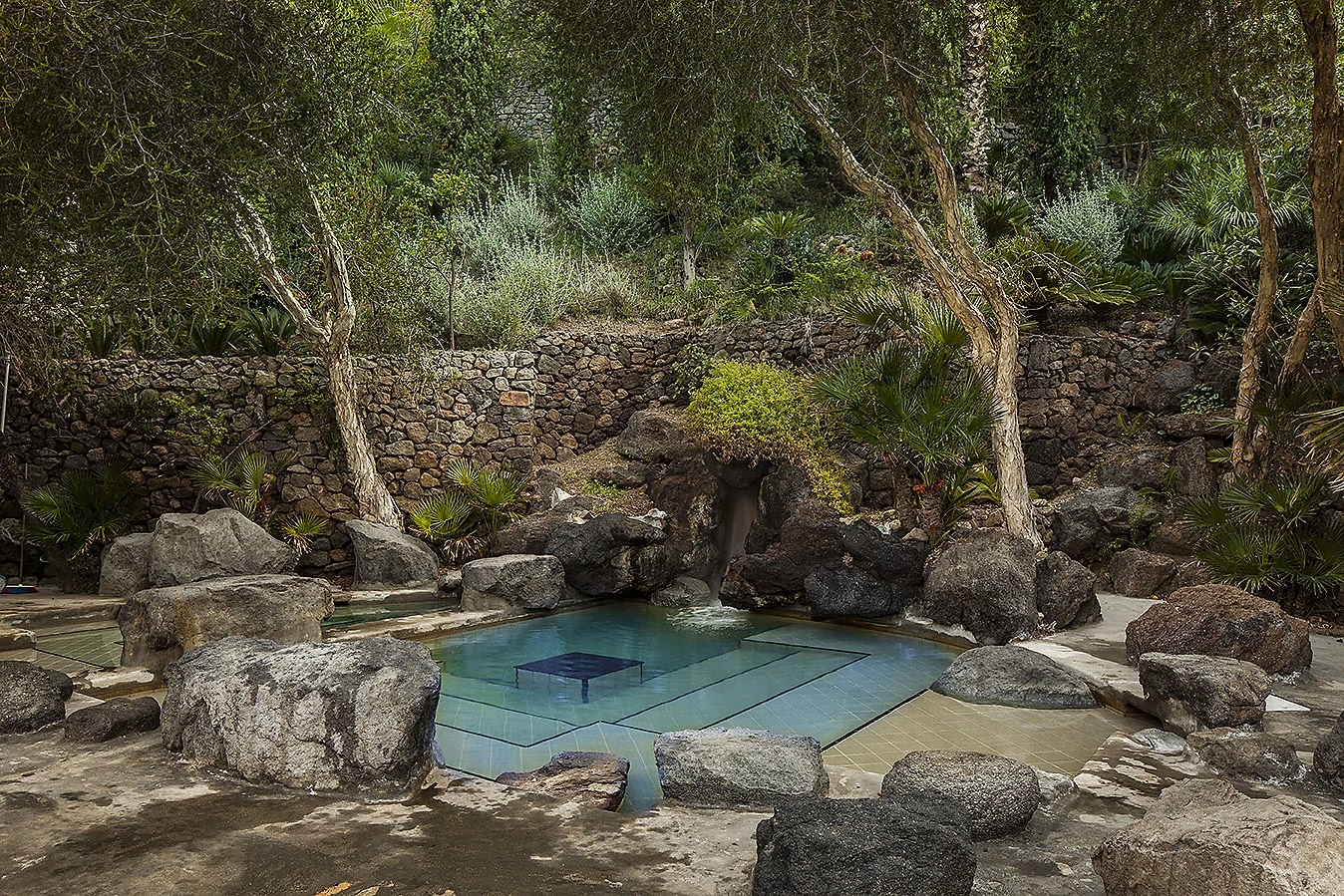
Negombo belongs to the San Montano setting near Lacco Ameno. Poseidon is associated with Citara on the western coast. Cavascura occupies a ravine behind Maronti, making the approach and rock-cut spaces central to its character.
Choose one experience first, then leave room to return or try another. Check the venue’s seasonal opening, admission inclusions and any age or bathing restrictions before booking. A beach ticket, a thermal-park ticket and a spa treatment need not cover the same facilities.
La Mortella and Giardini Ravino
These gardens deserve separate visits. La Mortella offers layered planting, water and the musical associations of William and Susana Walton; Ravino makes a different impression through the scale and varied forms of its cacti and other succulents.

La Mortella
Allow half a day including travel, with time to move between the garden’s lower and higher areas. If concerts interest you, check the programme separately from garden admission. La Mortella is not open every day: consult its official visiting information before arranging the rest of the day. Our La Mortella guide gives the visit its own space.
Giardini Ravino
The collection grew from Giuseppe D’Ambra’s interest in succulents and his travels. Mature specimens along the paths make this a garden of scale and shape as much as botanical detail. Our Giardini Ravino guide introduces its character; the official garden website provides current contacts and programme information.
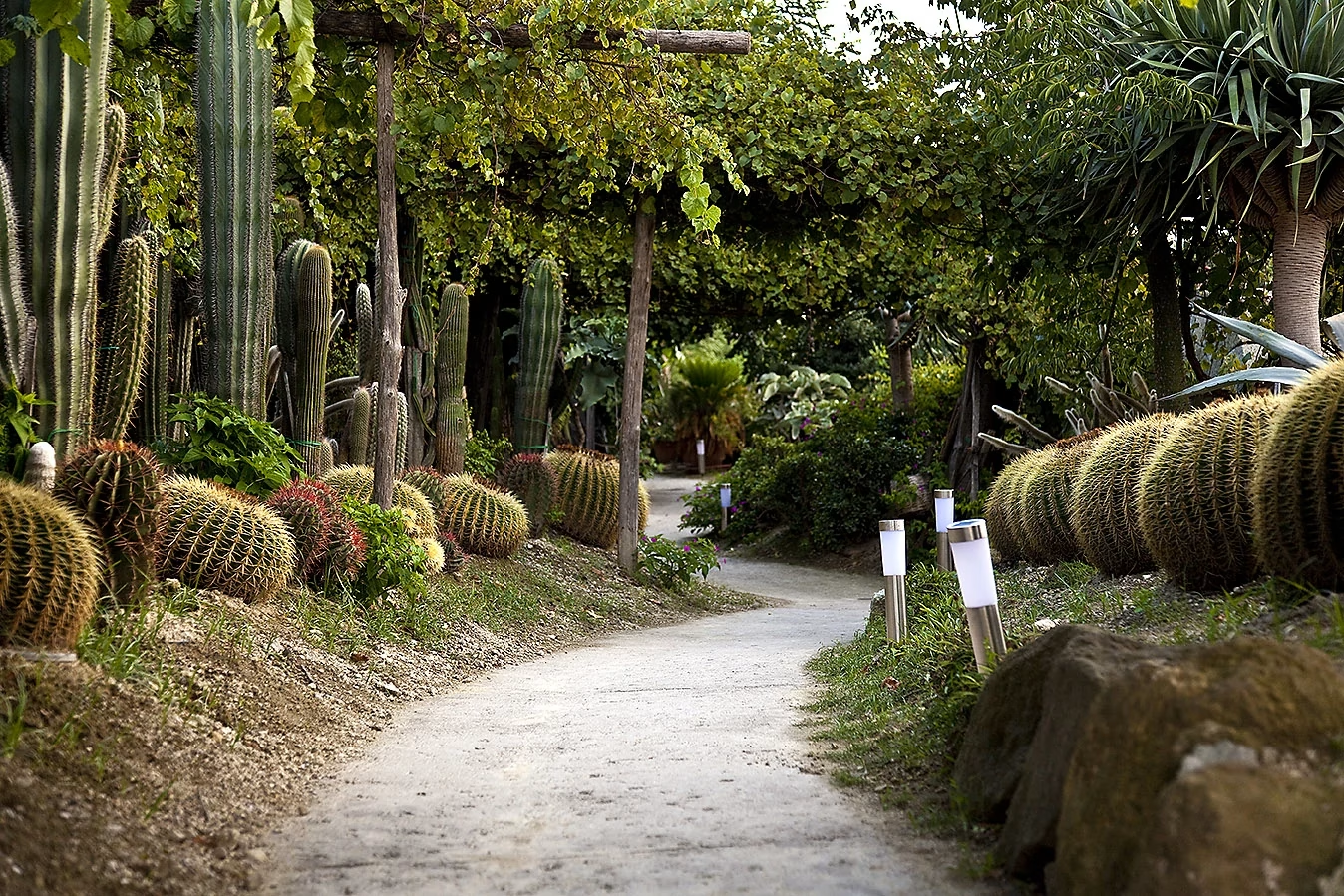
For a general holiday, choose the garden that most interests you and combine it with time in Forio. Enthusiasts can visit both, but they occupy different sites and should not be treated as adjoining attractions.
Walking, vineyards and food
The higher parts of Ischia add a different scale to a coastal stay. Paths, villages and cultivated slopes reveal an island shaped by working the land as well as living beside the sea. A guided inland walk can help connect the views with the geology, plants and agricultural history.

Choose a route according to its ascent, surface and return journey. Agree the starting point and transport before setting off; being taken part of the way uphill does not remove the walking involved. For a specific summit or woodland route, ask a local guide about current path conditions and suitability.

Food gives that inland landscape a place in the holiday. Coniglio all’ischitana, the island’s rabbit dish, sits alongside seafood on local menus. A countryside lunch or a pre-arranged vineyard visit can be a worthwhile outing, especially for travellers who want to understand the island beyond its coast.
Evenings are another reason to spend time in the island’s towns: take a walk around the harbour or through the lanes before dinner, and leave room in your plans to return to a place you enjoyed.
How long to stay and how to use the days
Three or four nights
Choose one base and two main outings: for example, Ischia Ponte and the castle on one day, then a garden or thermal park on another. Keep the arrival and departure days light. This is a useful introduction alongside a longer stay in Naples.
Seven nights
A week works well in one hotel. Allow separate days for the castle and Ponte, a western garden and Forio, a thermal park, and an inland or archaeological outing. Leave the remaining time for the beach, the hotel and revisiting a place you enjoyed.
Ten to fourteen nights
Consider two bases: Naples followed by Ischia creates a clear contrast between city culture and island time. Read our Naples travel guide to give the city a proper place in the journey. A stay in the Pozzuoli area can also complement Ischia, particularly when archaeology is a priority and the ferry arrangements suit your dates.
When to go: choose dates around the holiday you want. For walking and gardens, avoid making every day depend on swimming conditions. For a beach-led stay, prioritise the warmer part of the season. Spring sea temperatures can feel cool; autumn weather and seasonal opening dates need checking. A winter stay requires a specific hotel and activity plan.
Getting to Ischia and moving around
Arriving involves a mainland transfer, a sea crossing and an onward journey to the hotel. Naples airport and Napoli Centrale station are mainland arrival points; allow time between each stage rather than assessing the journey by the crossing alone.
Check both the departure quay and arrival port
In Naples, hydrofoils use Molo Beverello and ferries use Porta di Massa. Ferries also connect Pozzuoli with the island. Ischia Porto, Casamicciola and Forio are different arrival points, so confirm the port printed on the ticket before arranging your hotel transfer.
Use the operator’s current service information, including Alilauro and Caremar, for the actual travel date. Routes, calling points and seasonal connections differ. Check again close to departure, and allow a sensible margin before a mainland train or flight.
A car-free stay
EAV buses and taxis provide options for moving between areas. Walking is useful within individual centres, but many attractions are spread around the island. Check the official transport guide and current EAV information, and establish the stop or pick-up point nearest your hotel.
For a day combining several dispersed places, a private driver or guided outing may make better use of your time. For a simple beach or garden day, one outward journey and one return can be enough. If you do want a car, check hotel parking, local access restrictions and any applicable rules for taking the vehicle to the island.
If you have already booked
- Confirm the exact hotel address and final approach, including any steps or luggage assistance.
- Check the port names on both sailings and the meeting points for transfers.
- Place attractions with limited opening days into the itinerary first.
- Reserve any private guide or driver needed for a particular day.
- Keep a beach or hotel day flexible so you can move outings around.
If boarding assistance is needed, arrange it with the ferry operator in advance. Tell your holiday organiser about walking or access needs when choosing the hotel, rather than relying on a general description of the town.
Plan your Ischia holiday. Explore our Ischia holidays and selected hotels. We’ll help you choose the right accommodation for your interests, requirements and budget, and arrange transfers and private visits as part of your land-only holiday. Flights are booked independently.

 Facebook
 WhatsApp channel