


An Autumn Journey Through Campania, from Caserta to the Cilento Coast
I drove south from Naples to Reggio Calabria via the SS18, then took the train north to Pisciotta, where my stay in Campania began. From there, I explored the Cilento by e-bike and continued to Capua, Caserta and Salerno before returning to the coast.
In this article
Driving south on the SS18 with Vittorio
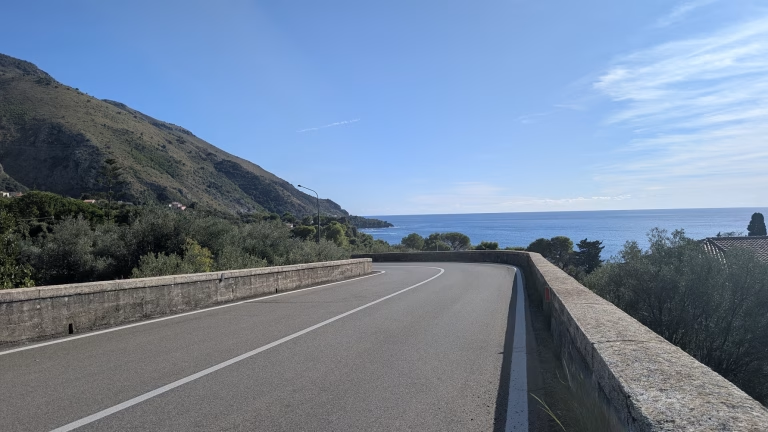
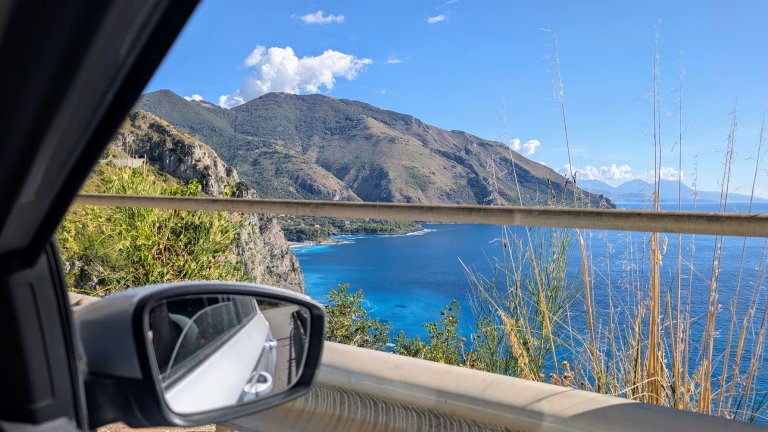
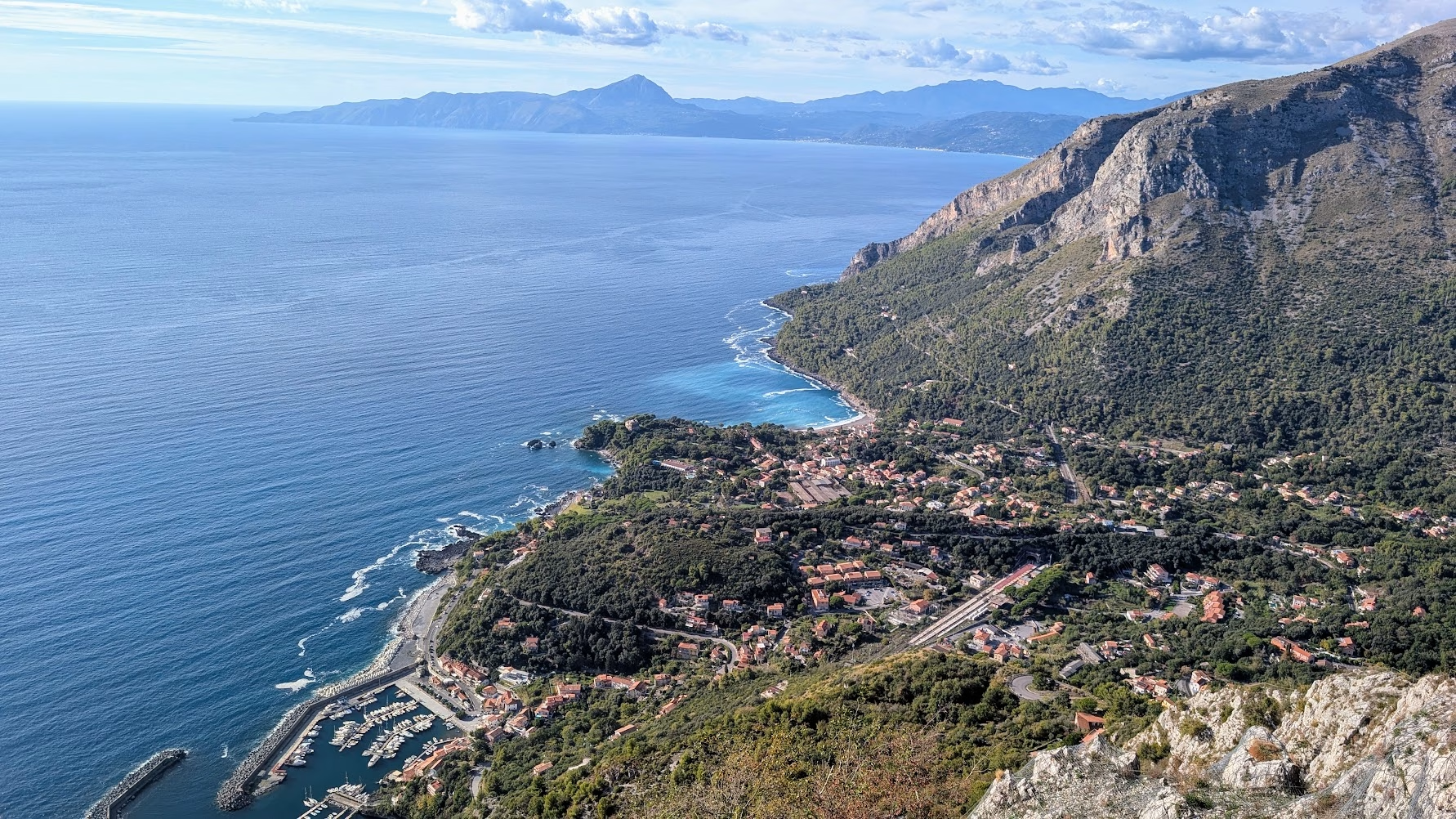
I met Vittorio Sciosia at Naples airport on 25 October and we drove south towards Reggio Calabria. We took the SS18 and stopped at the statue of Christ the Redeemer above Maratea, in Basilicata. From there, the shape of the Gulf of Policastro was easy to read. Sections of the road had been following that same coast, sometimes with the sea close and sometimes with a wide view from above. Vittorio continued towards Sicily, and I stayed that night in Reggio Calabria.
Back north by train from Reggio Calabria
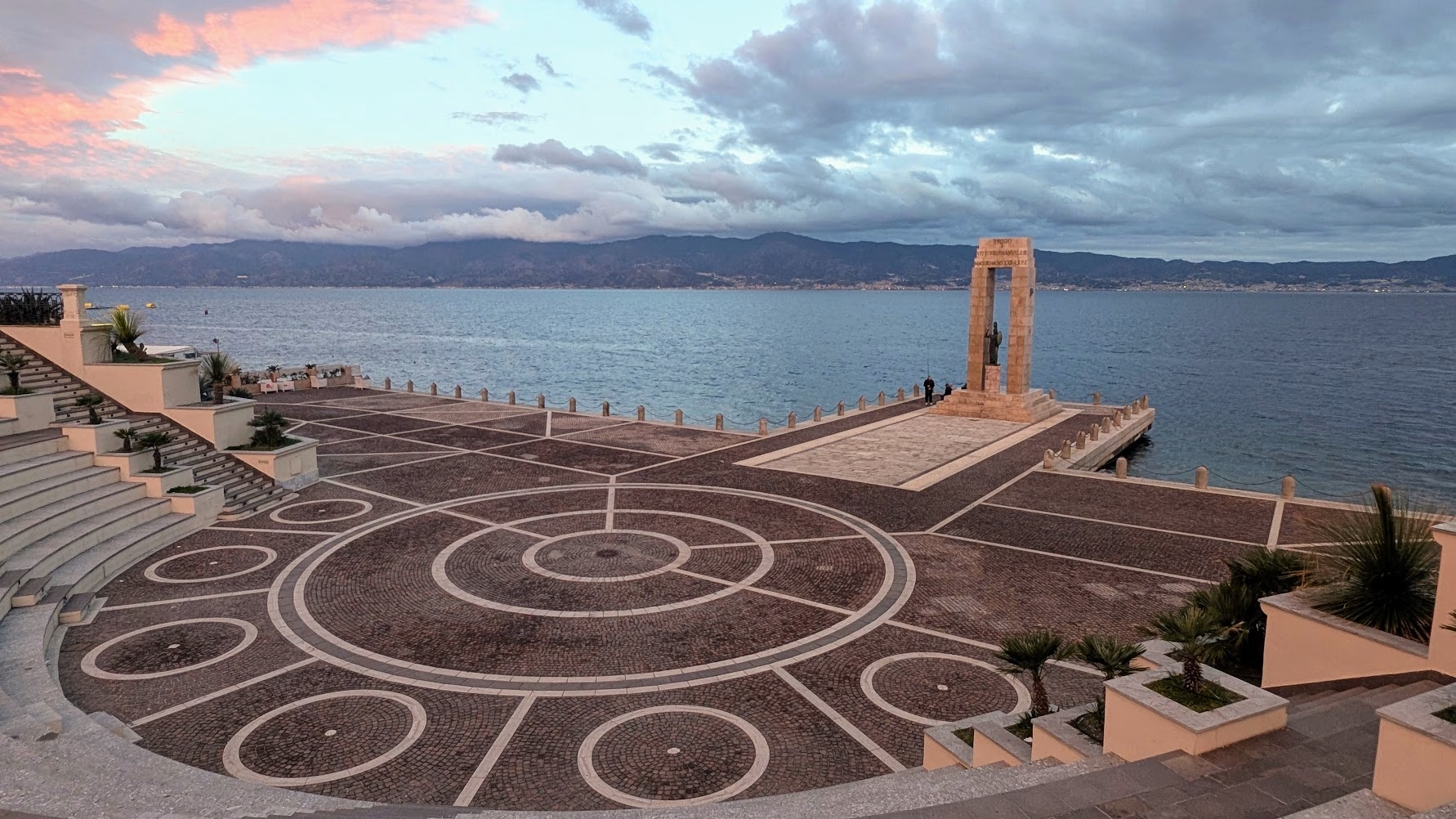
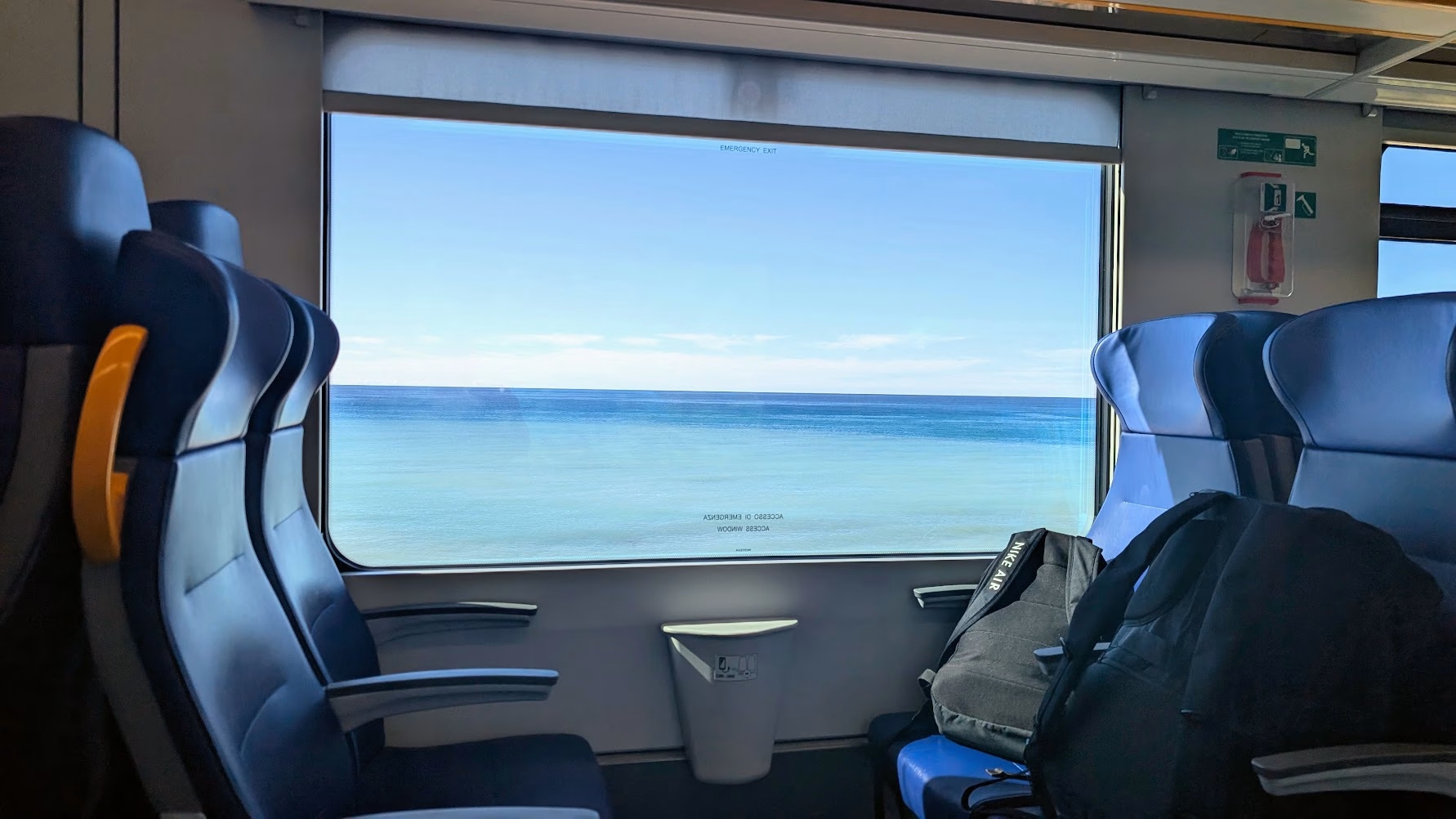
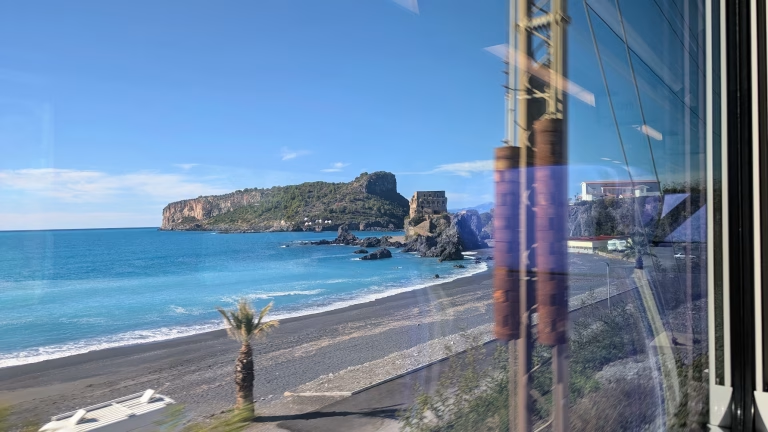
The next morning I walked along Reggio Calabria’s lungomare before catching the train north to Pisciotta. Sicily was visible across the Strait of Messina. Once on board, I was back beside the Tyrrhenian, with beaches and rocky headlands passing the window on the way to the Cilento.
Two nights on the hill at Pisciotta
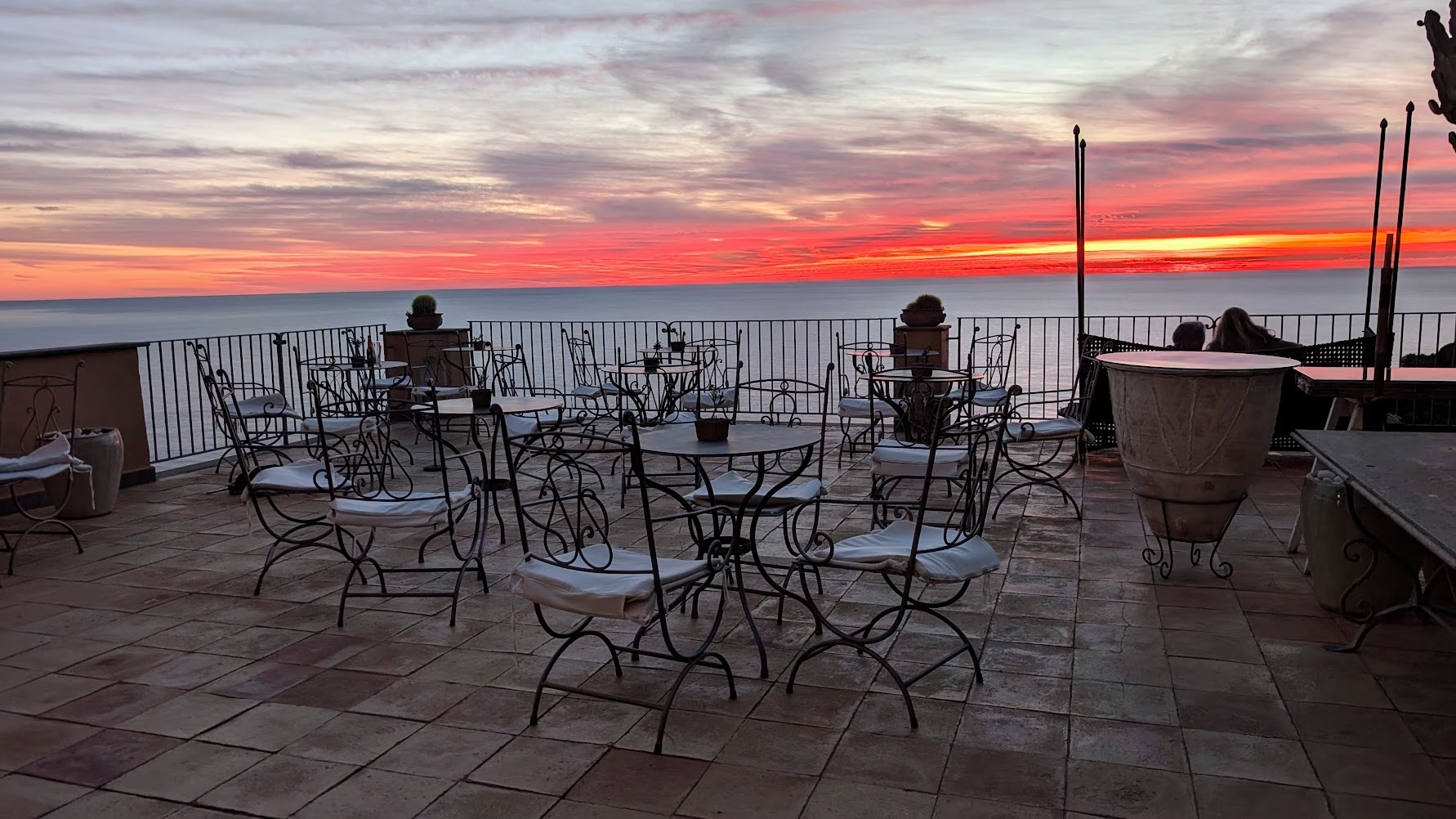
Hotel Marulivo gave me a base in Pisciotta’s old village, above the olive groves that slope towards the marina. After a day out, I liked coming back to the narrow lanes and the sea view from the terrace. On 27 October I hired an e-bike for the ride through Camerota and Palinuro to Pisciotta. On a bike, I had time to see how one stretch of coast leads into the next.
The two Capuas, Caserta and Salerno
On 28 October I took the train from Pisciotta to Caserta.
I visited the amphitheatre at Santa Maria Capua Vetere and the Museo Campano in modern Capua, then had pizza at Ciccio Vitiello’s Cambia-Menti.
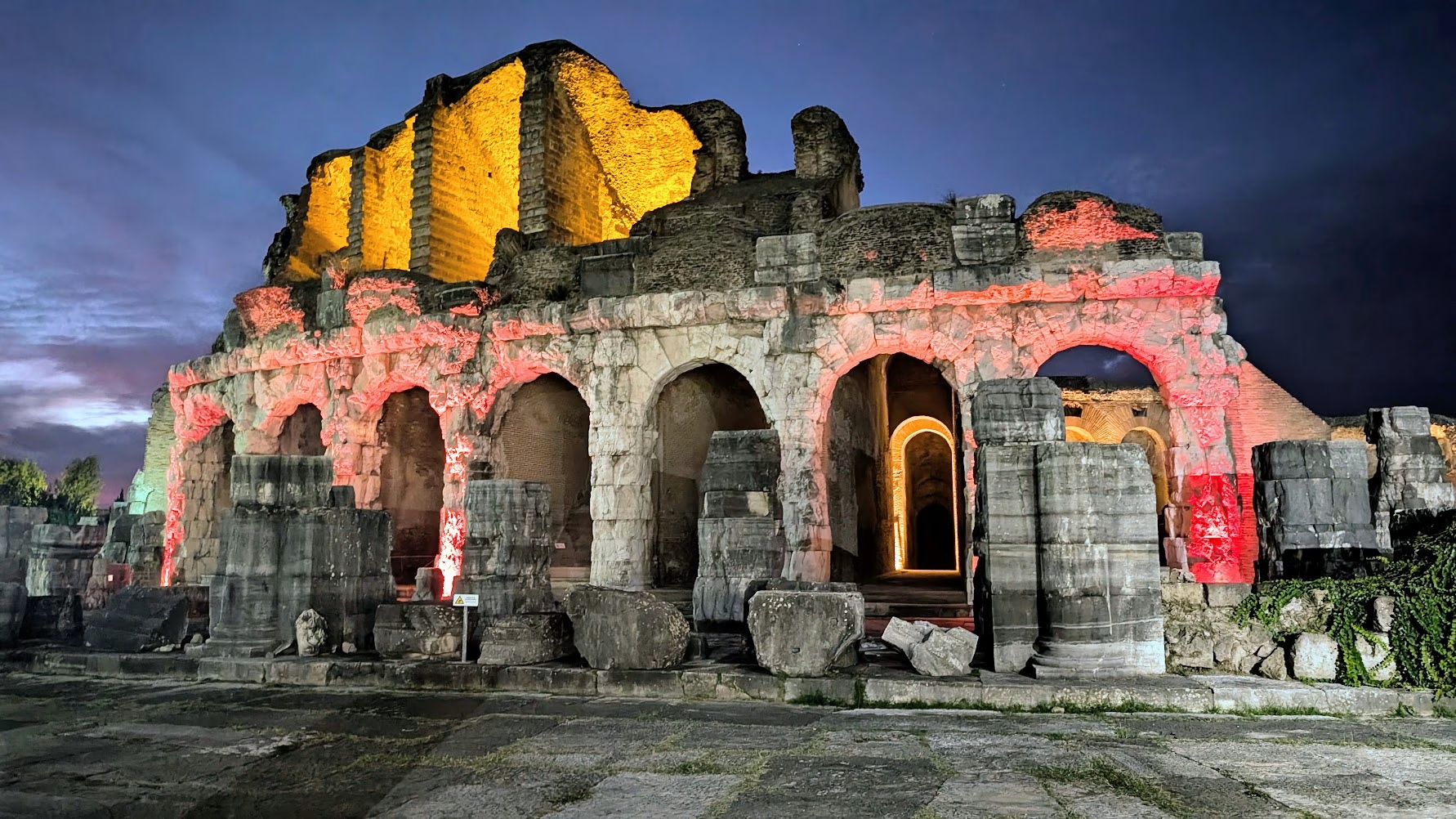
The next day I went to the silk works at San Leucio and the Royal Palace. I’d give the palace and gardens more time on a holiday, especially if you want to see both sides of the Bourbon complex. The silk museum was the stop that most changed how I thought about the court: you can see the work and the machinery behind a luxury the palace took for granted.
On the way to Paestum I stopped in Salerno for the cathedral and St Matthew’s crypt. I then continued to Paestum and checked in. Later I saw the temples and museum. The Paestum guide covers both in detail.
The Cilento plain, the hills and the coast
Paestum, Agropoli and a day inland
My two nights near Paestum gave me time to visit Tenuta Vannulo for mozzarella and the old town of Agropoli. I also spent a day inland at Padula Charterhouse and the Pertosa-Auletta caves. At Padula, the layout of the buildings still gives a sense of how the monks lived. At Pertosa, I entered by boat along the underground river.

Velia and the Castellabate coast
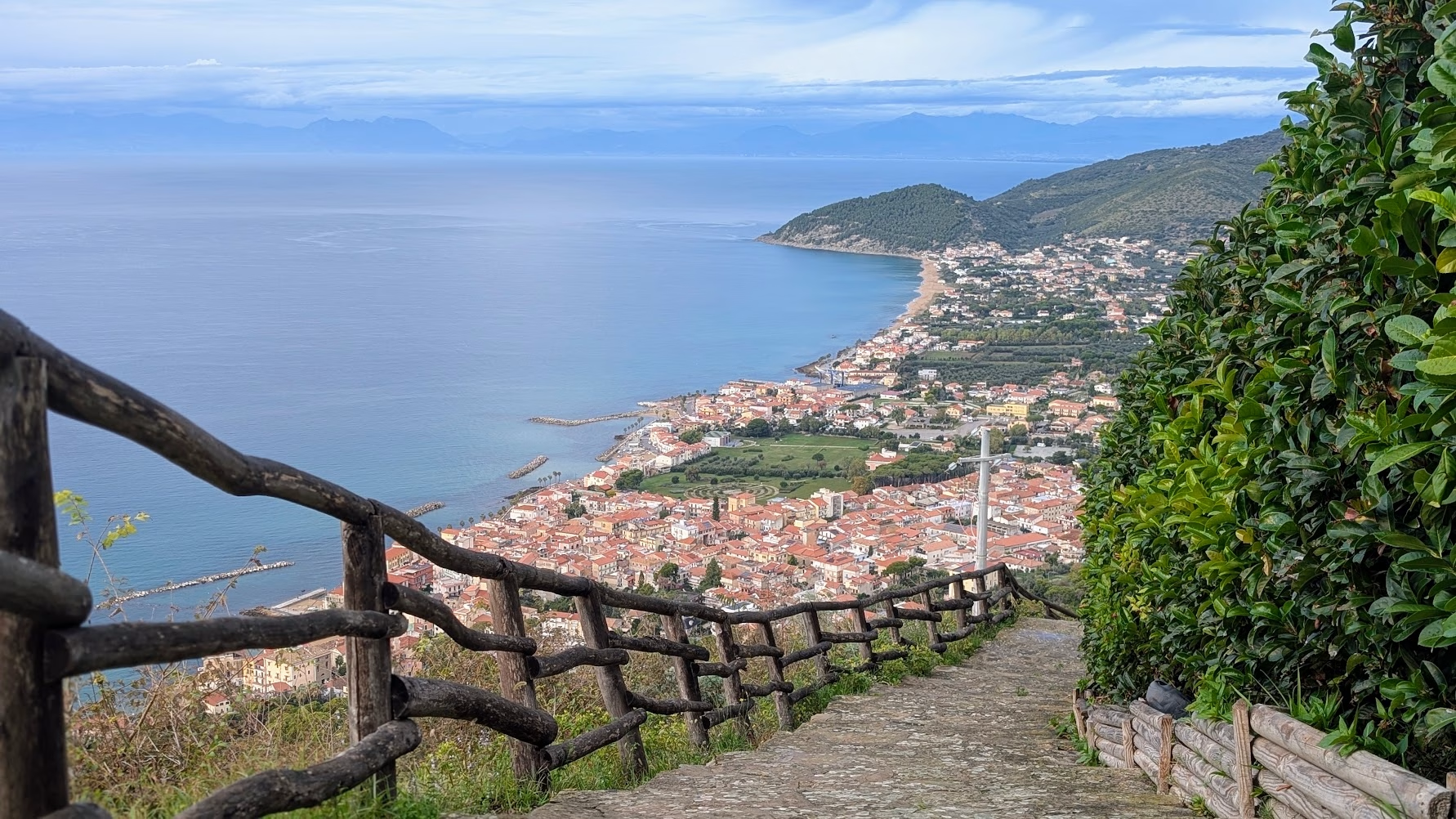
I finished the Campania part of the trip with a night in San Marco and another in Santa Maria di Castellabate. I visited Velia, the ancient Greek city of Elea, tasted olive oil in Casal Velino and spent time in Castellabate’s medieval hilltop centre. From the hill, I could see how the castle overlooks both the cultivated land and the coast.
I left by Frecciarossa for Turin, where I spent two days with family before returning to London.
How I’d turn it into a holiday
For a week, I’d choose one base on the Cilento coast. Paestum or Castellabate would suit a mix of coastal walks, archaeology and days inland. Pisciotta would be my choice for village evenings and a day on an e-bike.
With ten to fourteen nights, I’d combine two bases. Paestum and Pisciotta pair archaeological visits with a quieter stretch of coast. If Bourbon history is a priority, I’d pair Caserta with a longer Cilento stay. The Cilento towns and villages guide helps compare bases.
I’d use trains for the longer journeys and arrange a station transfer when staying uphill in a village. For a day at Padula and Pertosa, I’d hire a car for the freedom to stop along the way or arrange a private driver to handle the journey. Plan with ExpertoItaly to put together the stays, train journeys and transfers that suit your pace.



 Facebook
 WhatsApp channel