


In this article
Amalfi’s harbour and cathedral, Atrani’s small square and passages: these neighbouring towns reveal different sides of the same maritime history. Explore them together for churches, working traditions and views that change as you move from the waterfront into the lanes above.
From early settlement to a Mediterranean trading power
Amalfi’s foundation stories are difficult to separate from legend. Archaeological finds establish a Roman presence, while the town was already a bishop’s seat in 596. These are firmer starting points than a precise founding date or a story about a single group of refugees creating the town.
The decisive change came in 839, when Amalfi established its political autonomy. Government developed through different forms of elected leadership into ducal rule. Its merchants maintained communities in Mediterranean ports, with warehouses, shops, churches and institutions that supported business far from home.
Trade connected Amalfi with North Africa, the eastern Mediterranean and Byzantium. Timber, precious textiles, spices and other goods moved through these networks. The mountains restricted easy overland movement, while the sea opened routes to much larger markets. This helps explain the apparent imbalance between the town’s compact footprint and the ambition of its religious buildings.
Atrani belonged to this same political world. Noble families lived here, and the investiture of Amalfi’s dukes took place at San Salvatore de’ Birecto. Its proximity to Amalfi was therefore more than a geographical convenience: the two settlements shared the institutions and fortunes of the duchy.
Discover maritime Amalfi at the Arsenal
The surviving Arsenal, near Amalfi’s waterfront, gives physical form to this history. It was a shipbuilding space, originally extending much further towards the water. Its stone vaults make a useful first stop before the cathedral: they put the work of building vessels alongside the wealth those vessels helped generate. Arsenal of the Republic
The museum housed within it covers the maritime duchy through objects including coins, manuscripts and navigational instruments. Check the current exhibition and admission arrangements when planning a visit. Come here to discover how this small town traded with ports across the Mediterranean. Compass and Maritime Duchy Museum
Amalfi’s independence ended definitively with its incorporation into the Norman kingdom in 1131. Its commercial life continued, but stronger competitors and later warfare gradually reduced its influence. The change was a long process; the town’s history did not finish when its political independence did.
The cathedral: several centuries in one visit
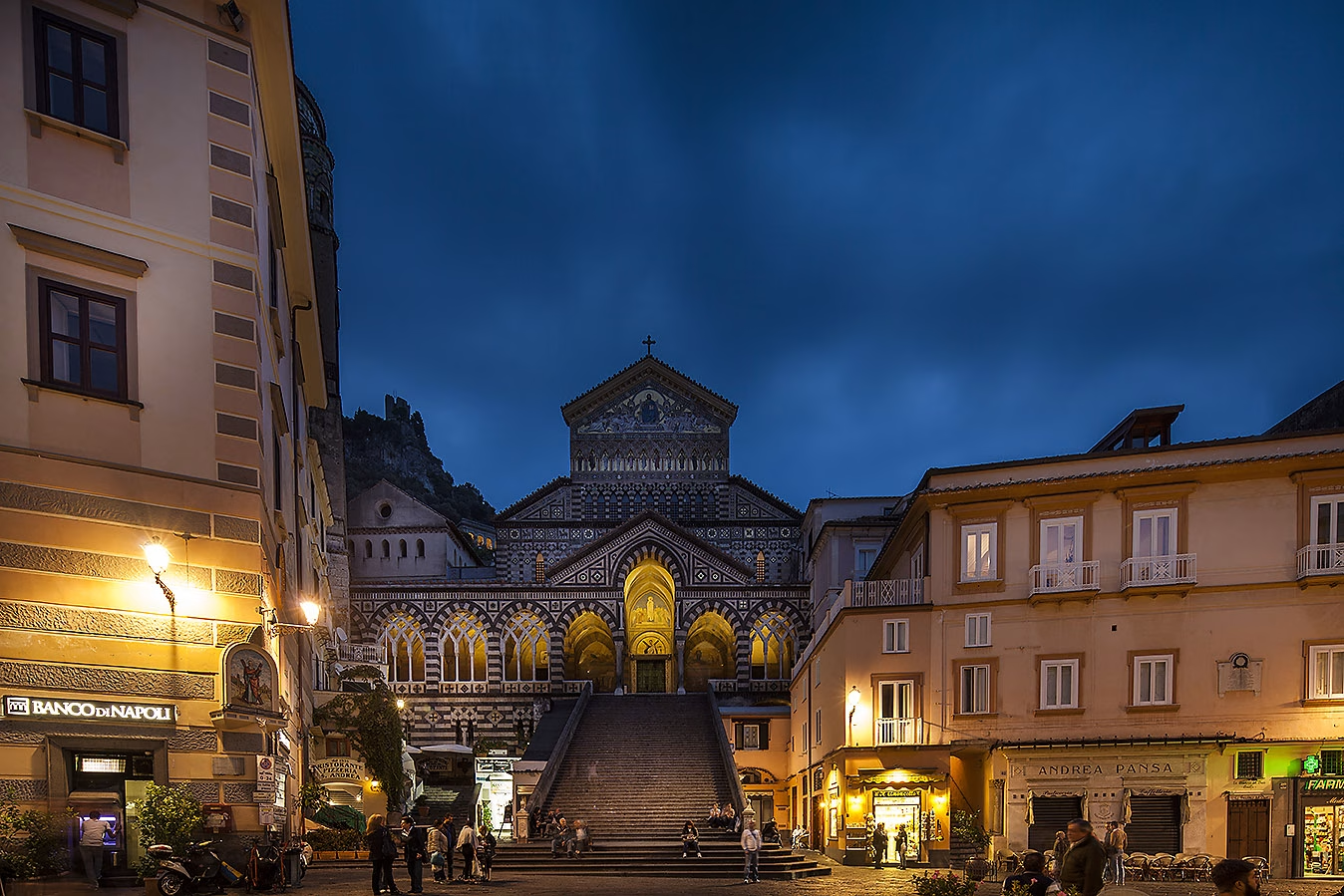
The staircase and patterned façade of Sant’Andrea dominate Piazza Duomo. The façade visitors see today is a nineteenth-century rebuilding, while the interior includes substantial Baroque decoration. Think of the cathedral as a building repeatedly adapted by later generations, each adding to an older religious centre.
Look particularly at the bronze doors. Made in Constantinople and donated in 1060 by the merchant Pantaleone de Comite, they are a direct material connection with Amalfi’s eastern trading world. The wider complex includes the older Basilica del Crocifisso and its museum, the crypt associated with Saint Andrew’s relics, and the Cloister of Paradise.
The cloister was commissioned in the thirteenth century as a burial place for the town’s nobility. Its slender paired columns and interlacing arches deserve a slow circuit. Together, the doors, cloister and crypt show how commercial wealth, family status and devotion found expression in architecture. Cathedral complex: history and visitor information
Leave room for this visit in the day. The monumental complex has seasonal admission arrangements; access for sightseeing should not be assumed to match church services. The staircase also matters for anyone who finds steps difficult.
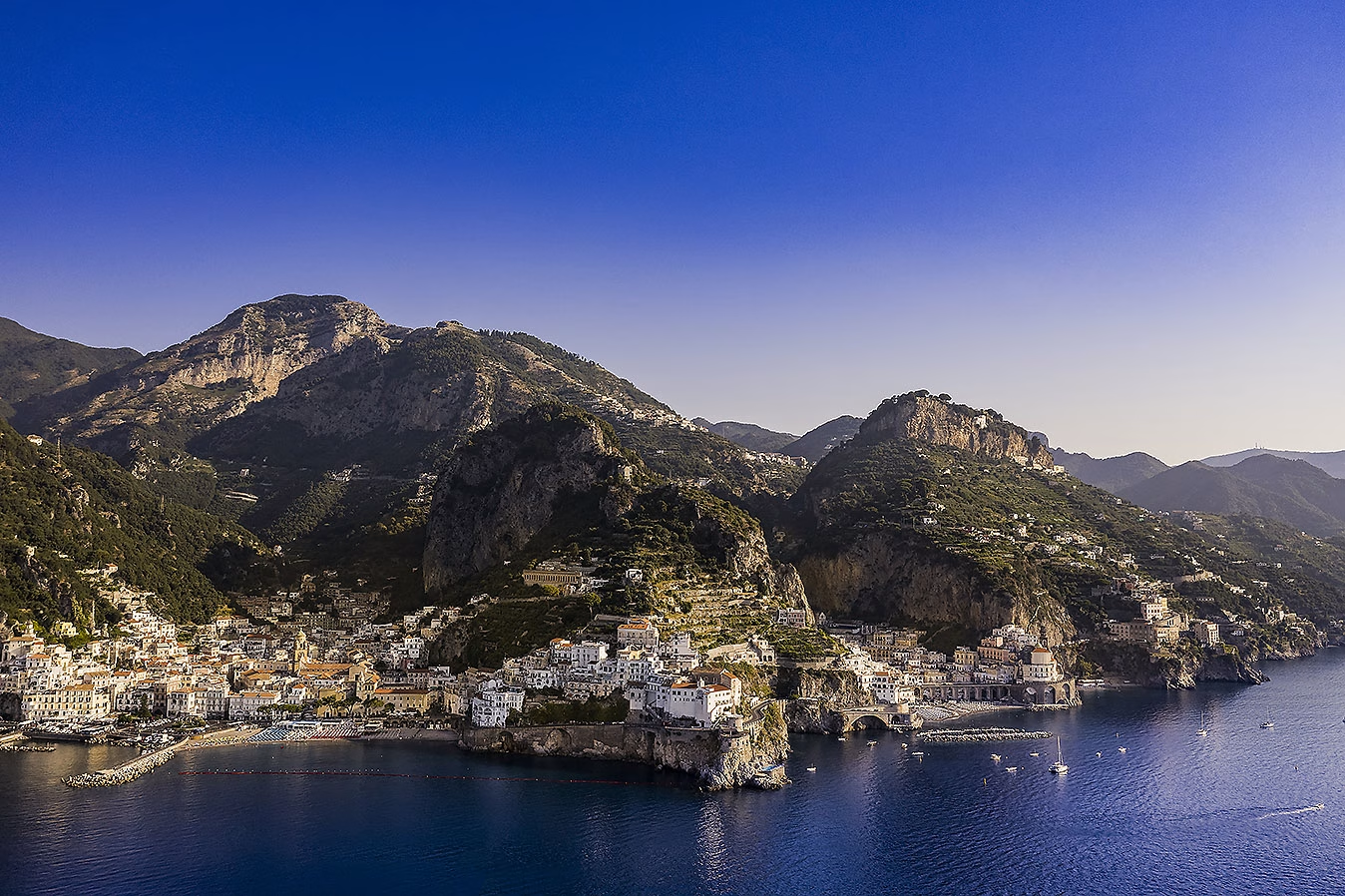
Inland Amalfi: water, paper and cultivated slopes
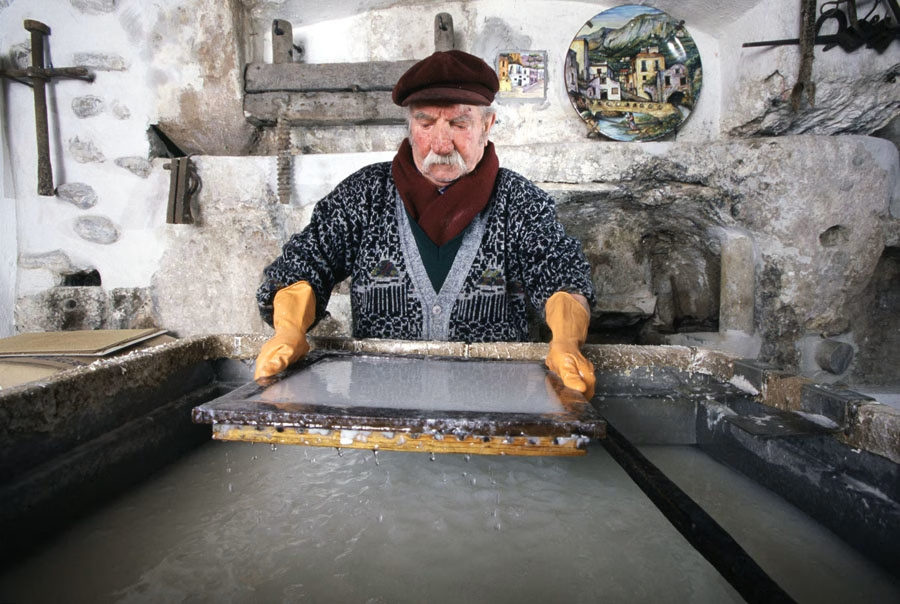
Follow the main street inland and the setting begins to explain another livelihood. The Canneto stream supplied power to paper mills in the valley behind the town. Paper-making was established here in the medieval period and remained an important industry for centuries.
The mills depended on both water and access to raw materials. Their confined valley location became a disadvantage as larger, better-connected factories developed elsewhere. Flooding was another vulnerability, and the disaster of 1954 dealt a severe blow to the industry. The surviving tradition belongs to Amalfi’s working history, with periods of adaptation and hardship as well as skilled craftsmanship. The Paper Museum’s history of the industry
At the Museo della Carta, a former mill, restored equipment demonstrates how textile rags were broken down and made into paper. Seeing the machinery gives substance to a craft that might otherwise appear only as stationery in a shop window. It is also a useful change of subject for families after the churches. Choose the visit format that includes the demonstration or hands-on experience you want. Museum description and current visit options.
Above the buildings, terraces and lemon groves show how farming occupies the same steep terrain. Retaining walls, water management and work by hand have made cultivation possible. Looking upwards from the town is a reminder that the landscape requires continuing maintenance.
A museum visit is straightforward to combine with the centre. A longer walk into the valley should be planned separately, according to the route, weather and current access; it is not simply another flat shopping street.
Squares and passages with a working past
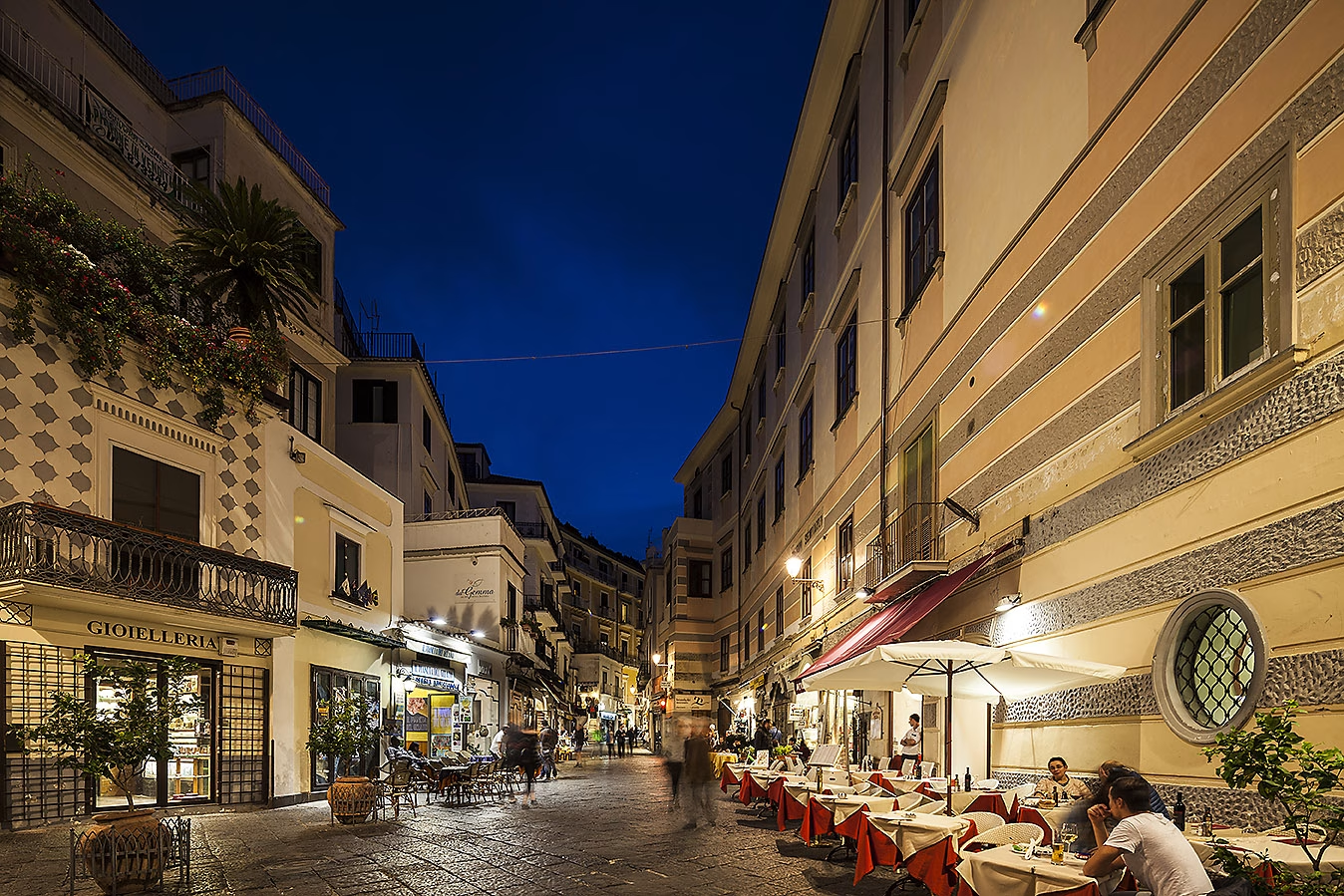
Away from Piazza Duomo, Piazza dei Dogi provides another connection between the town’s appearance and its former economy. It was associated with blacksmiths in the Middle Ages and was later used for drying pasta during the nineteenth and twentieth centuries. The official walking itinerary through Vagliendola introduces this history and the streets connecting the centre with the upper neighbourhoods. Exploring Rione Vagliendola
Wander through these streets, noticing the changes of level, covered passages and buildings overhead. There is plenty to discover between the main sights.
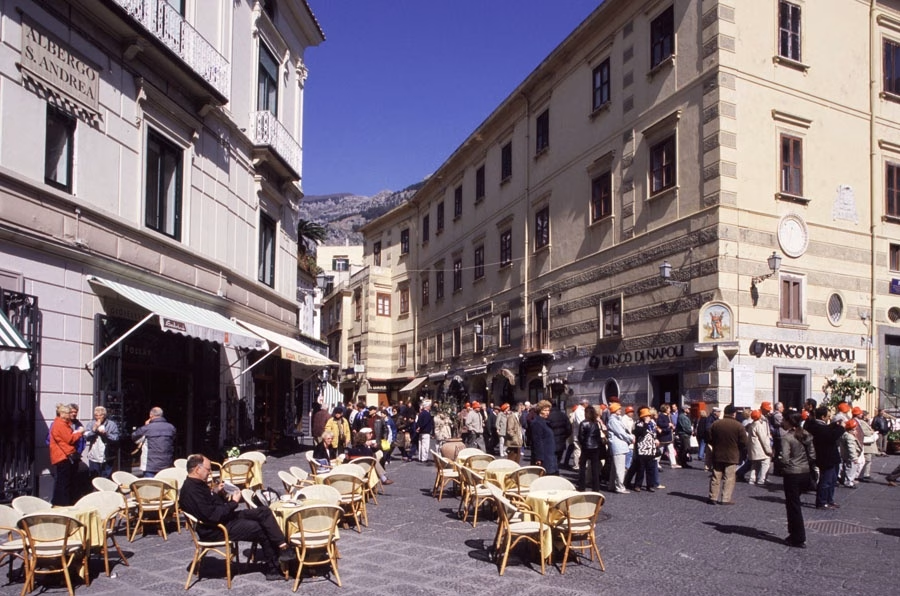
Leave time for a leisurely lunch, followed by an afternoon in Atrani or at the paper museum. Lemons and handmade paper also give shopping a local context: ask where a product was made and how it relates to the work still carried out here.
Atrani: a small square with a political history
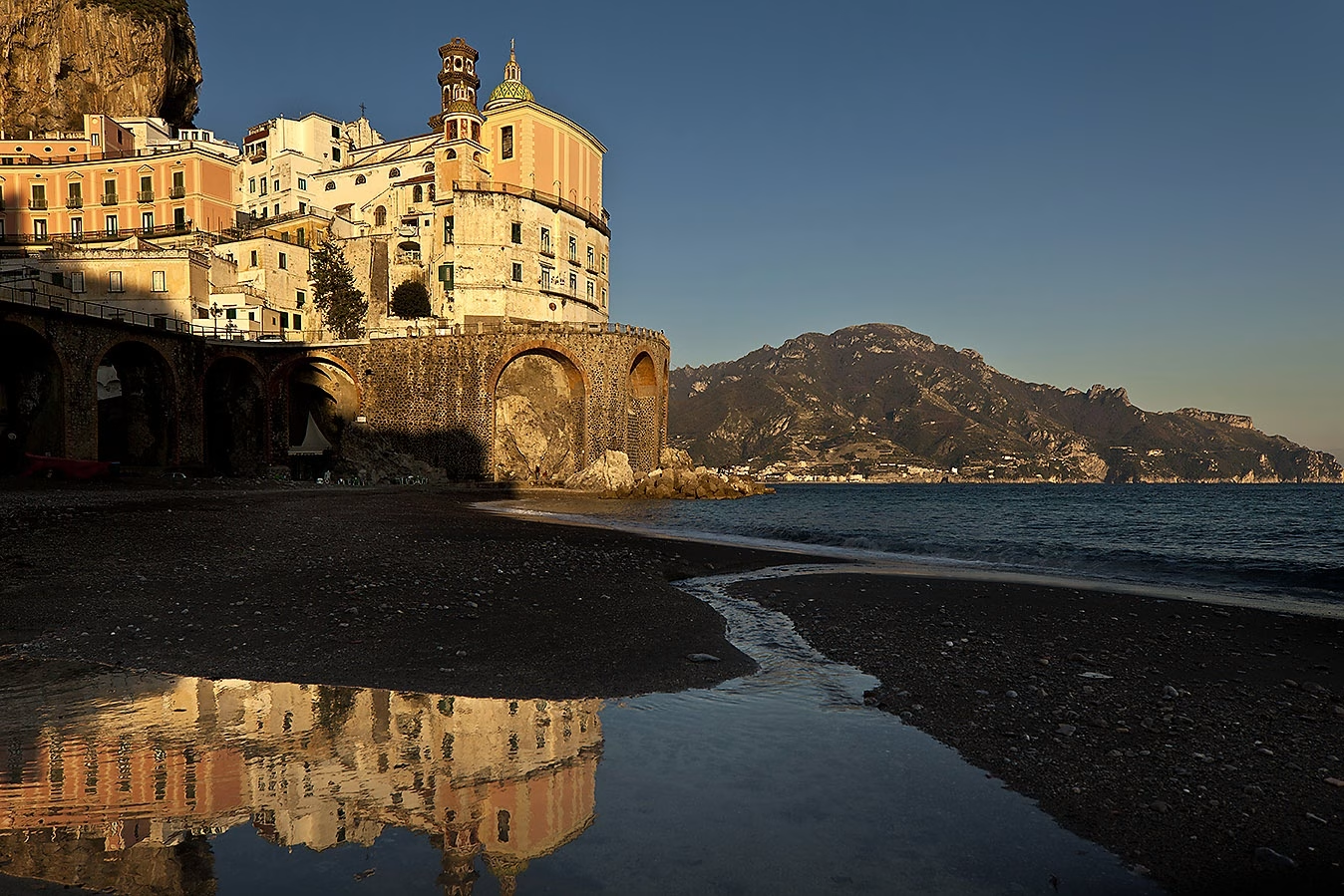
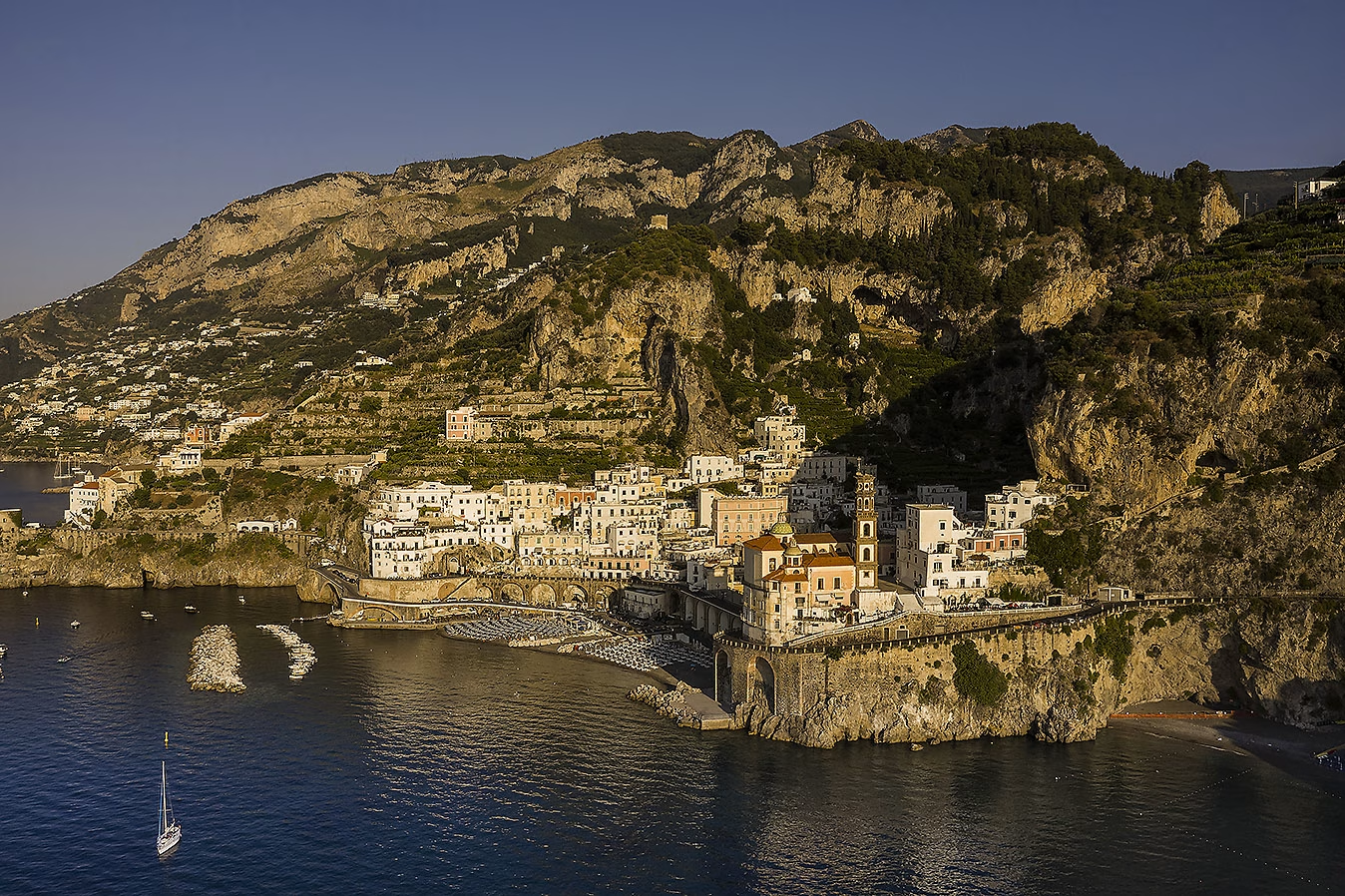
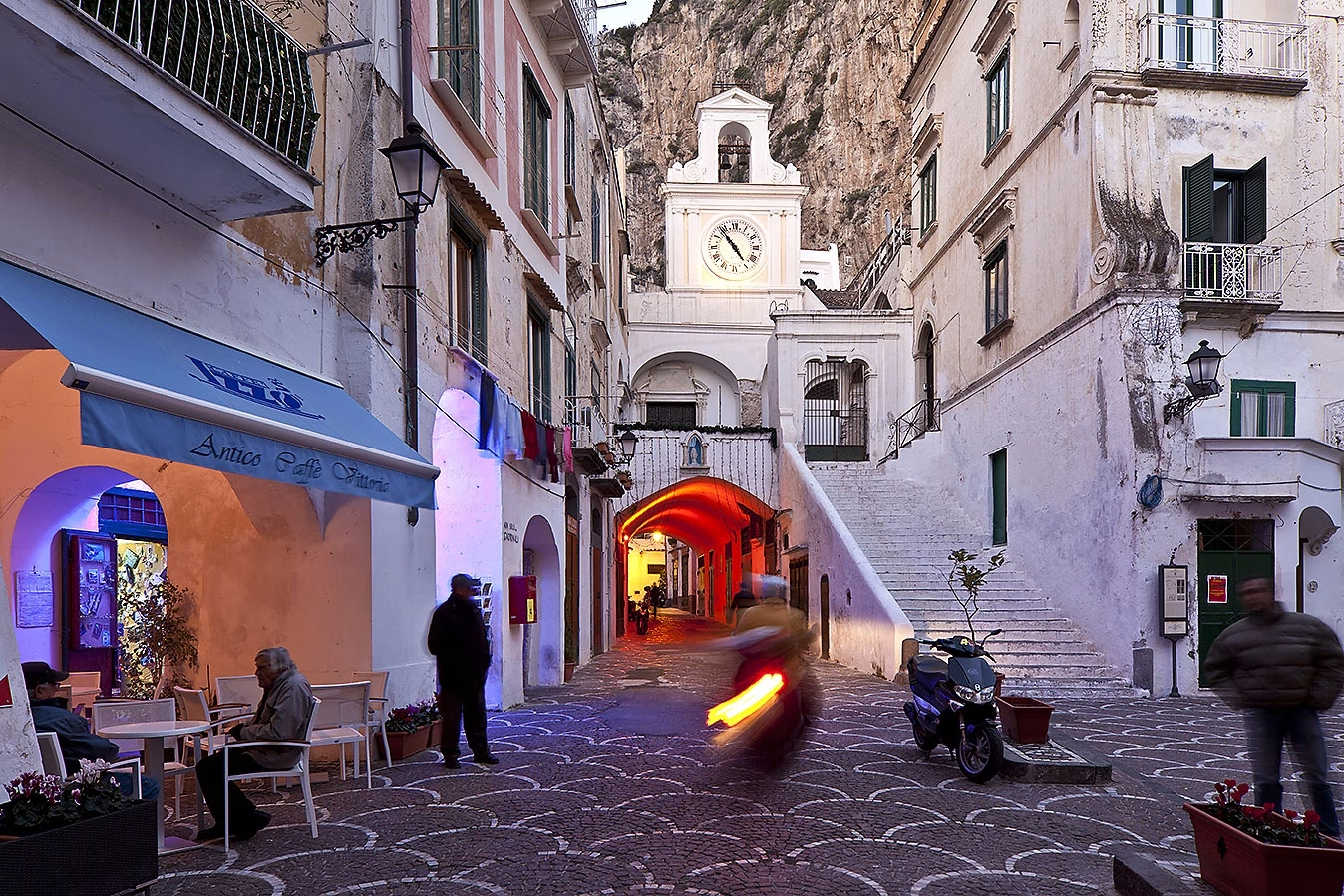
Atrani deserves its own portion of the day. The buildings gather tightly around Piazza Umberto I, with passages towards the waterfront and steps rising into the settlement. Its scale makes it possible to study the relationship between square, houses and hillside within a short walk.
San Salvatore de’ Birecto gives the square its historical importance. Knowing its association with ducal investiture changes the way you read an otherwise modest setting. Atrani’s role was bound to Amalfi’s power, while the town retained its own local identity.
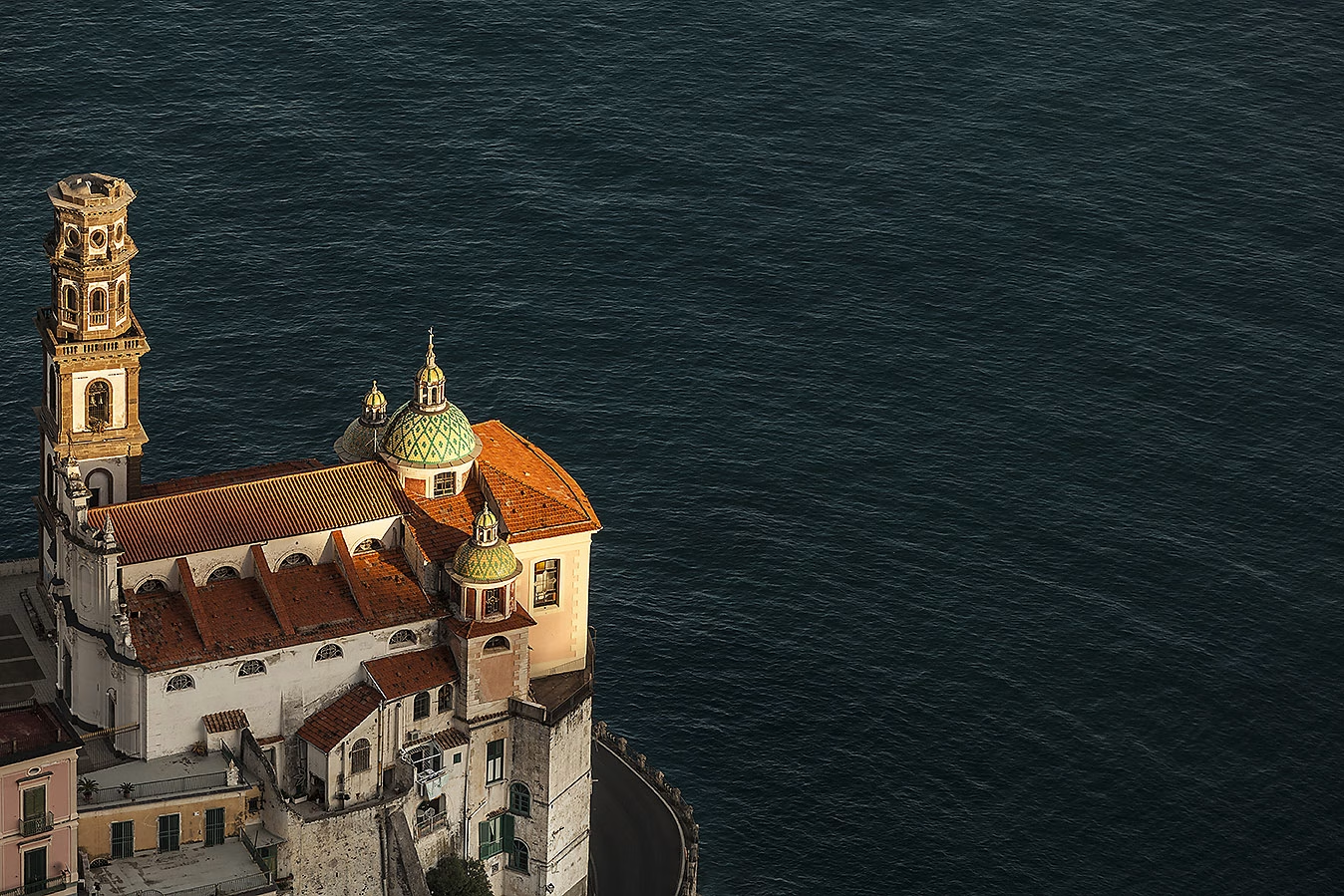
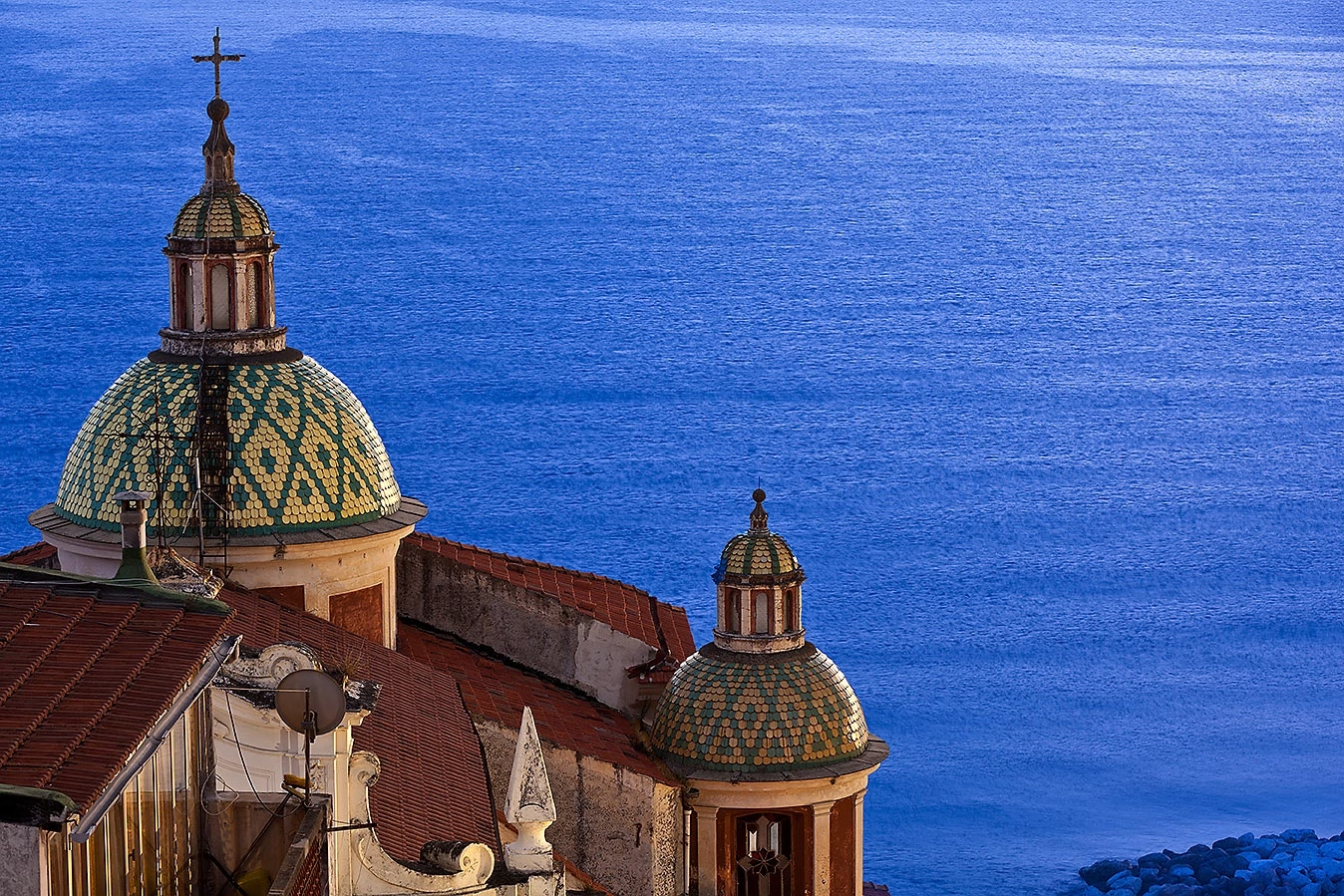
Higher up, Santa Maria Maddalena provides a different architectural focus. Founded in 1274, it was repaired and enlarged repeatedly, including a major eighteenth-century expansion. Its decorated façade and tiled roof belong to this accumulated history. The municipality records how an earlier repair was funded through taxes on grain imports and manufactured exports: a useful glimpse of the community supporting its church through trade.
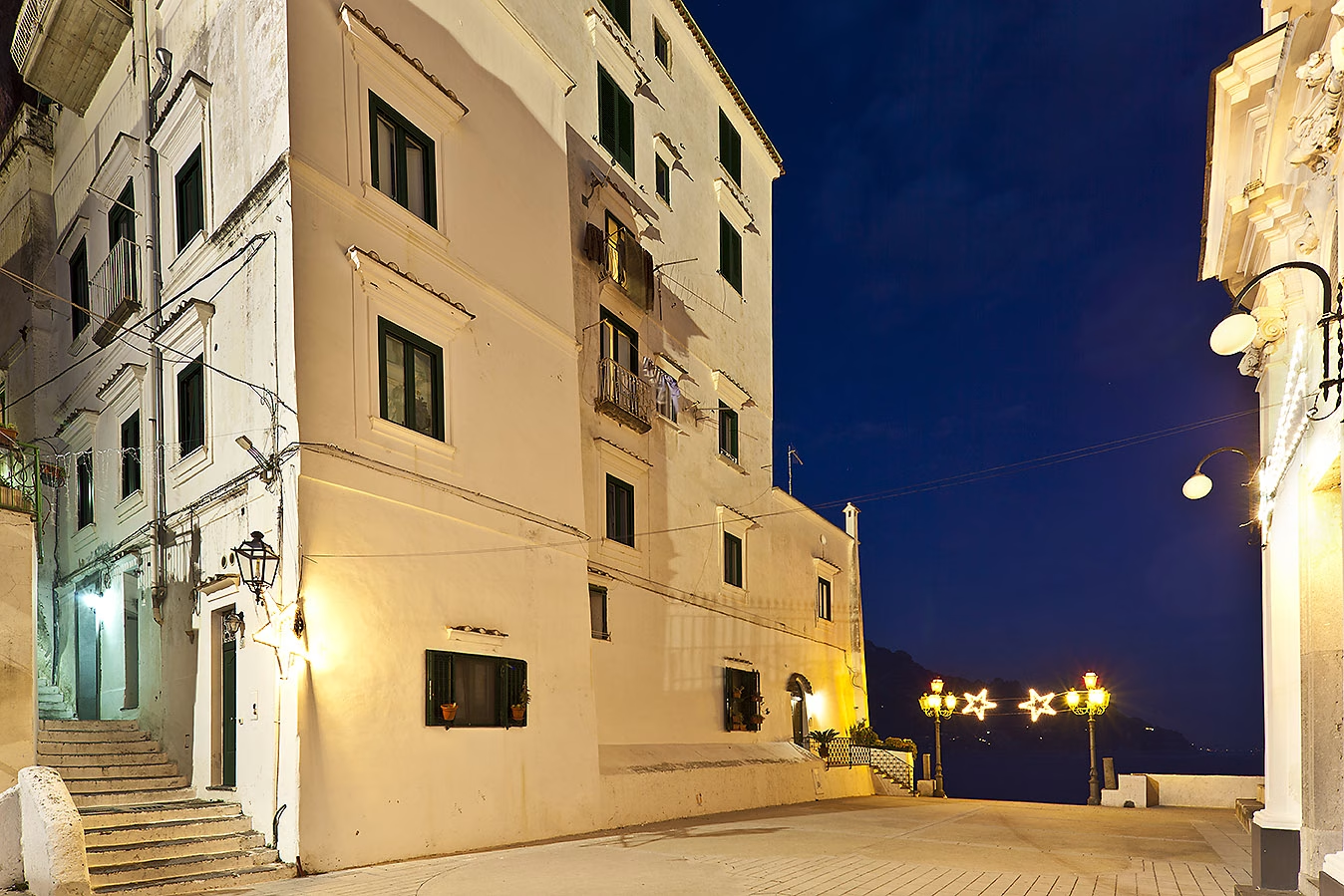
Walk up if the steps suit you, then return to the square for a pause. Continue through the passages towards the small beach to see the town from the water’s edge.
How the two towns continue to change
The surviving churches, mills and terraces belong to different periods. So do the shops, accommodation and visitor services through which many travellers encounter Amalfi and Atrani today. Contemporary tourism occupies places built for earlier purposes, bringing new uses to a compact landscape.
Atrani’s appearance in Netflix’s Ripley has added another layer to its public image. If the series interests you, our guide to the Ripley filming locations explains the relationship between the real places and the fictional setting. Keep that as one way into the town, alongside its much longer history.
The connection with the medieval duchy also remains part of present-day cultural life. The Capodanno Bizantino celebrations link Amalfi and Atrani, including a ceremony at San Salvatore de’ Birecto. These are modern commemorations of the past, rather than an unchanged medieval ritual. Municipality of Atrani: current civic news and celebrations
A worthwhile day in Amalfi and Atrani
Allow a full day for the cathedral complex, paper-making and unhurried time in Atrani. Start in Amalfi with the cathedral or Arsenal, continue inland to the paper museum, then allow for lunch and the walk to Atrani. If both museums appeal, check their opening arrangements and leave the day free for these two towns.
For keen walkers, the official Amalfi–Atrani itinerary climbs through passages and stairs towards the San Lorenzo viewpoint before descending into Atrani. It is a scenic urban walk with a substantial change of level, not a flat waterfront connection. Use the official route description to decide whether it suits your party. Travellers with limited mobility should plan the transfer and accessible parts of each centre individually.
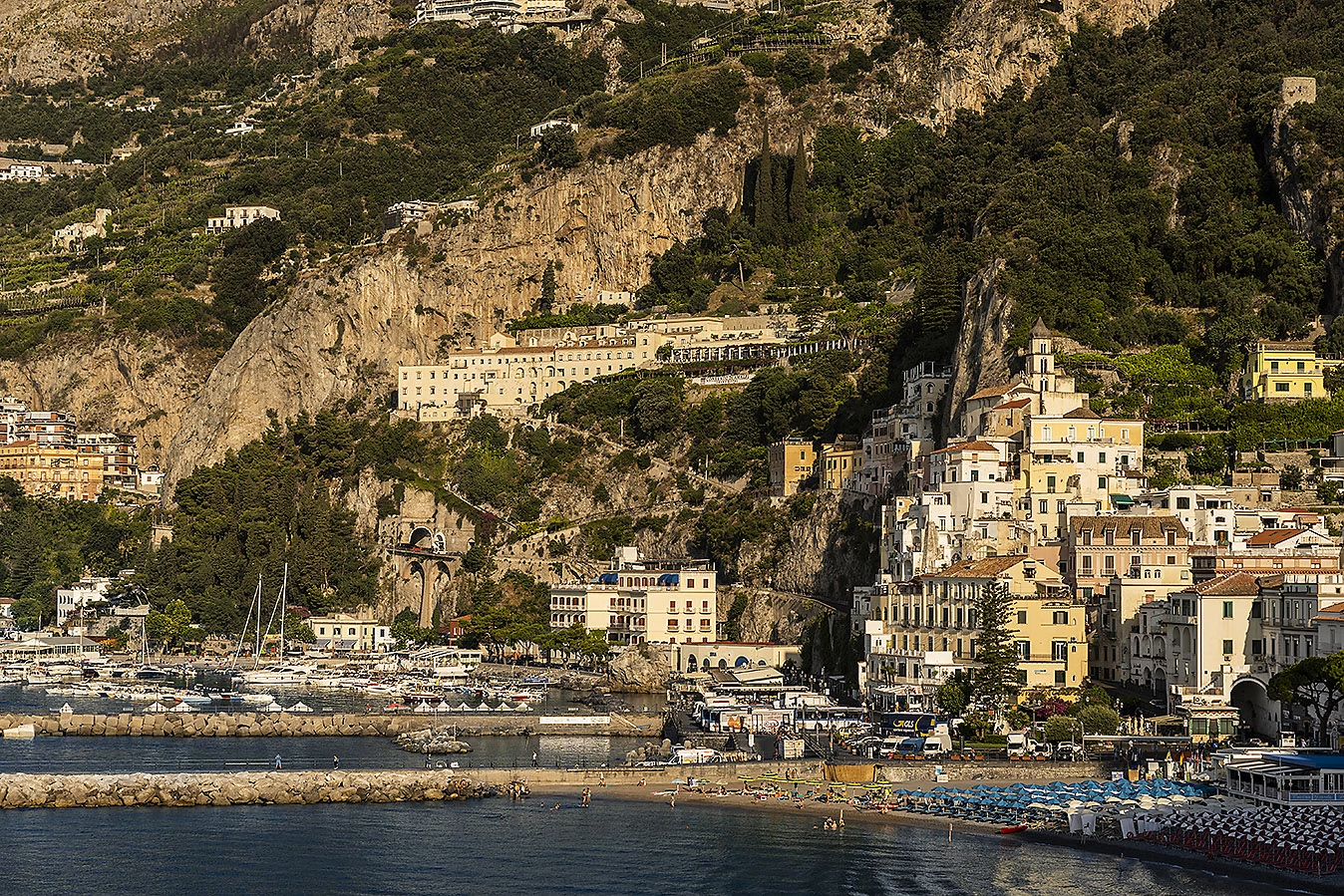
When ferries operate for your route and dates, arriving in Amalfi by sea can make the town’s relationship with the mountains particularly clear. Check the operator’s current services, including the return, and allow flexibility for sea conditions. Detailed decisions about driving and accommodation belong in our comparison of Sorrento and Amalfi Coast bases.
For an ExpertoItaly holiday, this day can sit within a coastal stay or a wider itinerary combining the coast with Naples, Rome or another part of Italy. Tell us how much time you have and what you enjoy, and we can recommend a hotel and arrange your journeys. Our Amalfi Coast multi-centre holidays offer ideas for combining these places in a holiday shaped around you.
Return to the main Amalfi Coast guide for the relationship between these towns and the rest of the coast.



 Facebook
 WhatsApp channel