


In this article
Positano’s houses above the shore, Praiano’s tiled domes and evening views, Furore’s bridge across a narrow inlet: this stretch of the Amalfi Coast changes character at every headland. Enjoy the lanes, churches and vineyards as well as the views, with time to pause by the sea.
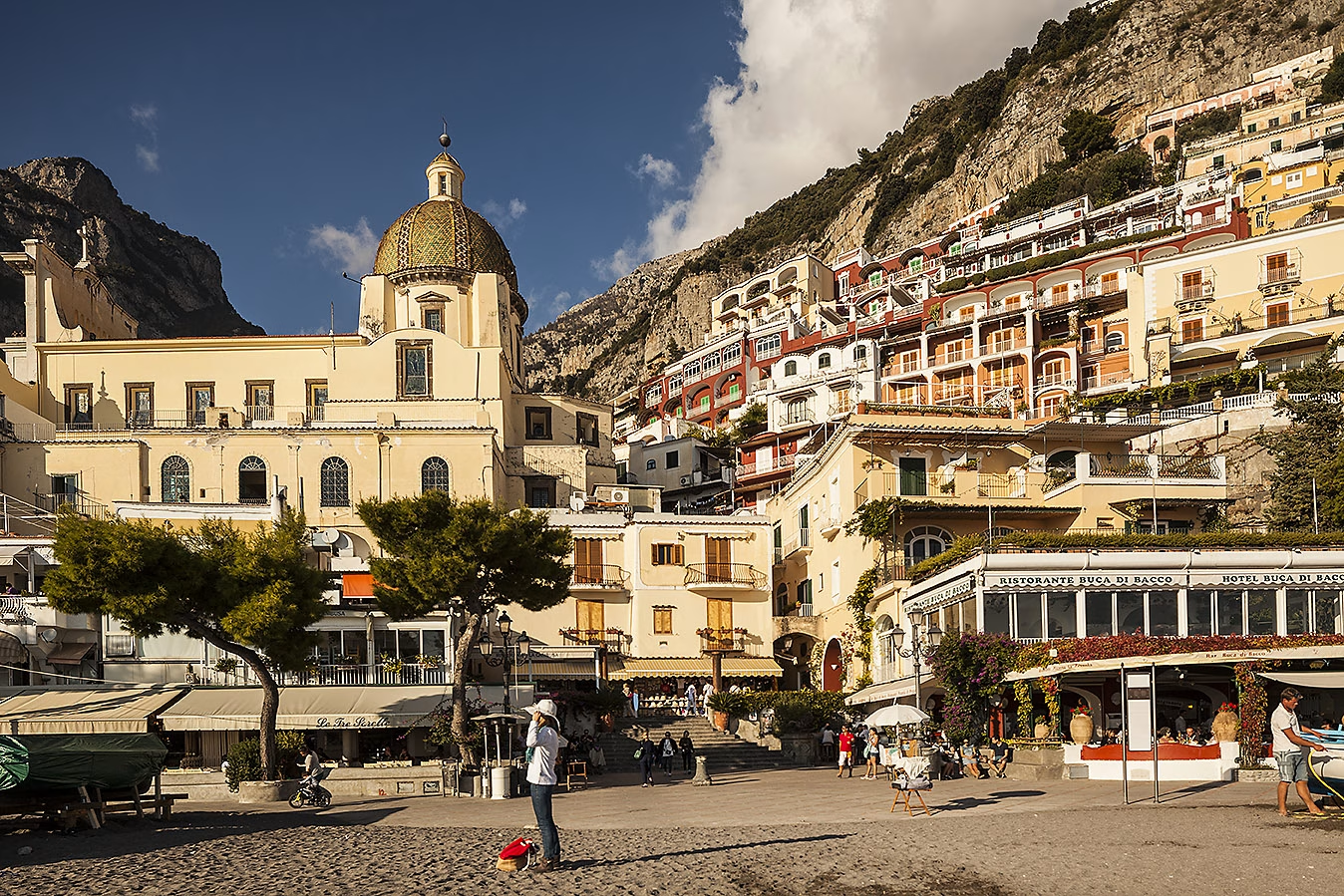
Positano: the town above the waterfront
Begin beside Santa Maria Assunta and look uphill. Houses, terraces, hotels and cultivated patches occupy almost every usable ledge. The shore is where the town meets the sea; the streets above explain how people have adapted to the mountain.
Positano belonged to the medieval Amalfi duchy, with fishing, maritime trade and cultivation supporting its households. Artists and writers arriving after the First World War, followed by the growth of tourism after the Second, helped turn it into an international destination. Boats and landing places still connect the town with that earlier coastal life.
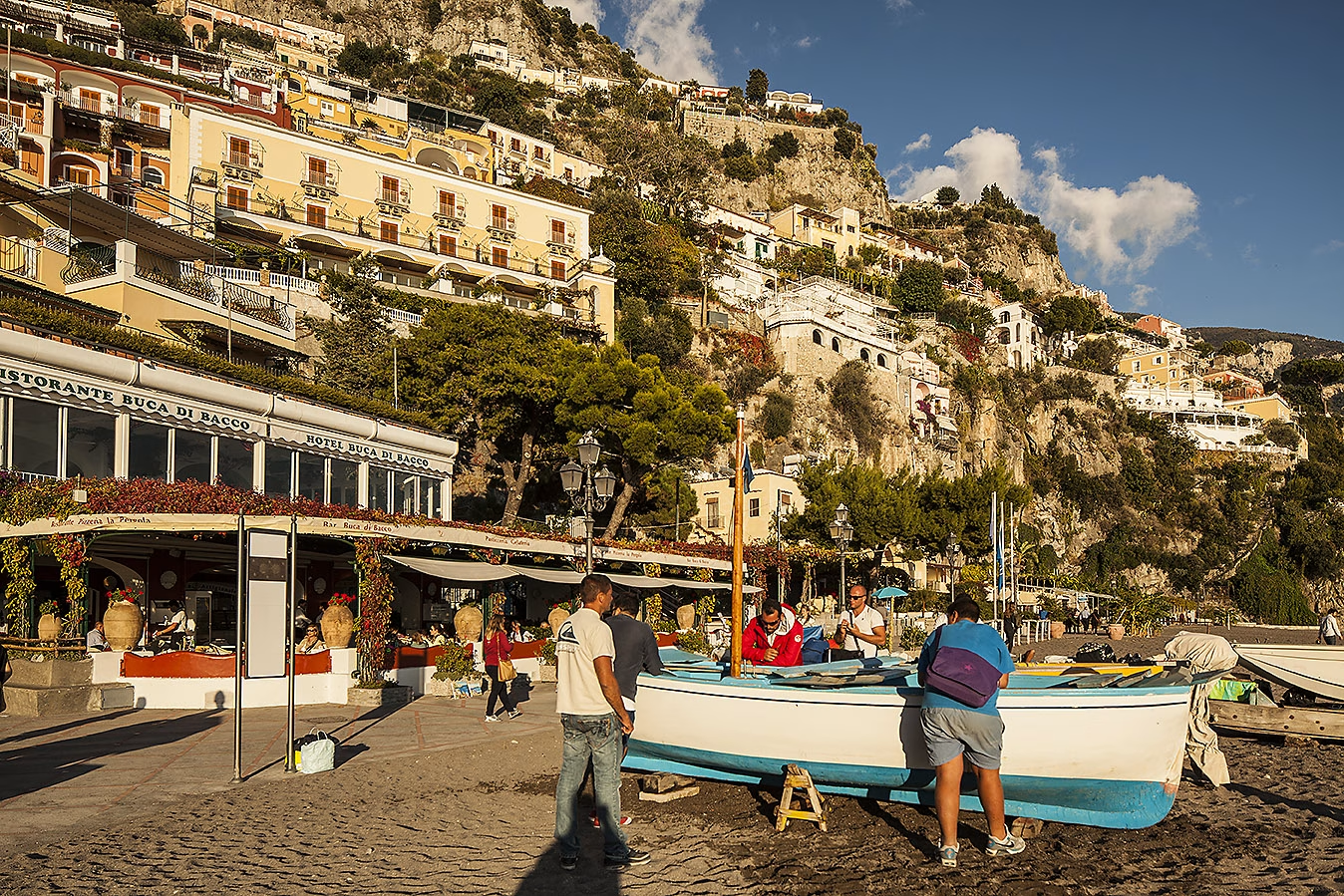
The church and the Roman residence beneath it
The church’s present form owes much to eighteenth-century enlargement, while its medieval Madonna and Child preserves an older devotional history. Beneath it, the Roman Archaeological Museum reveals a residence buried in the events of AD 79: coloured wall paintings and a mosaic floor place wealthy Roman life below the modern town. Check the museum’s guided-entry arrangements before visiting.
Lanes, steps and small discoveries
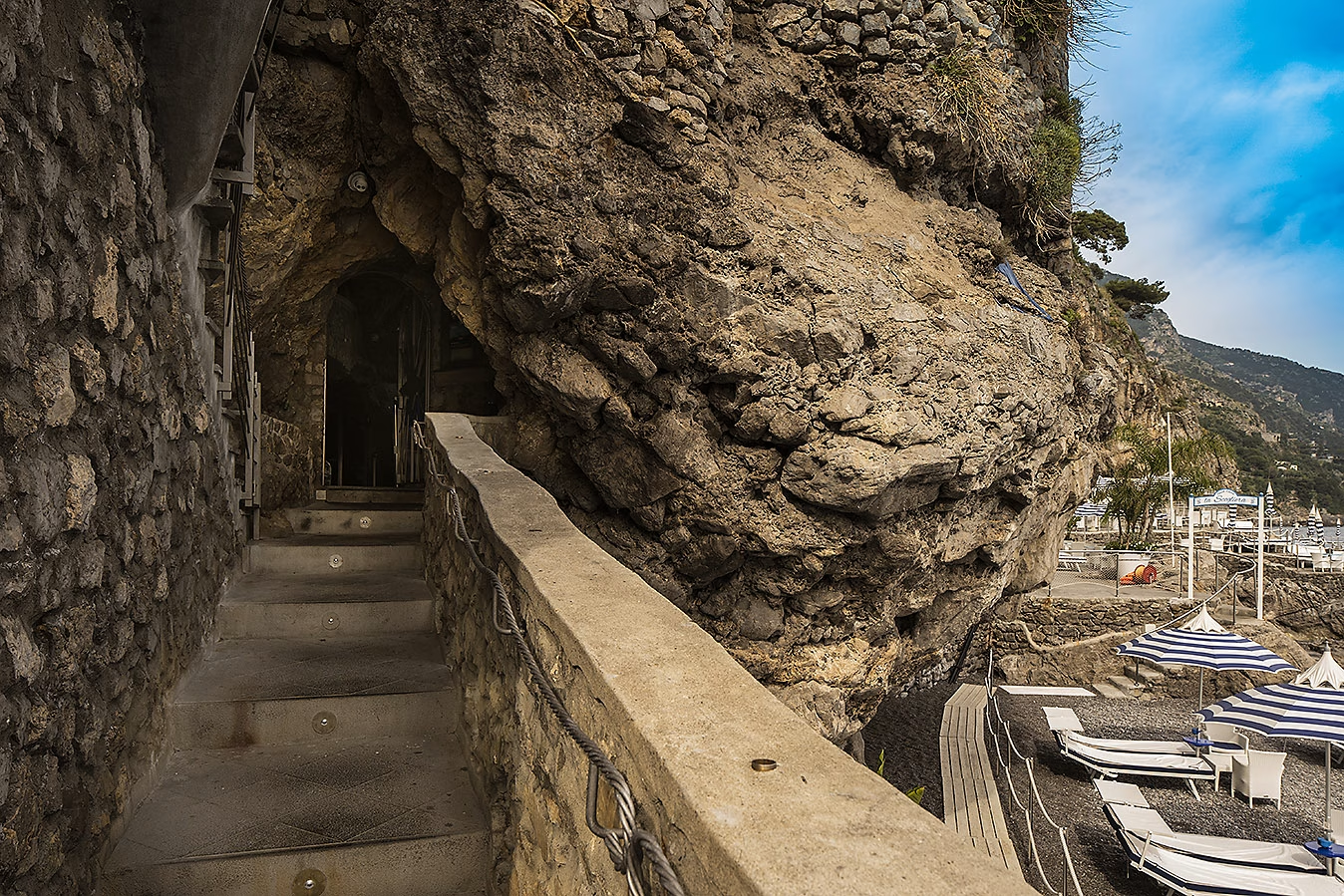
Leave the waterfront for the lanes around the church, then choose a manageable walk towards Fornillo or the streets above. Archways, tiled signs, doorways and terraces deserve as much attention as the panorama. A short distance can involve a substantial climb.
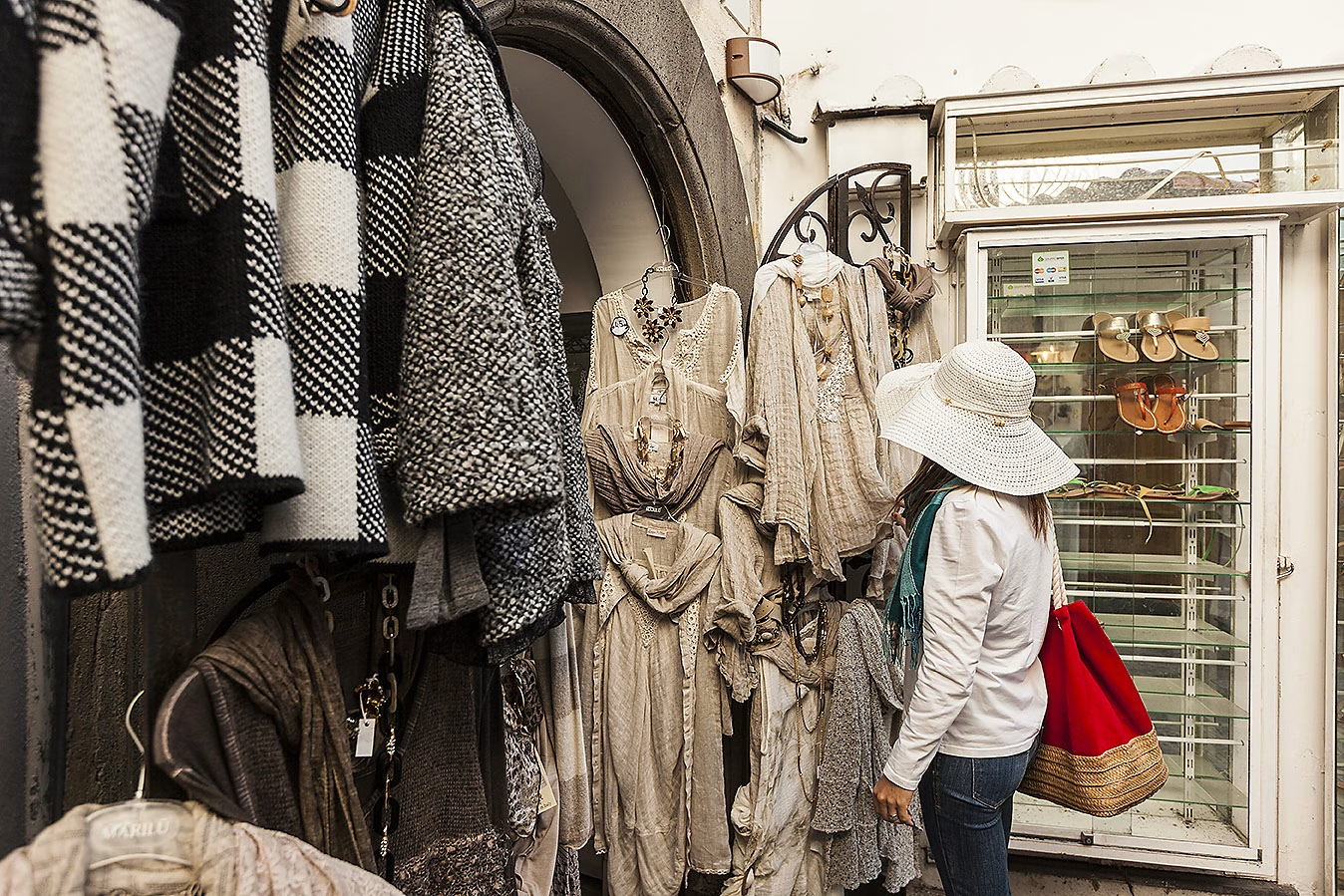
Clothes, sandals and the town’s changing tastes
Moda Positano developed in the 1950s from earlier textile work. Light clothing, lace and colour became part of the town’s reputation. In the shops, ask where a garment was made or watch a sandal being fitted to learn about the craft behind it.
Praiano: a headland with two different outlooks
Between Positano and Furore, Praiano spreads around Capo Sottile. The eastern side centres on San Luca and leads towards Marina di Praia. Vettica Maggiore, around San Gennaro, faces west towards Positano and the peninsula. This distinction shapes both the light and your choice of a hotel terrace.
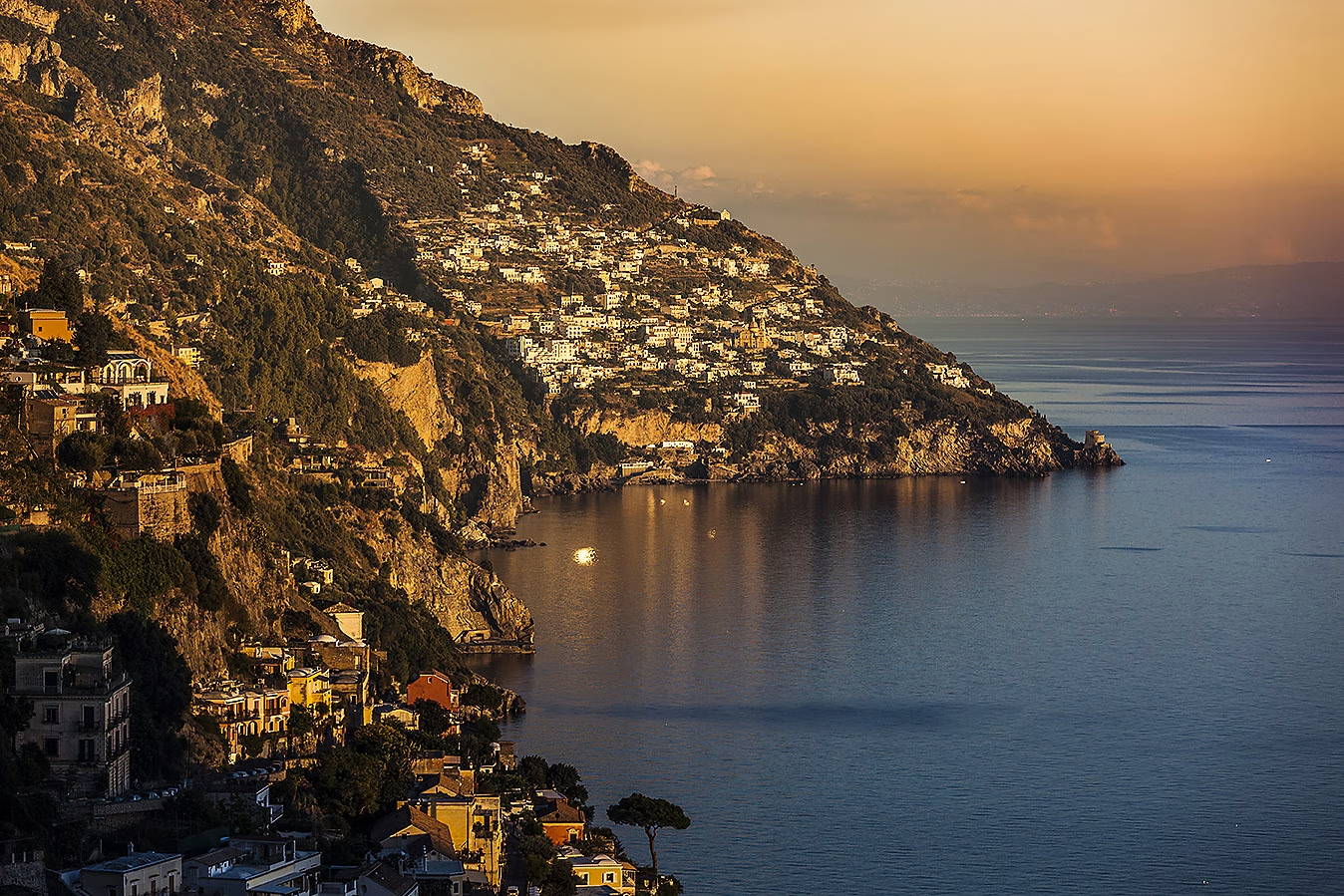
Seafaring, fishing, textile work and terraced farming all belong to Praiano’s history. Its churches give the scattered neighbourhoods recognisable centres. San Gennaro’s tiled dome is especially striking beside the coastal road; step into the square to appreciate its position above the sea.
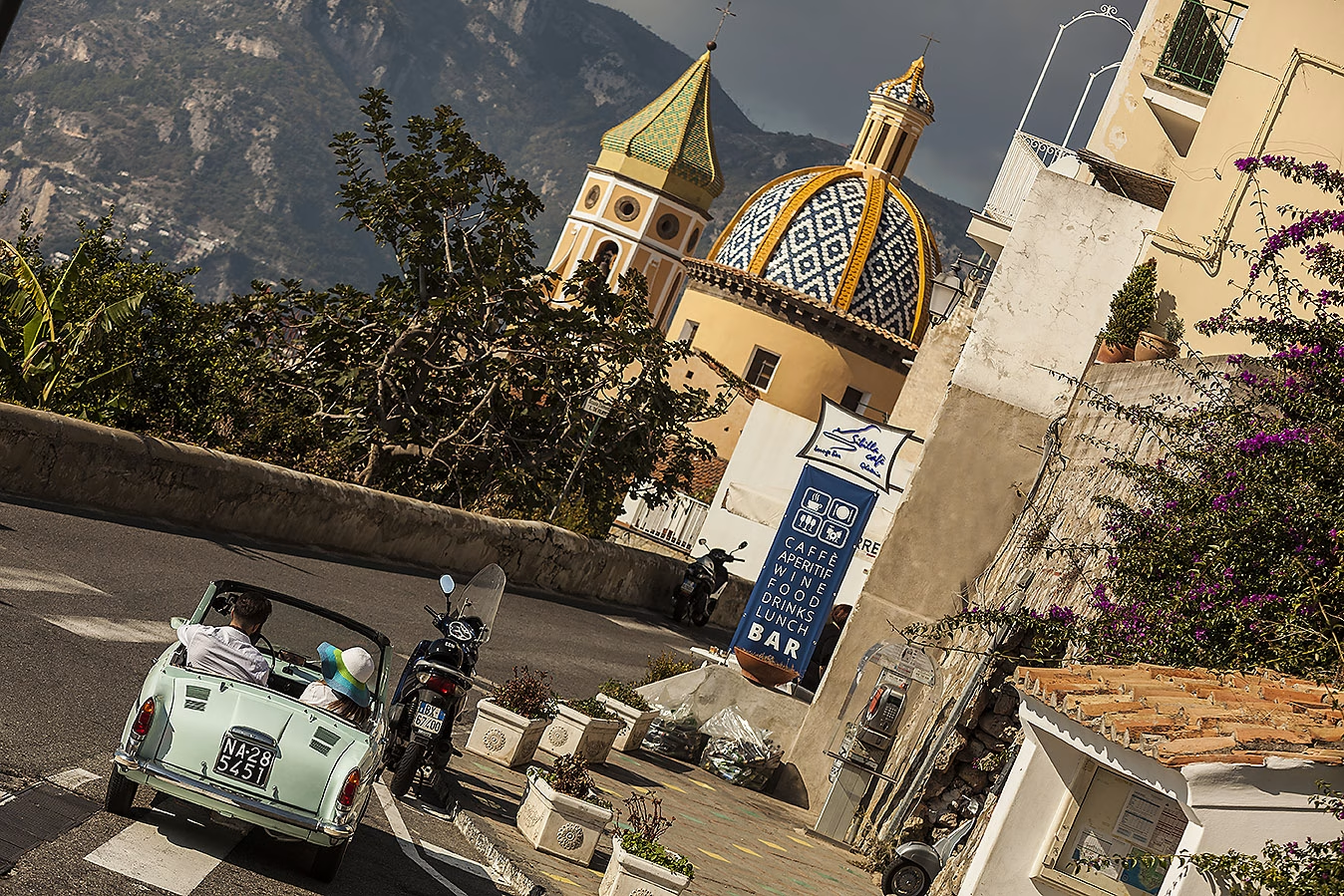
Leave an evening for the western side
Vettica’s western outlooks are the places to consider for sunset. A sea-view room on the other side of the headland offers a different experience. Choose the actual orientation, then leave time to sit and watch the light change.

Praiano also rewards a closer look along its footpaths. NaturArte’s ceramic and stone works bring local stories into the lanes. The Luminaria di San Domenico, rooted in the town’s Dominican tradition, fills terraces and Piazza San Gennaro with candles during its annual celebration. Check the programme if you want to include it.
Furore: the inlet and the village above
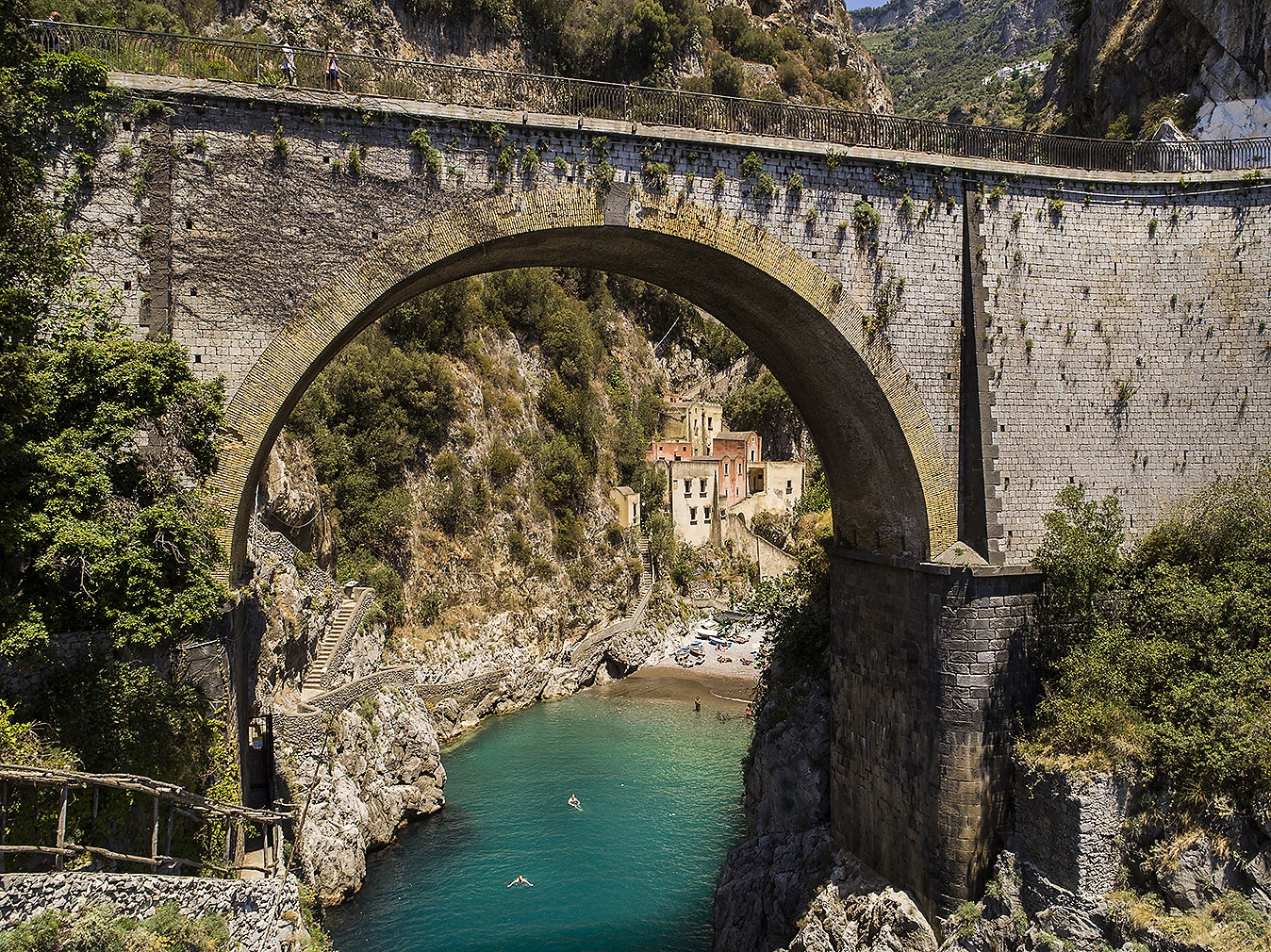
The bridge is the familiar image, but Furore extends far above it. The so-called fiord is a narrow coastal gorge shaped by the Schiato watercourse, rather than a glacier-cut fjord. Beneath the road, small buildings and steep steps show how even this confined space became a place to live and work.
The water once powered mills and paper-making, linking the gorge with the working history of Amalfi and its valleys. Look beyond the beach towards the buildings and rock walls: their relationship is what makes the inlet distinctive.
Vineyards, scattered houses and painted walls
Higher up, Furore becomes a dispersed settlement of houses, churches and cultivated terraces. Vineyards occupy narrow strips of ground above the sea, while murals add a more recent layer to the village. This agricultural landscape deserves a place in the visit alongside the inlet.
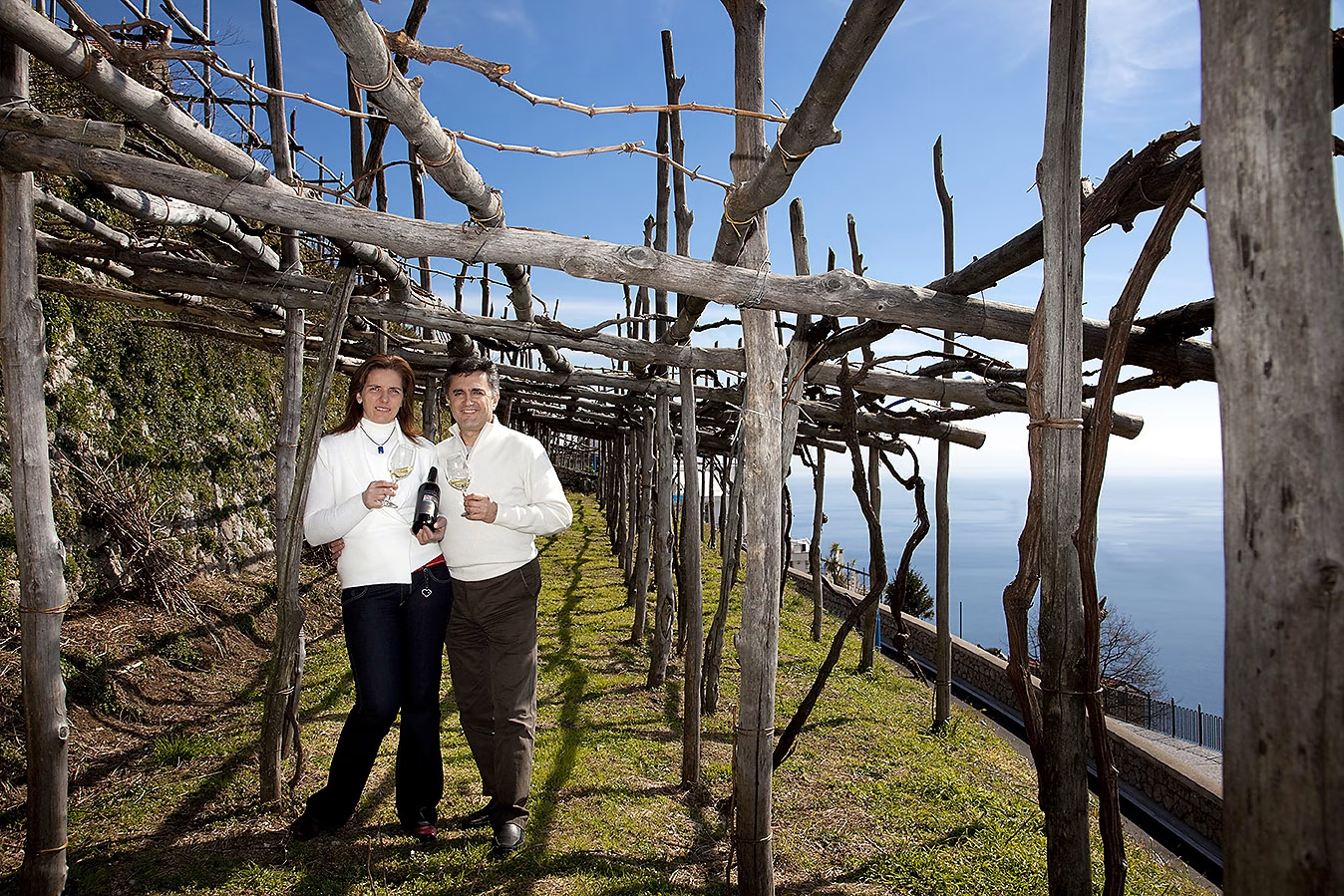
Marisa Cuomo: wine from Furore’s terraces
The vineyard pictured above belongs to Marisa Cuomo. The family business dates to 1942; in 1980, Andrea Ferraioli dedicated it to his wife Marisa as a wedding gift. Its pergola-trained vines occupy steep terraces, cultivated by hand, and the wines mature in a cellar excavated from the rock.
A wine to look for: Furore Bianco Fiorduva, made from the local Fenile, Ginestra and Ripoli grapes. The range also includes whites from Falanghina and Biancolella, and reds from Piedirosso and Aglianico.
Visiting: guided visits cover the production area, rock-cut cellar and a vineyard. Wine-and-food tastings are offered at the adjoining restaurant. Check Marisa Cuomo’s visits and tastings and reserve ahead.
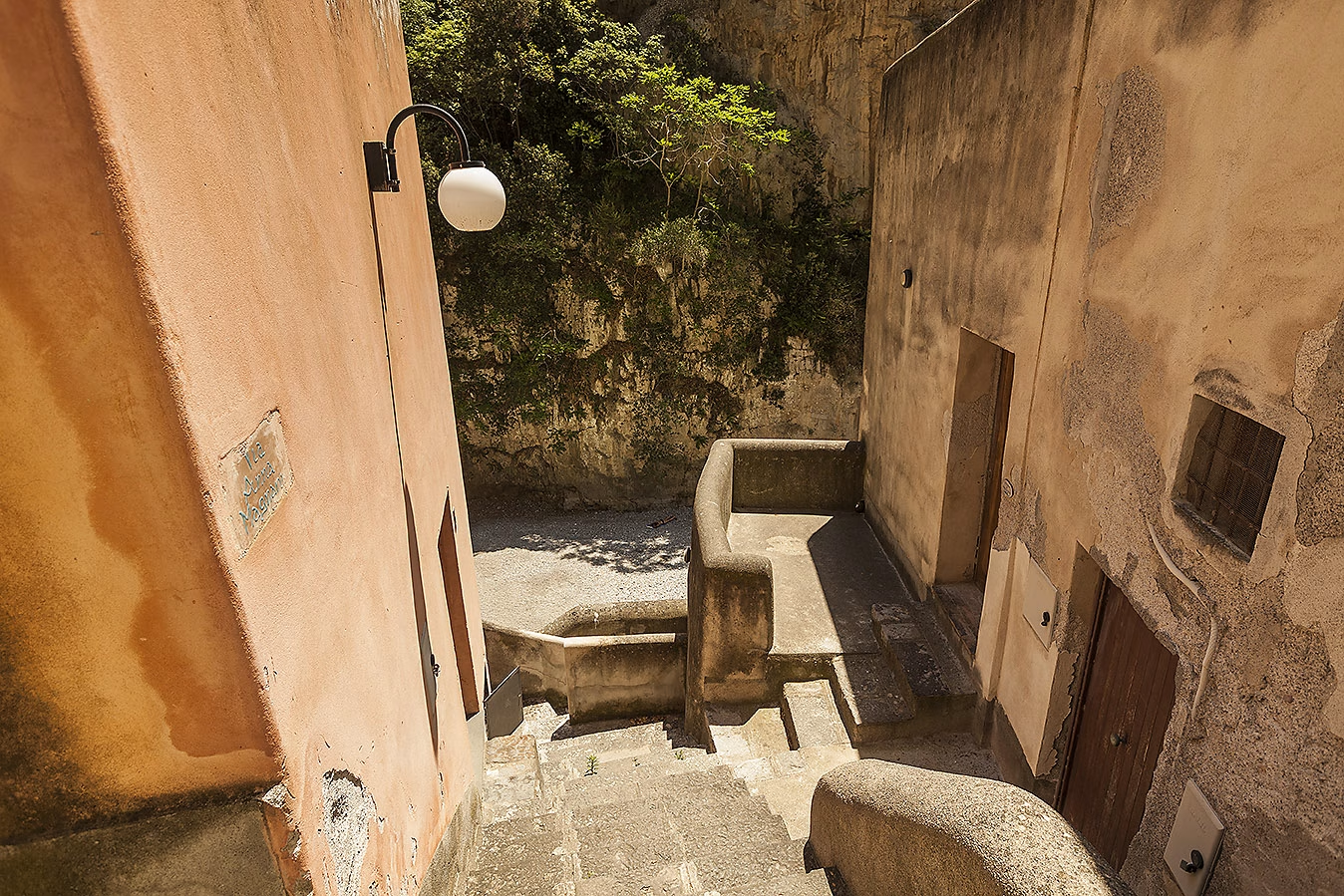
The twentieth century brought film-makers as well as visitors: Roberto Rossellini and Anna Magnani’s connection with Furore is part of its modern cultural history. The village above and the inlet below are separate stops; plan the journey between them rather than expecting a single compact centre.
A different view from the zipline
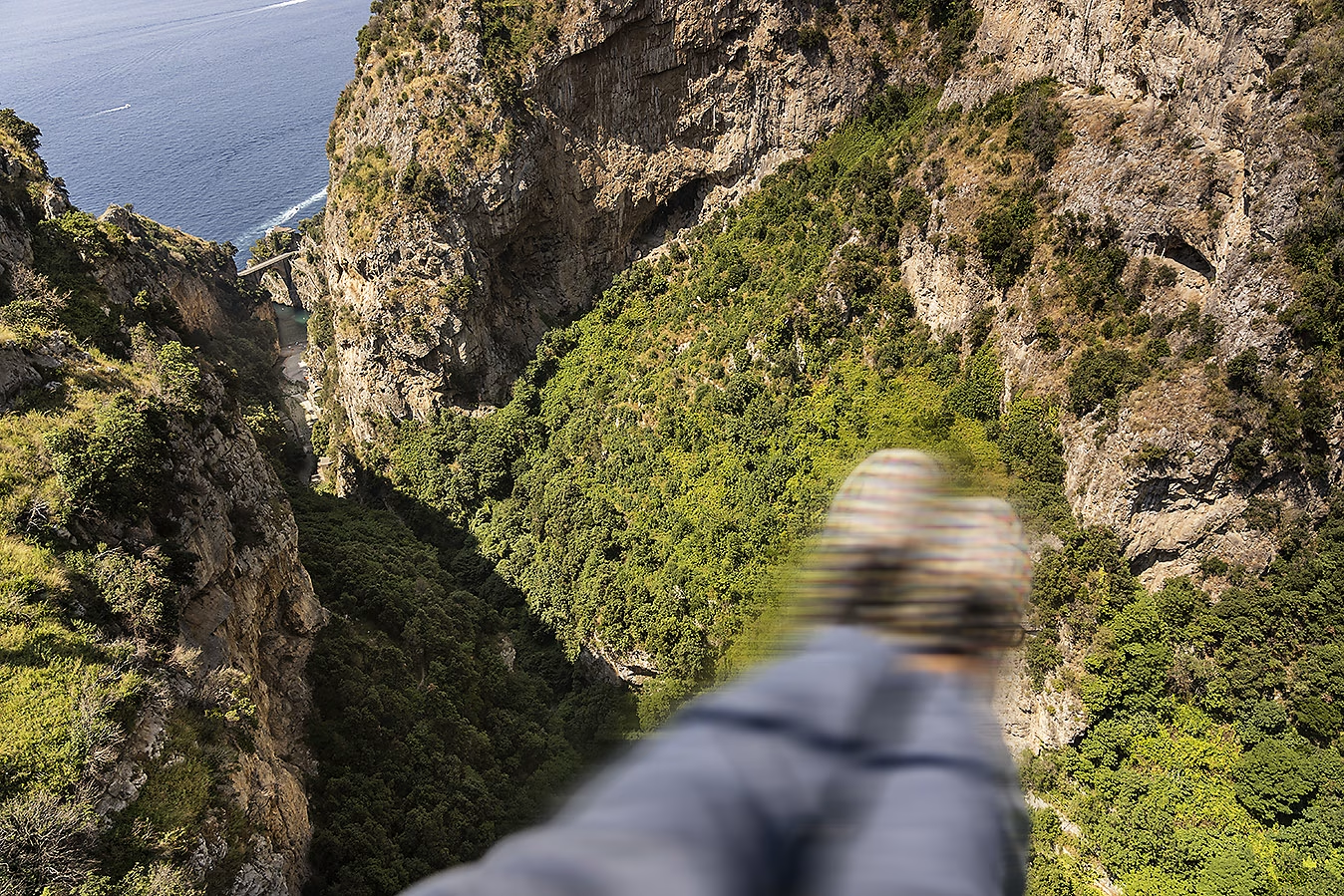
The Furore–Conca dei Marini zipline crosses high above the valley. It is a separate booked activity, not a descent into the inlet. Consult the operator for its calendar, meeting point and participation requirements.
For the inlet itself, check current access locally before planning a descent. Steps, summer crowds and the lack of convenient stopping space on the coastal road make it a visit to arrange, rather than an impromptu roadside pause.
Above the towns: the Path of the Gods
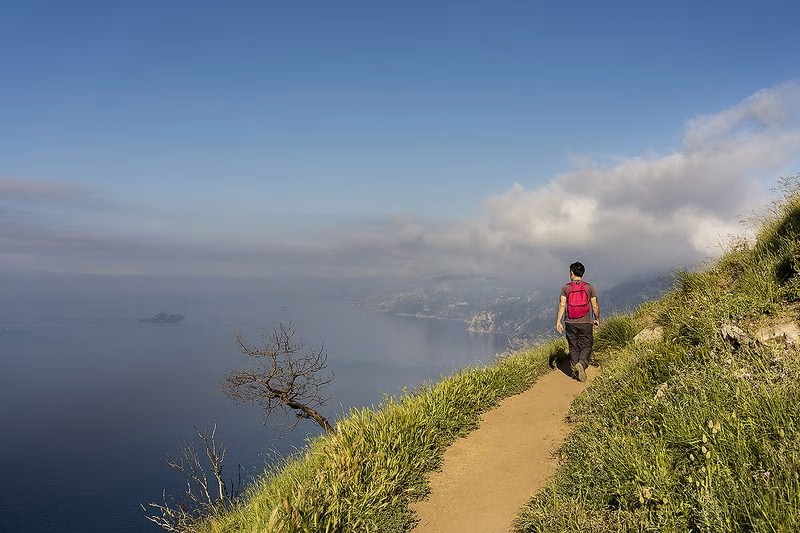
The upper slopes reveal another coast: paths, cultivated ledges and long views towards the peninsula. The usual Path of the Gods walk runs from Bomerano in Agerola to Nocelle, above Positano. The onward descent to Positano is a separate stage; starting from Praiano involves a substantial uphill approach.
Our Path of the Gods guide explains the route and transport choices. Set aside time for the walk, with town visits on another day.
Choose a few places and leave time between them
For Positano, combine the museum, church and lanes. For Praiano, choose a neighbourhood and an evening outlook. For Furore, decide whether your priority is the inlet, the upper village or the zipline. A boat trip offers another way to see the cliffs and settlements, but a view from the water does not include access to every landing place.
Spring and autumn often suit walking and exploring. Summer calls for fewer stops and more time; winter requires checking openings and sea connections. Use the current ferry information and our coastal driving advice to plan the practical details.
A coastal stay within your wider Italian journey
Villa Rosa in Positano offers a central base, private terraces and breakfast in the room, without a pool or restaurant. Hotel Margherita in Praiano brings a pool, terraces and help with local journeys. The room’s outlook and the daily climb matter as much as the town name.
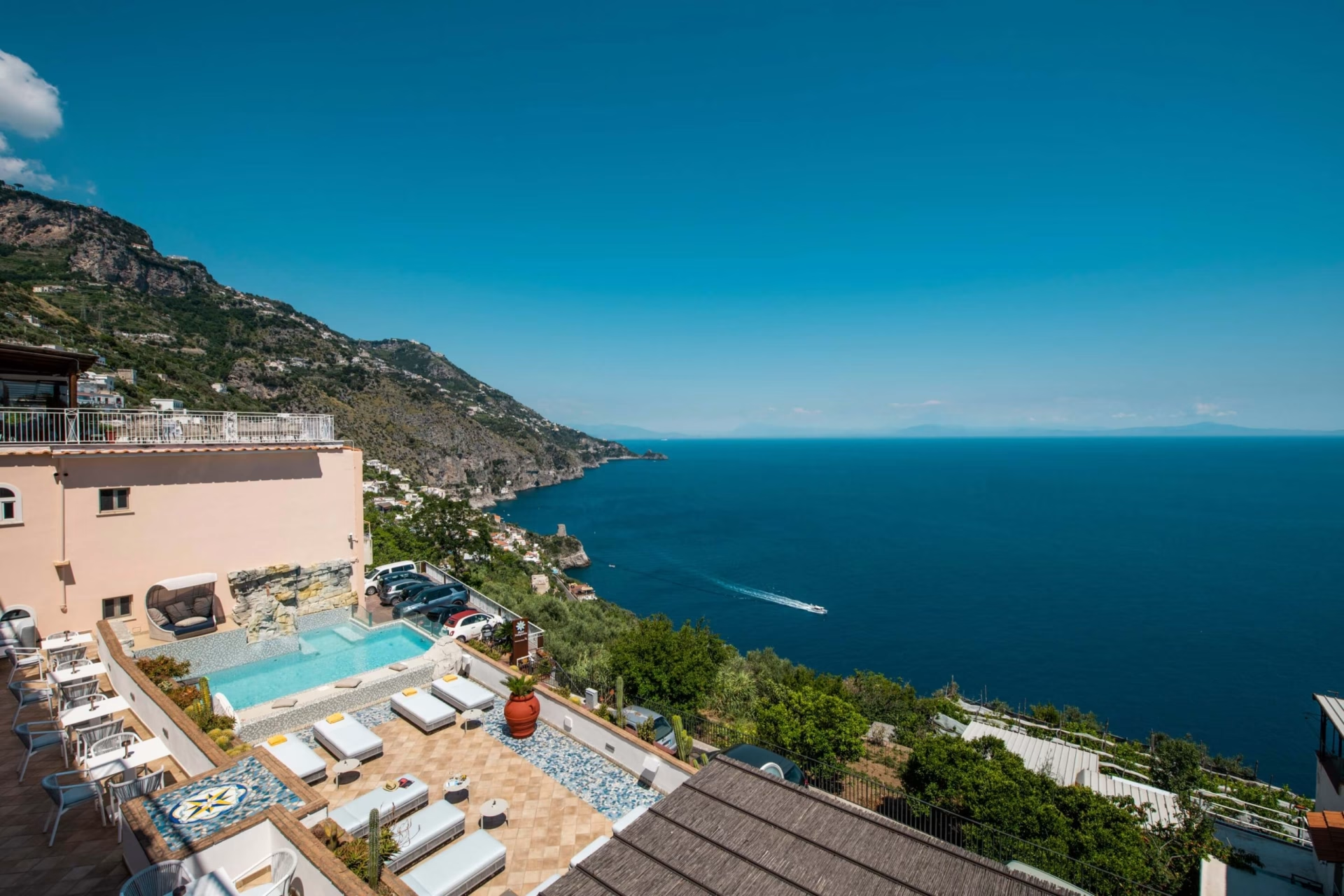
We can combine a coastal stay with Naples, Sorrento or a more leisurely stay on Ischia, or include it after Florence and Rome. Our Amalfi Coast holidays are starting points: tell us which views, places and experiences you want time for.



 Facebook
 WhatsApp channel