Ragusa: How to Explore Sicily’s Two-Level Baroque City
RAGUSA, SOUTH-EASTERN SICILY
One city, two historic centres — and more than a day trip
Ragusa unfolds across two levels. Ragusa Superiore occupies the higher plateau, while Ragusa Ibla follows the contours of the earlier settlement below. The streets and stairways between them open onto memorable views and reveal how the city rebuilt after the earthquake of 1693.
A carefully planned day is enough to understand this relationship, visit the principal churches and palaces, and enjoy lunch in Ibla. Staying for three or preferably four nights creates a different experience. Piazza Duomo, local restaurants, food shops, evening walks and quieter mornings become part of the holiday, while Marina di Ragusa, Donnafugata and the surrounding countryside can be explored without another hotel change.
VISITING FOR THE DAY
Allow one full day. Begin in Ragusa Superiore, descend towards Ibla and finish near Giardino Ibleo, avoiding an unnecessary uphill return.
STAYING IN RAGUSA
Three nights allow time for the city and one excursion. Four nights give more room between the historic city, local dining, the coast and one countryside excursion.
BEFORE YOU CHOOSE
Ragusa involves slopes, cobbled streets and long stairways. A central Ibla hotel reduces daily logistics, but it does not remove the city’s uneven terrain.
THE STORY THAT EXPLAINS THE CITY
Why Ragusa became two cities after 1693
The earthquake of 1693 did not simply destroy Ragusa. It forced a decision about where and how the city should begin again — and the disagreement that followed produced the Ragusa we see today.
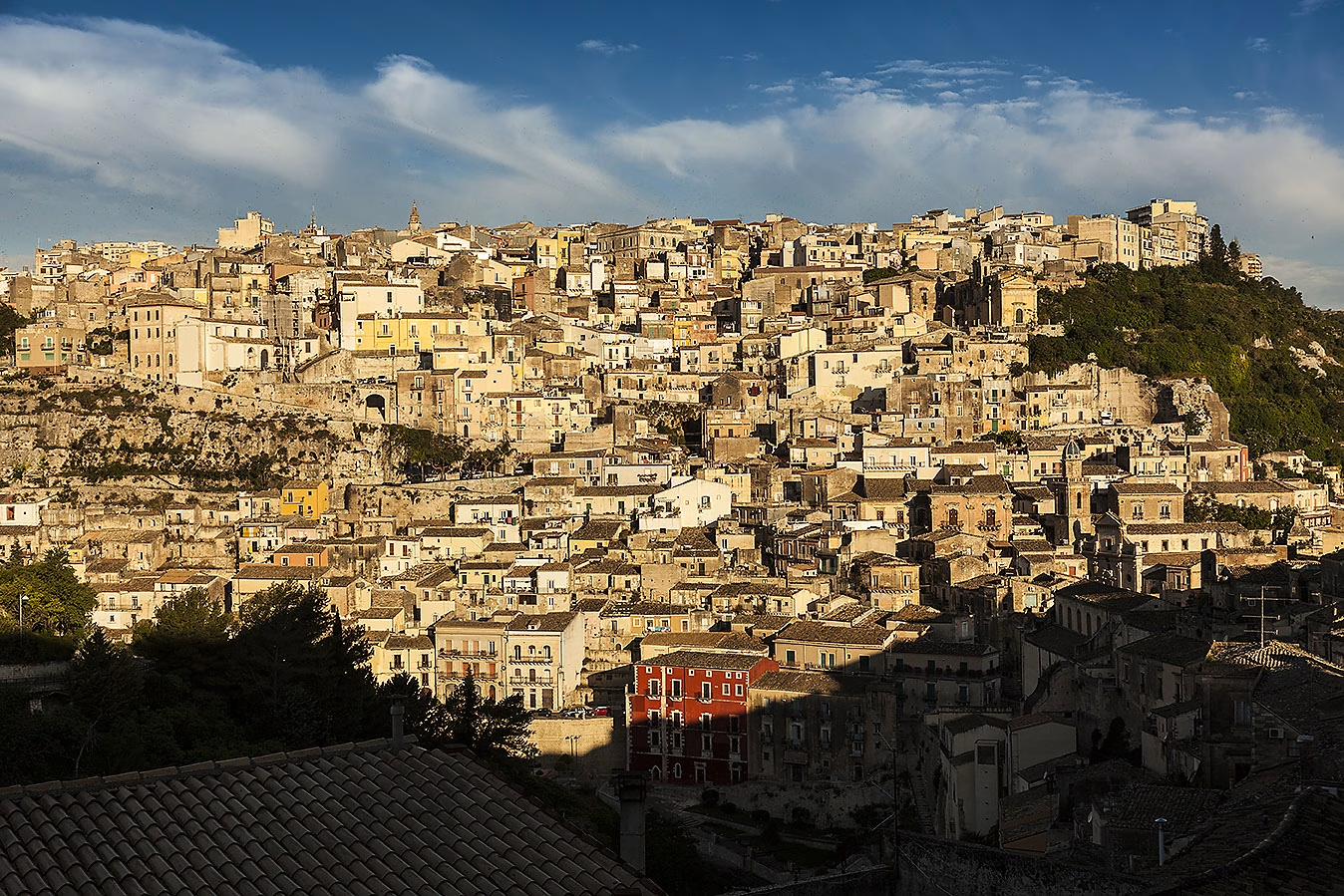
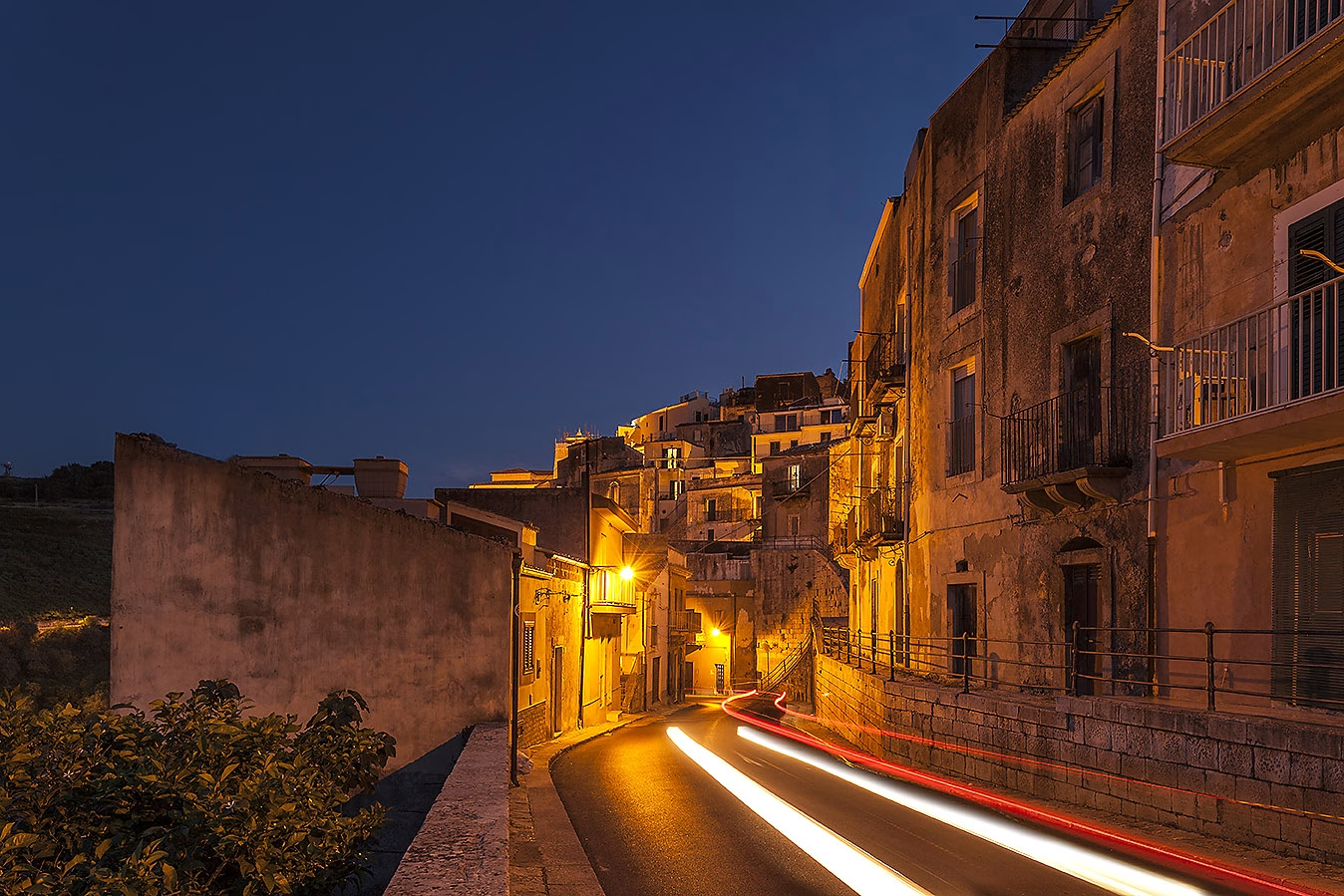
Ragusa Ibla retains the compact outline of the older settlement, with lanes and buildings following the steep terrain.
Ragusa’s earlier town occupied the rocky spur now known as Ibla. After the disaster, part of the population rebuilt among the surviving medieval streets, while another part established a new town on the higher plateau. Ragusa Superiore developed with a more ordered street plan and substantial new churches and palaces; Ibla kept its irregular urban footprint but filled it with inventive late-Baroque architecture.
01
Ragusa Superiore
The planned upper town, shaped by straighter streets, broader spaces and the Cathedral of San Giovanni Battista. It explains the civic response to the earthquake and should not be omitted from a first visit.
02
Ragusa Ibla
The older settlement rebuilt on its pre-earthquake site. Medieval lanes, steep levels and surviving fragments sit alongside the Duomo di San Giorgio and a remarkable concentration of Baroque churches and palaces.
The two communities remained administratively separate until 1926. Their reunification did not erase the contrast: the change in street pattern, terrain and architectural rhythm is still immediately visible when walking from one to the other.
WHY UNESCO MATTERS HERE
Ragusa is one of the eight Late Baroque Towns of the Val di Noto recognised by UNESCO. The designation is not for one cathedral or square alone: it recognises the wider rebuilding of south-eastern Sicily after 1693 and the exceptional architectural and town-planning response that followed.
THE UPPER CITY
Begin in Ragusa Superiore, where the new city took shape
Many visitors hurry directly to Ibla. Starting in Ragusa Superiore gives the day a much clearer narrative: first the ordered post-earthquake city, then the viewpoints and stairways that lead back towards the older town.
The Cathedral of San Giovanni Battista anchors the broad streets and civic life of Ragusa Superiore.
The Cathedral of San Giovanni Battista
The city’s cathedral is the principal monument of Ragusa Superiore. Its broad façade, strong columns and elevated position belong to the ambitious rebuilding that followed the earthquake. The surrounding Piazza San Giovanni is also a useful place to begin: it provides cafés, everyday city life and a marked contrast with Ibla’s tighter, more intricate lanes.
Give the cathedral enough time to look beyond the façade. The scale of the interior and the relationship between church, square and straight streets reveal the priorities of the new town: order, visibility and confidence after catastrophe.
A SENSIBLE START
Piazza San GiovanniBegin with the cathedral and a coffee before the longer walk.
Corso Italia and the upper streetsNotice the broader post-earthquake plan rather than treating this section only as a route to Ibla.
Santa Maria delle ScaleReach the terrace above the steps for the first complete view across the older city.
ARRIVING AND GETTING BACK
For a privately guided day, ask to be dropped in Ragusa Superiore and collected at the eastern end of Ibla. If travelling independently, decide how you will return to your car before beginning the descent; reversing the entire walk in the afternoon heat is rarely the best use of the day.
THE WALK BETWEEN THE TWO CITIES
Walk down to Ragusa Ibla
From Santa Maria delle Scale, Ragusa stops feeling like two separate names on a map. The steps reveal the ravine, the rooftops of Ibla and the sequence of churches and palaces built into the changing levels between the upper and lower towns.
Descending on foot makes the city’s terrain and post-earthquake history much easier to understand.
01
Santa Maria delle Scale
The terrace provides the classic view over Ibla, but the church also carries an important fragment of the earlier city. Parts of its pre-earthquake fabric survived, allowing Gothic and Renaissance details to sit beside later rebuilding.
02
Santa Maria dell’Itria
Its vividly tiled bell tower rises above the compact streets below. The church is an important visual marker on the route and one of the clearest signs that sacred buildings were designed to be read across Ragusa’s difficult terrain.
03
Palazzo Cosentini
Pause beneath the corner balconies. Their carved corbels turn stone supports into expressive faces and figures — a practical architectural element made theatrical by Ragusa’s Baroque craftsmen.
04
Piazza della Repubblica
The Church of the Anime Sante del Purgatorio marks the transition into Ibla. From here, the route begins to level out before rising again towards Piazza Duomo.
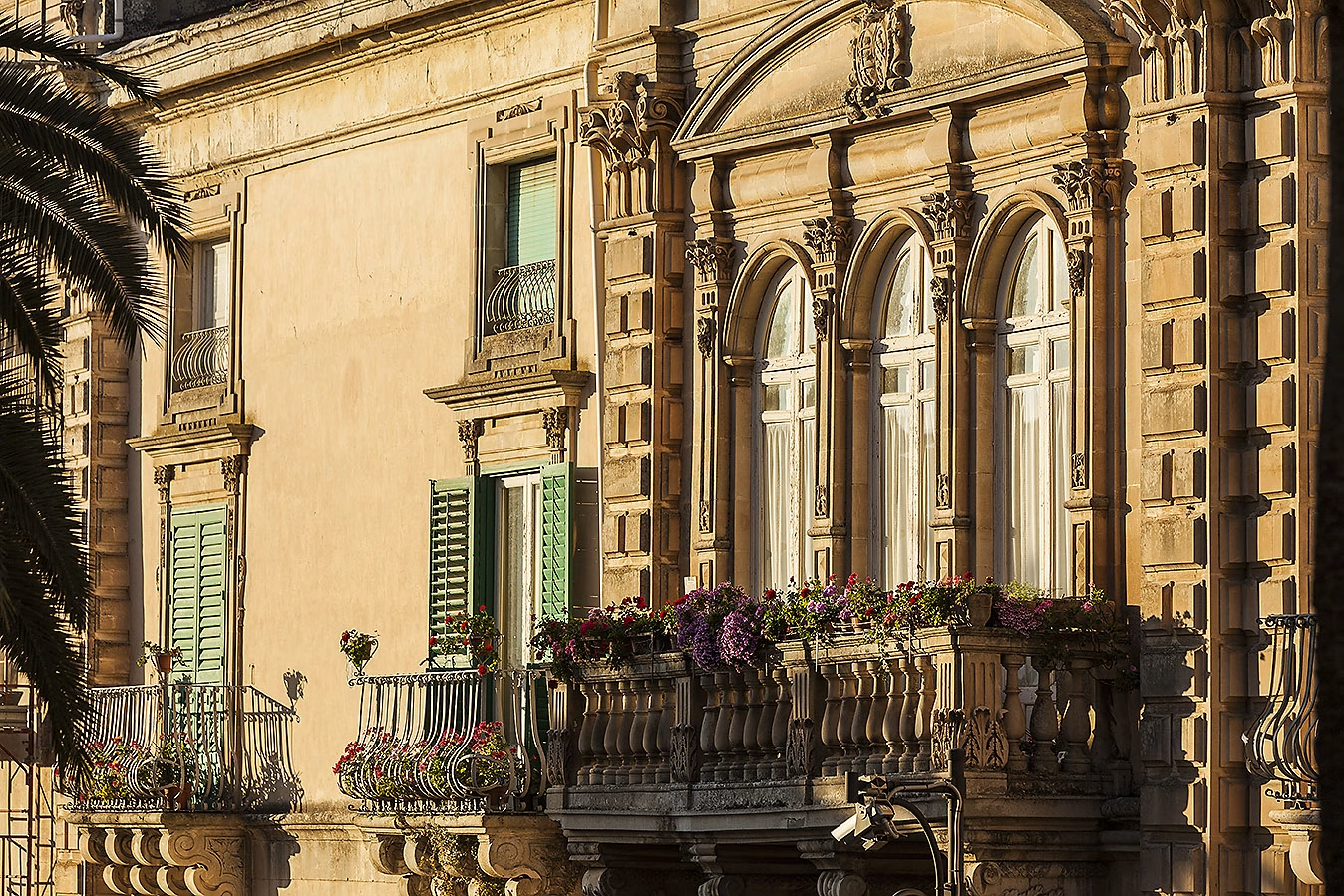
In Ragusa, the useful structure beneath a balcony becomes sculpture, satire and display.
PACE THE WALK
The route is not technically difficult, but it includes many steps and exposed sections. In warmer months, begin in the morning, carry water and allow time for pauses. Travellers with limited mobility can still understand both parts of the city by using a driver or local transport between selected viewpoints.
THE OLDER CITY REBUILT
What not to miss in Ragusa Ibla
Ragusa Ibla is compact enough to explore on foot, with squares, palaces, private clubs, churches, lanes and gardens set within the older street plan. Allow time to look up at the carved balconies and linger in Piazza Duomo.
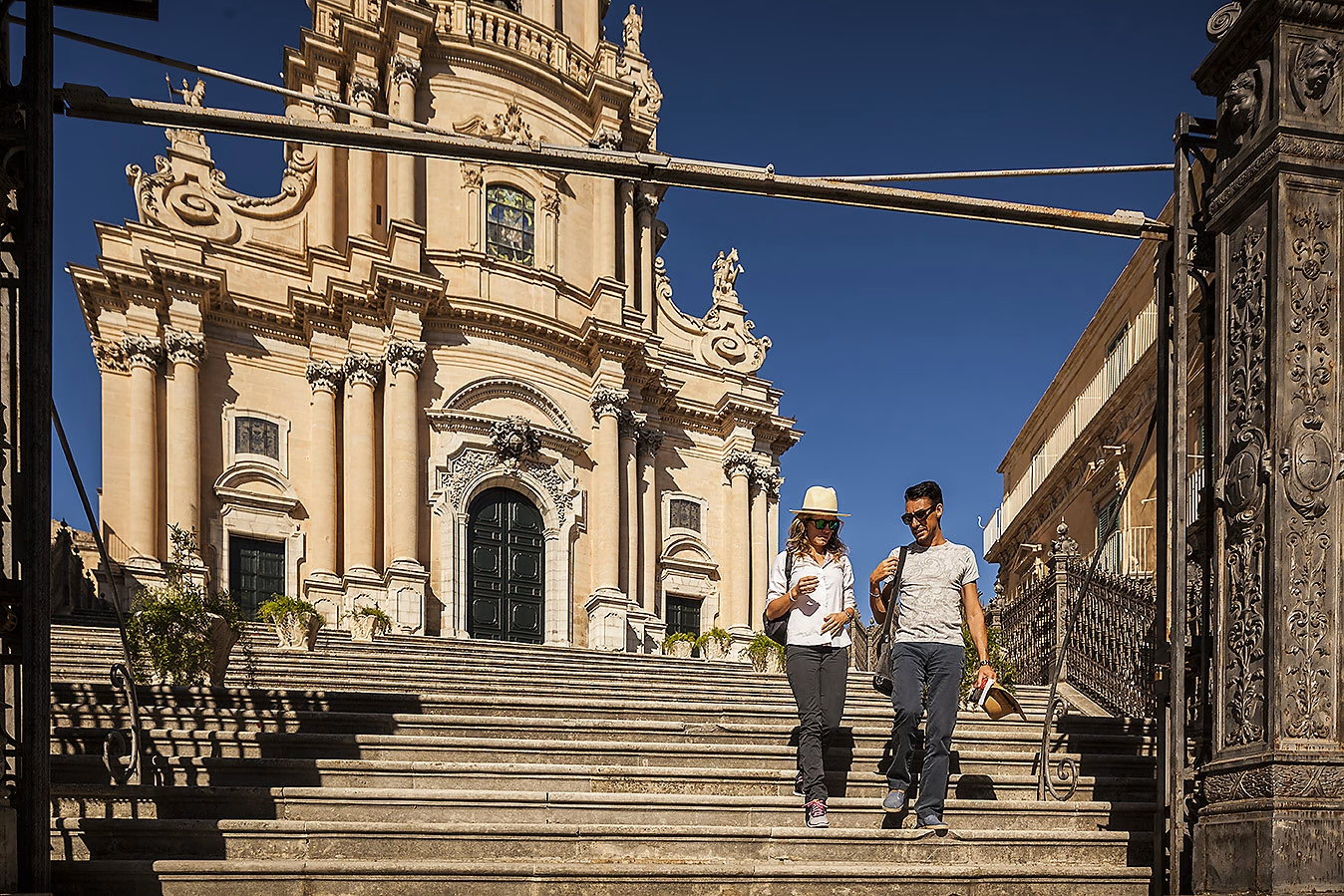
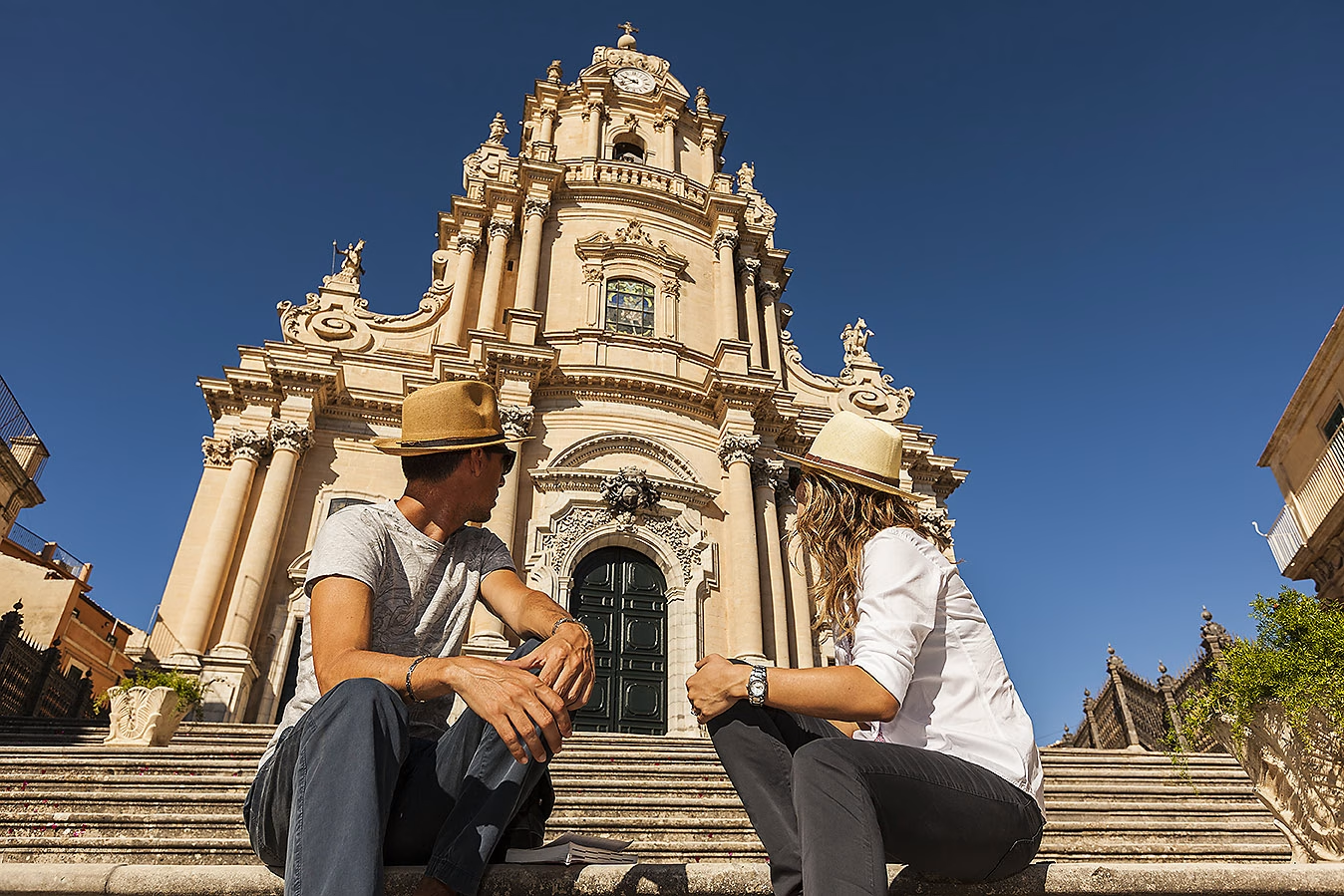
The Duomo di San Giorgio rises above its sloping square rather than sitting on a conventional level piazza.
Duomo di San Giorgio
Rosario Gagliardi’s great church is the architectural centre of Ibla. Its convex steps, tall central façade and bell tower create a deliberately theatrical approach, while the later dome remains visible from viewpoints across the city. Enter if open, but first walk to different points in the square to understand how carefully the façade controls the view.
Palazzo La Rocca
On Via Capitano Bocchieri, close to the Duomo, the palace is best known from the street for its sequence of balconies and expressive carved supports. Each is different. This is one of the clearest places to look closely at the wit and craftsmanship of Ragusan Baroque rather than only its monumental scale.
Circolo di Conversazione
This elegant nineteenth-century club stands close to Piazza Duomo and is a building in its own right, distinct from the nearby Palazzo Arezzo Trifiletti. Its reception rooms recall the social world of Ragusa’s aristocratic families and later became familiar to viewers of Inspector Montalbano.
Corso XXV Aprile and San Giuseppe
Continue east along Ibla’s principal walking street. The Church of San Giuseppe, traditionally associated with Gagliardi’s circle, repeats the vertical energy of San Giorgio on a smaller scale and leads naturally towards the garden end of town.
Giardino Ibleo
The public garden provides shade, space and a welcome change after the dense stone streets. Its terraces look across the Irminio valley, while small churches within and beside the garden make it more than a scenic final stop.
Portale di San Giorgio
Near the garden stands the Gothic-Catalan portal of the earlier Church of San Giorgio. It is the most visible surviving fragment of the medieval church destroyed by the earthquake and a useful reminder that Ibla’s history did not begin with the Baroque rebuilding.
Giardino Ibleo offers shade and open views at the eastern end of the historic town.
IF TIME IS LIMITED
With limited time, concentrate on San Giorgio, Palazzo La Rocca’s exterior, the Circolo di Conversazione if accessible, Corso XXV Aprile, Giardino Ibleo and the medieval portal. Enjoy the streets and views between them.
WHEN RAGUSA BECOMES A BASE
Dining, food shopping and evenings in Ragusa Ibla
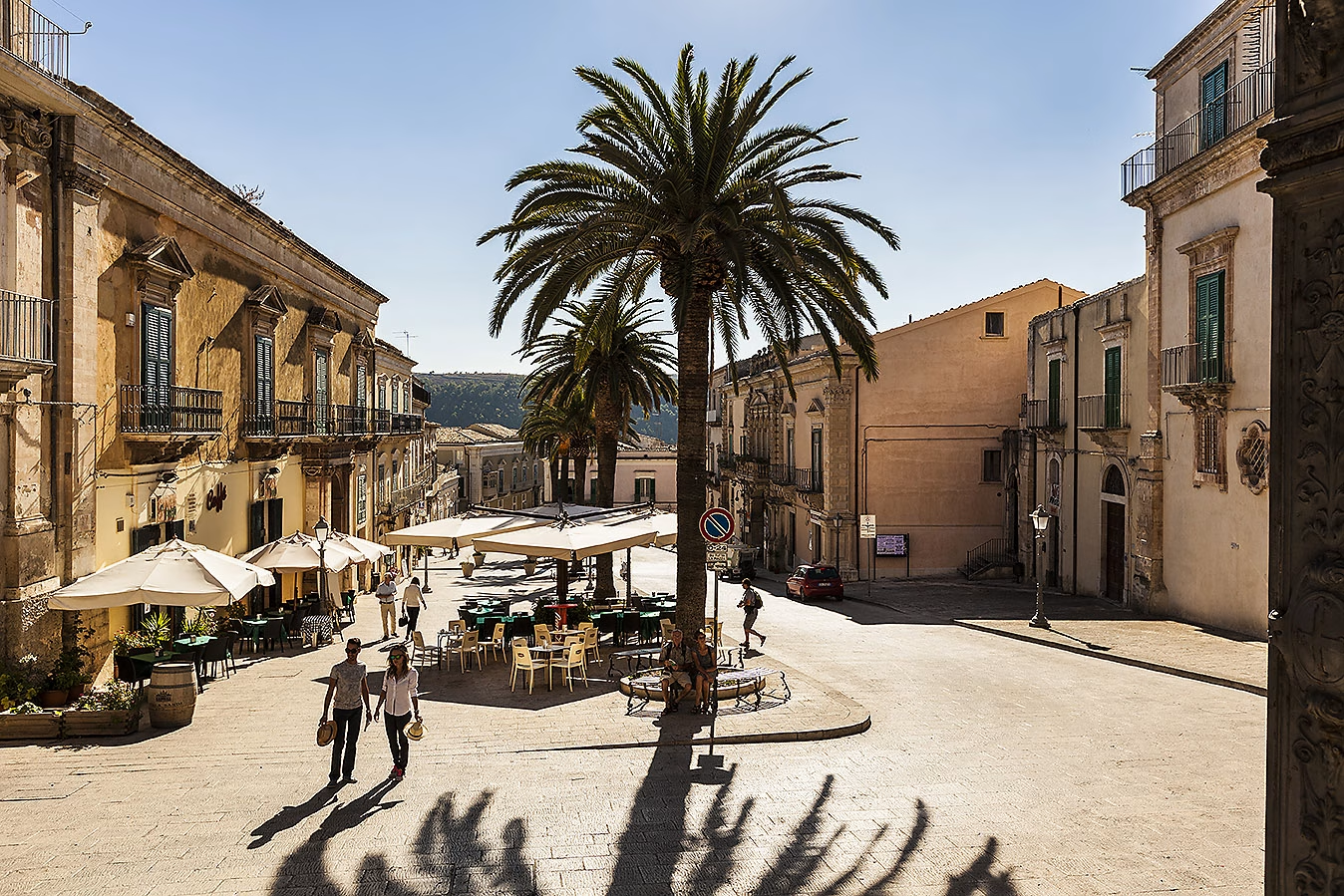
Stay overnight to enjoy Ibla as the day visitors leave: an aperitivo, dinner and an evening walk through the quietening streets. Local food traditions and the surrounding Val di Noto add variety to three or four nights here.
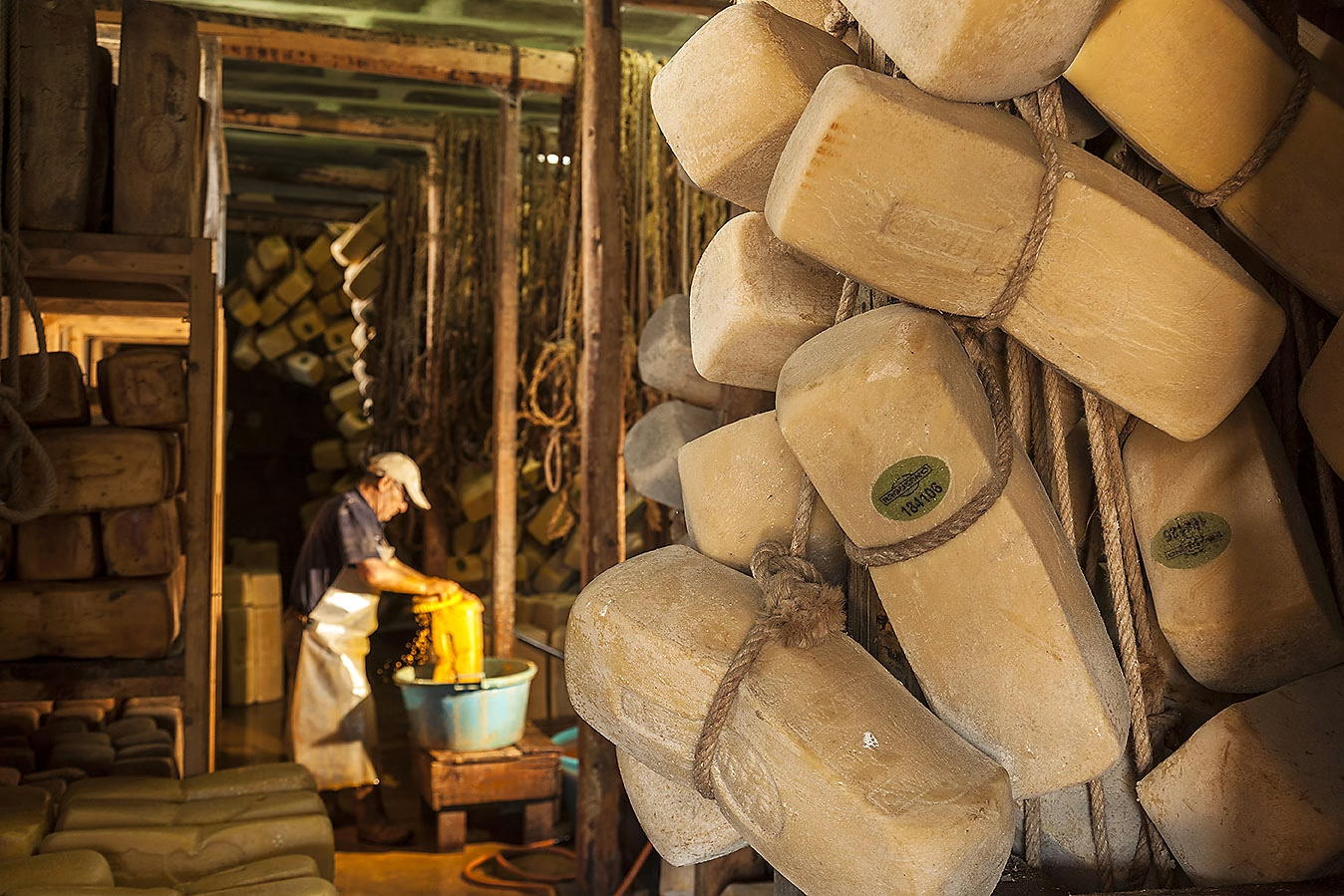
Ragusa’s food shops connect the city with the farms, dairies, vineyards and olive groves of the Hyblaean countryside.
What to taste
Scacce ragusane
Thin folded dough filled in different ways, often with tomato, onion, ricotta, vegetables or local cheese. They work well for a simple lunch or something to take on a day out.
Ragusano DOP
A firm stretched-curd cow’s-milk cheese made in the Hyblaean area. Younger examples are gentler; longer ageing produces a more decisive, savoury flavour.
Cavati and country cooking
Hand-shaped pasta, pork, sausage, seasonal vegetables and ricotta reflect Ragusa’s inland farming traditions as clearly as seafood represents the coast.
Local wine and olive oil
Look for Cerasuolo di Vittoria DOCG, Frappato and Nero d’Avola, together with oils, preserves and honeys produced across the wider Ragusa countryside.
Ciccio Sultano’s two-Michelin-starred restaurant is the city’s clearest special-occasion choice. The cooking interprets Sicily through its history, ingredients and successive cultural influences. Reserve well ahead and allow the evening to be the main event rather than placing it after a long excursion.
A one-Michelin-starred restaurant set in atmospheric old rooms carved into the limestone below Ibla. Vincenzo Candiano’s cooking is contemporary but strongly connected to the produce of the Hyblaean land and sea.
Part restaurant, part bakery, café and food shop, I Banchi is useful when you want serious ingredients without committing to a long tasting menu. It works for lunch, dinner, bread and pastries, or for buying well-chosen Sicilian products.
A long-established Ibla trattoria centred on seasonal produce, local farms, cured meats and cheeses. Choose it for a more straightforward expression of Ragusan cooking and a relaxed evening.
Near Giardino Ibleo, Cantunèra specialises in arancine with both classic and less conventional fillings. It is a useful stop when a full restaurant lunch would interrupt the day’s sightseeing.
WHAT IS WORTH BUYING
Food is the most convincing purchase: Ragusano DOP, local wine, olive oil, preserves, biscuits and carefully packed scacce for the day. I Banchi includes a useful food shop, while smaller delis around Ibla offer products from local farms. For craftsmanship, look for work connected to the painted Sicilian cart tradition; the Cinabro Carrettieri workshop preserves this highly distinctive Ragusan skill.
Ask about locally made food and craft products. If you are flying home, ask ExpertoItaly or the shop to help distinguish products that travel easily from fresh cheese, oil or wine that may require more careful packing.
DINING RHYTHM
On a four-night stay, plan one principal dinner, one traditional meal and one flexible evening left open for an aperitivo and a simpler supper. This gives the food scene variety without turning every day into a sequence of reservations. The starred restaurants require advance booking; weekend tables elsewhere are also worth arranging before arrival.
COAST, COUNTRYSIDE AND RAGUSA ON SCREEN
What to add beyond the historic city
Ragusa works as a base because the surrounding days are genuinely different from one another. The coast provides an uncomplicated beach day, Donnafugata introduces the aristocratic countryside, and the locations used for Inspector Montalbano connect places that many travellers already recognise without yet knowing their real names.
A DAY AT THE SEA
Marina di Ragusa
Marina di Ragusa lies about 25 kilometres from the historic city and should be treated as a separate coastal outing, not as though the beach sat below Ibla. Its broad golden-sand shore, promenade, cafés and restaurants make it easy to alternate sightseeing with a day that requires very little planning once transport has been arranged.
There are free stretches of sand as well as equipped stabilimenti balneari providing sunbeds, umbrellas, changing facilities, bars and restaurants. The atmosphere is livelier in July and August; late spring, June and September usually provide the more balanced combination of beach life and time in the Baroque towns.
A long-established beach club with a strong restaurant element, useful when a proper seafood lunch is as important as the sunbed.
WHERE WAS INSPECTOR MONTALBANO FILMED?
Ragusa Ibla, Punta Secca and television’s fictional Vigàta
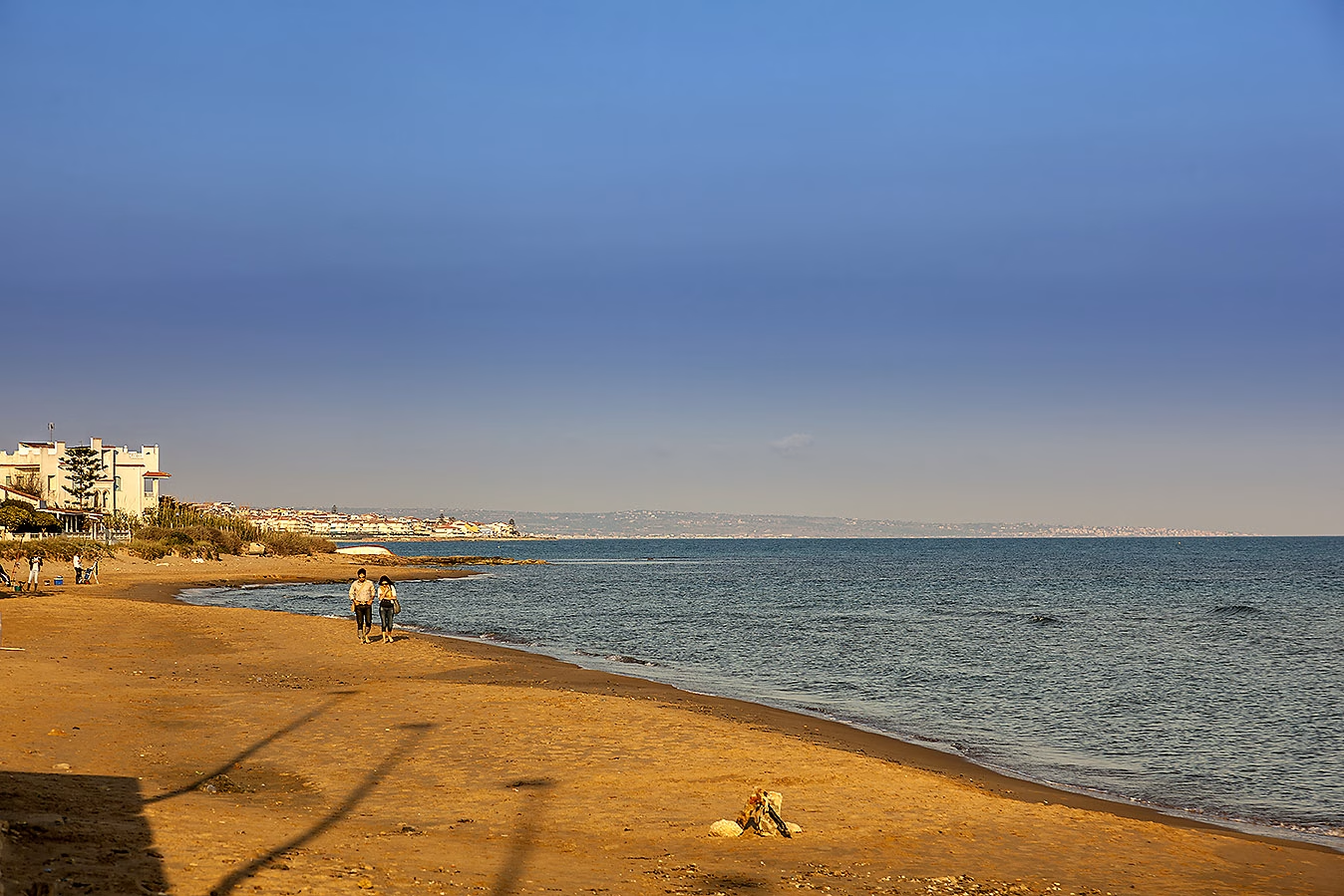
Punta Secca became Marinella on screen; Montalbano’s house stands directly beside the sandy beach.
Andrea Camilleri’s Vigàta is fictional, but the long-running television adaptation of his Inspector Montalbano novels gave it a recognisable geography assembled from real places across the province of Ragusa. The series helped introduce south-eastern Sicily’s Baroque towns and coastline to an international audience.
Ragusa Ibla’s Piazza Duomo, lanes and Circolo di Conversazione appear repeatedly. Scicli supplied the television police station and other civic locations, while Castello di Donnafugata became the home of Balduccio Sinagra. On the coast, Punta Secca stood in for Marinella, with Montalbano’s house immediately beside the beach shown above.
A Montalbano day works best when it follows the real landscape rather than attempting to reproduce every scene: Ragusa Ibla for the Baroque city, Scicli for Vigàta’s municipal buildings, and Punta Secca for the seafront house. The official Visit Sicily Montalbano itinerary provides further location context.
COUNTRYSIDE EXCURSION
Castello di Donnafugata
Donnafugata is a nineteenth-century aristocratic residence developed around an older country estate. Its ornate façade, furnished rooms, park, stone maze and costume collection provide a useful counterpoint to Ragusa’s churches and urban palaces.
Allow a substantial half-day rather than treating the castle as a quick photograph. It combines naturally with the coast or Punta Secca when travelling by car or private driver. Opening patterns can vary by season and for events, so ExpertoItaly will place it within the day only after checking the operating calendar for the travel dates.
HOW TO COMBINE THE DAY
Choose either a proper beach day at Marina di Ragusa or a touring day linking Donnafugata, Punta Secca and one other Montalbano location. Trying to include the castle, Scicli, the television locations and several hours on the beach usually leaves too little time for any of them.
PUTTING RAGUSA INTO THE HOLIDAY
Visit for the day — or allow Ragusa to become part of the route
Ragusa can work in two quite different ways. A well-managed day visit reveals the relationship between Superiore and Ibla. A three- or four-night stay adds local food, quieter evenings and the wider south-east without requiring a succession of short hotel changes.
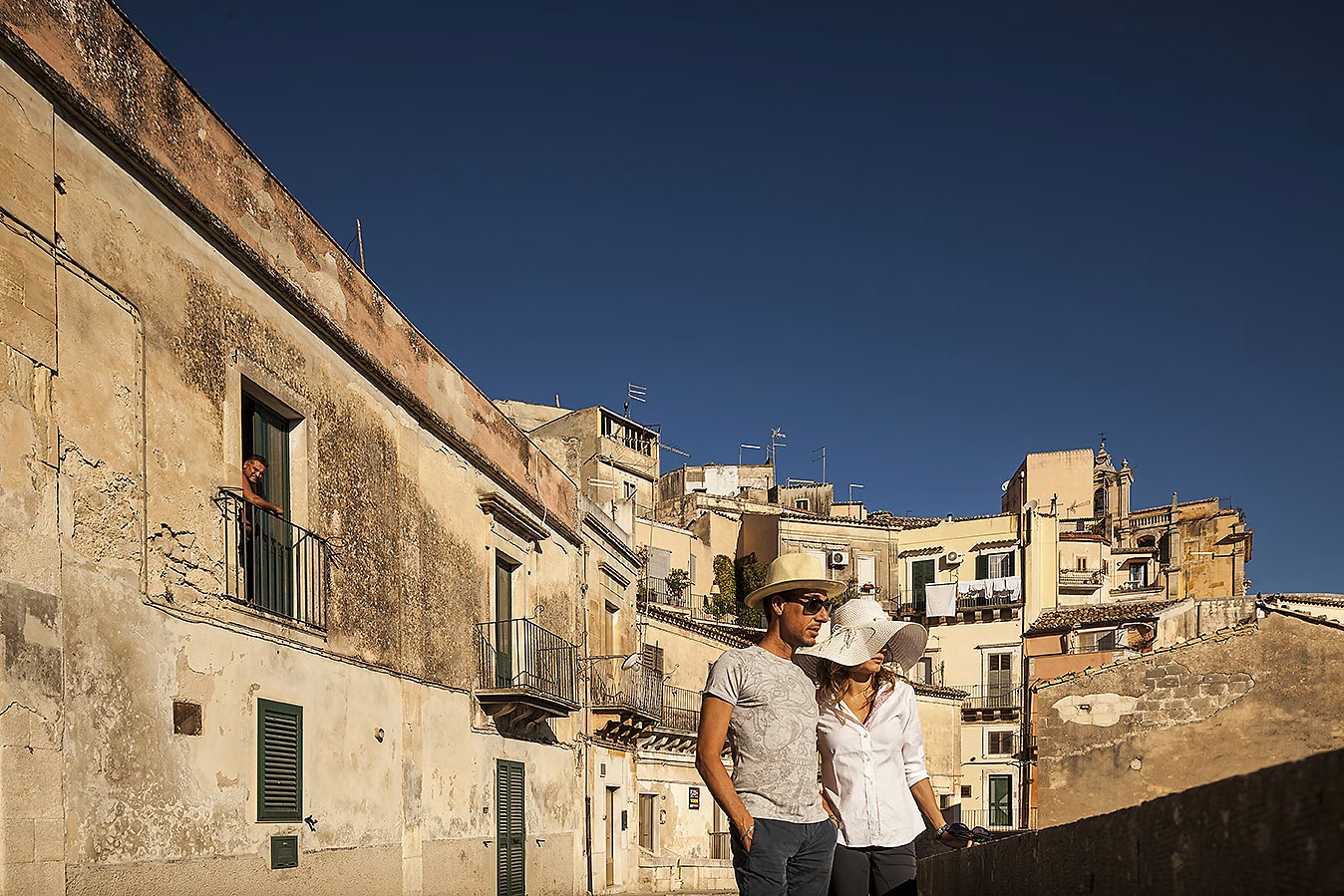
Staying in Ibla allows the streets and Piazza Duomo to become part of the evening rather than the end of a sightseeing day.
ONE FULL DAY
A complete visit without rushing
Begin at Piazza San Giovanni and the cathedral in Ragusa Superiore.
Walk to Santa Maria delle Scale for the view and descend through Itria and Palazzo Cosentini.
Reach Piazza Duomo for lunch and the Duomo di San Giorgio.
Continue past Palazzo La Rocca, Corso XXV Aprile and San Giuseppe.
Finish at Giardino Ibleo and the Portale di San Giorgio.
A private driver can drop you in the upper city and collect you at the garden end of Ibla. Self-drivers should use designated parking outside the controlled-traffic streets and settle the return between the two levels before beginning the walk.
THREE OR FOUR NIGHTS
The better base for a slower south-east
Arrival afternoon and an unhurried first evening around Piazza Duomo.
One full day for Ragusa Superiore and Ibla, with a principal dinner.
One day combining Modica and Scicli, privately guided or self-drive.
One flexible day for Donnafugata, Marina di Ragusa or the Montalbano coast.
Three nights work when one excursion is enough. Four nights allow a second day out or the freedom to keep part of the stay unplanned. Siracusa is usually better as the next base than as a long return day trip from Ragusa.
A.D. 1768 occupies a restored Baroque palazzo directly on Piazza Duomo. The position is the reason to choose it: San Giorgio, restaurants, aperitifs and evening walks are outside the door, allowing Ragusa Ibla to remain part of the holiday after sightseeing has finished.
It works particularly well for couples interested in architecture, design and food, and for a car-free stay supported by private airport transfers and selected guided excursions. A car remains useful for independent days across the wider Val di Noto, but it is unnecessary for dinner and daily life in Ibla. If you would enjoy a Duomo balcony or private terrace, ask us about the room choices early so we can help you find the right setting.
See how hotels, transfers, car hire and guided days can be joined into one properly paced route.
PLAN YOUR RAGUSA STAY
Ask us to shape your stay in Ragusa
Tell us your dates, interests and preferred pace. We can help you choose between a day visit and a longer Ragusa stay, then arrange accommodation, room choice, private transfers or car hire, guided visits and your onward journey through Sicily.
 Based on 78 reviews
 Posted on Google

 Kay Wade27 September 2026
 Catherine Day16 July 2026
 Mike Girling (No nickname)16 June 2026
 Daniel Hockman9 June 2026
 Elaine Yeoh6 June 2026
 Judith Warren29 April 2026
 Anne Fenton22 September 2025
 Teresa Oliveira25 August 2025
 IzzieD21 August 2025
 David Wise12 August 2025



 Facebook
 WhatsApp channel