


How Venice works: wells, bridges, boats and the details beneath your feet
Decode Venice’s wells, foundations, street names and boats, turning an ordinary walk into a closer understanding of the city.
In this article
Some of Venice’s most revealing sights are small enough to walk past. A stone wellhead explains the problem of fresh water. A bricked-up arch hints at a changed route. A delivery boat shows how a city without ordinary road traffic keeps shops and homes supplied.
You do not need a separate sightseeing day to explore these subjects. Carry a few questions on your normal walks and the spaces between the major monuments become part of the visit. How does this building meet the water? Where did this lane get its name? What job is that boat doing?
What actually supports the buildings?
Venice was built on islands and reclaimed ground within the lagoon, using construction methods adapted to difficult soils. Timber piles, planking, stone and masonry form parts of historical foundation systems, with arrangements varying by building and period.
The familiar image of a city balancing on a forest of wooden stilts is only a starting point. The foundations work with the ground and distribute loads; the buildings do not simply stand on exposed legs in open water. Much of the important engineering is hidden below the level at which visitors see the city.
Waterlogged, oxygen-poor conditions can help preserve buried timber, but this does not make it indestructible. Nor does the wood simply turn into stone. Research into the preservation of Venice’s foundation timber shows why the real material story is more interesting than the shorthand.
Look at the visible junction between masonry and water. Wear, repairs and changes of material remind you that buildings need continuing care. Venice’s survival is an ongoing task of maintenance and conservation, not a single ancient engineering trick that solved everything permanently.

The wellhead is the visible part of a water system
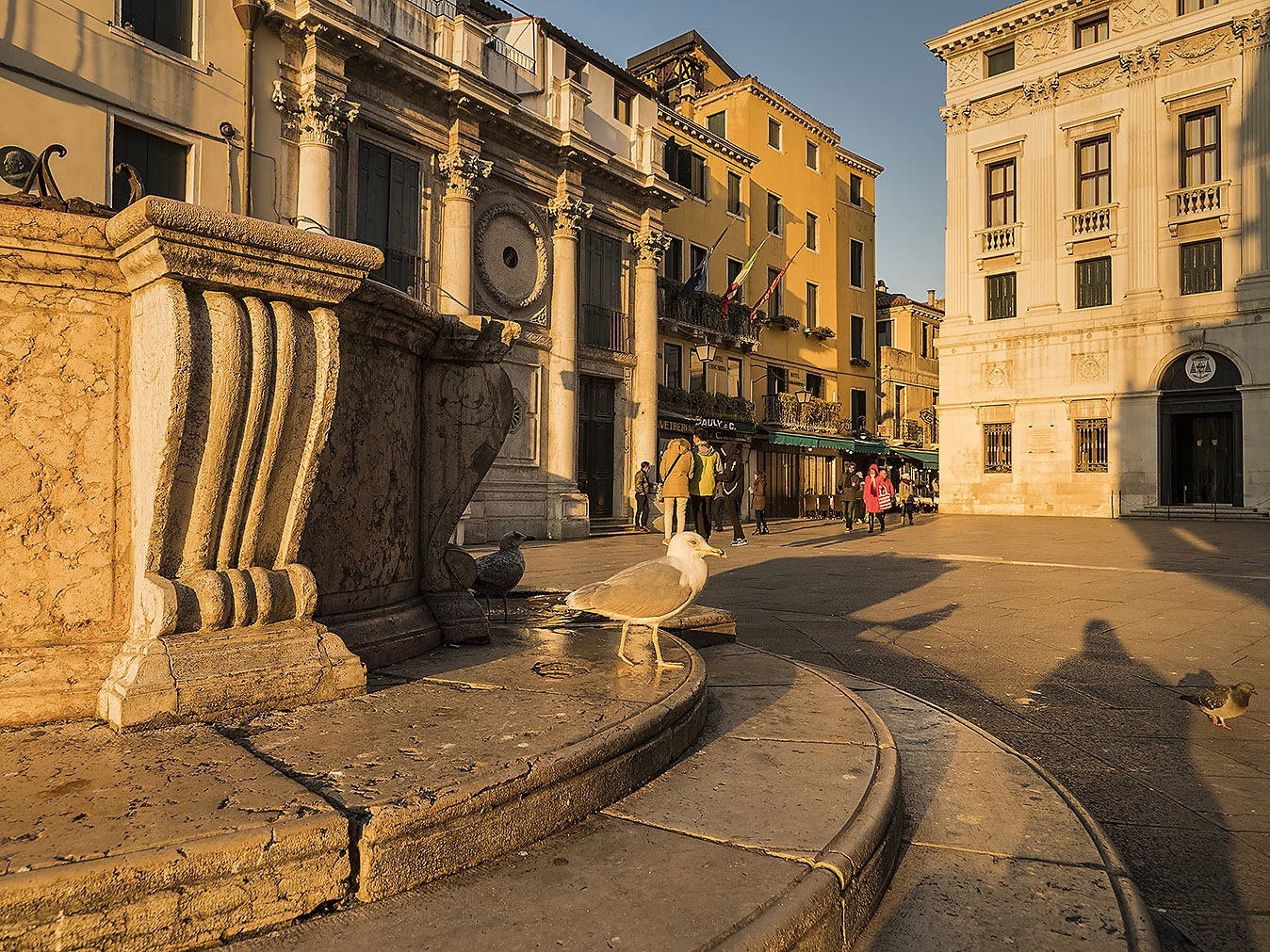
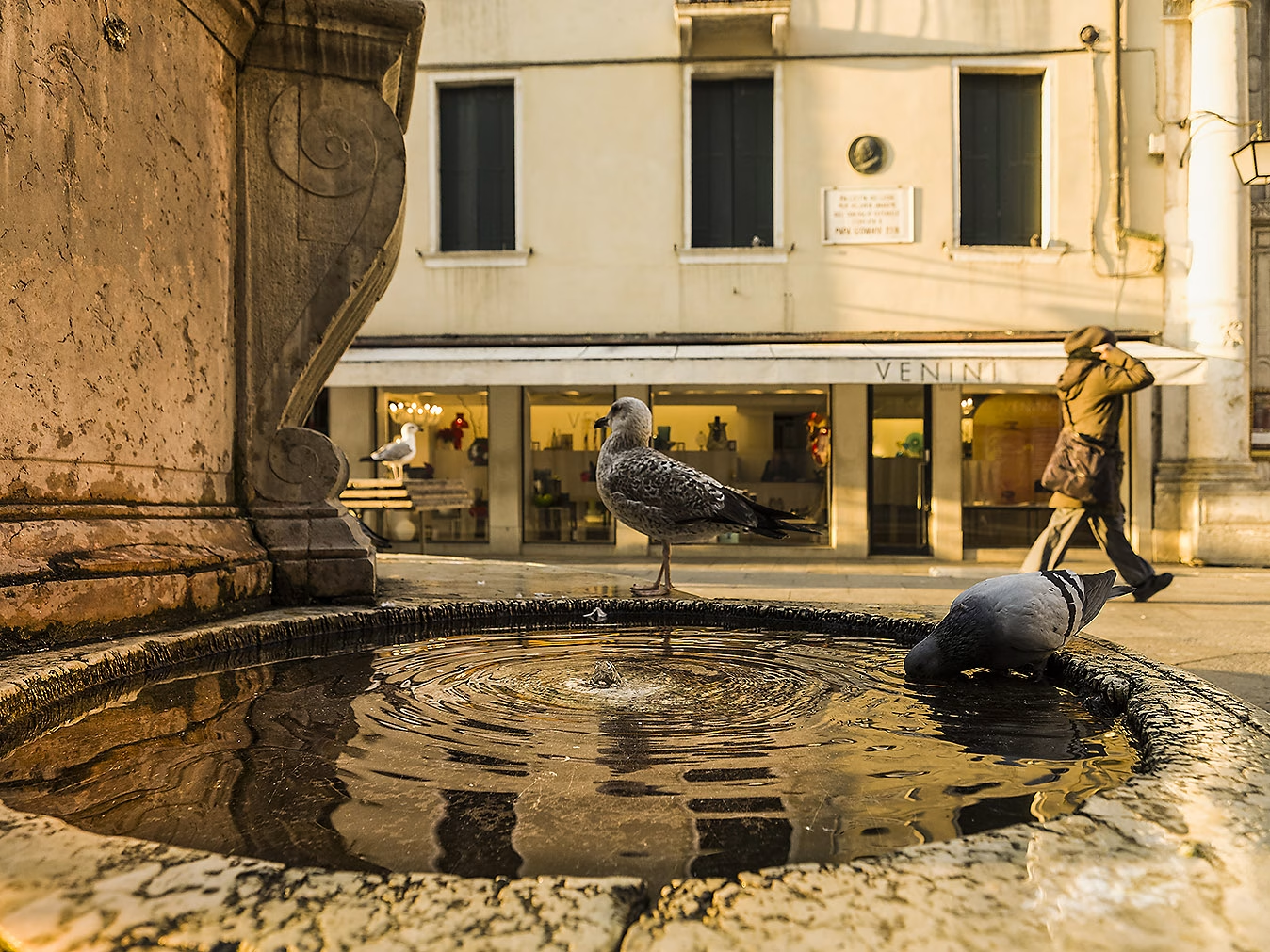
A carved vera da pozzo, or wellhead, is often the centrepiece of a campo. Its decoration can make it appear mainly ornamental today, but it once marked access to an essential resource: stored fresh water.
Many Venetian “wells” were connected to cistern systems that collected rainwater from the surrounding paved area and filtered it through layers of material. The storage needed to remain separate from the brackish water around the islands. In dry periods, water could also be brought from outside the city.
This is why the shape and surface of a campo matter. The square was not simply empty space left between buildings; it could help serve the practical needs of the community. Look for the relationship between paving, collection points and the wellhead, while remembering that later rebuilding may have changed what survives.
The city’s account of Rio dell’Acqua Dolce provides a useful introduction to Venice’s historical difficulty in securing fresh water. Modern drinking fountains belong to a different supply system. A decorative wellhead should not be confused with a working source of drinking water.
Street names can reveal a vanished canal
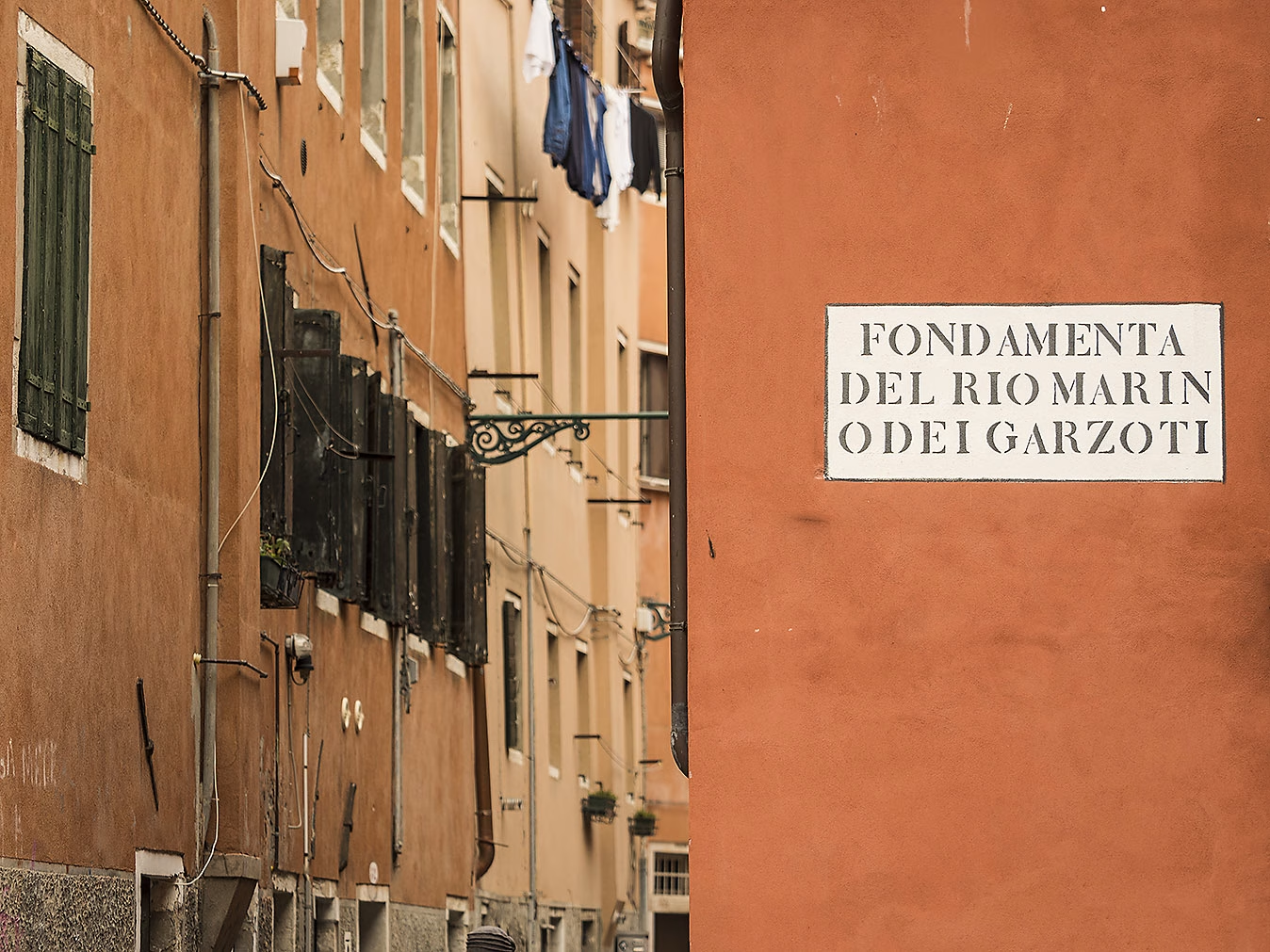
Learning a few Venetian terms makes navigation more rewarding. A calle is a lane; a campo is a square; a campiello is a smaller open space. A fondamenta runs alongside a canal, and a sottoportego passes beneath a building.
A rio terà is especially useful to recognise. The name records a filled-in canal, explaining why a street may have a width or alignment unlike the lanes around it. The water route has disappeared, but language preserves its earlier form.
The white-painted street-name panels, often called nizioleti, can also preserve trades, families, institutions or physical features. Names are evidence to investigate rather than invitations to invent a story. The same-sounding name may occur in more than one part of Venice, so include the district and a nearby landmark when locating an address.
House numbering can feel unfamiliar because numbers are organised within the sestieri rather than restarting on every street in the way many visitors expect. For a hotel, restaurant or meeting point, save the actual map location and the name of the nearest useful boat stop, not just the number.
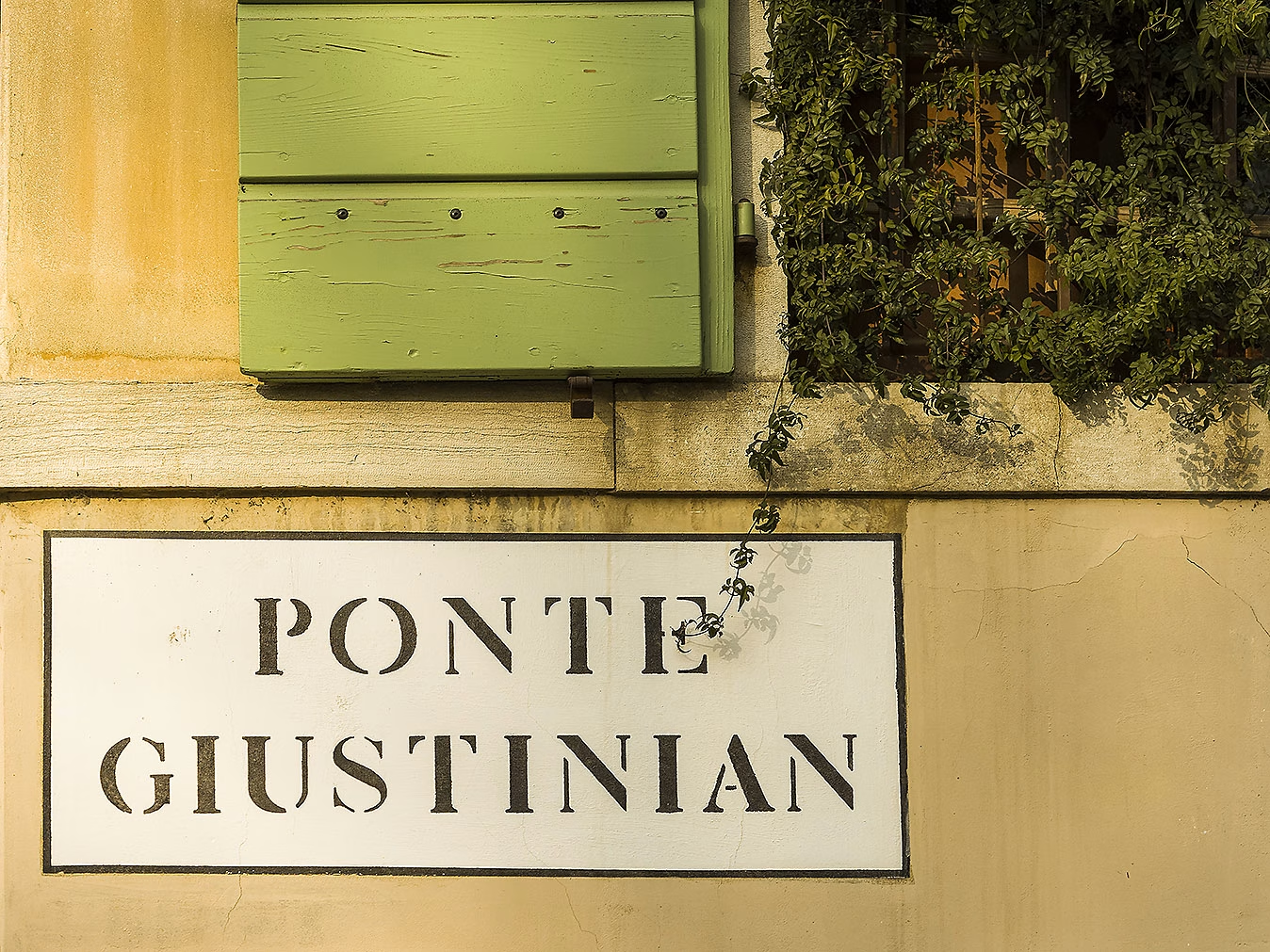
Bridges decide how a walking route works
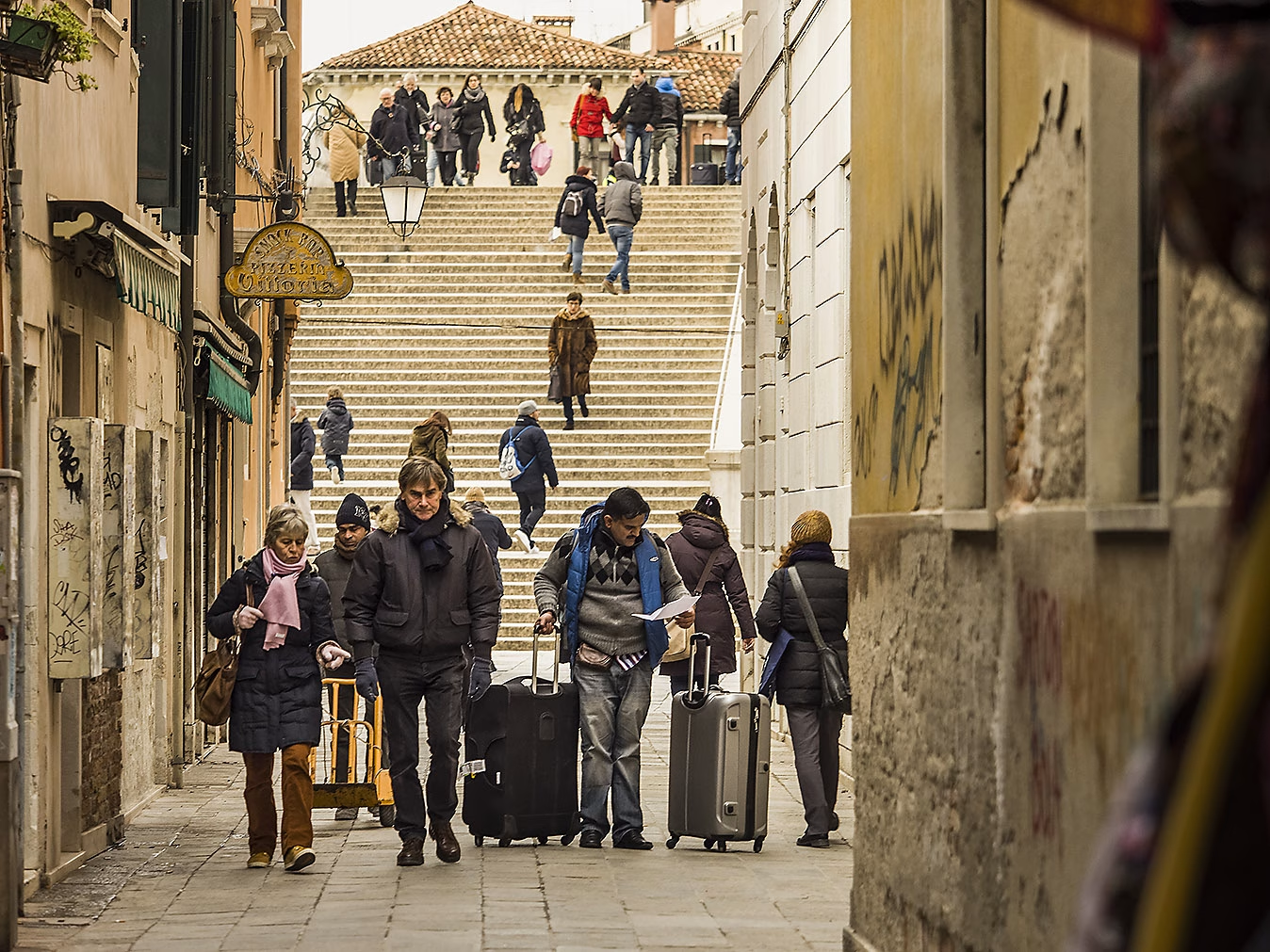
Venice looks compact on a map, but canals and bridge positions determine how you move through it. A destination directly opposite may require a substantial detour. A route that is straightforward without luggage can feel very different with a suitcase or limited mobility.
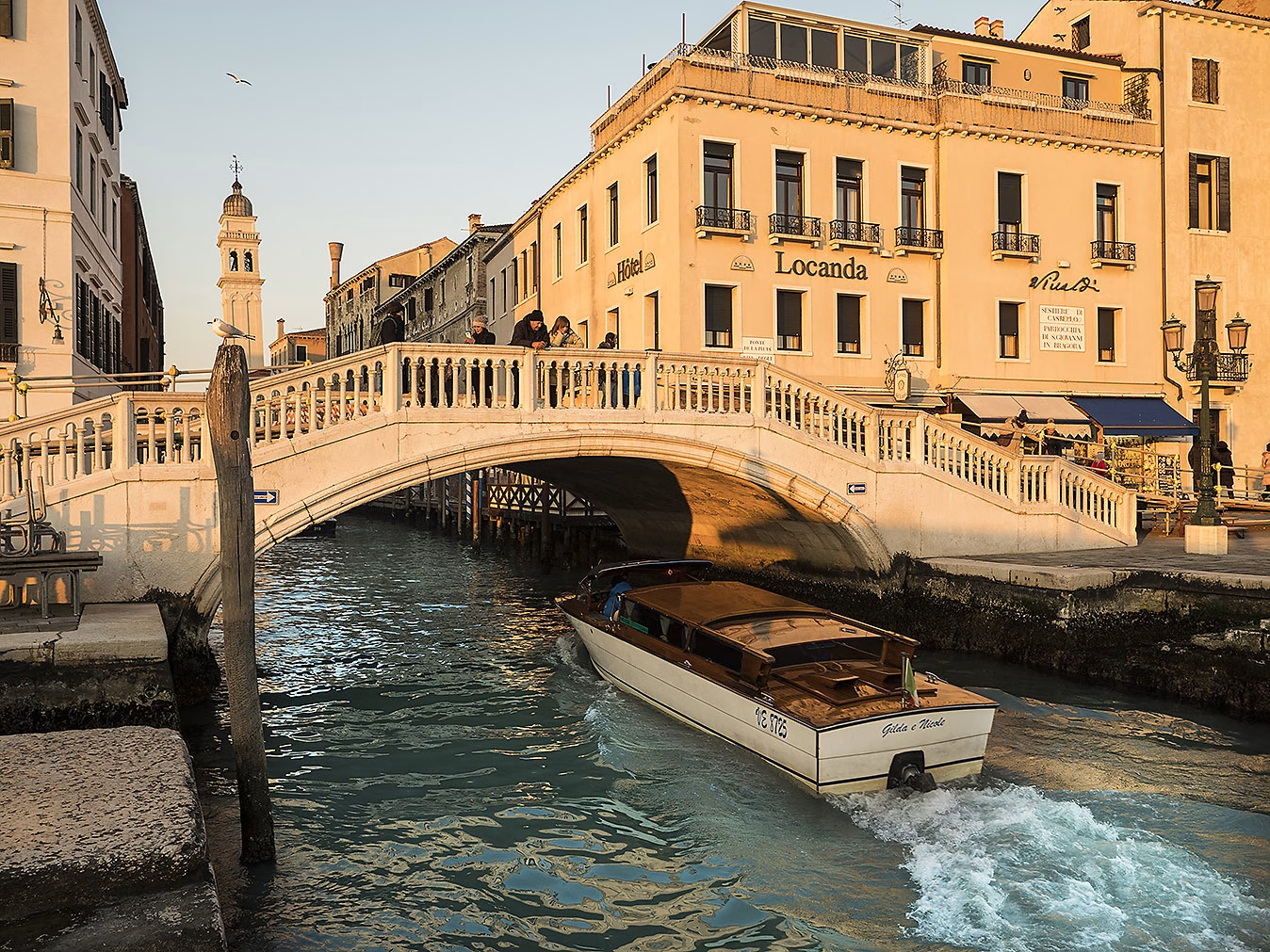
Bridges are also good places to see the city’s double network. At the top, pedestrians cross from one island or bank to another; below, boats follow the canal. Water doors, landing steps and mooring points connect the two systems.
Notice how low arches constrain boats and how the height of the water changes the available clearance. This is one reason a boat route is not simply a free choice of any blue line on a map. Navigation depends on the vessel, conditions and local rules as well as the destination.
For accessible planning, use the city’s visitor information and accessibility resources and confirm the exact route with your accommodation. “Near the stop” does not by itself tell you whether steps or bridges intervene.
Boats are the city’s working vehicles
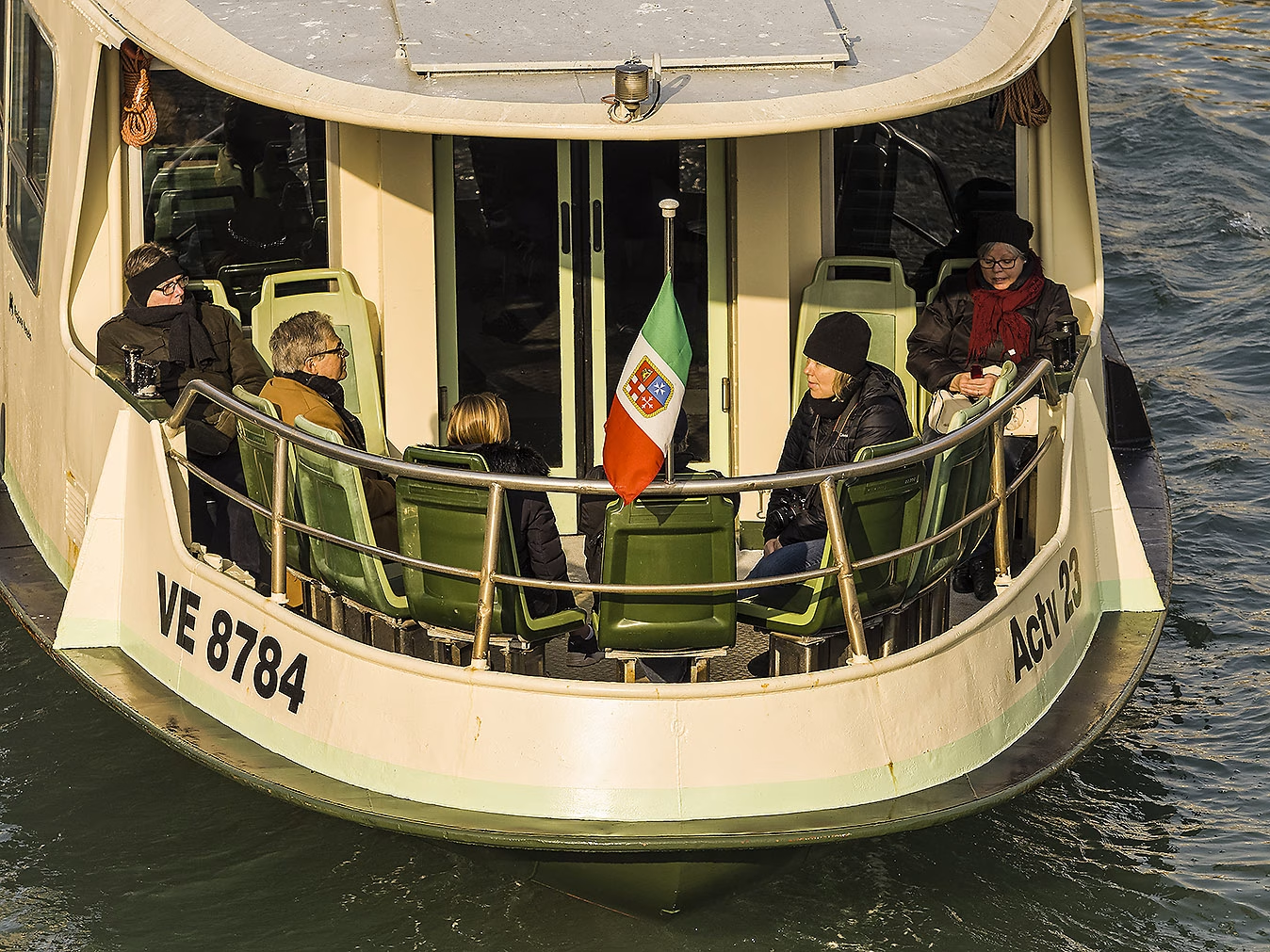
Watch a canal for a few minutes and the variety becomes obvious. Public passenger boats, private taxis, workboats, deliveries and service vessels have different shapes because they solve different problems. Some need passenger space; others need an open deck for goods or equipment.
The last part of a delivery often takes place on foot, with loads transferred from a boat to a trolley. A convenient landing is therefore valuable, and blocking it for a photograph can interrupt someone’s working day. The same applies to narrow bridges and passages used by porters.
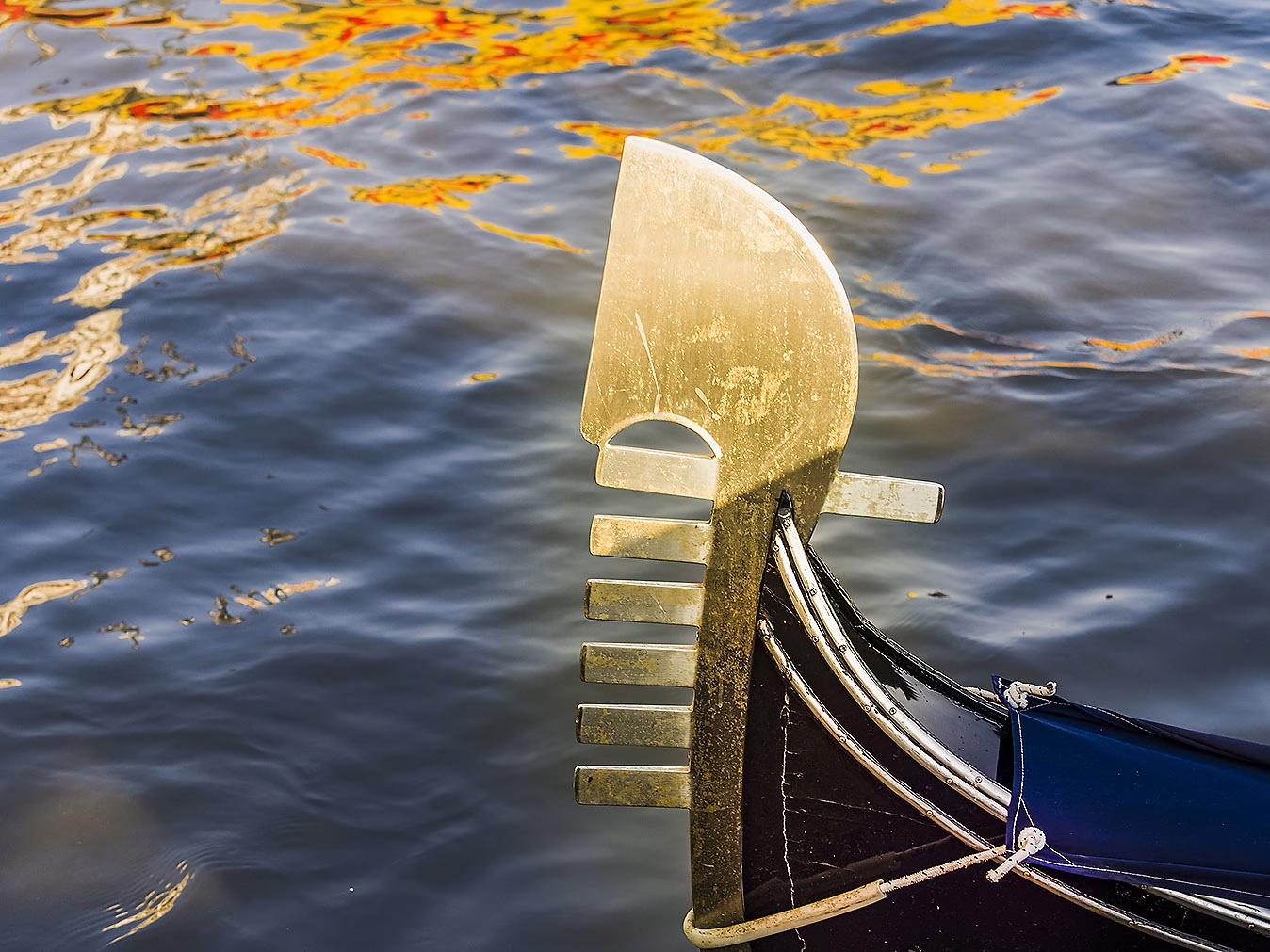
Gondolas belong within this wider picture. Their shape and the gondolier’s standing position suit a particular way of moving through the waterways. The metal ferro at the bow has a practical as well as a symbolic identity. Popular explanations connect its teeth with the six sestieri, but symbolic readings should not replace attention to the boat itself and the craft of handling it.

Tides, high water and a changing environment
The lagoon is tidal, so water levels are part of ordinary life as well as exceptional flood events. The effect of a high tide varies across the city because ground levels are not uniform. One flooded low area does not mean every walking route is under water.
The MOSE barriers provide protection during qualifying high-water events, but they do not remove the need to follow local forecasts and advice. For a visit, the useful source is the city’s tide information service. Ask your hotel how conditions affect the exact route you intend to take.
The broader issue includes the relationship between buildings, boat wash, salt, sediment and the lagoon environment. It is visible in repairs and conservation projects throughout the city. The point is not to turn every walk into a list of threats, but to recognise how much knowledge and work are required to keep Venice functioning.
Make a small observation walk
Choose a neighbourhood route you already need to take. Find a wellhead, a canal-side fondamenta, a covered passage and a landing used by a working boat. At each, ask what practical problem it solves. You will begin to see how the city’s distinctive appearance grows out of ordinary requirements.
This approach works particularly well in Cannaregio and on the smaller routes around Rialto and San Polo. It also changes a journey along the Grand Canal, where grand façades become easier to read once you recognise water entrances and the buildings’ working levels.
Leave time for these observations within the day. They require no additional ticket and often provide the details that make the major sights feel connected to a real, functioning city.

Make Venice part of your holiday
A well-paced Venice stay gives you time to notice the city’s daily workings as well as its monuments. Make it part of a wider Italian journey.
Photography by Vittorio Sciosia, from his Venice and lagoon collection (2016).



 Facebook
 WhatsApp channel