


An island with a living Benedictine community, a wooded hill of painted chapels and small waterfront villages: Lake Orta has a character of its own. For couples, its appeal lies in having enough to explore without needing to fill every day.
Lake Orta lies just west of Lake Maggiore, across the Mottarone hills, in the Piedmontese area known as the Cusio. Their proximity makes Orta a rewarding day outing, especially if you are staying around southern Lake Maggiore. Yet the island, wooded chapels and small waterfront villages give it enough character for a holiday of its own. From Cannobio, further north on Maggiore, allow a longer road journey—or give each lake its own stay. At Orta’s northern end, Omegna adds an unexpected chapter: the history of Italian coffee makers and household design.
It makes a rewarding outing from Lake Maggiore. Staying here offers something different: unhurried mornings, evenings after the day visitors leave, and time to explore beyond Orta San Giulio’s central square. The village is well known and can be busy; the quieter experience comes from choosing your base and timing thoughtfully.
In this article
Three reasons to visitOrta and Isola San GiulioSacro MonteThe quieter shoresOmegna and BialettiEight curiositiesStay or take a day trip?When to go and getting around
Three reasons to experience Lake Orta
1. An island shaped by monastic life
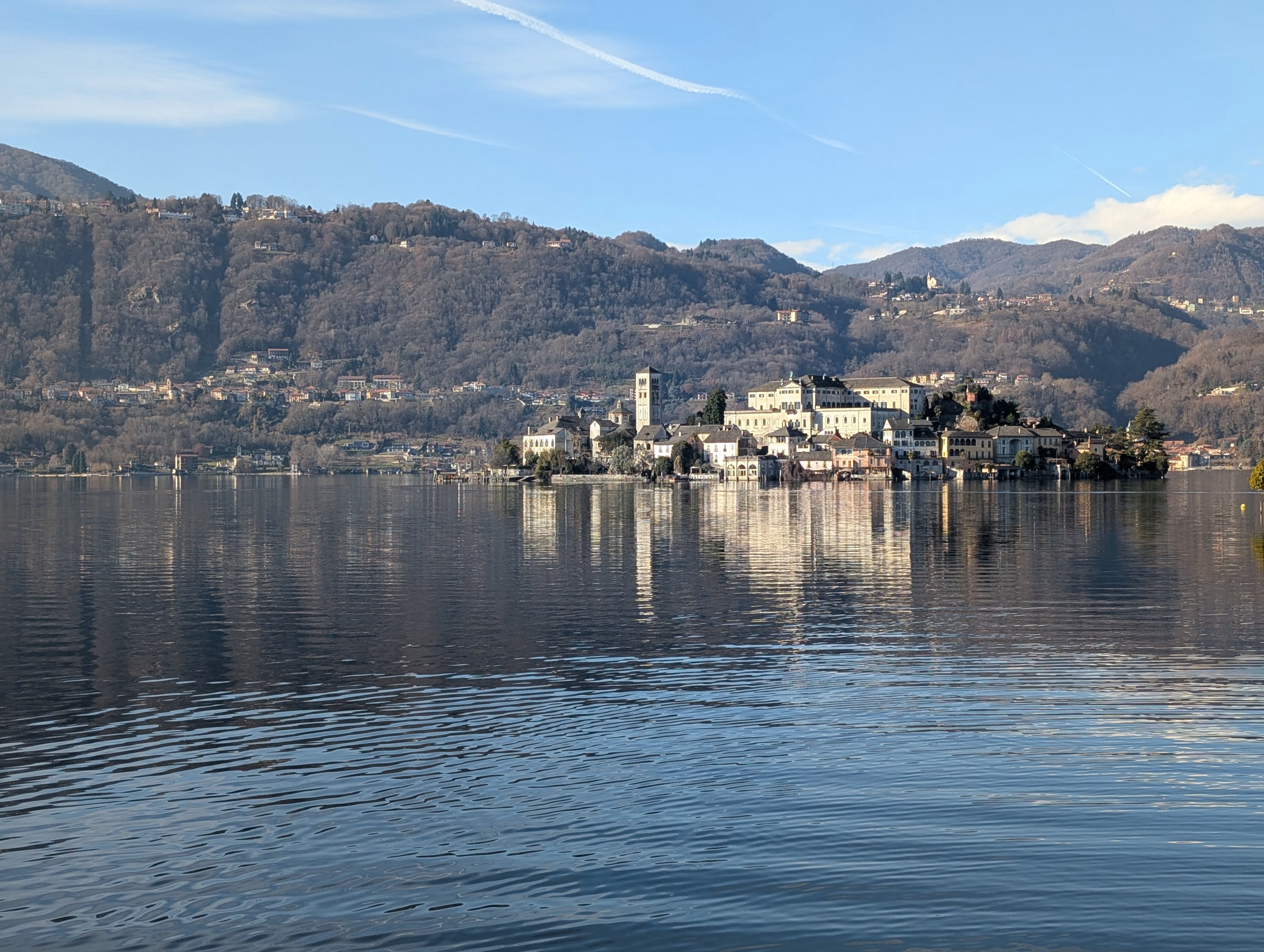
Isola San Giulio combines a Romanesque basilica, narrow lanes and an active Benedictine abbey. The island’s small scale makes it easy to appreciate on a day visit, while a stay lets you choose a quieter sailing and return to its views from different shores. For couples interested in historic places with a contemplative atmosphere, this is Orta’s defining experience.
2. Art and woodland in the same walk
Above Orta San Giulio, Sacro Monte brings together chapels, sculpture, frescoes and views through the trees. It gives a lakeside break a cultural depth that does not depend on a city excursion. You can combine it with the village on a full day out, or give it a separate morning when staying locally.
3. A lake of small villages and Italian design
Pella’s small waterfront, Orta’s lanes and Omegna’s workshops and manufacturing heritage give this lake several distinct faces. In Omegna, the story of the Bialetti Moka Express connects a familiar kitchen object with the place where it was invented. Stay locally to explore one shore or interest at a time, leaving afternoons for the view and evenings for dinner together. On a day trip, choose between the classic village-and-island visit and a day with more emphasis on design.
Orta San Giulio and the island
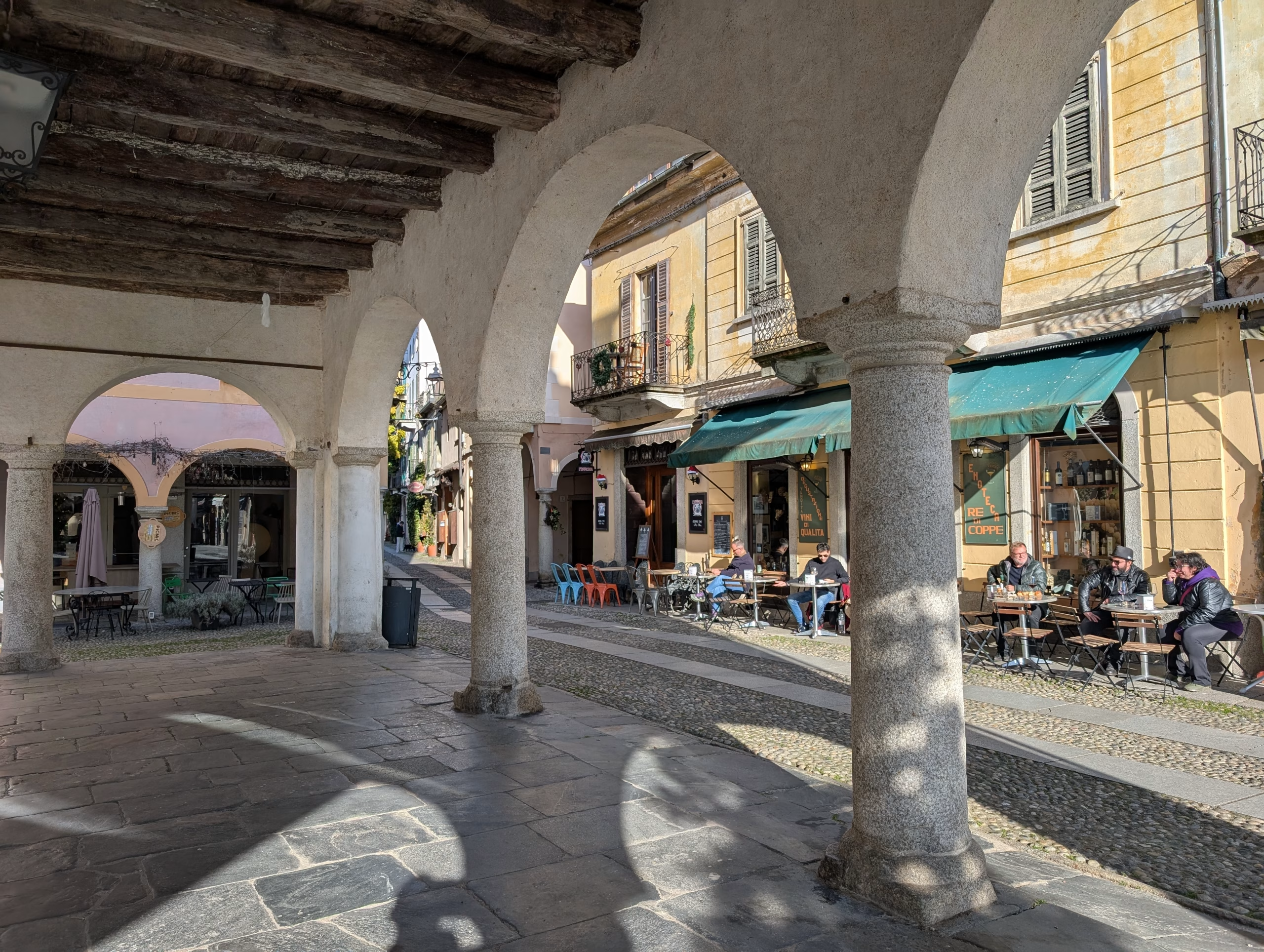
Start in Piazza Motta, where the village opens towards the water. Boats, café terraces and arcaded buildings give the square its character. It is an enjoyable place to sit, but the smaller lanes and stretches of waterfront reward a little wandering too. Come early if you want to see the centre before the busiest part of the day.
Take a boat to Isola San Giulio for the basilica and the short circuit known as the Via del Silenzio. Reflective signs along the route invite visitors to slow down. The abbey is home to a religious community; the public island walk and basilica visit should be approached with that in mind, rather than as access to the monastery itself.
Inside the basilica, look closely at the carved Romanesque pulpit. Outside, the appeal is the close relationship between stone buildings and water. Check basilica access and the return boat before crossing, especially outside the main visitor season.
Sacro Monte: a different view of the lake
The Sacro Monte di Orta occupies the wooded hill above the village. Its twenty chapels tell the life of St Francis of Assisi through painted scenes and sculpted figures. Moving between them is part of the experience: an interior full of detail, then trees, paths and another glimpse of the lake.
The complex belongs to the UNESCO-listed Sacri Monti of Piedmont and Lombardy. Allow around an hour and a half for an unhurried visit to the chapels, plus the walk up from the village. This is particularly rewarding for couples who enjoy art in a landscape setting.
The climb from the village takes about twenty minutes, on a route with slopes, cobbles and steps. If gradients or steps are a concern, check the official access information and arrange suitable transport to the upper area.
Pella, the western shore and time beside the water
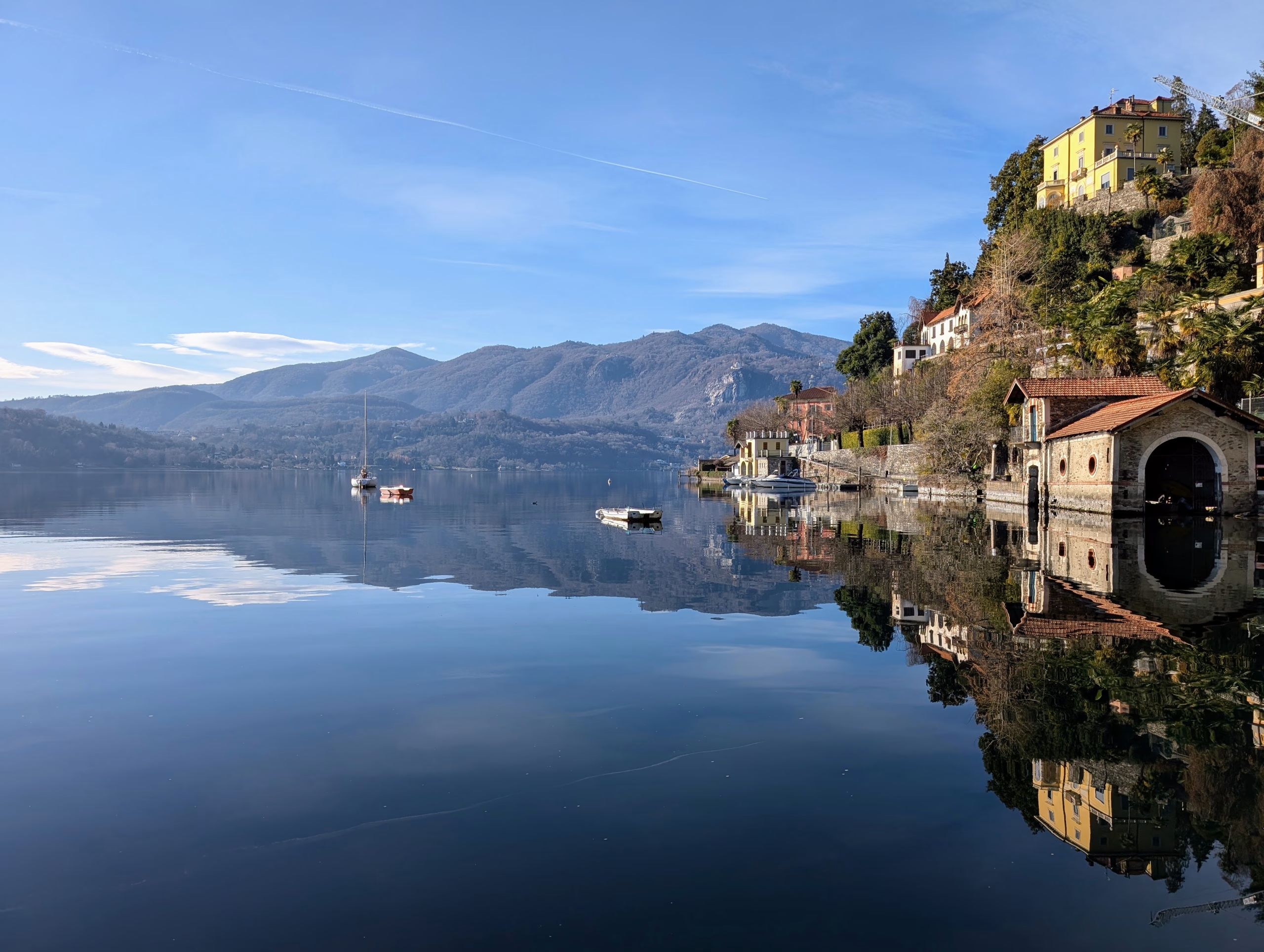
Pella, on the western shore, offers a smaller waterfront setting and views towards the island. It suits couples who prefer their evenings close to their accommodation, with village strolls and time by the lake. Orta San Giulio is the more convenient choice if you want a wider choice of cafés and restaurants within the historic centre.
Pettenasco offers another option on the eastern shore. Look at the precise position of any accommodation: a village address does not necessarily mean you can walk comfortably to dinner or directly along the water. Around Lake Orta, shore access is interrupted by buildings, slopes and roads; there is no continuous level promenade around the lake.

For a wider panorama, make a separate outing to the sanctuary of Madonna del Sasso, above the western shore. Walks around Pella, Egro and Ronco can involve substantial climbs and uneven paths, so choose a route by its full distance and ascent.
Omegna: coffee, design and everyday lake life
At the northern end of the lake, Omegna changes the perspective. Its waterfront and the Nigoglia waterway belong to a town with a strong manufacturing history. A visit adds something quite different to the island and chapels: the story of familiar objects used in Italian homes.
Bialetti’s story began in 1919 with Alfonso Bialetti’s workshop in Crusinallo, part of Omegna. The Moka Express followed in 1933. Knowing that connection makes a coffee stop here rather more interesting.
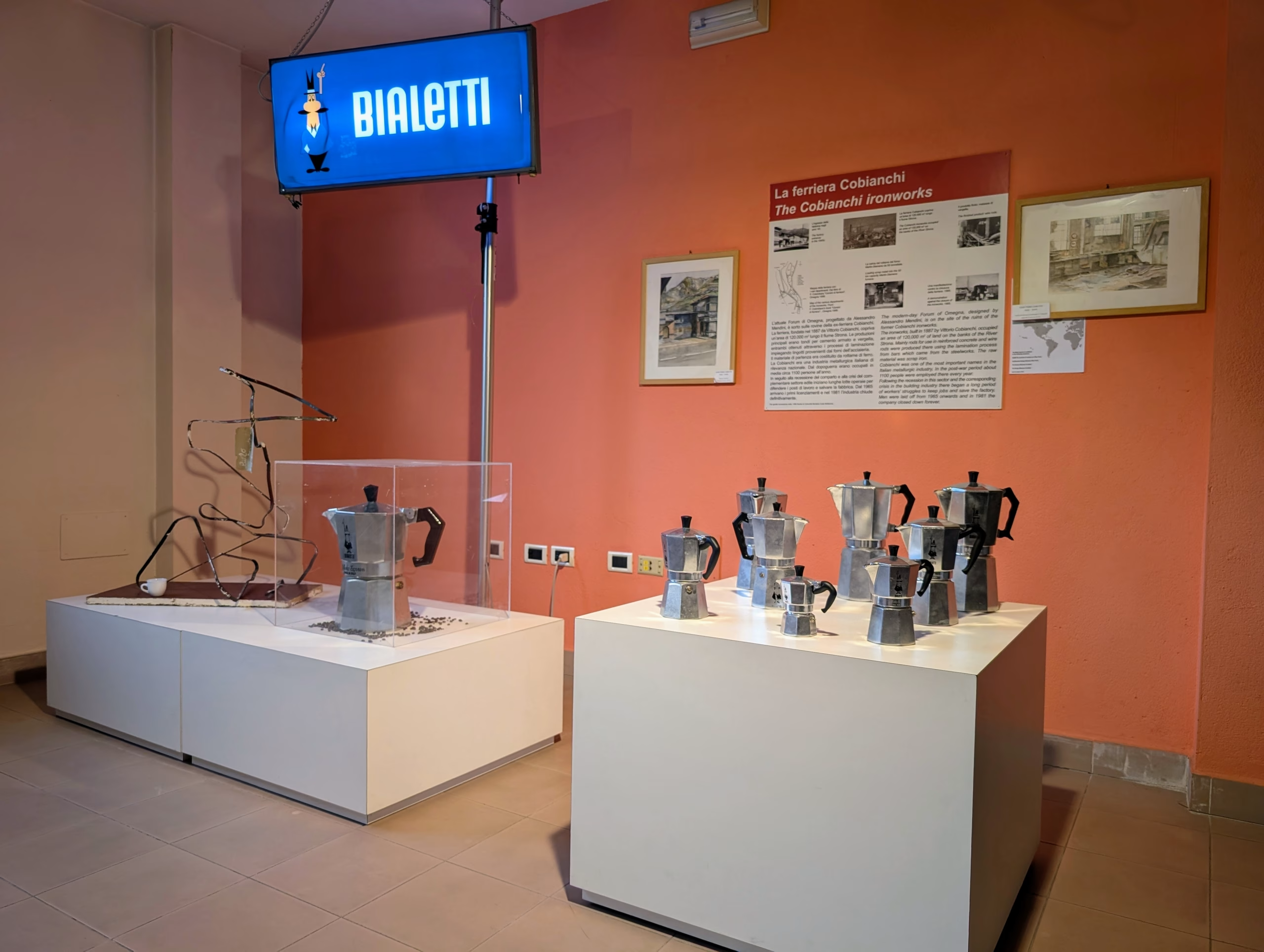
For the wider design story, visit the MOCA, Omegna’s household-goods museum at Forum Omegna. Its open archive places coffee makers, cookware and other everyday objects within the area’s history of design and manufacturing. Consult the museum’s current booking and opening information when planning your visit.
Omegna also has a literary connection. Children’s writer Gianni Rodari was born here, and the town celebrates his work through places and walks linked to his stories. Together, design and literature give the northern shore an identity beyond its scenery.
Eight curiosities about Lake Orta
- Its water leaves to the north. At Omegna, the Nigoglia flows out of the lake towards the Strona and then, via the Toce, Lake Maggiore. This unusual direction is sometimes described playfully as “uphill”; the water still follows gravity.
- The island’s founding story involves a cloak. According to the legend of St Julius, the saint crossed the water on his cloak and drove serpents from the island before building a church. It is a religious legend, not a historical account of the crossing.
- One small island walk has two themes. The Via del Silenzio and Via della Meditazione use short reflections to give the island circuit a contemplative purpose.
- The hill above Orta tells the story of St Francis. Sacro Monte’s twenty chapels are dedicated to his life. Their narrative unfolds through painted backgrounds and sculpted figures, rather like a sequence of staged scenes.
- The Moka Express has local roots. The familiar coffee maker dates from 1933, following the workshop Alfonso Bialetti opened in Crusinallo in 1919.
- Omegna is Gianni Rodari’s birthplace. The writer was born here in 1920. His birthplace is one of the landmarks connecting the town with his imaginative world.
- A Moorish-style villa stands beside a Piedmontese lake. Commissioned in 1879 by cotton industrialist Cristoforo Benigno Crespi, Villa Crespi is an unexpected architectural contrast to Orta’s village houses. It is now a hotel and restaurant, rather than a monument open for casual sightseeing.
- Orta is one part of a much larger sacred landscape. Its Sacro Monte is one of nine complexes in the UNESCO inscription, which brings together sites across Piedmont and Lombardy.
Stay on Lake Orta or visit from Lake Maggiore?
Choose Lake Orta as your base if your ideal holiday gives equal importance to the place you stay, meals together and a few well-chosen outings. Three or four nights make a useful introduction. With a week, keep one base and spread the island, Sacro Monte, Pella and Omegna across separate outings, leaving whole afternoons free. This suits couples who enjoy returning to a favourite café or walk as much as seeing somewhere new.
Visit from Lake Maggiore if you are already based around Stresa and want to experience Orta’s different character without moving hotels. The two lakes are close enough to combine in one holiday, but there is no need to split a short stay simply to see both.
| Experience | On a day trip | With Orta as your base |
|---|---|---|
| Village and island | Piazza Motta, a boat crossing and lunch form the core of the day. | See the waterfront at different times and enjoy evenings after day visitors leave. |
| Sacro Monte | Add it if the walk suits you and you have a full day. | Give the chapels their own morning, with time to stop and look. |
| Other shores and Omegna | Choose one additional interest rather than a circuit of every village. | Explore the design story, Pella and a hillside viewpoint on separate outings. |
A satisfying day from Stresa
Allow a full day from Stresa. Travel to Orta San Giulio, walk through the village and cross to the island when boats are operating. Return for lunch, then choose between Sacro Monte and more time by the water. If Omegna’s design heritage is your priority, build the day around the exhibition’s opening hours and reduce the other stops.
A car or arranged driver gives the most flexibility. Public transport needs checking against your exact date and starting point; do not assume a direct, frequent connection between the two lakefronts. Our guide to day trips from Stresa places Orta alongside other outings from Lake Maggiore.
When to go and how to keep the visit relaxed
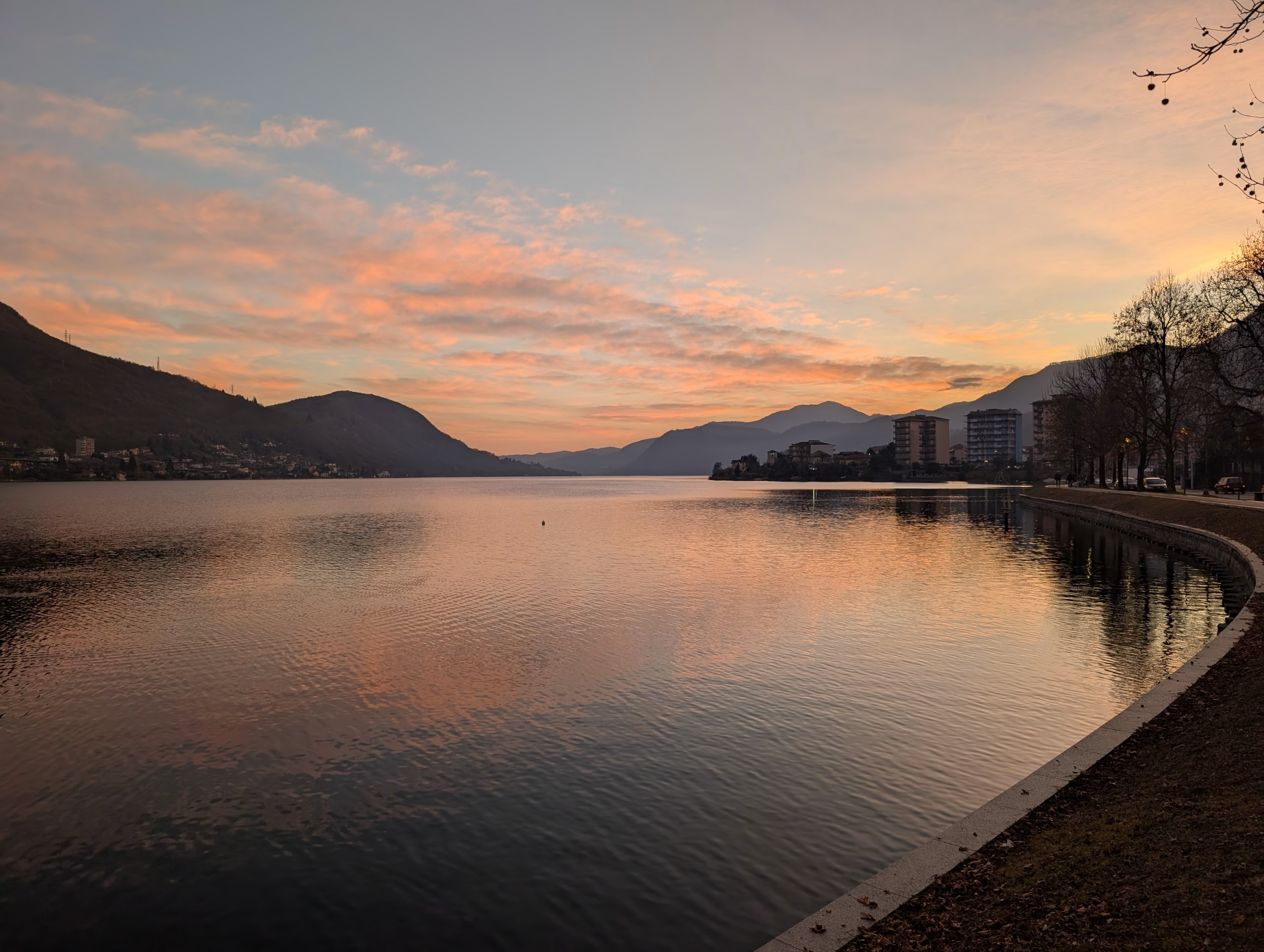
For tranquillity, consider weekdays in spring or autumn, while checking the services you need. Orta San Giulio can be lively on summer weekends and during holiday periods. The winter photographs in this article show another side of the lake, but quieter streets can also mean fewer open restaurants, exhibitions and boat departures.
For a stay without a car, choose your accommodation around what you want to reach on foot and arrange arrival transfers. Orta-Miasino station is outside Orta’s historic centre and across the lake from Pella. Boats are useful for planned outings, but should not be assumed to provide a late return after dinner. Check island boat services and the relevant operator’s timetable for any wider lake route.
Leave room for an afternoon with no fixed destination. Once you have seen the island and chosen a walk, the advantage of a Lake Orta base is that another excursion is optional.
For stays at Casa Fantini and a holiday combining Milan, Cannobio and Lake Orta, see our Lake Orta holidays page.



 Facebook
 WhatsApp channel