


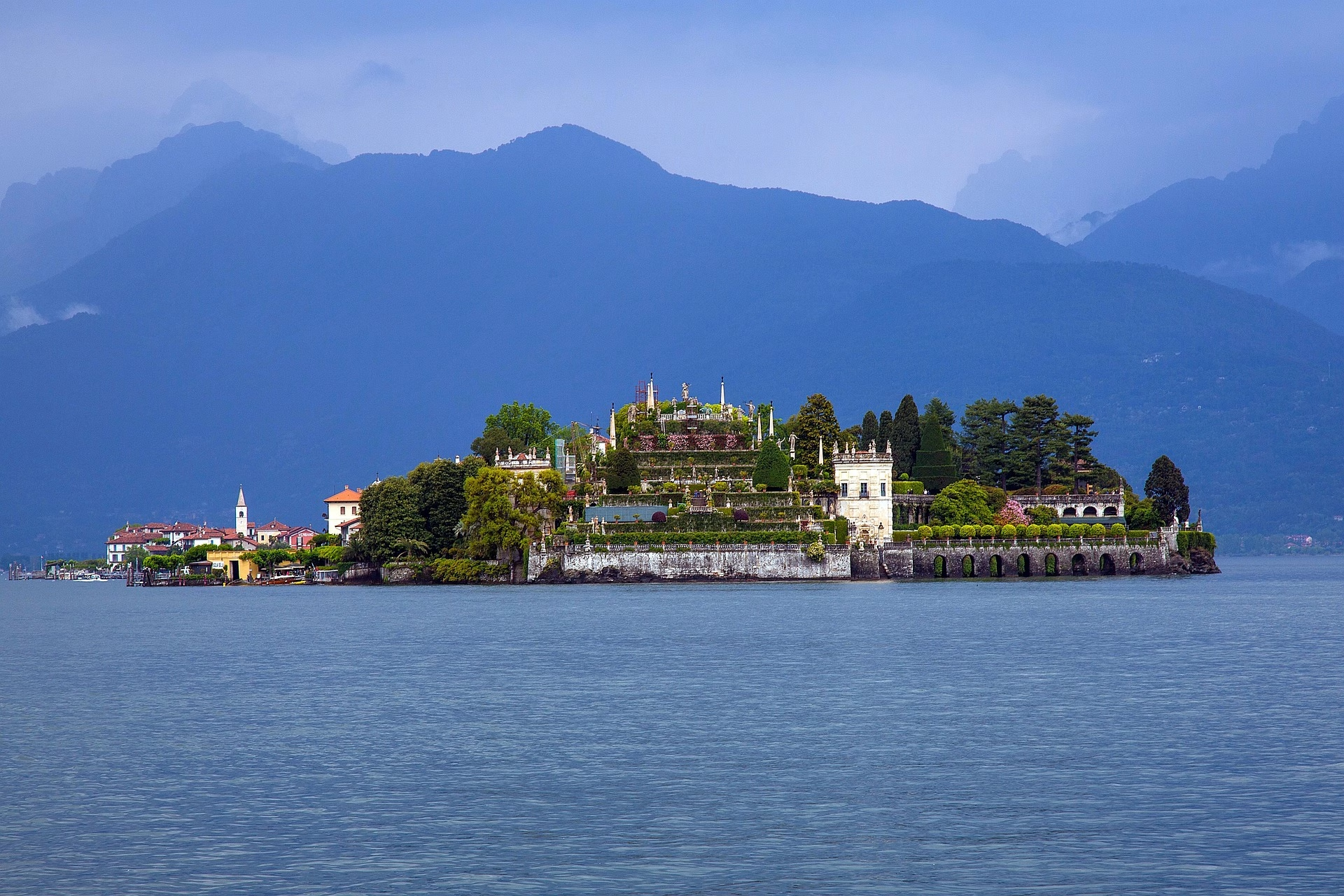
A palace rising from the water, a botanical garden shaped by the lake’s mild climate, and a fishing village made for a waterside lunch: the three principal Borromean Islands offer distinctly different reasons to leave Stresa by boat.
The pleasure is in seeing how much changes between landings. Isola Bella is an ambitious work of architecture and garden design; Isola Madre invites a slower walk among unusual plants; Isola dei Pescatori brings you back to village lanes, boats and the cooking of the lake. Together, they make one of Lake Maggiore’s most rewarding outings.
In this guide
Choose your islandsThe Borromeo storyIsola BellaIsola MadreIsola dei PescatoriA day from StresaA day from MilanBoats & practicalities
Three islands, three different experiences
For a first visit, we suggest Isola Bella followed by lunch and a walk on Isola dei Pescatori. This gives you a substantial palace-and-garden visit without turning the whole day into a sequence of boat connections. Garden enthusiasts should give Isola Madre equal consideration.
| Island | What makes it special | Suggested time ashore |
|---|---|---|
| Isola Bella | Baroque interiors, decorated grottos and terraced gardens | 2–3 hours |
| Isola Madre | A botanical garden and a more intimate historic residence | 1½–2 hours |
| Isola dei Pescatori | Village lanes, fishing heritage and lakeside dining | 1–2 hours, including lunch |
These are our suggested allowances, excluding boat journeys, waiting times and admission queues.
Lake Maggiore and Isola Bella, shared by @aujardindesmarees in collaboration with @terreborromeo.
The Borromeo family: how the islands took shape
The family name connects these small islands to the political and cultural history of Milan. In 1439, Duke Filippo Maria Visconti granted Arona and its fortress to Vitaliano I Borromeo. The family’s influence around Lake Maggiore grew from that base.
Its best-known churchman, Carlo Borromeo, was born at Arona in 1538, became Archbishop of Milan and was later canonised. He should not be confused with Carlo III Borromeo, associated with the development of Isola Bella in the following century.
The islands were transformed over generations. On Isola Madre, an agricultural estate gradually became a residence surrounded by ornamental planting. Isola Bella’s transformation gathered pace in the seventeenth century under Carlo III and Vitaliano VI, whose ambitions produced the palace and garden ensemble visitors come to see today.
Even the name has a personal history: “Isola Isabella” honoured Carlo III’s wife, Isabella d’Adda. Work continued long after the original Baroque project; the palace’s Salone Nuovo was completed in 1948. What appears to be a single grand design is also the record of centuries of patronage, collecting and building.
That history gives the visit its depth. The interiors express the family’s status and interests, while the gardens show two very different ways of shaping nature: the formal terraces of Bella and the freer landscape of Madre.
Isola Bella: a palace and garden conceived to impress
Isola Bella is our first choice for visitors who want the strongest combination of art, architecture and lake views. The approach by boat matters: from the water, you can appreciate the scale of an island transformed into a monumental residence.
What to look for inside the palace
The route through Palazzo Borromeo brings together richly furnished rooms, paintings and Flemish tapestries. Pause in the pale-blue Salone Nuovo, then look closely at the six grottos near water level. Their surfaces combine pebbles, shells, marble and volcanic stone in intricate decorative patterns: a striking change from the formal rooms above.
The palace rewards attention to detail, so allow time to look rather than simply pass through on the way to the garden.
The garden is part of the spectacle
Outside, ten terraces and the sculptural Teatro Massimo turn the garden into an architectural composition. Look up for the Borromeo unicorn, then step back to take in the relationship between planting, stonework and water.
There are also smaller pleasures: citrus trained along walls, geometric parterres and white peacocks moving beneath the trees. The views change as you climb. Comfortable shoes help with the steps and different levels.
The Teatro Massimo at Isola Bella, shared by @terreborromeo.
Why it deserves your time: few visits combine such elaborate interiors with a garden whose full setting becomes clear from the boat. Give both parts of the visit room in your day.
Isola Madre: the island for garden lovers
The largest of the Borromean Islands covers around eight hectares. Its mild setting supports a rich collection of plants, while its nineteenth-century landscape design favours groves, lawns and a less formal progression of views.
Camellias, azaleas, rhododendrons and magnolias are among its attractions. The experience changes through the season, so choose your visit according to the plants that interest you rather than expecting every flower to be at its best together.
The sixteenth-century palace stands at the island’s highest point. Its domestic scale and furnishings offer a useful contrast with Isola Bella’s ceremonial grandeur. Before the ornamental garden developed, vines, olives, figs and other crops occupied the estate; that gradual transformation is part of its character.
Why it deserves your time: Isola Madre makes the lake’s unusually favourable growing conditions tangible. Choose it when you want plants and an unhurried walk to be the main event. If gardens are your priority, visit Bella and Madre together and keep lunch simple.
Isola dei Pescatori: village life and a proper lunch
Also called Isola Superiore, Pescatori has a different history and rhythm. This is a small inhabited village shaped by fishing, with cobbled lanes, closely packed houses and long balconies once used for drying fish.
Take a short walk away from the landing stage and look for the Church of San Vittore, whose origins date to the eleventh century. The village is compact, but a slower circuit reveals details that are easily missed between arriving and finding a restaurant.
For lunch, look for lake fish such as perch or lavarello when available. Reserve ahead if a particular terrace matters to you, especially on busy summer days and weekends. Pescatori is popular with day-trippers: its fishing heritage should not be mistaken for a promise of empty lanes at lunchtime.
Why it deserves your time: it adds the human scale of a lakeside community to the palaces and gardens. A meal here belongs naturally in the day, rather than feeling like a pause between attractions.
A seasonal retrospective from @terreborromeo, featuring its wider collection of places around Lake Maggiore.
How to enjoy a day from Stresa
Our choice: Isola Bella, then Pescatori
- Start with Isola Bella. Choose a morning boat that fits the palace opening time. Allow two to three hours for the interiors and garden.
- Continue to Pescatori for lunch. Leave enough time for the crossing and a short walk before your reservation.
- Return without rushing. After lunch, explore the lanes and waterfront, then head back to Stresa with time for its promenade.
This is the combination we would recommend for couples who want a memorable day with a leisurely meal. You can enjoy the scenery between stops without constantly watching the clock.
If you want to see all three islands
Set aside a full day and build the order around the actual boat timetable. One possible sequence is Isola Madre → Pescatori → Isola Bella → Stresa, provided the connections and Bella’s final admission time work on your date.
Allow roughly six hours ashore across the three islands, plus crossings and waiting. Keep lunch to a manageable length and check your final palace entry before committing to the route. Staying in Stresa gives you more flexibility; over two days, you can give each garden the attention it deserves.
A day trip from Milan: direct rail to Stresa
The Borromean Islands also make a rewarding change of scene during a Milan stay. Selected direct trains from Milano Centrale to Stresa take 1 hour 13 minutes, bringing the lake within comfortable day-trip range. Journey times vary by service, so check your date and departure station before booking.
The rail journey is only the first part of the outing. Allow time to walk or take a taxi from Stresa station to your departure pier, buy or collect tickets and wait for the boat. As a planning allowance, leave at least 30–45 minutes between the train’s arrival and your intended sailing, with extra time on busy days or if you need assistance.
Early direct train to Stresa → Isola Bella’s palace and garden → lunch and a walk on Pescatori → boat back to Stresa → return train to Milan.
Two islands are usually the better fit for a day from Milan. All three can make sense with an early start and well-matched connections, but leave less room for a long lunch or delays. Choose your return train alongside the boat timetable and leave a generous buffer on the mainland; avoid relying on the last possible connection.
Use Trenord’s journey planning and timetable information to check the service for your travel date.
Boats, admission and the details worth checking
Book the right combination of tickets
Boat travel and admission to the palaces and gardens are separate purchases unless a product explicitly includes both. A ticket advertised as a “three-island tour” may cover transport alone.
Compare the scheduled services of Navigazione Laghi with private boat operators. Check the exact pier, island stops, return arrangements and operator named on your ticket. Do not assume another company will accept it.
Isola Bella and Isola Madre require paid admission for their palace-and-garden visits. Pescatori’s village does not have an equivalent palace admission charge, although you still need boat transport. Check the current options and opening dates directly with Isola Bella and Isola Madre.
Choose your date and pace
The palace-and-garden attractions operate seasonally. Confirm opening dates and last admission before organising a trip outside the main visitor season. For a less hurried experience, consider a weekday and an early start; weekends and holidays can be busy.
Wear shoes suitable for garden paths, cobbles and steps. If you have mobility requirements, check the individual attraction’s access information and your boat operator’s boarding arrangements in advance. A boat reaching an island does not establish that every part of the visit is accessible.
Finally, check the forecast and lake services before leaving. The pleasure of this day comes from combining the crossings with time ashore, and an itinerary with some breathing room is much easier to enjoy.
For more ideas during a longer stay, read our day trips from Stresa. To combine city and lake time within a wider journey, see our car-free Milan, Domodossola and Lake Maggiore itinerary.





 Facebook
 WhatsApp channel