Where history, daily life, and elegance quietly converge


This part of Turin offers one of the clearest introductions to the city’s character. Around the Duomo, Piazza Castello and the long civic axis that runs through Via Roma, the city reveals itself not as a backdrop for monuments, but as a place designed to be lived in — walked through, met in, and returned to.
It is formal without being stiff, historic without feeling preserved, and remarkably comfortable to explore at a human pace.
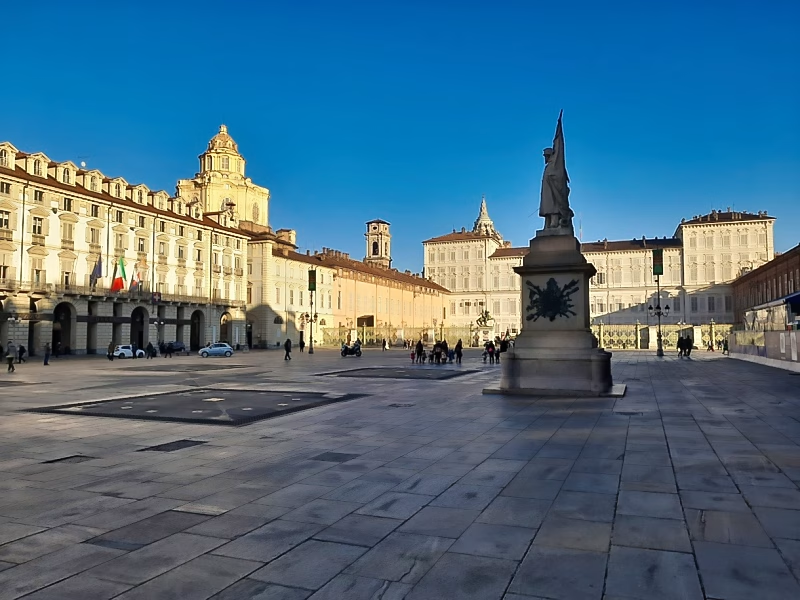
Duomo & Guarini Chapel
Faith, geometry and dynastic power
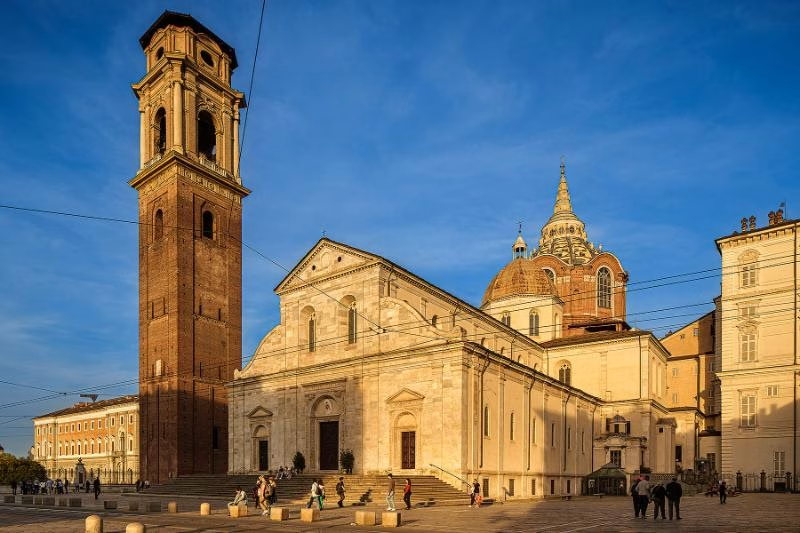
The Duomo di Torino feels deliberately calm. Unlike many Italian cathedrals pressed tightly into medieval streets, it faces an open square — a spatial pause in the middle of the city. This was no accident. The House of Savoy wanted the cathedral to be seen, approached, and understood as part of the civic stage.
Behind it rises the Chapel of the Holy Shroud, designed by Guarino Guarini. From outside, it appears almost discreet; inside, it is one of Europe’s most daring baroque structures. Its stacked arches and spiralling geometry were engineered to draw the eye upwards — a visual metaphor for both faith and dynastic ambition.
A lesser-known detail: the chapel was built not only to house the Shroud, but also to physically connect the cathedral to the Royal Palace of Turin, underlining how closely religion and state were intertwined in Savoy Turin.
Piazza Castello
The city’s hinge point
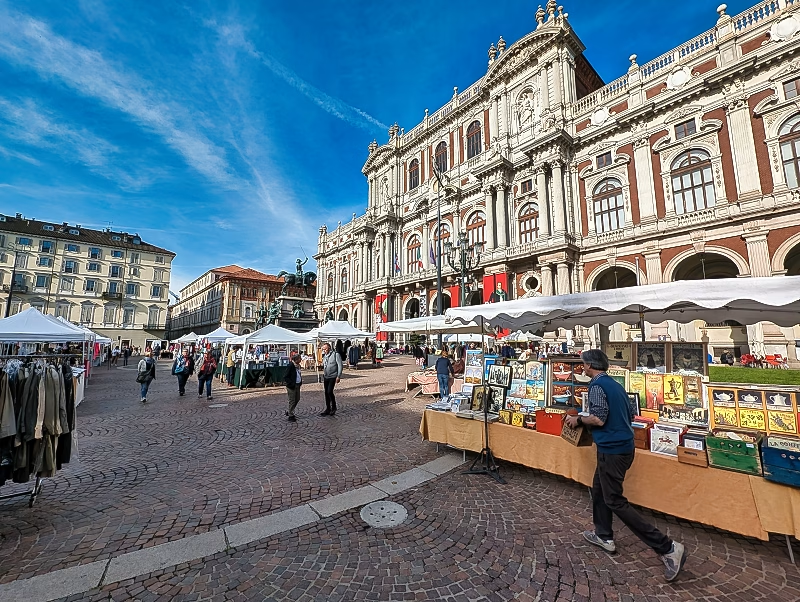
Piazza Castello is less a postcard square than a control room. From here, Turin’s main streets extend with unusual clarity — north, south, east, and west — making it one of the easiest historic centres in Italy to navigate on foot.
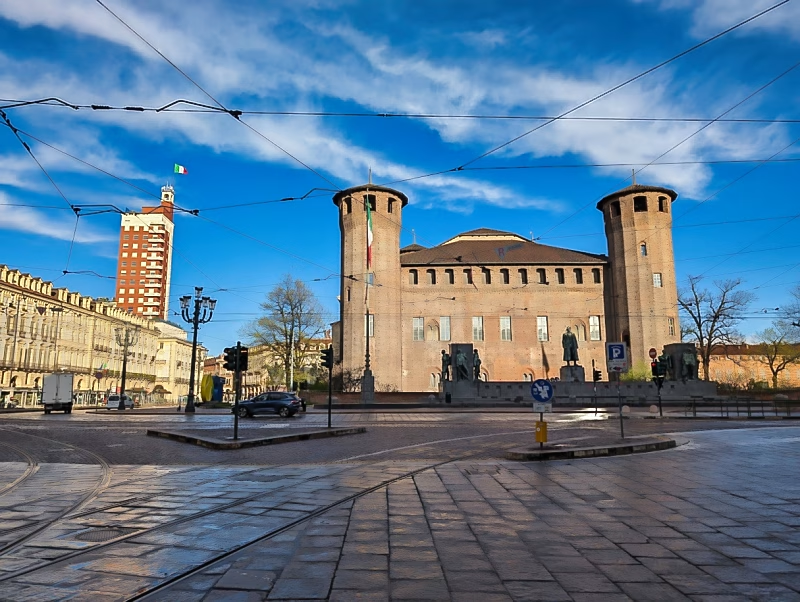
At its centre stands Palazzo Madama, a building that quietly tells a remarkable story: Roman gates at its base, medieval towers above, and an 18th-century baroque façade facing the square. Few buildings in Italy show so many centuries so clearly in one structure.
Look up from some angles and you’ll also spot the Torre Littoria, a 1930s insertion that reminds visitors that Turin never stopped redefining itself — even when doing so caused controversy.
Via Roma, Piazza San Carlo & Piazza Carlo Alberto
Walking, meeting and civic life
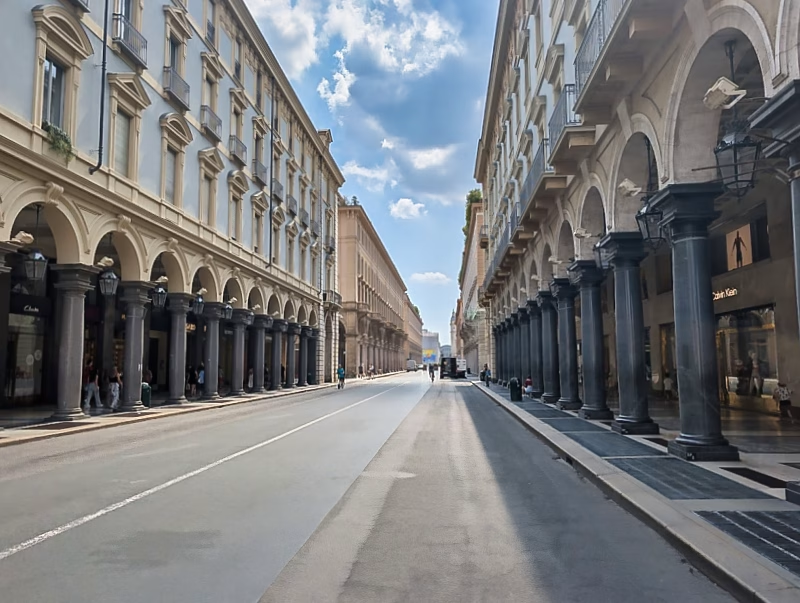
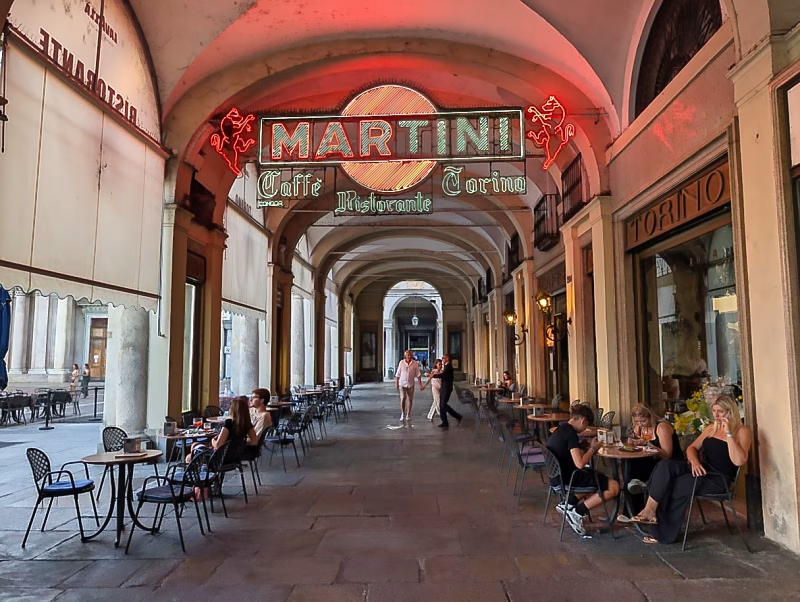
Today, Via Roma is one of the city’s most sociable streets. Shaped in the 1930s as a monumental axis, it now functions as a natural promenade — a place for shopping, afternoon strolls, and lingering aperitivi beneath the arcades.
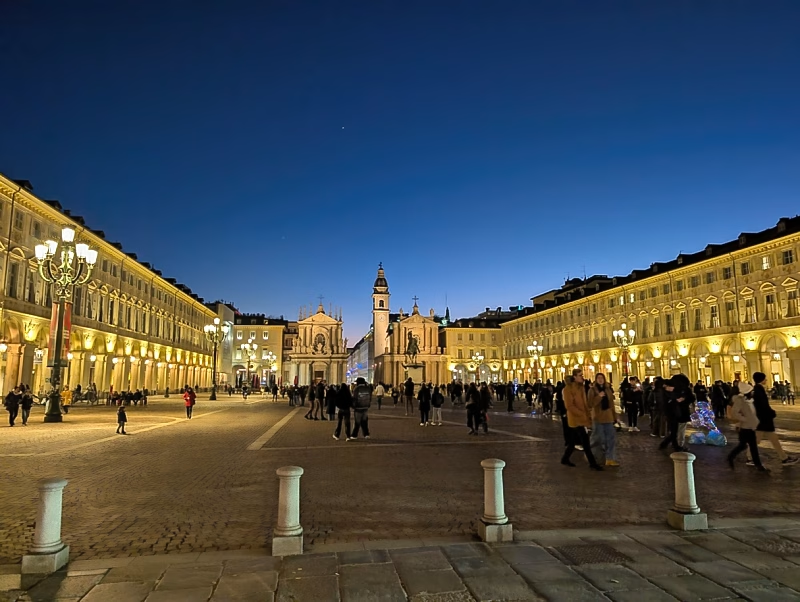
Halfway along, Piazza San Carlo opens like a perfectly proportioned drawing. Known locally as “il salotto di Torino” (Turin’s living room), it has long been a favoured meeting point — first for aristocrats, later for intellectuals, and today for anyone meeting “under the twin churches”.
A short walk away, Piazza Carlo Alberto shifts the narrative. Here, the story turns political. Palazzo Carignano was the birthplace of Italy’s first king, and this square quietly reflects Turin’s central role during the Risorgimento — a past that still shapes the city’s reserved, thoughtful tone.
Porticoes, pedestrian life & why walking Turin feels different
A city built for all seasons
One of Turin’s great — and often underestimated — pleasures is how walkable it is.
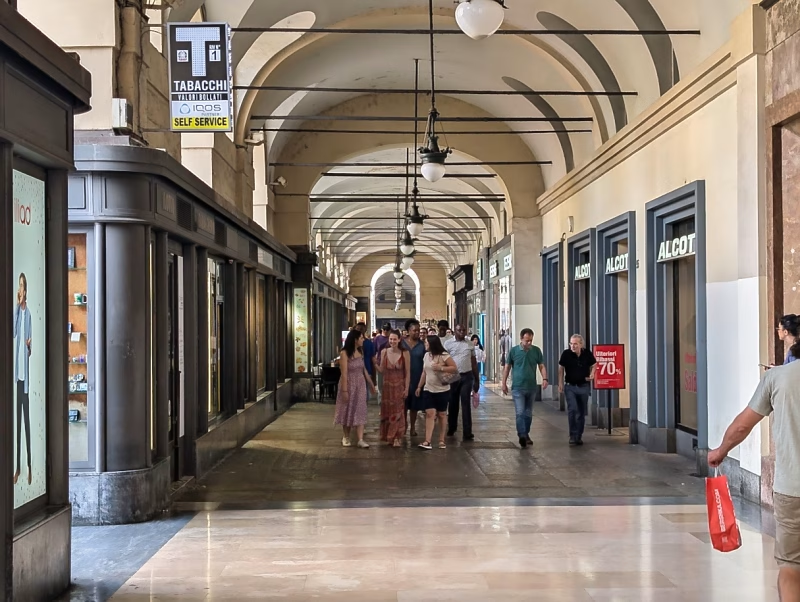
The city boasts around 18 kilometres of covered porticoes, forming one of the most extensive arcaded networks in Europe. These elegant walkways link major squares such as Piazza Castello, Piazza San Carlo and Piazza Vittorio Veneto, allowing continuous movement through the historic centre in rain, heat, or winter fog.
Some sources even claim Turin hosts the largest arcaded square in Europe. Whether or not the title is contested, the experience is undeniable: sheltered shopping streets, cafés spilling beneath stone vaults, and a pedestrian rhythm that feels natural rather than forced.
This is why the historic centre functions so well as a social space. Streets become meeting places. Walking becomes part of daily life, not just a way of getting from one sight to another.
Galleria Subalpina & Caffè Baratti
Turin’s indoor living room
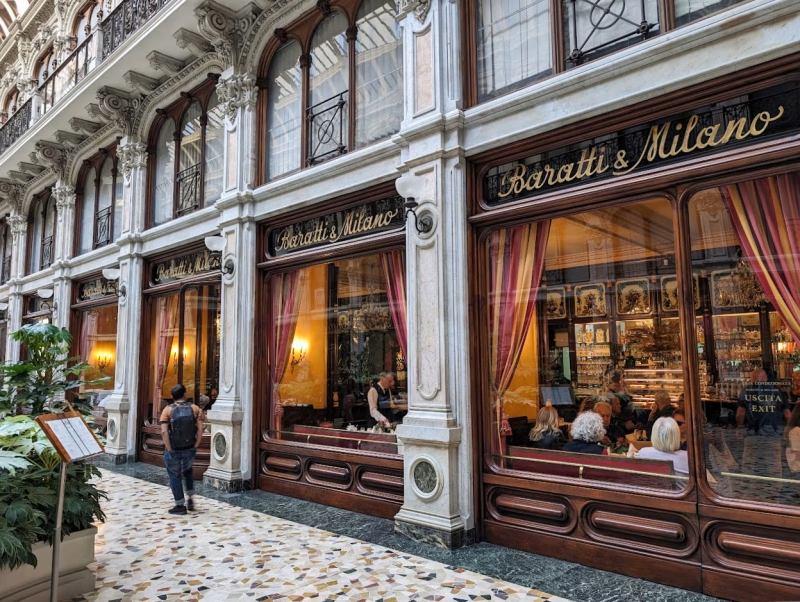
Just off Piazza Castello, the Galleria Subalpina offers a more intimate expression of Turin’s relationship with walking, meeting, and lingering. Opened in 1874, it was conceived as a covered urban salon — a place where commerce, conversation and culture could unfold regardless of the weather.
Unlike grand Parisian passages designed for spectacle, the Galleria Subalpina was always social in intent. Writers, politicians and intellectuals used it as an extension of the street, slipping inside for warmth, coffee, or debate before returning to the city outside. Its iron-and-glass roof, mosaic floors and restrained decoration reflect Turin’s preference for elegance over display.
At its heart sits Caffè Baratti & Milano, founded in the 19th century and long associated with Turin’s chocolate and coffee culture. Once a supplier to the House of Savoy, it became a natural meeting place for the city’s bourgeoisie and cultural elite — a role it still quietly plays today.
Stopping here is less about ceremony and more about continuity. The rituals are simple: coffee at the counter, a gianduiotto with it if you wish, and the sense of being momentarily inside Turin’s everyday rhythm rather than observing it from the outside.
Via Pietro Micca & Piazza Solferino
Civic Turin, quietly confident
West of Via Roma, streets such as Via Pietro Micca lead into Piazza Solferino, a square associated with both military memory and professional life.
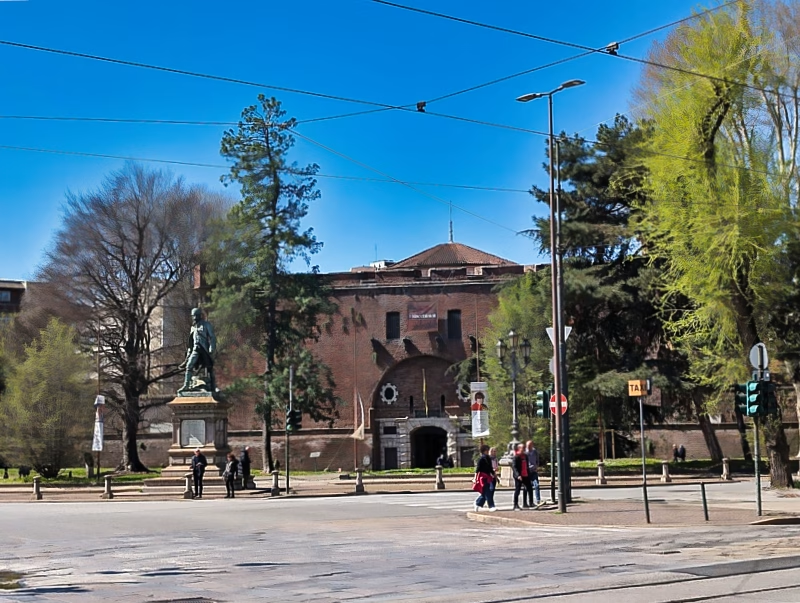
The statue of Pietro Micca recalls the 1706 siege of Turin, when the city’s defence helped secure Savoy independence. That episode is explored in greater depth at the Museo Pietro Micca, located along Via Cernaia — a continuation of Via Pietro Micca — where underground galleries and original passages preserve the memory of the city’s military engineering. Today, however, the square itself feels resolutely contemporary, with offices, cafés and a steady local rhythm replacing spectacle.
It is an area that feels central without being touristic, and one that often appeals to those looking to experience Turin as it is lived today.
This is why the historic centre functions so well as a social space. Streets become meeting places. Walking becomes part of daily life, not just a way of getting from one sight to another.

What this part of Turin reveals
Taken together, the Duomo, Piazza Castello, Via Roma and the surrounding squares explain why Turin feels so different from other Italian cities.
It is a place where:
History is present but not performative
Architecture supports daily life rather than dominating it
Walking is easy, sheltered, and genuinely enjoyable
Shopping, culture, and social life overlap naturally
For travellers drawn to cities that reward curiosity, rhythm, and repeat visits rather than checklist sightseeing, this civic heart offers a quietly compelling introduction to Turin — and often, a reason to stay a little longer than planned.
You are in good hands




Tailor-made Italy holidays, thoughtfully planned by ExpertoItaly.
Characterful places to stay, thoughtful routes and well-planned travel between them — across one region or several.
We arrange your accommodation, transport and experiences in Italy. Flights are booked separately.
About ExpertoItalyPlan with ExpertoItaly
Tell us where you would like to go, when you can travel and what matters to you.
Start planning your Italy holidayMonday–Thursday: 9am–6pm
Friday: 9am–5.30pm · UK time
At weekends, please send an enquiry.
Your holiday protection

Travel Trust Association
Member Q8055
Read how your holiday payments are protected through our TTA membership.
How your holiday is protectedItaly ideas and travel advice by email
Subscribe for destination ideas, places to stay and practical advice from ExpertoItaly.
We will never sell your details. Read our privacy policy.
Follow ExpertoItaly
 Facebook
 WhatsApp channel
Follow our travel updates. For help planning your own holiday, contact ExpertoItaly.
ExpertoItaly Ltd · Company registration no. 12035194 · TTA membership Q8055
Package holidays are sold by ExpertoItaly Ltd. Registered office: 33 Miles Close, London, SE28 0NJ.