Turin’s original city, still in use


The streets and piazzas of the Quadrilatero Romano reveal a dense, walkable fabric shaped by Roman planning and refined through medieval and baroque layers.
Its name describes a physical reality. This district preserves the four-sided grid of Augusta Taurinorum, the Roman settlement founded in the 1st century BC. The plan is still readable on the ground: straight axes, compact blocks, and short distances. Turin did not erase this structure. It built directly on top of it.
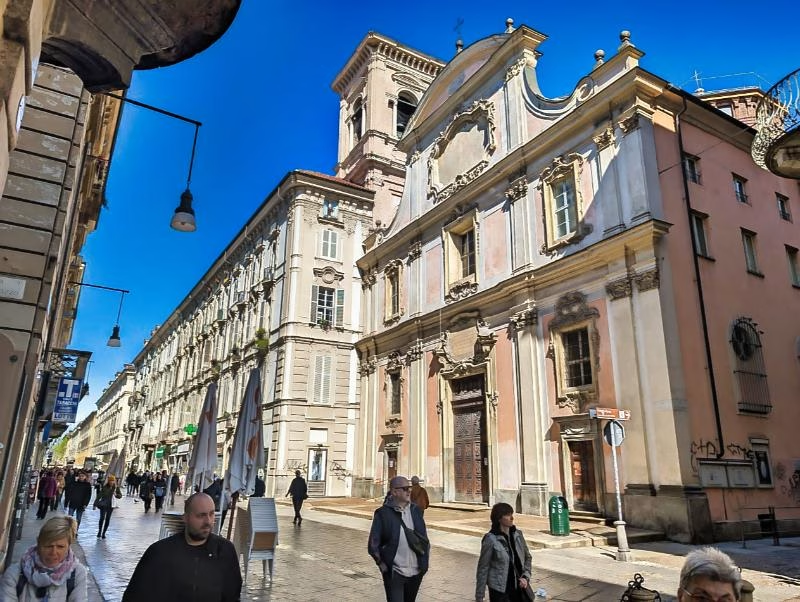
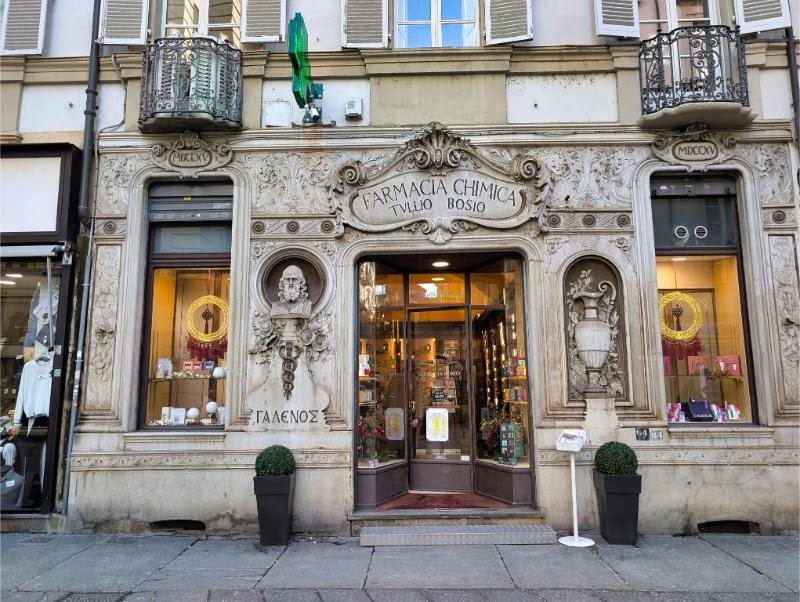
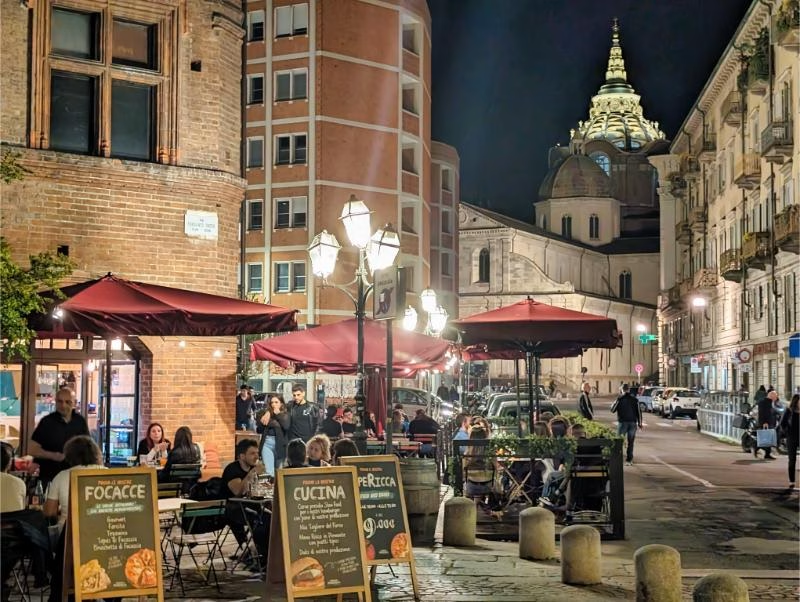
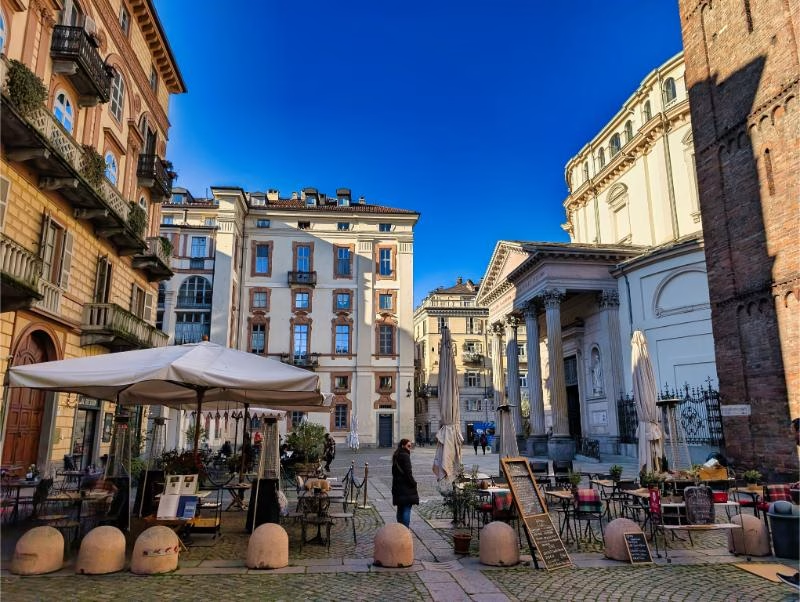
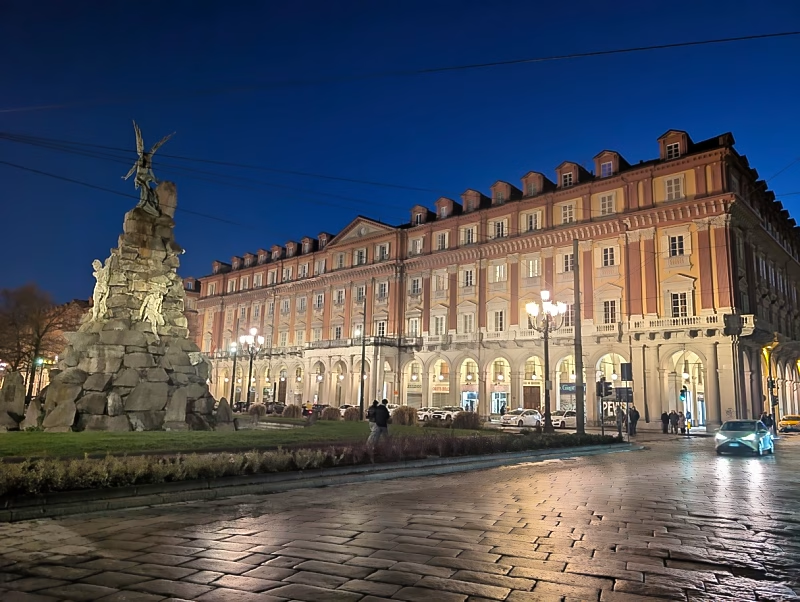
The result, visible throughout the imagery, is a dense urban fabric where Roman foundations, medieval streets, baroque churches, and later civic buildings sit shoulder to shoulder. Nothing here feels isolated or monumental on its own. Everything belongs to a continuous city.
The Quadrilatero lies between Via Garibaldi to the south, Corso Regina Margherita to the north, Via XX Settembre to the east, and Via della Consolata to the west. Within these boundaries, the scale is deliberately human. Streets are short, blocks are tight, and the district is designed to be crossed on foot.
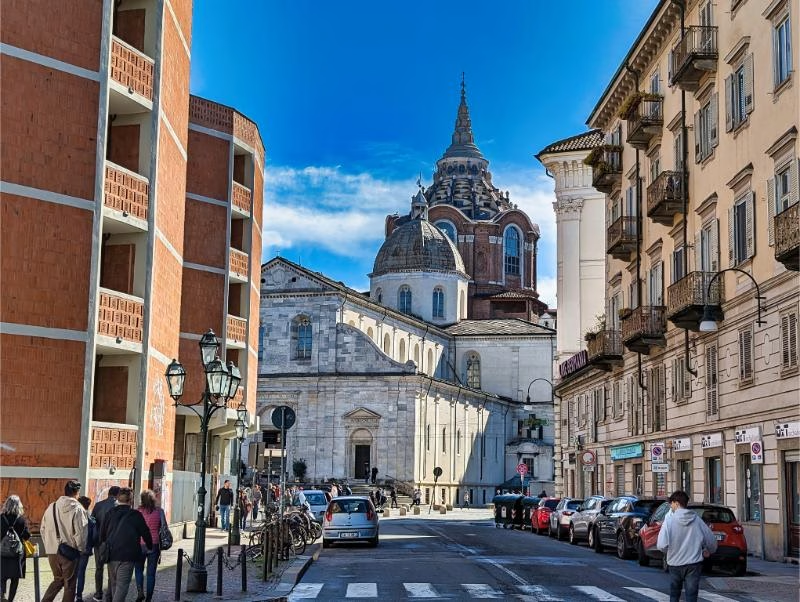
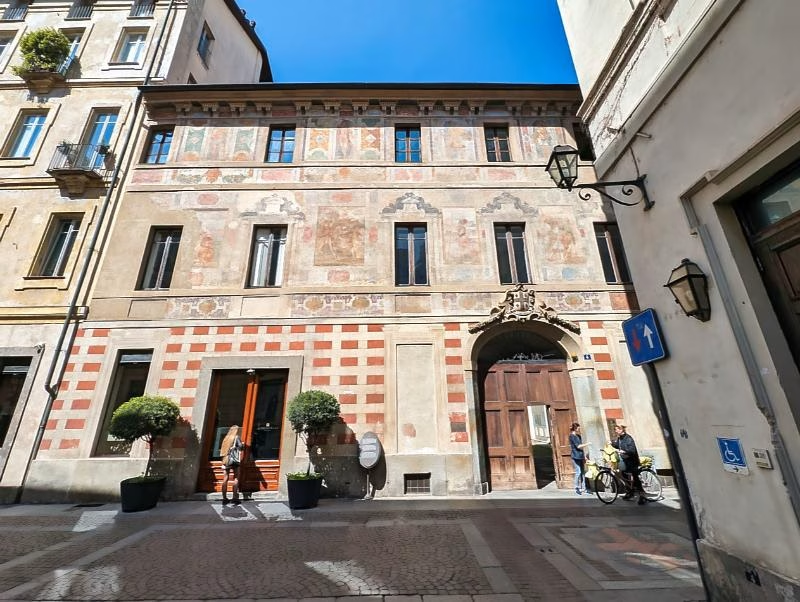
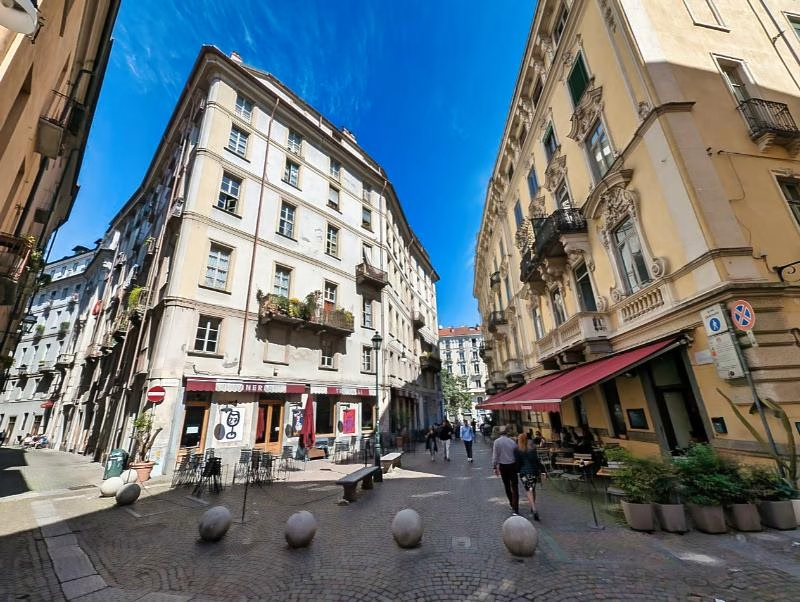
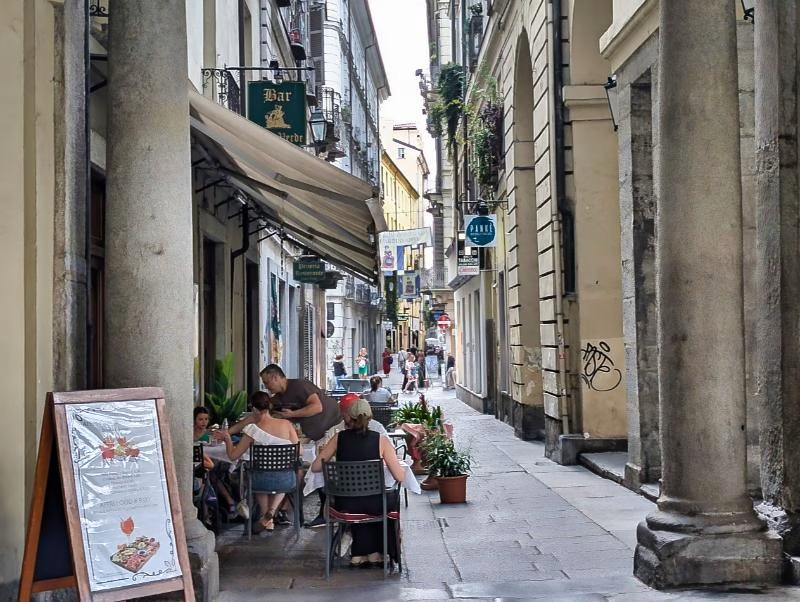
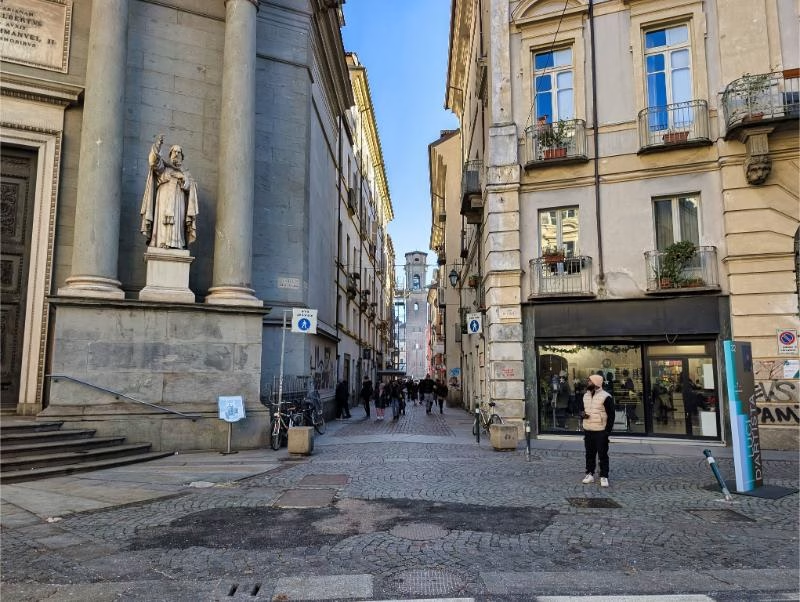
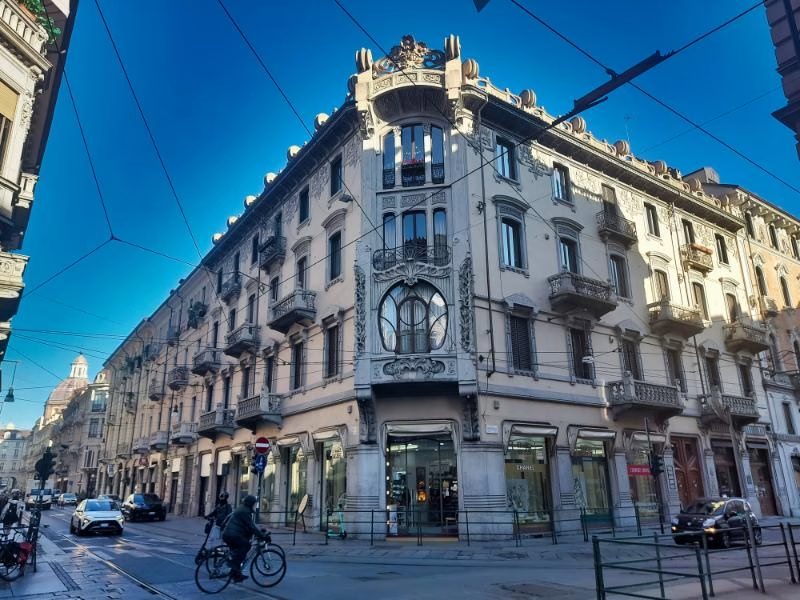
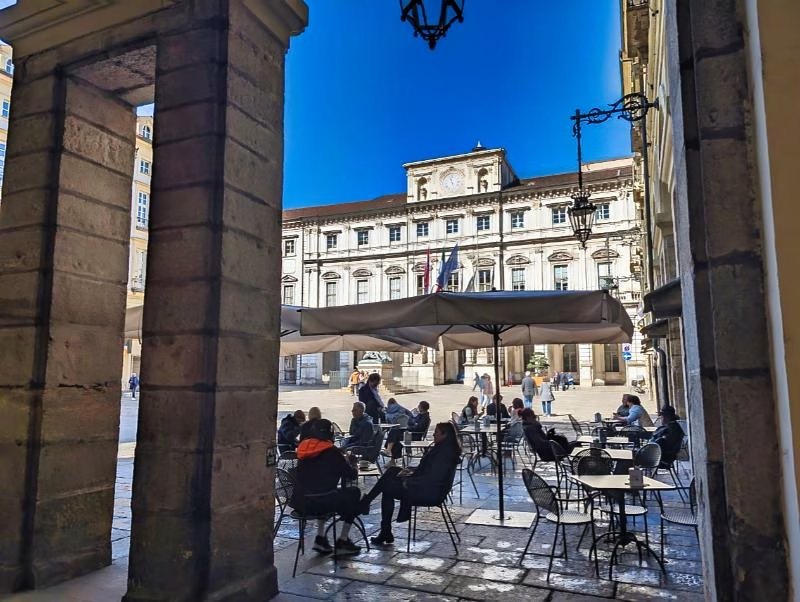
Via Garibaldi and the Roman grid of Turin
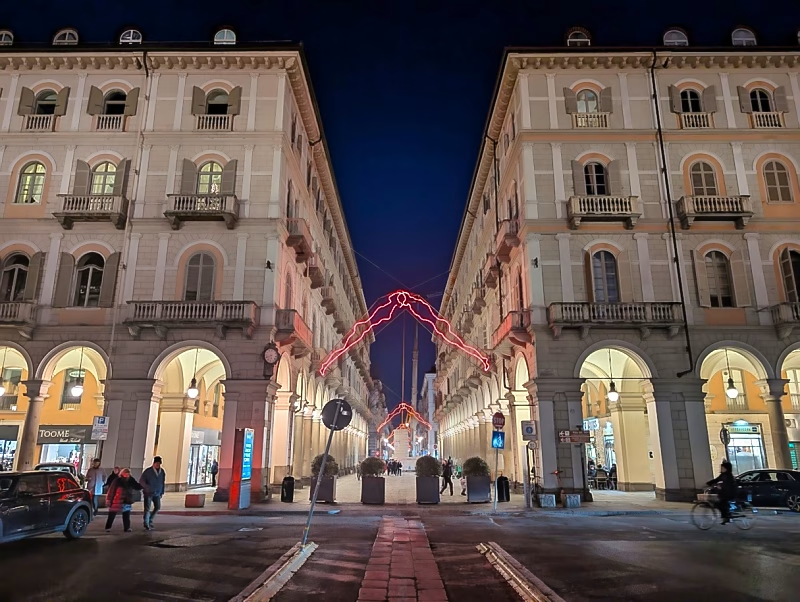
Via Garibaldi follows the Roman decumanus maximus and forms the district’s southern edge. Historically known as Via Dora Grossa, it has always been a commercial artery. Today it remains one of Europe’s longest pedestrian streets, with shops at ground level and residential life continuing above.
Moving north, the grid tightens. Streets such as Via San Domenico, Via delle Orfane, Via Santa Chiara, and Via della Consolata show the medieval layering that developed within the Roman frame: religious houses, workshops, modest residences, and small courtyards pressed close together. The imagery captures this compression — façades close enough to touch, light filtered rather than open.
Small piazzas interrupt the grid rather than dominate it:
- Piazza della Consolata, anchored by the city’s most important sanctuary
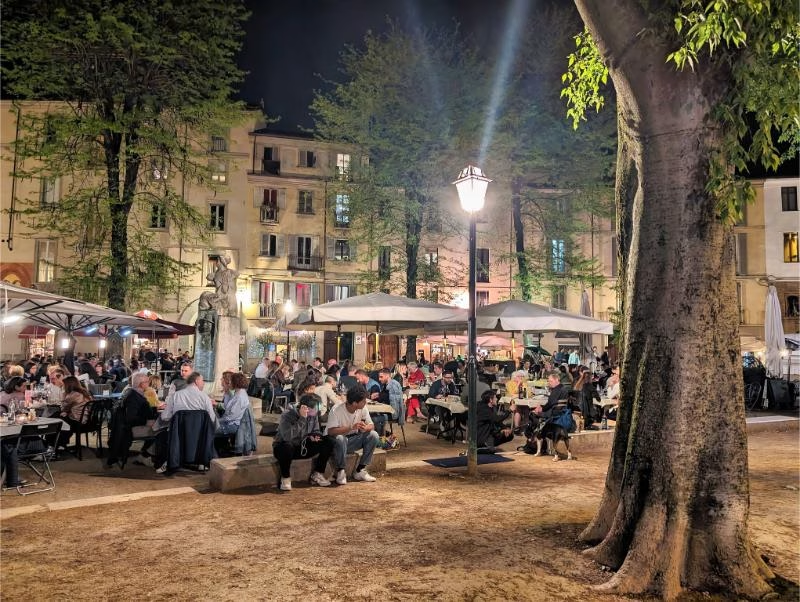
- Piazza Emanuele Filiberto and Piazza IV Marzo, long associated with markets and everyday social life
- Piazza Savoia, marked by its restrained 19th-century obelisk
These are not ceremonial squares. They function as pauses in the urban fabric — places where daily life briefly opens out before narrowing again.
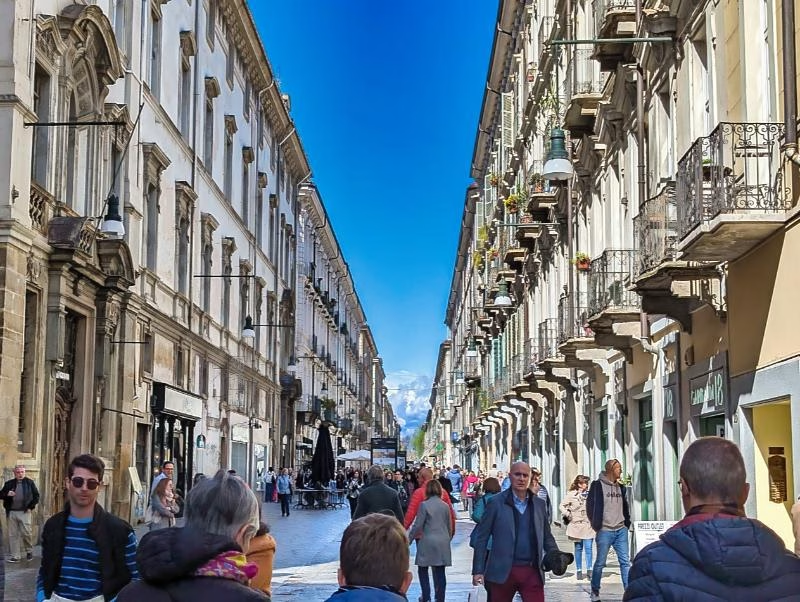
Porta Palazzo, the historic market of Roman Turin
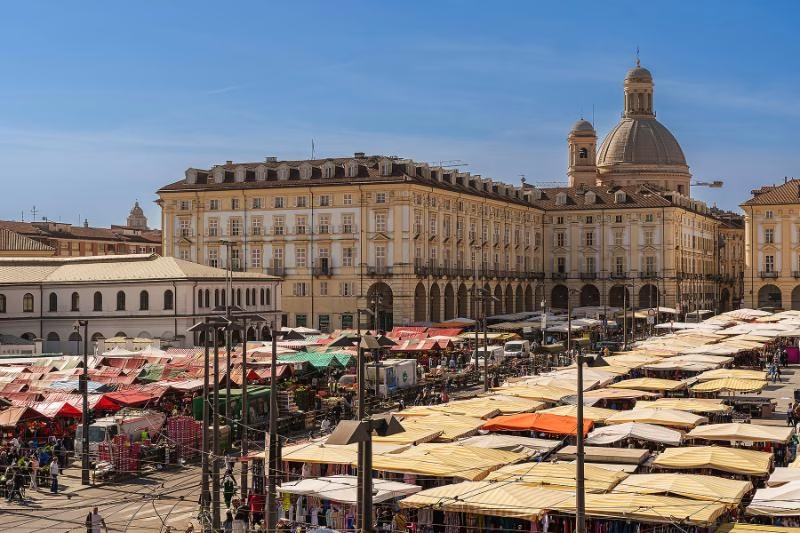
At the northern edge of the Quadrilatero, the city opens into Porta Palazzo, Europe’s largest open-air market.
Its location follows Roman logic. Markets traditionally formed near city gates, and in Turin this function was never displaced. Instead, it expanded. Over centuries, Porta Palazzo grew outward while remaining rooted to the historic core.
Porte Palatine, the Roman city gates of Turin
At the north-eastern corner of the Quadrilatero stand the Porte Palatine, among the best-preserved Roman city gates in the world.
Their survival is practical rather than accidental. Because they remained in use through the Middle Ages, they were incorporated into later structures instead of being dismantled for stone. Function protected them more effectively than reverence.
Restored in the 20th century, the gates still mark the threshold between the Roman city and the area that developed into Porta Palazzo. In the imagery, they read less as a monument and more as a hinge — a point of passage that has always been crossed rather than admired from a distance.

Bicerin, the traditional drink of the Quadrilatero Romano
The bicerin is a traditional Turinese hot drink made of espresso, hot chocolate, and milk or cream, served layered rather than stirred in a small glass.
It emerged in the 18th century around the Santuario della Consolata, where vendors served warm drinks to pilgrims. The name comes from the Piedmontese bicerìn, meaning “small glass”.
The café Al Bicerin, established in 1763 just off Piazza della Consolata, became closely associated with the drink. It was frequented by local residents and public figures alike, including Camillo Benso di Cavour — less as a literary anecdote than as evidence of how deeply this ritual belonged to everyday city life.
You are in good hands




Tailor-made Italy holidays, designed personally by Antonio Cresce.
Characterful places to stay, thoughtful routes and well-planned travel between them — across one region or several.
We arrange your accommodation, transport and experiences in Italy. Flights are booked separately.
Meet Antonio & discover ExpertoItalyPlan with ExpertoItaly
Tell me where you would like to go, when you can travel and what matters to you.
Start planning your Italy holidayMonday–Thursday: 9am–6pm
Friday: 9am–5.30pm · UK time
At weekends, please send an enquiry.
Your holiday protection

Travel Trust Association
Member Q8055
Read how your holiday payments are protected through our TTA membership.
How your holiday is protectedItaly ideas and travel advice by email
Subscribe for destination ideas, places to stay and practical advice from ExpertoItaly.
We will never sell your details. Read our privacy policy.
Follow ExpertoItaly
 Facebook
 WhatsApp channel
Follow our travel updates. For help planning your own holiday, contact Antonio directly.
ExpertoItaly Ltd · Company registration no. 12035194 · TTA membership Q8055
Package holidays are sold by ExpertoItaly Ltd. Registered office: 33 Miles Close, London, SE28 0NJ.