A lived-in neighbourhood shaped by planning, culture and everyday life


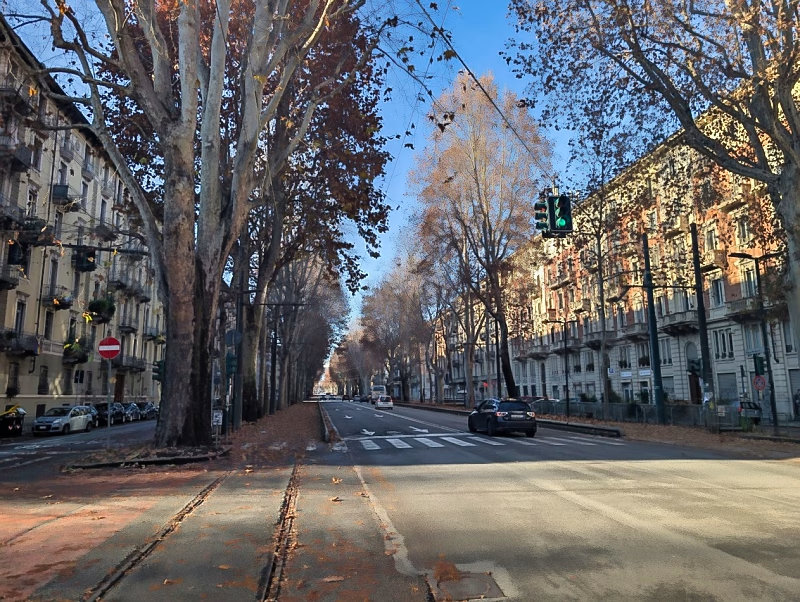
Borgo Vanchiglia occupies the triangular stretch between the Po, Corso Regina Margherita and Corso San Maurizio, immediately east of Via Po. Today it feels calm and residential, defined by tree-lined streets, compact apartment blocks and a steady local rhythm. This sense of balance, however, is the result of careful planning rather than chance.
Vanchiglia offers a different reading of Turin: less ceremonial than Piazza Castello, less theatrical than Via Po, yet deeply connected to how the city became modern.
From unhealthy fringe to planned neighbourhood
Until the mid-19th century, Vanchiglia was one of Turin’s least desirable areas. Its proximity to the river and the presence of the canale dei Canonici — effectively an open sewer used by latrines and slaughterhouses — made the area unhealthy and marginal. The former Jewish cemetery further reinforced its peripheral status.
The turning point came in the 1850s, when Turin introduced a major expansion plan led by architect Carlo Promis. Vanchiglia was not treated as an afterthought, but as a district where the city’s future growth could be tested.
What remains visible today is the result of that plan:
- former military earthworks near the Royal Gardens were levelled
- streets such as Via Rossini and Via Montebello were extended and regularised
- the area was drained and sanitised
- a clear, rational street grid replaced irregular plots
Early construction favoured solid, functional buildings, reflecting the district’s proximity to both the river and the historic centre.
Antonelli and the identity of Vanchiglia
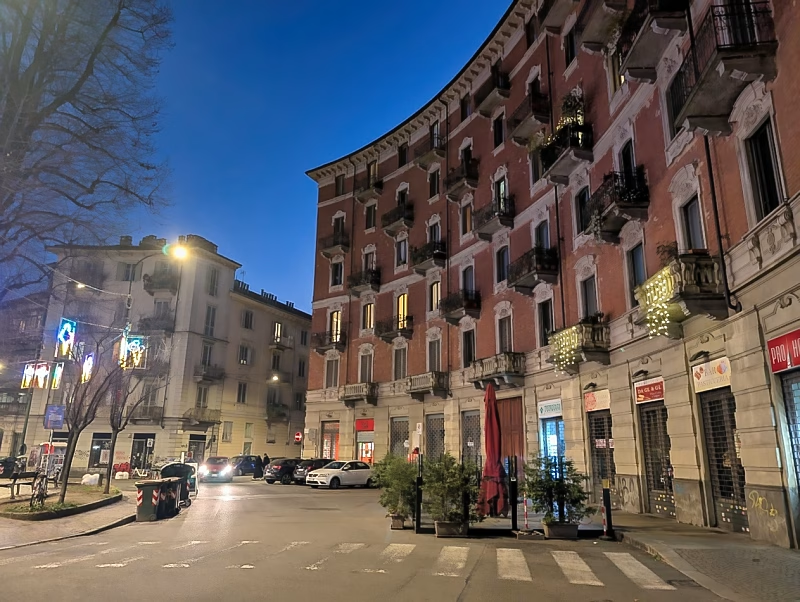
Several of Vanchiglia’s sharper corners and unusual façades are linked to the work of Alessandro Antonelli. While development slowed elsewhere after Turin lost its capital status in 1865, Vanchiglia continued to evolve, partly thanks to his presence and investment.
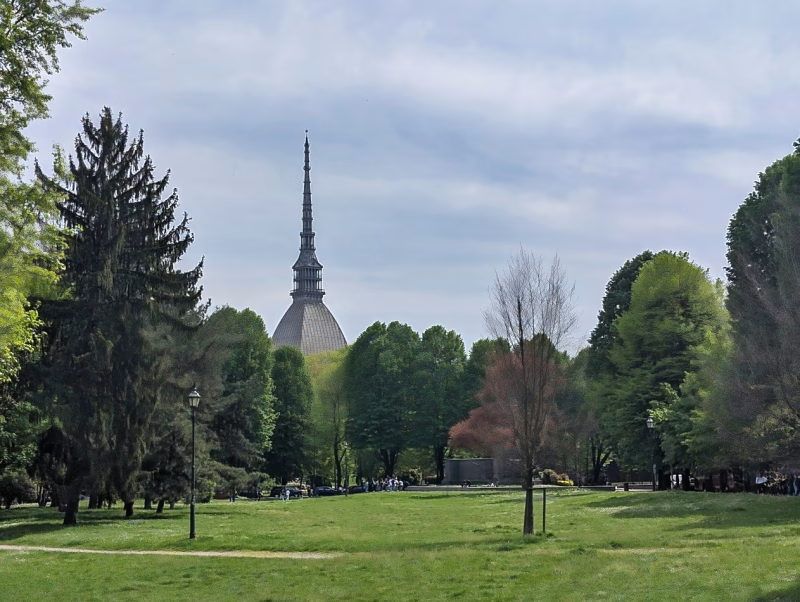
Just to the west rises the Mole Antonelliana, conceived as a synagogue and later transformed into a civic monument. Its position — on the edge of Vanchiglia rather than in a royal square — tied the district to culture and experimentation rather than ceremony, anchoring it permanently to Turin’s intellectual life.
Antonelli also lived locally, reinforcing Vanchiglia’s reputation as a place where ambition and unconventional solutions were accepted.

Piazza Santa Giulia: everyday civic life
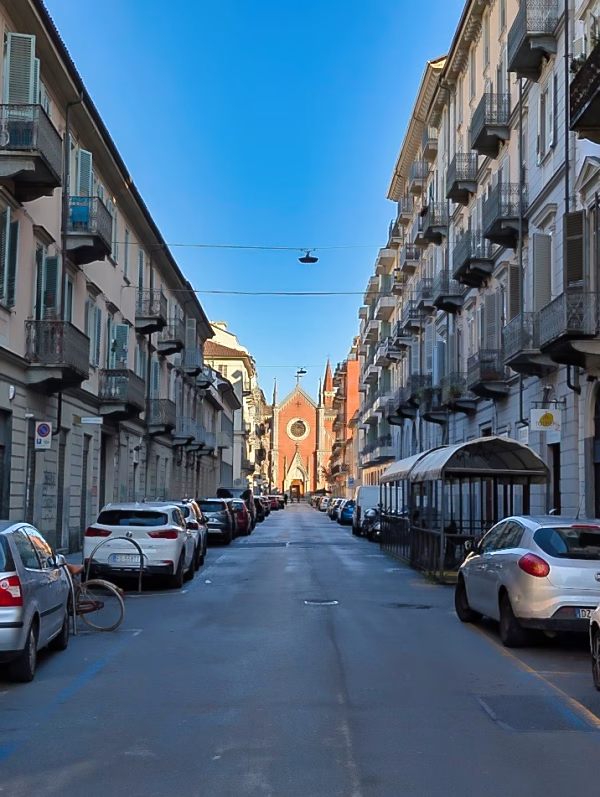
At the heart of the district lies Piazza Santa Giulia, historically a market square and still one of the area’s most active gathering points. It is informal, social and genuinely lived in — shaped by daily routines rather than visitors.
Overlooking the square is the Chiesa di Santa Giulia, built in 1866 thanks to the patronage of Giulia di Barolo. Its architecture reflects the neighbourhood itself: restrained, functional, and part of everyday life rather than designed for ceremony.

Narrow plots, sharp corners
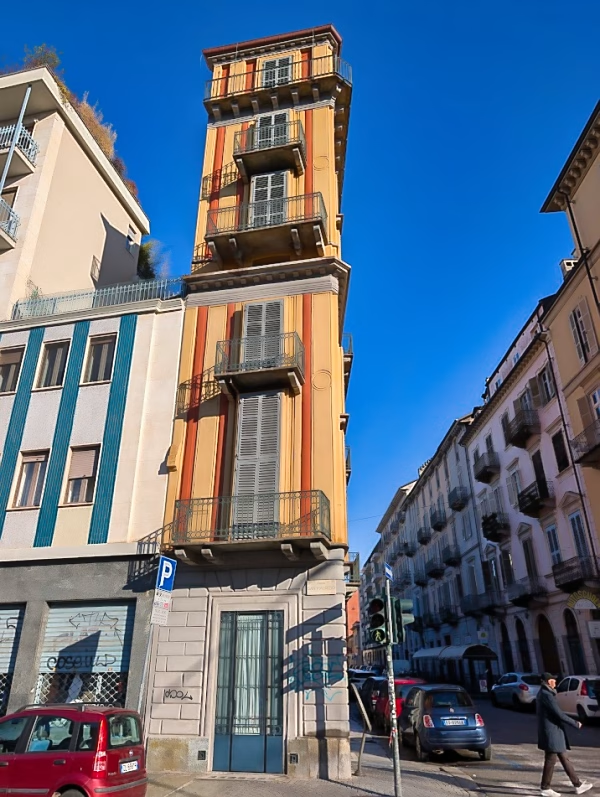
Vanchiglia is known for buildings shaped by tight plots and practical solutions rather than decorative ambition. The most famous example is the Fetta di Polenta, officially known as Casa Scaccabarozzi.
Designed by Alessandro Antonelli in 1840, the house stands on a tiny trapezoidal plot at the corner of Corso San Maurizio and Via Giulia di Barolo. At its narrowest point it measures little more than half a metre wide, while rising to around 25 metres in height. Its nickname comes from its wedge-like form and warm yellow-ochre façade.
These buildings are not eccentricities. They reflect how Turin accommodated density while maintaining a clear, ordered street layout.
Vanchiglia’s most famous architectural curiosity sits quietly within this otherwise rational fabric.


Voices, education and a bohemian edge
Vanchiglia has long attracted artists, musicians and students. Among its most famous residents was Fred Buscaglione, who lived in Via Bava; his funeral at Santa Giulia in 1960 cemented the district’s place in Turin’s cultural life.
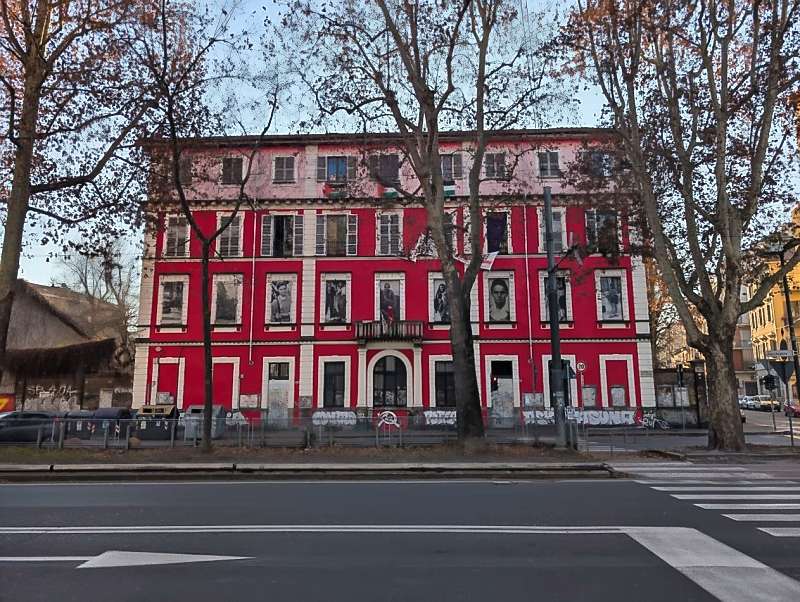
Along Corso Regina Margherita, street art, posters and murals add a more bohemian note — visual reminders that this is a neighbourhood where creativity and everyday life coexist.
By the early 20th century, the district expanded beyond Corso San Maurizio, introducing Liberty-influenced façades and educational institutions such as the future Istituto Avogadro. Civic buildings from this period, including the former municipal baths, show how even public services were once designed with architectural care.
Why Borgo Vanchiglia matters
Borgo Vanchiglia tells a quieter, more residential story of Turin. It shows how the city addressed growth, health and education through practical planning rather than grand gestures.
History here remains visible at street level: in compact façades, rational streets, modest churches and buildings shaped by necessity as much as ambition. Vanchiglia is not a postcard — it is a working chapter of how Turin became a modern city.
For travellers who prefer lived-in neighbourhoods over landmarks, Vanchiglia offers one of Turin’s most convincing bases.

You are in good hands




Tailor-made Italy holidays, designed personally by Antonio Cresce.
Characterful places to stay, thoughtful routes and well-planned travel between them — across one region or several.
We arrange your accommodation, transport and experiences in Italy. Flights are booked separately.
Meet Antonio & discover ExpertoItalyPlan with ExpertoItaly
Tell me where you would like to go, when you can travel and what matters to you.
Start planning your Italy holidayMonday–Thursday: 9am–6pm
Friday: 9am–5.30pm · UK time
At weekends, please send an enquiry.
Your holiday protection

Travel Trust Association
Member Q8055
Read how your holiday payments are protected through our TTA membership.
How your holiday is protectedItaly ideas and travel advice by email
Subscribe for destination ideas, places to stay and practical advice from ExpertoItaly.
We will never sell your details. Read our privacy policy.
Follow ExpertoItaly
 Facebook
 WhatsApp channel
Follow our travel updates. For help planning your own holiday, contact Antonio directly.
ExpertoItaly Ltd · Company registration no. 12035194 · TTA membership Q8055
Package holidays are sold by ExpertoItaly Ltd. Registered office: 33 Miles Close, London, SE28 0NJ.