


In this article
East of Amalfi, Minori, Maiori, Cetara and Vietri sul Mare reveal four different ways of living on the same coast. Pasta-making, cultivated terraces, fishing and ceramics give each town a particular character. Their differences become more interesting when you understand the connections between them.
Enjoy a meal in Minori, a walk above Maiori, time around Cetara’s harbour or a conversation in a Vietri workshop. Choose two neighbouring towns for an unhurried day, with time for lunch and the discoveries along the way.
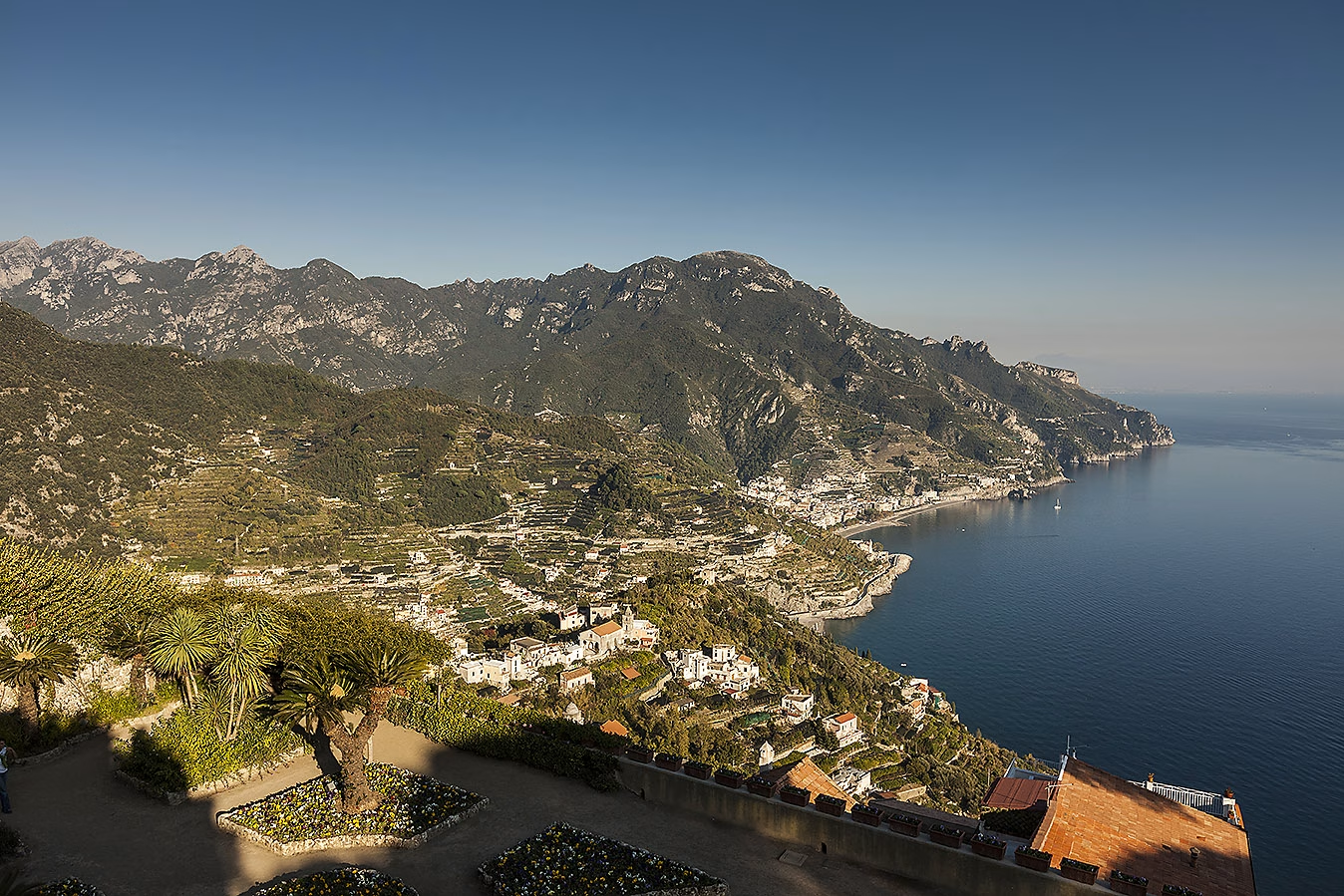
The eastern coast: linked, but never identical
The towns occupy the mouths of valleys and the slopes around them. Streams, cultivable land and access to the sea helped people settle here; inland routes linked the coast with communities beyond the mountains. The Roman villa at Minori provides firm evidence of ancient occupation. Other accounts of the towns’ beginnings include traditions and disputed identifications, which should not be treated as established foundation dates.
In the medieval period, Minori, Maiori and Cetara formed part of the world of the Amalfi duchy. Religious institutions, farming, coastal defence and maritime activity connected them with their neighbours. Vietri’s relationships leaned more strongly towards nearby Salerno and Cava de’ Tirreni. Being on the modern Amalfi Coast does not mean every town followed precisely the same political history.
Our guide to Amalfi and Atrani explains the maritime centre behind many of these connections. Here, the most revealing question is how each community used its own valley, shoreline and skills.
Minori: a Roman residence and a town of pasta-makers
Minori’s Roman villa places this small town in a much older history of coastal residence. Built in the early first century AD, it extended towards the sea and remained in use, with changing functions, into the seventh century. Its dining and water-display spaces, decoration and garden layout show that the coast attracted wealthy households long before modern tourism.
Roman villa: check reopening before planning a visit
At our September 2026 check, the Ministry of Culture still listed the villa and Antiquarium as temporarily closed for restoration, following closure in August 2025. Consult the official Minori Roman villa listing for the reopening announcement. Its history belongs in an account of Minori, but entry should not currently be assumed.
Later Minori developed within the medieval Amalfi territory, with religious life, cultivation and trade shaping the settlement. The Basilica of Santa Trofimena remains its principal church and a useful starting point for understanding the town’s patronal traditions.
Those traditions also reach the table. Ask about ’ndunderi, the hand-shaped pasta associated with celebrations for Santa Trofimena. The present recipe uses flour, ricotta or curdled milk, egg yolks and cheese. The pieces are pressed and ridged to hold their sauce. Claims of Roman ancestry are often repeated, but the local preparation and its continuing place in family and festival cooking are the stronger reasons to try it.
Campania’s account of the dish also connects Minori’s pasta-makers with the later growth of production at Gragnano. This is a reminder that skills travelled across the Monti Lattari. Make lunch part of your visit, then leave time for the streets behind the waterfront and the pastry shops. Spend a leisurely day enjoying Minori’s food, history and waterfront.
Maiori: a broader waterfront with a complicated past
Maiori’s long beach and relatively level seafront make an immediate contrast with the tighter waterfronts elsewhere. They also make it a practical place for a promenade, a pause with children or lunch without a climb. Move inland or towards the churches, however, and the familiar slopes return.
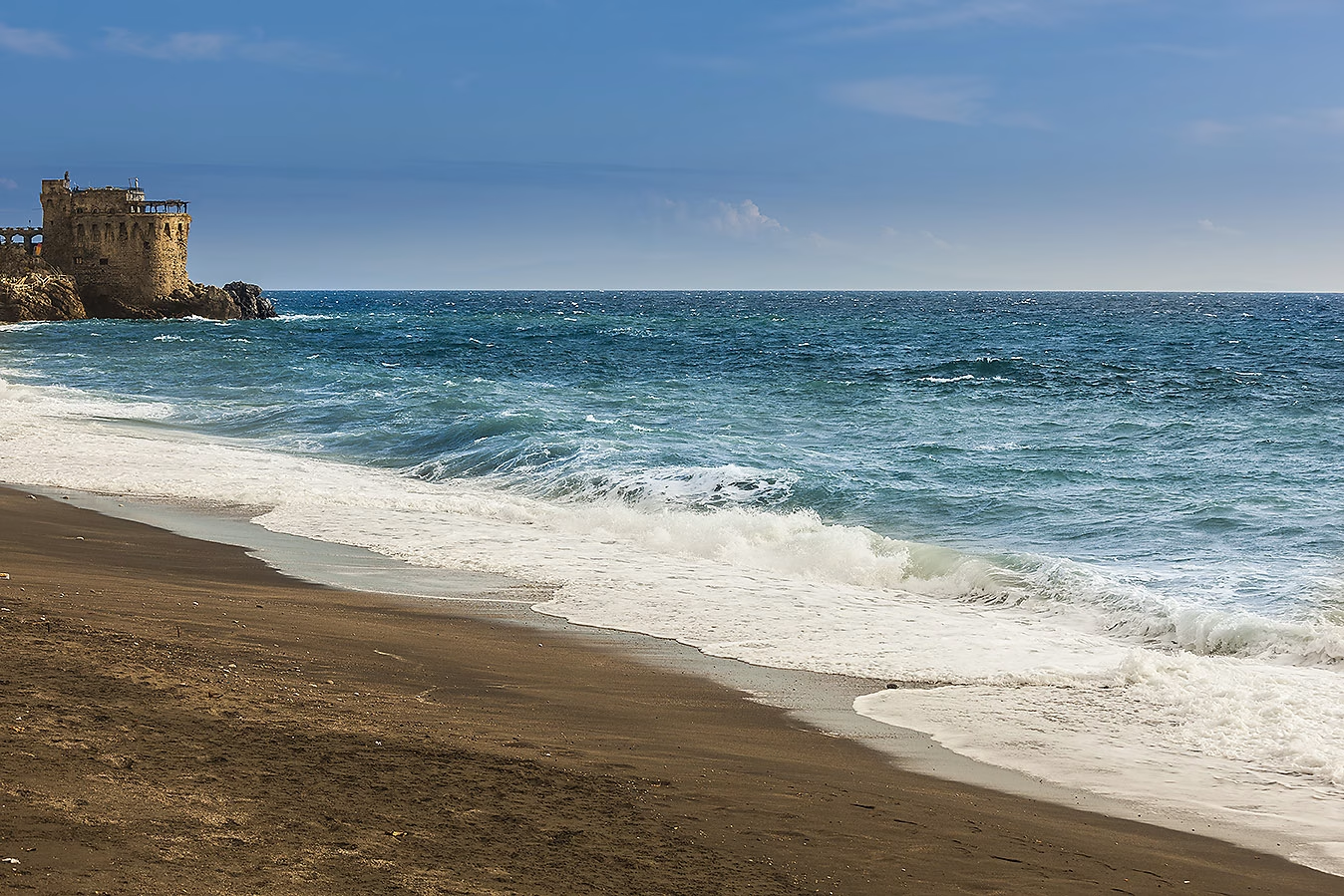
The valley formed a natural connection with the pass towards the Vesuvian plain. Medieval Maiori shared the fortunes of the Amalfi duchy, with coastal towers and the stronghold of San Nicola de Thoro-Plano contributing to its defence. The identity of its earliest founders is uncertain; a confident story of an Etruscan foundation goes beyond what the evidence securely establishes.
The devastating flood of 1954 changed the town. Reconstruction replaced buildings and altered the relationship between the stream, gardens and waterfront. Its modern appearance is therefore part of the history to understand, rather than a reason to overlook it.
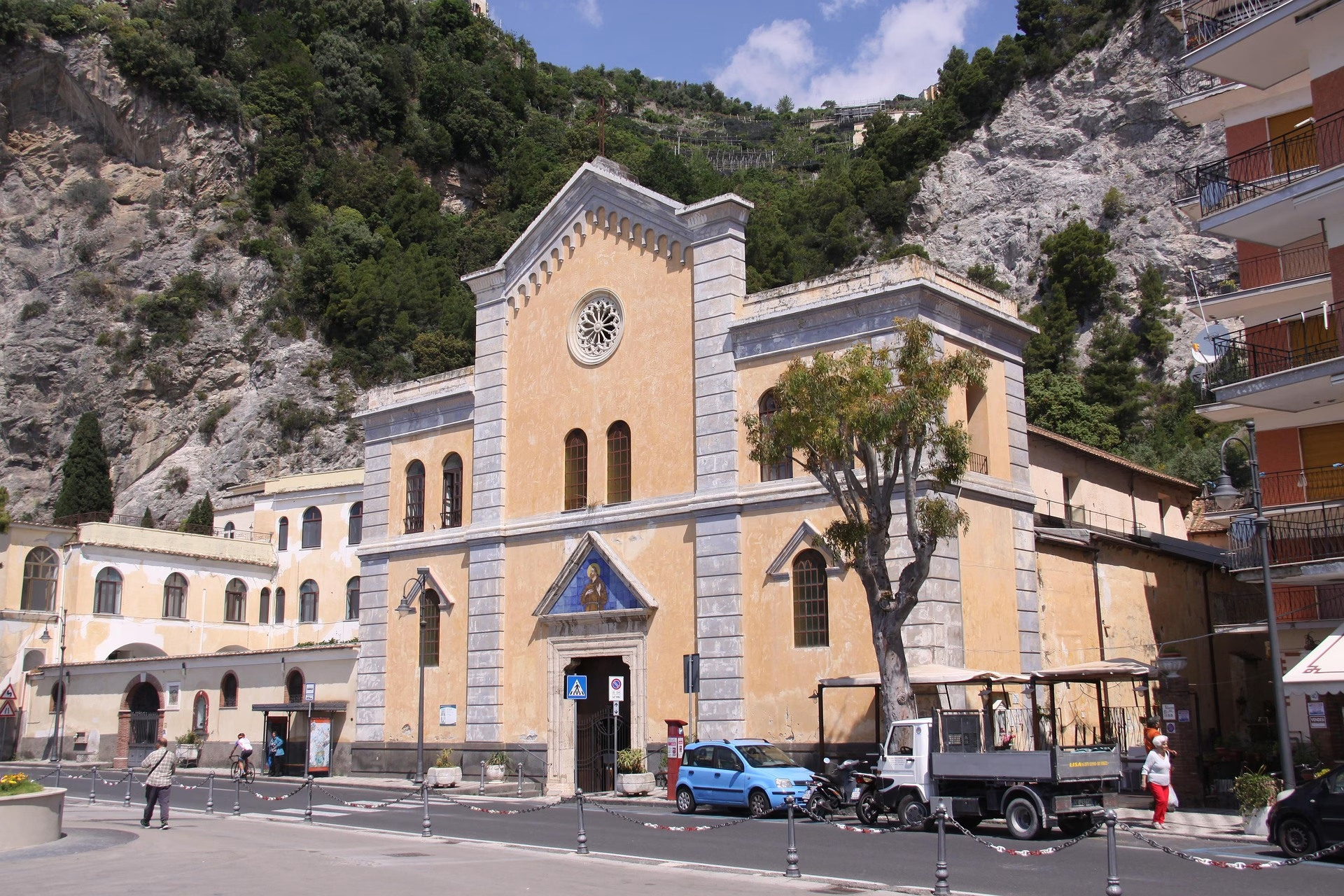
Look up towards the tiled dome of Santa Maria a Mare, then make time for the church and convent of San Francesco near the western end of town. These religious buildings give the waterfront a longer context. Combine these visits with time on the beach or a seafront lunch.
Between Minori and Maiori: the Path of the Lemons
The Sentiero dei Limoni links the two towns through the higher settlement of Torre and the cultivated hillside. It is a good way to see the ground between the waterfronts: terraces, walls and paths that supported the movement of people and produce.
Lemons here are a crop requiring labour, not simply decoration. Notice the structures supporting the trees, the narrow access routes and the divisions between plots. Stay on the public path and enter a grove only through an arranged visit. A local guide or grower can explain the work more clearly than a view from the road.
Although this is a shorter proposition than a major mountain hike, it involves climbs and many steps. Allow a generous part of the morning, take water and check conditions locally after heavy rain. The many steps make this route unsuitable for pushchairs or anyone who finds stairs difficult. The operator’s description of the lemon-path route helps locate its coastal connections; check the details if booking a guided outing.
Cetara: fishing, preservation and colatura
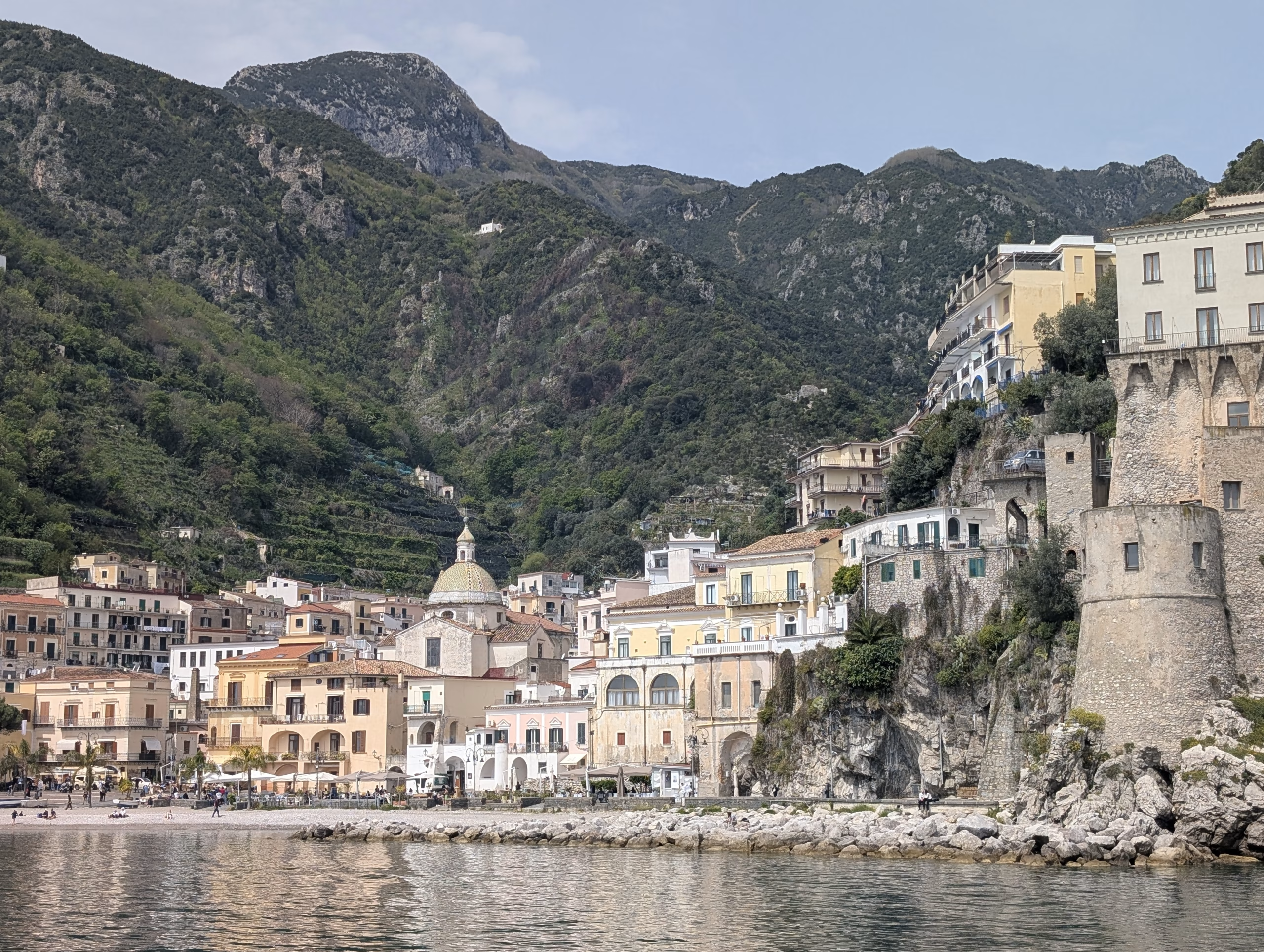
Cetara’s waterfront brings the church, houses, boats and coastal tower into a compact space. Fishing is central to its identity. In the medieval period the settlement belonged to the Amalfi duchy and had connections with religious institutions along the coast and at Cava. Later administrative ties to Vietri preceded its emergence as a separate municipality.
Walk beyond the first viewpoint towards the harbour and the streets around San Pietro. The relationship between work and settlement becomes easier to see when you give the town time. Boats, landing places and the need to preserve a catch mattered here long before they became subjects for visitor photographs.
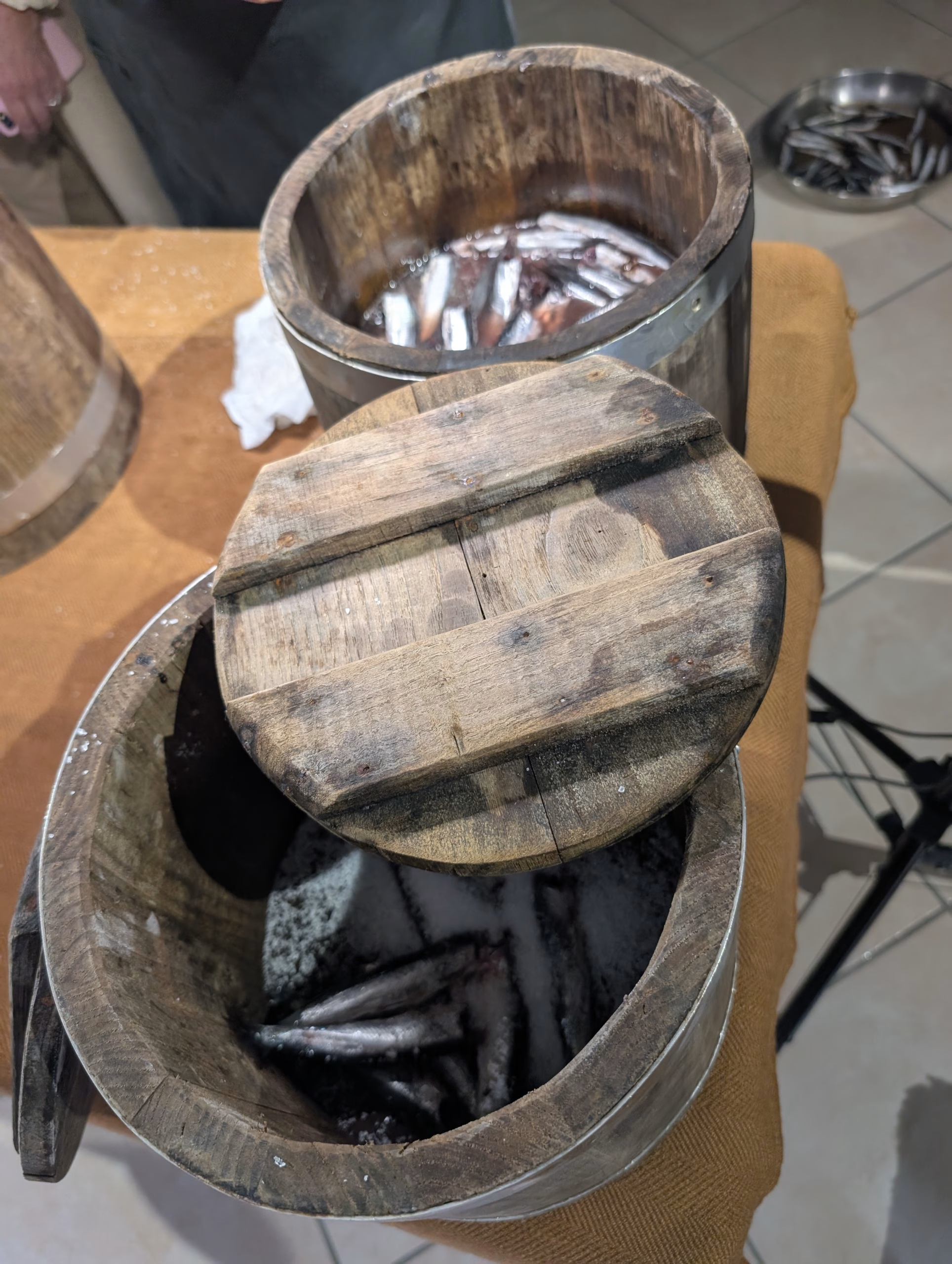
Colatura di alici is the local speciality to understand. Anchovies are layered with salt in wooden containers and weighted while they mature. The resulting liquid is collected and filtered through the fish to produce an amber seasoning with a concentrated savoury flavour. It takes only a small amount to season a dish such as spaghetti.
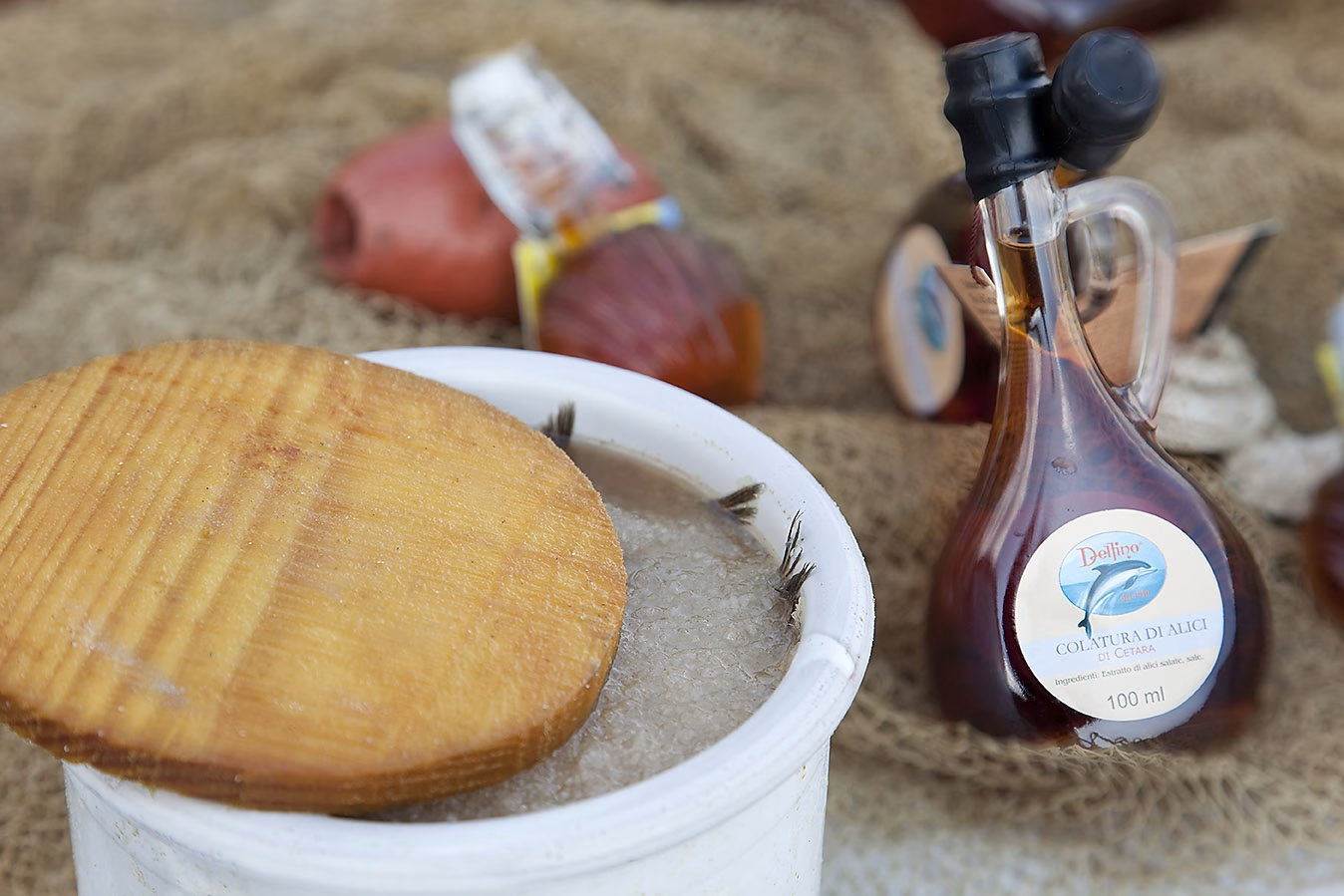
The comparison with Roman garum helps place it within a long Mediterranean history of fish sauces, but does not make today’s product an unchanged Roman recipe. Colatura di Alici di Cetara has protected DOP status; the product specification sets out what that designation means.
Ask a producer or specialist shop how its colatura is matured and used. A tasting, when available, makes the difference between preserved anchovies and their liquid seasoning clear. Stay for lunch in Cetara to enjoy the local fish and try colatura in the dishes it seasons.
Vietri sul Mare: ceramics and the gateway towards Salerno
Vietri stands at the eastern end of this coastal journey, close to Salerno. Ancient finds establish occupation in the area, although the identification of the ancient settlement of Marcina is debated. Its later connections with Cava’s abbey, regional production and trade help explain why its history differs from the smaller valleys farther west.
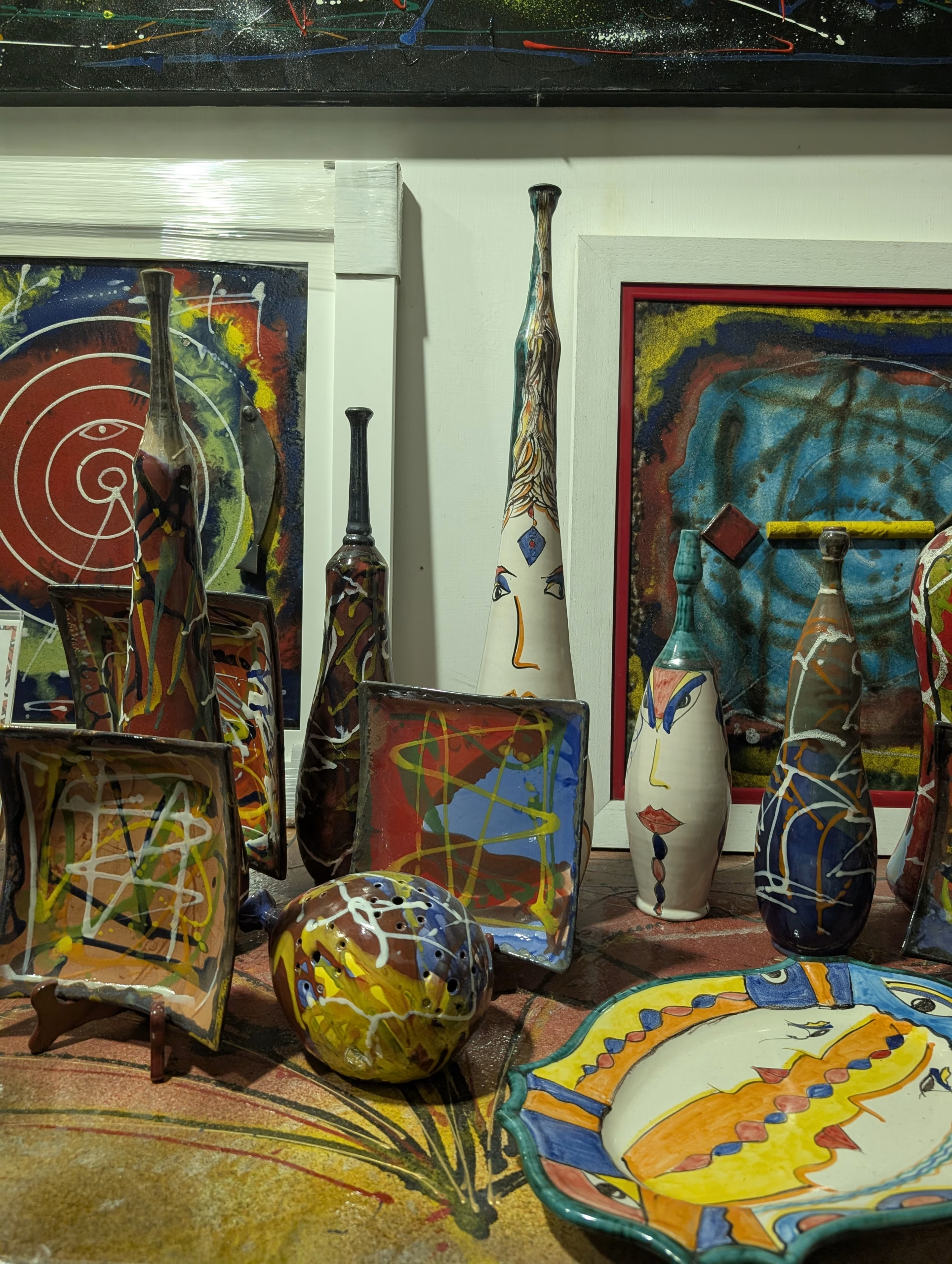
Ceramic production is securely documented from the sixteenth century, with everyday wares already made at the end of the fifteenth. The workshop was known as a faenzera. Plates, jars, religious panels and floor tiles gave this craft uses in ordinary households as well as churches and substantial buildings.
After the First World War, visiting European artists brought new approaches to local workshops. The so-called German period combined established skills with different imagery and markets. The ceramics in Vietri today belong to a tradition that has adapted, rather than remained fixed.
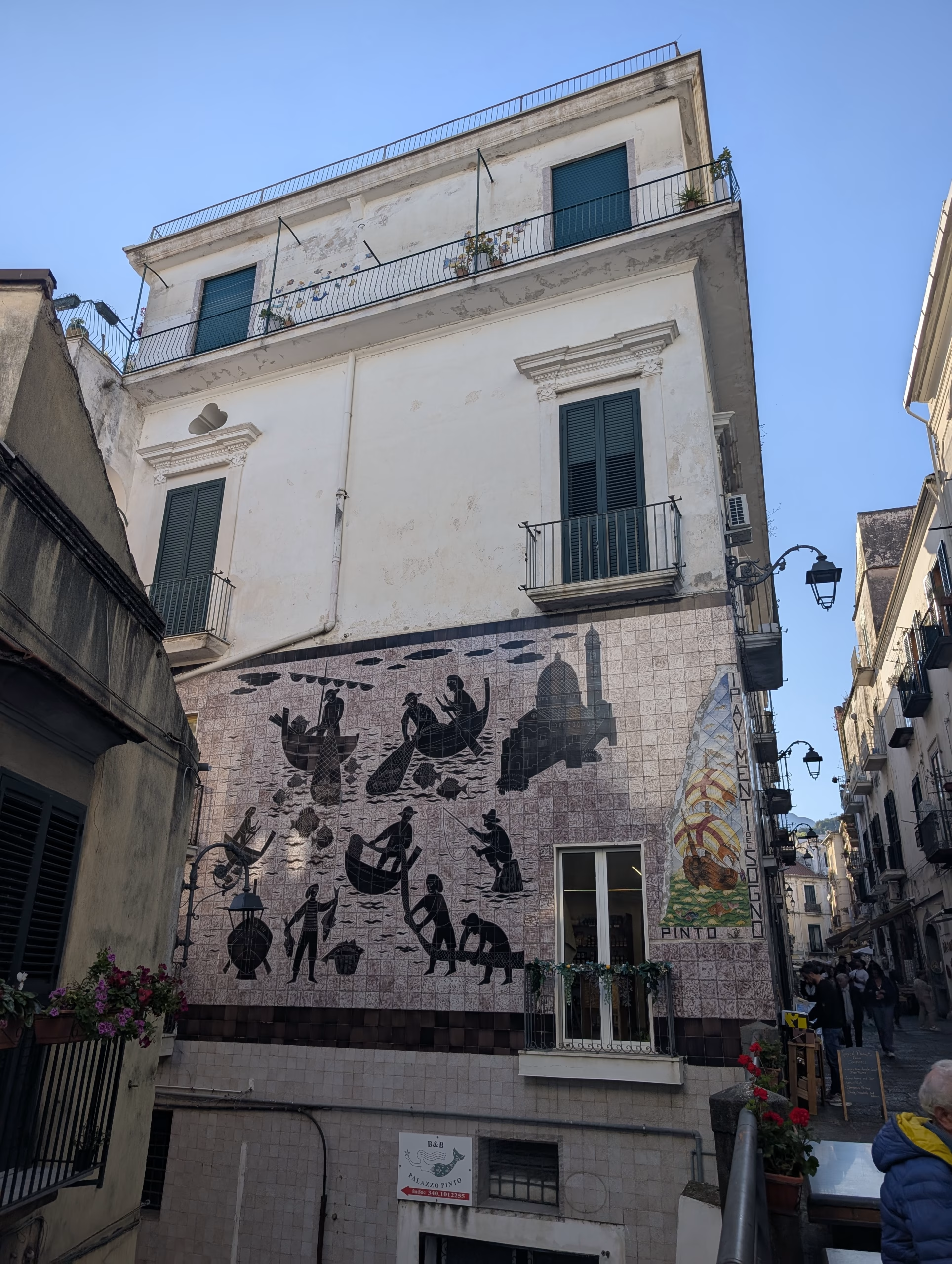
Look around the streets as well as inside shops: decorated façades, signs and religious imagery show ceramics as part of the town. When buying, ask where a piece was made and painted, whether it is intended for food use, and how it can be packed or shipped. Take time to find a piece you would enjoy using or displaying at home.
For more context, consider the ceramics museum at Villa Guariglia in Raito, uphill from central Vietri. It is a separate visit, so confirm opening arrangements and transport first. Likewise, distinguish the town centre from Marina di Vietri below: a ferry arrival at the shore does not remove the climb to the shops.
Enjoy a day on the eastern coast
Minori and Maiori work naturally together: begin with a town visit, add the lemon path if it suits your walking ability, and leave time for lunch. During the Roman villa’s closure, do not build the day around archaeological entry.
Cetara and Vietri make a different pairing: fishing traditions and lunch in Cetara, then ceramics in Vietri. If workshops are the priority, reverse the order around confirmed appointments. Four towns, a hill walk, a museum and a long lunch are too much for an unhurried day.
Seasonal ferries connect several of these waterfronts with Amalfi and Salerno. Check Travelmar’s current routes and operating notices for the actual stops, return sailing and any change at Amalfi. Weather can interrupt boats. Road services remain useful, but distance alone is a poor guide to travel time; our Amalfi Coast driving guide explains when a driver is preferable to a hire car.
Outside summer, the food, churches and craft focus still gives the trip a purpose. Confirm individual openings and reduce the number of stops when daylight is short. Maiori’s seafront can suit a gentler outing; the lemon path and Raito require a more active plan.
Fit the eastern towns into a wider journey
Explore these towns during a settled Amalfi Coast stay, choosing each day’s outings around your hotel and interests. Salerno can also be a useful connection when continuing towards Cilento and its selected places to stay.
For a longer holiday, we might combine a coastal base with time exploring Naples, or make it the southern part of a journey through Florence and Rome. Our Amalfi Coast multi-centre holidays illustrate the approach. Tell us whether food, craft, walking or a slower pace matters most, and we can build the route around that.



 Facebook
 WhatsApp channel