


Rialto and San Polo: merchants, markets and the art they supported
Explore Rialto, the Frari and Scuola Grande di San Rocco through the merchants, confraternities and painters who shaped San Polo.
In this article
San Polo brings together three subjects that are often separated in a Venice itinerary: trade, religion and painting. Around Rialto, the city exchanged goods and money. At the Frari and Scuola Grande di San Rocco, wealth became architecture, charitable prestige and extraordinary works of art.
The distances are modest, but the contents are substantial. This is a good day to begin with the market, walk through the district and give one or two interiors proper attention. The connection between them matters more than the number of stops.
Rialto: where Venice did business
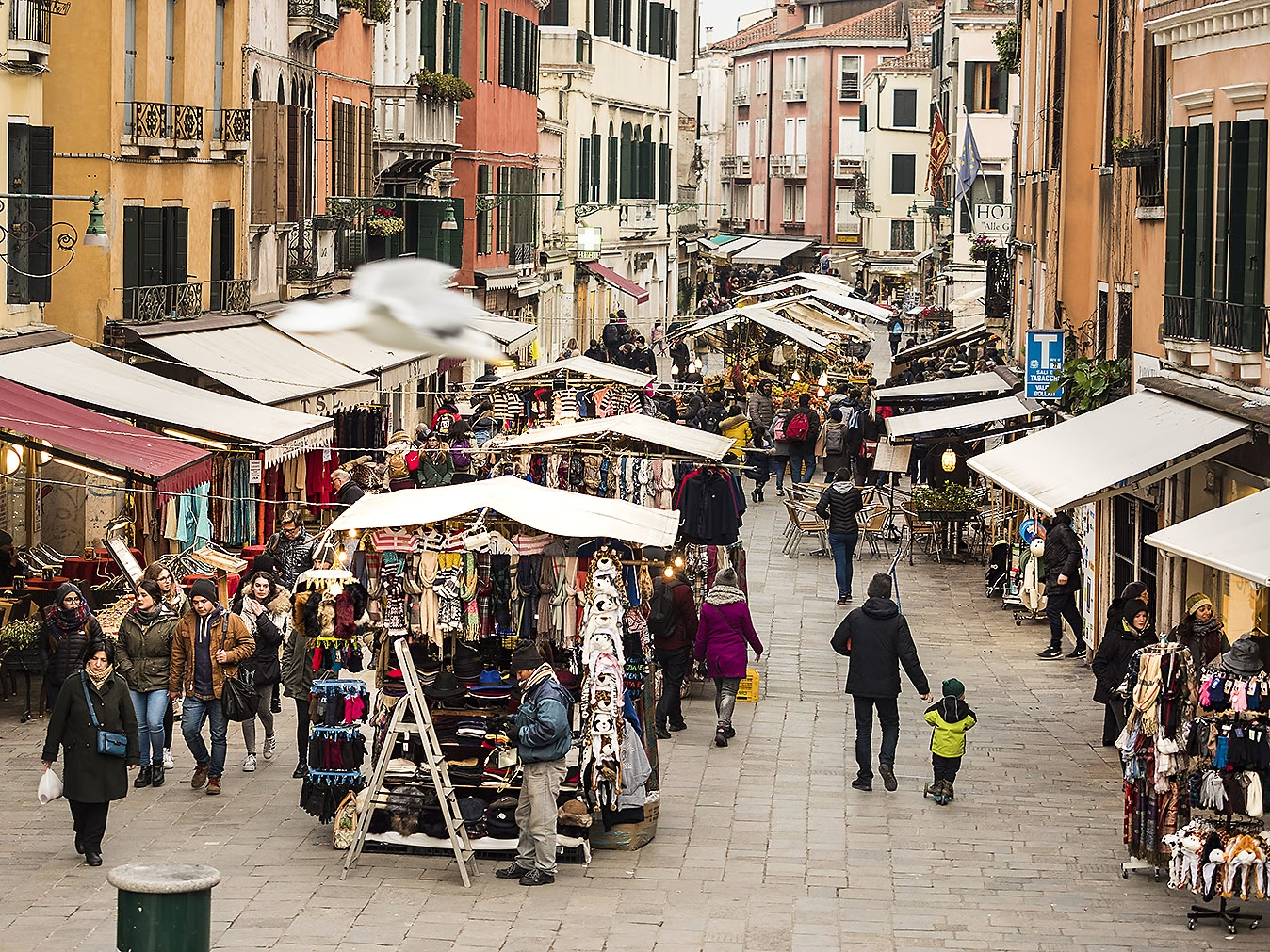
Rialto developed as the commercial centre of the city, with markets, warehouses, financial activity and routes linking the two sides of the Grand Canal. The bridge is its most familiar landmark, but the surrounding streets explain why the crossing mattered.
Approach the market side and notice the close relationship between the quays and the trading spaces. Goods arriving by water could be brought into a compact network of stalls and shops. The canal was part of the commercial infrastructure, not merely an attractive backdrop.
The present stone Rialto Bridge dates from the late sixteenth century. Its shops preserve the idea of a bridge as useful commercial space as well as a route across water. Cross it slowly if conditions allow, then move away from its central viewing points. The broader story lies in the streets around it.
Visit the market as a working place
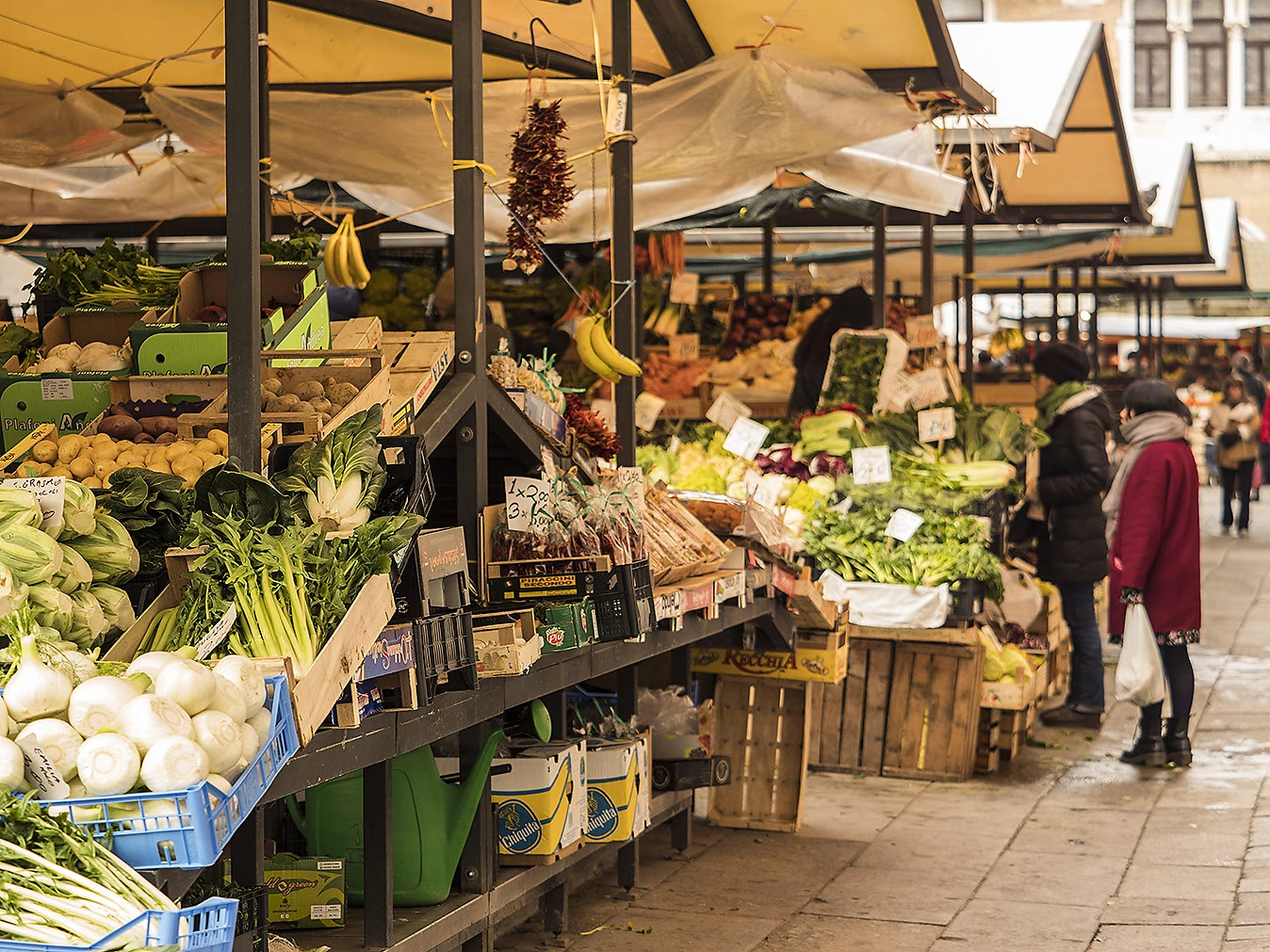
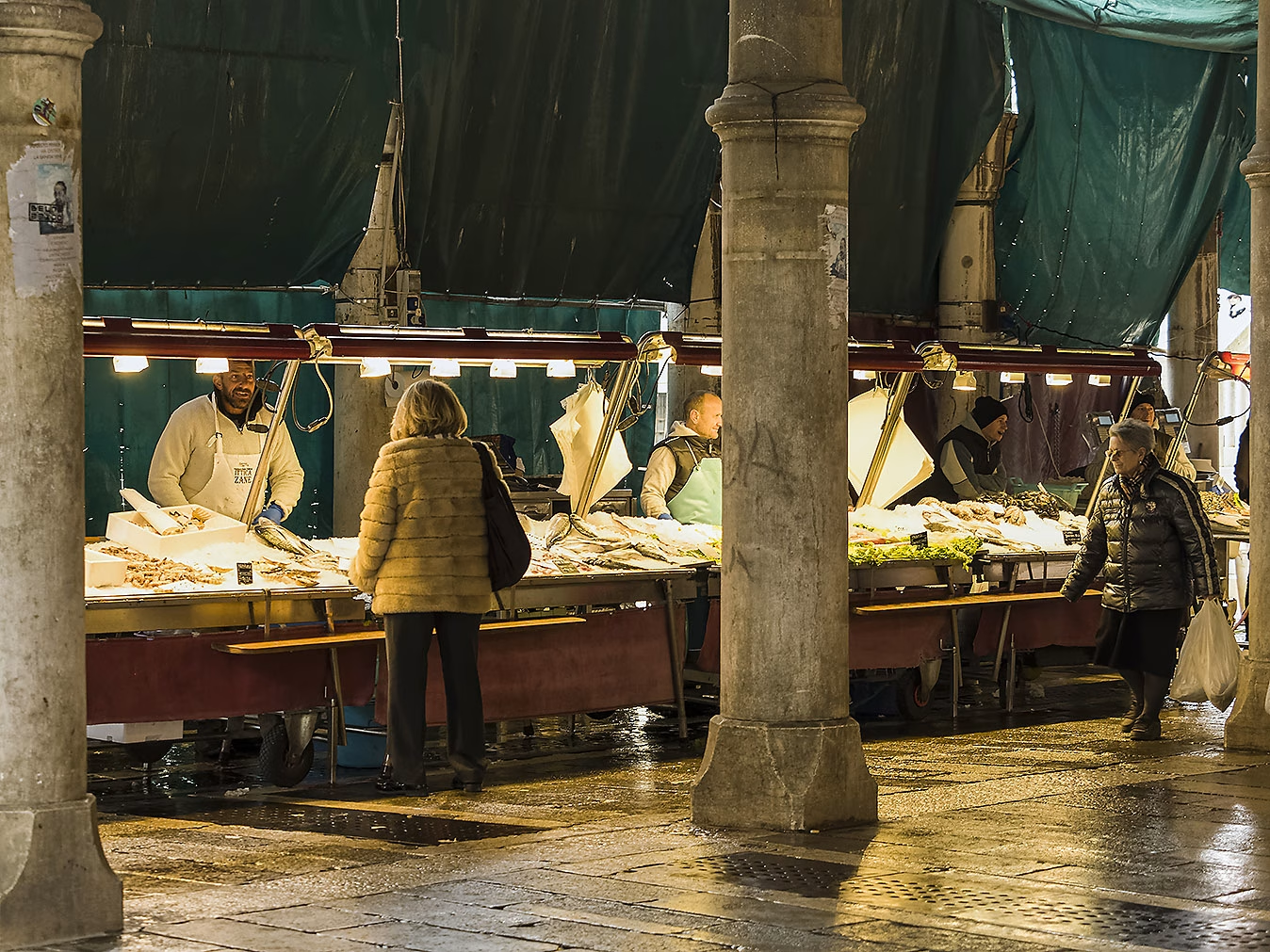
Morning is the useful time to see trading activity, though individual market sections and stalls follow different days and hours. Check locally before arranging a visit around a particular counter. An afternoon walk can still explain the setting, but it will not reproduce a morning market.
Look at what is being sold rather than assuming every item has come straight from the lagoon. Fish counters connect local waters with wider supply chains, just as Venice has always depended on trade beyond its immediate surroundings. Ask about provenance if buying; the answer can be more interesting than a familiar regional label.
Vegetables provide another connection with the lagoon. Islands such as Sant’Erasmo have long supplied produce to the city, alongside growers on the mainland. Seasonal differences matter: a market in spring tells a different story from one in autumn.
Keep passages clear and ask before making close photographs of stallholders. If you plan to buy food for a picnic, choose a permitted place to eat rather than assuming a bridge, church step or monument is suitable. Our guide to eating in Venice explains the ingredients and dishes to look for later at the table.
Walk into the quieter scale of San Polo
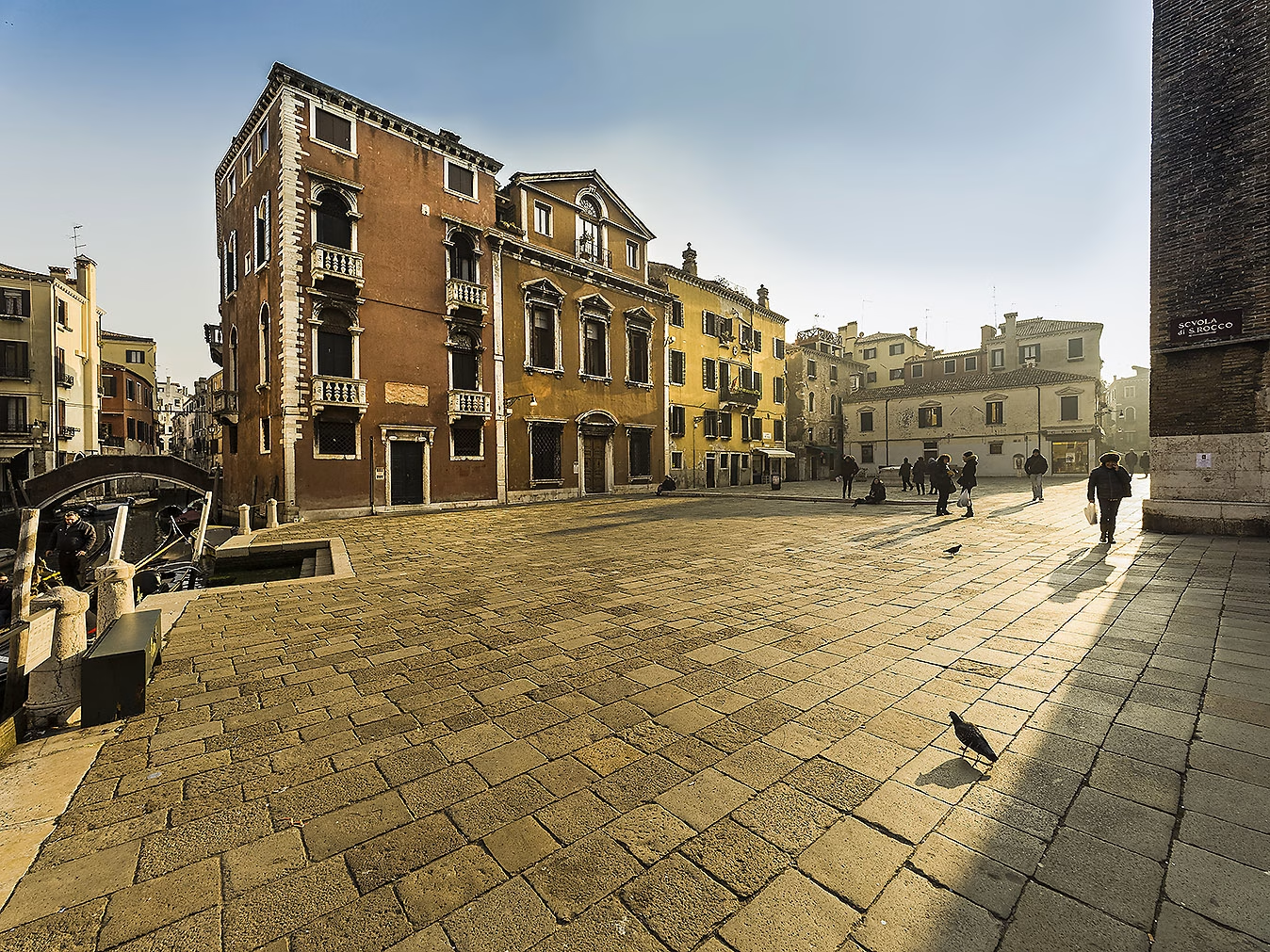
From Rialto, work towards Campo San Polo and then the Frari. The route alternates between narrow passages and larger public spaces. That change of scale is one of the pleasures of walking here: you repeatedly emerge from a confined lane into a campo where the surrounding buildings can be read together.
Campo San Polo is a useful place to pause and look at the district beyond its famous interiors. Notice the wellheads, domestic façades and routes feeding into the open space. The square belongs to the everyday organisation of the neighbourhood as much as to a sightseeing itinerary.
Street names can preserve traces of trades or former uses, though not every plausible explanation is historically secure. Treat them as invitations to investigate. A guide with knowledge of Venetian social history can make this part of the walk especially rewarding, connecting ordinary buildings with the institutions you will see next.
The Frari: paintings still in conversation with a church
The Basilica di Santa Maria Gloriosa dei Frari offers a different experience from a picture gallery. Its paintings, monuments and choir belong to a large Franciscan church. You see works in relation to altars, worship and the ambitions of patrons.
Titian’s Assumption of the Virgin, installed in 1518, commands the high altar. Begin at a distance. Its rising movement, red clothing and luminous upper zone were designed to carry across the church. Only then move closer, where the relationship between the earthly figures and the ascending Virgin becomes more legible.
The Pesaro Madonna invites another kind of looking. Titian shifts the composition away from a simple central arrangement, bringing the patron’s family and the sacred figures into a dynamic relationship. Compare where you stand, where the figures look and how the architecture within the painting directs attention.
In the sacristy, Giovanni Bellini’s triptych provides a quieter counterpoint. Its enclosed architectural space and measured stillness reward a pause after the scale of the nave. These works make an excellent introduction to different ways Venetian painters used colour, light and composition. The basilica’s official visitor information is the place to check access around services.

San Rocco: a charitable institution with an artistic voice
The word scuola can mislead English-speaking visitors. In this context it means a confraternity, not a school in the modern classroom sense. Such associations provided religious fellowship and forms of charitable support, while their buildings and commissions also expressed corporate standing.
The Scuola Grande di San Rocco was founded in the fifteenth century and is closely associated with Tintoretto. His extensive cycle makes the interior unusually coherent: this is a sustained encounter with one painter working across rooms and surfaces.
Begin with the scale and light before trying to identify every biblical episode. Tintoretto often uses diagonals, abrupt changes of illumination and figures caught in movement to pull the viewer into an event. The paintings reward looking across a whole composition, then returning to a smaller group or gesture.
The Crucifixion in the Sala dell’Albergo is a strong place to concentrate. Its crowd of actions surrounds the central event, inviting your eye to travel rather than settle immediately. In the upper hall, biblical narratives also speak to concerns such as relief, sustenance and salvation that mattered to the confraternity. The charitable institution is part of the paintings’ meaning.
How to pace the day
For a full day, begin around Rialto, take a slow walk through San Polo and leave a generous interval for lunch. Then visit the Frari and San Rocco, allowing a break between them. If you prefer fewer interiors, choose one and keep the second for another stay.
For a half-day, decide between a market-led morning with one church or a focused art visit to the Frari and San Rocco. Trying to compress market, bridge, shopping, lunch and two major interiors into a short window tends to reduce each to an impression.
Check the San Rocco visiting arrangements and any exceptional closures before fixing the sequence. Churches remain places of worship, and access can respond to services or events.
Continue the artistic story on another day in Dorsoduro, where the Accademia places Venetian painting in a broader sequence. Or return to the Grand Canal to look again at the merchant palaces. After San Polo, their façades become easier to connect with the people and institutions whose spending shaped the city.
Make Venice part of your holiday
Make time for Venice’s markets and great paintings as part of a holiday built around the way you like to explore.
Venice and lagoon photography by Vittorio Sciosia (2016), except the additional photographs and artwork reproductions credited individually above. Additional images retain their full compositions and are resized for web display.



 Facebook
 WhatsApp channel