


The Grand Canal: how to read Venice’s palaces from the water
Discover what Venice’s Grand Canal palaces reveal about trade, wealth and daily life, and choose the right way to explore by boat.
In this article
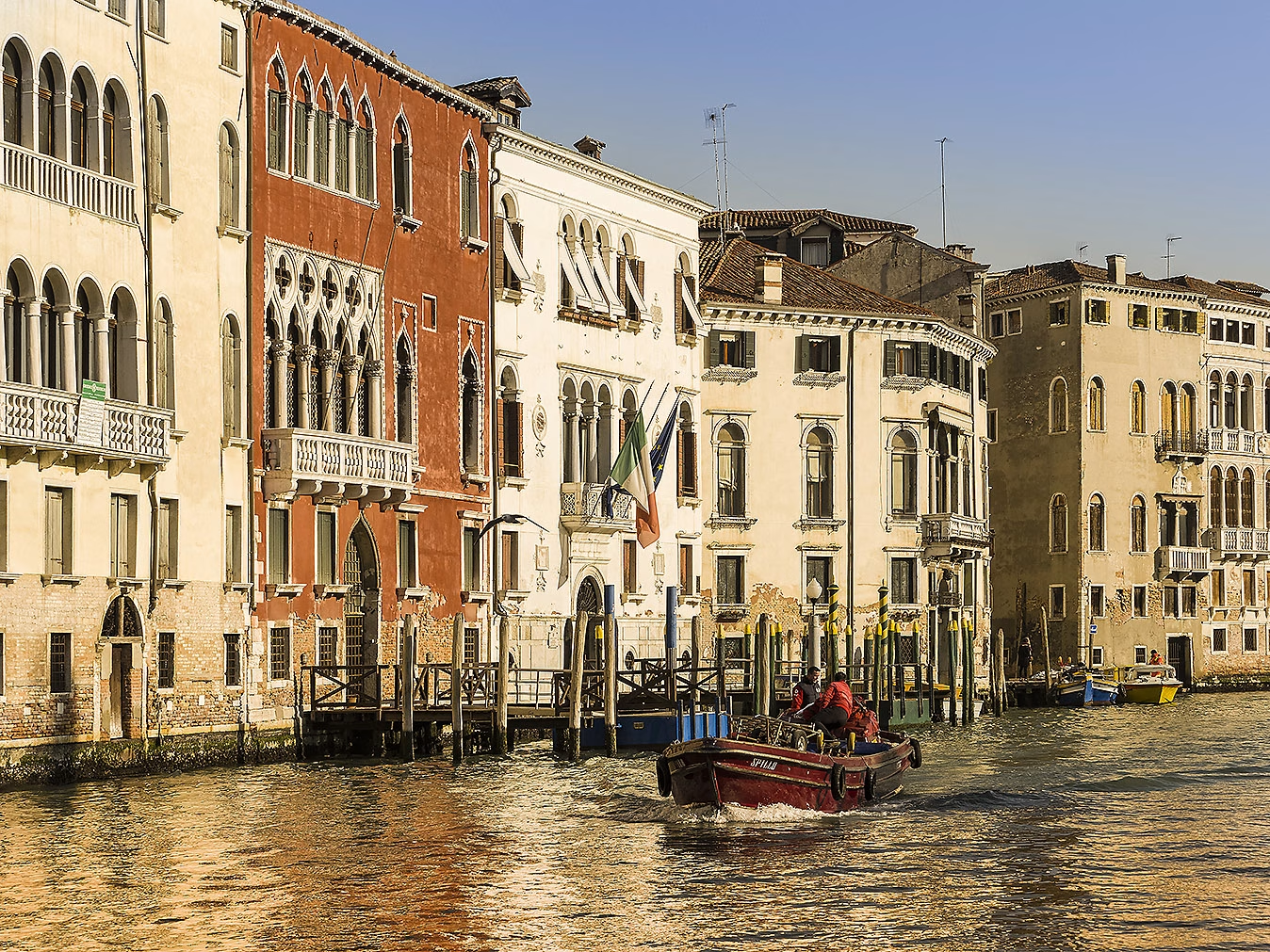
The Grand Canal is the best place to see how Venice arranged wealth along a working route. Its palaces face the water because the water carried people, merchandise and prestige. A doorway at canal level can therefore tell you as much about a building as the elaborate windows above it.
A first journey works best as an introduction rather than a test of palace names. Look for recurring features, identify a handful of landmarks and then choose one interior that interests you. Once the architectural pattern becomes familiar, the long procession of façades begins to read as a history of changing tastes and fortunes.
Think of the canal as a principal street
Venice’s buildings often have two relationships with the city: one towards a walking route and another towards the water. On the Grand Canal, the water-facing side was a public statement. Boats brought visitors and goods to entrances that now appear unusual only because most cities taught us to arrive by road.
The merchant residence combined domestic life, business and storage in arrangements that varied over time. On many façades, a lower working level sits beneath one or more principal floors. Groups of larger central windows announce important interior spaces, while more solid areas to either side contain smaller rooms.
The broad central hall, or portego, is a useful idea to carry with you. It helped organise movement and reception within many Venetian houses. You cannot reconstruct every interior from its exterior, but the emphasis on central openings often gives a clue to how light and circulation were managed.

Recognise a few architectural changes
Pointed arches, tracery and delicate loggias identify many of the canal’s celebrated Gothic façades. Their ornament belongs to a Venetian language shaped by trade and contact across the Mediterranean. Look at the balance between open windows and wall, rather than trying to assign every detail a single foreign source.
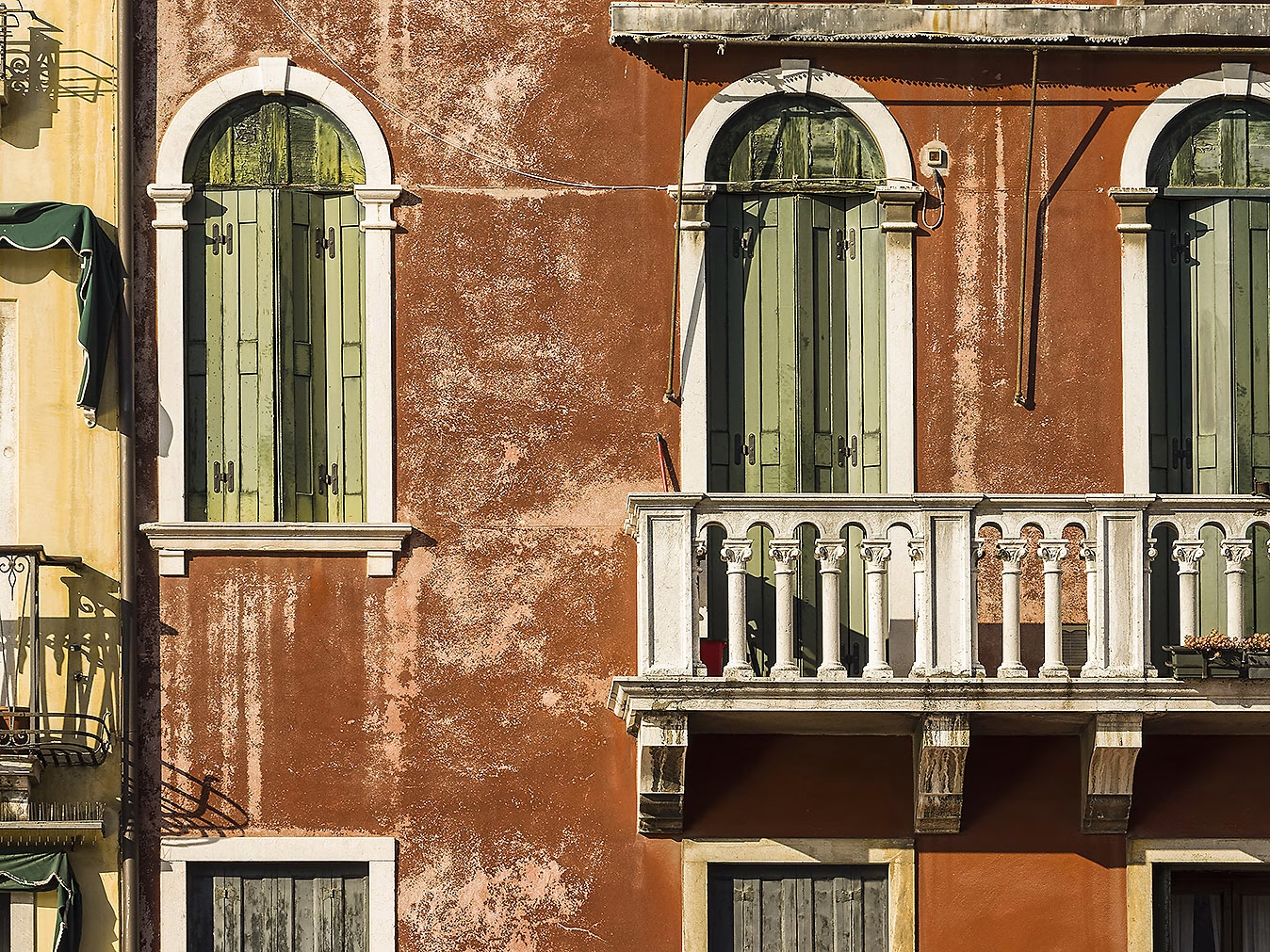
Renaissance buildings tend to make classical order more explicit: columns or pilasters, rounded arches and a stronger sense of horizontal divisions. Later palaces may use larger sculptural effects and more emphatic entrances. These styles coexist because the Grand Canal was rebuilt and embellished over centuries.
Colour also needs interpretation. The name Ca’ d’Oro recalls gilded decoration that once contributed to the building’s appearance. Weathered stone and pale façades can make today’s canal seem more restrained than parts of it once were. Age has not simply preserved an original scene; it has changed the way that scene looks.


Follow the landmarks towards San Marco
From the railway-station end, the canal gradually introduces the dense urban frontage that makes the route so distinctive. The Ca’ d’Oro is a particularly useful Gothic example: notice the open loggias and the asymmetry of the façade. If an interior visit appeals, check the current arrangements for the Galleria Giorgio Franchetti rather than assuming every part is accessible during restoration or exhibition work.
At Rialto, commerce becomes the central subject. The bridge joins the two banks at the historic market district. Its shops and covered passages make it more than a viewing platform. Look beyond the bridge itself towards the quays and market streets, then return on foot using our Rialto and San Polo guide.
Farther along, Ca’ Rezzonico gives the journey a different emphasis. Its monumental façade introduces the world of eighteenth-century Venice, which can be explored inside the museum of eighteenth-century Venice. This is a good choice if you want rooms, furnishings and painting to help you imagine patrician domestic display.
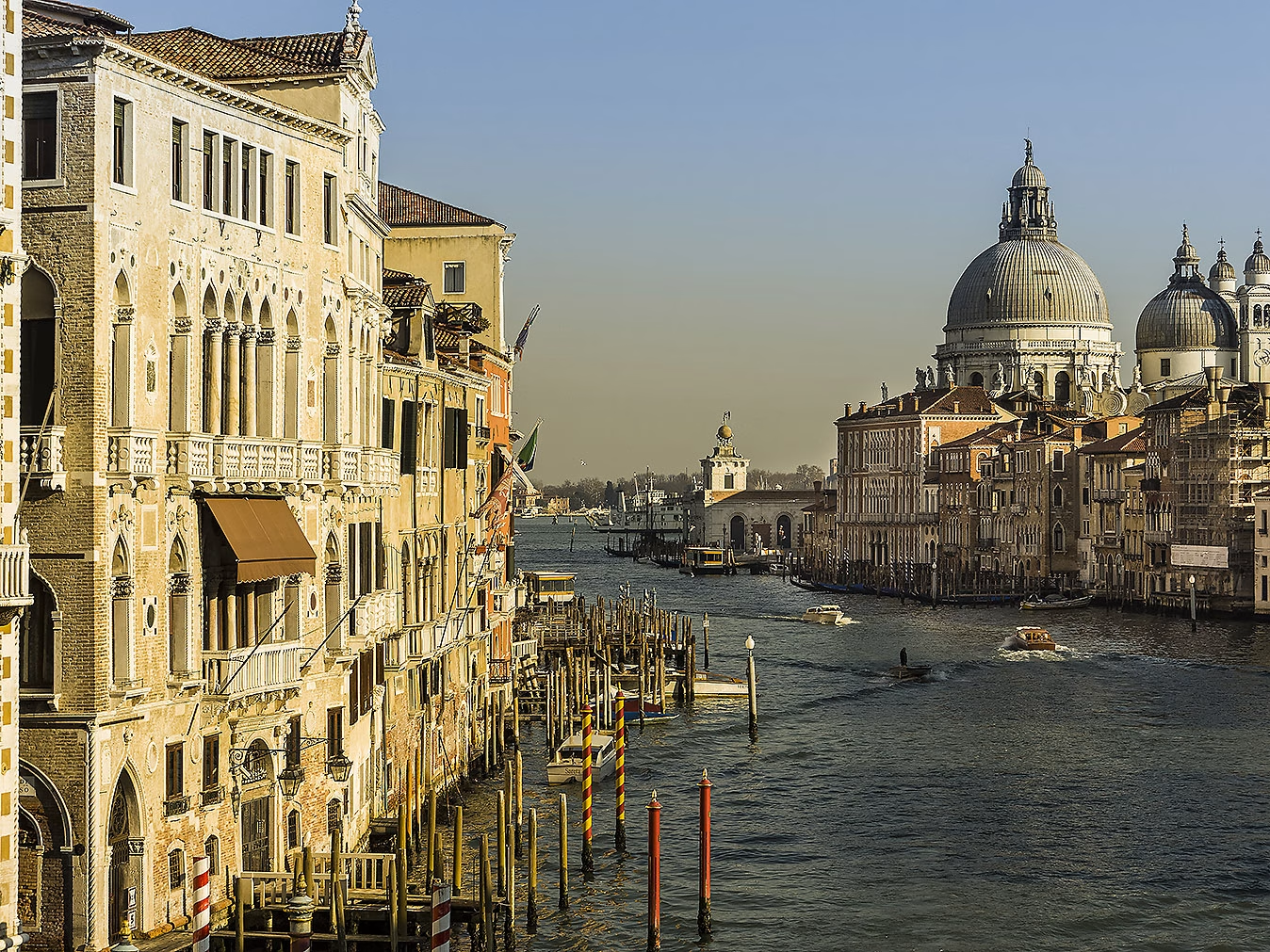
Near the Accademia bridge, the view begins to open towards Santa Maria della Salute. The church marks the approach to the basin, and its great dome gives you a clear reference point. The low waterfront building of Punta della Dogana nearby recalls the customs administration through which the republic supervised goods moving into the city.
Choose the boat for the experience you want
A vaporetto is public transport. It gives an excellent architectural introduction, but it also carries residents, workers and visitors who need to reach their stops. A slower Grand Canal service can offer more time to look than a faster route. Consult the current ACTV transport information for the service pattern on your dates rather than relying on an old route screenshot.
A private water taxi is primarily a transfer or a chartered journey. It can be useful for luggage and a planned arrival, but the boat, landing and route should be agreed in advance. Speed and convenience do not automatically produce the best architectural experience; a guided boat visit has a different purpose from getting directly to a hotel.
A gondola is particularly rewarding on smaller canals, where you notice water-level entrances, bridges and the close scale of the buildings. Routes vary with the starting point and conditions. Discuss what is included before boarding, especially if you have a particular stretch in mind.
A traghetto is different again: a short crossing of the Grand Canal in a gondola-style boat at an operating crossing point. It is transport from one bank to the other, not a shortened sightseeing tour. Locations and operating hours can change, so treat it as a useful option when available, rather than a guaranteed link in a tightly timed route.

Add one interior to what you have seen outside
The boat journey gives breadth; a palace visit gives depth. Ca’ Rezzonico suits travellers interested in the eighteenth century and the social life suggested by grand rooms. Other palace museums offer different collections, and temporary exhibitions may affect which spaces are open.
Before choosing, ask whether your interest is the building, its art or its historical period. A palace that now houses a collection from elsewhere does not necessarily reproduce the household that once occupied it. That distinction is useful, especially if you are trying to connect the objects inside with the façade you saw from the boat.
For a shorter stay, the canal journey plus one carefully chosen interior is enough. You will remember more if you can compare a few architectural features than if you spend the day moving between museums without time to absorb them.
Make the journey part of a good day
Allow for the practicalities of public transport: finding the correct boarding point, validating the right ticket and waiting for the service you need. Different routes can use different pontoons at the same named stop. Let passengers disembark and keep luggage out of the circulation space.
For photography, a clear line of sight matters more than a particular seat promised in advance. The direction of sunlight changes the façades during the day, and boats, poles and reflections form part of the view. Take a few photographs, then put the camera down long enough to follow how the canal bends and opens.
After travelling towards San Marco, continue on foot through Dorsoduro or spend time around the basin. On another day, use the boat journey in reverse to recognise buildings from a new angle. The Grand Canal becomes more rewarding through familiarity: what first looked like a continuous display of palaces begins to reveal individual decisions about trade, family, taste and public standing.

Make Venice part of your holiday
Combine a considered stay in Venice with the Veneto, Italian lakes or another city, with the journey planned around your interests.
Photography by Vittorio Sciosia, from his Venice and lagoon collection (2016).



 Facebook
 WhatsApp channel