


Castello and the Arsenale: the Venice that built a maritime republic
Walk through Castello to understand Venice’s naval power, confraternities and everyday life, from the Arsenale to San Pietro.
In this article
Castello gives Venice’s maritime history a physical scale. Behind the city’s ceremonies and merchant façades stood the labour of building, equipping and maintaining ships. The Arsenale brings that work into view, while the surrounding neighbourhood stretches east through churches, public gardens and streets with a strong residential life.
This is a rewarding district for a day when you want to walk, look and connect ideas. Choose either a route around the Arsenale and eastern waterfront or a substantial exhibition visit. Combining every possible church, museum and Biennale venue usually leaves too little attention for the streets between them.
Begin with the city’s institutions beyond San Marco
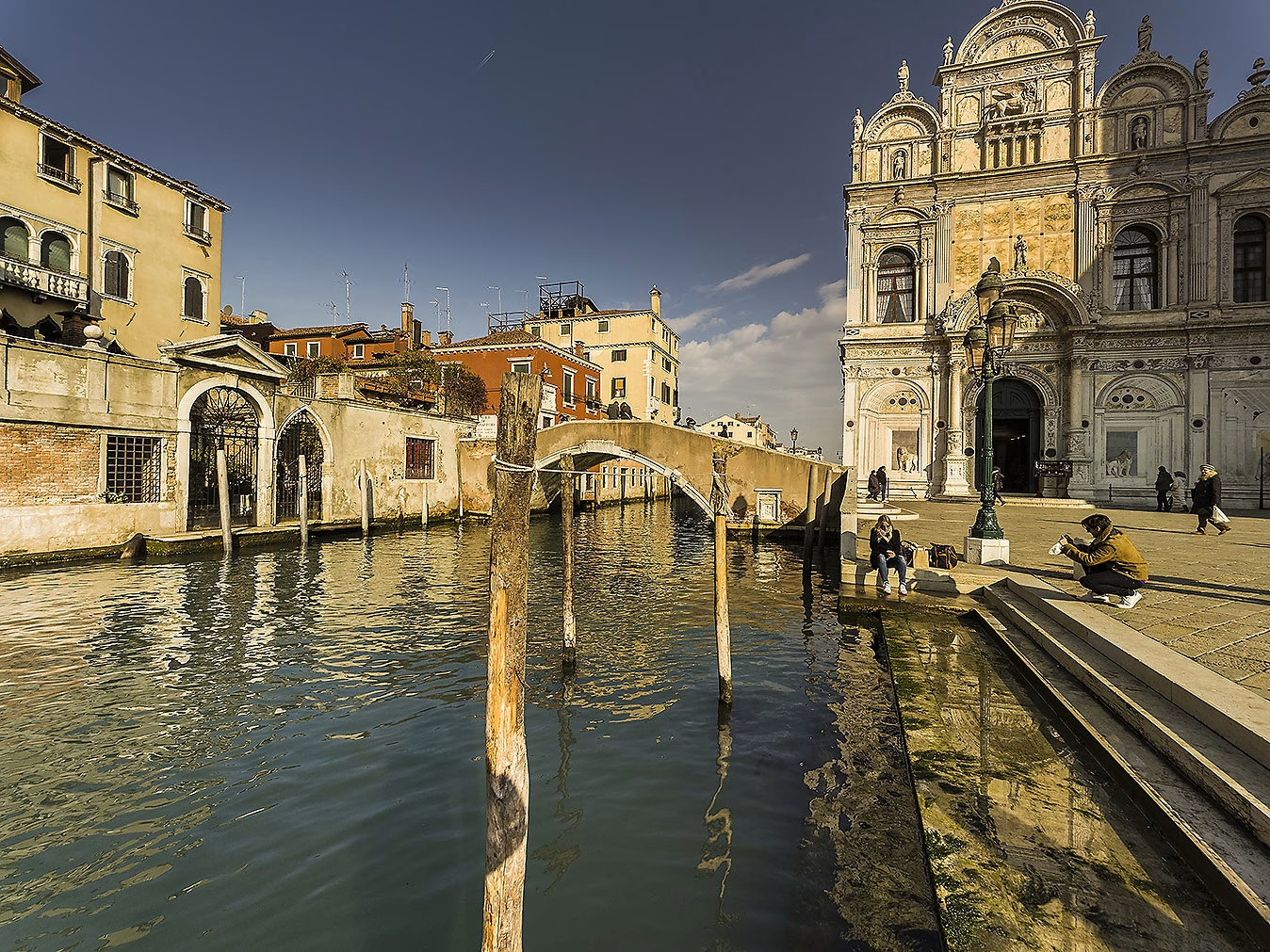
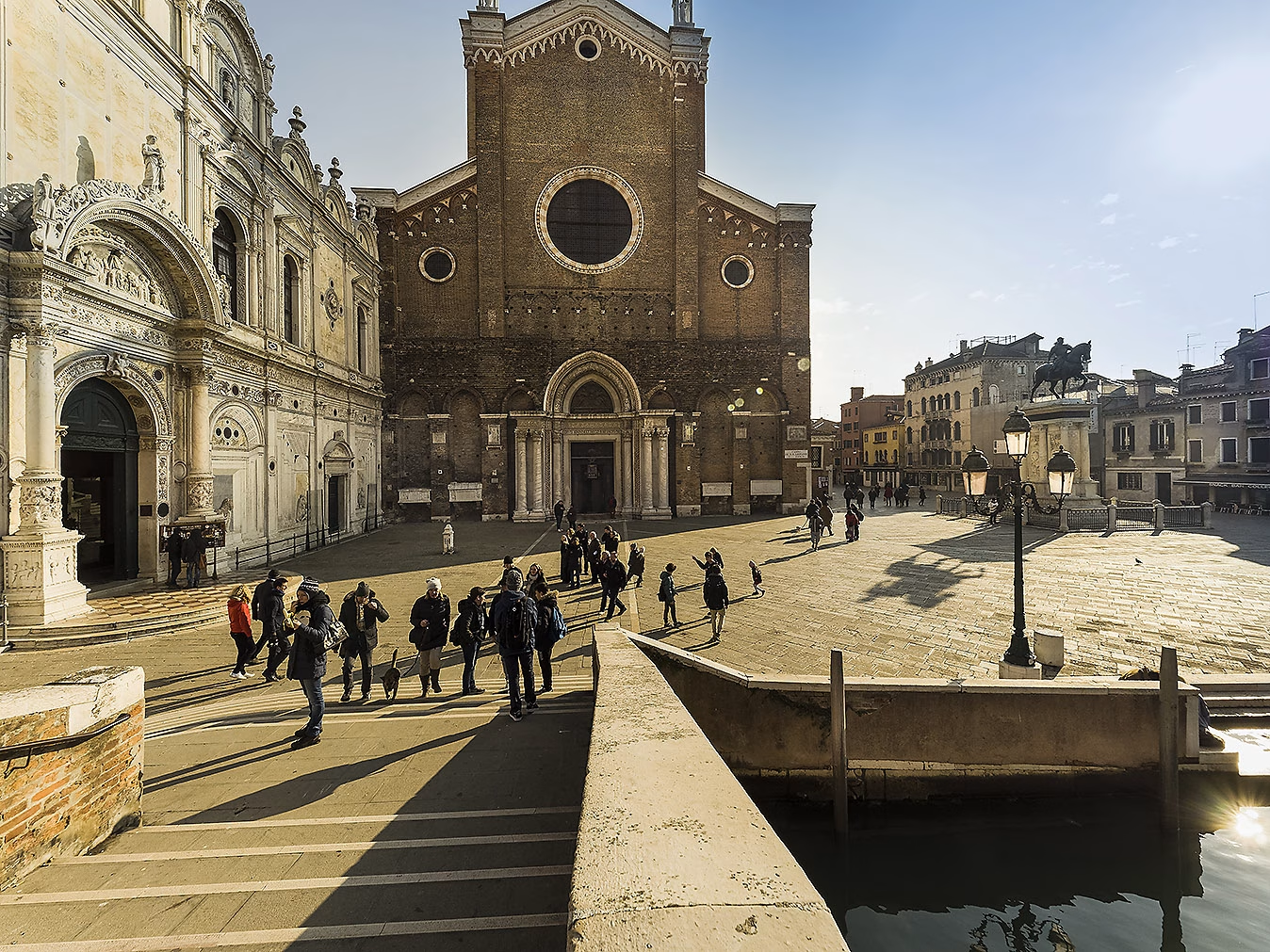
At Campo Santi Giovanni e Paolo, the great church and the decorated façade of the Scuola Grande di San Marco show that public ambition extended beyond the government centre. Churches, confraternities and individual patrons all shaped the city’s appearance.
The façade of the Scuola Grande di San Marco is particularly useful after visiting San Rocco. Both belong to the history of lay religious associations, but their settings and decoration differ. Look at how the marble surface, reliefs and architectural divisions give the institution a public presence.
The neighbouring church became an important place of burial for doges. That makes the campo a good setting in which to consider the relationship between family memory, religious life and political office. An interior visit adds depth if this subject interests you; otherwise, use the exterior as the beginning of a walk towards the shipbuilding city.
The Arsenale: understand the size of the enterprise
The Arsenale grew over centuries into a vast complex serving the republic’s naval needs. Shipbuilding depended on coordinated supplies of timber, rope, sails, metalwork and skilled labour. The finished vessel was only the visible result of a much larger organisation.
Think about what had to happen before a fleet could sail. Materials had to be acquired, stored and worked; hulls built or repaired; equipment assembled; and vessels made ready for service. The walls and long buildings begin to suggest the space required for these connected activities.
It is tempting to describe the Arsenale using a single modern comparison, such as a factory or assembly line. Such comparisons can help introduce its scale, but they should not erase changes in technique and organisation across its long history. This was a working institution that developed, expanded and adapted, rather than one system fixed in a single moment.
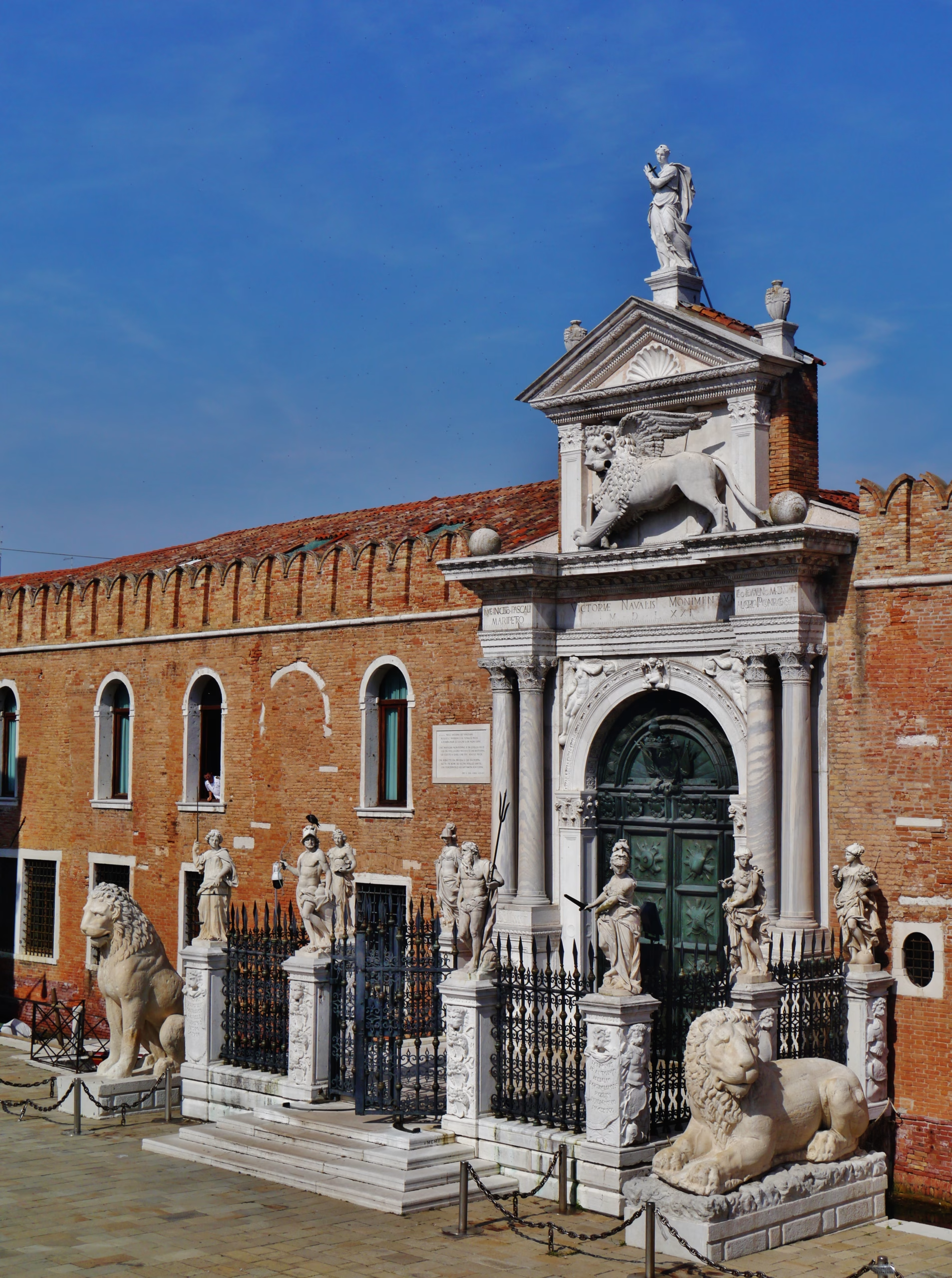
At the monumental entrance, look at how military function is presented through a ceremonial gateway and sculpture. The republic gave even its industrial and naval infrastructure an architectural language of authority. The contrast between the imposing entrance and the practical work behind it is the key to understanding the place.
Know which parts you can actually visit
The Arsenale is not an unrestricted open-air museum. Different parts serve different organisations and uses, and access varies with exhibitions, events and operational requirements. Seeing the main entrance does not imply that you can walk freely through the whole complex.
For Biennale visits, consult La Biennale di Venezia and select the information for the edition taking place on your dates. The Arsenale and Giardini are substantial venues, with their own entrances and ticket arrangements. An old map or a previous year’s admission rule is not a dependable plan.
If you are interested in the architecture as much as the exhibition, allow time to look at the long former working spaces. The buildings help explain the scale of rope-making, storage and naval production even as contemporary installations change how you move through them. Respect any areas that are closed or outside the ticketed route.
A neighbourhood walk can still be worthwhile when there is no suitable interior access. Plan around the public approaches and the wider district, with a museum or exhibition added only when its opening has been confirmed.
Via Garibaldi and the eastern waterfront
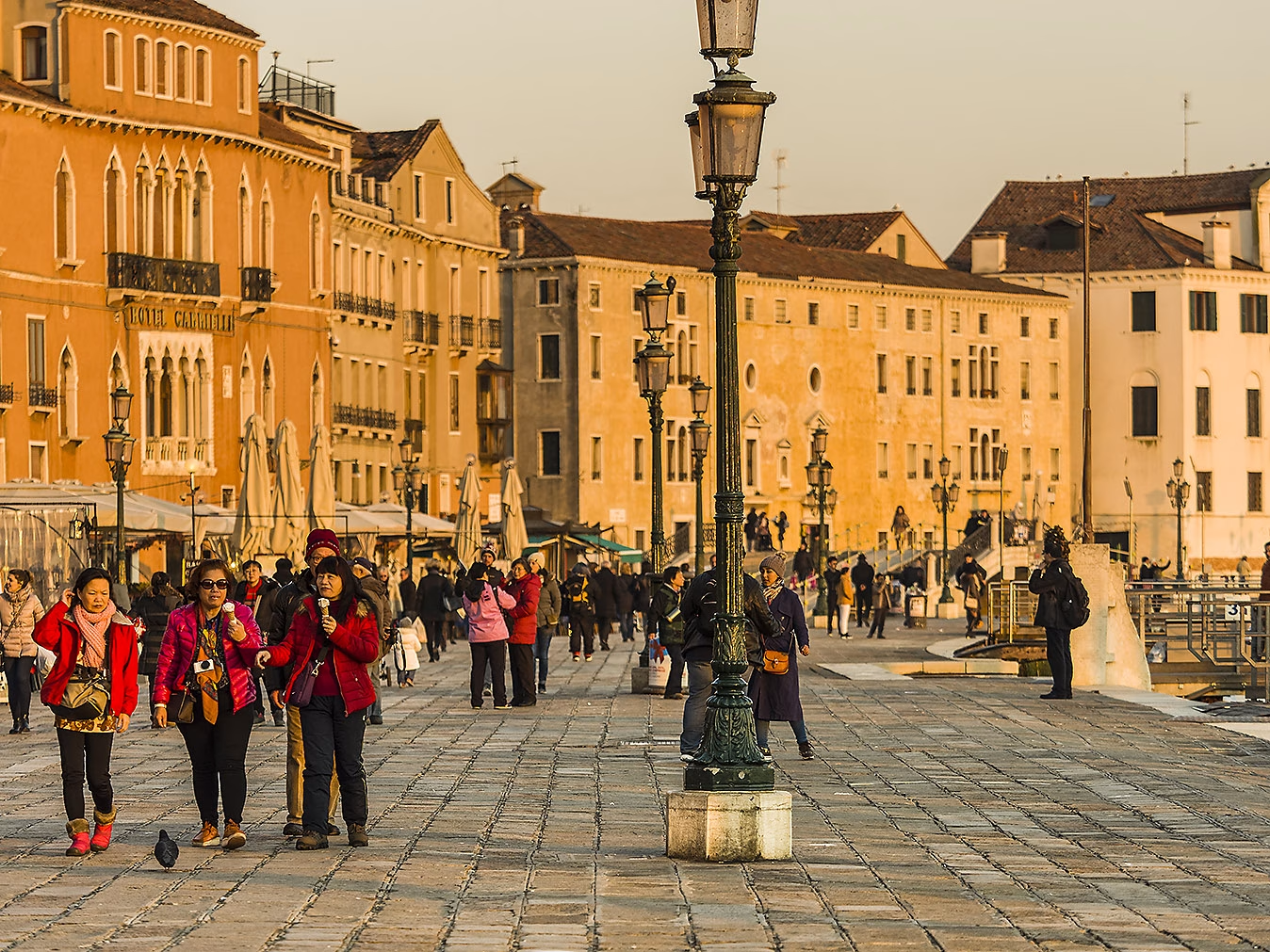
From the Arsenale area, the walk towards Via Garibaldi introduces a broader street and a different pace from many of central Venice’s lanes. Shops, cafés and ordinary errands share the space with visitors. It is a sensible place to pause rather than treating the eastern district as a continuous march to a final monument.
Look at the relationship between the broad street, smaller side routes and the waterfront. Venice’s urban form was not created all at once, and later interventions changed the way people moved through parts of Castello. Wide spaces can therefore be historical clues as useful as narrow medieval passages.
Continue towards the public gardens if you want more sky and a break from close-set buildings. Distinguish the public green spaces from ticketed exhibition areas when planning your route. A walk beside the basin gives a new perspective on San Giorgio Maggiore and the central waterfront, now seen at a distance.
San Pietro di Castello: Venice’s earlier cathedral
San Pietro di Castello rewards the walk east because it changes an assumption many visitors bring to Venice. St Mark’s was not always the city’s cathedral. San Pietro held that role until 1807, when the cathedral seat transferred to San Marco.
The setting feels removed from the ceremonial centre, which makes the distinction especially striking. It reminds you that religious and political geography did not always coincide. The doge’s chapel at San Marco and the cathedral at San Pietro served different roles within the same city.
The official introduction to San Pietro provides context for a visit. Check access before making the church interior the focus of your walk. Even from outside, the open space, façade and separate campanile help you read the site as a distinct religious centre.
Allow time here to stop. The value of reaching this part of Castello is partly the distance you have travelled through the city’s changing scales. A rapid photograph followed by a hurried return misses that progression.
Two good ways to spend the day
For a walking day, begin around Santi Giovanni e Paolo, continue towards the public Arsenale approaches, pause around Via Garibaldi and finish at San Pietro or the eastern waterfront. Add one interior according to your interests and its confirmed opening. This is a route to adapt, not a demand to complete every section.
For an exhibition day, give the Biennale the time it needs and use Castello’s streets and waterfront as a break around it. Visitors with a strong interest in contemporary art or architecture may prefer separate days for the principal venues. The district provides enough places to pause without adding another major museum.
Check the return journey before you are tired, especially if staying on the far side of the city. A suitable vaporetto can turn the return into a view across the basin, but service patterns and boarding points should be confirmed for the day.
To place Castello within the wider republic, pair this walk with St Mark’s and the Doge’s Palace. To compare another neighbourhood shaped by particular communities and institutions, choose Cannaregio. Together, they show how much of Venice’s history lies beyond the most familiar approach to the square.
Make Venice part of your holiday
Include time for Venice’s eastern neighbourhoods in an Italian holiday that balances celebrated sights with deeper exploration.
Venice and lagoon photography by Vittorio Sciosia (2016), except the additional photographs and artwork reproductions credited individually above. Additional images retain their full compositions and are resized for web display.



 Facebook
 WhatsApp channel