


St Mark’s and the Doge’s Palace: understanding the power of Venice
Read the mosaics, sculptures and council chambers of St Mark’s and the Doge’s Palace, with a practical plan for visiting both.
In this article
The two great buildings beside St Mark’s Square make more sense together. The basilica presented Venice’s sacred identity through relics, mosaics and precious materials; the Doge’s Palace housed the institutions that governed the republic. Between them, they explain how a trading city represented itself as a power with both earthly authority and divine protection.
Their proximity can make a combined visit look easy. In practice, each deserves sustained attention. Reserve the entries you want, allow a break between interiors and arrive with a few questions to pursue. Why does the church look towards Byzantium? How much power did the doge actually hold? Why was so much wealth spent on public imagery?
Read the square before going inside
Begin in the open space of the piazza and look towards the basilica. Its clustered domes and rich façade differ markedly from the temple fronts of later Venetian churches. Move towards the waterfront and the palace appears beside it, with arcades below a broad wall patterned in pale and pink stone.
The two buildings formed part of a larger ceremonial setting. The piazza, the smaller Piazzetta opening towards the water, the campanile and the surrounding administrative buildings made state occasions visible. A visitor arriving by boat encountered an image of the republic before entering its government rooms.
Look at the palace’s carved capitals from the public exterior, then compare their scale with the broad upper wall. Details that appear decorative at first can belong to a visual language of justice, virtue and authority. They also reward returning after you have seen the interior, when the façade is no longer an isolated photograph.


St Mark’s: Venice and the eastern Mediterranean
The basilica’s identity centres on St Mark, whose relics were brought from Alexandria to Venice in the ninth century. Their arrival gave the city a patron with an apostolic connection and an emblem that became inseparable from the state: the winged lion.
The present church developed through successive campaigns of building and embellishment. Byzantine influence appears in its domed plan and its treatment of walls and ceilings as fields of mosaic. Gold creates a changing surface as daylight and artificial illumination strike the tesserae at different angles. Allow your eyes to adjust; this is an interior to read slowly rather than photograph quickly.
The imagery is organised around biblical history and Christian belief. Instead of trying to identify every scene, choose one area and follow its figures, gestures and movement. An informed guide can connect these details with the building’s role as the doge’s chapel. St Mark’s became the city’s cathedral only in 1807, a useful reminder that its original political relationship was different from that of many European cathedrals.
Venice’s acquisition of objects after the sack of Constantinople in 1204 is essential context. Columns, sculpture and other materials helped turn the church into a display of the republic’s reach. The basilica’s own account of the Fourth Crusade places that episode within its history. Admiration for the workmanship need not obscure the violence through which some objects changed hands.


Decide which parts of the basilica matter to you
The basilica, the Pala d’Oro, the museum and loggia, and the campanile are distinct visiting choices. Do not assume that a ticket described generally as “St Mark’s” includes all of them. Check the components on the official basilica ticket site before paying.
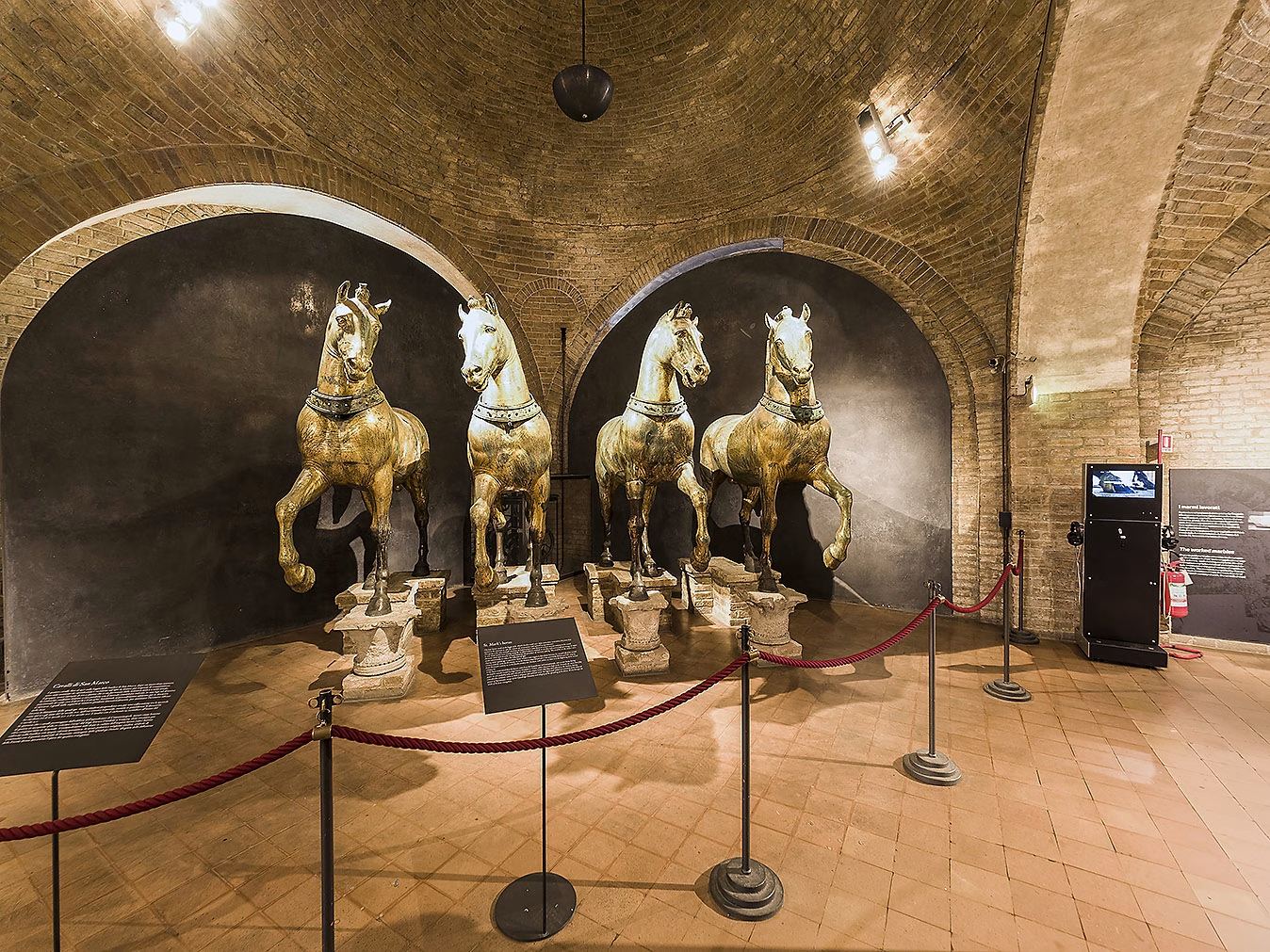
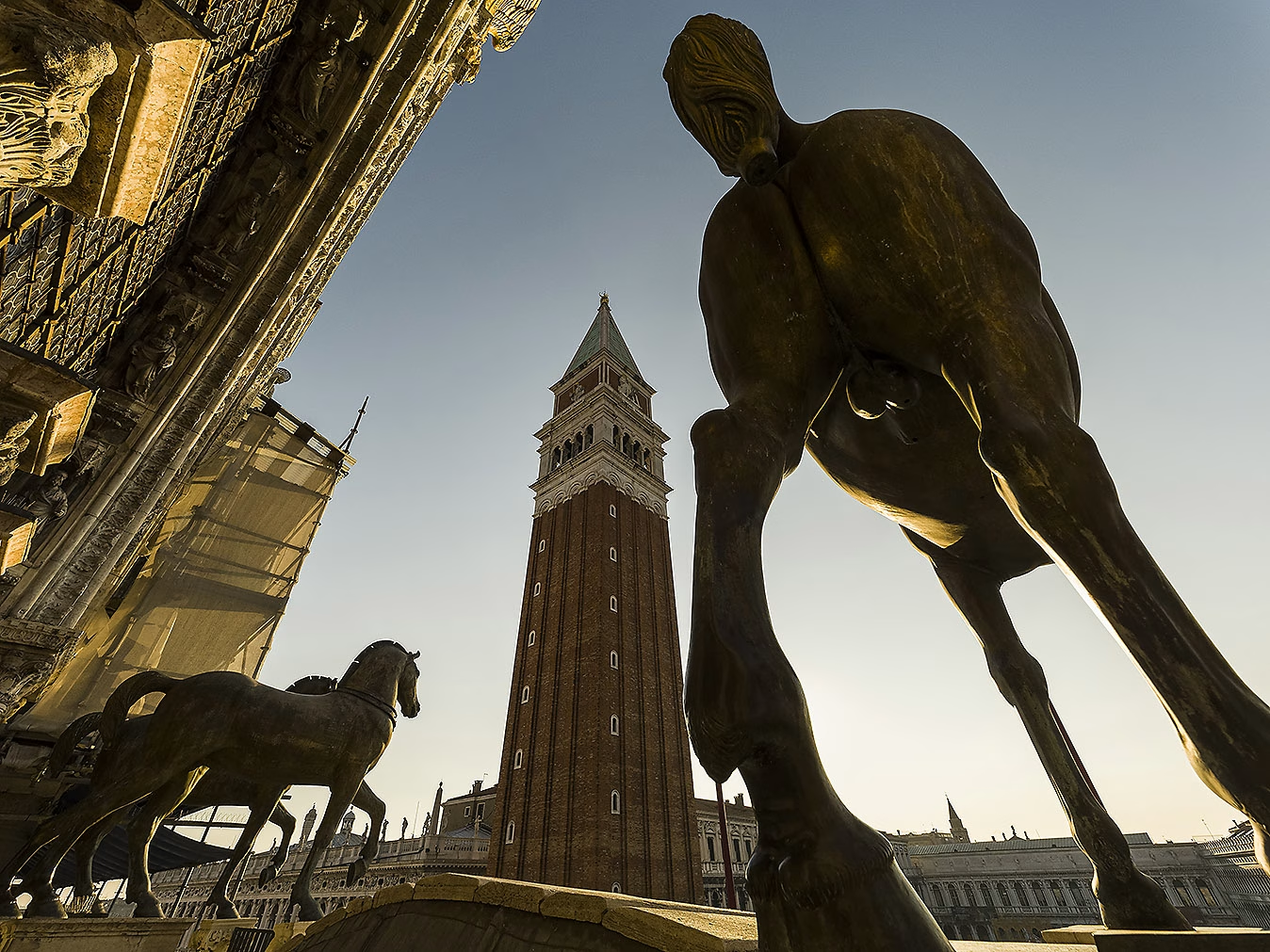
The Pala d’Oro, the precious altarpiece behind the high altar, is the choice for close attention to enamels, goldsmiths’ work and the accumulation of devotional wealth. The museum and loggia add the original bronze horses and a different perspective on the square. The horses outside are replicas: this distinction makes the museum more than a route to a balcony.
The campanile offers height and orientation, but it is a separate experience from reading the church’s interior. For a short stay, choose deliberately rather than adding every possible entry. Check current access arrangements if steps, lifts or standing time matter to your visit; different parts of the complex present different conditions.
The Doge’s Palace: a government, not a royal household
The word “palace” can suggest that the main purpose of the visit is to see how a ruler lived. Here the institutional rooms are at least as important. The doge was elected for life, but worked within a system of councils and legal restrictions. The republic’s governing class took considerable care to prevent any one individual from turning the office into a hereditary monarchy.
The route through the palace shows different scales of authority, from smaller decision-making chambers to the enormous Sala del Maggior Consiglio. Ask who could enter each room, who participated and what the images overhead said about Venice. The decorative programme repeatedly associates the state with justice, victory, prosperity and religious protection.
The grand canvases are therefore political statements as well as paintings. Look at how a viewer is positioned beneath them, how allegorical figures elevate the republic and how historical events become part of an official narrative. The palace’s collection guide is a useful introduction to the sequence of spaces.

The Bridge of Sighs and the less romantic history of justice
The enclosed Bridge of Sighs connected the palace’s judicial complex with the prisons across the canal. Its modern fame often begins with romance and photography; its practical purpose belonged to confinement and the administration of punishment.
Seeing it from outside and crossing it on the museum route offer very different experiences. From the waterfront it is a small, ornate object suspended between buildings. From inside, the narrow passage and restricted views make its function clearer. Keep that relationship in mind when moving from painted state rooms to prison spaces.
The separately organised Secret Itineraries visit additional administrative and detention areas. It is not simply another name for standard admission. Check its booking conditions, physical demands and age restrictions before choosing it. The palace’s accessibility information distinguishes the main route from areas that are less accessible.

A practical way to combine the two
Treat the two interiors as the principal work of the day. Choose a basilica slot and a palace visit with breathing space between them; do not build a chain of timed entries that leaves no margin for security checks or a slower room. A booked time does not remove every queue.
Before and after the interiors, use the piazza as part of the visit. Compare the palace’s water-facing exterior with the council chambers you have seen. Look again at the basilica’s materials and the clock tower. A quiet pause is more useful here than rushing directly to another museum.
For the next chapter, follow Venice’s commercial life along the Grand Canal or across to Rialto and San Polo. If the republic’s sea power interests you most, continue another day into Castello and the Arsenale. Those routes give the ceremonial centre its wider economic and physical setting.
Make Venice part of your holiday
Give Venice’s great monuments enough time within a holiday that also leaves room for its quieter streets and lagoon.
Photography by Vittorio Sciosia, from his Venice and lagoon collection (2016).



 Facebook
 WhatsApp channel