An active volcanic system
Etna is continually reshaped. Eruptions, fissures and collapses alter its profile, which is why summit heights and access arrangements should never be treated as permanently fixed.


Mount Etna guide
Mount Etna’s cable-car approach, northern forests, high-altitude terrain, cultivated slopes and wine towns reveal different parts of a remarkable volcanic landscape.
The right way to visit depends on what you want to understand. A family with teenagers may want an accessible introduction to volcanic geology. A walker may prefer quieter terrain and closer interpretation of lava flows. Wine travellers may find that Etna becomes more rewarding below the summit zone, among vineyards, orchards and small producers.
Visit Etna for a day from Taormina or Catania, choose a privately guided experience, or stay for two or three nights among the vineyards and volcanic slopes. This guide will help you find the experience that suits your interests and holiday.
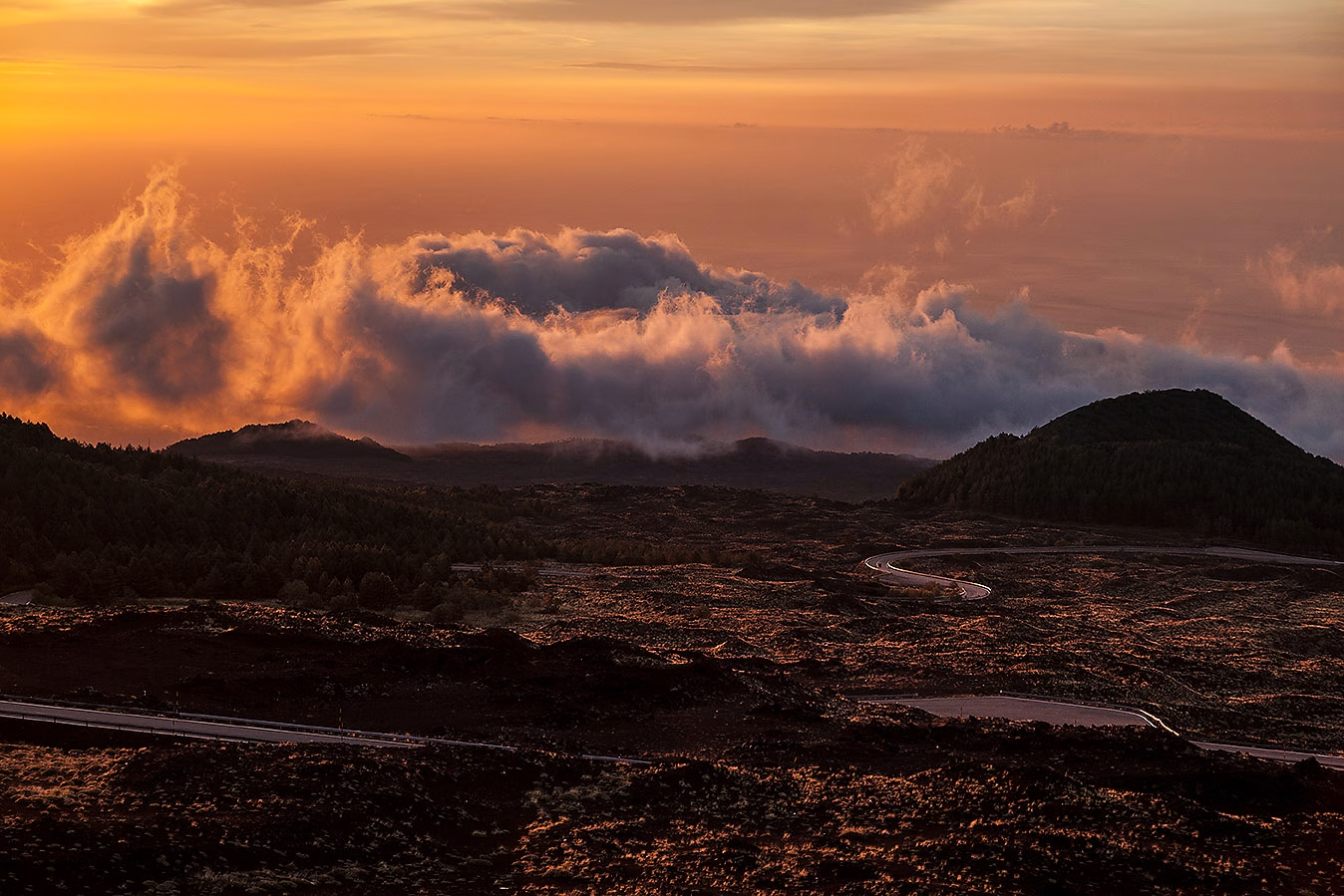
The essential decision: choose Etna according to your interests and the role it should play in the holiday—not simply according to the highest point advertised on the day.
A landscape in continual change
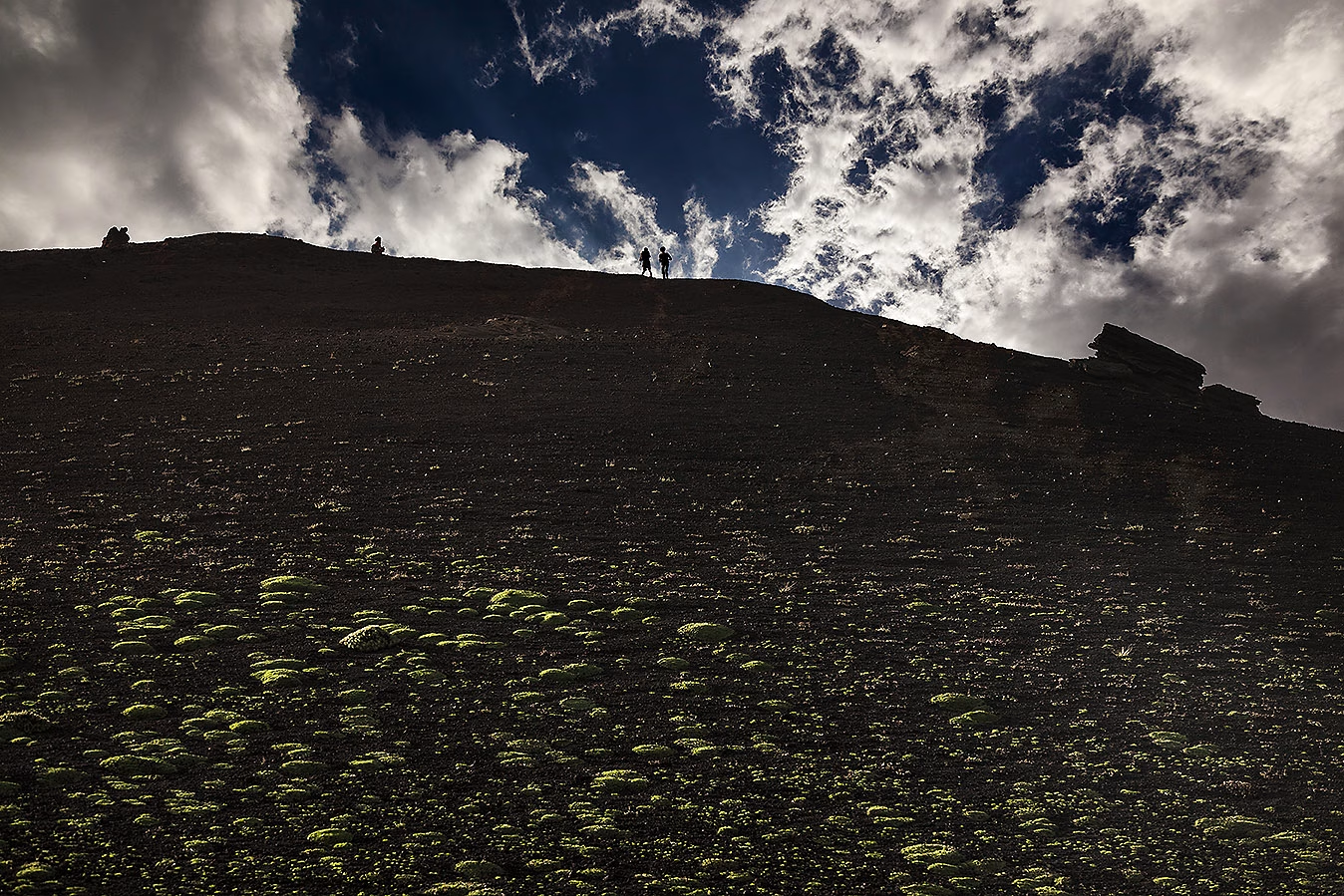
Etna’s importance lies in the combination of continual volcanic activity, an exceptionally long record of observation and a landscape where geological processes can be read across craters, lava flows, caves and the great depression of the Valle del Bove.
Etna is continually reshaped. Eruptions, fissures and collapses alter its profile, which is why summit heights and access arrangements should never be treated as permanently fixed.
Its documented activity has contributed substantially to volcanology, geophysics and other earth sciences. Specialist interpretation can turn a dramatic landscape into a comprehensible one.
Vegetation and land use change markedly with altitude. Barren volcanic terrain gives way to forest, cultivated slopes, orchards, vineyards and inhabited towns.
The volcano has shaped local agriculture, settlement and the dark lava-stone architecture of Catania. It is inseparable from the wider history of the region.
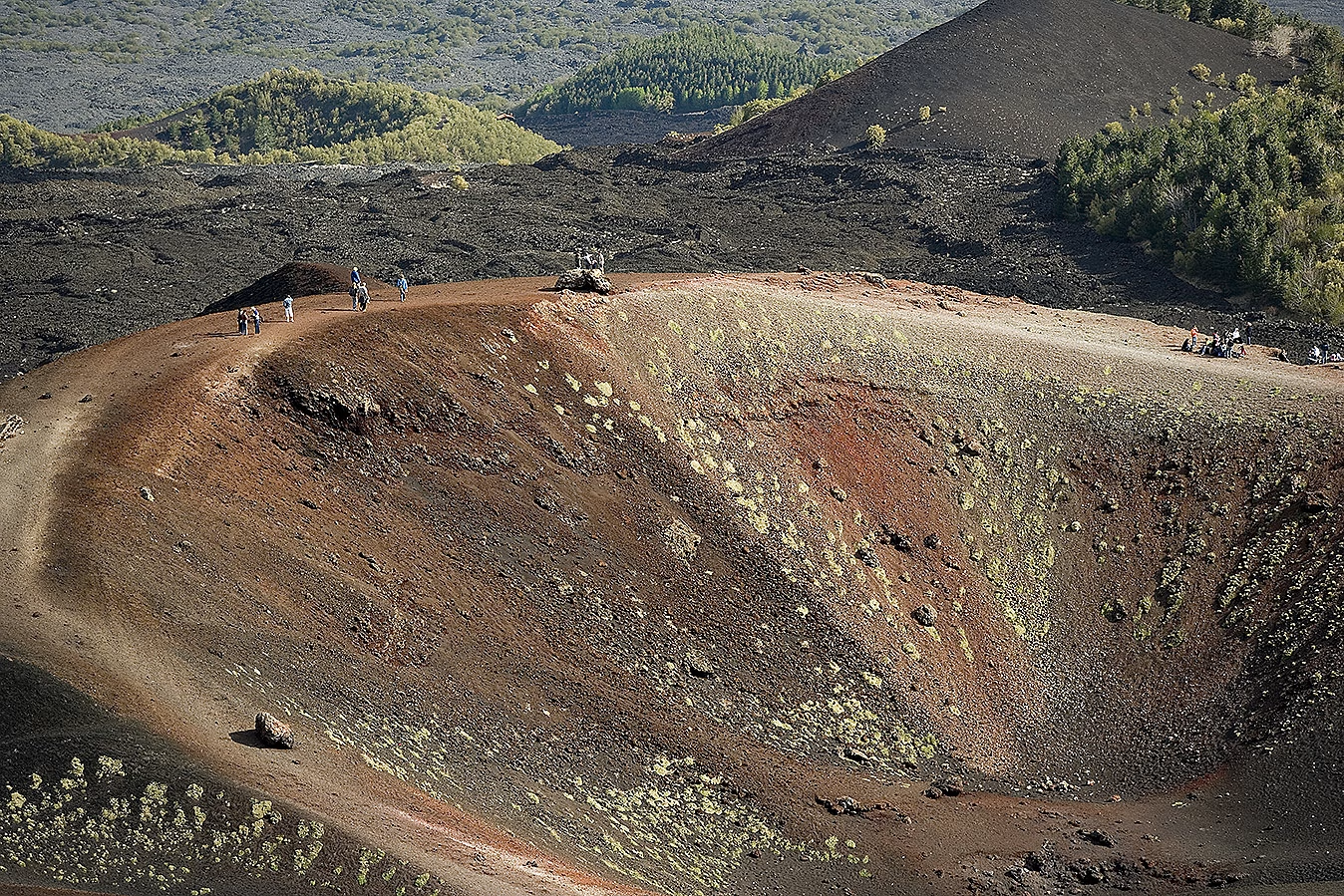
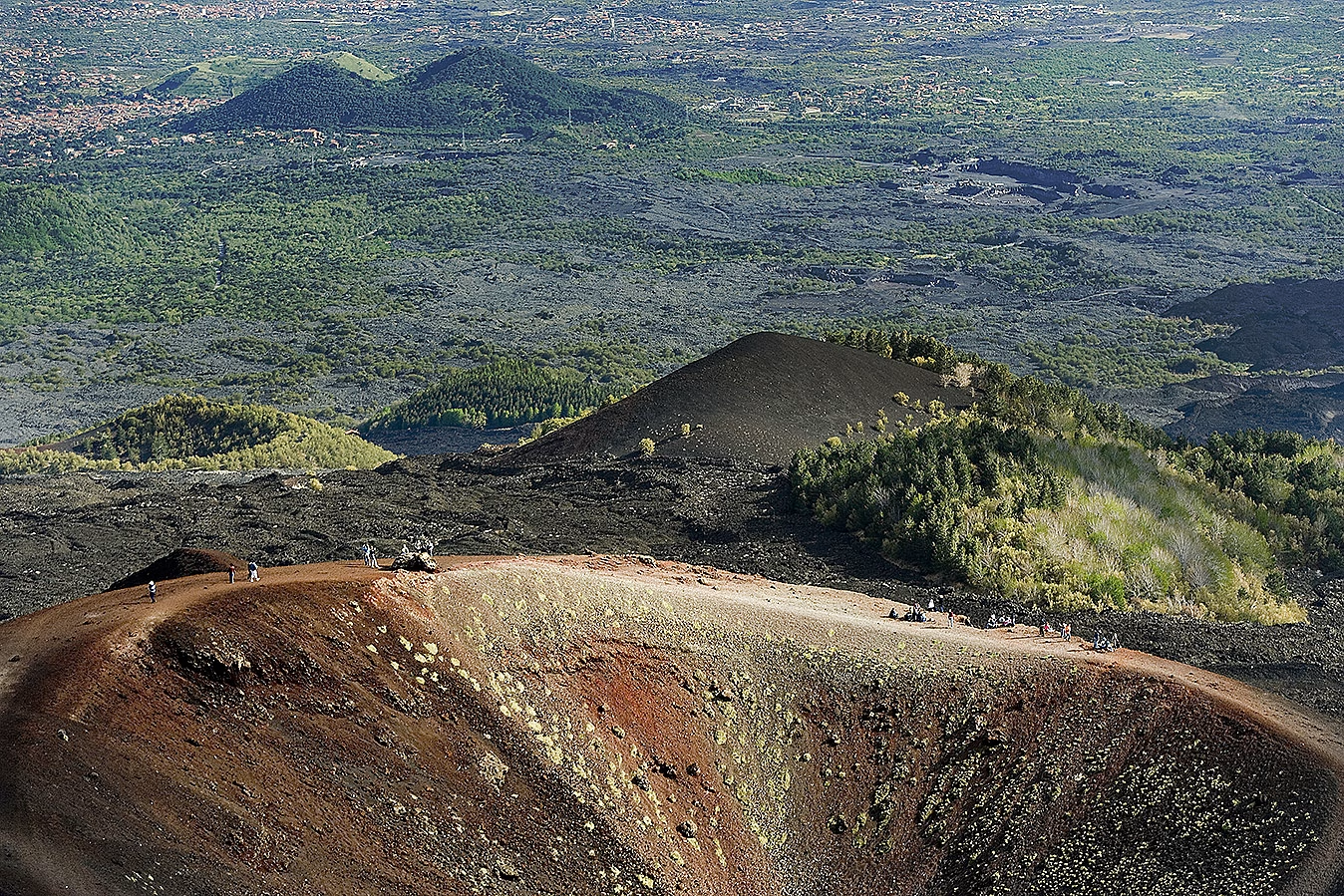
Mount Etna entered the UNESCO World Heritage List in 2013 for its geological, scientific, cultural and educational importance. The protected World Heritage property covers the most strictly protected and scientifically significant upper area. Read the UNESCO description of Mount Etna .
Orientation
“Visiting Etna” can describe markedly different days. The southern approach provides the clearest infrastructure for a first high-altitude visit. The north is defined more by forest and extensive lava landscapes. The eastern and north-eastern slopes introduce the inhabited and cultivated Etna of vineyards, orchards and small towns.
Rifugio Sapienza is the base for the cable car and the principal authorised high-altitude progression. The nearby Silvestri Craters also provide a shorter, independent introduction without committing to the complete upper-level excursion.
Piano Provenzana provides a different physical setting, approached through woodland and extensive evidence of past eruptions. It is a convincing choice when walking, landscape or geological interpretation matters more than following the standard southern sequence.
Around places such as Zafferana Etnea, Milo, Linguaglossa and Randazzo, the volcano becomes an agricultural territory. These slopes suit travellers interested in vineyards, food, producers, woodland and a slower understanding of Etna.
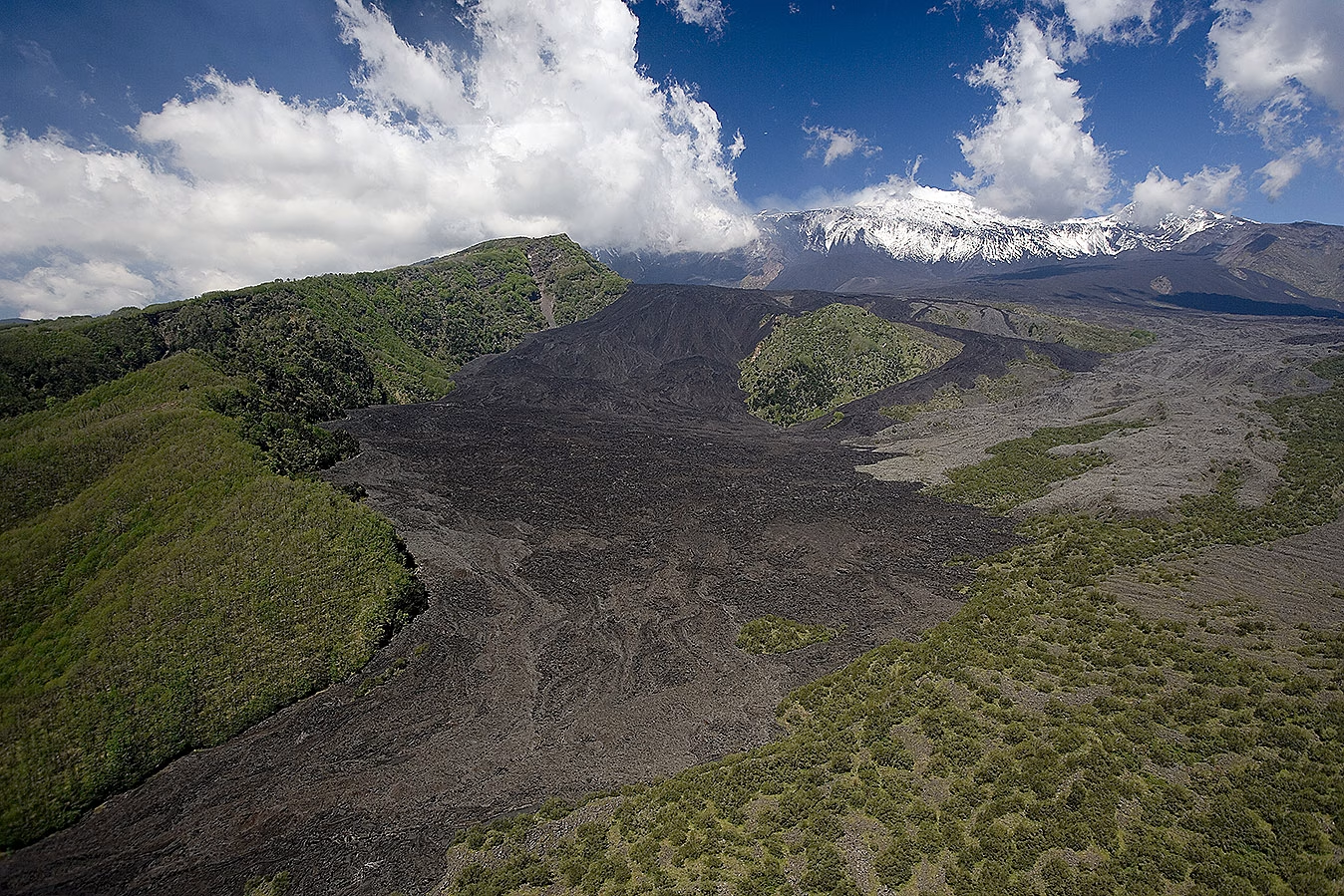
Which Etna is right for you? Choose the south for the most straightforward first high-altitude experience; the north for forest, walking and a different reading of the lava landscape; or the cultivated slopes when wine, food and a slower stay are central.
Active Etna
Reaching a greater altitude is only one way to experience Etna. The most rewarding choice depends on whether the priority is an accessible overview, sustained walking, specialist geology or a more active way of crossing the lower and middle slopes.
The cable car rises from Rifugio Sapienza to the upper station. Authorised vehicles then continue towards the highest area permitted by the authorities, followed by interpretation from an alpine or volcanological guide.
A private day can be adjusted to the traveller’s knowledge, mobility and interests. This is particularly valuable for families who want a learning experience and for amateur or professional geologists seeking greater depth.
Forest, secondary craters, lava flows and viewpoints can provide a more satisfying day than pursuing the upper zone when walking and interpretation matter more than altitude.
These are alternative ways of moving through selected roads, forest and lava landscapes. They should be chosen for the route and setting, not treated as substitutes for specialist geological interpretation.
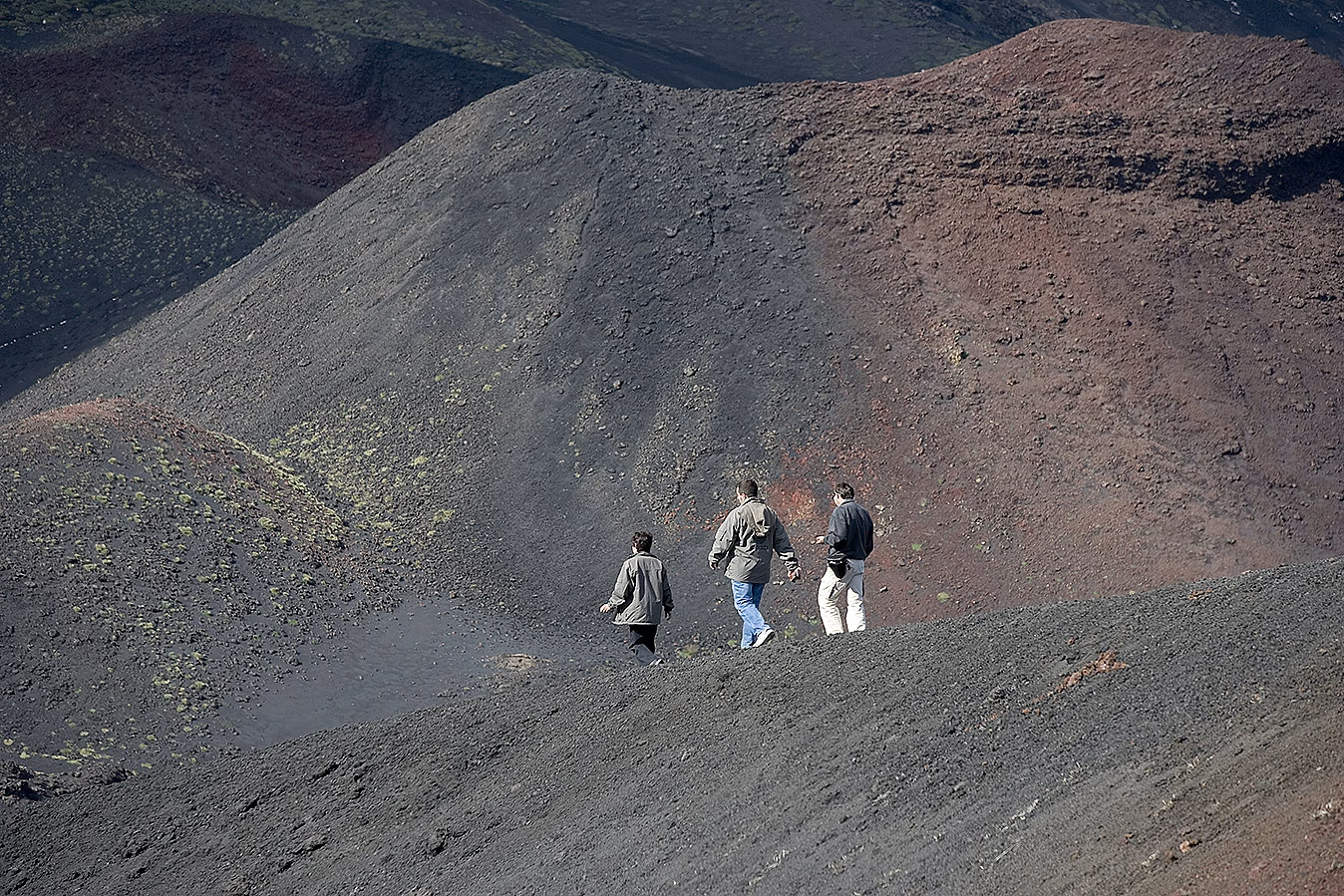
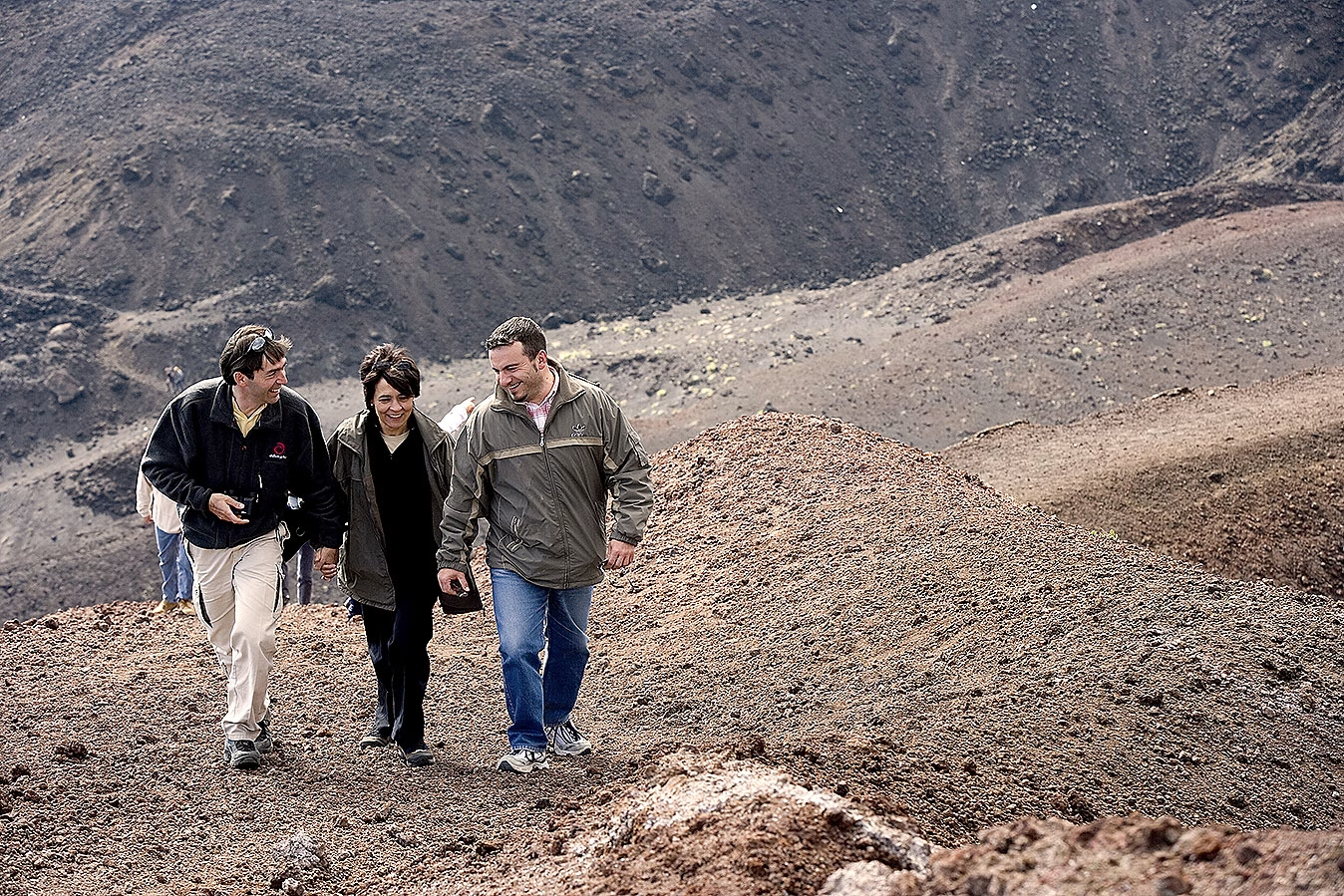
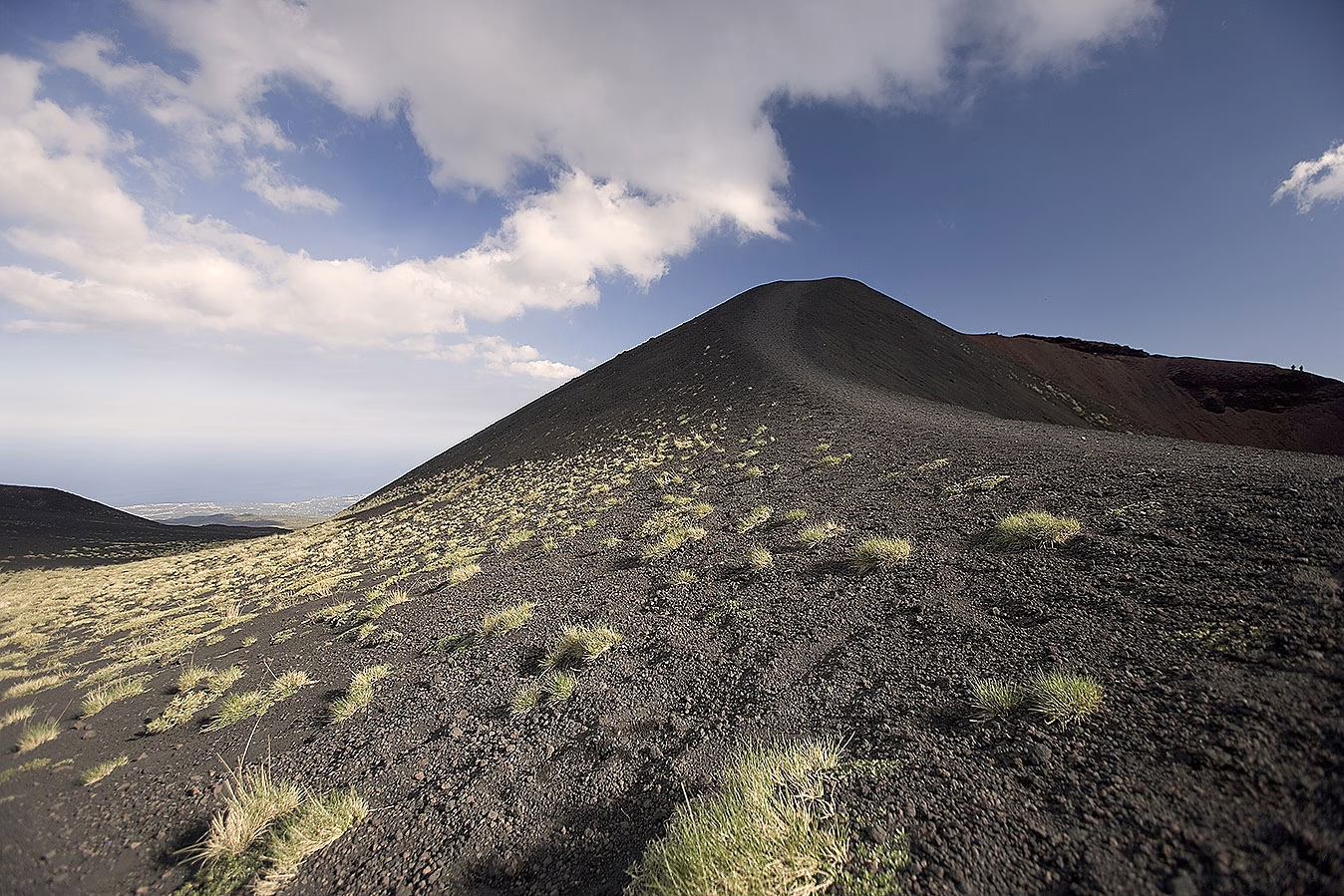
The summit craters, the summit zone and the highest accessible visitor point are not interchangeable. High-altitude arrangements can change because of weather, volcanic conditions or technical requirements. Consult Funivia dell’Etna for current south-side operation and Parco dell’Etna for official park information.
Etna beyond the high-altitude excursion
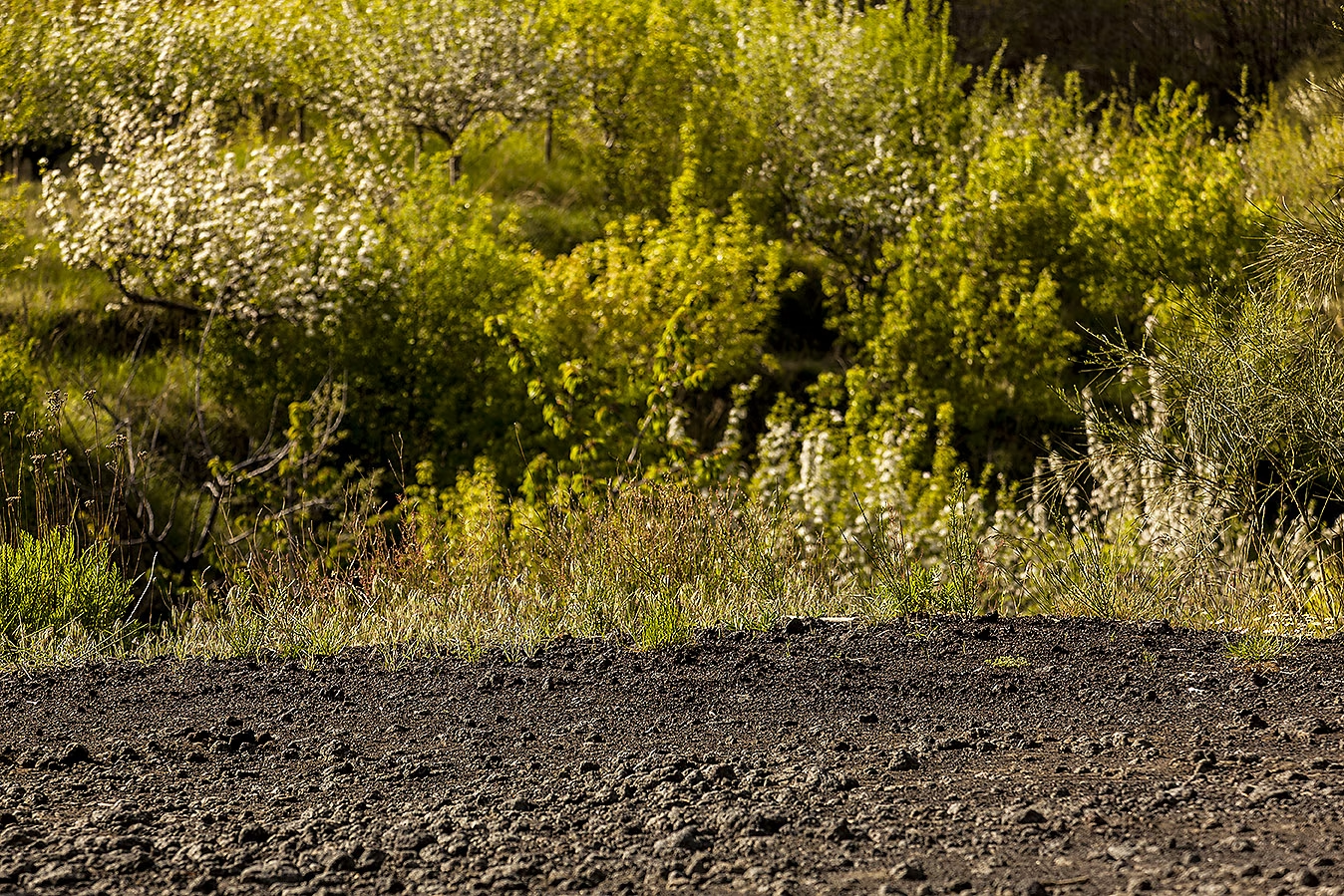
A summit-focused day shows only one part of Etna. Lower down, vineyards, orchards, woodland and towns reveal how people have adapted to a productive but continually changing landscape.
A winery visit can be added to a broader Etna day, but travellers with a serious interest in food and wine gain more from giving it a clear purpose. A dedicated producer-led day allows time to understand the differences between growing areas, meet selected winemakers and eat without compressing every part of the volcano into one itinerary.
A cooking class creates another kind of connection. It moves the day away from passive tasting and towards the ingredients, techniques and domestic traditions of eastern Sicily. This can work particularly well for families, small groups and travellers making Etna a short base.
Combine selected volcanic terrain with a producer visit or structured lunch. This suits travellers who have one day but do not want the experience to be entirely about altitude.
Allow the vineyards and agricultural landscape to become the purpose of the day, with the route shaped around a small number of meaningful visits rather than a list of estates.
A practical alternative for travellers who want to understand Sicilian food through ingredients and preparation, particularly during a longer stay around Etna.
Giusi, ExpertoItaly’s local food-and-wine specialist, can shape winery visits, meetings with selected producers, cooking classes and slower explorations of Etna’s cultivated landscape for clients whose wider Sicily holiday has been organised by ExpertoItaly. See how our private Etna experiences are approached.
Time and season
One day is sufficient when Etna is one element of a wider eastern Sicily stay and the priority is a classic south-side visit, a privately guided geological experience or a carefully paced landscape-and-wine day.
Choose a main experience for the day—a cable-car excursion, a guided walk or time with a wine producer—and leave room to enjoy it over lunch and a few well-chosen stops.
A local stay becomes worthwhile when travellers want two contrasting Etna experiences, meaningful wine time, walking, producer visits or Alcantara without turning each day into a long return excursion.
Choose a place to stay for its setting, gardens, pool and the space your family or group would enjoy between outings.
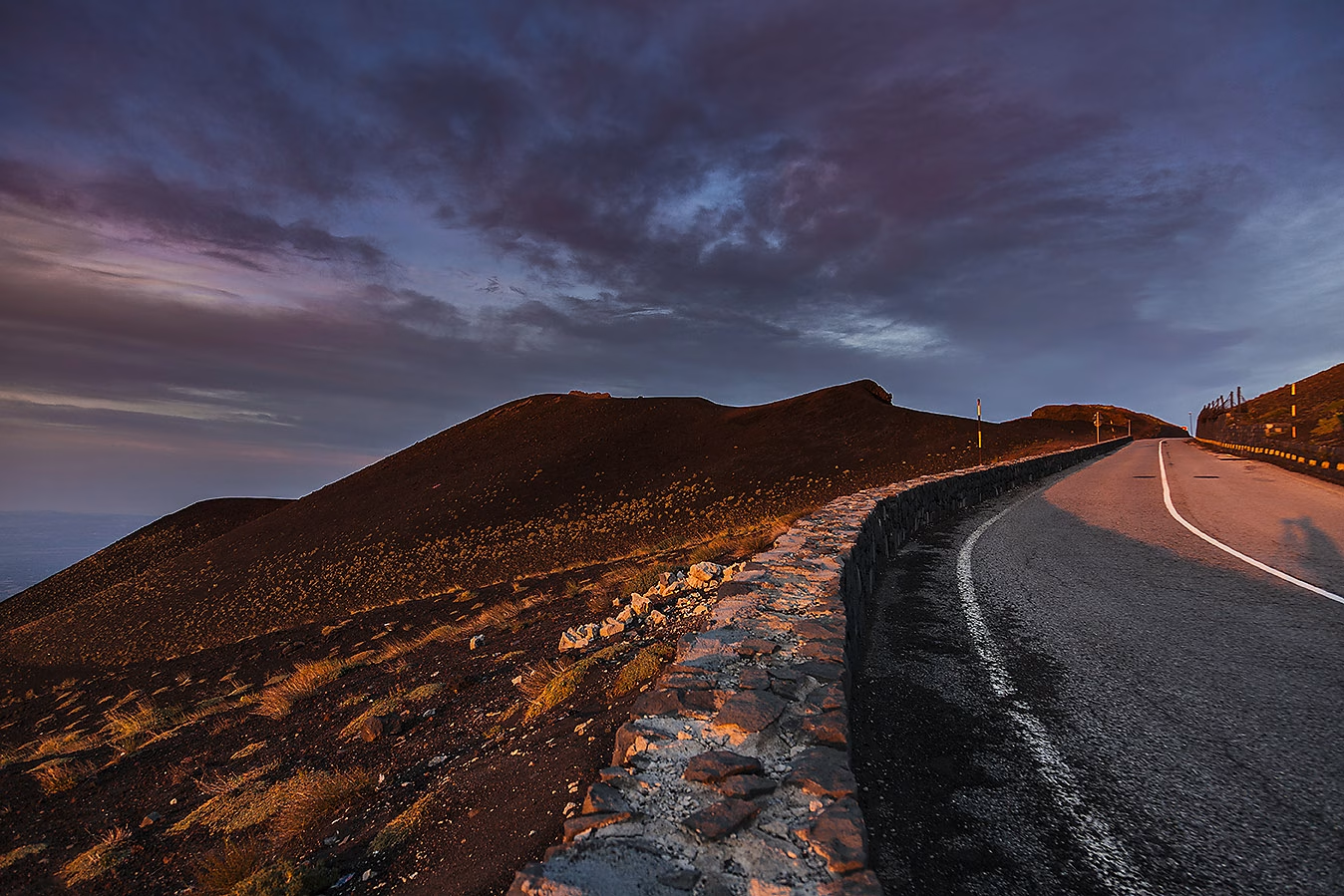
Spring often suits lower- and mid-altitude exploration, but snow, wind and cooler conditions may remain at higher levels. Coastal weather is not a reliable guide to conditions above.
Summer makes Etna a natural excursion from the coast, but popular departure points become busy. High altitude can still be cold and exposed, so layers and wind protection remain necessary.
Autumn can be particularly rewarding on the cultivated slopes. Conditions become less predictable as the season advances, so the day should retain flexibility.
Snow can transform the landscape and alter transport and walking arrangements. Winter visits require appropriate clothing and should be planned around current mountain conditions rather than a fixed year-round itinerary.
Etna does not have one universally best month. The right period depends on whether the priority is high altitude, walking, wine, vegetation or the role of Etna within a coastal Sicily holiday.
Eastern Sicily planning
Etna should be placed according to the rhythm of the complete holiday. Some travellers need one carefully designed day; others gain more by changing base and allowing the volcanic landscape to become part of everyday life.
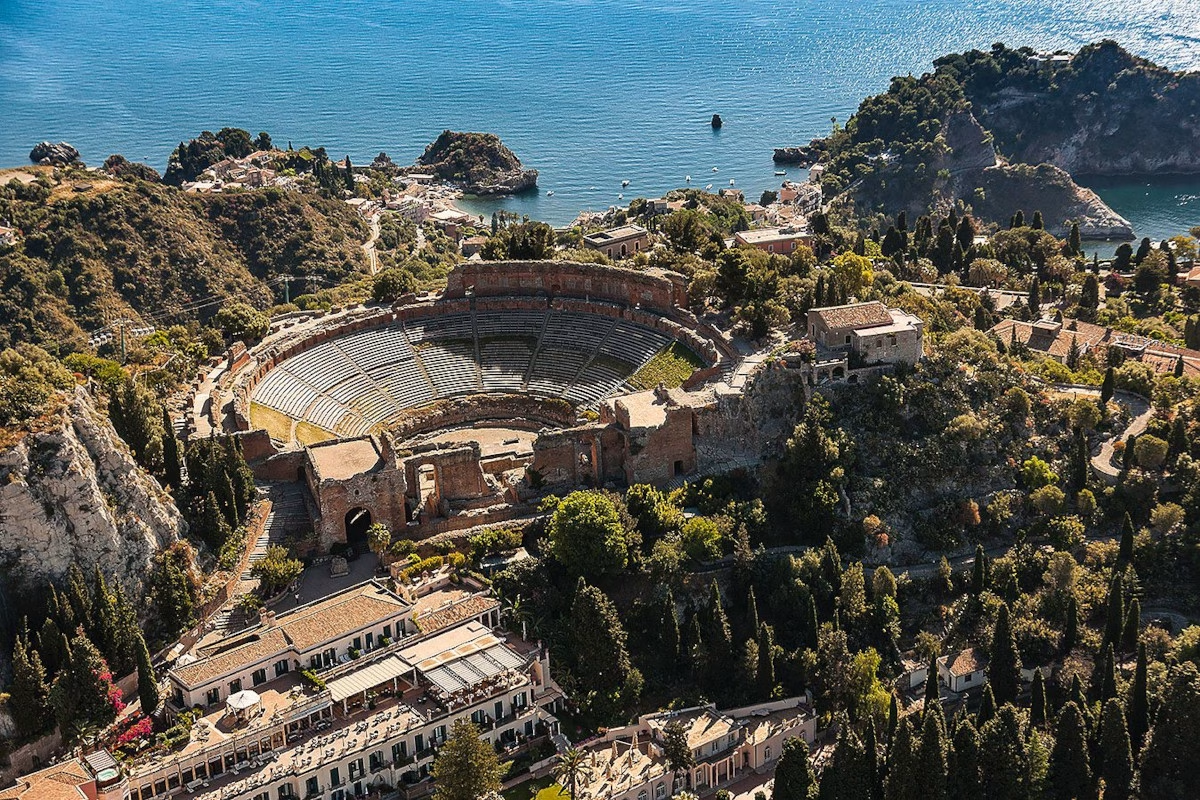
Etna works naturally from Taormina when the upper town, coast and hotel remain the principal reasons for the stay. A classic excursion, family learning day or private geological experience can fit into four or five nights without introducing another hotel move.
Catania provides a practical starting point for Etna South. An independent public bus can reach Rifugio Sapienza, but its fixed timetable, limited flexibility and concentration on the southern access point make it different from a privately structured day. Read more about Catania within eastern Sicily .
A local base is most convincing when Etna is not merely an excursion. It can support one geological or walking day, a separate food-and-wine experience and time in the Alcantara Valley without repeatedly returning to the coast.
The Aeolian Islands provide a natural thematic continuation for travellers interested in volcanic landscapes. The combination works best when the islands are allowed to become a proper coastal stay rather than another brief geological stop.
Stay on Etna’s slopes
A villa can justify a longer Etna stage when a family or small group wants private space, a pool and the freedom to combine active days with time at home. These examples serve different group sizes; their precise location should still be matched to the intended side of the volcano.

A larger base for an extended family or a small group sharing an Etna stage.

A more compact family base for combining the volcanic landscape with slower villa days.
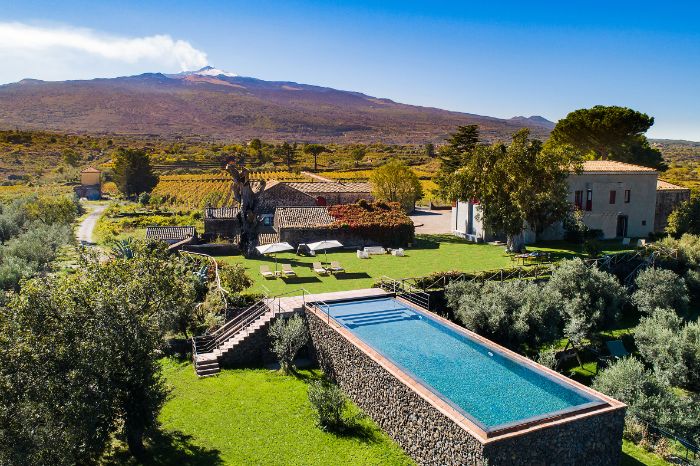
Suitable for a larger family or small group wanting Etna to form a substantial part of the holiday.
Practical questions
Yes, within accessible areas such as Rifugio Sapienza and the Silvestri Craters. Independent visitors can also use the southern cable car according to the operator’s current arrangements. A car provides greater flexibility, while the public bus from Catania follows a limited schedule.
Higher-altitude access, specialist walks and lava-cave experiences need more careful organisation. Independent access should not be confused with unrestricted access to the summit zone.
Generally, yes. Etna is particularly successful for teenagers when the day includes clear geological interpretation, physical movement and time to understand what they are seeing. The precise route should reflect age, fitness, weather and interest rather than assuming every family needs the highest available excursion.
Stable, closed footwear is the baseline because volcanic ground can be loose and uneven. Proper walking boots are preferable for guided trails or sustained walking. Layers, sun protection and a windproof outer layer remain useful even in summer.
No. Altitude, temperature, wind and uneven ground make it unsuitable for some travellers. Funivia dell’Etna currently advises against its highest excursion for people with cardiac or respiratory conditions, hypertension and during pregnancy. Travellers should consult the current operator guidance before choosing it.
They can be combined selectively, especially from Taormina or an Etna-area base. The plan works best when the Etna component is kept focused and the Alcantara visit is matched to the season, water conditions and traveller mobility. A full high-altitude programme, extended walking and a substantial Alcantara activity should not all be forced into the same day.
Etna works differently within every eastern Sicily itinerary. For some travellers, the right choice is a well-planned day from Taormina or Catania. For others, vineyards, walking, local food and the wider volcanic landscape justify making Etna a base in its own right. The important decision is not simply whether to visit, but which part of Etna best fits the holiday around it.
Tailor-made Italy holidays, thoughtfully planned by ExpertoItaly.
Characterful places to stay, thoughtful routes and well-planned travel between them — across one region or several.
We arrange your accommodation, transport and experiences in Italy. Flights are booked separately.
About ExpertoItalyTell us where you would like to go, when you can travel and what matters to you.
Start planning your Italy holidayMonday–Thursday: 9am–6pm
Friday: 9am–5.30pm · UK time
At weekends, please send an enquiry.

Travel Trust Association
Member Q8055
Read how your holiday payments are protected through our TTA membership.
How your holiday is protectedSubscribe for destination ideas, places to stay and practical advice from ExpertoItaly.
We will never sell your details. Read our privacy policy.
Follow our travel updates. For help planning your own holiday, contact ExpertoItaly.
ExpertoItaly Ltd · Company registration no. 12035194 · TTA membership Q8055
Package holidays are sold by ExpertoItaly Ltd. Registered office: 33 Miles Close, London, SE28 0NJ.




 Facebook
 WhatsApp channel