


Sorrento · Bay of Naples
A coastal town with a long tradition of hospitality, a historic centre worth exploring and unusually useful connections for discovering the Bay of Naples and the Amalfi Coast.
Sorrento offers more than a convenient place to sleep between excursions. Its museums, harbours, restaurants and sea-view terraces give substance to a stay, while residential streets, everyday shops and local routines continue beyond the main visitor season. Tourism is prominent, but this remains a working town.
In this article
Understanding SorrentoSorrento and NaplesArriving & getting aroundA walk through the townMuseums & craftsmanshipHarbours & swimmingEating & eveningsChoosing your days outSeasons & ChristmasMaking the most of your stay
Already booked your stay?
Start with arriving and getting around, follow our walk through the historic centre and use the excursion guide to plan days that leave time to enjoy Sorrento itself.
Understanding Sorrento
Sorrento stands above the Bay of Naples, on the northern side of the Sorrentine Peninsula. Vesuvius belongs to the view across this bay. The Amalfi Coast lies around the other side of the peninsula, facing the Gulf of Salerno: close enough for a day out, but separated by hills, winding roads and journey times that a map can disguise.
Compared with the smaller resorts along the Amalfi Coast, Sorrento offers a broader choice of everyday services and transport. You can explore the centre on foot, take the railway towards Pompeii and Naples, or use the port for island and coastal journeys when services operate. For a first visit with several different interests, it is one of the most practical coastal bases.
The town centre occupies a plateau above the sea. Walking between shops, squares and restaurants is generally straightforward; reaching the water is a separate descent. That distinction matters more than the distance between two points on a map.
If you are still deciding where to stay, our Amalfi Coast and Bay of Naples comparison explains the geography and which bases combine sensibly.

Sorrento and Naples through the centuries
The Roman bay
Roman Surrentum belonged to a coastal world in which towns, ports and wealthy seaside residences were connected by the Bay of Naples. Maritime routes linked communities that could be awkward to reach overland. The attraction of this coastline as a place to spend time, as well as to trade and live, therefore long predates the modern holiday.
A duchy with its own identity
In the medieval period, Sorrento developed from the Byzantine political world associated with Naples into a duchy with its own rulers. Its relationship with Naples included dependence and periods of autonomy, alongside rivalry and shifting alliances with neighbouring powers. Norman conquest ended its independence in 1137, incorporating it into the Kingdom of Sicily.
Within the Kingdom of Naples
Under later rulers, Sorrento shared the history of the mainland kingdom centred on Naples, while retaining local civic institutions. The Sedile Dominova, where noble families met, makes that distinction visible. The Ottoman sack of 1558 also explains why coastal defence mattered so much: the sea brought danger as well as prosperity.
The Grand Tour and the holiday town
As Naples became a major destination for European cultural travel, Sorrento attracted visitors drawn to the landscape and climate. Nineteenth-century hospitality and craftsmanship helped establish its international reputation well before the celebrity holidays of the twentieth century. Wood inlay became particularly associated with the town and its visiting clientele.
Today the relationship remains complementary: Naples supplies the scale, collections and intensity of a regional capital; Sorrento offers a more contained coastal stay. Give the city time of its own with our Naples travel guide.

Arriving and getting around
From Naples Airport
A pre-arranged private transfer is the simplest arrival with luggage, especially for a hillside hotel or an evening landing. The Curreri airport shuttle offers a public coach alternative between Naples Airport and Sorrento. Check its departure point and timetable against your flight, then arrange the final journey from the Sorrento stop to your hotel. Road traffic can substantially extend the journey; follow the operator’s recommended allowance for your return flight.
From Napoli Centrale
For the ordinary Circumvesuviana service, follow signs to the EAV platforms at Napoli Garibaldi beneath the main station and check that the train is for Sorrento. This is a local commuter railway: luggage space and comfort differ from a high-speed train. Allow a generous connection if arriving from Rome or another city. High-speed trains do not run through to Sorrento.
Use EAV’s timetables and service notices for the latest railway arrangements. Campania Express is a separate service with reserved seating when operating; EAV currently announces its suspension from 1 October 2026 until further notice. Do not assume it will be available for an autumn or winter booking.
Arriving by sea
Sorrento’s passenger port is at Marina Piccola, below the centre. Check your operator’s precise Naples departure terminal, ticket conditions and luggage allowance. The NLG route planner includes Sorrento services; routes and frequency vary with the season, and sailings depend on sea conditions.
The useful lift
The Sorrento Lift at Villa Comunale connects the upper town with the Marina Piccola waterfront and bathing area. There is still a walk to the ferry berths. Opening hours change seasonally, so check the closing time before relying on it for your return. It does not serve Marina Grande.
Do you need a car?
For a central Sorrento stay built around the town, archaeological visits and boat trips, usually not. A car introduces parking costs and traffic without helping in the pedestrian lanes. A driver can make a particular excursion easier, but cannot remove coastal congestion.
If driving is part of a wider journey, confirm hotel parking and the authorised approach before arrival: historic-centre restrictions and narrow streets make improvised routes unhelpful. For a hotel above town, check shuttle frequency, the last evening departure and taxi options. An address described as “Sorrento” does not guarantee an easy walk home.
A walk through Sorrento’s historic centre
Allow a relaxed half-day with stops. The core route stays in the upper town; add Marina Grande separately if you are comfortable with slopes and steps.
Piazza Tasso and Vallone dei Mulini
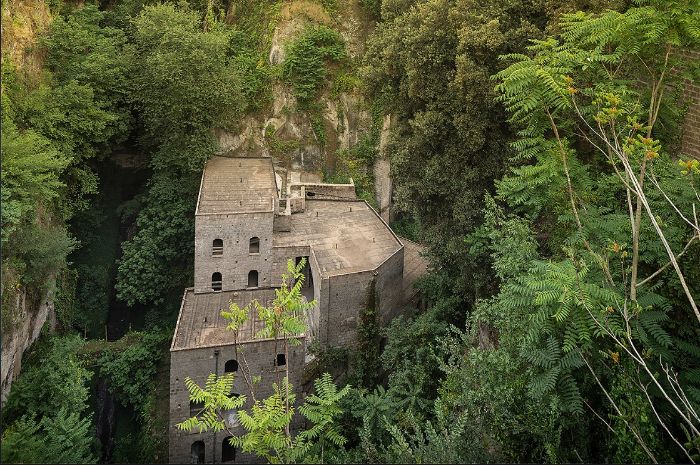
Begin in Piazza Tasso, named after the Sorrento-born poet Torquato Tasso. A short detour along Via Fuorimura brings you to the viewpoint over Vallone dei Mulini. Looking down into the ravine helps explain the dramatic change in level beneath the modern streets. Treat this as a view from above, rather than planning to enter the valley.
Corso Italia, the cathedral and Sedile Dominova
Return to Piazza Tasso and follow Corso Italia west towards the cathedral. Its appearance reflects successive rebuilding, so the history is more layered than a single medieval date suggests. Enter when worship permits, then turn into the old-town lanes towards Via San Cesareo and Sedile Dominova. Look up at the painted meeting hall before continuing through the shopping streets.
The closely spaced lanes are part of the pleasure, but allow time beyond souvenir shopping. The wood-inlay museum on Via San Nicola makes a worthwhile extension at this end of town.
San Francesco and Villa Comunale
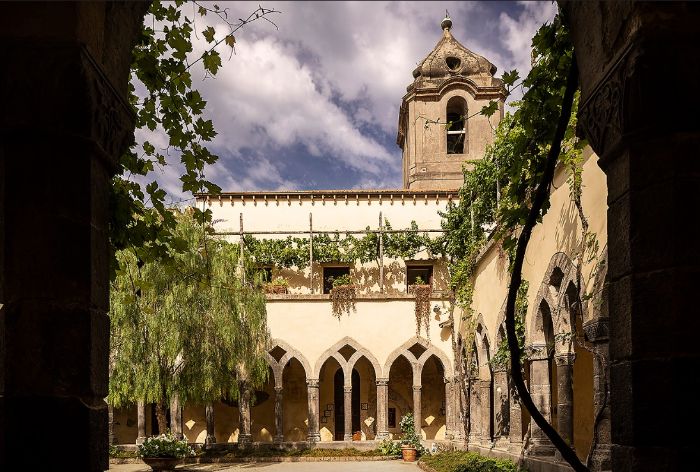
Continue towards the cloister of San Francesco, whose arcades and garden offer a change of pace from the shopping streets. The medieval cloister has been altered over the centuries; its contrasting arches reward a closer look. Respect any services or private events taking place.
Beside it, Villa Comunale opens towards the Bay of Naples. This is a useful place to understand the coastline and locate the lift down to the waterfront. Return through Piazza Sant’Antonino towards Piazza Tasso, or continue west towards Marina Grande for lunch.
Walking comfortably: wear shoes suitable for uneven paving. Keep the harbour descent optional if steps are difficult, and ask your hotel about an accessible route rather than assuming that the shortest walking route is suitable.
Museums and Sorrento’s craftsmanship
Museo Correale
The Museo Correale, at Via Correale 50, occupies the family’s former summer residence. Its collections bring together archaeology, Neapolitan painting, decorative arts, porcelain and Sorrentine inlay. Paintings of the Scuola di Posillipo connect the visit directly with the artistic life of Naples and its bay. The garden extends the visit beyond the galleries.
Choose it for a fuller cultural morning, particularly if you enjoy paintings and historic interiors. Check current opening arrangements before setting out: weekly and seasonal closures matter, especially for a winter stay.
Museobottega della Tarsialignea
At Via San Nicola 28, the Museobottega della Tarsialignea focuses on the art of wood inlay. Historic work and contemporary design show how differently coloured pieces of wood can create images and patterns. It gives context to a craft that is easily reduced to a souvenir when encountered only in shop windows.
Its position in the historic centre makes it easy to add to the town walk. Consult the museum’s own visiting information for hours, tickets and guided visits.
Two harbours, and time by the sea
Marina Grande: lunch and the fishing waterfront
Marina Grande is the fishing harbour west of the centre, with waterfront houses, boats and restaurants. Walk down for a leisurely lunch or an early evening meal, allowing for the climb back. It makes a good destination for a day when you want to stay close to town.
Marina Piccola: ferries and the bathing area
Despite its name, Marina Piccola is the port most visitors need for scheduled passenger boats. Follow your ticket’s operator and berth instructions rather than simply arriving at “the marina”. Allow time for the descent, any ticket formalities and boarding.
Nearby, beach clubs and bathing platforms provide a different way to enjoy the coast. Sorrento is not principally a long sandy-beach resort: much of the experience involves small beach areas, decks and access into the water by steps or ladders.
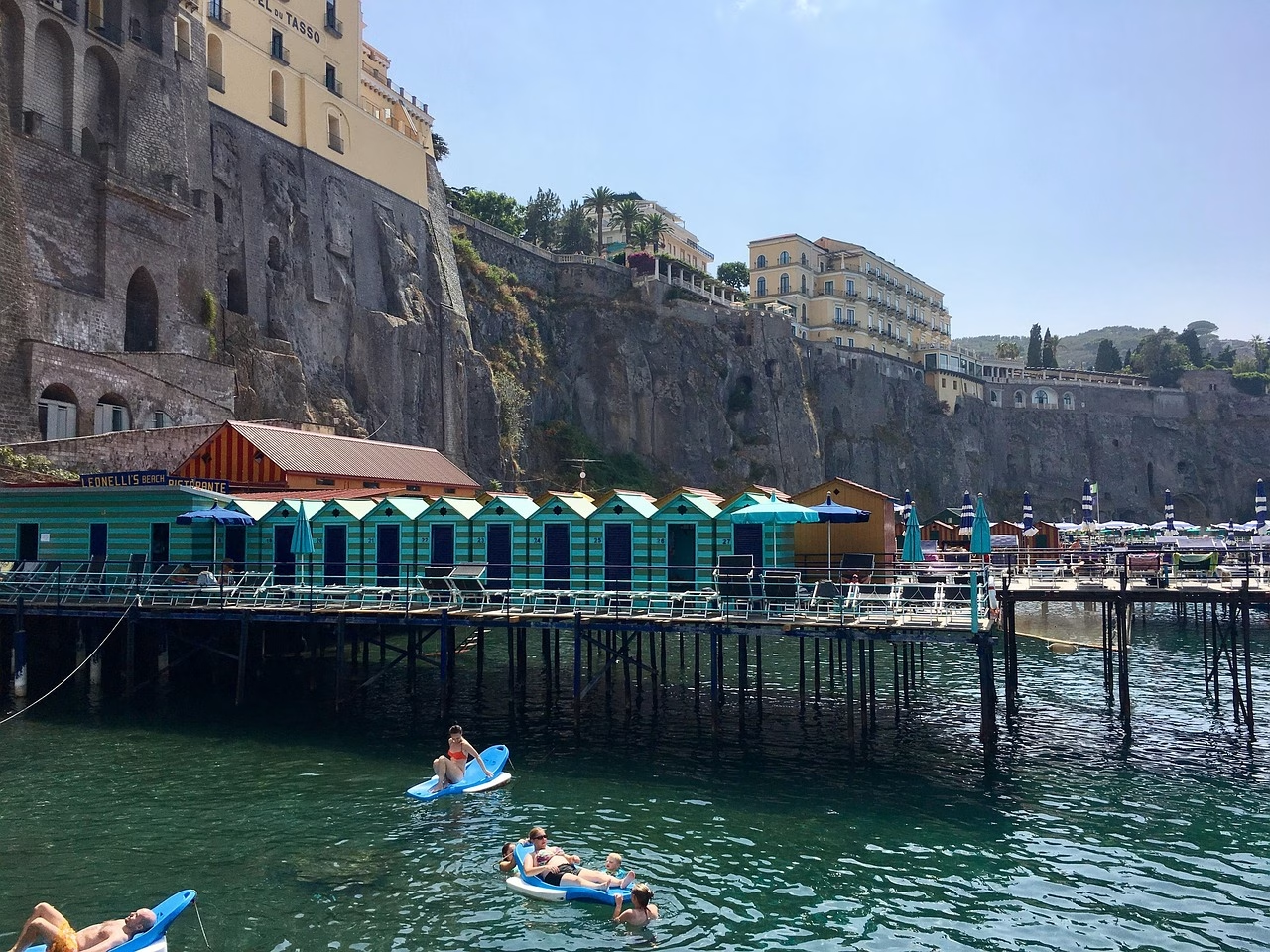
If swimming is central to your holiday, check the exact facilities before booking: hotel pool opening, private sea access, beach-club charges and suitability for children or less confident swimmers. The lift operator’s waterfront directory links to several bathing establishments. Confirm seasonal opening and reserve space when required.
Eating and evenings in Sorrento
Keep a balance between meals in the old town, a harbour lunch and an evening on a terrace. Gnocchi alla sorrentina, baked with tomato and cheese, is a useful introduction to local comfort food; seafood and lemon-based desserts offer other ways into the peninsula’s cooking.
For a planned dinner, Il Buco offers a more considered restaurant occasion. L’Antica Trattoria is another established choice in the historic centre, with a garden setting. Check current menus, opening days and reservations directly, particularly outside summer.

A waterfront table does not automatically mean the same experience everywhere. Marina Grande suits an unhurried meal by the boats; the terraces above the cliffs give a broader view. Some well-known rooftop venues are in neighbouring Sant’Agnello, so check the address and return transport before booking.
For Christmas Eve, Christmas Day and New Year’s Eve, reserve ahead and confirm whether a special menu replaces the usual choice.
Choosing your days out
Sorrento’s advantage is the choice of directions. Use it to select a few rewarding days, with time in town between them. For a week, one base can work well; there is no need to move hotels simply to see another part of the bay.
| Destination | Practical approach from Sorrento |
|---|---|
| Pompeii | Take the EAV railway towards Naples to Pompei Scavi–Villa dei Misteri. Confirm the station and entrance shown on your ticket. Choose a guide if you want help understanding the scale of the site. |
| Herculaneum | Use Ercolano Scavi on the Naples-bound railway, then walk downhill to the archaeological site. The return walk climbs back towards the station. |
| Naples | Travel by railway or an available sailing. Choose one part of the city and a principal visit, then leave time for lunch and walking. Plan the return before setting out. |
| Capri | Take a scheduled boat from Marina Piccola. Your island arrival is at Marina Grande on Capri: this is a different harbour from Marina Grande in Sorrento. Allow time for onward island transport. |
| Positano & Amalfi | Compare seasonal boats with SITA buses or a private driver. Buses use the winding coastal road and can be crowded. Choose a manageable number of stops; Ravello requires a further journey uphill. |
Our Pompeii and Herculaneum guide helps you choose between the sites. Vesuvius belongs to this Bay of Naples experience: read how to visit Vesuvius before adding it, as the crater needs separate transport and ticket planning and can make an archaeological day tiring.
For the islands, use our Capri planning guide. For the other side of the peninsula, the Amalfi Coast travel guide helps you choose towns, while SITA Sud’s Campania timetables provide current bus information. Buy the appropriate ticket before boarding and check its validation requirements.
A more active alternative is kayaking from Nerano towards Baia di Ieranto. It starts beyond Sorrento at Marina del Cantone, so organise the transfer as part of the outing.
Before leaving your hotel
Check the return service, save tickets offline, confirm the meeting point and allow for the journey down to the port or across town to the station. On boat days, recheck the operator’s service notices. Keep the least weather-dependent day flexible so you can exchange plans.
Sorrento beyond summer, and Christmas across the bay
Sorrento can be particularly enjoyable when the streets are quieter and your day revolves around the town, a museum, lunch and a cultural excursion. Its everyday services give it more substance outside the holiday season than a stay built entirely around beach facilities.
Spring brings longer days and generally warmer conditions, while early autumn can combine town visits with time outdoors. These are attractive periods for exploring, although showers and rough seas remain possible. January and February call for the most flexible approach: choose a central hotel, check what is open and make archaeology, food and town life the foundations of the stay.
Christmas in Naples and Sorrento
Christmas makes a rewarding reason to combine the two. Spend time in Naples for its churches, sacred art and nativity workshops, then enjoy Sorrento’s more contained coastal setting. Our guide to the art and symbolism of the Neapolitan nativity explains what to look for in the presepi and why San Gregorio Armeno matters.

The festive period is not uniformly quiet: popular shopping streets and holiday dates can be busy. Book the meals that matter, check holiday transport and museum opening, and treat Capri as an optional day subject to services and sea conditions. A Christmas stay is about culture, hospitality and being by the bay; summer beach clubs are a different experience.
Making the most of your stay
For a first week, allow at least one full day for Sorrento and keep another lightly planned. Then choose excursions around your interests: archaeology, Naples, Capri or the Amalfi Coast. You will usually enjoy the week more with a few complete days than by trying to reach every destination.
If your hotel is already booked, check three details now: the route from your arrival point, the actual walking or shuttle connection to the centre, and which pool or sea-access facilities operate during your dates. These make more difference to daily comfort than a list of attractions.
For a longer holiday, Sorrento can be paired with Naples for deeper cultural exploration or with a separate island stay. Our Sorrento holidays page introduces accommodation and planning options; Amalfi Coast and Bay of Naples holidays puts the wider journey together.
If you would like help choosing the right hotel, arranging transfers or adding a private guided day, speak to ExpertoItaly about your plans.





 Facebook
 WhatsApp channel