


In this article
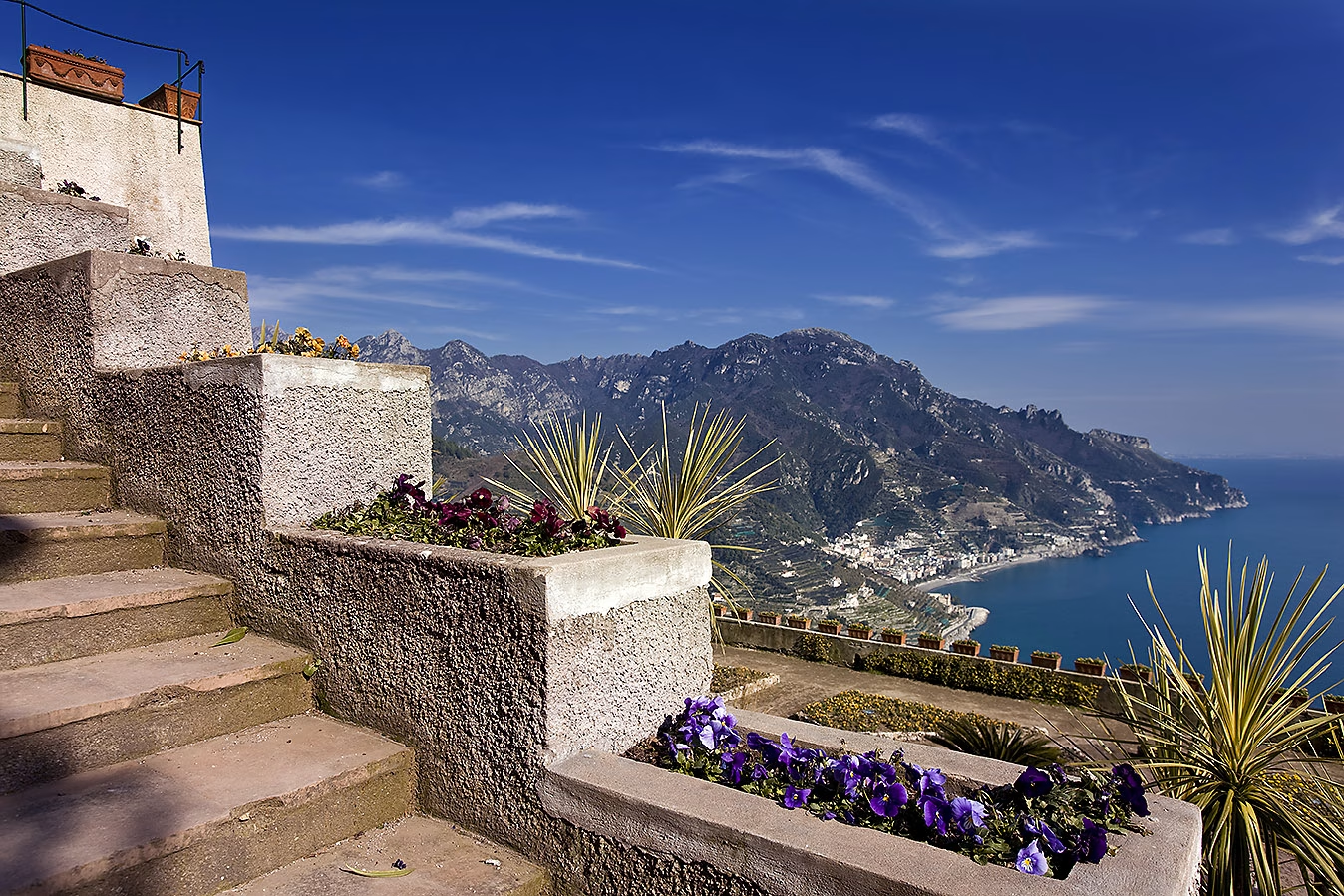
Wander through gardens high above the sea, explore medieval churches and follow lanes towards the hillside villages of Scala. Facing one another across the Dragone valley, Ravello and Scala offer a day of art, history and long views above Amalfi.
Visit Ravello for Villa Rufolo, Villa Cimbrone and the cathedral, but give Scala a place in the day. Across the valley, the emphasis shifts towards scattered neighbourhoods, an important former cathedral and paths connecting cultivated slopes with the towns below. Together they explain a part of the Amalfi Coast that is easily missed from its waterfronts.
Two neighbours in the medieval Amalfi world
Neither town has a securely documented birthday. Scala’s traditional foundation story involves Roman shipwreck survivors; it is a local account, rather than a date we can establish from reliable evidence. What becomes much clearer is the importance of both settlements during the Middle Ages.
Scala had a bishopric by the late tenth century. Ravello became a separate episcopal seat in 1086, under Norman rule. These were substantial communities in the territory associated with Amalfi, with their own ambitions and wealthy families. Their position above the shore did not isolate them from the Mediterranean economy: the fortunes of merchants and landowners helped pay for the buildings still standing here.
The relationships were not always harmonious. Ravello, Scala and Amalfi competed for influence, while family alliances crossed the valley. Think of the coast as a network of ports, farms, religious institutions and trading households. The account of Amalfi and Atrani’s maritime and civic history provides the useful coastal counterpart.
Ravello’s cathedral: bronze doors and mosaics
Piazza Duomo is the natural place to begin. Step inside the cathedral of Santa Maria Assunta to see the medieval furnishings that reveal the wealth and craftsmanship of early Ravello.
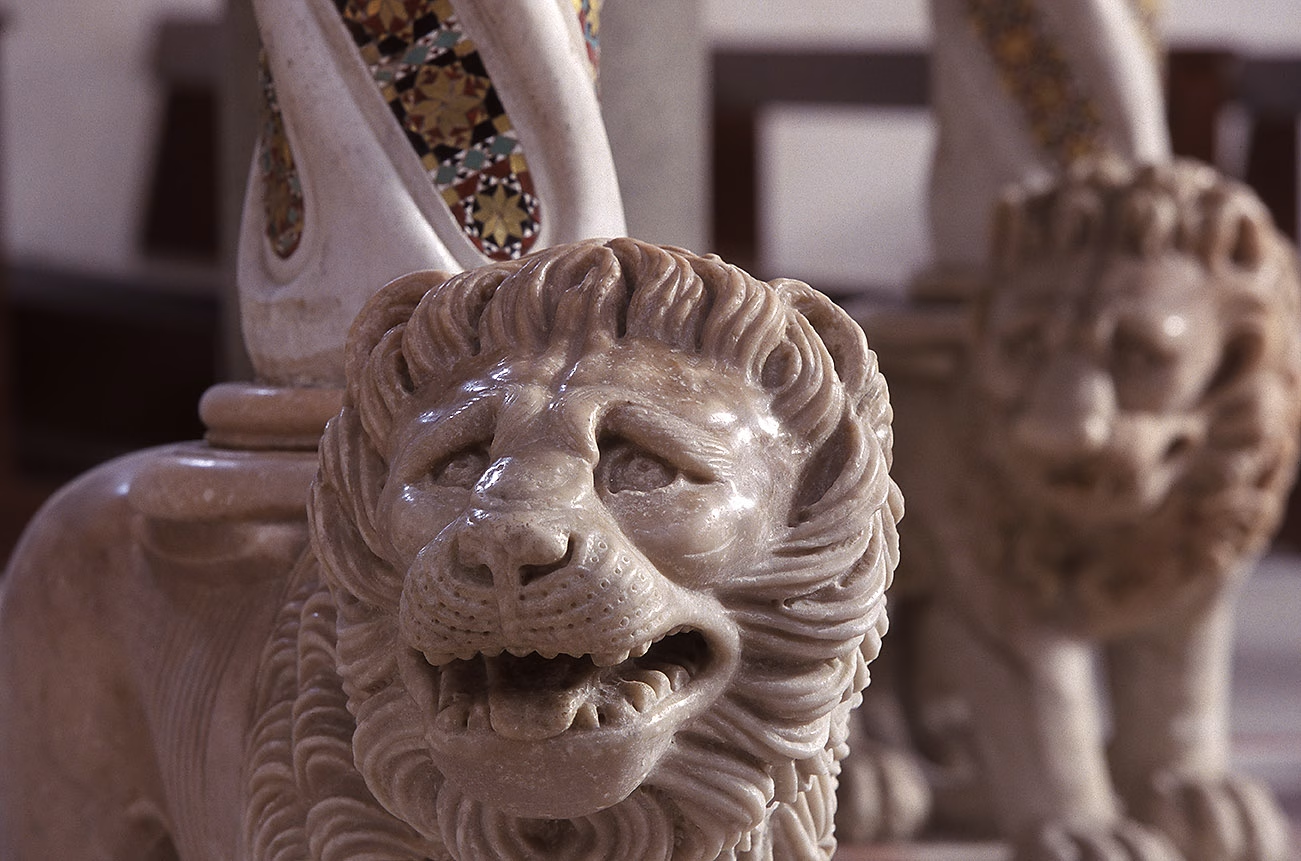
Look for the bronze doors of 1179 and the two raised platforms used for readings. The Gospel pulpit, commissioned by Nicola Rufolo in 1272, combines mosaic decoration, slender columns and sculpted lions. Here a merchant family’s resources became a public statement of faith and standing. Compare the coloured surfaces with the more restrained appearance of the surrounding church.
The cathedral has changed repeatedly, including substantial eighteenth-century alterations. Its museum preserves sculpture and fragments from furnishings that were dismantled or moved. Check the cathedral and museum’s visitor information for the areas currently accessible, and allow worship to take precedence over sightseeing.
Villa Rufolo: a merchant residence remade as a garden
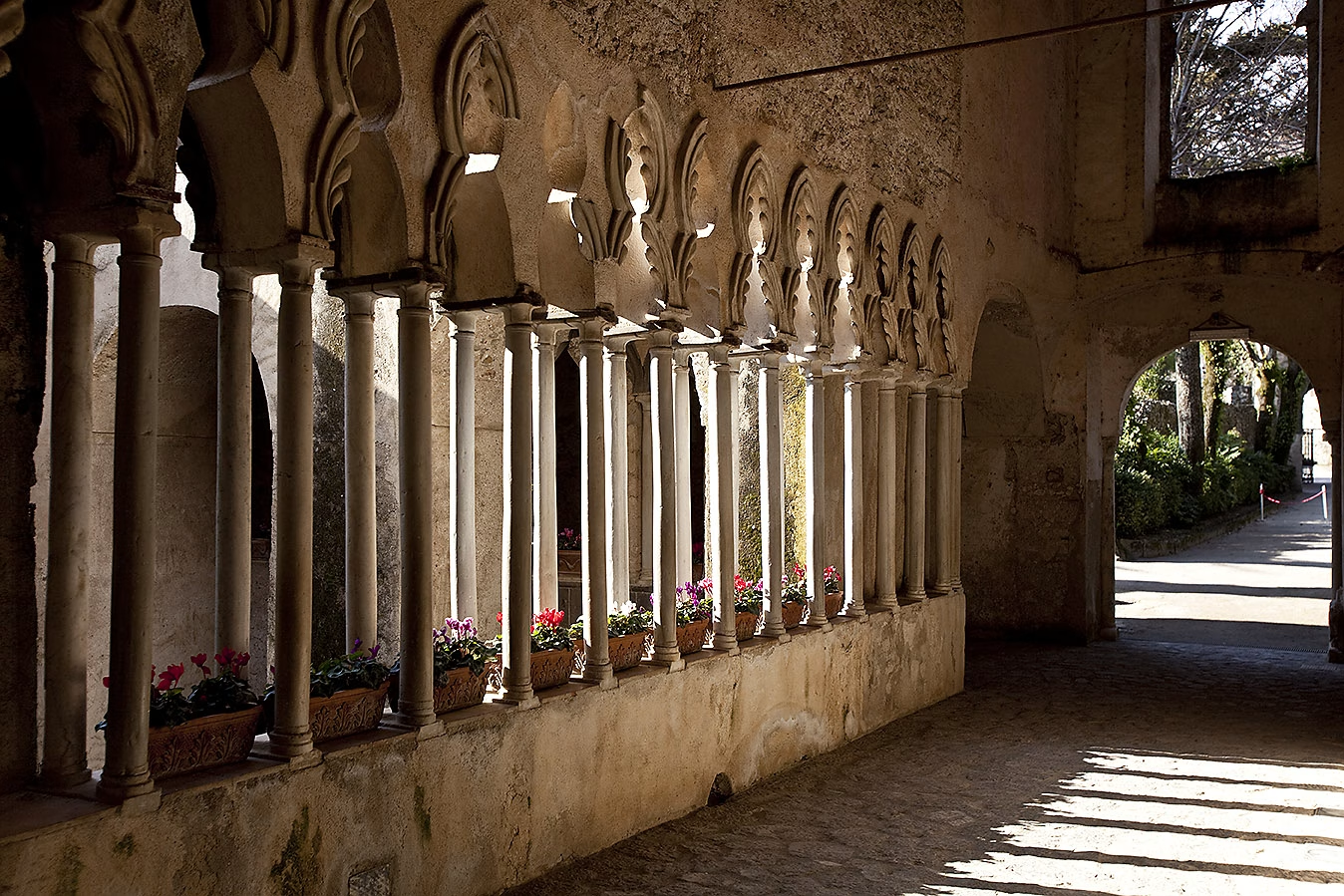
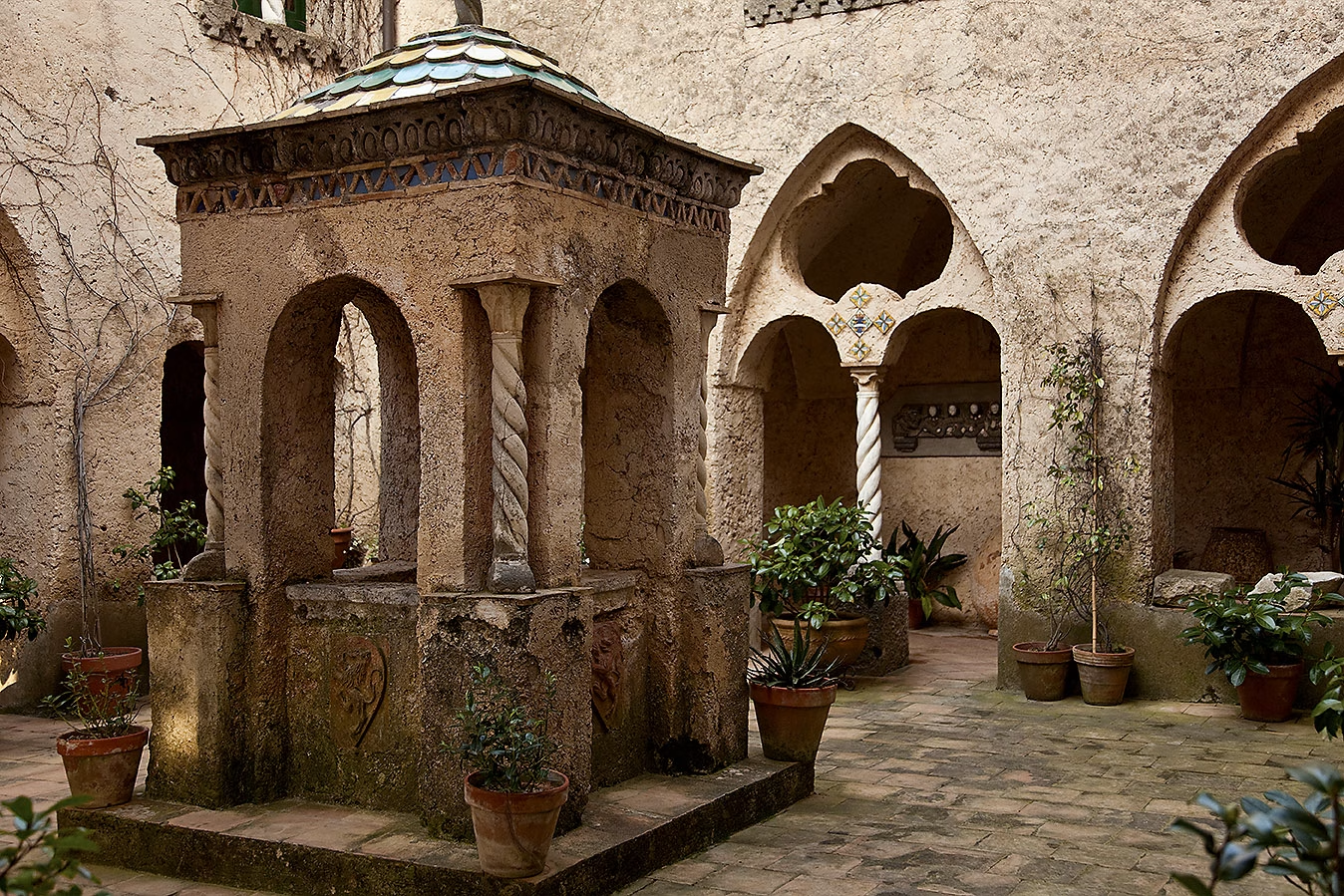
At Villa Rufolo, beside the square, enjoy the architecture as well as the garden views. Towers, arcades and the courtyard belong to a residence developed over different medieval phases. Its decorative language reflects the wider Mediterranean world in which the Rufolo family operated.
The family’s fortunes declined, and the estate later passed through other hands. In 1851 the Scottish owner Francis Nevile Reid bought it and began restoring the property and developing its gardens. The combination visitors recognise today therefore brings medieval architecture together with nineteenth-century garden-making.
Richard Wagner visited in 1880 and associated the garden with Klingsor’s enchanted garden in Parsifal. This was an episode of inspiration, not evidence that he composed the opera here. The connection helps explain Ravello’s later musical identity.
Walk through the arcades, look at how the planted terraces frame the coast, and return to details you passed on arrival. Consult Villa Rufolo’s official site for access and exhibitions. An ordinary garden visit and a ticketed performance are separate plans.
Villa Cimbrone and the view from the gardens
Villa Cimbrone lies beyond the central square, reached through Ravello’s pedestrian lanes. Its estate has medieval origins, but much of the garden arrangement was reworked in the early twentieth century. This is a designed landscape, shaped by successive owners and the enthusiasm of foreign residents for southern Italy.
The approach is part of the visit: paths, planting and architectural features lead towards the celebrated Terrace of Infinity, where a row of stone busts marks the edge of the outlook. Take your time along the paths, enjoying the changes between sheltered garden spaces and open views.
The property includes a hotel, while the gardens admit day visitors. There is no need to stay at the hotel to visit them. Check current arrangements and ask about steps and suitable routes if access is a concern. The route from the square and the garden paths require more walking than Villa Rufolo’s central position might lead you to expect.
Scala: San Lorenzo, Minuta and Pontone
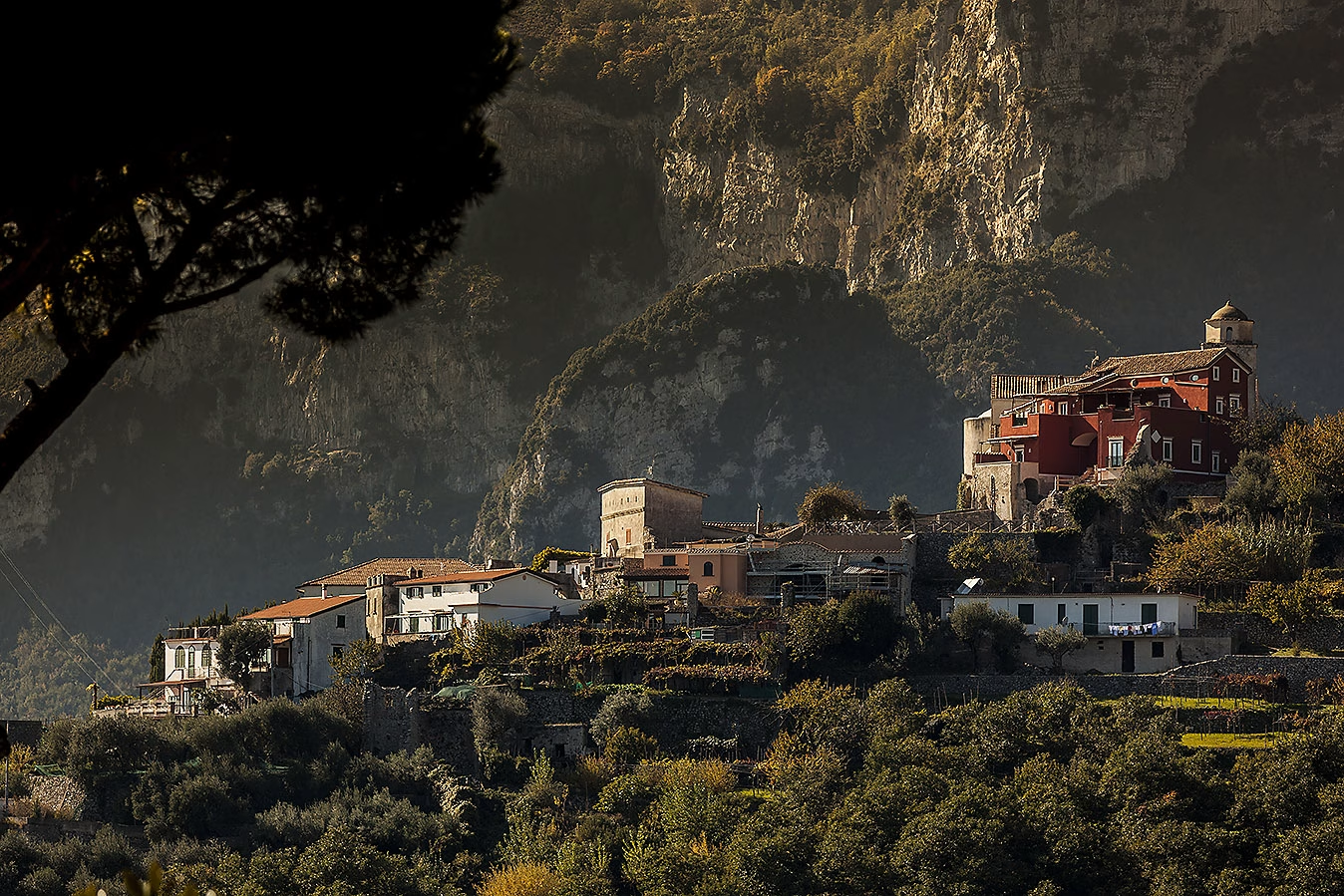
Scala is a separate town, spread across several neighbourhoods, with churches, small squares and hillside paths to explore. Start at the former cathedral of San Lorenzo, whose scale is evidence of the community’s earlier importance.
The interior combines medieval remains with later decoration. In the crypt, the fourteenth-century tomb of Marinella Rufolo, commissioned by her husband Antonio Coppola, makes the family connections between the two towns tangible. Above, later paintings, stucco and tiled decoration record further centuries of use. Ask locally about crypt access rather than assuming every part opens with the church.
Minuta and Pontone take the visit towards smaller squares, cultivated land and the descent to Amalfi. At Pontone, the remains of the Basilica of Sant’Eustachio show how ambitious a religious building could be outside the principal centres. The surviving walls and apses are worth looking at as architecture, as well as for their setting. Check the basilica’s current visitor arrangements before building a walk around entry.
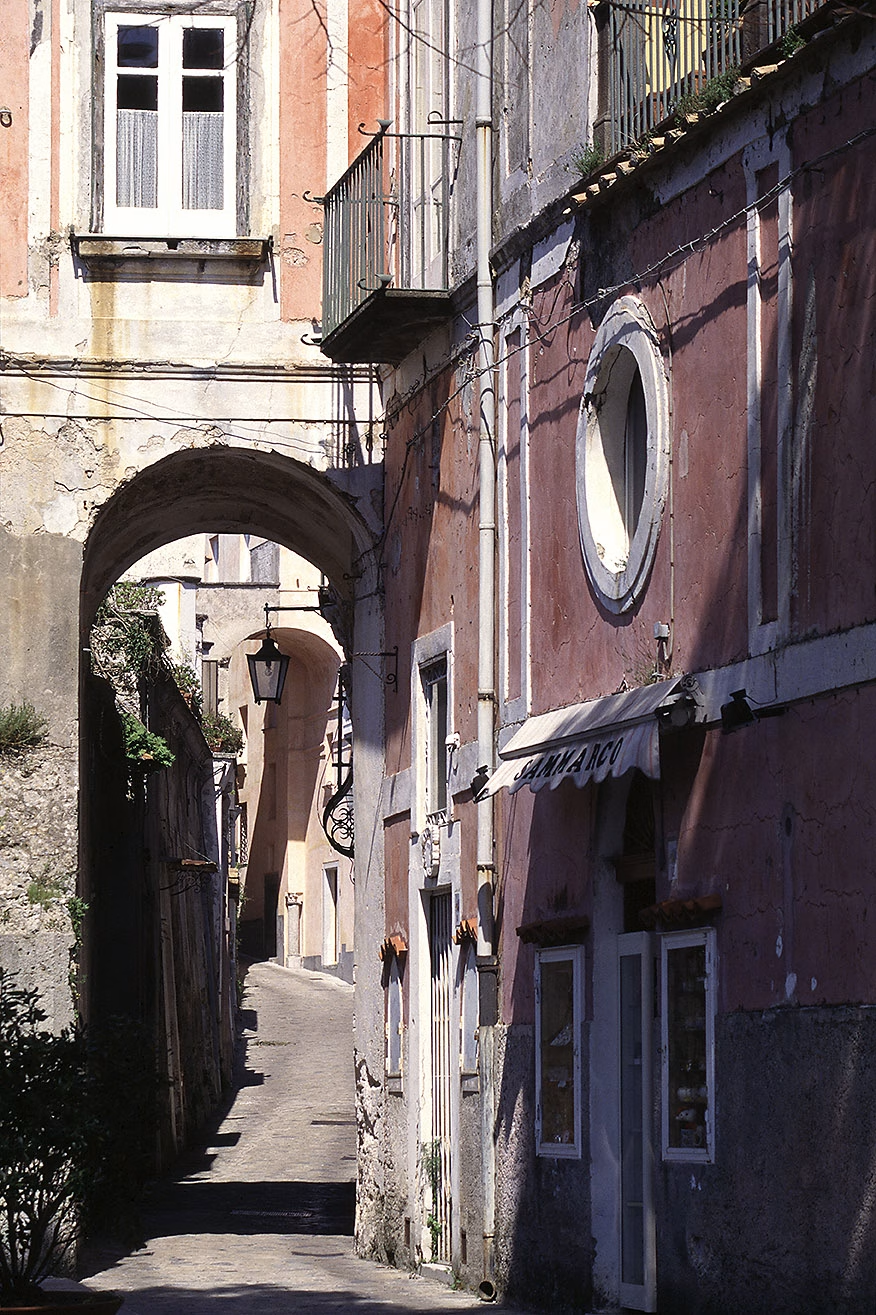
Choose one or two neighbourhoods and leave time for the walks between them. There are slopes, steps and frequent changes of level, with views over cultivated terraces along the way.
Music, farming and the towns today
Garden restoration, visiting writers and artists, and the development of cultural tourism brought a new chapter to Ravello. Music remains part of its identity through the Ravello Festival. Choose a performance from the official programme if it interests you, then arrange the evening’s return journey around it.
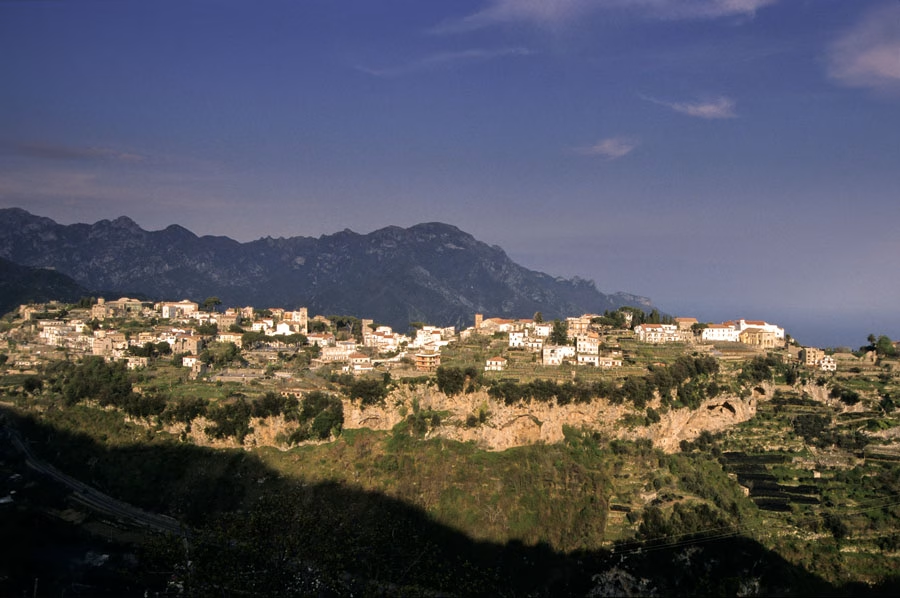
Scala retains a stronger connection with its surrounding agricultural and wooded land. The town’s chestnut celebration is one expression of that relationship. Across both settlements, terraces are working structures: retaining walls, access steps and irrigation make cultivation possible on steep ground. Gardens designed for visitors and land maintained for crops sit close together, but serve different purposes.
Spring and autumn can suit a day divided between gardens and walking, although rain or low cloud may change the experience. Summer brings performances and more visitors; start with your most important site and avoid making the hottest part of the day a long climb. Winter offers a different, quieter visit, with shorter daylight and a need to check openings and transport individually.
Enjoy a day among gardens and villages
For a first visit, allow a substantial day for Ravello’s cathedral and both gardens, with lunch and time in the lanes. Add Scala by choosing fewer Ravello stops, or give the two towns separate days. Trying to include both gardens, several Scala neighbourhoods and a long descent to Amalfi is a demanding itinerary, especially in heat.
Neither historic centre has a ferry landing. If arriving by sea at Amalfi, you still need the uphill connection. SITA’s Scala–Ravello–Amalfi service is the relevant bus route; consult the current service and notices for your date. A driver can simplify a day with a fixed concert or an onward transfer, but road traffic still affects the journey.
Walking down to the coast is a separate excursion, not an automatic shortcut. Check the chosen path’s condition locally, wear shoes with grip and arrange the return before setting off. Families may enjoy one garden and a shorter village walk more than a complete monument circuit. Travellers who find repeated steps difficult should plan around specific entrances and drop-off points.
Where Ravello and Scala fit into your holiday
You can explore both from an appropriate coastal base without changing hotels. The right choice depends on how often you want gardens and walking, how much time you want in the hotel, and whether Naples, Sorrento or an island is the next part of the journey. Our comparison of Sorrento and Amalfi Coast bases explains those trade-offs.
For a garden-led trip, we would build space around these visits. For a wider itinerary, they might form one carefully chosen day during a coastal stay, following Naples or a journey through Florence and Rome. Explore our Amalfi Coast multi-centre holidays, then tell us which places and experiences interest you. We can arrange a holiday with time for your favourite gardens, a performance or walks between the villages.



 Facebook
 WhatsApp channel