Sicily for Families and Curious Travellers

Sicily experience collection

Ancient temples, Roman mosaics, a living historic city, volcanic landscapes, river gorges, islands and a proper Sicilian beach: Sicily gives curious travellers many ways to experience its history and geography directly.

Visitors walking with a guide through Mount Etna's volcanic landscape

This is not a checklist of seven compulsory stops. Each place adds something different: the scale of an ancient Greek city, Roman stories preserved in mosaic, a base where archaeology and daily life remain connected, or a landscape that can be walked, climbed, entered or swum beside.

Use the collection to decide what belongs in your Sicily holiday. The destination links show where each experience fits and where it makes sense to stay; the detailed guides explain the practicalities when you want to look more closely.

Western Sicily

Two very different reasons to slow the route down

Agrigento brings ancient Sicily into the landscape; San Vito Lo Capo gives the holiday a beach-led change of pace. They can belong to the same western journey, but they should not be treated as interchangeable day trips.

Ancient Sicily · Agrigento

Valley of the Temples: history at landscape scale
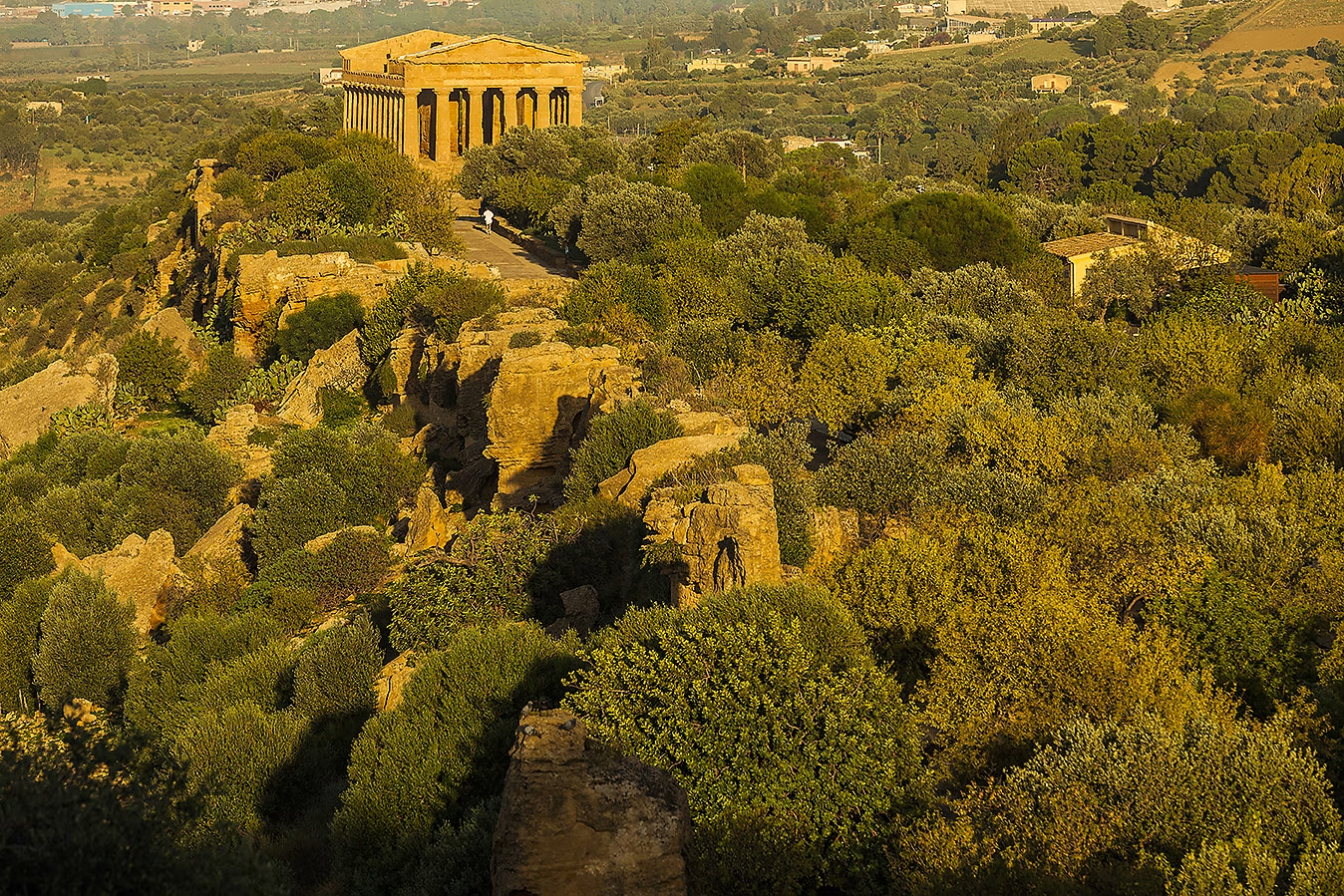
The Temple of Concordia within the cultivated landscape of the Valley of the Temples
The temples make most sense as part of the long archaeological landscape of ancient Akragas, not as isolated monuments.

The Valley of the Temples is engaging because the scale of the ancient city remains visible. The route moves along an exposed ridge between temples, fortifications, sanctuaries, olive trees and the remains of a much larger urban world. A good guide can connect that landscape to mythology, ritual and the ambitions of Greek Akragas without turning the visit into a classroom lesson.

It suits travellers who can manage a substantial outdoor walk and want archaeology with a strong sense of place. Heat and distance matter, particularly in summer, so timing is more important than adding another sight to the same day.

How it fits

Allow at least half a day. Use it as a focused excursion, an intelligently planned transfer stop or part of an Agrigento stay. Do not combine it with Villa Romana del Casale as two major visits on the same day.

Beach and local life · Trapani coast

San Vito Lo Capo: the beach-led change of rhythm

Shallow clear water and the mountain beside San Vito Lo Capo beach
San Vito is first and foremost a proper beach stay: pale sand, shallow water and a town that can be used on foot.

San Vito Lo Capo earns its place here by giving the journey space to breathe. The broad beach sits directly beside a walkable town, while the food reflects western Sicily’s Mediterranean connections, particularly through couscous, fish and the relationship with North Africa.

The wider setting can add walking or boat time around the Zingaro Nature Reserve and selected visits to Segesta, Erice, Trapani or the salt pans. The point, however, is not to turn San Vito into a base for relentless sightseeing. Its value lies in combining the sea with a small number of well-chosen western Sicilian experiences.

How it fits

Give San Vito several nights and protect genuine beach time. August is busy, hot and expensive; late spring, June, September and early October are usually more convincing for travellers who want both the beach and the surrounding area.

Central Sicily · Piazza Armerina

Villa Romana del Casale: Roman life told in images

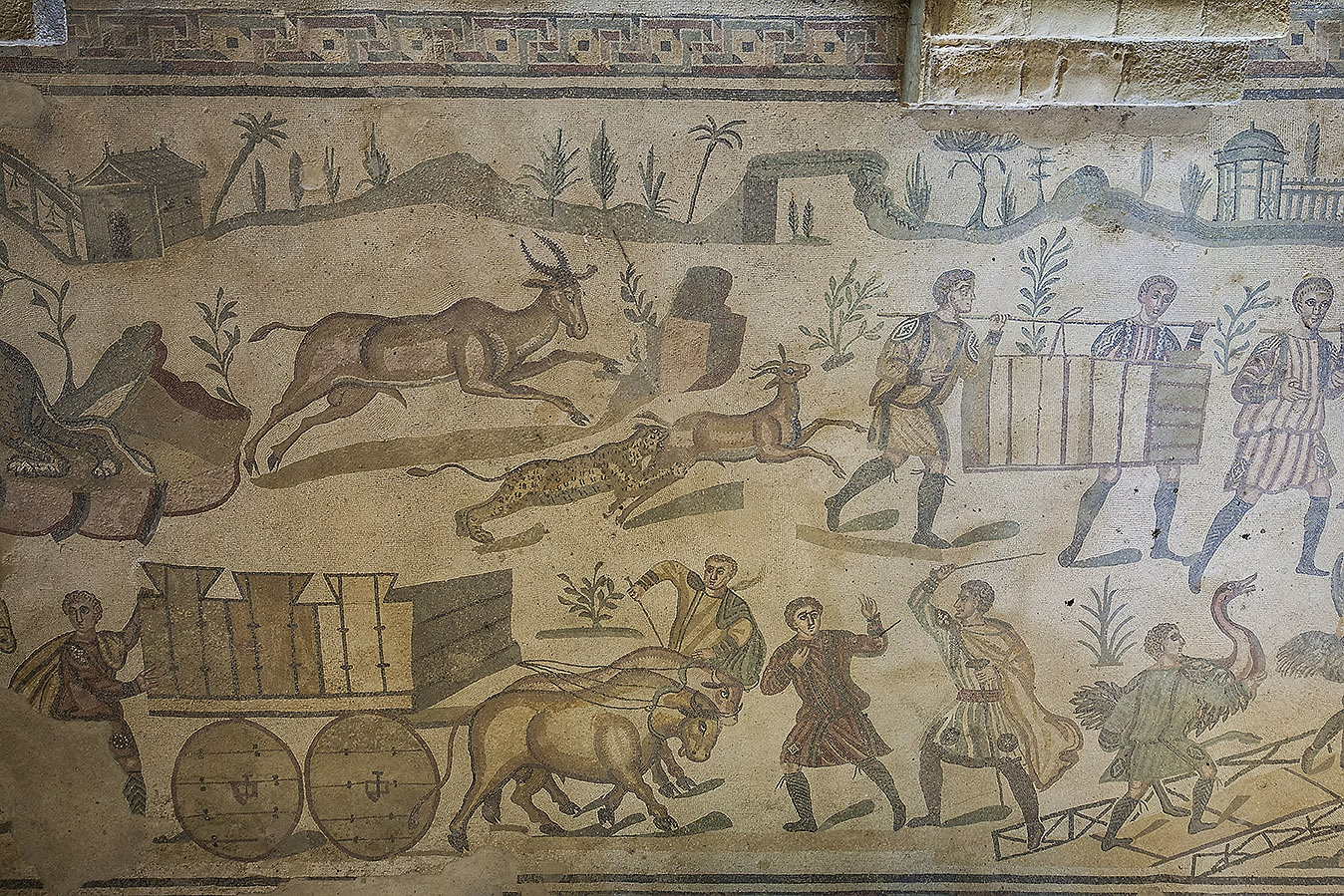
Great Hunt mosaic showing animals, handlers, cages and transport at Villa Romana del Casale
The Great Hunt turns transport, animals and the reach of the Roman world into a story that can still be followed visually.

Villa Romana del Casale is different from a conventional ruin because the floors still communicate directly. Animals are captured and transported, women compete in athletic events, chariots race, hunters eat outdoors and Ulysses approaches Polyphemus. Visitors can begin with the action in the images and then understand what each room says about wealth, education, status and Roman domestic life.

This makes the Villa particularly effective for visually curious children, teenagers and adults who respond more readily to stories than to foundations and architectural fragments. The modern raised route also helps visitors read the mosaics in relation to the rooms for which they were made.

How it fits

Reserve roughly half a day. The Villa is often strongest as a purposeful stop while crossing Sicily, or as a focused excursion from a sensibly positioned base. It rarely justifies distorting the entire route.

South-east Sicily · A proper base

Siracusa: a city where the layers stay visible

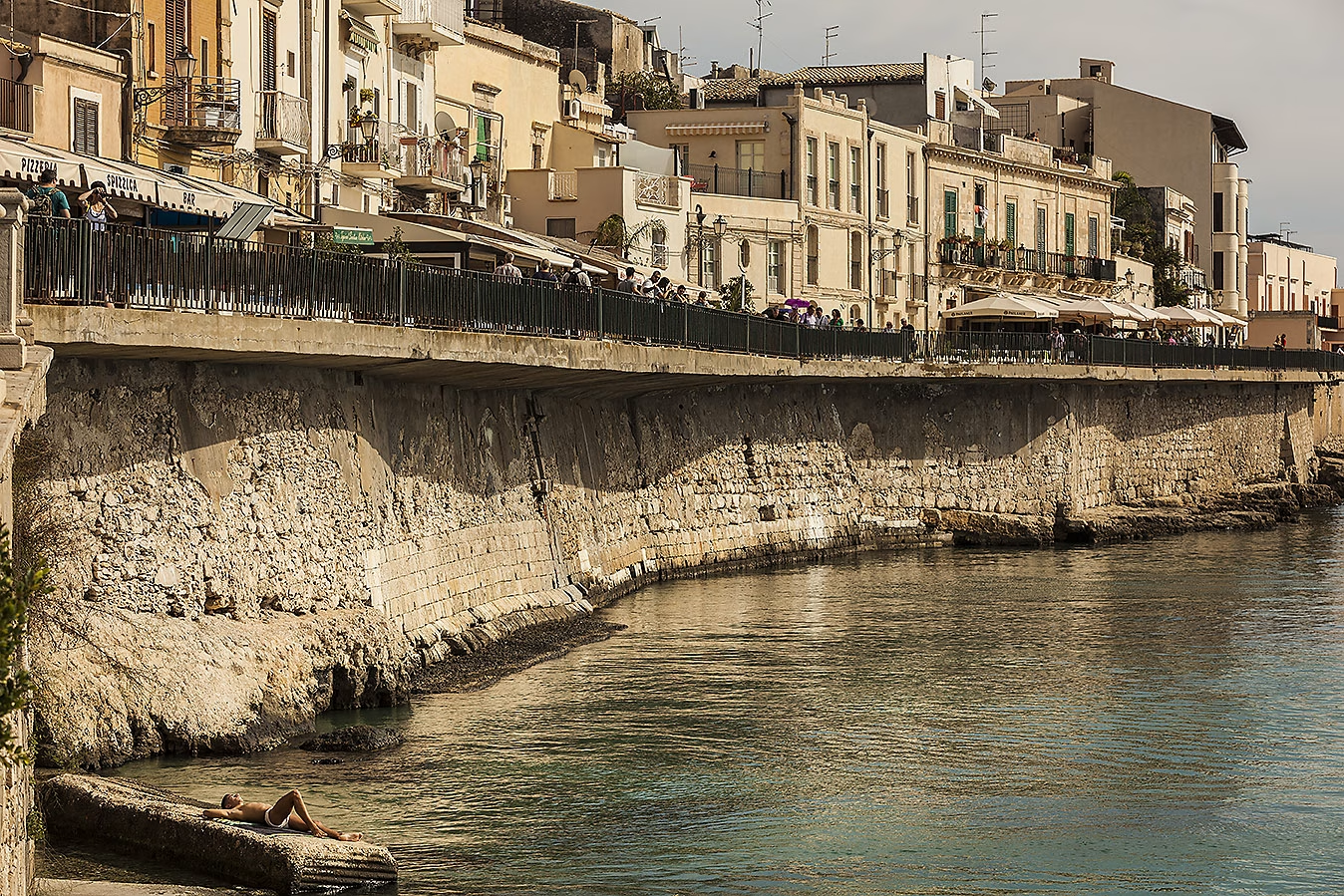
Ortigia waterfront buildings rising directly above the rocky shoreline
Ortigia keeps history, food, boats and the sea within the same lived-in city experience.

Siracusa is the collection’s strongest all-round base. The Greek theatre and Neapolis archaeological park provide the monumental history, while Ortigia brings temple fragments, Baroque streets, markets, food, boats and the sea into daily life. The result has cultural depth without requiring a different hotel for every experience.

It works well for families and adults who prefer variety to a sequence of formal visits. One day can concentrate on archaeology; another can remain largely in Ortigia; a third might bring the nearby coast, Pantalica or the Baroque south-east into the route. The choice depends on interests and season, not on completing every possible excursion.

How it fits

Treat Siracusa as a proper stay rather than another sightseeing stop. Three or four nights give the city room to work as both a cultural base and a place to enjoy at a slower pace.

Eastern Sicily · Volcanic landscape

Mount Etna: choose the experience, not just the mountain

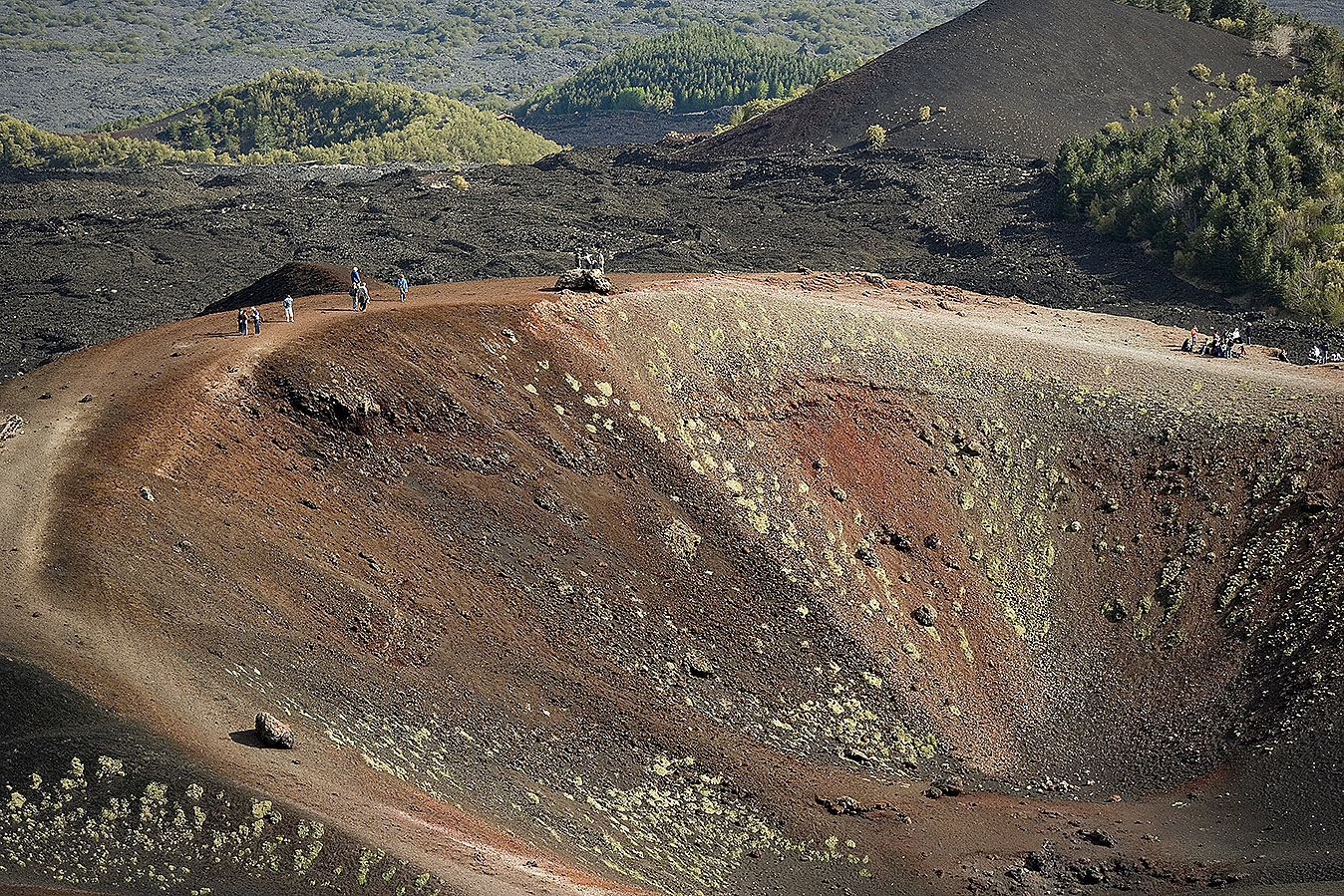
Volcanic crater and vegetation across Mount Etna
Etna offers several different days out, from high volcanic terrain to gentler lower slopes, villages and wine country.

Etna should not be reduced to one standard excursion. Some travellers want the cable car and authorised high-altitude vehicles; others are better suited to a guided walk, an accessible crater landscape, lava caves or a slower day across the lower slopes and wine country.

The right version depends on age, fitness, walking confidence, altitude, weather and the conditions on the intended day. That choice is what makes Etna rewarding for a mixed group: everyone can engage with the volcano, but not everyone needs to do so in exactly the same way.

How it fits

Protect a full day and keep the plan adaptable. Etna works from Taormina, Catania or a countryside base on the mountain, but the starting point changes the pace and the range of experiences that remain comfortable.

Eastern Sicily · River and gorge

Alcantara River Park: a different way into volcanic Sicily

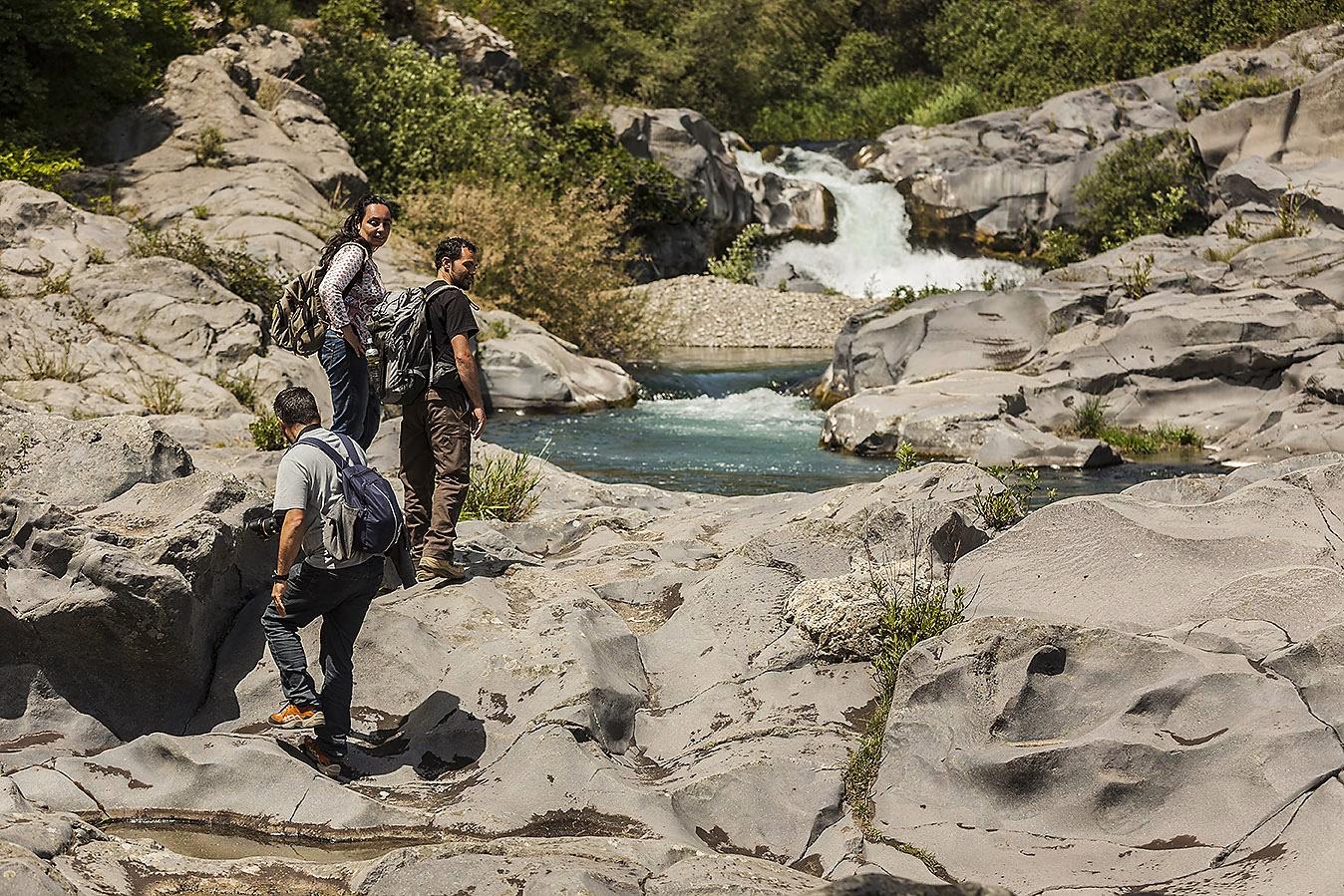
Guided walkers crossing the rocky landscape beside the Alcantara River
Alcantara can be a landscape visit, a river walk or a more demanding organised activity; those experiences are not interchangeable.

The Alcantara shows another consequence of Etna’s volcanic history: water cutting through old lava to create basalt walls, pools, rapids and a greener river landscape. Simply seeing the principal gorge is very different from joining river trekking, body rafting, canyoning or a gentler guided experience.

This range makes Alcantara useful for families and active adults, provided the activity is matched to age, swimming confidence, physical ability, season and current water conditions. Operator eligibility and equipment rules must be checked for the chosen date rather than assumed from a general description.

How it fits

A straightforward gorge visit can occupy part of a day; an organised river experience deserves more time. Etna and Alcantara can belong to the same eastern Sicily stay, but they should not automatically be compressed into one demanding excursion.

Aeolian Islands · Volcanic island

Vulcano: crater walking, sea and island geography

Walkers following the crater route on Vulcano above the Aeolian Islands
The crater route places the volcanic landscape within the wider geography of the Aeolian archipelago.

Vulcano is not a smaller version of Etna. Its appeal comes from experiencing volcanic terrain on a compact island, with the crater, port, coast, boats and neighbouring islands all held within the same geography. A walk can be balanced with swimming or an easier afternoon rather than becoming another full day of organised activity.

The climb is exposed and heat can make the experience considerably harder. Current access arrangements and volcanic guidance must always be checked before travelling. Travellers who do not want the crater can still understand the island through coastal views, boats and its relationship with the rest of the archipelago.

How it fits

Vulcano belongs within a properly paced Aeolian Islands stay. It should not be treated as a casual add-on from any part of Sicily simply because it appears close on the map.

Where these experiences fit

Choose the part of Sicily before choosing every day out

The destination should determine the natural experiences, not the other way round. Start with the area that best suits the holiday, then add the attractions that fit its geography and pace.

Start planning

Let us shape the right mixture around you

Tell us who is travelling, the children’s ages if relevant, your dates, walking and swimming confidence, and whether culture, active days, food or beach time should lead the holiday. We can then choose the right bases and give each experience its proper place.

Start planning your Sicily holiday