


In this article
The Amalfi Coast road is an impressive way to see the relationship between cliffs, villages and sea. Driving it yourself is worthwhile only when the journey suits your plans and you are comfortable with narrow bends, traffic and parking.
A convertible can be enjoyable on the right day, but it is not the default choice for a coastal holiday. For many stays, a transfer followed by ferries, local transport and selected outings with a driver is more practical.
What the road is like
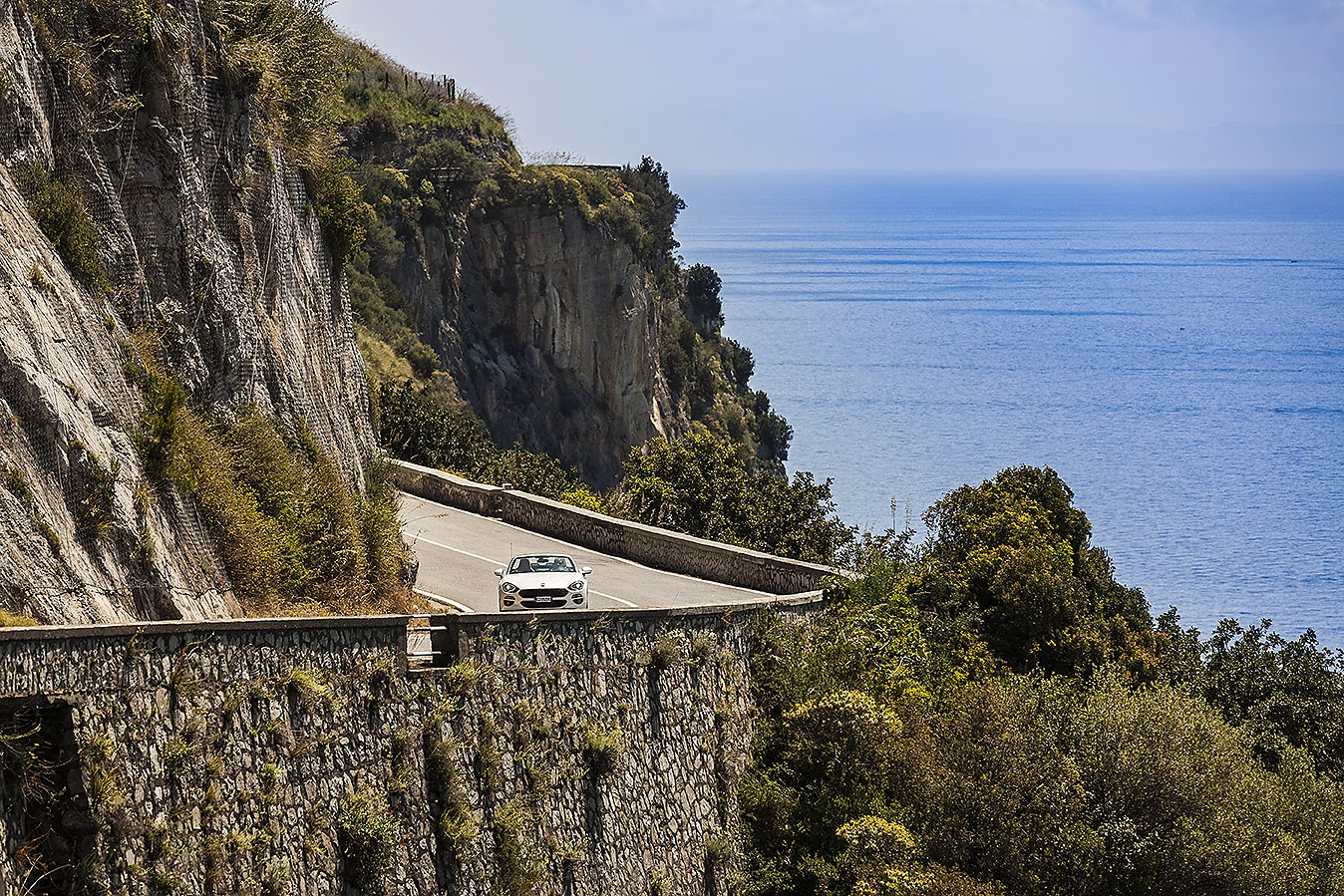
The SS163 follows the southern side of the peninsula through a landscape that leaves little room for a road. Retaining walls, bridges, tunnels and repeated bends are part of the experience. It connects places that were historically reached by sea or by the paths across the slopes.
Scenery and driving demand attention at the same time. Buses need room on bends, scooters pass through traffic and pedestrians may be close to the carriageway. The driver will see less of the view than passengers. A short distance can take much longer than expected when traffic builds around a town.
Hire car, private driver or ferry?
When a hire car makes sense
A car can be useful if the holiday continues into rural Campania or Cilento, or if you are staying at a property where parking and local road access have been checked. It offers flexibility for inland visits that are awkward by public transport.
It is less useful if your days revolve around Positano, Amalfi and their waterfronts. Paying to leave the car parked while you use ferries may be reasonable during one part of a longer road trip, but it is not a reason to hire one for the entire stay.
When to book a driver
A driver removes the responsibility for the road and parking. This is useful for airport or station transfers, a winery visit, or an outing with several carefully chosen stops. It does not remove congestion, and a car cannot necessarily reach the entrance of a hotel in a pedestrian area.
Agree the itinerary and stops in advance. A transfer from one hotel to another and a sightseeing day with waiting time are different services. Ask whether luggage assistance is needed for the final section.
When the ferry is preferable
For travel between served coastal towns, a ferry avoids road traffic and shows the landscape from the water. Check current coastal ferry services, including operating dates and the final return. Sea conditions can change the plan, and the climb from the pier to your destination remains part of the journey.
Restrictions and parking need checking
Driving rules on the SS163 can include alternating number-plate restrictions during specified periods. They are not a single permanent calendar that can be copied from one year to the next. Read the current municipal and road-authority notices for your dates and vehicle.
The Comune di Amalfi’s 2026 notice illustrates why the detail matters: its hotel-guest exemption applies to necessary arrival and departure journeys with a valid reservation. It is not a general exemption for sightseeing throughout the stay. Confirm the applicable arrangements with your hotel and hire company.
Restricted town-centre zones and local parking arrangements are separate questions. Book accommodation with confirmed parking if you are arriving by car, ask where the entrance is, and check whether a space is included or charged separately. A hotel address may direct a navigation app towards an entrance that vehicles cannot use.
Do not plan to stop wherever a view appears. Only use legal parking or stopping places with enough room and safe access. Cathedral squares, bus stops, junctions and narrow roadside margins are not substitutes for a parking space.
Planning a worthwhile driving day
Choose a limited section of coast and one or two substantial stops. A visit to Ravello followed by time in Amalfi is a more coherent plan than an attempt to stop at every named town between Sorrento and Salerno. The best direction depends on your starting point and the route after the coast, not simply which side gives the passenger a sea view.
Reserve any visit that depends on an appointment and leave generous margins. Avoid combining a tightly timed attraction, a tasting, several beach stops and a flight departure. Parking and the walk from it can take as much thought as the drive itself.
Spring and autumn may offer more comfortable temperatures, but weekends, holidays and popular dates still bring heavy demand. If the purpose is to enjoy the scenery, compare the day with a boat outing or private driver before committing to the car.
If you specifically want a convertible
Make the car part of a deliberately chosen experience. Check the vehicle size, luggage capacity, insurance terms, collection arrangements and parking before booking. A smaller vehicle is generally easier to place on narrow roads than a large one, but familiarity and driving confidence matter more than its appearance.
Open-top driving also means sun, wind and exposure to the weather. The roof should be useful as well as decorative. Do not assume that a supplier’s promotional photograph represents a place where you can legally stop or park.
Choose transport after the hotels
Our Sorrento and Amalfi Coast base comparison explains how location changes the need for a car. A journey continuing to Cilento may justify driving for part of the holiday. Tell us the places and hotels you want to combine, and we can recommend where a car, driver or ferry adds value.





 Facebook
 WhatsApp channel