Rione Sanità: Naples’ Vibrant Neighbourhood of History, Art and Flavour

From Ancient Necropolis to Lively Neighbourhood

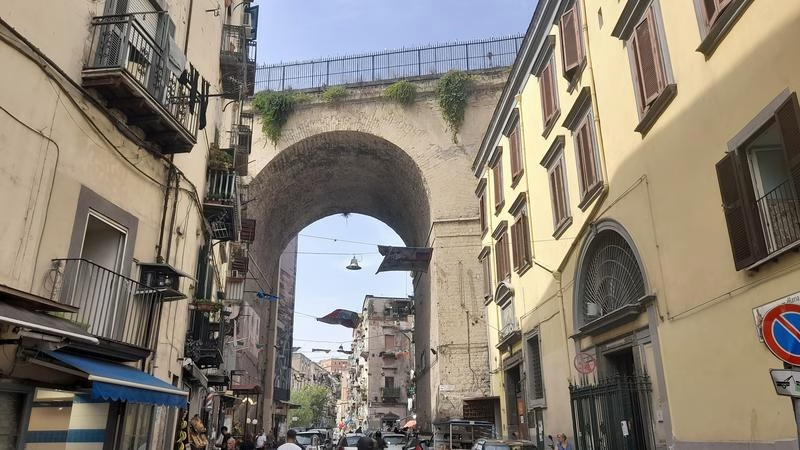
Tucked in a valley at the foot of Capodimonte Hill, Rione Sanità is a Naples neighbourhood that has seen it all – from ancient tombs to Baroque palaces. In Greco-Roman times this area was actually a necropolis, a place of catacombs and underground tombs beyond the city walls. Centuries later, its fresh country air gave it the name “Sanità” (health) and attracted noble families to build grand residences here. The district’s fortunes shifted in the 19th century when a long viaduct was built high above Sanità to speed the route to the Capodimonte Royal Palace, inadvertently isolating the neighbourhood below.

For decades Sanità languished with a rough reputation, yet beneath that unsavoury façade it preserved a trove of archaeological and artistic treasures – from early Christian catacombs to majestic churches.

In recent years, local pride and community initiatives (led by a visionary priest, Father Antonio Loffredo) have sparked a renaissance, transforming Sanità into a flourishing hub of culture and social enterprise.

Today the area welcomes visitors with open arms. Walk its streets and you’ll find people out at all hours, music drifting through narrow alleys, and the mouth-watering aroma of ragù slow-cooking in kitchens – the authentic soul of Naples everywhere around you. It’s a place where past and present intertwine in the most captivating ways.

Ponte della Sanità arch over the streets of Rione Sanità, Naples
 

The 19th-century Ponte della Sanità was built to speed travel to Capodimonte, but it also isolated Rione Sanità beneath its arches – shaping the neighbourhood’s unique identity.

 
Basilica of Santa Maria della Sanità dome seen from the street in Naples
 

The dome of the Basilica of Santa Maria della Sanità rises above the lively neighbourhood streets, a landmark at the heart of Rione Sanità.


Why Rione Sanità is Worth the Detour

Visiting Rione Sanità adds a rich layer to any Naples trip. For history enthusiasts, the district packs in many chapters of the city’s story in one compact area. You can explore Greek and Roman burial grounds and then emerge into streets lined with 17th- and 18th-century aristocratic palaces and a dense network of old churches.

Cultural travellers will appreciate how Sanità showcases Naples’ spirit of resilience and creativity – this was once an infamous zone of poverty and crime, but it has reinvented itself through grassroots efforts, youth cooperatives and a strong community bond.

That local energy is visible in the colourful street art, communal events, and the genuine warmth with which residents greet outsiders.

And for food lovers, Sanità offers an authentic taste of Neapolitan street life: from produce stalls and bakeries in the Borgo dei Vergini market to beloved eateries like the historic Pasticceria Poppella (home of the “fiocco di neve” pastry) and the cult-favourite pizzeria Concettina ai Tre Santi – you won’t leave hungry.

All of this comes without the crowds of the more touristy centre, making Sanità feel like a rewarding little discovery just a short stroll from the historic core. In short, if you want to experience the true gritty-glorious heart of Naples, Rione Sanità is absolutely worth the small detour.

Ancient marble busts at the Archaeological Museum of Naples
 

Marble busts at the Archaeological Museum of Naples, home to one of the world’s richest collections of Greco-Roman art.

 
Corridor inside the Archaeological Museum of Naples
 

Elegant corridors at the MANN museum, gateway to exploring Naples’ ancient past before stepping into Rione Sanità.


Exploring Sanità: A Walking Itinerary

One of the best ways to soak in Rione Sanità is on foot. Here’s a suggested route weaving through its lively streets and fascinating sights, from street art to subterranean secrets:

Porta San Gennaro and Borgo dei Vergini

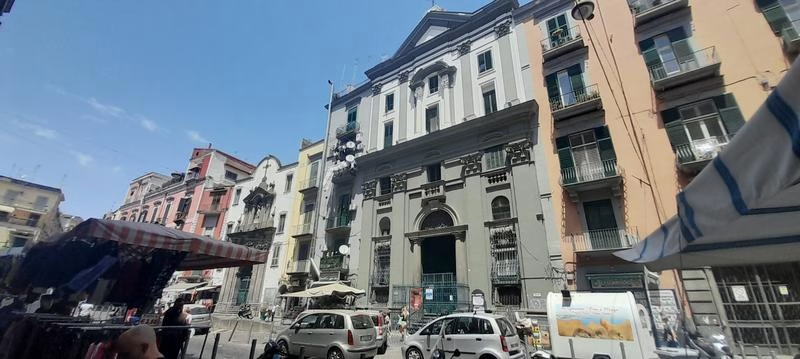
Begin your walk just behind the National Archaeological Museum (MANN) at Porta San Gennaro, Naples’ oldest surviving city gate. Most visitors stop at the museum, but few realise that slipping through this arch takes you straight into another world: Rione Sanità. On the other side, the Borgo dei Vergini unfolds in a burst of baroque façades and market stalls, a vivid introduction to the neighbourhood’s rhythm of life.

The Borgo bustles with one of Naples’ most popular open-air markets – a daily commotion of vendors hawking fresh produce, fish, household wares and more. Allow yourself to get swept up in the scene: locals banter in rapid-fire Neapolitan dialect, vespas squeeze past fruit crates, and laundry flutters overhead between faded palazzi.

Amid this glorious chaos, take note of the weathered yet elegant facades around you – many of these buildings are former aristocratic residences from the XVII–XVIII centuries.

Borgo dei Vergini in Rione Sanità, Naples
 

Borgo dei Vergini, the historic gateway to Rione Sanità, known for its vibrant street life and monumental palaces.


Palaces of the Borgo Barocco

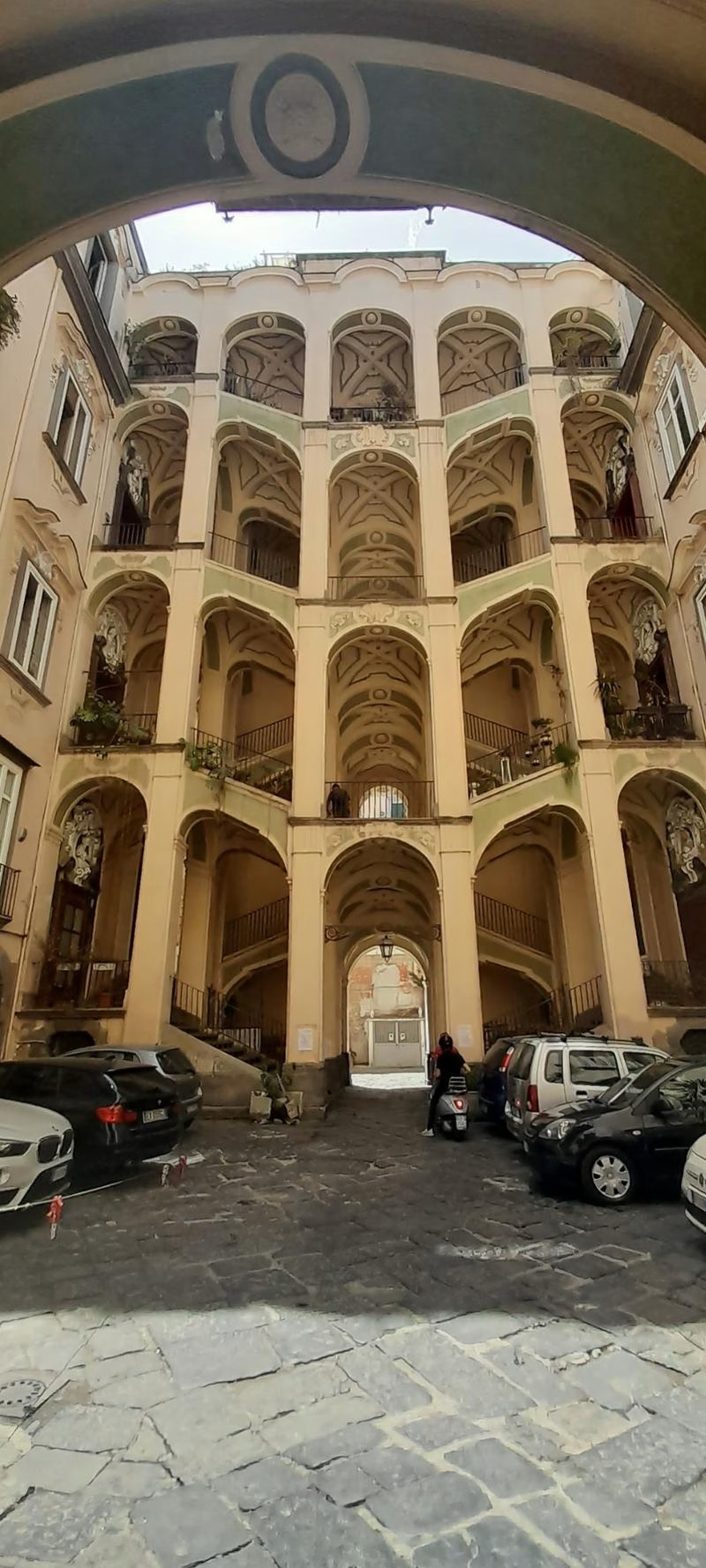
Just past the market stalls, you’ll find the first major highlight: Palazzo dello Spagnolo, also known as the “Spanish Palace.” Its plain exterior belies a stunning interior courtyard with a double-flighted staircase so ornate it’s practically a film set.

A few blocks away on Via Arena della Sanità is Palazzo Sanfelice, another Baroque treasure designed by the same architect. It’s slightly less grand but still showcases twin staircases, graceful arches, and what remains of once-opulent frescoes and stuccoes.

These palaces speak of a time when Sanità was a desirable address for nobles seeking tranquillity on the city’s outskirts. Today, they stand as open-air museums of architecture and even feature modern street art interventions.

Baroque staircase courtyard of Palazzo dello Spagnolo, Rione Sanità, Naples
 

The theatrical courtyard of Palazzo dello Spagnolo in Rione Sanità, famed for its sweeping double staircase designed by Ferdinando Sanfelice in the 18th century.

 
Baroque stucco detail in Palazzo dello Spagnolo, Rione Sanità, Naples
 

A Baroque stucco bust above a doorway in Palazzo dello Spagnolo, showcasing the theatrical artistry of architect Ferdinando Sanfelice.


Murals, Street Art and Totò’s Legacy

As you wander further, Sanità’s street art will undoubtedly catch your eye. In recent years, the neighbourhood has become an open-air gallery, with international and local artists turning blank walls into colourful stories.

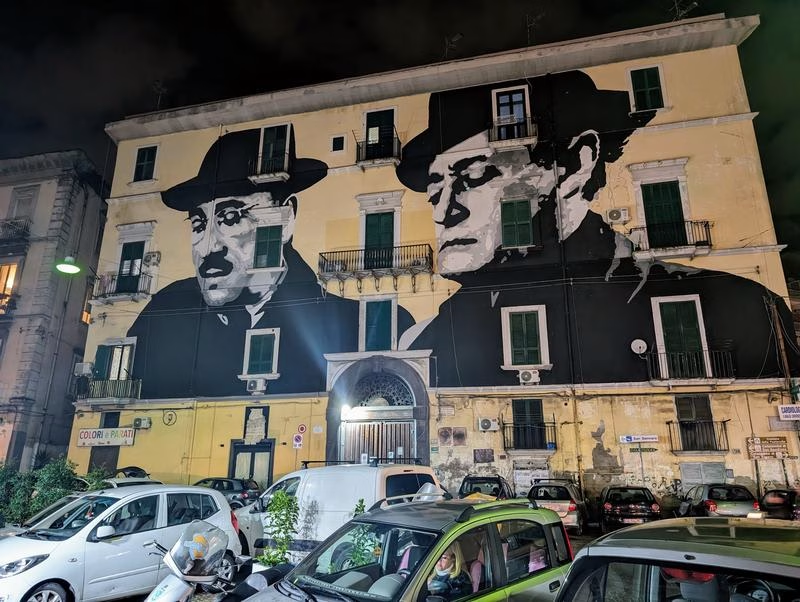
Many murals here celebrate Sanità’s people and heritage. Look for the large mural titled “Resis-ti-amo” by Francisco Bosoletti and the radiant “Luce” on the basilica’s bell tower by Tono Cruz. You’ll also spot a vibrant tribute to beloved comic actor Totò, born and raised in these streets.

Strolling through the neighbourhood, you may also come across playful figures, surreal scenes, and poignant messages – each mural carrying a message of pride, hope or social commentary.

Totò mural on a building at night in Rione Sanità, Naples
 

A dramatic night view of the Totò mural in Rione Sanità, honouring Naples’ beloved comic genius where he was born and raised.

 
Mural of Sophia Loren in Rione Sanità, Naples
Street art mural in Rione Sanità, Naples, depicting an embracing couple, symbol of love and resilience in the neighbourhood.
 

One of Rione Sanità’s most striking murals, symbolising rebirth and passion, part of the neighbourhood’s cultural revival through contemporary art.


Baroque Splendour of Basilica Santa Maria della Sanità

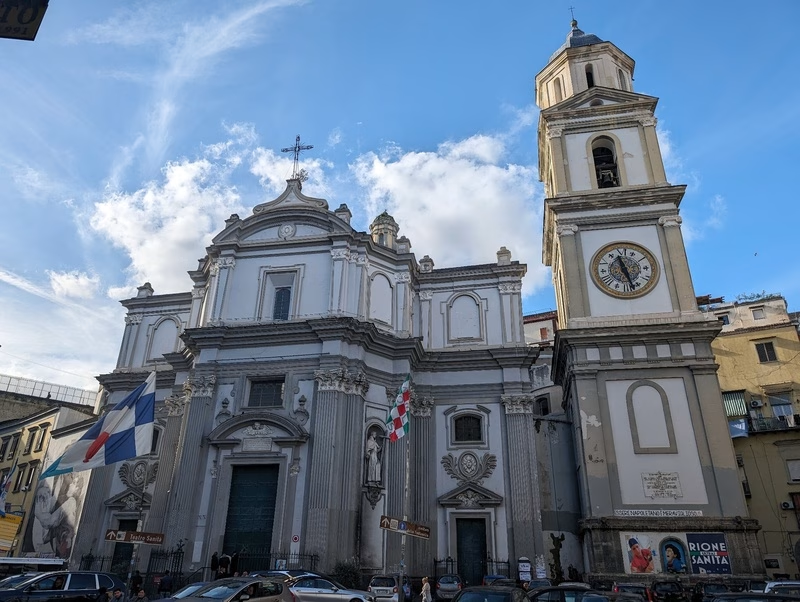
At the heart of the district lies the Basilica of Santa Maria della Sanità, a Baroque church that is both a spiritual centre and a literal bridge between worlds. The basilica’s bright yellow-and-green tiled dome is a beacon on the Sanità skyline.

Built between 1602 and 1610, the church is one of Naples’ most exquisite examples of Baroque design. Inside, it features a rare Greek-cross floor plan with curving lines, lavish altars, and a dramatic raised choir. Tucked in a side chapel is the icon of the Madonna della Sanità, a 5th-century painting of the Virgin believed to be the oldest Marian image in Campania.

Basilica of Santa Maria della Sanità with bell tower in Naples’ Rione Sanità district.
 

The Basilica of Santa Maria della Sanità, with its imposing façade and clock tower, stands as the spiritual and cultural heart of Rione Sanità.


The Presepe Favoloso – Naples’ Nativity Reimagined

A short step from the basilica, you’ll find the Presepe Favoloso, a monumental contemporary nativity scene created by local artisans. Far from a dusty relic, this “fabulous nativity” is a living artwork: terracotta figures, fantastical creatures, and everyday Neapolitans all mingle around the Holy Family.

It feels both traditional and daringly modern, echoing Sanità’s own mix of history and reinvention. For visitors, it’s a striking way to experience how Naples transforms the familiar Christmas story into a theatre of community, creativity, and faith that lasts all year.

Presepe Favoloso nativity scene in Rione Sanità, Naples
 

The Presepe Favoloso in Rione Sanità transforms Naples’ nativity tradition into a fabulous year-round display of art, faith, and imagination.


Descending into the Catacombs

No visit to Rione Sanità is complete without delving into its subterranean world. Beneath the basilica lie the Catacombs of San Gaudioso, and a short walk up the hill brings you to the larger Catacombs of San Gennaro – together, these sites offer an unforgettable journey into early Christian Naples.

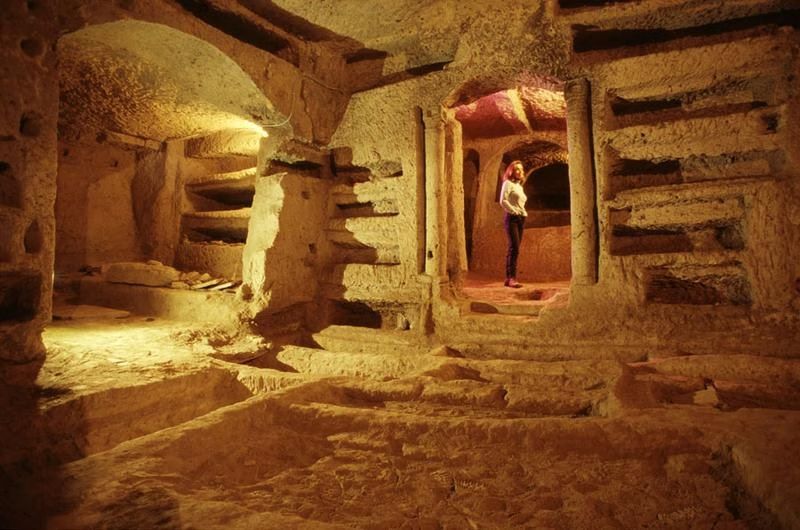
The Catacombs of San Gennaro, in particular, are the most famous: a sprawling underground cemetery dating back to the 2nd–4th centuries AD, complete with frescoes, mosaics and the tomb of Saint Januarius. Visiting them, you’ll wander through a maze of dimly lit galleries where ancient sarcophagi line the walls.

These catacombs had been abandoned for years, but local youth from the Sanità quarter revived the site for guided tours. Their cooperative now runs the catacombs, offering insight into the spiritual and cultural layers beneath Naples.

Corridor inside the Catacombs of San Gennaro, Naples
 

A view of the long corridors of the Catacombs of San Gennaro in Rione Sanità, an early Christian burial site carved into the tufa rock.

 
Visitor exploring the Catacombs of San Gennaro, Naples
 

“The hauntingly beautiful corridors of the Catacombs of San Gennaro, where early Christian devotion and centuries of history are carved into the volcanic tufa rock.”


The Fontanelle Cemetery – City of Skulls

If you’re intrigued by Naples’ macabre side, head west towards Cimitero delle Fontanelle, tucked in a quiet corner of Sanità’s Materdei section. This vast ossuary is set in a cavernous tuff quarry, an immense cave filled with skulls and bones neatly arranged on shelves and altars.

The site was first used to deposit victims of plagues and later cholera epidemics. Over time, Neapolitans developed a unique ritual around these “abandoned souls.” Locals would adopt a skull, caring for it and seeking protection or good fortune in return – a fascinating blend of folk spirituality and Catholic devotion.

Interior view of Cimitero delle Fontanelle, Naples
 

The cavernous interior of the Cimitero delle Fontanelle, blending geology, history, and popular devotion in one of Naples’ most moving sites.

 
Close-up of skulls at Cimitero delle Fontanelle, Naples
 

Rows of skulls at the Cimitero delle Fontanelle in Rione Sanità, a site where devotion and memory meet in Naples’ unique cult of the dead.

 
Wall of bones at Cimitero delle Fontanelle, Naples
 

The ossuary walls of the Cimitero delle Fontanelle, where thousands of anonymous remains are kept in devotion and remembrance.


Optional Add-ons: Capodimonte Museum

Rione Sanità’s strategic location means you’re only steps away from one of Naples’ top cultural institutions: the Capodimonte Museum up on the hill. Set in a grand Bourbon palace amid leafy gardens, it houses a world-class art collection, while the park around it offers a breath of fresh air and sweeping views over the city.

Sanità’s Soulful Charm

Rione Sanità is much more than a checklist of attractions – it’s an immersion into Naples at its most authentic. In a single day here, you witness the city’s entire spectrum: ancient tombs and vibrant street art, sacred shrines and loud produce markets, crumbling palaces and hearty street food, all jostling together in a chaotic harmony.

Sanità shows that to truly know Naples, you sometimes have to step off the polished tourist paths and venture into the raw, beautiful core of the city’s culture. So when you plan your Naples itinerary, consider carving out a few hours for Rione Sanità.

It may be just a short stroll from the famous Duomo or Archaeological Museum, but it feels a world apart – a world where Naples’ contradictions and charms are on full display.

Street shrine with flowers in Rione Sanità, Naples
 

A votive shrine in Rione Sanità, one of many small altars that bring faith and colour to the neighbourhood’s streets.

 
Decorated wall with football memorabilia and icons in Rione Sanità, Naples
 

A decorated wall in Rione Sanità shows the neighbourhood’s creative spirit, blending football passion, religious icons, and street art into a lively tableau.

 
Tags :