


Five-star hotels in Italy follow a clear legal framework: structured, measurable and deliberately neutral. Yet many travellers assume a five-star rating guarantees beauty, atmosphere or cultural relevance. It doesn’t.
This article explains what Italian law actually measures, what it never attempts to capture, and how ExpertoItaly evaluates five-star hotels through a different, experience-led lens.
The aim is not to challenge the system, but to frame the questions that lead to better holidays.

A reminder that some five-star settings carry emotional gravity that cannot be replicated through facilities alone.
1. What Italian 5-Star Classification Actually Measures
Italian hotel classification is issued regionally, using shared national criteria. These requirements concern infrastructure and operational capability, not atmosphere.
They include:
• minimum bedroom and bathroom sizes
• 24-hour reception
• lifts when rooms are above ground level
• porterage
• daily housekeeping
• in-room amenities
• safety and accessibility standards
• defined room service hours
• laundry and pressing
These guarantee functionality — not beauty, coherence or emotional value.
2. What the System Does Not Attempt to Measure
The five-star rating does not measure:
• sense of place
• architectural clarity
• proportion and quiet
• design intelligence
• hospitality culture
• coherence of experience
• emotional impact
The system regulates availability — not what it feels like to stay there.
3. Reframing the Real Question
Once the structure is understood, the useful question is no longer “Is this hotel five-star?” but:
“Is this room worth this price, in this place, for this type of trip?”
4. What Makes an ExpertoItaly 5-Star
A five-star rating tells you what a hotel must provide.
ExpertoItaly focuses instead on what a hotel makes you feel.
Across our collection, four experiential multipliers consistently elevate a stay from “technically” five-star to emotionally and culturally five-star — the kind of luxury that stays with you, not just on paper.
Each multiplier contains variations — sub-multipliers — expressed differently in each destination.
Together, they form the framework through which ExpertoItaly evaluates every five-star property.
1. Sense of Place
Architecture, light and rhythm that could only belong to this landscape.
• Elemental Setting
Terme di Saturnia — geothermal spring as organising element
Therasia Resort (Vulcano) — volcanic cliffs, Aeolian light
• Landscape Integration
Excelsior Dolomites — rooftop saunas facing the peaks
Castello Banfi — estate, rows, borgo all working as a single whole
• Architectural Belonging
Aquatio Cave Hotel — cave architecture expressed with contemporary clarity
Santavenere (Maratea) — terraced gardens merging with hillside and sea
2. Cultural & Design Identity
Coherent heritage and design — atmosphere as the real expression of luxury.
• Heritage Translated with Modern Clarity
Aquatio Cave Hotel — minimalism within ancient stone
Castello del Nero — frescoes paired with calm, contemporary interiors
• Precision Authenticity
Capofaro — vineyard purity, island light, elemental restraint
Castello Banfi — authenticity through balance, not nostalgia
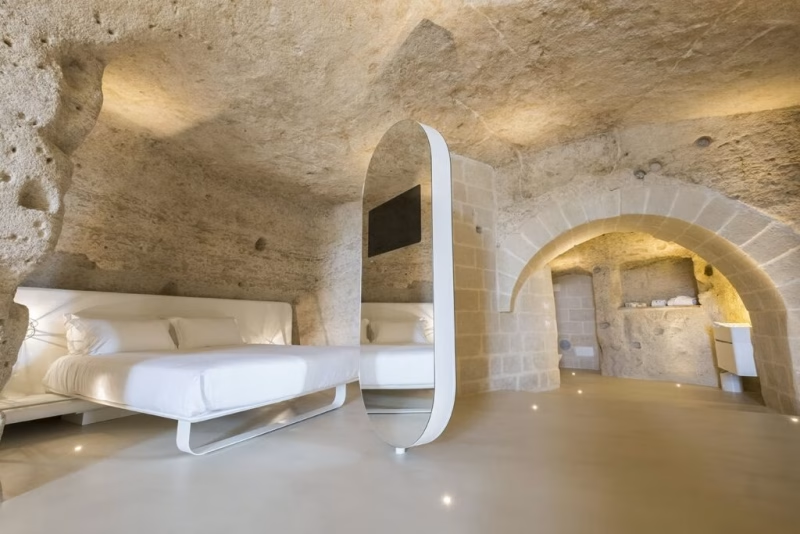
A room category where the architecture is the experience, not an upgrade.
• Coastal or Urban Aesthetic Discipline
Hotel Excelsior (Pesaro) — 1950s Riviera narrative executed consistently
Bellevue Syrene — aristocratic Sorrento identity expressed with elegance
3. Hospitality Culture
Generous, intuitive service shaped by people, not procedures.
• Generosity as a Value
Bellevue Syrene — Club Lounge offered with natural grace
Santavenere — understated, grounded, genuinely caring team
• Local Skill and Stewardship
Botania Relais — owner-led culture, garden-to-table authenticity
Excelsior Dolomites — Call Family guiding hikes, shaping guest rhythms

A hotel shaped by movement, outdoor ritual and the rhythm of the mountains.
4. Wellbeing Through Nature & Ritual
Calm created by water, gardens, air and movement rather than spa size.
• Element-led Wellness
Saturnia — the spring dictates the pace of the day.
Ischia thermal hotels — Roman baths, mineral water, natural heat embedded in architecture.
• Botanical Calm
Botania Relais — gardens, scent, and a vegetarian Green Michelin Star reinforcing its philosophy.
Santavenere — woodland and sea breeze shaping a restorative atmosphere.
• Movement-led Clarity
Excelsior Dolomites — sky spa + owner-led guided hikes creating an alpine ritual.
Castello Banfi — vineyard walks creating calm and coherence.

A Green Michelin philosophy rooted—literally—in the resort’s own garden.
5. When Uniqueness Matters — And When It Does Not
Uniqueness matters when it structures the stay, not when it decorates the brochure.
It matters when it is elemental, such as a geothermal spring at Terme di Saturnia; philosophical, such as the vegetarian Green Michelin restaurant at Botania; architectural, such as the cave spa at Aquatio; or daily, such as the rooftop Sky Spa that shapes time at Excelsior Dolomites.
It matters far less when it is simply numerical: the number of pools, the size of a gym, or the length of a spa menu. These may be pleasant, but they do not change how you live the stay.
6. Why Five-Stars Feel Different — And Why Prices Vary Widely
Hotels may share the same legal category yet express luxury in very different ways. This is where expectation, price and experiential logic must align.
When price is high
A hotel’s price reflects the strength and rarity of its experiential multipliers:
• scarcity of views
• emotional architecture
• heritage gravity
• depth of hospitality culture
• experiential intensity of rooms
• access to unique elements such as thermal water, cliffs or vineyards
When price is gentle
A more accessible five-star can still deliver genuine luxury through:
• proportion
• coherence
• quiet
• design clarity
Its experiential energy is focused rather than layered.
Both belong. They simply serve different journeys.
Service culture is also shaped by its ecosystem. Highly touristic destinations often have deeper talent pools and polished training, but can suffer from selective charm and a touch of “celebrity fatigue” in peak season. Quieter places may have fewer specialist roles, but often offer truer local knowledge, steadier teams and more grounded warmth. Polish and authenticity are both forms of luxury.
7. How Travellers Should Choose a 5-Star Hotel in Italy
Choosing the right five-star hotel is about understanding the role the hotel should play in your holiday. Once that role is clear, the choice becomes far simpler.
Start with the journey, not the hotel
Decide whether this trip is for rest or exploration, and whether you want the hotel to amplify the destination or soften it. The intention should lead the property, not the other way around.
Choose the room category carefully
Room categories change the tone of the entire stay. A sea-view room in Sorrento is a different holiday from a rear-facing room. A cave suite in Matera is the experience itself. A private terrace in Positano can add hours of daily pleasure. The real question is: which room creates the stay you want?
Consider the relationship between hotel and place
Some hotels place you inside the destination; others offer distance and calm. Clifftop settings give you the bay every time you draw breath. Vineyard estates slow the pace and reshape mornings. City sanctuaries provide clarity after dense days of art and crowds. Decide whether you want the hotel to echo the place or to counterbalance it.
Understand the price logic
Higher prices usually reflect rare settings, deep heritage, strong service culture, exceptional architecture or standout room categories. Gentler prices often reflect proportion, calm and design clarity. The question is whether the price is tied to something meaningful for your particular trip.
Think about the pace you want
Hotels have their own rhythm: energising, soothing, timeless or movement-led. The wrong pace creates friction. The right pace makes the trip feel effortless.
Decide the role the hotel should play
Some hotels are bases: elegant and practical. Others are complements that mirror the mood of the destination. A few are protagonists where the hotel is the experience. Misaligned expectations create disappointment, even in flawless properties. Decide what job you want the hotel to do for you.
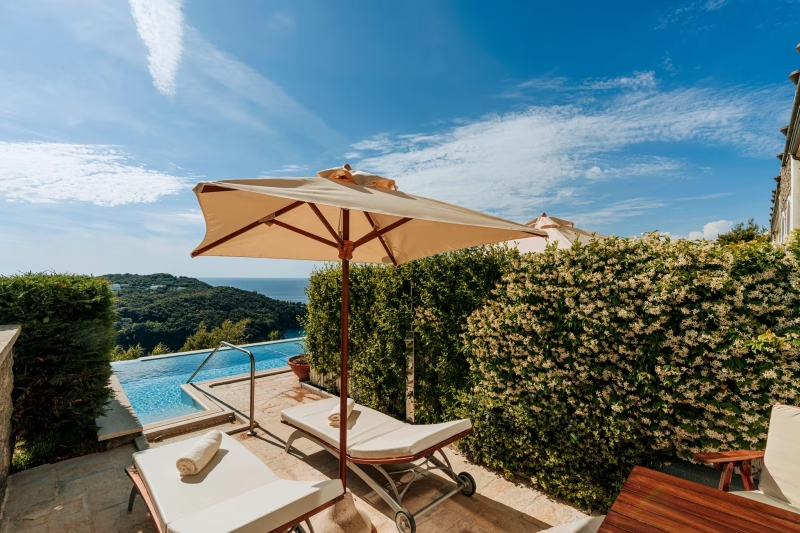
A good example of how a room’s orientation can define the emotional tone of the stay.
8. Room Logic: Where the Real Five-Star Experience Lives
A stay feels genuinely five-star when the room carries the identity of the place. Within the same hotel, atmosphere can vary dramatically between categories.
Look at view and orientation, proportion and layout, quality of light, terrace depth and privacy, architectural identity and the tactility of the bathroom. These details often matter more than the length of the amenity list.
9. The ExpertoItaly Perspective
A five-star rating guarantees infrastructure, not meaning. Some five-stars feel worth every euro; others feel strangely hollow. Experiential value depends on coherence, identity and emotional clarity.
Luxury is not the presence of services. Luxury is the presence of meaning.
Plan your five-star journey with ExpertoItaly
Tell us the pace you want — island stillness, vineyard immersion, alpine clarity or heritage calm — and we will suggest the hotels and room types that make sense for your trip, not just for the rating.
Contact the Italian specialists →
You are in good hands




Tailor-made Italy holidays, thoughtfully planned by ExpertoItaly.
Characterful places to stay, thoughtful routes and well-planned travel between them — across one region or several.
We arrange your accommodation, transport and experiences in Italy. Flights are booked separately.
About ExpertoItalyPlan with ExpertoItaly
Tell us where you would like to go, when you can travel and what matters to you.
Start planning your Italy holidayMonday–Thursday: 9am–6pm
Friday: 9am–5.30pm · UK time
At weekends, please send an enquiry.
Your holiday protection

Travel Trust Association
Member Q8055
Read how your holiday payments are protected through our TTA membership.
How your holiday is protectedItaly ideas and travel advice by email
Subscribe for destination ideas, places to stay and practical advice from ExpertoItaly.
We will never sell your details. Read our privacy policy.
Follow ExpertoItaly
 Facebook
 WhatsApp channel
Follow our travel updates. For help planning your own holiday, contact ExpertoItaly.
ExpertoItaly Ltd · Company registration no. 12035194 · TTA membership Q8055
Package holidays are sold by ExpertoItaly Ltd. Registered office: 33 Miles Close, London, SE28 0NJ.