Welcome to our Amalfi Coast travel guide, crafted by ExpertoItaly to help you arrive well, move smartly (car-free or with a hire car), own the golden hours, unlock signature trails, and savour the coast’s true flavours — without following the crowd.


How to Get There (Air · Rail · Sea)
First impressions matter. Choose the approach that matches your style and timetable.
By Air
Naples International (NAP) is the main gateway with broad European connectivity and easy onward links by rail, sea, or private transfer.
Salerno Costa d’Amalfi (QSR) adds seasonal routes close to the eastern side (Vietri–Maiori–Amalfi). Always check live schedules for your dates.
By Train
High-speed trains from Rome/Florence/Milan reach Napoli Centrale and Salerno.
By Sea
From spring to autumn (weather-dependent), ferries and hydrofoils connect:
Naples Beverello ⇄ Amalfi/Positano (the most theatrical arrival).
Salerno ⇄ Amalfi/Positano (often the most regular east-coast corridor).
Local note
Choose the sea for your grand entrance; choose rail/road on your “control days”. Each route draws the coastline differently—and that’s the pleasure.
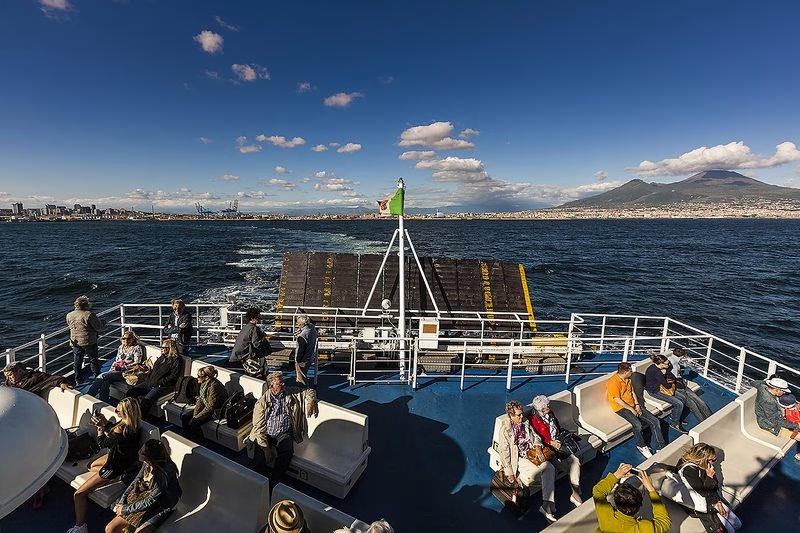
Casting off from Naples: Vesuvius astern, a clear run across the bay — the most cinematic way to reach the coast in season.
Car-Free or Car Hire? The Smart Choice
The Amalfi Drive (SS163) is legendary—and narrow. Decide based on the experience you want, not habit.
When going car-free wins
Ferries land you steps from the action and beat traffic in season.
SITA buses knit hills and harbours; expect queues at peak times.
Private transfers remove friction on airport/station days and for trailheads.
When a hire car makes sense
You’re exploring interior villages/high ground (Agerola, Tramonti, the Lattari).
You want to push further to Paestum/Cilento.
You’re travelling in shoulder season (Apr–May, Sep–Oct).
Refinement
Convertible curious? In shoulder season, when the road exhales and the light softens, a drop-top turns the SS163 into theatre—map it with our
Amalfi Coast convertible drive (La Dolce Vita).
Amalfi Coast convertible drive (La Dolce Vita).
And in village cores, properties with guaranteed parking are worth their weight in limoncello.
Nature & Trails: Walk the Coast Like an Insider
Three classics that deliver huge views, deep time, and that quiet satisfaction of having out-smarted the crowds.
Sentiero degli Dei (Path of the Gods) — Bomerano → Nocelle
A balcony-trail along the cliffs from Bomerano (Agerola) to Nocelle (Positano). Allow 2–3 hours one-way; from Nocelle take the local shuttle or descend the long stairway to Positano. Start early; carry water, sun protection and good footwear.
Valle delle Ferriere — Waterfalls, mills & a living time capsule
Behind Amalfi lies a cool ravine of waterfalls, paper-mill ruins and rare ferns. The outer valley is freely accessible; the core Reserve—home to ancient Woodwardia radicans—is by pre-booking (5 euros at local info point). Enter from Pontone/Scala or Amalfi.
Punta Campanella & Bay of Ieranto — Where myth meets the sea
From Termini (Massa Lubrense), follow the ancient Via Minerva to the headland facing Capri and Li Galli; extend to Monte San Costanzo for a tougher finish. You’re inside a Marine Protected Area—keep to paths and leave no trace.
Field note
Best tackled Bomerano → Nocelle: you descend with the coastline unrolling before you; starting from Positano means a steep, sun-exposed climb.
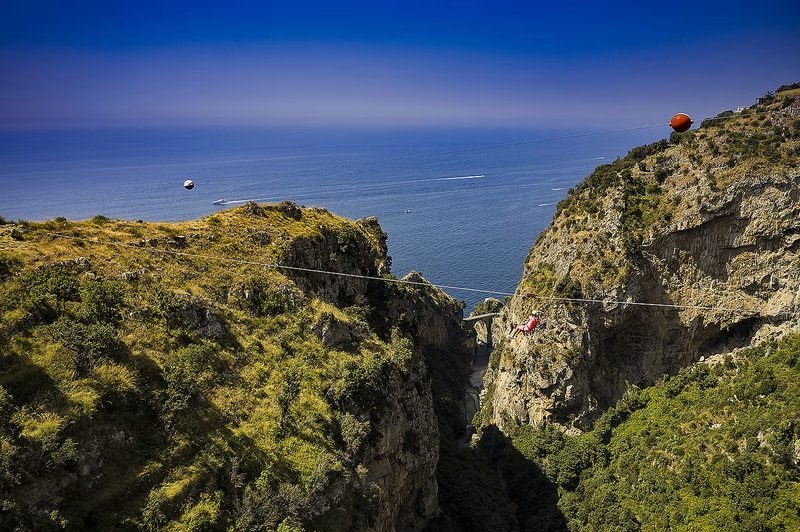
A swoop from rock to rock above the fiordo — sea, cliffs and adrenaline in a single line.
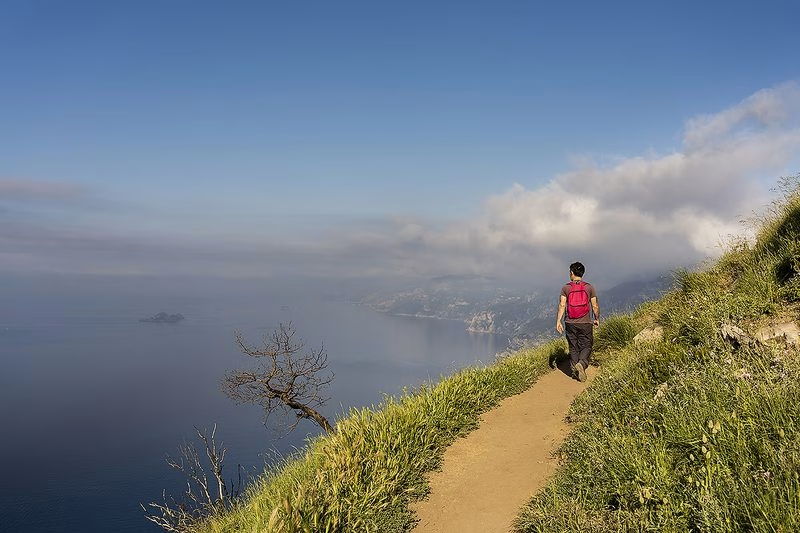
Bomerano → Nocelle: the classic balcony path, sky at your shoulder and the coast unfolding below.
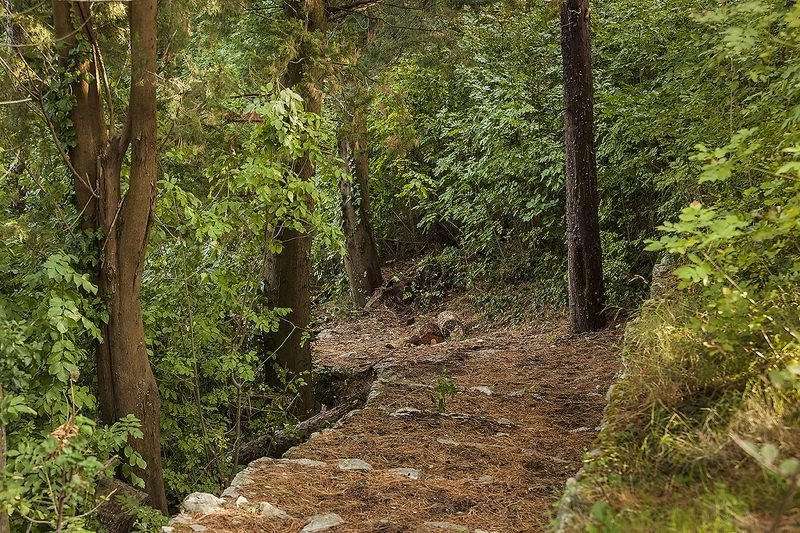
The quiet side of Amalfi — cool shade, chestnut and pine, and a soft path leading towards waterfalls and old mill ruins.
History, Myths & Miracles: Power Plays on a Legendary Coast
Let facts anchor you and myths pull you forward: cathedral steps in the morning for ceremony; Li Galli views in late light for contemplation.
Amalfi the Republic: Law of the Sea, Law of Prestige
Before it was a postcard, Amalfi was a player—a maritime republic whose Tabula Amalfitana shaped Mediterranean seafaring custom for centuries. Prestige here was written in clauses and carried by sail. The glory dimmed after Pisan attacks (1135 & 1137), but the memory of mastery never left these stones.
Relics of St Andrew: Faith with a Fleet
On 8 May 1208, the relics of the Apostle St Andrew arrived from Constantinople, escorted by galleys; today they rest in the cathedral’s crypt and anchor two great feasts each year.
The 1544 Storm (Legend)
When Barbarossa threatened Amalfi in 1544, townspeople prayed at St Andrew’s tomb; a sudden storm scattered the fleet. History keeps the dates; tradition keeps the meaning. The coast still marks it each 27 June.
Li Galli (Sirenuse): Songs that could wreck a kingdom
Off Positano, the Li Galli islets are tied to Homer’s sirens—beauty with consequences. Admire them from a ferry wake or a cliff-path belvedere; either way, approach with intent.
Pogerola’s “Miracle of the Milk” (Local devotion)
Above Amalfi, Pogerola keeps a tender tradition linked to the Madonna delle Grazie—remembered each 14 August and still part of the hamlet’s living identity.
Villages with Personality

Cliffs, terraces and a quiet bay catching the last light — the coast at its most unhurried.
Positano — the vertical muse
Pastel houses tumble to the sea; Santa Maria Assunta holds the Byzantine Black Madonna beneath a glittering majolica dome. Drift back to Spiaggia Grande for the beach-to-boat rhythm.
Do: Late-afternoon aperitivo above the marina.
See: MAR Positano (Roman villa, timed entry).
Savour: Scialatielli ai frutti di mare; lemon desserts that actually taste of lemon.
Arienzo first light
Be on the Arienzo Beach courtesy boat before 10:00; swim while Spiaggia Grande wakes up. Return by steps for the view, or call the boat back for lunch in town.
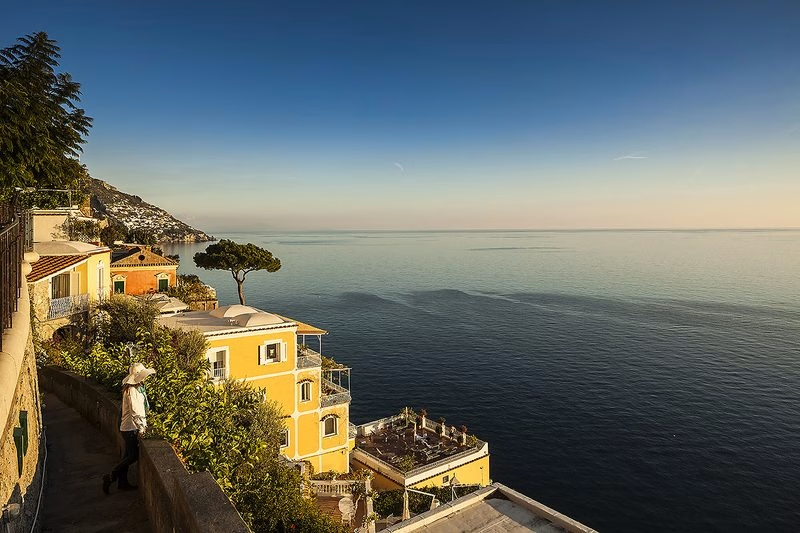
Late light along the high lanes — pastel villas, an umbrella pine, and Positano opening to an endless sea.
Our Positano Pick
Villa Rosa — front-row Positano, without the fuss
A charming guest house in a central perch with wide-open sea views — perfect for a few unhurried days in Positano.
- Central location for ferries, lanes and Spiaggia Grande.
- Superior-room terraces that catch the blue hour (see photo).
- Easygoing service; great value for the view you’re getting.
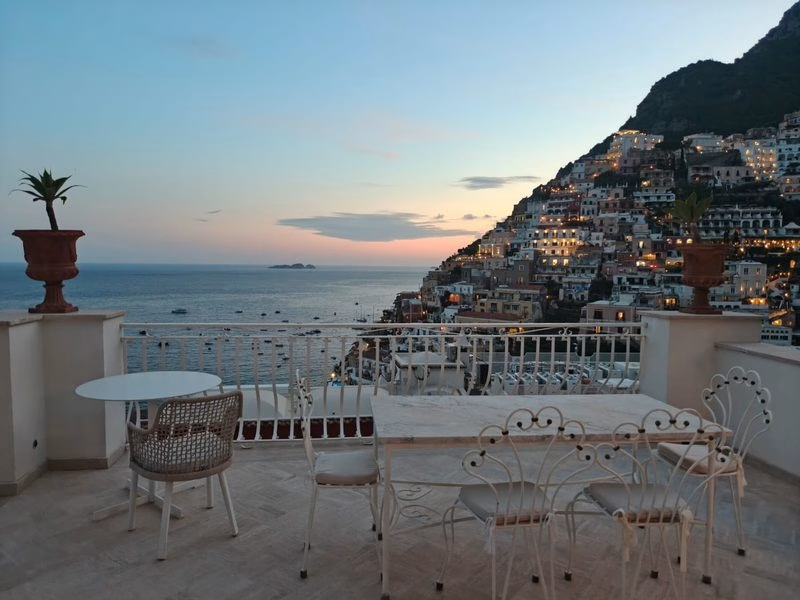
Villa Rosa Positano — Superior Room Terrace
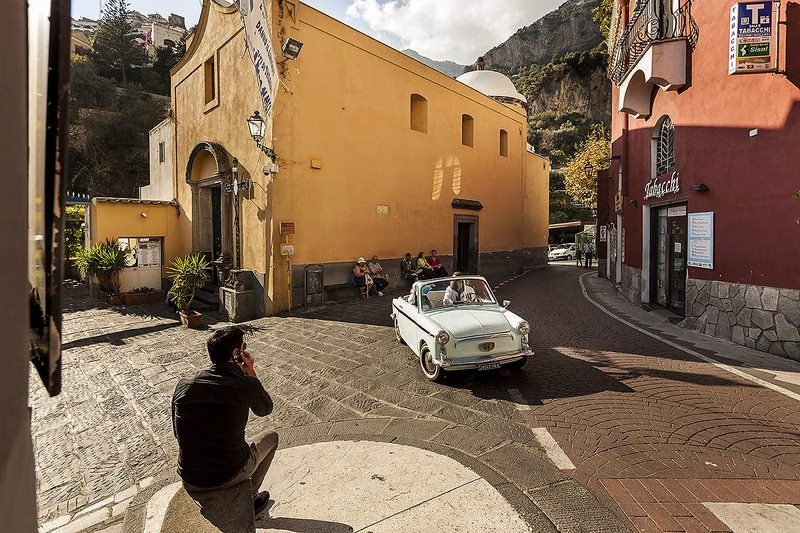
Everyday Positano: a tiny piazza, soft light on the chapel wall, and a vintage cabrio slipping through the lanes.
Amalfi — law, trade, pageantry
Once a maritime power, Amalfi wrote the sea’s unwritten rules; today the Regatta of the Ancient Maritime Republics keeps that swagger alive. In the Duomo, the relics of St Andrew anchor identity and festivals.
Do: Cloister of Paradise + crypt; coffee under the steps.
See: Paper Museum or the Ferriere trailhead.
Savour: Delizia al limone from Pasticceria Pansa.
Atrani loop + Torre dello Ziro
Slip to Atrani for coffee in Piazza Umberto I, then climb to Torre dello Ziro—a quiet balcony over both bays. Return by the seaside arc.
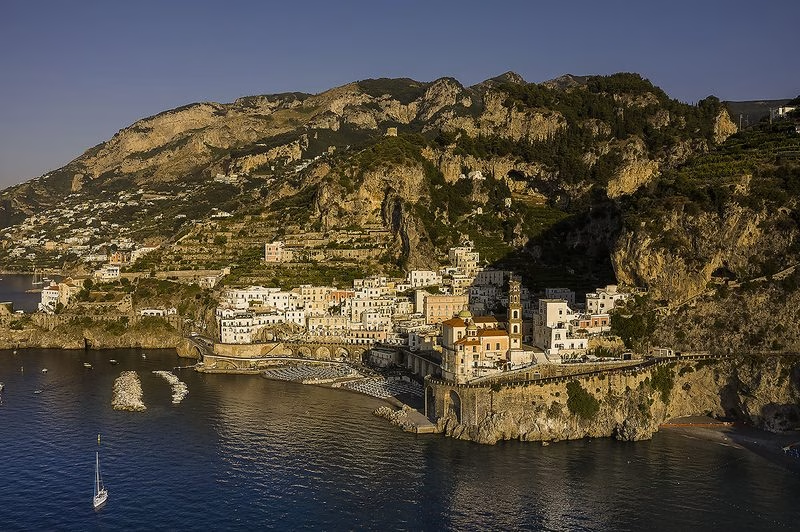
Atrani seen wide: the amphitheatre of houses, the baroque church above the beach, and evening light sliding down the terraces.
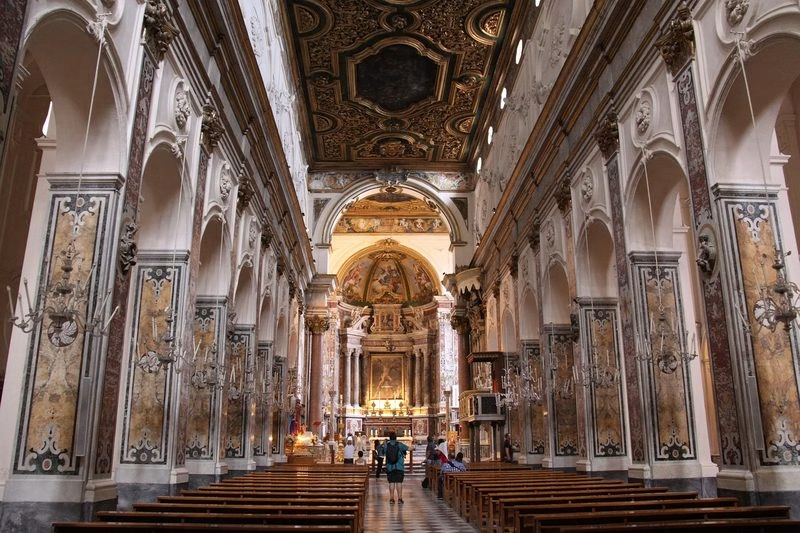
Inside the Duomo di Sant’Andrea — marble, gilt and a hush that belongs to Amalfi’s seafaring past.

Atrani’s baroque silhouette — Santa Maria Maddalena above the harbour — catching the last light before the lanes slip into evening.
Praiano — quiet terraces, artists’ light
Praiano trades hype for hush. On La Praia, the Torre a Mare hosts an artist’s atelier; in summer, the Luminaria di San Domenico turns alleys into rivers of flame.
Do: Golden-hour stroll between San Luca and San Gennaro.
See: Boat over to the Fiordo di Furore.
Savour: Grilled pezzogna (sea bream) at sunset.
Gavitella for sunset
Take the steps from Piazza San Gennaro to Cala della Gavitella—one of the few beaches that actually sees the sun set. Aperitivo on the rocks; taxi or boat back.
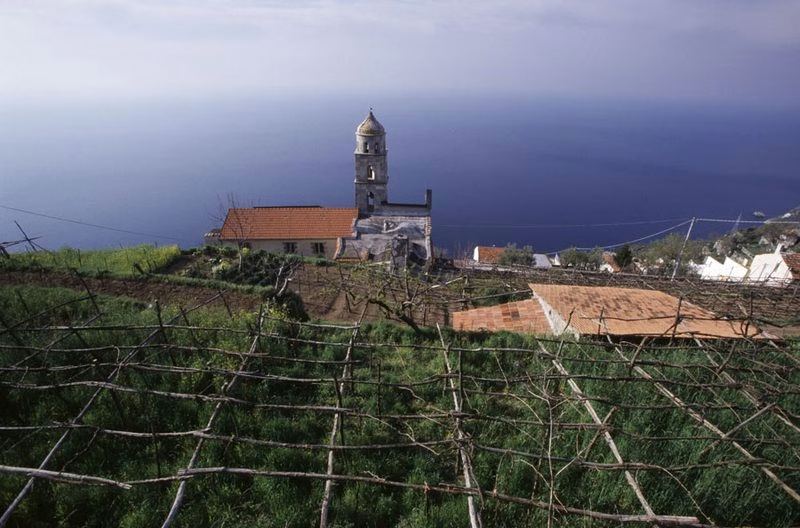
Praiano’s pergola vines stepping towards the sea; a quiet chapel keeping watch above terraces and water.
Ravello — high ground, higher notes
Ravello is where the coast exhales. Villa Rufolo inspired Wagner; the Terrace of Infinity at Villa Cimbrone is pure theatre over the void.
Do: Time your visit for golden light.
See: Duomo museum; Rufolo → Cimbrone via quiet lanes.
Savour: A slow lunch under pergolas.
Ravello Festival · Playbook
Programme drops in spring; headline nights go fast—book as it lands. For Belvedere di Villa Rufolo, pick central rows a few back for balanced sound and the sea-stage view; bring a light layer (breeze bites even in August). Arrive an hour early to thread Villa Rufolo’s gardens and take a pre-performance drink as the light fades. If wind picks up, concerts may move to the Oscar Niemeyer Auditorium—check day-of updates. Logistics: use bus/transfer for curtain time; parking is scarce and approaches are slow.
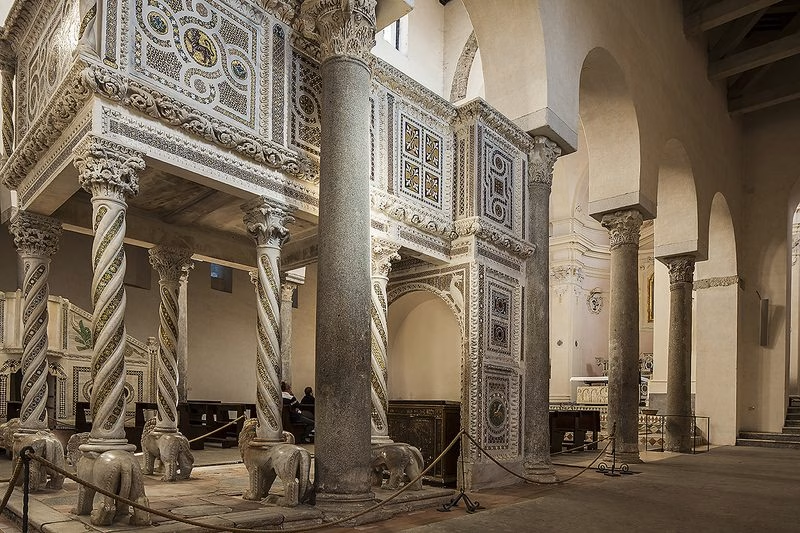
Ravello’s Romanesque heart — cosmatesque mosaics, lion-footed columns and a quiet light that flatters every detail.
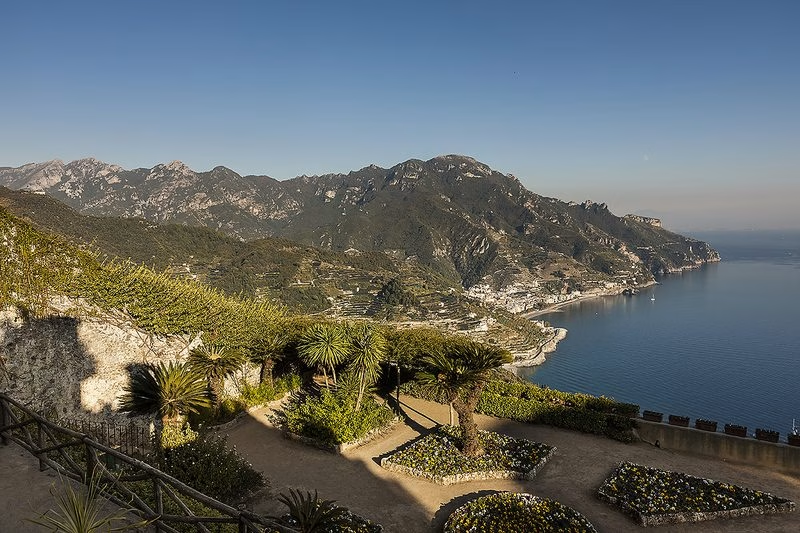
Ravello from its hanging gardens — flower beds, palms and a high, still horizon over Amalfi and the sea.
Minori & Maiori — Roman leisure, monastic quiet
In Minori, the 1st-century Roman Villa (garden and mosaics) whispers that this has been holiday country for two millennia. Above the lanes, the Sentiero dei Limoni threads lemon terraces towards Maiori, where the cliff-side abbey of Santa Maria de’ Olearia preserves rare medieval fresco cycles.
This is the coast at walking pace: dry-stone walls, citrus perfume, and sudden balconies over the sea.
Do: Villa first, then the Lemon Path in the cool; check abbey times before you climb.
See: The hamlet of Torre along the path; in Maiori, the belvedere by Santa Maria a Mare.
Savour: ’Ndunderi (ricotta dumplings) and proper lemon cake; finish with a granita al limone back in Minori.
Lemon Path · Playbook
Best direction Minori → Torre → Maiori: a gentle climb through terraces, then a scenic descent towards Maiori (45–75 mins, photo stops included).
Early light catches the trellises; avoid midday heat. Detour to the belvedere by Santa Maria a Mare, then return to Minori by the seaside promenade
or hop a short ferry—no backtracking, just two views of the same story.
or hop a short ferry—no backtracking, just two views of the same story.
Cetara — working harbour, serious flavour
Cetara is the coast’s fishing conscience. Try colatura di alici—amber anchovy essence, now PDO-protected—over simple spaghetti.
Do: Taste with small producers; dawn harbour scene.
Savour: Fried cuoppo cones and tuna belly panini.
Working rhythm
Harbour at dawn for the real picture; lunch is for Colatura—keep the pasta simple and let the anchovy speak.
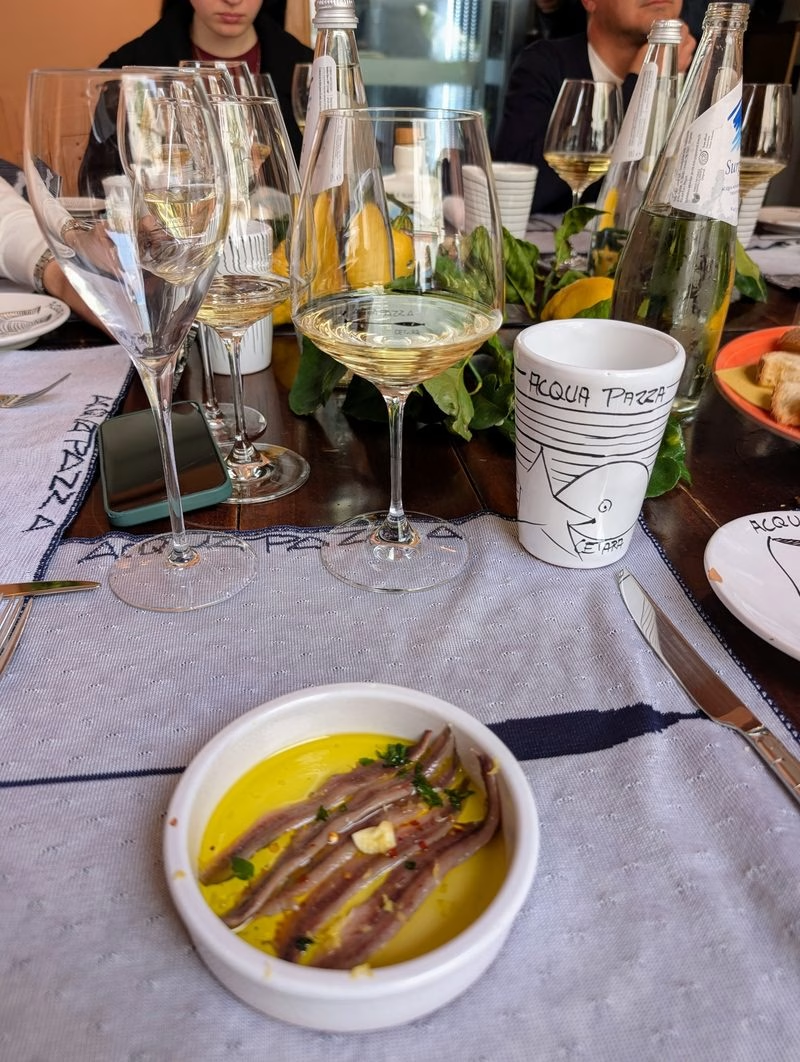
Anchovies as they should be — fillets in good oil, a whisper of garlic, a glass of crisp white, and the lineage that leads to colatura.
Vietri sul Mare — ceramics capital
Workshops, hand-painted street signs, and the Ceramics Museum at Villa Guariglia. Look up to San Giovanni Battista—its majolica-tiled dome glints green-yellow-blue in the sun.
Do: Shop small; ask for shipping and certificates of origin.
See: Raito hill for views + ateliers.
Savour: Lemon-zest biscuits with an espresso.
Local angle
Workshops in the morning for conversations and commissioning; late light for the dome and the Raito viewpoints.
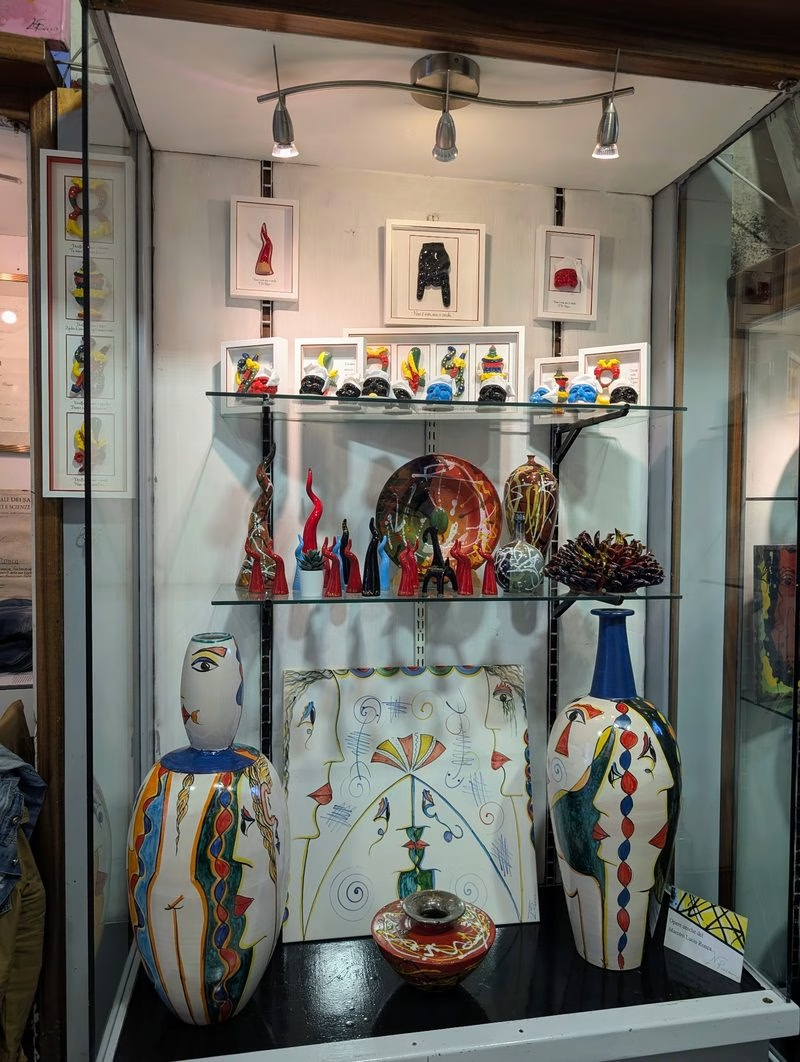
From workshop to window — modern Vietri maiolica in bold colour, echoing a craft that has shaped the town for centuries.
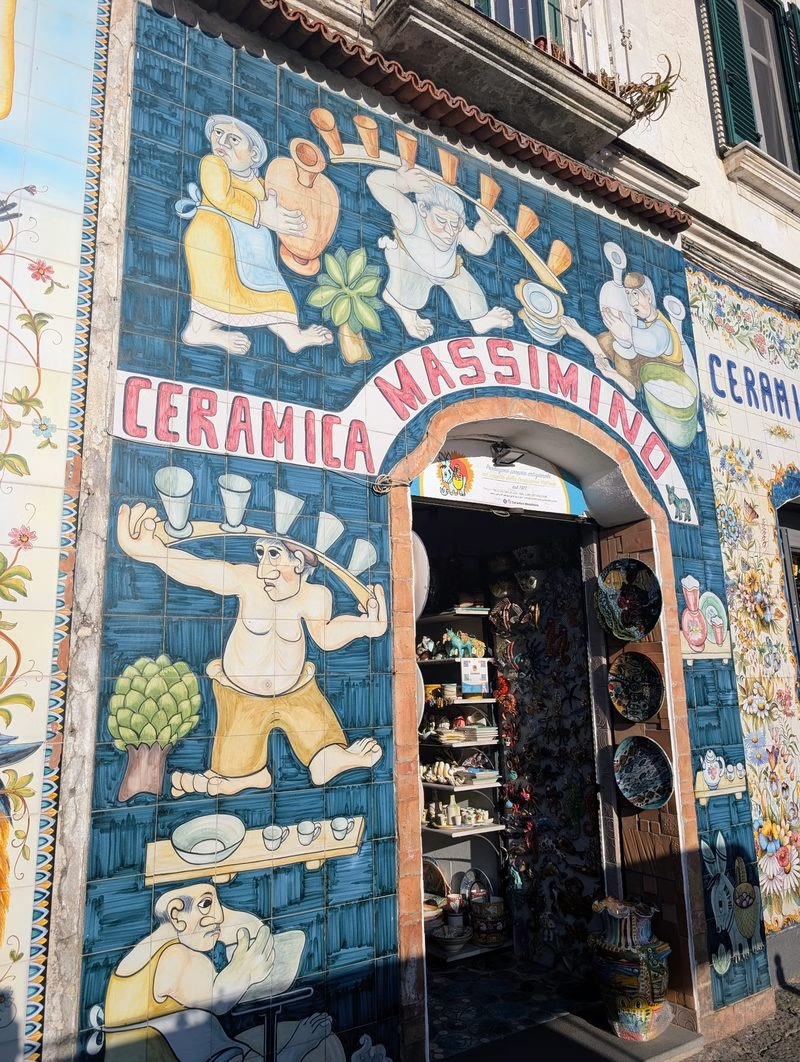
A doorway written in tiles — Vietri’s playful maiolica drawing you straight into the kiln-warm world of local makers.
Flavours of the Coast
The Amalfi Coast is a tasting menu of terroirs—sea, stone, citrus, and steep terraces shaped by human hands.
Lemons & Limoncello
The Sfusato Amalfitano is the calling card: thick peel, perfumed oils, clean acidity. You’ll meet it in limoncello, cakes, custards, salads, even with raw fish. Visit a family grove in Minori/Amalfi to see how trellises tame the slope.
Sfusato Amalfitano · The Amalfi Lemon (IGP)
-What: An elongated, sun-gold lemon with a perfume of essential oils and a thick, oil-rich peel — recognised as IGP (PGI).
-Where: Terraced giardini di limoni from Vietri to Positano, shaped by sea breezes and the shelter of the Lattari Mountains.
-Heritage: Citrus arrived via Arab traders; Amalfi’s sailors made it famous as a vitamin-C safeguard against scurvy. Terraces, dry-stone walls and chestnut pergolas tell a thousand-year story.
-Craft: Cultivation is heroic — baskets carried by hand along steep steps, just as it has been for generations.
-Season & size: Harvested spring to late summer; fruits often exceed 100 g.
-Kitchen uses: Zest over fish, juice for salads, the soul of limoncello; in pastry: sfogliatelle and feather-light delizia al limone.
-Cultural note: More than a crop — a symbol of resilience and beauty; to taste one is to taste the essence of the Amalfi Coast.
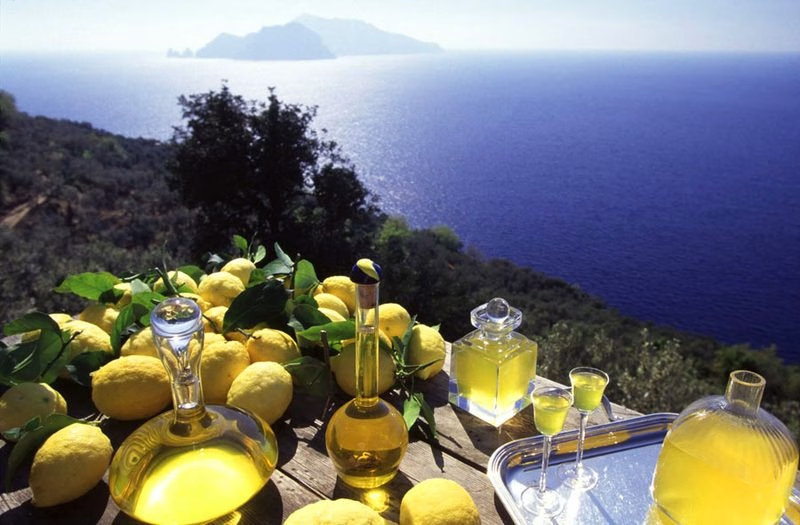
Sfusato Amalfitano and limoncello in the breeze — citrus oils, sea light and the taste that defines the coast.
Anchovies of Cetara & Colatura
Tradition meets technique in colatura di alici. A few drops over spaghetti, olive oil, garlic, parsley—pure umami. Taste different ageing and ask about seasonality.
Colatura di Alici di Cetara · PDO (DOP)
-What: Amber anchovy essence from Cetara—slow-dripped, translucent, intensely savoury—recognised with PDO/DOP status.
-Where: Made by small family producers in the harbour town of Cetara on the Amalfi Coast.
-How it’s made: Spring–early summer anchovies (late Mar–Jul) are cleaned, then layered with coarse sea salt in wooden barrels (terzigni), weighted and left for months. The first extract is filtered, then in autumn it’s poured back through the fish—the repassata—before bottling around December.
-Flavour: Clean umami, saline depth, a touch of sweetness; when used correctly it’s fragrant, not “fishy”.
-Kitchen use: Classic spaghetti with olive oil, garlic and parsley—add colatura off the heat. Dress blanched greens, grilled vegetables, tomatoes, or warm bread with oil. (No cheese.)
-Dosage: Start with ~1 tsp per person, loosen with hot pasta water instead of salt, taste and adjust. Never reduce on the hob.
-Buy well: Look for the PDO/DOP mark, producer name and batch/year. Choose small bottles; store cool and dark; keep tightly sealed once opened.
-Cultural note: A cherished Christmas gift in Cetara—each drop is a memory of summer seas and early-morning boats.
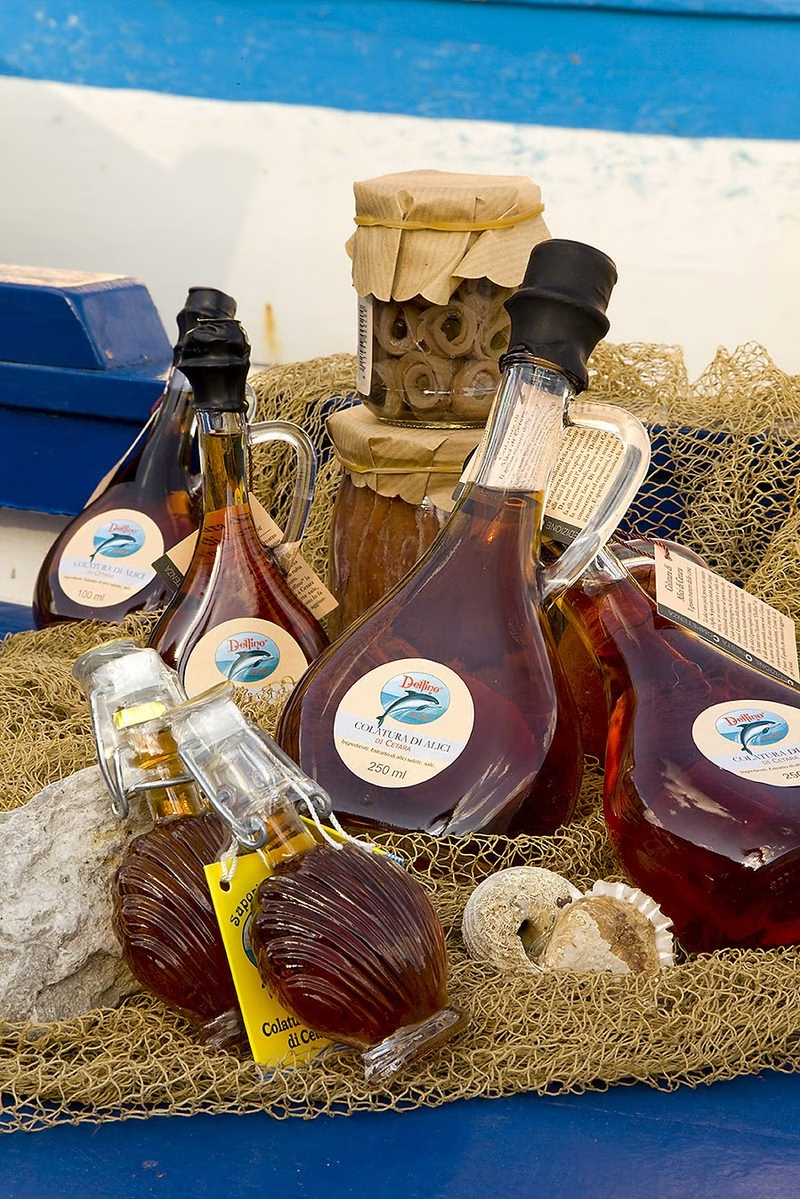
Cetara’s liquid gold — small-batch colatura resting on a fisherman’s net, sea and craft in every drop.
Mountain Dairies & High-Ground Produce
Up in Agerola: Provolone del Monaco, fior di latte, smoked caciocavallo. Pair with mountain honey, garden tomatoes and crusty bread.
Provolone del Monaco · DOP (PDO)
-What: A semi-hard, stretched-curd cow’s cheese from the Lattari Mountains; name recalls shepherds cloaked like “monks” on their way to Naples’ markets.
-Where: High pastures above the Amalfi Coast, crafted primarily in Agerola; mountain air and chestnut country shape its character.
-Milk & breed: Made with at least 20% milk from the hardy Agerolese cattle, adapted to steep terrain; the remainder from local herds.
-Make & maturation: Pear-shaped forms tied with natural rope (3–8 kg); matured a minimum of 6 months to develop depth and perfume.
-Look & texture: Thin amber rind; firm, straw-yellow paste marbled with tiny eyes—sliceable yet supple.
-Flavour: Buttery to start, growing gently piquant with age; a whisper of sweetness and wild-herb notes from the high meadows.
-How to enjoy: Thick slices on rustic bread; shaved over potato-pasta dishes or grilled vegetables; lovely with a Campanian red (think Piedirosso or Aglianico).
-Buy well: Look for the DOP seal and producer details; a clean dairy-herbal aroma, not ammoniac. Bring to room temperature before serving.
-Cultural note: A mountain emblem that ties Agerola’s pastures to Naples’ tables—taste the journey as much as the cheese.
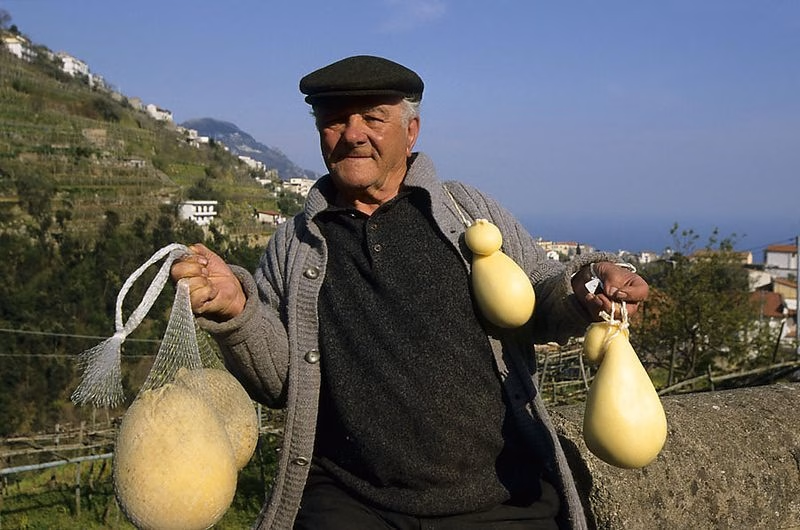
Mountain-made Provolone del Monaco — pear-shaped forms from Agerola’s terraces, buttery at first and gently piquant with age.
Wine on the Edge
Terraced vines make heroic wines: coastal whites with citrus and saline bite, agile rosés, volcanic-edged reds. Furore and neighbouring valleys welcome pre-booked tastings.
Cantine Marisa Cuomo · Tour & Tasting (Furore)
-Setting: Cliff-hugging terraces above the fjord-like coves of Furore; vines carved from ancient rock, bathed in sun and salted breeze.
-Experience: By reservation only. Guided vineyard walk with sweeping sea views → cellar visit → tutored tasting of signature whites/rosés with coastal freshness and structured reds, paired with local bites.
-When: Mon–Sat, 09:00–17:00; tastings run until stock is exhausted (limited, intimate format).
-Book: Reserve via the website form or WhatsApp; include party size, preferred time, language and any dietary notes.
marisacuomo.com
-Practical: Steep terraces—wear closed shoes and bring a light layer. Parking is tight on the SS163; consider a transfer. Allow 90–120 mins.
-Why go: A vivid lesson in “heroic viticulture” where land, sea and human craft converge—wines that taste of cliffs, light and breeze.
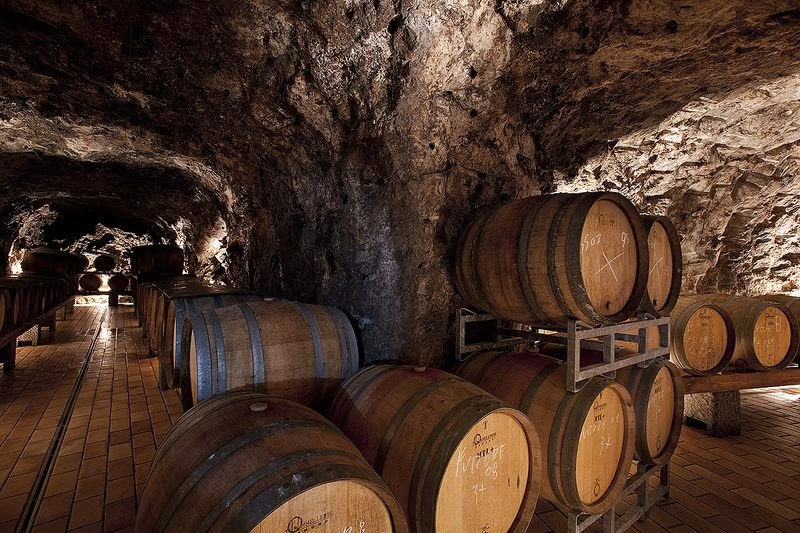
Wine at rest in stone — the cool, cave-like cellars of Marisa Cuomo where sea breeze, rock and time shape the flavour.
After-Tasting Micro-Route · Furore → Fiordo → Sunset
- Fiordo belvedere — Roll or transfer down to the Ponte del Fiordo di Furore and take the short stairway to the cove for that sheer-cliff, turquoise-water frame.
- Coastline pause — Drift to Marina di Praia (Praiano) for a dip or a quick coffee perched on the rocks; boats buzz in and out of the tiny harbour.
- Golden hour — Aim west for Cala della Gavitella or a terrace near Piazza San Gennaro in Praiano. This side holds the sun—order an aperitivo and watch Capri turn silhouette.
Refinement: Parking is tight along the SS163; a pre-booked transfer keeps the line clean. Closed shoes for the fiordo steps; bring a light layer for the breeze.
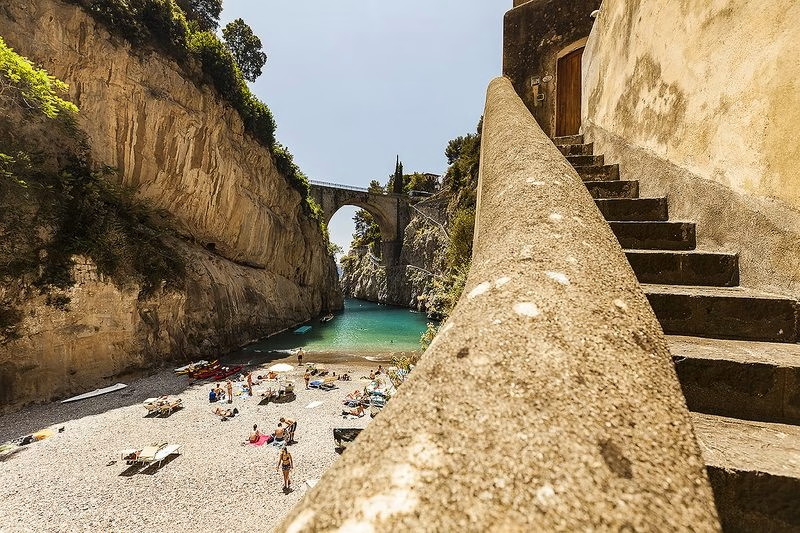
Steps into a hidden inlet — turquoise under the arch, sea held quiet between the cliffs.
Sample Itineraries
4 Days · Car-Free “See More, Stress Less”
Base: Positano (or Amalfi for a flatter centre). Move by ferry/bus/transfers.
Day 1 — Arrival by Sea: Naples Beverello → Positano/Amalfi (seasonal). Sunset wander; dinner with a view.
Day 2 — Sentiero degli Dei: Bus/transfer up to Bomerano, walk to Nocelle. Late lunch above Positano; shuttle or stairs down.
Day 3 — Ravello High Notes: Amalfi → Ravello (Rufolo, Cimbrone, Duomo). Slow lunch under pergolas; cloister/crypt on return.
Day 4 — Nature or Boat: Ferriere waterfalls (pre-book core zone) or boat day to hidden coves. Farewell spritz by the marina.
Pro moves: Early starts; west-facing lunches for sunset light. Always a ferry Plan B; transfers when buses are packed.
5 Days · With Car “Backroads & Big Views”
Bases: 3 nights Amalfi/Praiano + 2 nights Agerola (or Massa Lubrense).
Day 1 — Coastal Settle-In: Check-in, seafront stretch, cathedral, dinner nearby.
Day 2 — Eastbound Loop: Vietri ceramics, Cetara tasting, Minori Roman villa + beach. Park outside centres.
Day 3 — Ravello & Terraces: Villas and lanes; pull-outs on the SS163; sunset in Praiano.
Day 4 — Agerola Dairy Day: Cheesemaker visit; picnic; short ridge walk.
Day 5 — Punta Campanella: Via Minerva headland; lunch overlooking Capri; easy roll back.
Pro moves: Book lodging with parking. Avoid midday coast-driving in peak months.
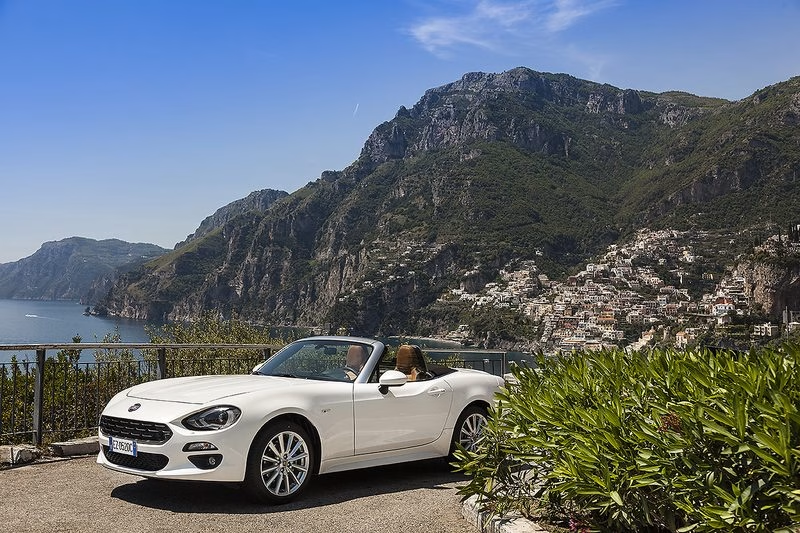
A shoulder-season classic — top down, coast in widescreen, Positano unfolding beyond the bends.
When to Go & Timing
Spring (Apr–May): Wildflowers, cool air, clear paths; ferries ramp up.
Early Summer (June): Long days, warm seas, rising energy—reserve ahead.
Peak (July–Aug): Hot and busy—own the morning; sea days + long shaded lunches.
Golden Shoulder (Sept–Oct): Balmy water, softer light, calmer lanes.
Winter (Nov–Mar): Quiet, contemplative, reduced services; culture-first travellers win.
The ExpertoItaly Amalfi Coast Holiday Promise
Days that flow. Logistics that disappear. A rhythm that lets the coast perform—while you simply savour more.
Your Daily Rhythm
-Own the morning: trails and squares before 09:30.
-Midday drift: museums, cloisters, shaded walks, long lunches.
-Golden hour: viewpoints, aperitivi, coastal strolls.
-After dinner: short, slow walk—cool air, empty lanes, stars.
Effortless Arrivals
-Private transfer from NAP/QSR straight to your door.
-Luggage-light strategy: courier the heavy, travel with a day-three capsule.
Moves that Save Hours
-Ferries first when seas allow; buses for the last mile; transfers for early starts/late returns.
-Pre-book Ravello events and Ferriere core-zone access.
-Choose restaurants for timing and view axis (west-facing for sunset).
Real Expertise, Real People
-Trail host for Sentiero degli Dei (pacing, detours, photo spots).
-Cetara tasting with a maker—colatura from fish to bottle.
-Lemon grove visit: cultivation, tasting, and proper citrus (not tourist sweet).
-Small-boat skipper who knows currents, caves and safe swims.
Sleep & Basecraft
-Two bases beat one for pace and reach (e.g., Positano/Amalfi + Cetara/Vietri).
-Car-free? Stay near ferry piers/bus nodes. Driving? Book a convertible.
You’re in good hands
Clients often mention what matters most — care, precision, and the sense of travelling with someone who knows the way.
STAY CONNECTED WITH US (it’s free!)
Unlock insider tips on Italy’s hidden gems, free every month!
👍 Follow us on Facebook – Stay inspired with daily updates, travel ideas, and a community of fellow Italy lovers.

📲 Join our WhatsApp channel 🟢 – Get instant updates, behind-the-scenes insights, and connect directly with our team.

We’ll always treat your details with the utmost care and will never sell them to other companies. See our privacy policy
Package holidays are sold by ExpertoItaly Ltd (Reg. 12035194)
Call us on +44 (0) 77 3838 5790
Registered office: 33 Miles Close, London, SE28 0NJ

Business Hours
Monday – Thursday 9am to 6pm
Friday 9am to 5:30pm
Saturday – please send us an enquiry form
Sunday – please send us an enquiry form