A few streets east of the fashion district, beyond the polished shopfronts of Via della Spiga and the flow of Corso Venezia, Milan suddenly goes quiet. Via Mozart sits inside what locals call the quadrilatero del silenzio — the “quadrilateral of silence”: trees, gated villas, very little noise. It feels discreet, slightly private.


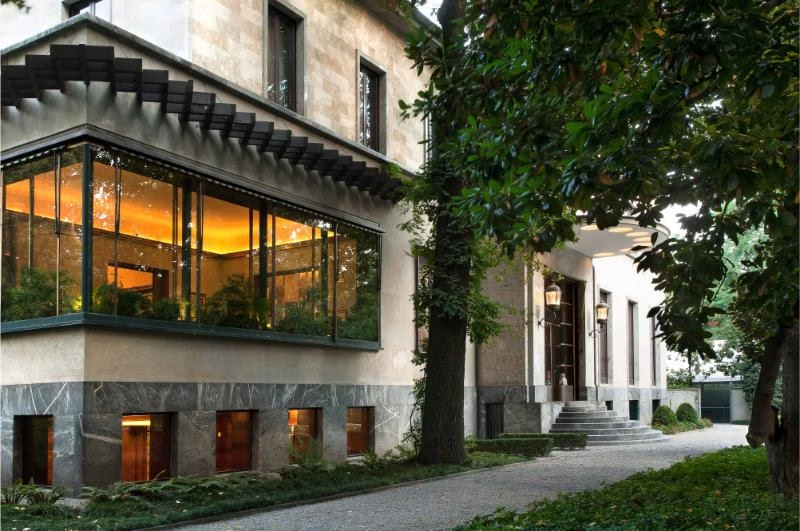
The villa’s calm, rationalist façade, with the glass winter garden projecting into the greenery. Photo credit: IMG6885_Foto arenaimmagini.it, 2014 © FAI.jpg
And then, behind a modest wall and garden, you step into one of the most rewarding houses you can visit in the city. Not a palace. Not a museum. A house — preserved with its rhythms, objects, and atmosphere intact.
If you’re an architect, a designer, or simply someone who notices proportions, light, and materials, this is Milan at its most quietly compelling.

The pool was radical for its time — not just leisure, but part of the villa’s modern idea of comfort and design. Photo credit: 7314_Foto arenaimmagini.it, 2022 © FAI.jpg
A wrong turn in the fog — how Villa Necchi began
The villa’s origin story is wonderfully Milanese: fast, foggy, and decisive. In the early 1930s, the Necchi Campiglio family — industrialists from Pavia, wealthy thanks to sewing machines and cast-iron manufacturing — were returning from an evening at La Scala.
A thick Milanese fog swallowed the streets and their driver lost his way.
They ended up near Via Mozart, then far less built-up than it is today. Through the mist: a quiet plot, a semi-abandoned garden, and a simple sign: “Vendesi”. The legend says that Angelo Campiglio saw, instantly, the chance to build a kind of country house in town — and bought the lot the next morning. A fortunate mistake, and one that gave Milan a design landmark.
Portaluppi’s rationalist masterpiece — Milanese modernism at its finest
They commissioned Piero Portaluppi (1932–1935), one of the most original minds of interwar Milan. What he produced was modern without being noisy: clean geometry, generous windows, disciplined lines, and a sense of proportion that still feels effortless.
It’s rationalism at its most refined — elegant, controlled, and quietly luxurious.
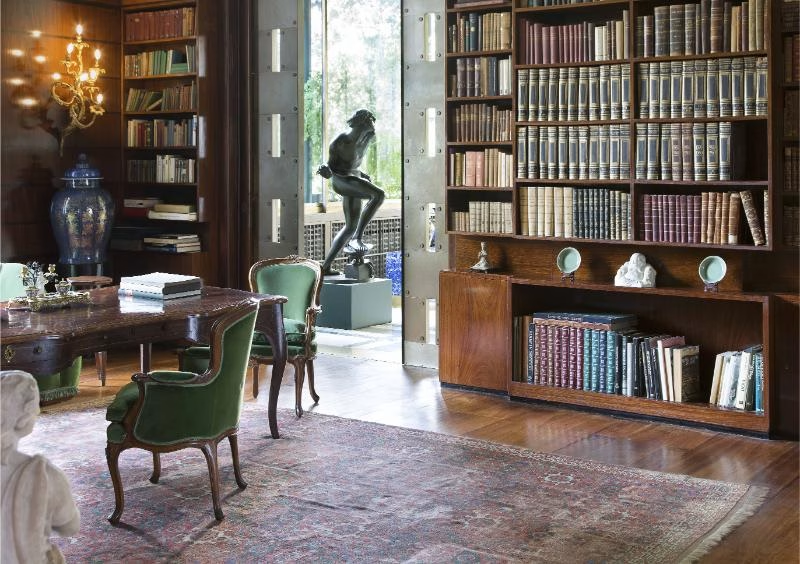
The library: wood, books, and daylight — a room that still reads as a lived-in interior, not a staged display. Photo credit: Piano terreno-BIBLIOTECA-07_Foto arenaimmagini.it, 2021 © FAI.jpg
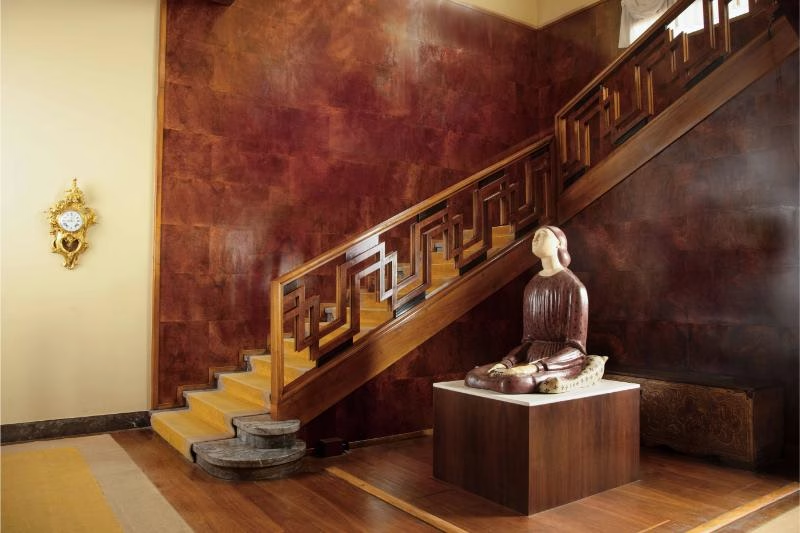
The staircase turns structure into a pattern — a rationalist gesture made tactile through timber, stone, and rhythm. Photo credit: 2175_Foto Lorenzo Pesce, 2023 © FAI.jpg
What surprises many visitors is just how technologically advanced the house was for 1935. Villa Necchi Campiglio operated like a machine for living — precise, efficient, and built for comfort as much as for aesthetics.
- Heated swimming pool — the first private one in Milan, designed as a visual focal point from the main rooms
- Tennis court — a statement of modern leisure, integrated into the garden life of the house
- Lifts, intercoms, and dumbwaiters — practical, discreet systems that kept everything running smoothly
- Underfloor heating — an early commitment to comfort and climate control
- Hidden vault doors — security elements concealed behind wood panelling and boiserie
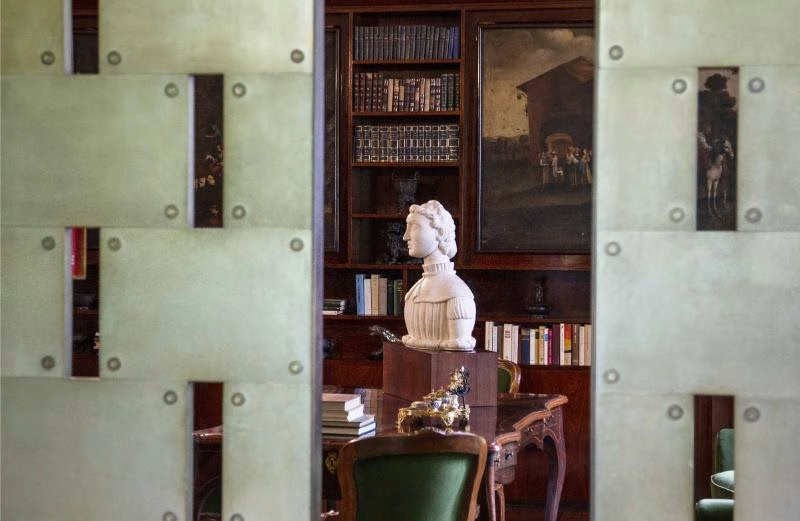
A glimpse through one of the villa’s discreet security elements — modern protection designed to disappear into the house. Photo credit: PMF-1214_Foto Barbara Verduci, 2021 © FAI.jpg
A house designed for living — and for hosting Milanese society
This was not a “show villa”. It was a working home, designed with an almost theatrical clarity of roles.
Reception rooms on the ground floor; private family apartments on the first floor; staff quarters in the attic; kitchens and service areas below. The result is a house that reveals its era in the most honest way: through circulation, hierarchy, and the choreography of hospitality.
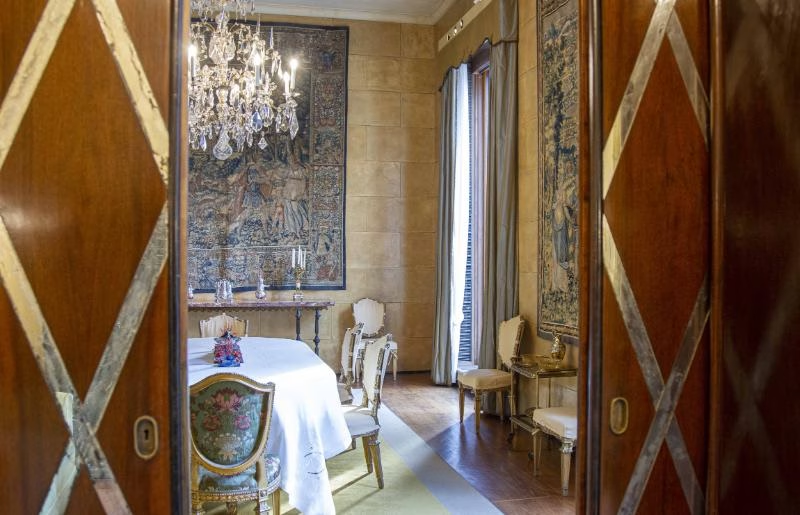
A formal dining room framed by geometric doors — the villa as a precise machine for hospitality. Photo credit: 8199_Foto Barbara Verduci, 2021 © FAI.jpg
There are hidden staircases and service routes that allowed staff to move through the building without disturbing guests, plus a small lift that carried dishes directly from the kitchens to the dining room.
It’s a fascinating insight into how upper-bourgeois Milan worked — not as an idea, but as a daily system.
The villa hosted the best of Milanese society and culture, and even welcomed the Savoy family.
One bedroom is traditionally known as the “Prince’s Room”, reserved for Umberto of Savoy during his visits.
The Buzzi interiors — when modernism softened into classic elegance
By the 1950s, the owners began to find Portaluppi’s rationalist clarity a little too cool for their evolving taste.
They brought in Tomaso Buzzi, who “warmed” the interiors with eighteenth-century references: richer decoration, antique furnishings, mirrors, textiles — a more classical sense of domestic comfort.
The result today is one of the villa’s most interesting qualities: a dialogue between crisp architectural modernity and a more traditional, layered interior world. It shouldn’t work on paper — but in person it feels surprisingly harmonious, and wonderfully Milanese in its ability to combine eras without forcing a single narrative.
Why it feels different from a museum — and more like a real home
The villa’s “miracle” is not just its design — it’s its survival. The Necchi Campiglio family had no children.
When the last of the household, Gigina Necchi, died in 2001 (aged 100), the villa was not sold, stripped, or converted.
It was left to the FAI (Fondo per l’Ambiente Italiano) so it could remain a public asset.
That decision preserved something rare: a house that still feels inhabited. Objects remain where you expect them to be.
Wardrobes still hold clothes. Bathrooms retain original details and everyday items. It’s less a “period display” and more a living document — the sensation is that the owners have simply stepped out for a moment.
The library: wood, books, and daylight — a room that still reads as a lived-in interior, not a staged display. Photo credit: Piano terreno-BIBLIOTECA-07_Foto arenaimmagini.it, 2021 © FAI.jpg
Art collections, design details, and a touch of cinema
After opening to the public, the villa also became a discreet cultural space, enriched with significant donated collections — including important Italian twentieth-century works (Sironi, Carrà, De Chirico, Morandi, Martini) and refined eighteenth-century pieces, including Venetian paintings and ceramics. It’s an added layer for anyone who enjoys moving between architecture, interiors, and art without changing location.
You may also recognise the villa from film: it was the primary setting for Luca Guadagnino’s Io sono l’amore (2009), and its aesthetic has echoed through other productions, including scenes associated with House of Gucci.
Once you’ve visited, you’ll understand why — the geometry, the light, the pool, the silence: it’s inherently cinematic.
Why architects — and lovers of beautiful things — should make time for Villa Necchi
Villa Necchi Campiglio is not an obvious Milan visit — which is exactly its appeal.
It’s for travellers who appreciate the quiet intelligence of a well-made space: how a corridor frames light, how stone changes tone during the day, how walnut and marble can feel both modern and intimate.
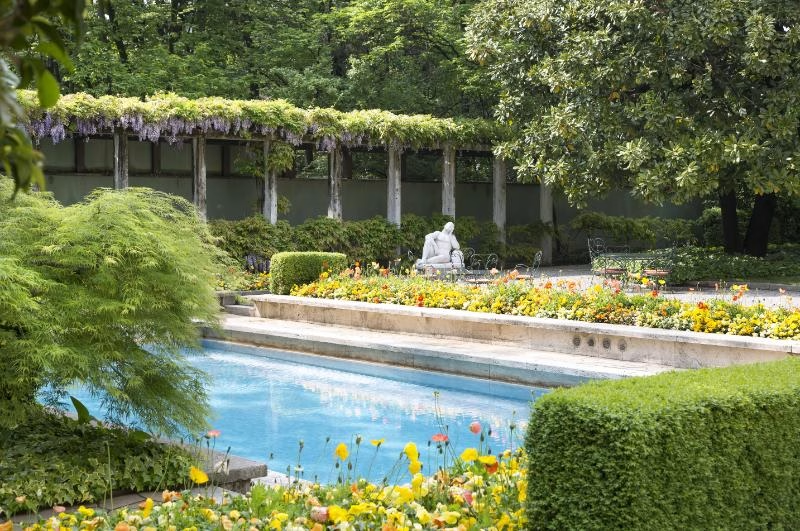
A garden that behaves like an outdoor room — pergola shade, water, and planting designed for unhurried city living. Photo credit: 7147_Foto arenaimmagini.it, 2022 © FAI.jpg
If you’re building a Milan programme with depth — not just the headline sights — this is one of the best places in the city to slow down.
It offers something increasingly rare: a refined private world, preserved without performance, where design and daily life still speak to each other.
Practical visiting notes — tickets, timings, and how to plan
- Where: Via Mozart, in Milan’s Quadrilatero del Silenzio
- How long to allow: 1.5–2 hours (longer if you’re detail-minded)
- Best paired with: a walk through Porta Venezia’s elegant streets or an unhurried coffee nearby before returning to the city’s pace
- Tickets & opening times: check the FAI website for the most up-to-date schedule and entry options
Practical note
Villa Necchi Campiglio often uses timed entry. If you’d like to lock in a specific slot (especially at weekends), you can check live availability and tickets online.
Affiliate link: you’ll pay the same price, and it helps support our independent guides.
You’re in good hands
Clients often mention what matters most — care, precision, and the sense of travelling with someone who knows the way.
STAY CONNECTED WITH US (it’s free!)
Unlock insider tips on Italy’s hidden gems, free every month!
👍 Follow us on Facebook – Stay inspired with daily updates, travel ideas, and a community of fellow Italy lovers.

📲 Join our WhatsApp channel 🟢 – Get instant updates, behind-the-scenes insights, and connect directly with our team.

We’ll always treat your details with the utmost care and will never sell them to other companies. See our privacy policy
Package holidays are sold by ExpertoItaly Ltd (Reg. 12035194)
Call us on +44 (0) 77 3838 5790
Registered office: 33 Miles Close, London, SE28 0NJ

Business Hours
Monday – Thursday 9am to 6pm
Friday 9am to 5:30pm
Saturday – please send us an enquiry form
Sunday – please send us an enquiry form