Ascoli Piceno suits travellers who already know Italy’s headline cities and are looking for somewhere elegant, walkable and genuinely lived-in — with enough depth for several days, and easy access to hill towns and mountains beyond. It’s not about ticking sights; it’s about settling into a place that still works as a real town.


In this guide you’ll find what to see, how long to stay (spoiler: 4–5 nights), and how to add Offida and the Sibillini without rushing.
Ascoli’s History in Brief
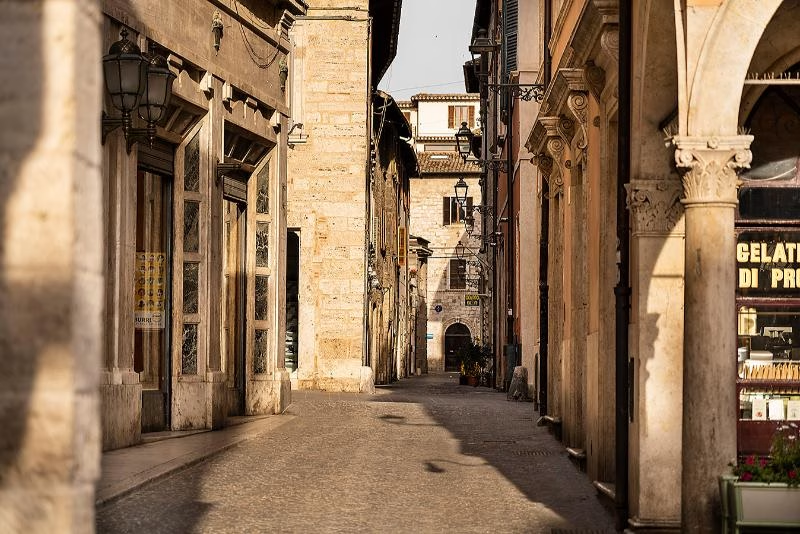
A side street in Ascoli’s historic centre — that soft, coherent travertine palette in action.
Part of Ascoli’s charm is that it doesn’t feel curated for visitors. It feels like a place that has simply kept going — improving itself over centuries without losing its core rhythm.
Ascoli Piceno in plain English
Ascoli grew in a strategic position where waterways meet and routes naturally converge, linking the Adriatic side of Italy to the Apennines. That location kept the settlement relevant over time: it was a place worth organising, defending, governing, and improving.
Rather than being “one era”, Ascoli is layered. Older infrastructure and street patterns sit beneath later civic spaces, and medieval power is still readable in the city’s fortifications and public buildings. Later centuries refined the city’s squares and façades into the elegant, composed centre you experience today. The result is a town that feels continuously used — not preserved — and that is precisely why it still feels authentic.
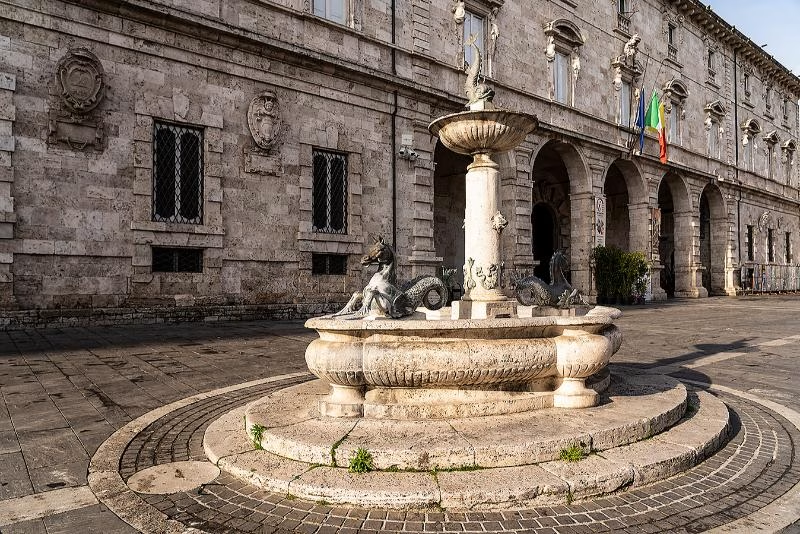
Travertine gives Ascoli its rare sense of visual coherence — calm, even when it’s busy.
Why Travertine Matters
Ascoli is often described as a city of travertine, and here it genuinely matters. The stone gives the historic centre a rare visual coherence — as if the whole city is speaking one architectural language, from grand façades to small details underfoot.
What is travertine (travertino)?
Travertine (Italian: travertino) is a natural limestone formed when mineral-rich water deposits calcium carbonate over time — often around springs and river systems. It is strong, workable, and ages beautifully, which is why it has been used in Italian architecture for centuries.
Why it matters in Ascoli: because so much of the historic centre is built in travertine, the city has a rare visual coherence. Streets and façades feel part of one palette, and the stone reflects light softly, giving the city a calm, composed elegance even when it’s busy.
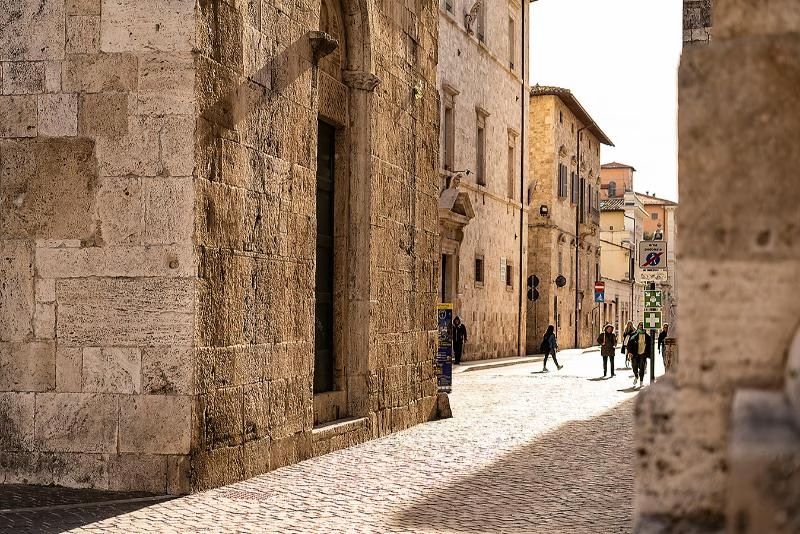
In Ascoli, even the ‘in-between’ streets feel architectural.
What to See in Ascoli

Ascoli’s porticoes: shade, rhythm, and that quietly dignified stonework.
Ascoli works best when you let the city lead. It is compact, walkable, and designed around public space — which means the “in-between” moments (porticoes, side streets, small squares) are part of the experience, not just the route between monuments.
Piazza del Popolo: a square that still behaves like a square
Start at Piazza del Popolo. It’s often called one of Italy’s finest squares, but the real point is that it’s not a photo set. It’s a working “salotto”: people meet here, pause here, and treat the square as an extension of daily life. The Palazzo dei Capitani del Popolo anchors the civic side of the square, while the Church of San Francesco adds a sober grandeur. Together they tell you something important about Ascoli: this is a city shaped by public life — governance, ritual, and community — not just aesthetics.
Caffè Meletti: the simplest ritual that explains the city
Do one thing properly: sit at Caffè Meletti. This Liberty-style institution has become a symbol not because it’s famous, but because it matches Ascoli’s tone — elegant, unhurried, and quietly sociable. An espresso or aperitivo here is a practical way to understand how the city moves.
Piazza Arringo: Ascoli’s older, more solemn heart
From Piazza del Popolo, it’s an easy walk to Piazza Arringo, where the city’s civic and religious identity sits close together. The Cathedral of Sant’Emidio is the anchor, but what stays with you is the feeling of continuity — a city whose public spaces have been used for centuries and still feel purposeful.
Battistero di San Giovanni: early layers, clean lines
The Battistero di San Giovanni is a good contrast to Ascoli’s more decorative moments: a simpler, earlier structure that reads as austere and architectural. It’s a short visit, but it adds depth — a reminder that Ascoli’s timeline is longer than its most visible façades.
Pinacoteca Civica: an hour of slow looking
If you enjoy painting and prefer museums that don’t feel like endurance tests, the Pinacoteca Civica is a good fit. It’s the kind of collection you can visit without racing, then step back into the city and continue your day without “museum fatigue”.
Ponte Romano di Solestà: Roman Ascoli in one clean moment
For a quick, high-impact history moment, go to the Roman Bridge of Solestà. It is refreshingly direct: the engineering is the explanation. Even if you only spend ten minutes there, you leave with the sense of a city that has long been organised and important.
Forte Malatesta: the tougher edge of the story
Forte Malatesta adds a more defensive, strategic flavour to a city often defined by elegance. It’s a useful counterweight: a reminder that Italian beauty is rarely gentle — it’s often built alongside control, power, and the practical needs of a fortified town.
When to visit: Quintana versus quieter Ascoli
If you enjoy tradition at full volume, time your stay with the Torneo Cavalleresco della Quintana, when the city fills with processions, costumes, ritual, and competitive spirit. It’s a civic event with real local ownership, not a staged performance.
If you prefer Ascoli at its most composed, visit outside festival dates. You’ll get the same architecture and atmosphere with more space to breathe — and more time to claim the city as your own.
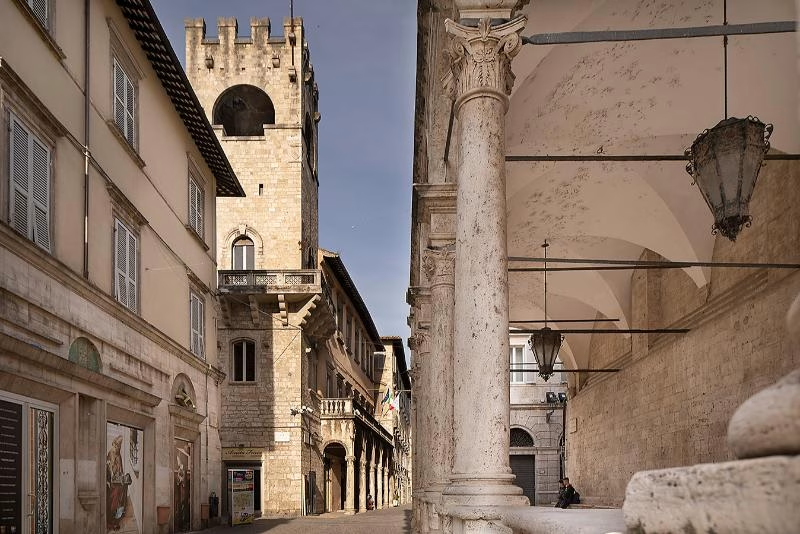
A city of towers and arcades — medieval power, still legible in the streetscape.
Where ExpertoItaly suggests staying in Ascoli
If this kind of Italy appeals, Palazzo dei Mercanti is one of the few places that truly fits Ascoli’s character.
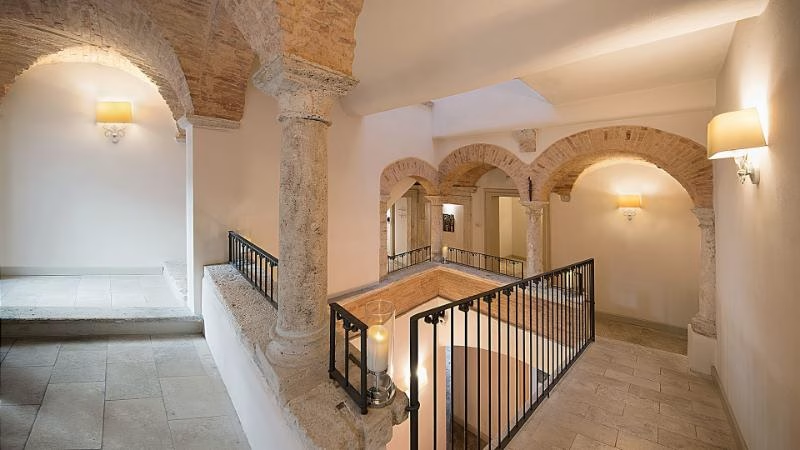
Inside Palazzo dei Mercanti: travertine arches and quiet spaces that echo Ascoli’s historic rhythm.
Day Trips: Offida & the Sibillini
The strongest way to sell Ascoli is not to treat nearby places as “extras”, but as part of Ascoli’s natural radius — the elements that turn a city break into a layered stay without changing bases.
Offida: village texture, craft, and a different scale
Offida is the day trip that adds texture rather than distance. Set on a rocky spur between valleys, it feels immediately distinct: smaller, tighter, and more intimate than Ascoli — yet perfectly aligned with the same off-the-beaten-track appeal.
Walk the centre slowly, then make time for Santa Maria della Rocca, dramatically positioned at the margins of the town. Offida’s most persuasive detail, though, is human: the tradition of merletto a tombolo (bobbin lace). It gives the place a lived identity beyond “pretty views”.
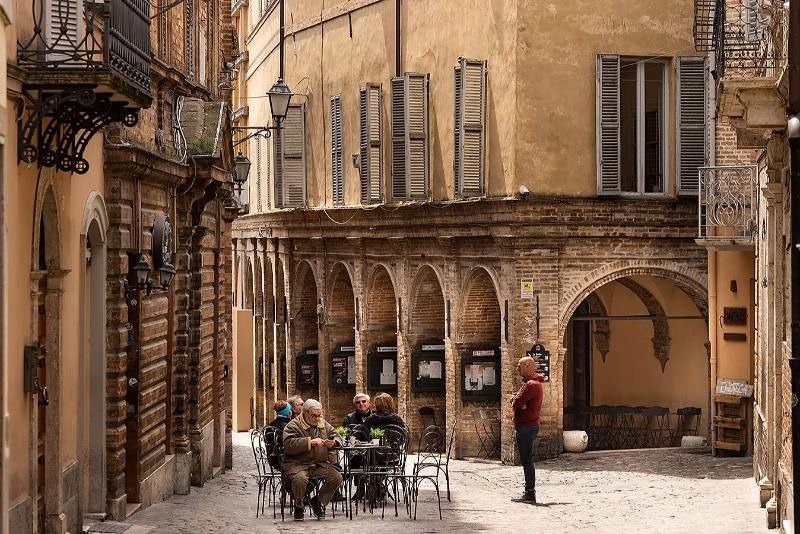
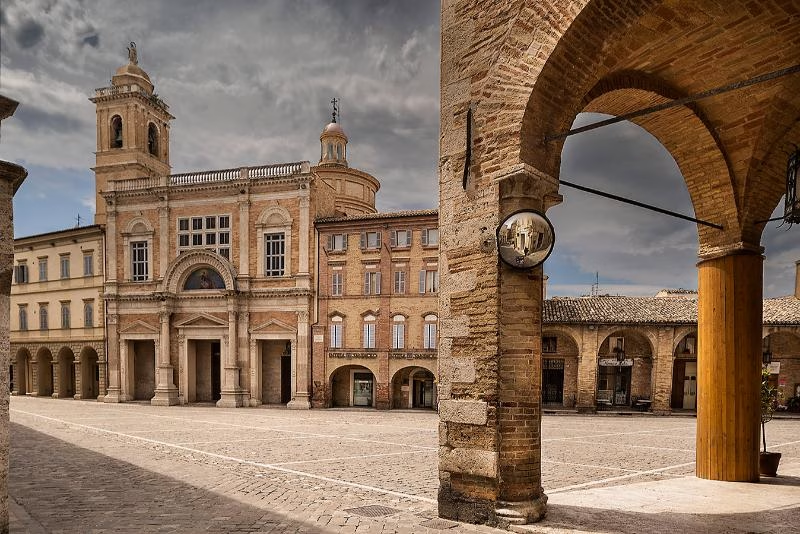
Offida: a compact, lived-in hill town where arcaded squares and everyday rituals make an ideal day trip from Ascoli.
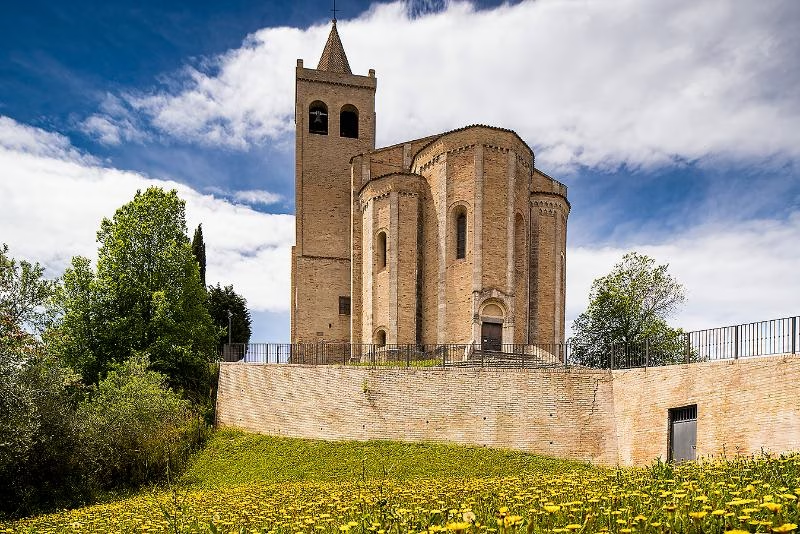
Santa Maria della Rocca, Offida’s quietly powerful Romanesque church, standing apart from the village with calm authority.
Monti Sibillini: big scenery, clean air, and a reset day
The Monti Sibillini are Ascoli’s other advantage: landscape. In under an hour by car, you can shift from civic squares to wide valleys and ridgelines. This doesn’t need to be an extreme hiking day. The real win is the change of scale — viewpoints, fresh air, and a gentle walk that makes your final evening back in Ascoli feel even better.
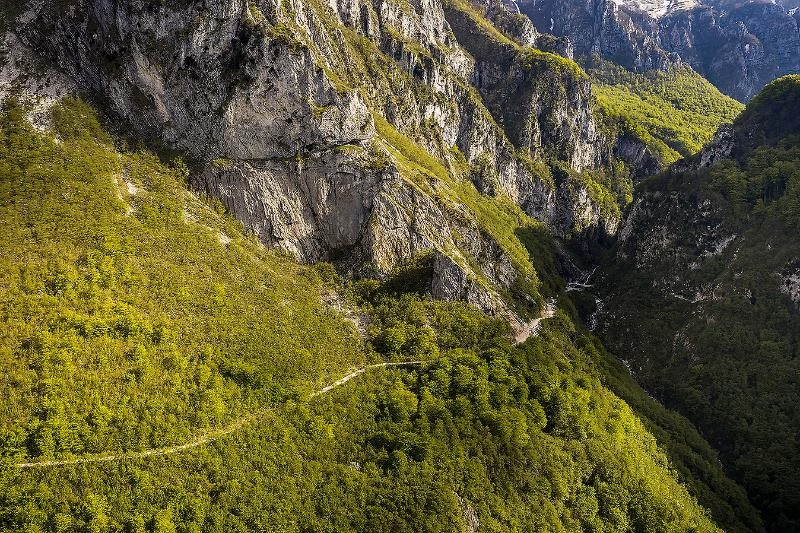

The Sibillini are close enough for a day of mountain air from Ascoli — big landscapes, quiet trails, and a genuine sense of the Apennines.
Car-Free or Self-Drive?
Car-free travellers will appreciate that Ascoli’s historic centre is compact, coherent, and made for wandering. Your best days here are built around walking, pausing, and letting the city’s public spaces do their work.
Self-drive travellers get an additional advantage: Ascoli becomes a cultured stop with a ready-made radius. You can enjoy the city properly and still reach Offida or the Sibillini without long transfers or awkward detours.
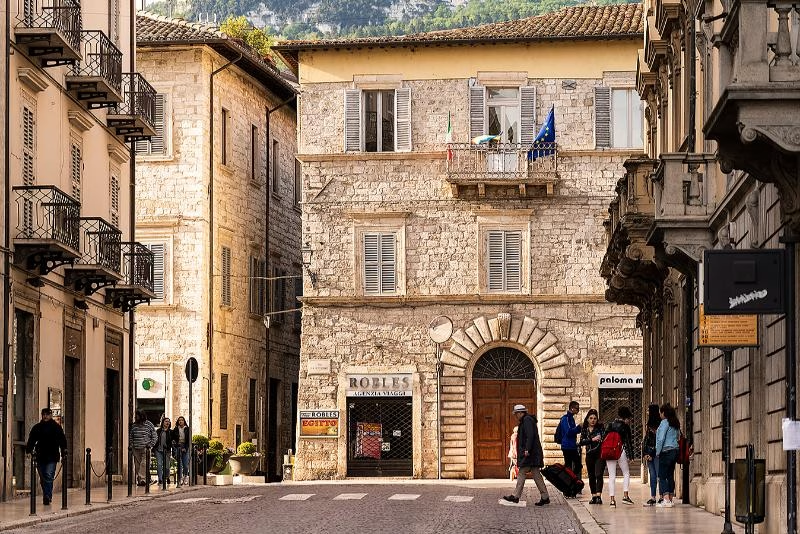
Ascoli feels lived-in — not staged — and that’s exactly the point.
A car-free line-up of art cities and sea air
If you’re drawn to the idea of Italy by rail — cultured days, local food, and a touch of sea air — ExpertoItaly can stitch together a car-free itinerary linking Bologna, Ravenna, Pesaro and Ascoli: four very different places, one easy travel logic, and a refreshingly non-obvious take on northern/central Italy.
How Long to Stay
Plan for 4–5 days (4–5 nights) in Ascoli Piceno. That gives you 3–4 full days to enjoy the historic centre properly and add one or two easy day trips such as Offida and the Monti Sibillini.
- 2 days (3 nights): A quick taste — enough for Piazza del Popolo, Piazza Arringo, and the main sights, but little breathing space.
- 3 days (4 nights): The best “city break” pace — Ascoli in depth plus one day trip (Offida or the Sibillini).
- 4 days (5 nights): The ideal slow-travel stay — Ascoli unhurried plus both Offida and a Sibillini scenery day.
Simple rule: if you want Ascoli + Offida + the Sibillini without rushing, choose 5 nights.
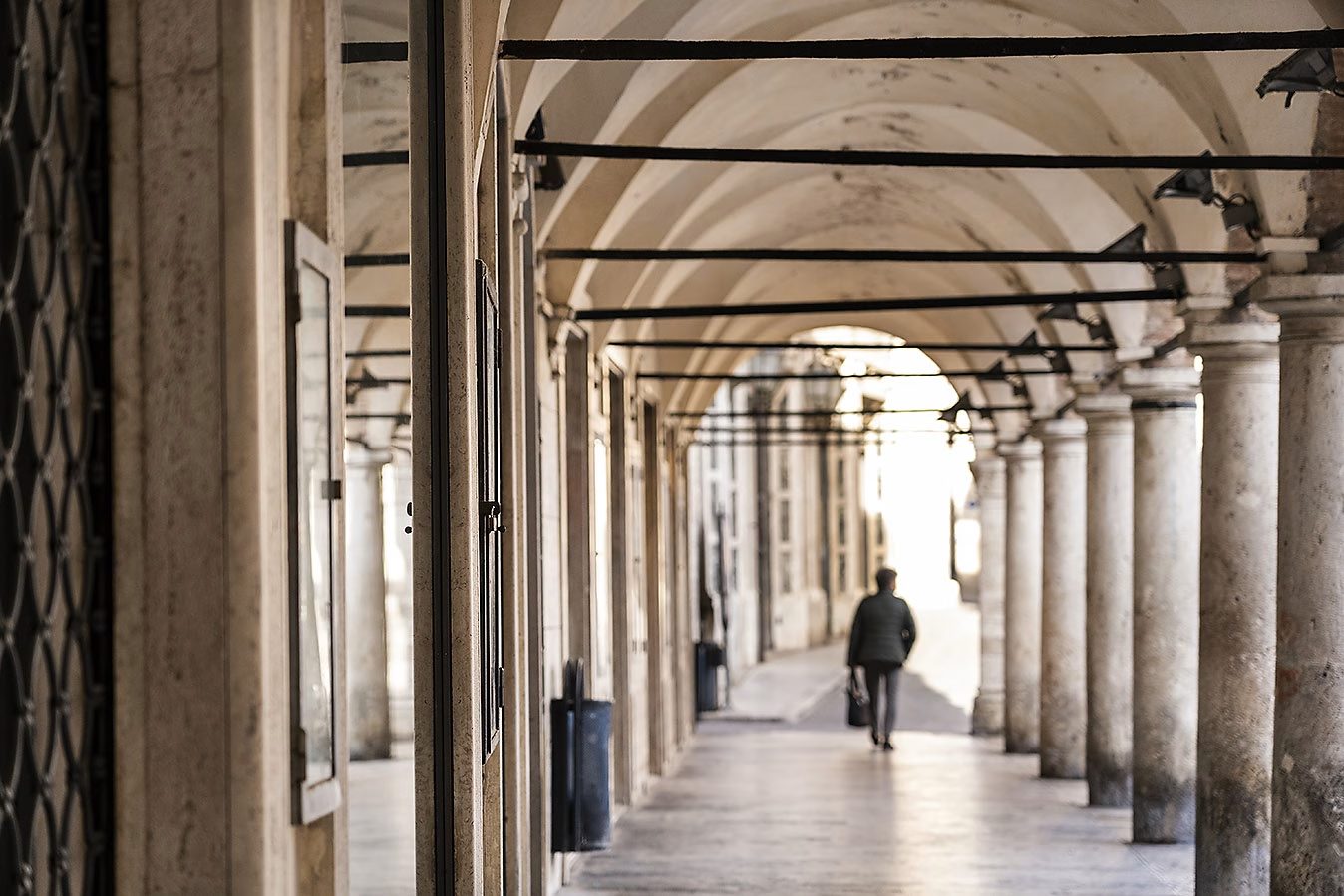
The pace of Ascoli: long arcades, soft light, and space to wander without a plan.
Why Ascoli convinces selective travellers
Ascoli Piceno delivers a rare combination: beauty, authenticity, and ease. It’s cultured without being performative, historic without being heavy, and calm without being sleepy. With Offida and the Sibillini within easy reach, a 4–5 night stay becomes intelligently layered: city life, village texture, and mountain scale — all from one elegant base.
If Ascoli fits how you like to travel, we can build it into a wider, quietly brilliant Italian itinerary.
You’re in good hands
Clients often mention what matters most — care, precision, and the sense of travelling with someone who knows the way.
STAY CONNECTED WITH US (it’s free!)
Unlock insider tips on Italy’s hidden gems, free every month!
👍 Follow us on Facebook – Stay inspired with daily updates, travel ideas, and a community of fellow Italy lovers.

📲 Join our WhatsApp channel 🟢 – Get instant updates, behind-the-scenes insights, and connect directly with our team.

We’ll always treat your details with the utmost care and will never sell them to other companies. See our privacy policy
Package holidays are sold by ExpertoItaly Ltd (Reg. 12035194)
Call us on +44 (0) 77 3838 5790
Registered office: 33 Miles Close, London, SE28 0NJ

Business Hours
Monday – Thursday 9am to 6pm
Friday 9am to 5:30pm
Saturday – please send us an enquiry form
Sunday – please send us an enquiry form