Not all beauty in the Cilento faces the sea.


Where silence tells its own story
Beyond the olive groves and mountain passes lies another landscape — one of monasteries, meadows, and medieval hill towns.
Here, history speaks softly, through carved stone, church bells, and the scent of wild herbs drifting through the valleys.
Three places capture this quieter spirit of the Cilento:
the Certosa di Padula, one of Europe’s greatest Carthusian monasteries;
the nearby Valle delle Orchidee in Sassano, a natural sanctuary of springtime bloom;
and the hilltop town of Teggiano, where faith and folklore have shared the same streets for a thousand years.

The Certosa di Padula, founded in 1306, is the spiritual heart of inland Cilento — a vast Carthusian monastery of cloisters, gardens, and marble silence set against the mountains.
🏛️ Certosa di Padula — The Carthusian Masterpiece
The Certosa di San Lorenzo, better known as the Certosa di Padula, is the largest monastery in southern Italy and one of the most majestic in Europe.
Founded in 1306 by Tommaso Sanseverino, Prince of Salerno, it housed the Carthusian order — monks who lived in silence, solitude, and devotion.
Everything about the complex reflects that philosophy.
From the outside, it’s austere; inside, it unfolds like a meditation in marble: wide cloisters, quiet courtyards, and a sense of symmetry that feels almost musical.
Its Great Cloister, completed in the seventeenth century, spans over 12,000 square metres — one of the largest in the world — encircled by graceful arcades and a central garden once used for reflection.
From here, a grand staircase of white marble ascends to the monks’ cells, each with a private garden for prayer and cultivation.
Below, the lay brothers’ workshops once buzzed with practical life — carpentry, weaving, and olive pressing.
The Charterhouse was a complete world, guided by balance: labour and silence, structure and serenity.
A treasure of art and endurance
Over the centuries, the Certosa became a masterpiece of Baroque craftsmanship.
Frescoes adorn its chapels; carved wood and gilded altars gleam in the half-light.
The library, once a beacon of learning, still preserves thousands of volumes — an echo of the Carthusians’ quiet scholarship.
Even after the monks departed — first during Napoleon’s suppression, then permanently in the nineteenth century — the building retained its power.
Now a UNESCO World Heritage Site, it stands as both architectural marvel and spiritual metaphor: a reminder that discipline can create beauty.
Walking through its cloisters, you don’t just see the past — you feel it breathing.
The monastery in modern life
Today, the Certosa di Padula is far from static.
Its spaces host art exhibitions, classical concerts, and summer events linking faith with creativity.
Every August, the Notte Certosina transforms the monastery into a candlelit stage — visitors wander by torchlight to the sound of monks’ chants, blending devotion and theatre under a starry sky.
🕍 Certosa di Padula — Practical Information
Opening days and hours
The Charterhouse is open Wednesday to Monday from 09:00 to 19:30 (last admission 18:45). It is closed on Tuesdays, except during some high-season periods. Always check for temporary closures before travelling.
Ticket prices
General admission: €6 (full) | €2 (reduced 18–24 yrs).
Children under 18 enter free.
A combined ticket for the Casa Alta and Casa Bassa areas costs €8 / €4.
Tickets are purchased on site; no reservation required for individual entry.
Getting there
By car: exit the A2 motorway at Padula/Buonabitacolo and follow the signs for “Certosa”.
There is a large free car park suitable for cars and coaches near the entrance.
By public transport: from Salerno, take Curcio or Lamanna bus services; in summer, the Sunday Certosa Link connects Salerno directly to Padula.
Accessibility
The site provides reserved parking and ramp access for visitors with reduced mobility. Some internal stairways remain, but most courtyards and exhibition areas are accessible.
Guided visits
Guided tours are offered by licensed local guides and must be booked in advance through the monument or ExpertoItaly. Standard admission does not require pre-booking.
Suggested visiting time
Allow two to three hours to explore the main cloisters, church, and museum rooms, or a half day if combined with Padula village or the Valle delle Orchidee.
Official information: certosadipadula.org
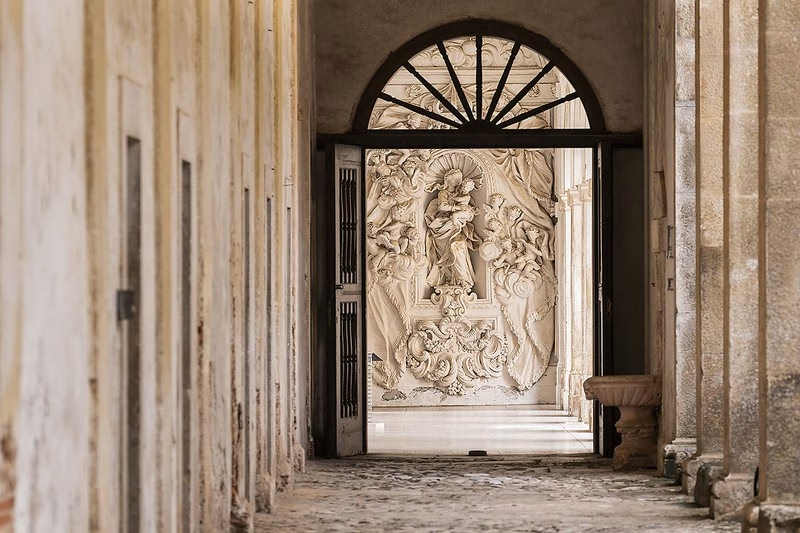
Within the Certosa di Padula, even silence feels sculpted — Baroque marble angels rise from shadow, revealing faith expressed through mastery of form and light.
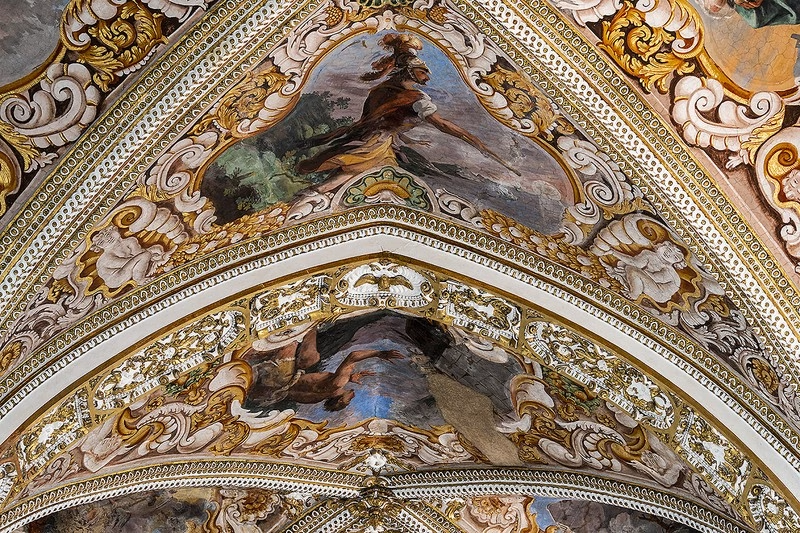
The frescoed vaults of the Certosa di Padula shimmer with gold and myth — each panel a dialogue between heaven and human artistry, where devotion meets imagination.
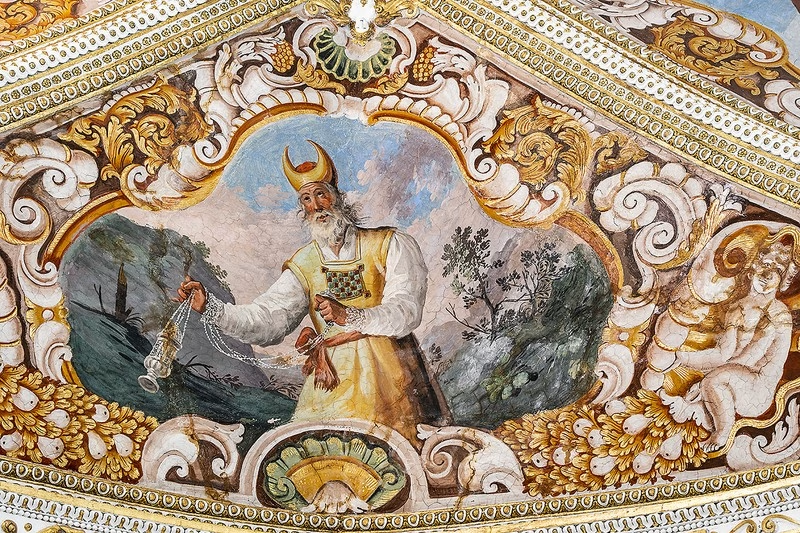
A bishop swings his censer across the painted heavens of the Certosa di Padula — a fresco that captures the union of devotion, artistry, and the eternal rhythm of prayer.
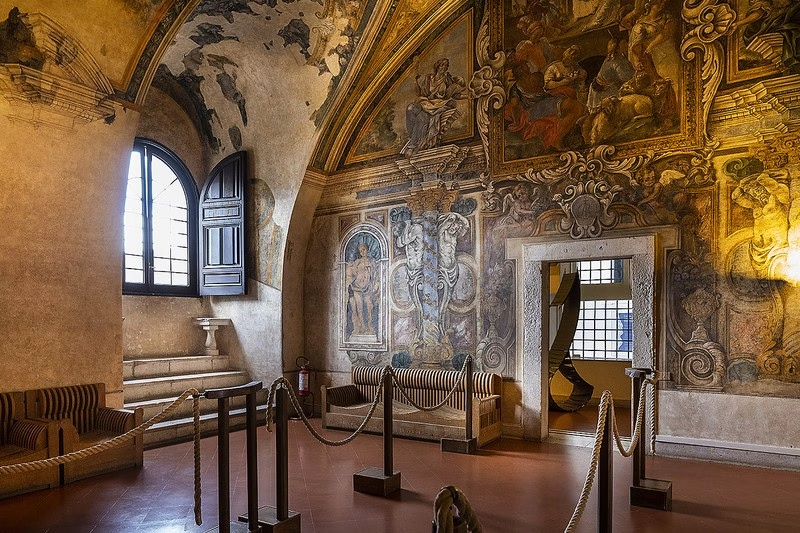
Light and fresco meet in harmony inside the Certosa di Padula — where art, architecture, and stillness form the soul of monastic life.

The carved choir and marble altar of the Certosa di Padula reflect centuries of devotion — where sculptors, painters, and monks worked together to create divine harmony in stone.
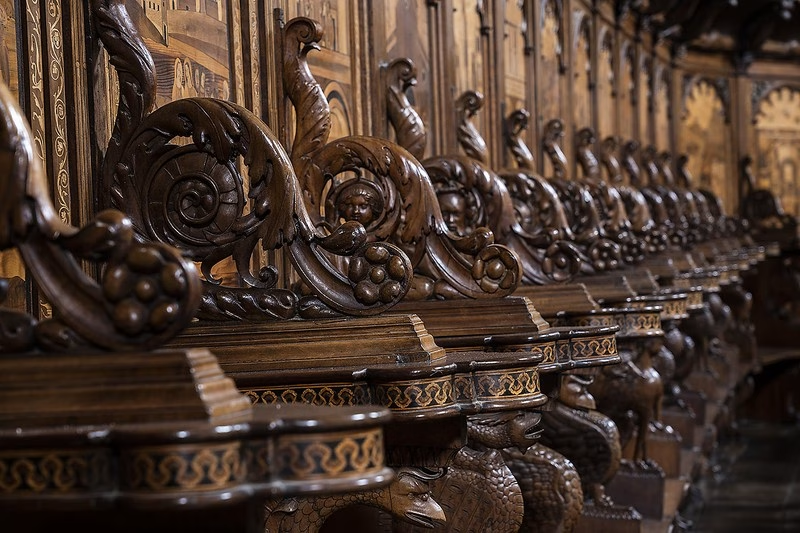
The carved choir and marble altar of the Certosa di Padula reflect centuries of devotion — where sculptors, painters, and monks worked together to create divine harmony in stone.
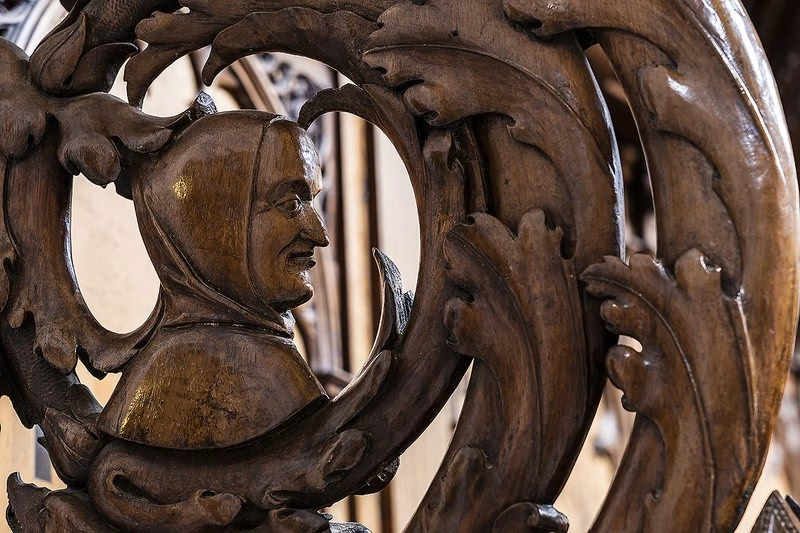
A carved monk peers through oak leaves in the Certosa di Padula’s choir stalls — a reminder that devotion can take the shape of human hands and humble wood.
Why include this stop in your Cilento holiday?
Padula gives you silence and scale. Sassano gives you spring colour. Teggiano gives you medieval street life and proper food culture.
Together, they balance the coast.
Padula gives you silence and scale. Sassano gives you spring colour. Teggiano gives you medieval street life and proper food culture.
Together, they balance the coast.
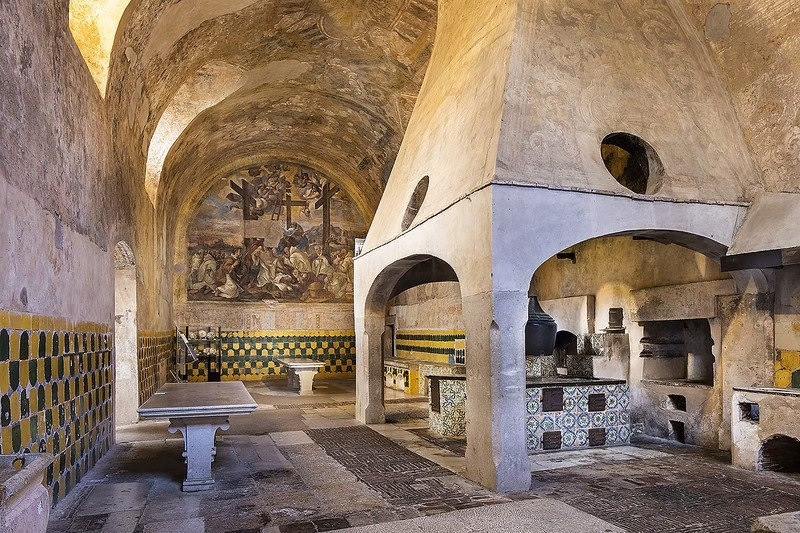
The kitchen of the Certosa di Padula tells stories of silence, service, and shared meals — its frescoes and tiled hearths preserving the daily rhythm of monastic life.
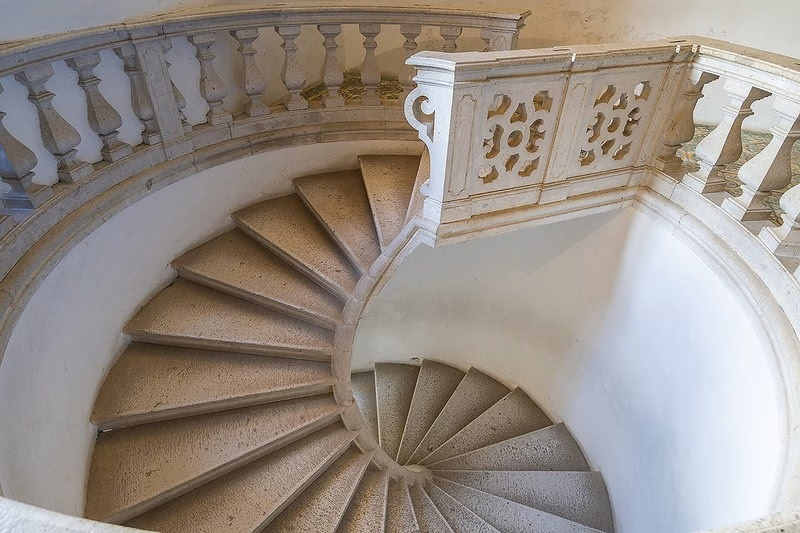
A perfect spiral of stone within the Certosa di Padula — each step a quiet descent into the discipline and grace of monastic life.
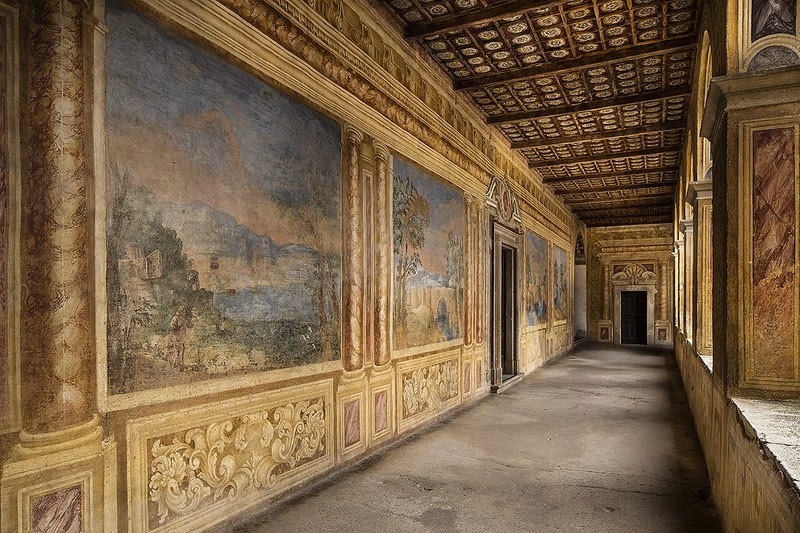
Along the frescoed corridors of the Certosa di Padula, painted landscapes open windows onto imagined worlds — a dialogue between silence and splendour.
🌸 Valle delle Orchidee — The Valley of Wild Orchids
A few kilometres away, near Sassano, nature stages its own act of reverence.
The Valle delle Orchidee — the Valley of Orchids — is one of Europe’s richest reserves for wild orchid species.
Each year, between April and May, more than 180 varieties bloom across the meadows of Monte Cervati and Monte Panesco, transforming the slopes into a living tapestry of pink, violet, and gold.
The valley lies within the Cilento, Vallo di Diano e Alburni National Park, accessible from Padula or Monte San Giacomo.
Marked trails lead through beech and oak woods, opening onto sunny pastures filled with orchids such as Ophrys, Serapias, and Anacamptis.
Information panels line the route, and during the annual Orchid Festival, local naturalists guide visitors through the bloom — part science, part poetry.
For botanists, photographers, and families, it’s one of the Cilento’s most unexpected joys — a landscape that teaches patience and delight in equal measure.
🌸 Valle delle Orchidee (Sassano) — Practical Information
Best time to visit
The flowering season runs from late April to June, with the beginning of May usually offering the most spectacular bloom. This is when the meadows are at their most colourful.
Trail and how it works
The main route is about 13 km through pastures, open grassland and beech and oak woodland. You can walk independently at your own pace, or join a guided walk on selected Sundays in spring.
Free guided Sundays (2025)
During peak blossom, local naturalists lead free walks every Sunday at 10:00. Typical dates are the last Sunday of April and all Sundays in May. You simply arrive at the Ecomuseum headquarters in Sassano before 10:00 and join the group. Families and small independent travellers are welcome.
Where it is and how to get there
The Valle delle Orchidee lies in the Cilento, Vallo di Diano e Alburni National Park, near Sassano. It’s easiest to reach by car from Padula or Teggiano. Parking is available near the trail start. Sturdy walking shoes are recommended, but the terrain is mostly gentle.
What is the Ecomuseum?
The Ecomuseum of the Valle delle Orchidee is a local project supported by GIROS (the Italian Group for Research on Wild Orchids). They protect the landscape, document over 180 orchid species, lead guided walks, and run small educational activities. Visiting with them directly supports conservation.
How long to allow
A relaxed visit with photo stops takes around 2–3 hours. You can comfortably include the Valle delle Orchidee as a half-day excursion when staying in the inland Cilento (Padula / Teggiano area).
Local information: Valle delle Orchidee, Sassano.
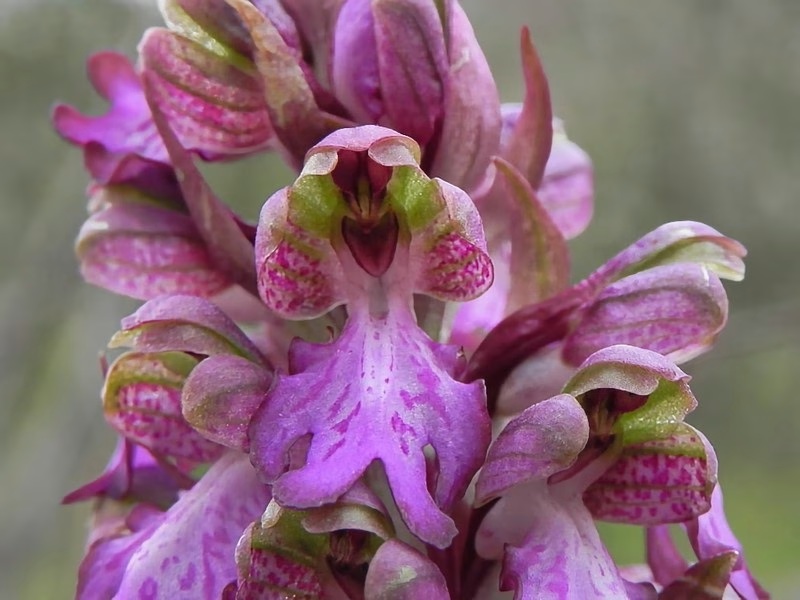
The Barlia robertiana, among the first orchids to bloom in the Valle delle Orchidee di Sassano, turns the Cilento hills into a canvas of soft purples each spring.
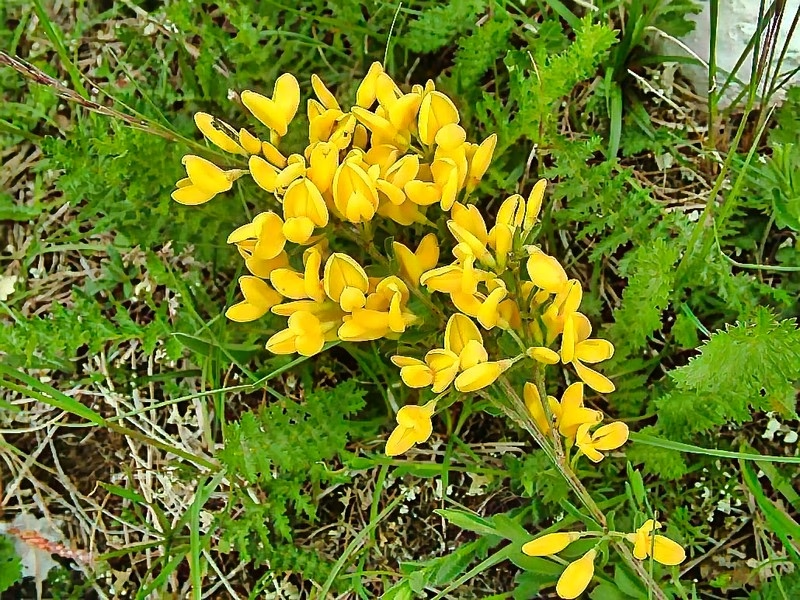
Bright wildflowers like this yellow bloom light up the meadows of Sassano’s Valle delle Orchidee, where every spring step reveals a new hue of Cilento’s living palette.
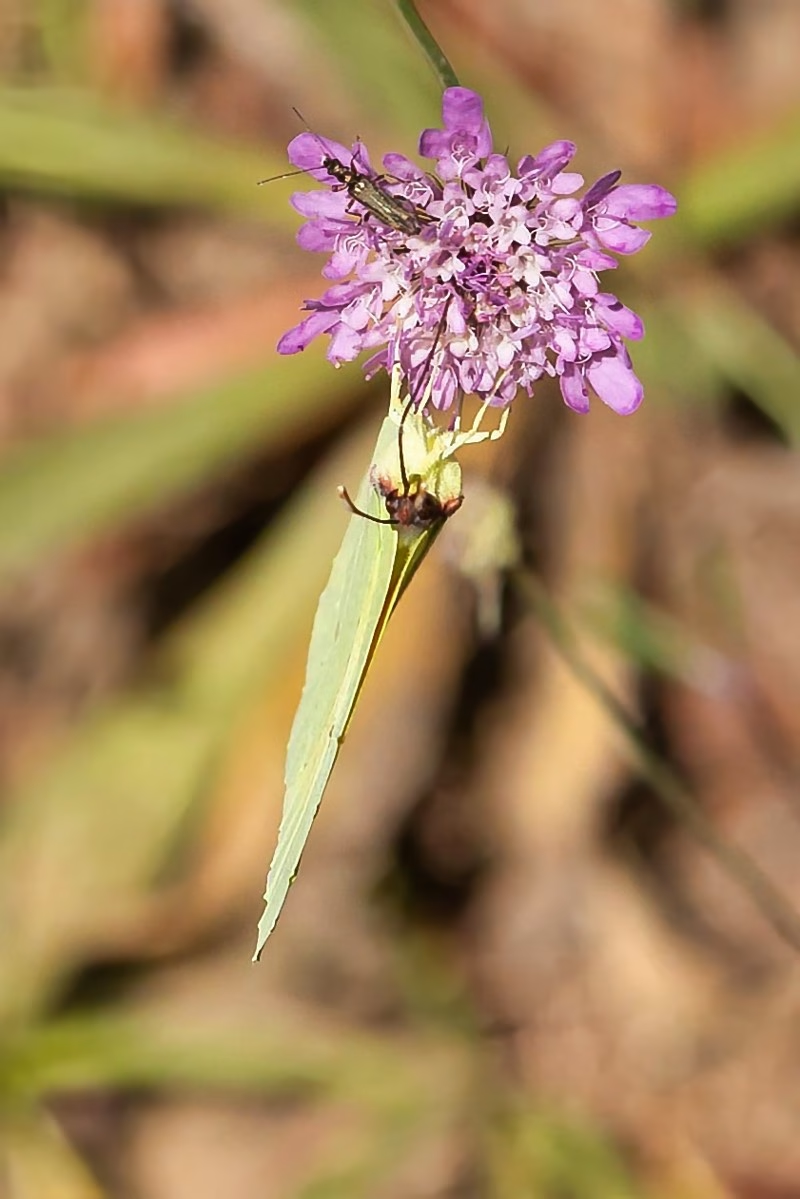
A wild scabiosa in the Valle delle Orchidee — one of the many blooms that colour the Cilento hills each spring.
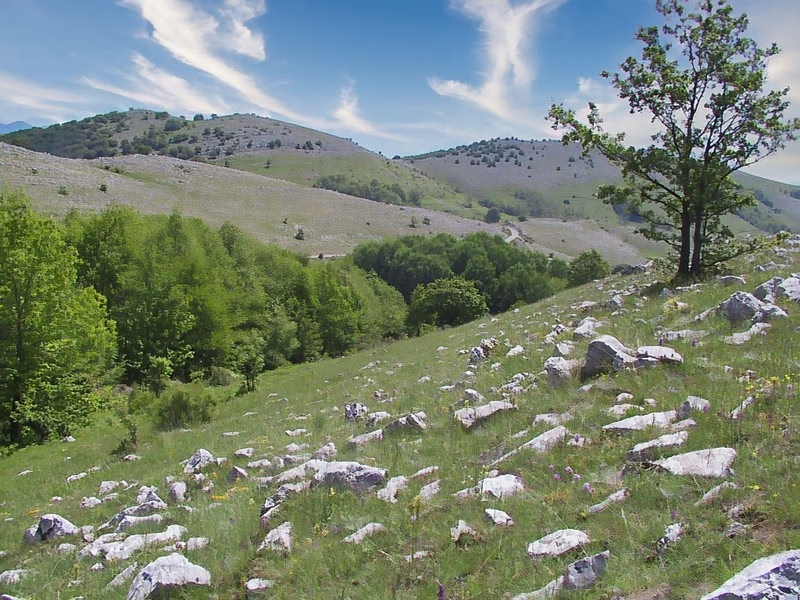
The Valle delle Orchidee unfolds across limestone ridges and meadows where orchids, herbs, and mountain light meet — a wild sanctuary in the heart of Cilento.
🏰 Teggiano — The Walled City of History and Faith
Drive twenty minutes west of Padula and the skyline changes again.
High on a limestone ridge, the medieval town of Teggiano crowns the Vallo di Diano plain — a labyrinth of churches, palaces, and cobbled alleys wrapped in ancient walls.
Once the seat of the Sanseverino princes, Teggiano was both fortress and cultural capital.
Its skyline is dominated by Sanseverino Castle, now home to a small museum, while the town itself holds more than a dozen historic churches, each filled with art from different centuries.
Teggiano’s real magic, however, lies in its sense of continuity.
Every August, the town transforms for the Festa della Principessa Costanza, a three-day historical re-enactment celebrating the marriage of Costanza da Montefeltro and Antonello Sanseverino.
Narrow streets fill with medieval music, processions, and costumed parades; taverns serve local wine and game dishes by candlelight.
It’s history as theatre — joyful, precise, and deeply local.
Visiting Teggiano offers a vivid contrast to the solitude of Padula: here, faith and festivity coexist, proving that the Cilento’s inner life is far from quiet.
🏰 Teggiano — Practical Information
Why visit Teggiano?
Perched above the Vallo di Diano plain, Teggiano is one of southern Italy’s best-preserved medieval hill towns. Inside its ancient walls you’ll find Romanesque churches, quiet piazzas, artisan shops and sweeping views of the valley. It’s a perfect inland stop for travellers exploring the Certosa di Padula or the Valle delle Orchidee.
How to get there
By car: from the A2 motorway take the Teggiano-Polla exit (about 90 minutes from Paestum or Agropoli). Parking is available just outside the medieval gate, with short walks into the centre. Public buses connect from Padula and Sala Consilina.
Main annual festivals
August – “Alla Tavola della Principessa Costanza”
A three-day medieval pageant (mid-August) with processions, music, street banquets and crafts recreating 15th-century life.
November – “Festa delle Castagne e dei Prodotti Tipici”
A chestnut and local produce festival on the first weekend of November, celebrating mountain flavours and autumn traditions.
Holy Week – Religious processions
Traditional Easter processions fill the streets with candlelight and choral chants, offering visitors a glimpse of deep southern devotion.
What to buy
• Artisan olive oil and honey from local farms
• Teggiano’s handmade almond sweets and “pizzicotti” biscuits
• Local wines (Aglianico and Fiano from the Vallo di Diano hills)
• Small ceramics and wooden crafts made in the old town workshops
Suggested visit time
Half a day is enough to wander the walled centre, visit the Museo Diocesano and enjoy lunch at a family trattoria. Stay overnight in August or during festival periods to experience the town at its most alive.
Tourist information: comune.teggiano.sa.it
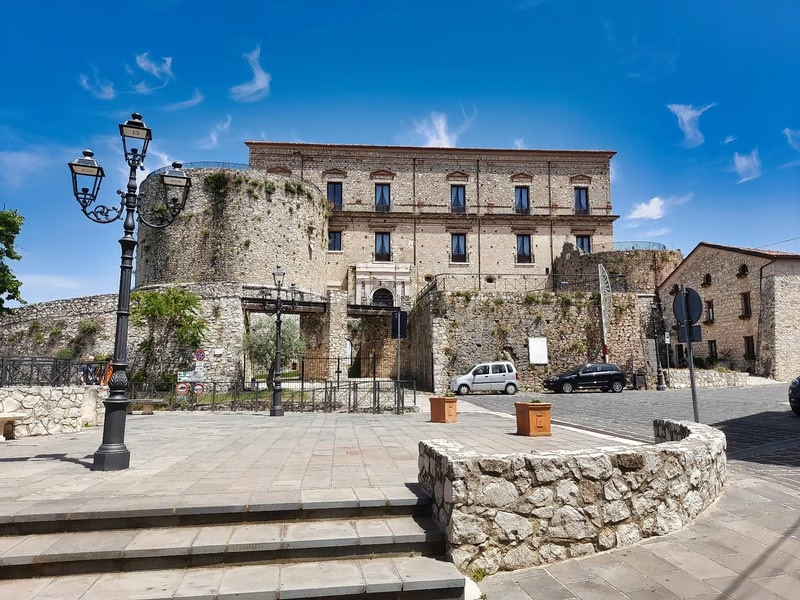
Dominating the medieval heart of Teggiano, the castle once guarded the Vallo di Diano and now stands as a proud symbol of the town’s layered past — from Lombard stronghold to Renaissance residence.
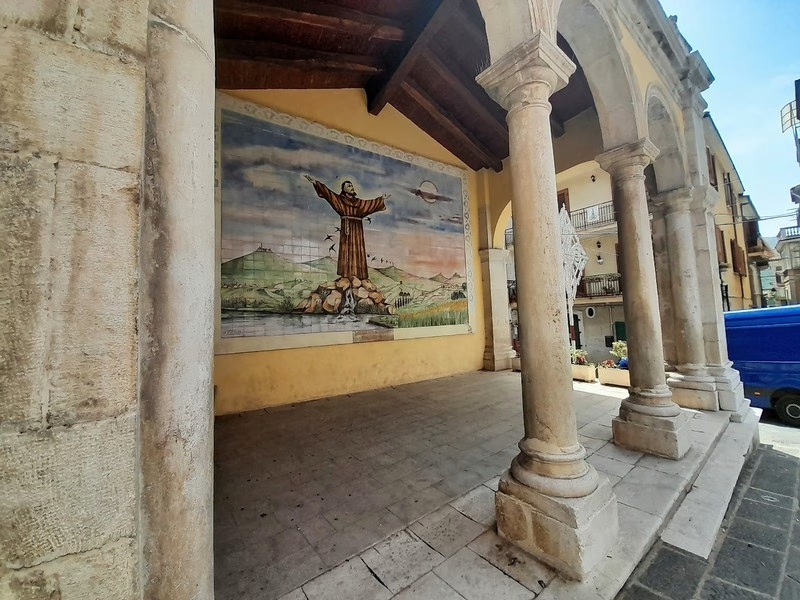
Beneath Teggiano’s stone porticoes, a ceramic mural of Saint Francis greets visitors with open arms — a symbol of the town’s enduring faith and gentle humanity.
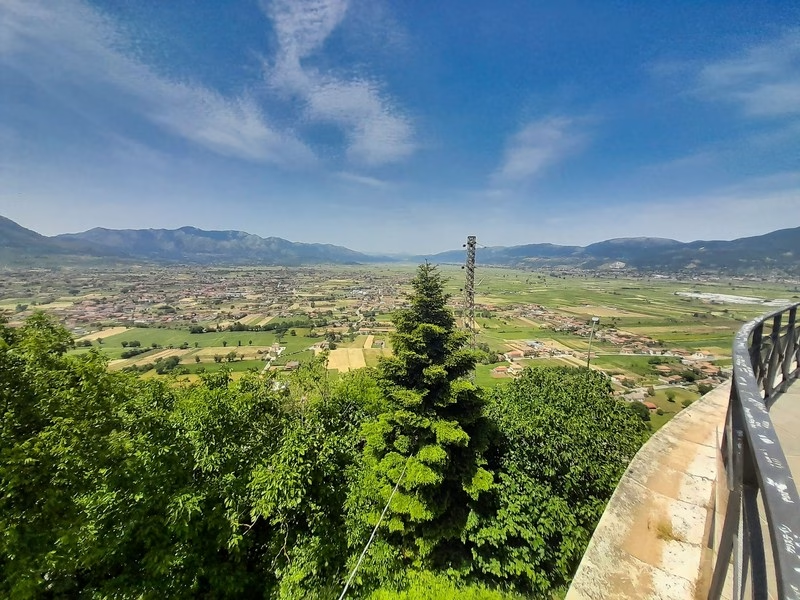
From the terraces of Teggiano, the vast Vallo di Diano unfolds like a living map — a patchwork of fields, rivers, and distant hills that define the inland soul of Cilento.
Faith, patience, and the art of time
Together, Padula, Sassano, and Teggiano reveal the Cilento’s most contemplative side — a region where devotion takes many forms: prayer, craftsmanship, and the simple act of noticing.
The monks shaped their lives around silence; the orchids bloom by rhythm; Teggiano celebrates its history with pride and laughter.
All share the same lesson — that endurance, when tended with grace, becomes beauty.
After days by the sea, coming here feels like turning a page.
The air cools, the pace slows, and the sense of continuity deepens.
If the Cilento’s coast teaches you how to live well, its valleys teach you how to breathe.
Plan Your Journey Through the Hidden Valleys of Cilento
Combine the stillness of Padula’s monastery, the spring colours of Sassano’s orchid valley, and the timeless charm of Teggiano.
ExpertoItaly designs tailor-made holidays that bring together these inland treasures with the Cilento coast — effortless travel, curated stays, and stories that stay with you.
✉️ Start Planning with ExpertoItaly
Prefer a personal conversation? Message directly on WhatsApp at
+44 7738 385790.
#Cilento #Padula #ExpertoItaly #CulturalTravel #ItalyHolidays #SlowTravel #HiddenItaly #ValledelleOrchidee #Teggiano #UNESCO
You’re in good hands
Clients often mention what matters most — care, precision, and the sense of travelling with someone who knows the way.
STAY CONNECTED WITH US (it’s free!)
Unlock insider tips on Italy’s hidden gems, free every month!
👍 Follow us on Facebook – Stay inspired with daily updates, travel ideas, and a community of fellow Italy lovers.

📲 Join our WhatsApp channel 🟢 – Get instant updates, behind-the-scenes insights, and connect directly with our team.

We’ll always treat your details with the utmost care and will never sell them to other companies. See our privacy policy
Package holidays are sold by ExpertoItaly Ltd (Reg. 12035194)
Call us on +44 (0) 77 3838 5790
Registered office: 33 Miles Close, London, SE28 0NJ

Business Hours
Monday – Thursday 9am to 6pm
Friday 9am to 5:30pm
Saturday – please send us an enquiry form
Sunday – please send us an enquiry form