


In local dialect, Cit Turin means Piccola Torino — Little Turin. The name reflects the origins of the district: a compact, self-contained extension of the city, developed when Turin was redefining itself at the end of the 19th century.
No longer Italy’s capital, Turin was becoming an industrial, technical and administrative centre. The city needed new residential districts for engineers, professionals, senior clerks and managers connected to railways, factories and public institutions rather than court life.
Cit Turin and the neighbouring San Donato were built to meet that need. They were conceived not as monumental quarters, but as places for modern urban living.
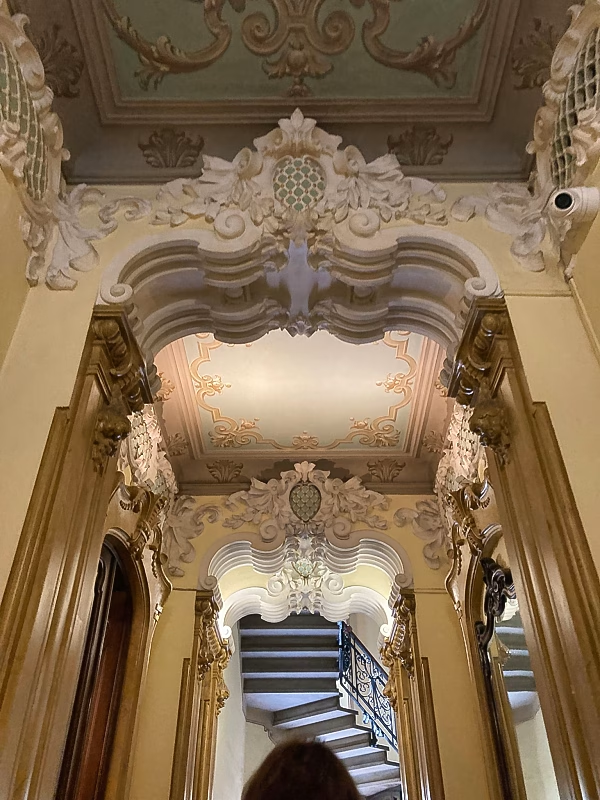
Early 20th-century Liberty residential vestibule in Turin. The entrance sequence is articulated by layered plaster arches, floral reliefs and a painted ceiling, demonstrating the extension of Liberty design from façades into shared interior spaces.
Planned districts at the western edge
Both areas developed just beyond the historic western limits of the city, close to former military land and infrastructure. Their urban layout followed a clear and rational plan:
- wide streets
- regular blocks
- generous building plots
- controlled heights
This marked a clear departure from the dense medieval fabric of the Quadrilatero and the ceremonial spaces of Borgo Nuovo. Here, priority was given to light, hygiene, order and residential quality. Within this framework, Liberty architecture became the dominant language.
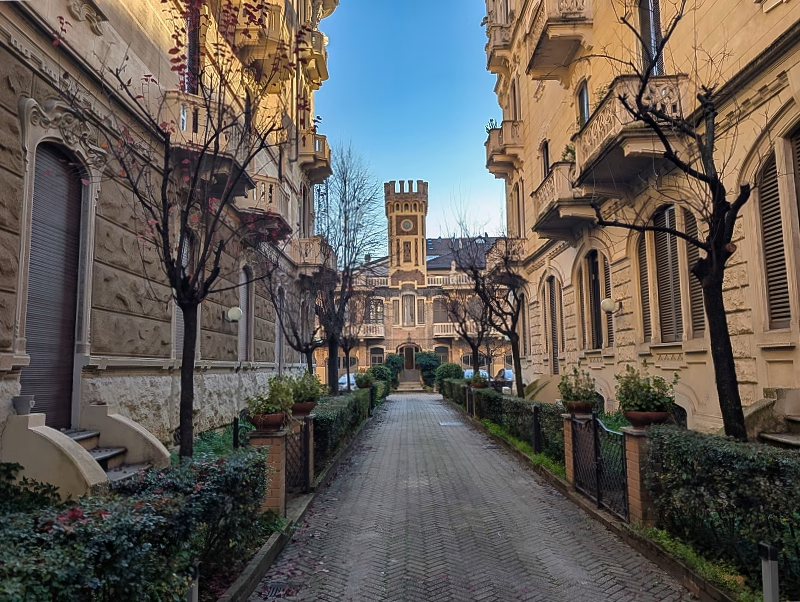
Early 20th-century Liberty residential court in Turin. The composition is organised around a central access path flanked by residential façades with balconies and decorative stucco, terminating in a towered building that acts as a visual and spatial focal point.
Liberty Torinese: domestic and coherent
Liberty in Turin differs from other Italian cities. It is less theatrical than Palermo and less experimental than Milan, but more consistent at neighbourhood scale.
The key figure is Pietro Fenoglio, whose work defines much of Cit Turin. His buildings combine:
- bow-windows and curved volumes
- floral and vegetal motifs
- refined wrought-iron balconies and staircases
- modern construction techniques
The emphasis is residential rather than monumental.
Corso Francia and the headline buildings
Along Corso Francia, Liberty appears with confidence. Casa della Vittoria (the so-called House of Dragons) blends Art Nouveau with Neo-Gothic imagery, marking the boulevard as a prestigious residential axis.
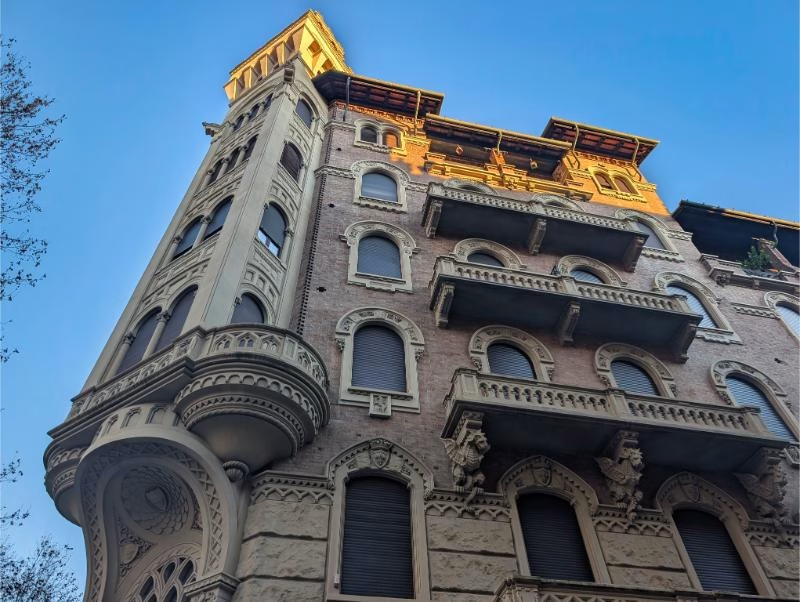
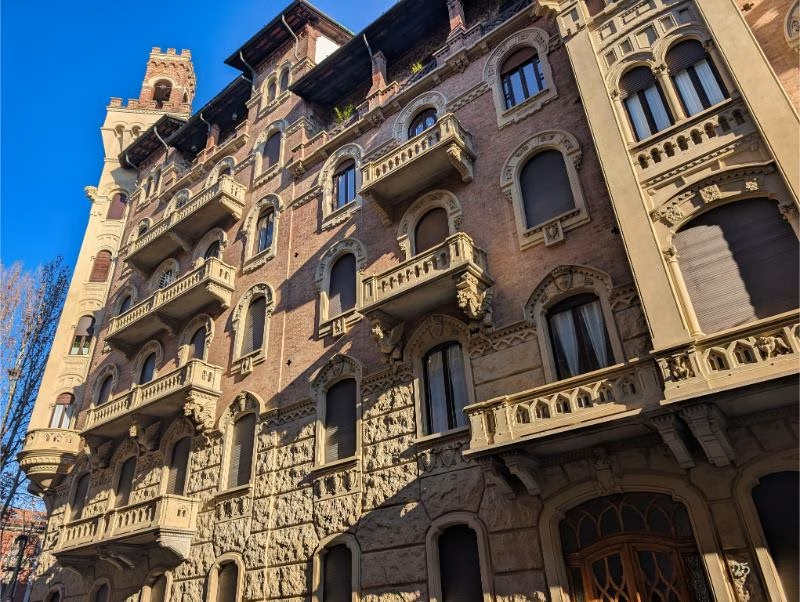
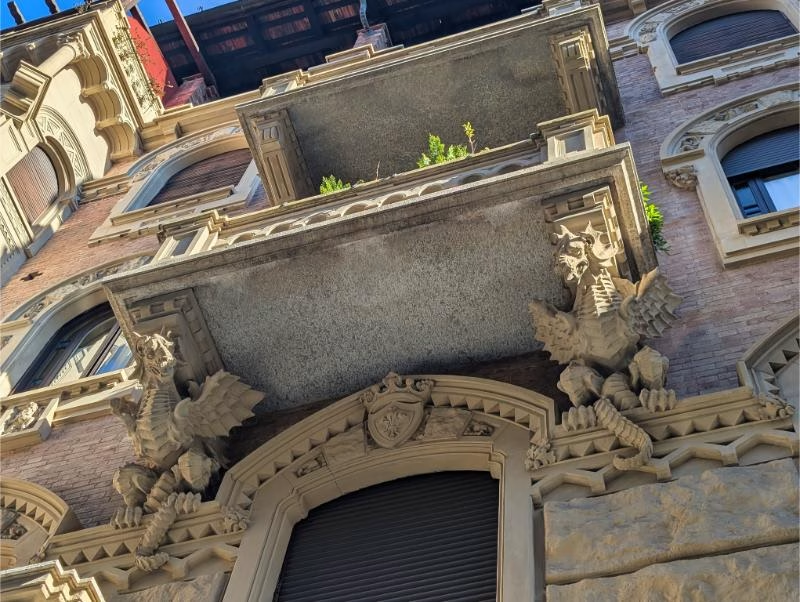
Nearby, Villino Raby represents one of the most complete Liberty residences in the city, with ironwork by Alessandro Mazzucotelli and a façade rich in detail.
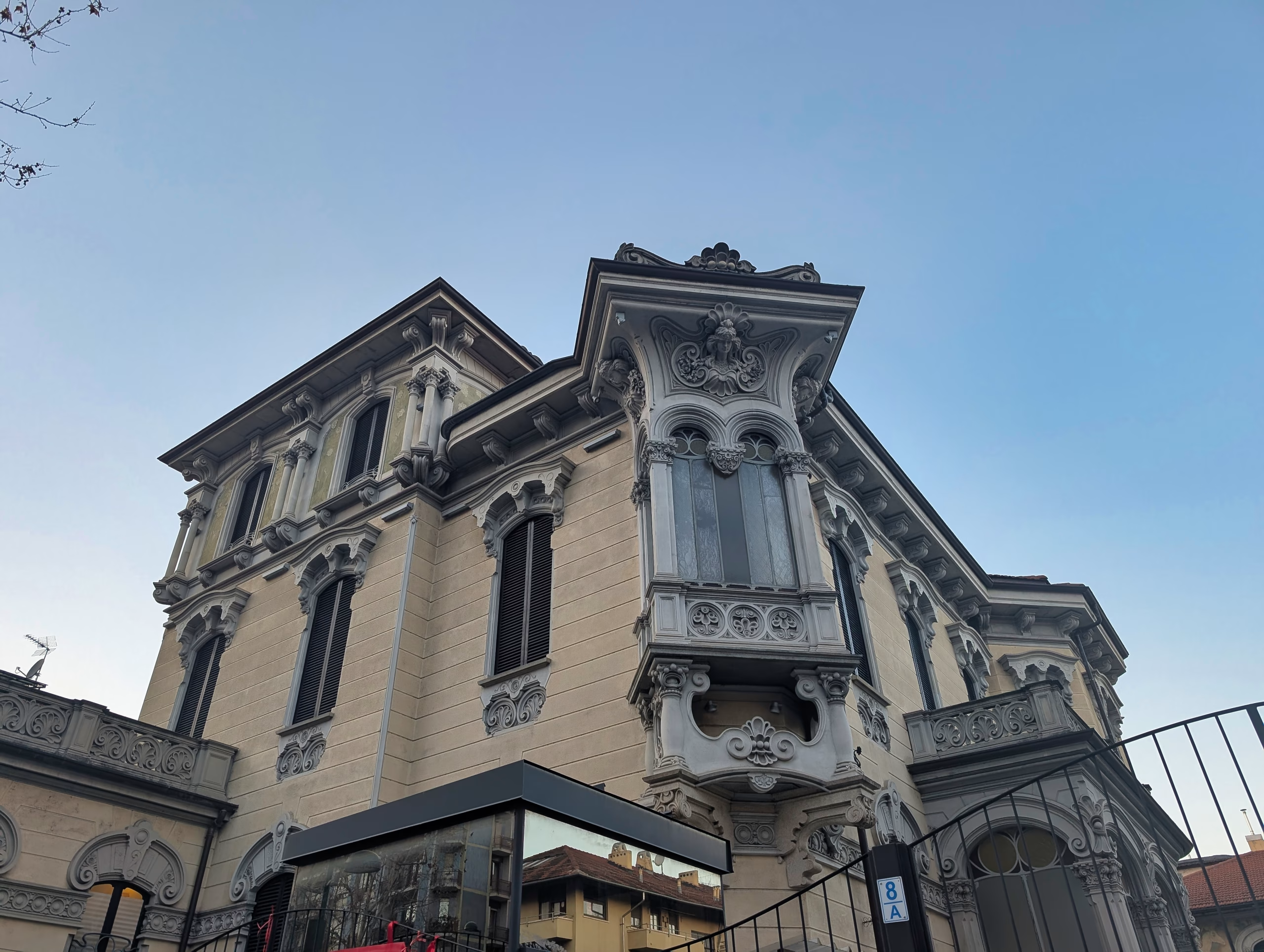
Villino Raby, Corso Francia 8. Early 20th-century Liberty residence characterised by asymmetrical massing, a prominent bow-window, sculpted stucco decoration and wrought-iron details. The building marks Corso Francia’s role as a prestige residential axis rather than a secondary street.
Via Beaumont, Via Piffetti and the “street-by-street” Liberty
Moving into streets such as Via Beaumont and Via Piffetti, Liberty becomes quieter and more repetitive. Buildings like Casa Tasca, Casa Galleani d’Agliano, and the palazzine of Via Piffetti show how the style was applied across entire streets rather than limited to isolated landmarks.
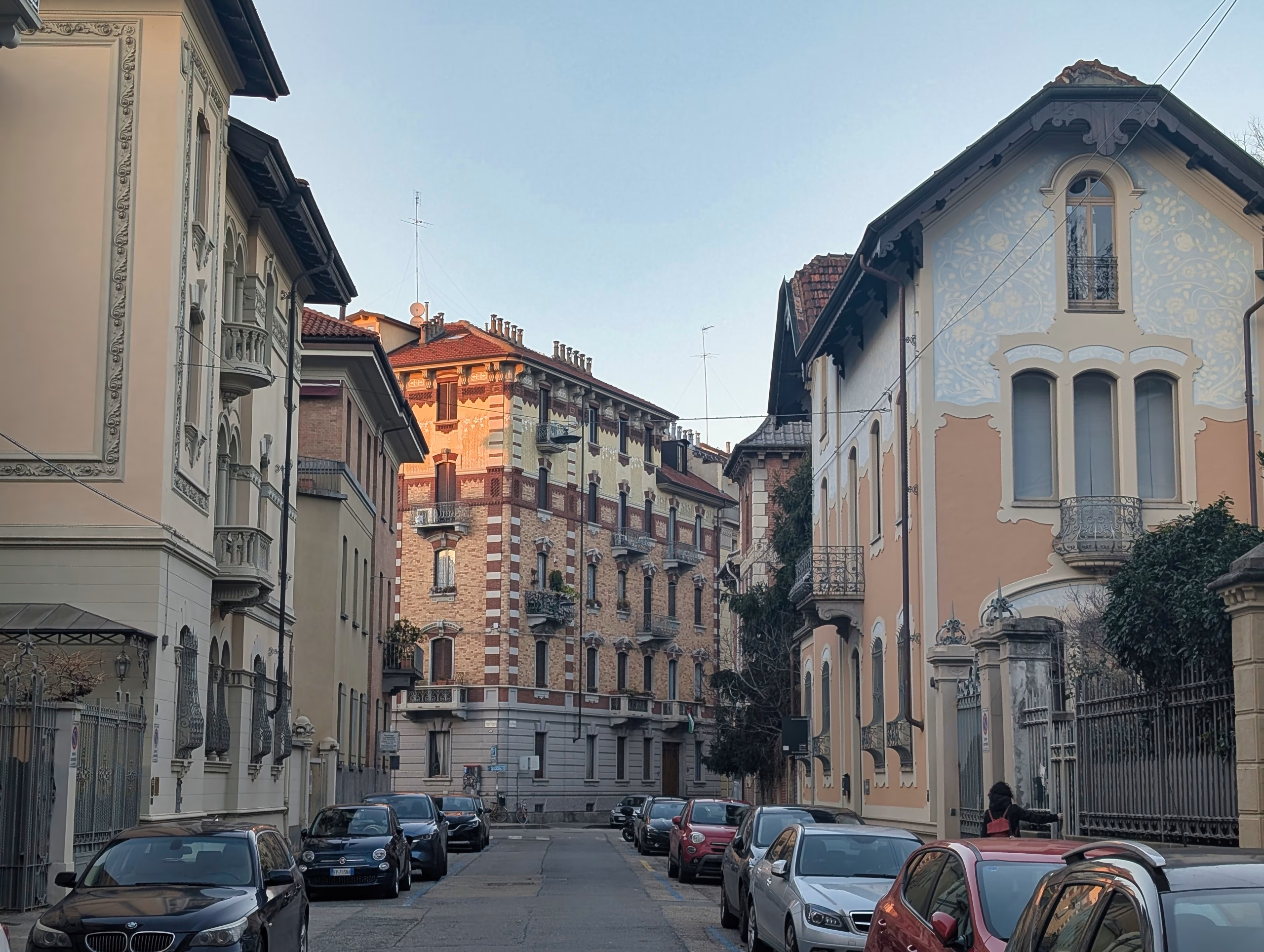
Via Beaumont, Turin. Casa Galleani d’Agliano (Palazzina Ostorero) on the right, photographed for its Liberty-era façade decoration, wrought-iron balcony details, and residential street context.
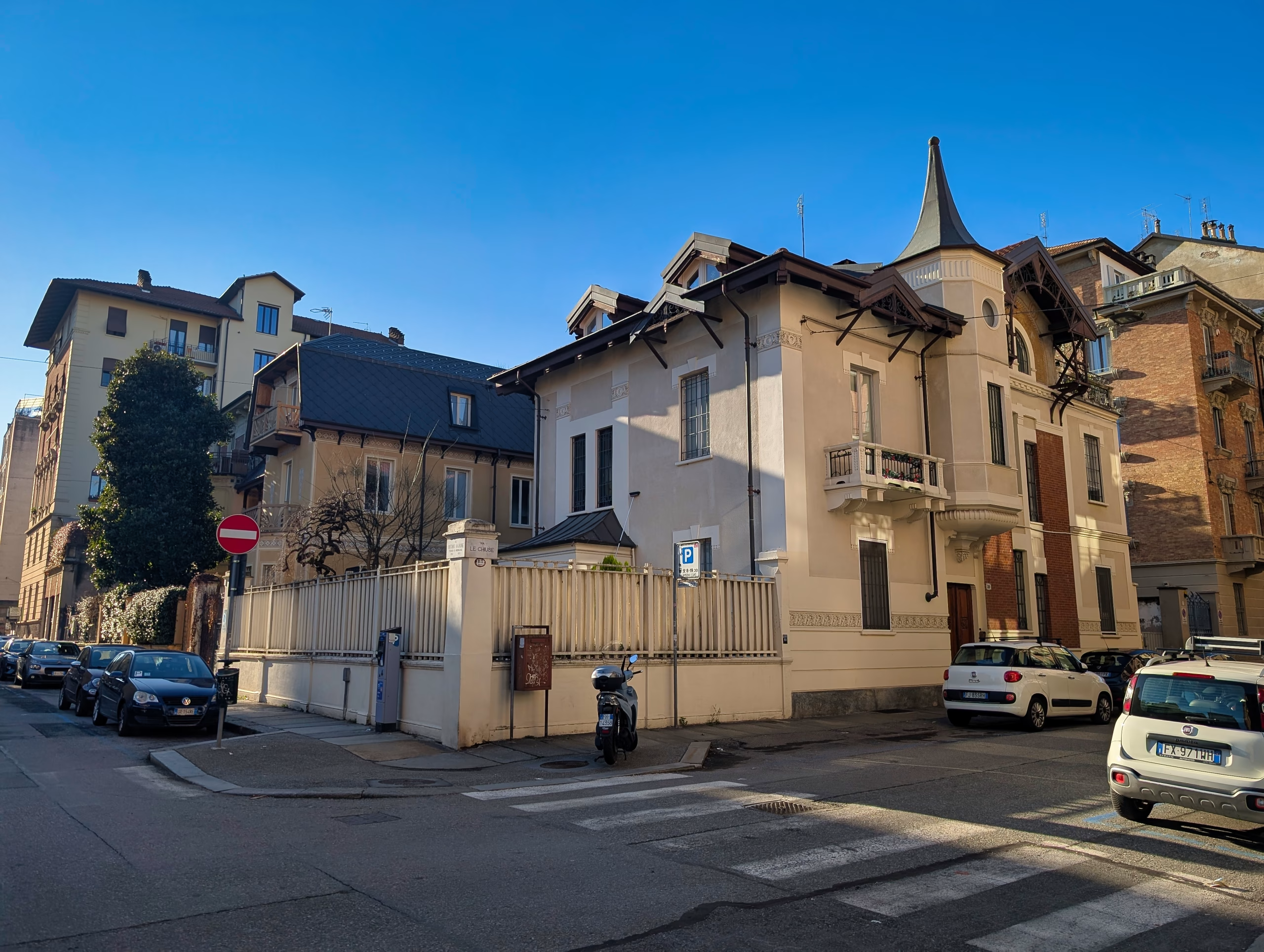
Villa Baloire, Via Antonio Vagnone 9. Early 20th-century Liberty villa characterised by an articulated corner volume, decorative stucco work, and a varied roofline. The building reflects the domestic scale and individual expression typical of Turin’s western Liberty expansion.
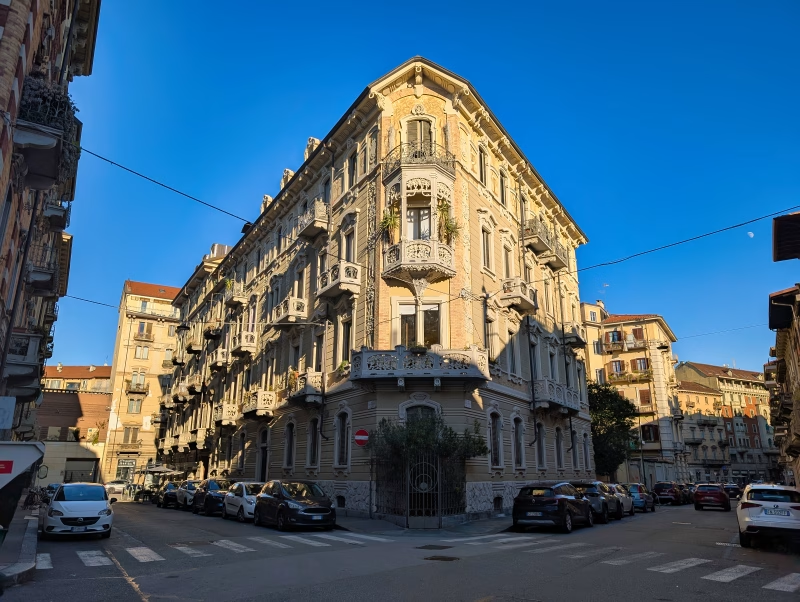
Casa Tasca. Early 20th-century Liberty apartment building occupying a prominent corner position, characterised by continuous balconies, sculpted stucco decoration, and a regular yet highly articulated façade. The building exemplifies the application of Liberty language to medium-scale residential blocks in Turin’s western expansion.
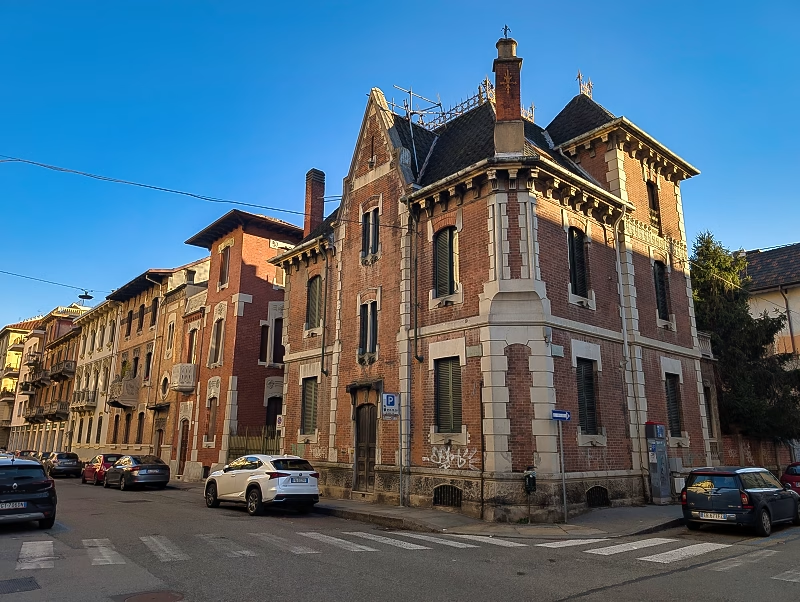
Via Pietro Piffetti. Early 20th-century residential buildings showing a restrained Liberty language applied to everyday apartment housing. Brick façades, simplified stone detailing, and articulated corner volumes illustrate how Liberty in this area functions as continuous urban fabric rather than isolated architectural statements.
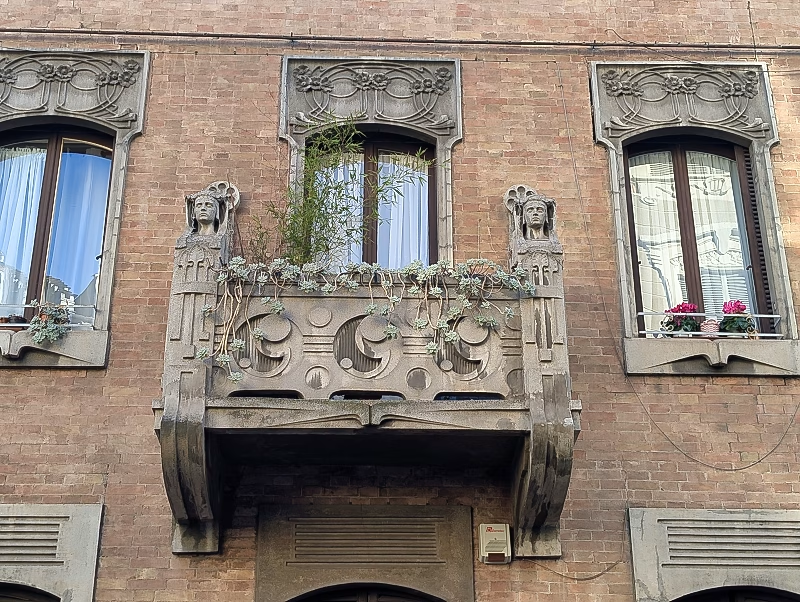
Liberty balcony detail. Sculpted stone balustrade with stylised female heads and geometric ornament set within a brick façade. Such elements illustrate how Liberty decoration in Turin is often concentrated around balconies and window frames, enriching otherwise restrained residential elevations.
San Donato: continuity and restraint
San Donato extends the same residential logic. Here, Liberty is often combined with eclectic or neo-medieval elements, as seen in Palazzo Ansaldi on Via Susa, recognisable by its crenellated clock tower.
The architectural interest lies less in individual buildings than in the continuity of the streetscape. Balconies, entrances and façades follow shared proportions and materials, reinforcing the district’s residential character.
Piazza Benefica: Liberty and daily life
At the centre of San Donato, Piazza Benefica anchors the neighbourhood. Surrounded by early-20th-century residential buildings, it hosts one of Turin’s most established local markets.
Clothing stalls, household goods and food vendors fill the square daily, bringing activity into an otherwise calm district. The surrounding Liberty and eclectic façades provide a consistent architectural frame for this everyday use of space.
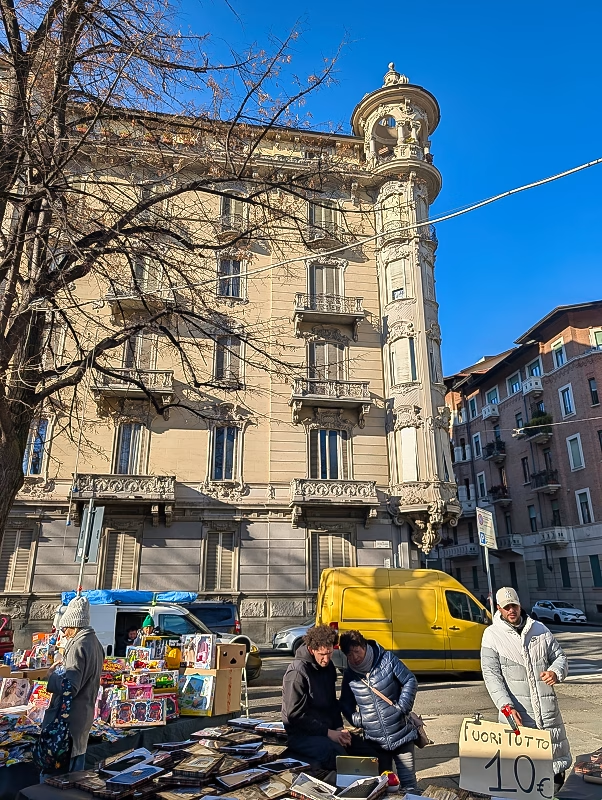
Liberty residential building overlooking Piazza Benefica, Turin. The façade is articulated by stacked balconies, sculpted stucco decoration and a prominent corner tower with loggia, marking the square as a local urban node rather than a purely residential street.
Why these districts matter
Cit Turin and San Donato show Liberty not as a stylistic episode, but as a long-term urban choice. They reflect a Turin that invested in:
- quality housing
- craftsmanship
- functional beauty
- neighbourhood coherence
These districts have changed little because they were built with clarity of purpose.
For architecture enthusiasts, they offer one of Italy’s most complete Liberty landscapes. For curious travellers, they reveal a side of Turin shaped by moderation, precision and residential ambition — a city attentive to how people live, not only to how buildings appear.
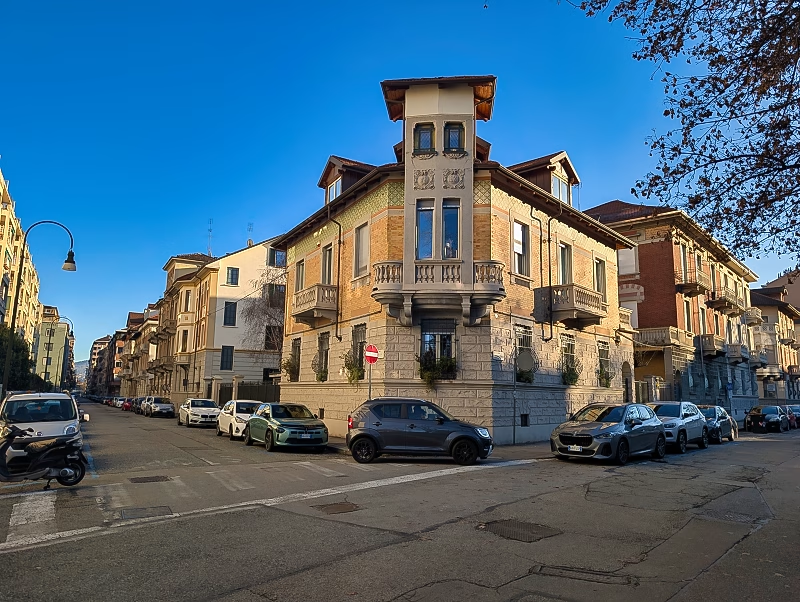
Early 20th-century Liberty residential building in Turin. The corner is emphasised by a projecting volume with balconies, a stone-clad base and mixed brick-and-stucco façades, illustrating the use of articulated corners to define intersections within planned residential streets.
Liberty Walking Loop
Cit Turin → San Donato
(approx. 60–75 minutes, flat)
This loop is designed to be walked slowly, keeping your eyes at façade level and above.
The interest lies in sequence and continuity, not in single landmarks.
1) Start: Corso Francia (Cit Turin)
Begin near Villino Raby (Corso Francia 8). This is one of the most
complete Liberty residences in Turin. Note the bow-window, the asymmetrical volumes,
and the wrought-iron staircase railing — a hallmark of high-quality early-20th-century
residential design.
A few minutes further west stands Casa della Vittoria (Corso Francia 23),
also known as the House of Dragons. The winged dragons framing the entrance
signal the more symbolic side of Liberty, where Art Nouveau blends with Neo-Gothic references.
Continue along Corso Francia, using the boulevard to understand how Liberty was used
to mark prestigious residential axes, not just side streets.
2) Via Beaumont: compact Liberty ensemble
Turn south into Via Beaumont, one of the most coherent Liberty streets in the area.
- Casa Tasca (Via Beaumont 3)
- Casa Galleani d’Agliano (Via Beaumont 4)
Here, Liberty becomes more domestic and repetitive. Bow-windows, floral decoration
and balanced proportions are used consistently across multiple buildings, giving
the street its architectural rhythm.
3) Via Piffetti: Liberty as urban fabric
Continue east towards Via Piffetti, where Liberty appears in a quieter, more residential form.
- Palazzine di Via Piffetti (nos. 10 and 12)
These buildings show how Jugendstil-influenced Liberty was applied to everyday apartment
housing. Look for iron balconies, window frames and entrance portals rather than grand façades.
4) Transition into San Donato
Walk north-west towards Via Susa, crossing naturally from Cit Turin into San Donato
without a clear visual break — a sign of how closely the two districts are linked.
Stop at Palazzo Ansaldi (Via Susa 33). Its crenellated clock tower
introduces neo-medieval references, showing how Liberty in San Donato often blends
with eclectic styles.
5) Piazza Benefica: the everyday centre
End the loop at Piazza Benefica. Surrounded by early-20th-century
residential buildings, the square hosts one of Turin’s most established neighbourhood
markets. It provides a clear sense of how these Liberty districts functioned — and
still function — as lived-in residential areas.
How to walk it
- Keep your pace slow
- Look up: balconies, ironwork, bow-windows
- Notice repetition as much as exception
- Read buildings as part of streets, not as isolated objects
This loop works best mid-morning or late afternoon, when façades are evenly lit
and details are easier to read.
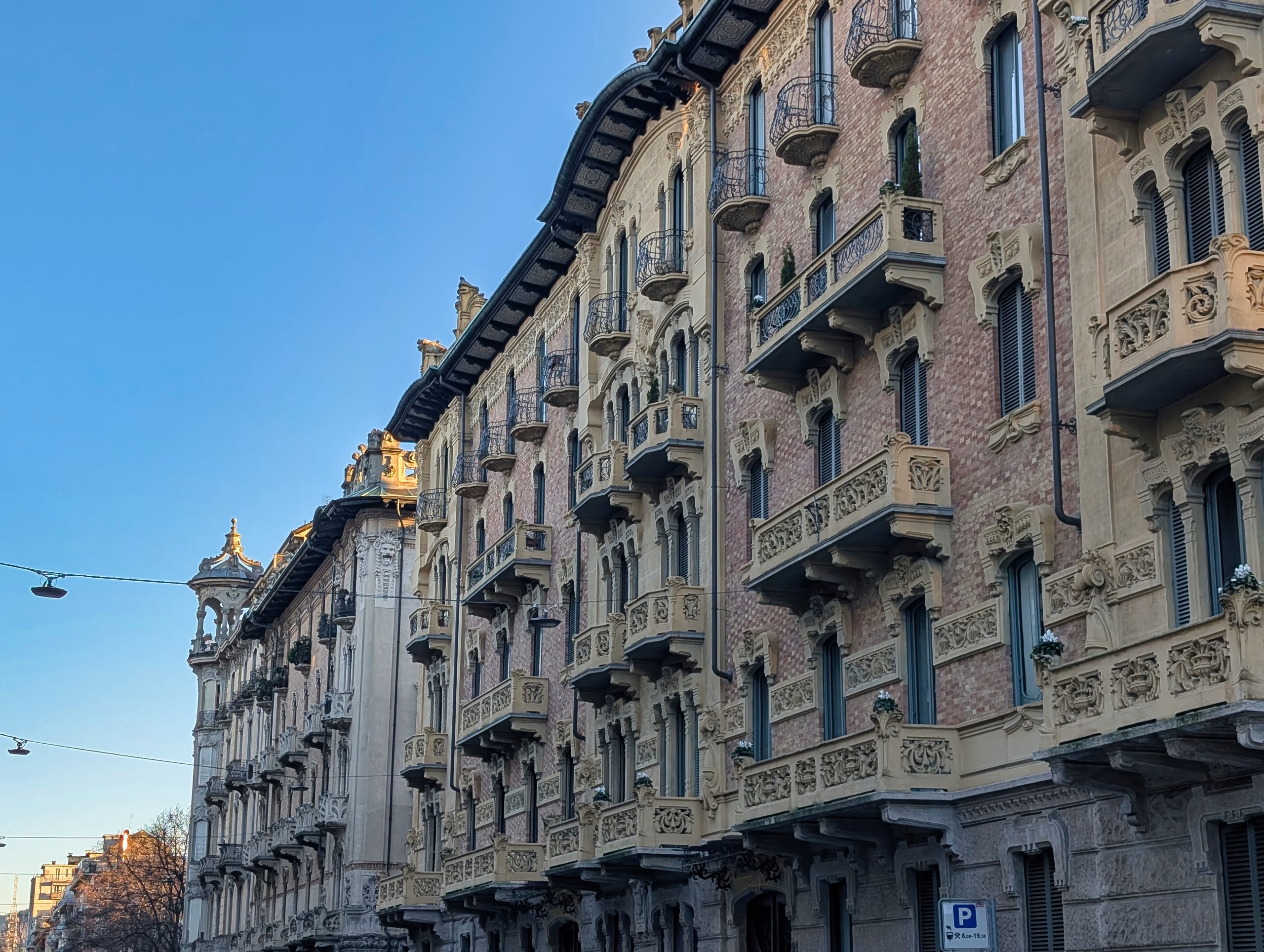
Via Principi d’Acaja, Turin. Continuous early 20th-century Liberty residential frontage characterised by brick façades, repeated balconies, sculpted stone window surrounds and wrought-iron railings. The uniform rhythm reflects coordinated urban development rather than isolated landmark buildings.
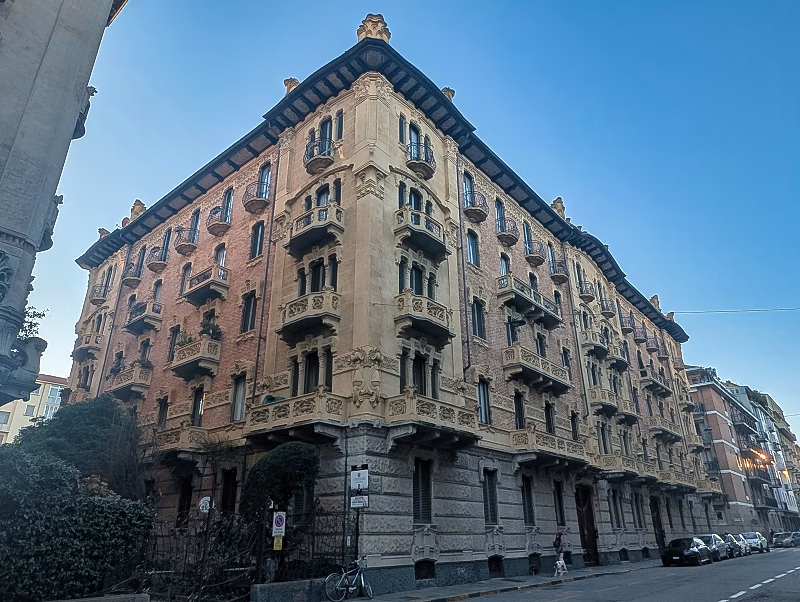
Early 20th-century Liberty apartment block in Turin. The chamfered corner is emphasised through stone articulation and stacked balconies, while brick façades and repeated openings reinforce the continuity of the surrounding streetscape. Such buildings illustrate how Liberty architecture was applied at block scale within planned residential districts.
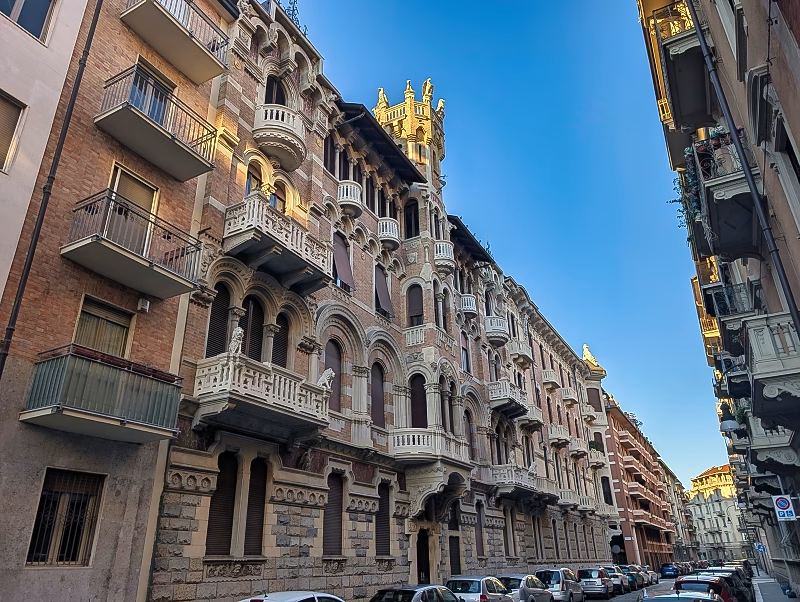
Early 20th-century Liberty residential buildings along a secondary street in Turin. Brick façades, repeated balconies and restrained decorative elements demonstrate how Liberty architecture extended beyond major avenues, shaping everyday residential streets with continuity rather than monumentality.
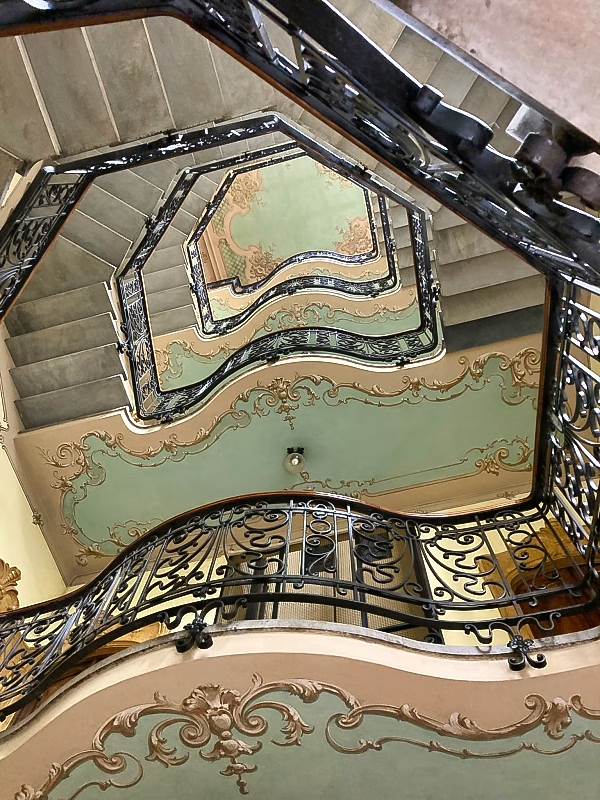
Liberty stairwell in an early 20th-century residential building. Curved stair flights, continuous wrought-iron balustrades and painted ceilings form a cohesive interior composition typical of Turin’s Liberty apartment houses.
You’re in good hands
Clients often mention what matters most — care, precision, and the sense of travelling with someone who knows the way.
STAY CONNECTED WITH US (it’s free!)
Unlock insider tips on Italy’s hidden gems, free every month!
👍 Follow us on Facebook – Stay inspired with daily updates, travel ideas, and a community of fellow Italy lovers.

📲 Join our WhatsApp channel 🟢 – Get instant updates, behind-the-scenes insights, and connect directly with our team.

We’ll always treat your details with the utmost care and will never sell them to other companies. See our privacy policy
Package holidays are sold by ExpertoItaly Ltd (Reg. 12035194)
Call us on +44 (0) 77 3838 5790
Registered office: 33 Miles Close, London, SE28 0NJ

Business Hours
Monday – Thursday 9am to 6pm
Friday 9am to 5:30pm
Saturday – please send us an enquiry form
Sunday – please send us an enquiry form