Turin’s disciplined residential heart


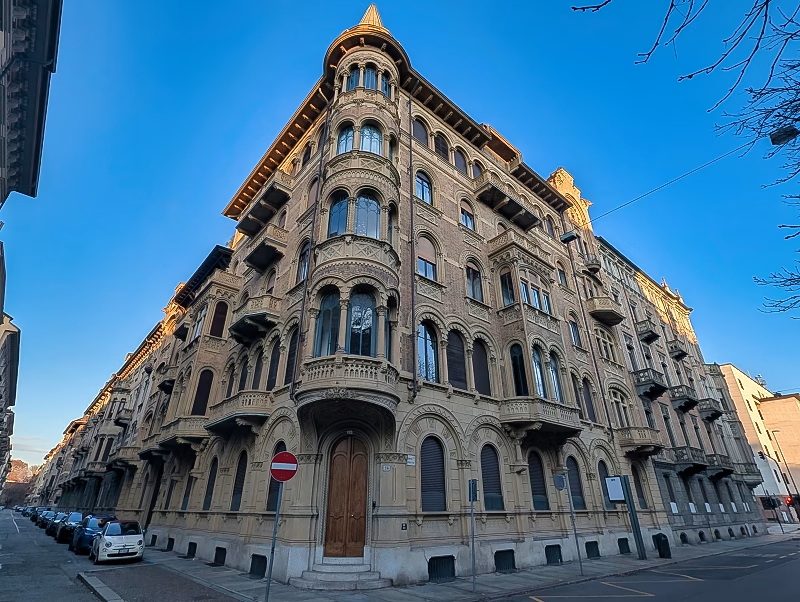
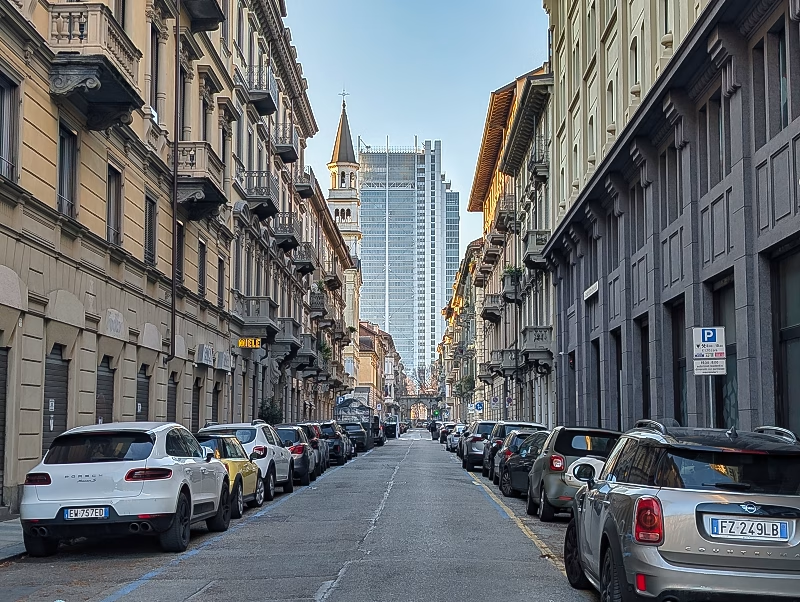
This part of Turin forms the western edge of the historic centre, where the city’s late-19th-century expansion produced one of its most coherent urban landscapes. Broad streets, long façades, and carefully aligned corners define an area that feels residential, formal, and deliberately composed.
Photographically, it is a district of perspectives rather than landmarks: corner palazzi, receding façades, porticoes unfolding in sequence. The visual rhythm comes from repetition, scale, and restraint.
Developed from the mid-1800s onwards, as Turin expanded beyond its former fortifications, this was not a mixed or improvised quarter. It was planned as a bourgeois extension of the city — permanent, orderly, and institutional in character.
A city of façades
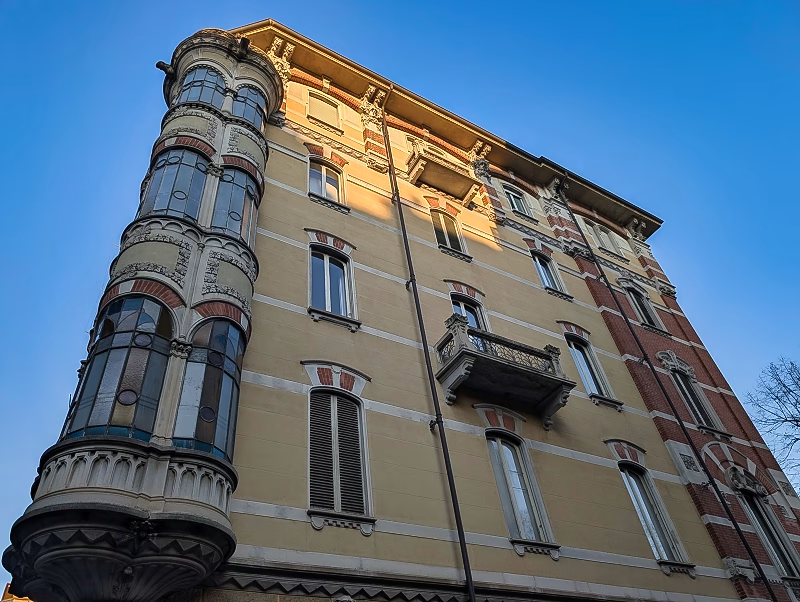
Along Via Cernaia, Via Avogadro, Corso Matteotti, Corso Vinzaglio, and the streets feeding into Piazza Solferino, architecture follows a consistent vocabulary. Buildings are tall and regular, with strong stone bases, formal entrances, and iron balconies stacked in measured progression.
Decoration is present but controlled. The emphasis is on proportion, alignment, and continuity rather than individual flourish — qualities that read clearly in street-level photographs and oblique corner views.
These were addresses chosen by senior civil servants, officers, bankers, and professionals tied to the Savoy state and, later, to the institutions of the Kingdom of Italy.
Piazza Solferino: space over spectacle
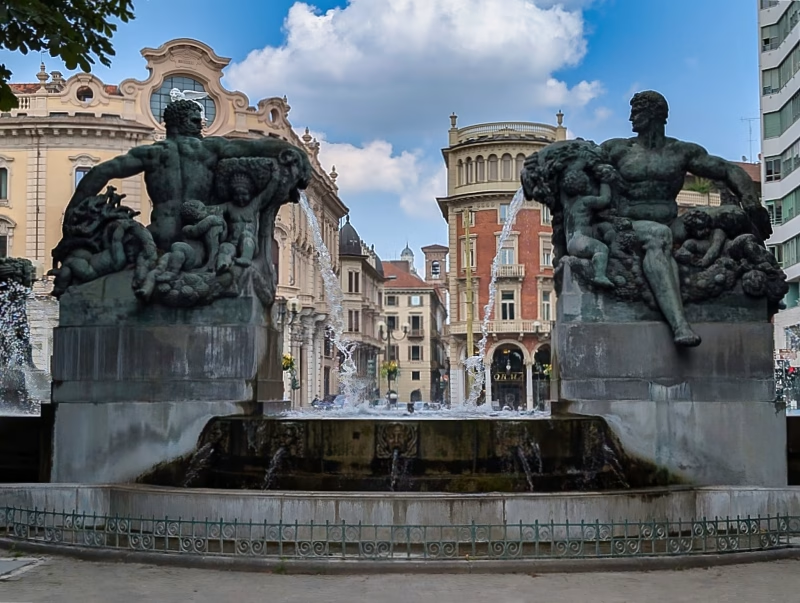
Piazza Solferino anchors the district. Large and open in scale, it was conceived as a representative square rather than a social one. The surrounding palazzi frame the space with quiet authority, reinforcing its civic rather than theatrical role.
In images, the square reads as an urban pause — a widening of space that marks the transition between the medieval city to the east and the rational 19th-century expansion to the west.
A quiet quarter by design
Unlike the Quadrilatero or Via Po, this part of Turin remains understated. Shops and cafés exist but never dominate the scene. The interest lies in the continuity of the built fabric — long streets, repeated porticoes, and façades designed to be read as a whole.
It is an area that rewards slow observation: looking up, reading corners, noticing how buildings hold the street line.
The military edge that shaped the city
Before becoming a bourgeois residential district, this area formed Turin’s western military frontier.
La Cittadella di Torino
Once a vast star-shaped fortress, it marked the city’s defensive boundary until the mid-19th century. Most of the structure was demolished after 1852, with only the Mastio surviving today.
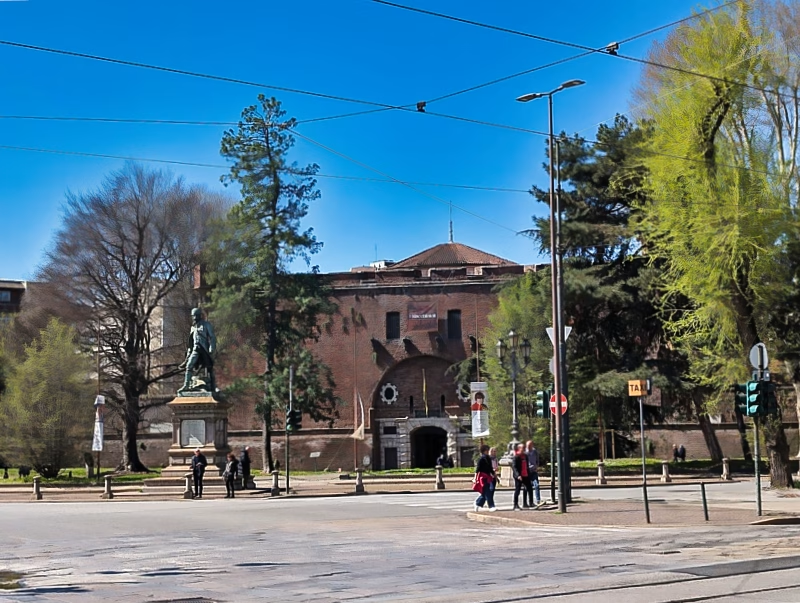
Caserma Cernaia
Established as a major training site and closely linked to the Arma dei Carabinieri, founded in Turin in 1814. The barracks remain active, preserving the area’s institutional continuity.
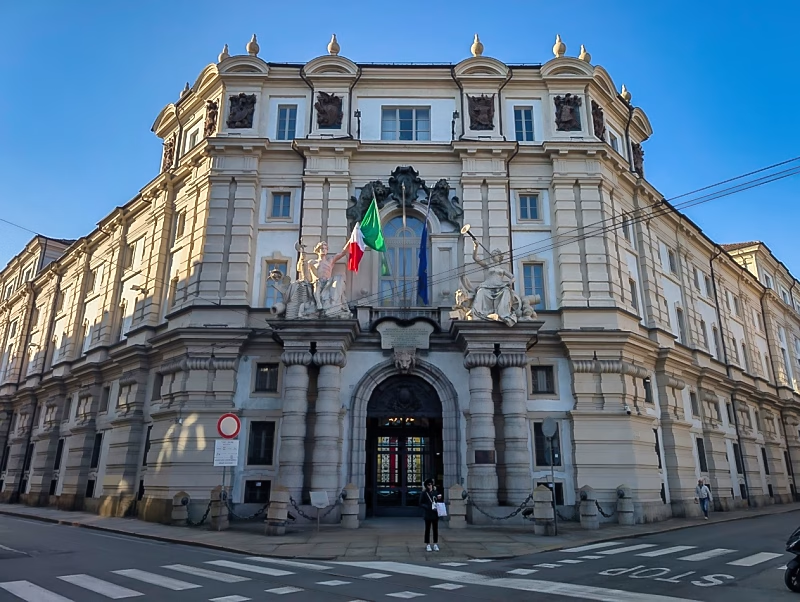
Palazzo dell’Arsenale
Home to the Scuola di Applicazione, where military engineering and fortifications were studied — a reminder that this zone once concentrated defence, training, and technical instruction within walking distance of Piazza Castello.
When the fortifications were dismantled, the discipline of this military landscape translated directly into the orderly geometry of the residential district that replaced it.
Via Pietro Micca & the Contrada del Gambero
Where modern Turin cuts across the old city
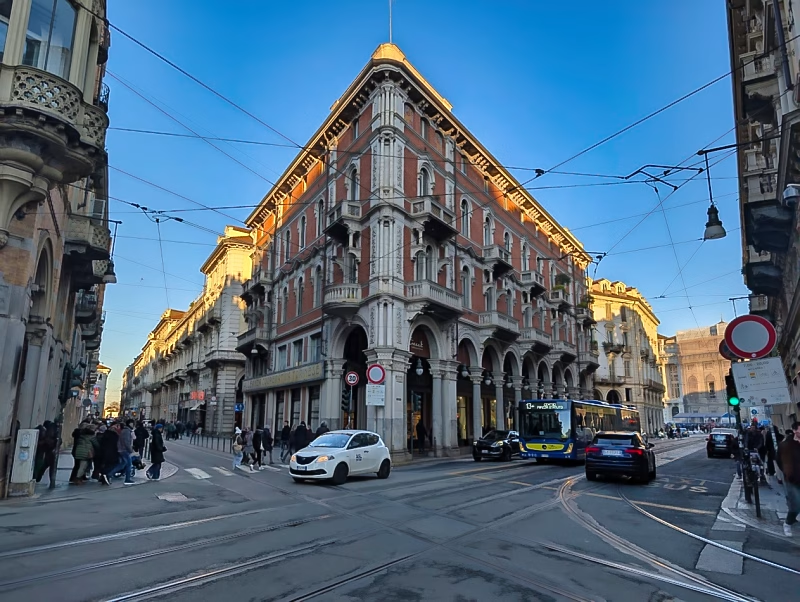
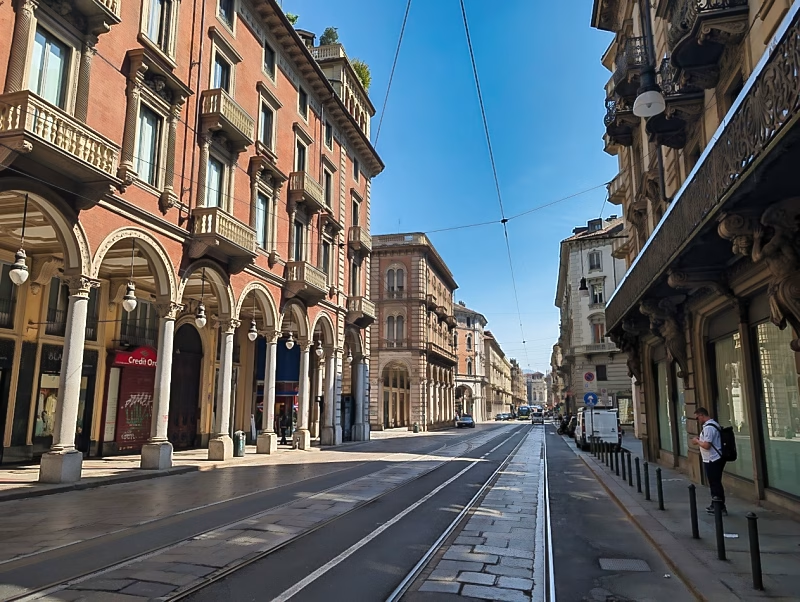
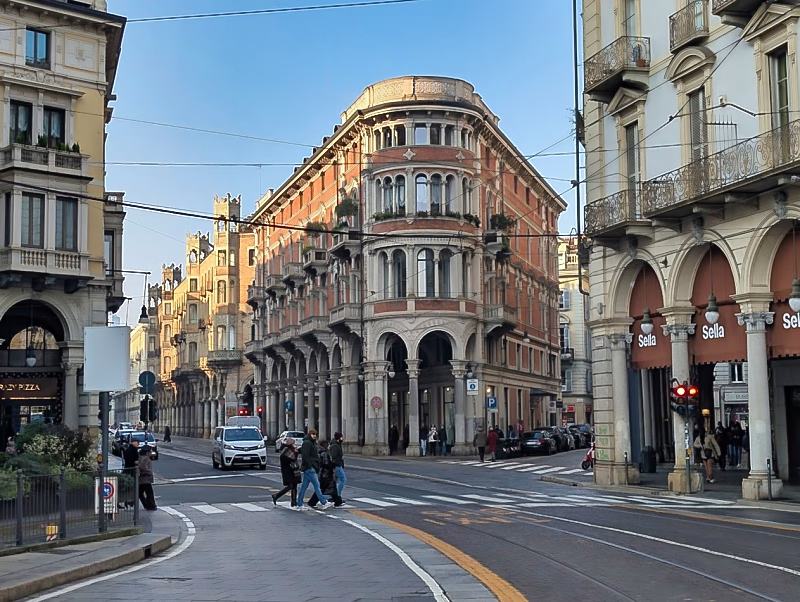
Among the streets radiating from Piazza Solferino, Via Pietro Micca stands apart. It is the only major street in central Turin to cut diagonally across the Roman grid — a deliberate and visible rupture in the city’s ancient structure.
Opened between 1885 and 1897, the street was part of a radical urban renewal programme. Its construction required the demolition of dense medieval fabric to create a direct, efficient connection between Piazza Castello, Piazza Solferino, and the expanding railway zone towards Porta Susa.
This intervention — known as lo “sventramento” — was both practical and symbolic. It improved circulation and sanitation, but it also asserted a new urban confidence: openness, visibility, and architectural ambition.
Bourgeois modernity in stone
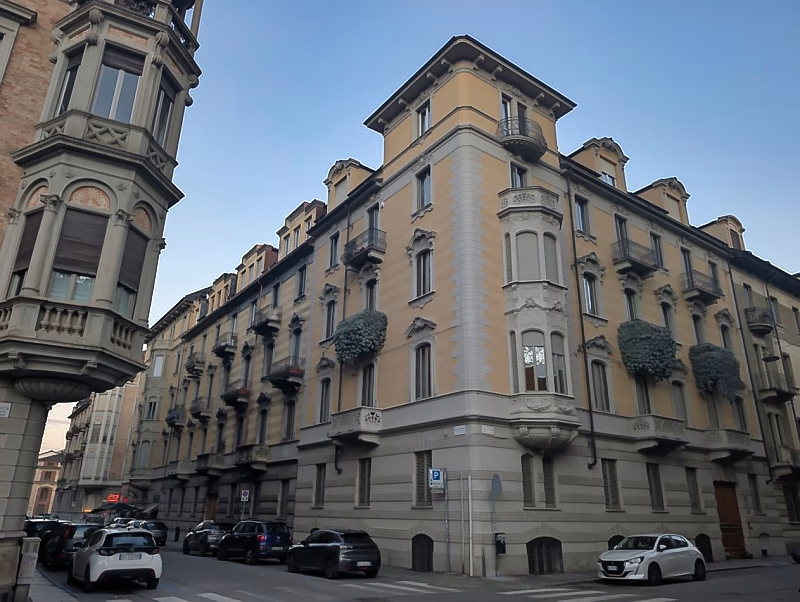
The buildings lining Via Pietro Micca reflect this intent. Monumental palazzi rise in sequence, their façades designed to be read from the street rather than as isolated objects.
Notable examples include Palazzo Bellia, among the first civilian buildings in Turin to use a reinforced concrete frame, and Palazzo Fiorina, associated with modern residential standards and spacious internal courtyards. Eclectic and Liberty influences appear, but always within a disciplined architectural framework.
The Contrada del Gambero
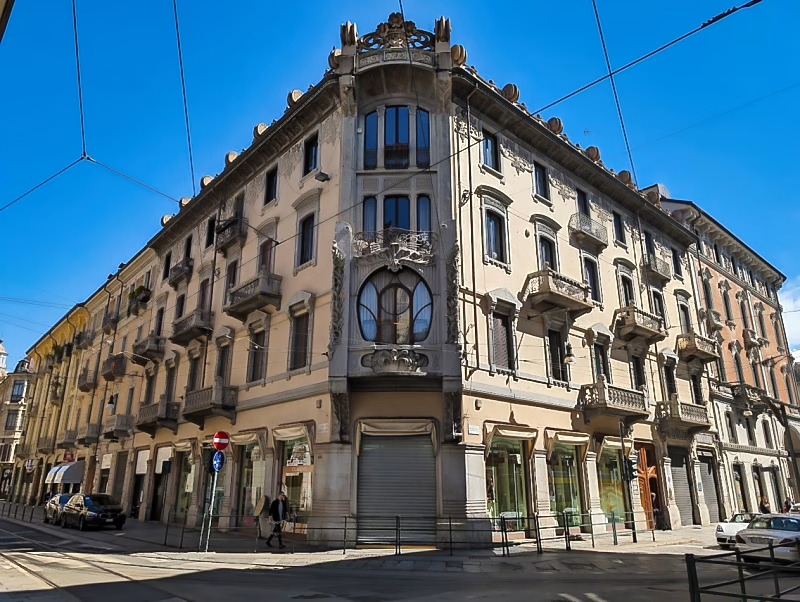
Before redevelopment, the surrounding area was known as the Contrada del Gambero — a working neighbourhood of workshops, taverns, and modest housing clustered near the military installations of the western edge.
As Via Pietro Micca opened, this artisan quarter was gradually absorbed into the new bourgeois city. Buildings such as Palazzo Derossi housed state officials, officers connected to the Scuola di Applicazione, and professionals drawn by modern infrastructure: wide streets, electric lighting, and proximity to institutions.
The transformation was structural rather than abrupt — a reorganisation of space that still reads clearly in the architecture.
Reading the street today
Today, Via Pietro Micca remains one of the clearest expressions of Turin’s late-19th-century transformation. Its diagonal line, monumental palazzi, and continuous porticoes offer a visual lesson in how medieval fabric, military margins, and bourgeois ambition were reshaped into a coherent urban statement.
It is a street best understood through perspective — standing at its corners, following its line, and letting the city reveal itself through form rather than narrative.

You are in good hands




Tailor-made Italy holidays, thoughtfully planned by ExpertoItaly.
Characterful places to stay, thoughtful routes and well-planned travel between them — across one region or several.
We arrange your accommodation, transport and experiences in Italy. Flights are booked separately.
About ExpertoItalyPlan with ExpertoItaly
Tell us where you would like to go, when you can travel and what matters to you.
Start planning your Italy holidayMonday–Thursday: 9am–6pm
Friday: 9am–5.30pm · UK time
At weekends, please send an enquiry.
Your holiday protection

Travel Trust Association
Member Q8055
Read how your holiday payments are protected through our TTA membership.
How your holiday is protectedItaly ideas and travel advice by email
Subscribe for destination ideas, places to stay and practical advice from ExpertoItaly.
We will never sell your details. Read our privacy policy.
Follow ExpertoItaly
 Facebook
 WhatsApp channel
Follow our travel updates. For help planning your own holiday, contact ExpertoItaly.
ExpertoItaly Ltd · Company registration no. 12035194 · TTA membership Q8055
Package holidays are sold by ExpertoItaly Ltd. Registered office: 33 Miles Close, London, SE28 0NJ.