Turin’s market city, in full view.


Porta Palazzo is Europe’s largest open-air market and one of the most varied food markets you can visit anywhere on the continent.
It is not a themed attraction or a farmers’ market curated for visitors. It is a working market, used daily by the city, where scale and diversity are the point: fruit and vegetables by the crate, fish laid out under stone porticoes, spices, cheeses, bread, meat, street food, household goods, and clothing — all operating at once, across a vast square.
For travellers interested in food, this is Turin at its most direct.
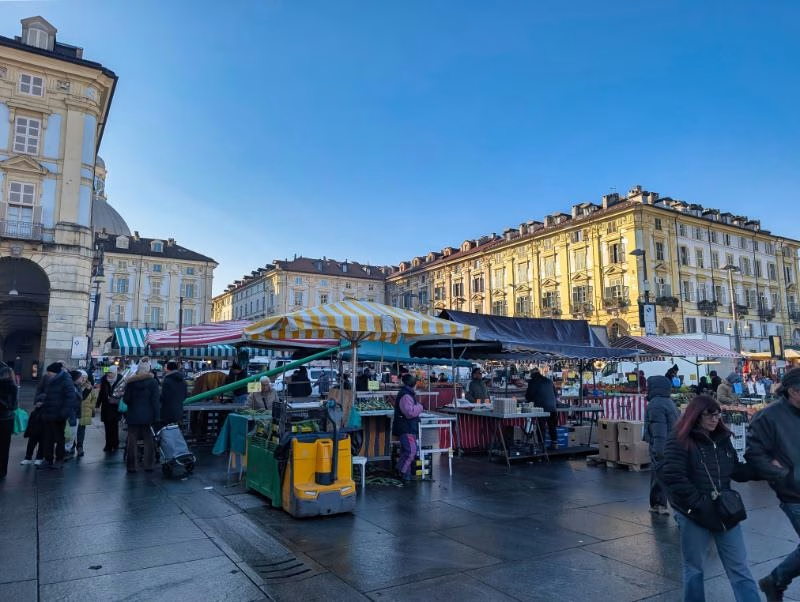
Porta Palazzo in full flow — open-air stalls across Piazza della Repubblica, framed by Turin’s arcades.
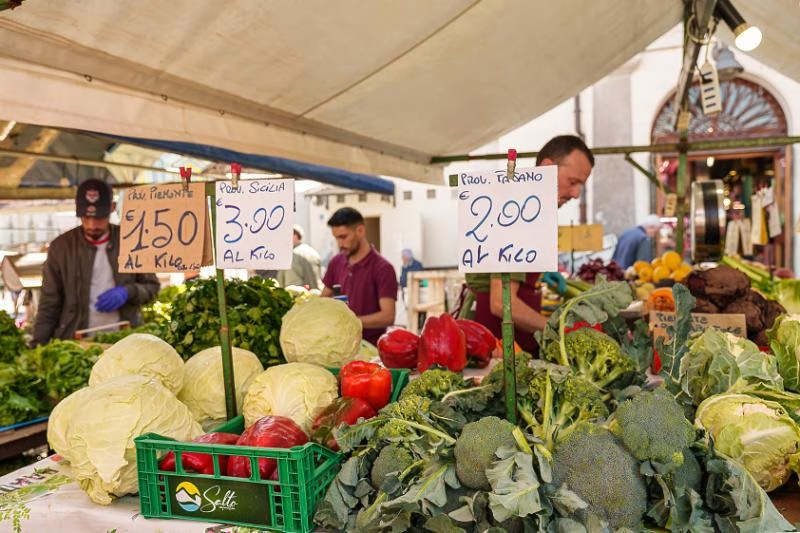
The market’s honest rhythm: seasonal produce, handwritten prices, and no performance for visitors.
A square made for a market
The market occupies Piazza della Repubblica, a large octagonal space immediately north of the historic centre, between the Quadrilatero Romano and the Aurora district.
This area has functioned as a northern gateway to the city since Roman times, when nearby Porta Palatina controlled movement toward the Alps. Over the centuries, as walls were modified and later removed, the space opened up rather than closing in — an essential condition for a permanent market.
The food trade arrived here officially in 1835, following a cholera epidemic that forced the city to move slaughtering and fish handling away from the dense medieval centre. Porta Palazzo offered air, space, and separation — practical requirements that turned into a lasting advantage.
Architecture that serves food
Unlike many historic markets squeezed into leftover spaces, Porta Palazzo was gradually equipped with purpose-built structures.
The neoclassical pavilions for meat and fish were designed to improve hygiene and circulation, sheltering vendors and customers alike.
In 1916, the large Tettoia dell’Orologio, built in iron and glass, added one of the city’s most recognisable market structures — functional, luminous, and still in daily use.
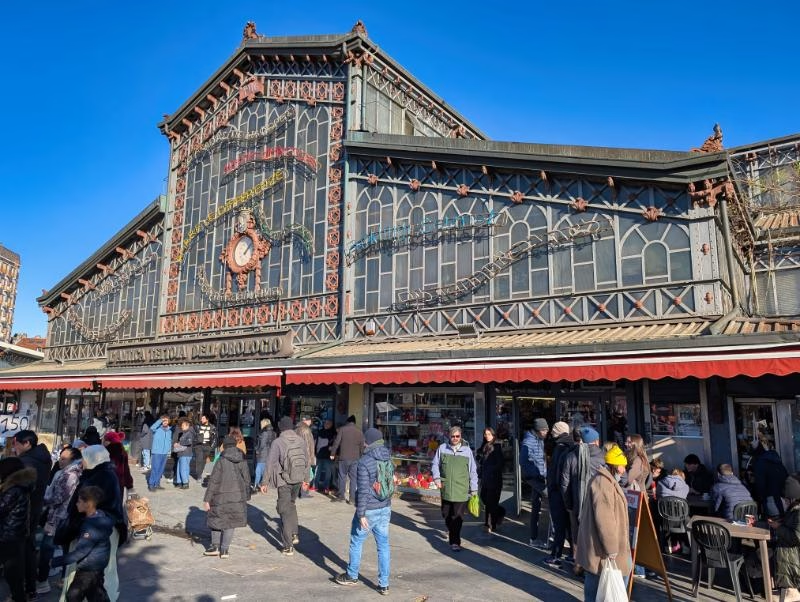
The Tettoia dell’Orologio — a working landmark of iron and glass that still anchors the market’s daily flow.
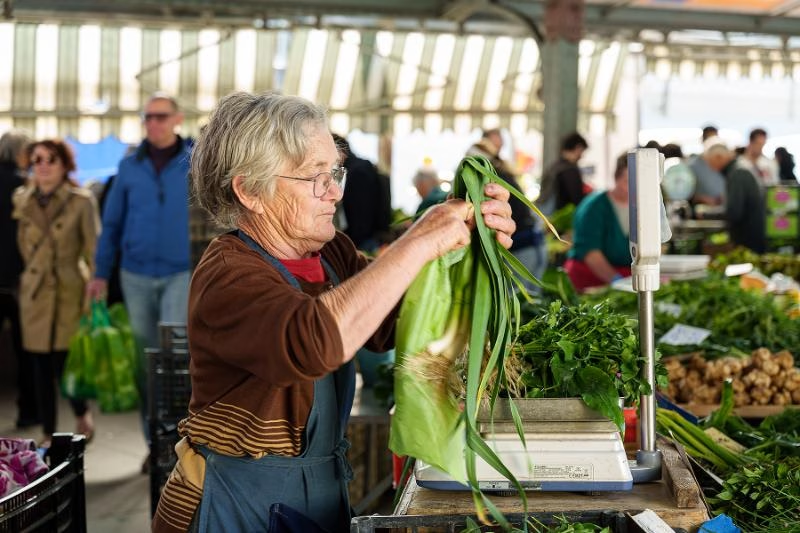
A working market moment — weighing, sorting, and moving quickly for regular customers.
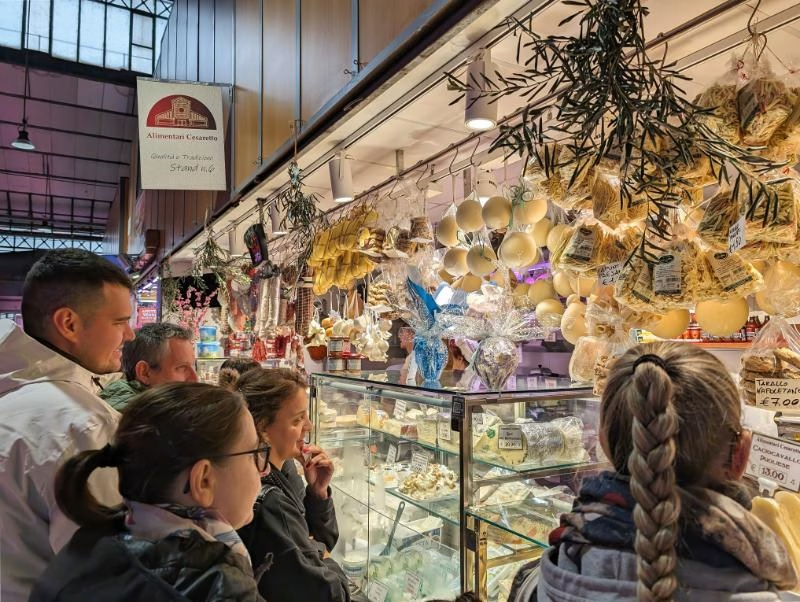
A classic Porta Palazzo tableau — cured meats, cheeses and pantry staples displayed for fast, regular trade.
What makes Porta Palazzo exceptional today
For visitors, the real impact of Porta Palazzo lies in its range.
- Regional Italian produce sits next to North African, Middle Eastern, Eastern European, and Asian ingredients.
- Traditional Piedmontese stalls coexist with vendors selling foods rarely found elsewhere in Italy.
- Prices, quantities, and rhythms are those of a local market — not adjusted for tourism.
This is where Turin shops for food. The result is one of the few places in Europe where culinary cultures overlap visibly and daily, rather than being separated into districts or specialised shops.
Covered, open, and everything in between
The market unfolds in layers:
- Open-air stalls fill the central square, especially strong for fruit and vegetables.
- Covered pavilions concentrate fish, meat, cheese, and delicatessen products.
- Around the edges, permanent shops, bakeries, cafés, and wine merchants extend the experience beyond the square itself.
A short walk leads into Galleria Umberto I, a late-19th-century commercial gallery built on the site of a former hospital, and into streets where food trade continues indoors.
Saturdays: Il Balon, the city’s second-life market
On Saturdays, Porta Palazzo expands beyond food.
Along the streets edging the square — especially towards Borgo Dora — Il Balon, Turin’s historic second-hand and antiques market, takes over. Furniture, books, prints, tools, clothing, records, and everyday objects spill out onto pavements and into side streets.
Like the food market, Il Balon is not staged for visitors. Prices are negotiated, objects are reused rather than curated, and the clientele mixes dealers, collectors, locals, and browsers. What changes is not the function of the area, but its rhythm.
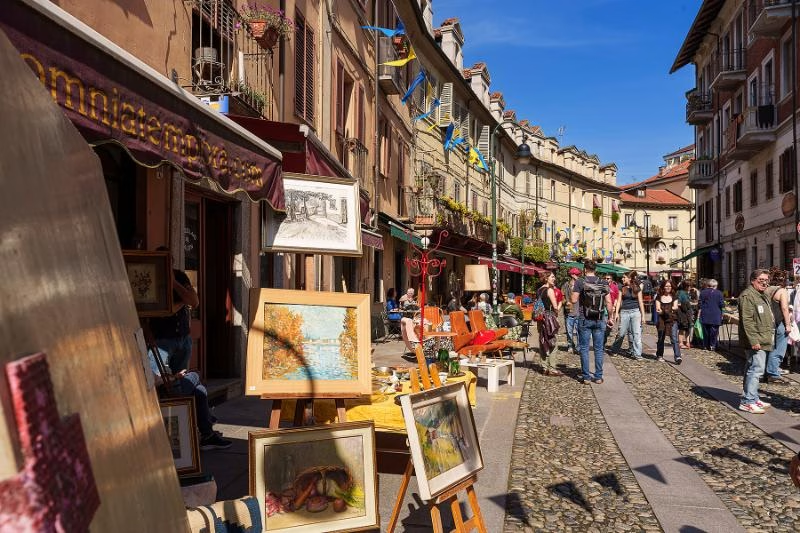
On Saturdays, the story widens: Il Balon turns nearby streets into a living archive of objects and reuse.
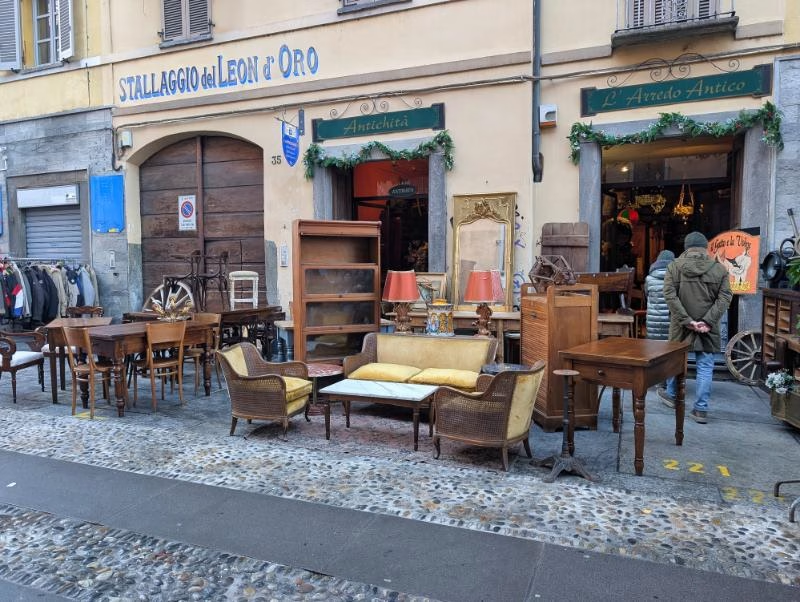
Street-level commerce, the Turin way: furniture and objects move outdoors, and browsing becomes part of the district’s rhythm.
How to visit
Porta Palazzo operates every morning, Monday to Saturday.
Saturday is the most intense day, with the widest variety and the strongest atmosphere.
The market works best when approached slowly: walk the full perimeter first, then choose one area to explore in detail. It pairs naturally with a visit to the Quadrilatero Romano or the Roman remains around Porta Palatina.
Why it matters
Porta Palazzo is not famous because it is old. It is famous because it still works.
For anyone interested in food, everyday culture, and how cities actually live, this is one of the most revealing places in Turin — and one of the hardest to replicate elsewhere in Europe.
You are in good hands




Tailor-made Italy holidays, thoughtfully planned by ExpertoItaly.
Characterful places to stay, thoughtful routes and well-planned travel between them — across one region or several.
We arrange your accommodation, transport and experiences in Italy. Flights are booked separately.
About ExpertoItalyPlan with ExpertoItaly
Tell us where you would like to go, when you can travel and what matters to you.
Start planning your Italy holidayMonday–Thursday: 9am–6pm
Friday: 9am–5.30pm · UK time
At weekends, please send an enquiry.
Your holiday protection

Travel Trust Association
Member Q8055
Read how your holiday payments are protected through our TTA membership.
How your holiday is protectedItaly ideas and travel advice by email
Subscribe for destination ideas, places to stay and practical advice from ExpertoItaly.
We will never sell your details. Read our privacy policy.
Follow ExpertoItaly
 Facebook
 WhatsApp channel
Follow our travel updates. For help planning your own holiday, contact ExpertoItaly.
ExpertoItaly Ltd · Company registration no. 12035194 · TTA membership Q8055
Package holidays are sold by ExpertoItaly Ltd. Registered office: 33 Miles Close, London, SE28 0NJ.