Urbino in Le Marche: Palaces, Raphael and Everyday Italy

This Urbino travel guide is for travellers heading to northern Le Marche who want more than a quick photo stop. Urbino is a compact Renaissance hill town with a lived-in university soul: towers, domes and brick palaces rising above soft green countryside, and streets where students and locals still outnumber tour groups.


Urbino is at its best when the day-trippers leave and the town returns to itself — brick streets, open windows, and long evening views rolling out towards the hills.
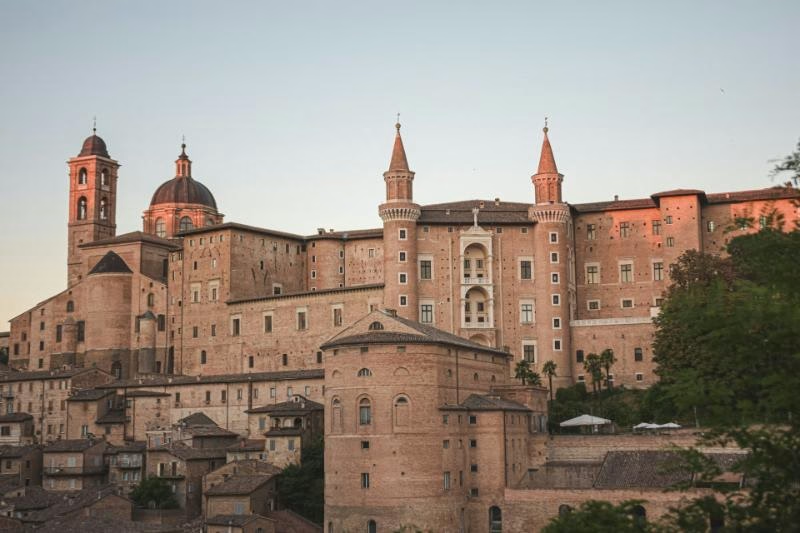
Soft evening light on Urbino’s Ducal Palace, its brick walls and twin turrets lifting above the old town roofs.

Soft evening light on Urbino’s Ducal Palace, its brick walls and twin turrets lifting above the old town roofs.

Urbino at a Glance

  • UNESCO-listed historic centre with a remarkably intact Renaissance layout.


  • Compact, walkable hill town – you can cross the core in around 15–20 minutes.


  • Home to the Ducal Palace and the Galleria Nazionale delle Marche.


  • A real university city, not just a museum for visitors.


  • Works best as a 2–3 night stay within a wider Le Marche or central Italy itinerary.
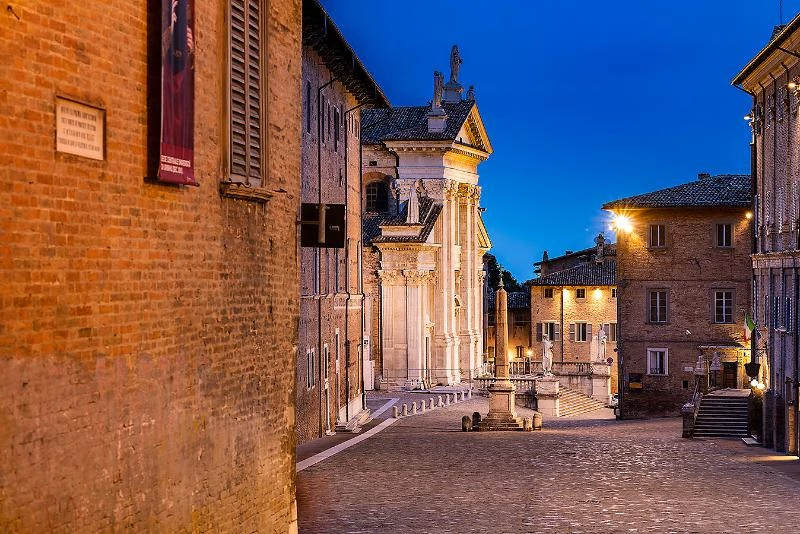
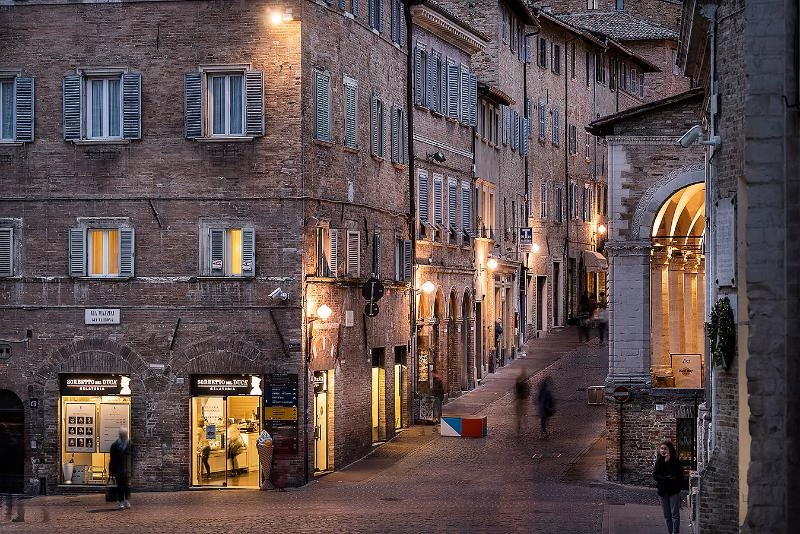
Evening street scene in Urbino historic centre with brick buildings, shuttered windows and softly lit shops

As evening falls, Urbino’s brick streets glow with shop lights and quiet movement, revealing a town that lives well beyond museum hours.

Why Urbino Works So Well for a Short Stay

Unlike some hill towns that empty when the coaches leave, Urbino has a year-round local rhythm.

Students and residents keep the streets around Piazza della Repubblica busy; small bookshops, wine bars and cafés sit alongside everyday shops and university buildings.

Just beyond the walls, the landscape drops away into neat fields and wooded ridges.

For many ExpertoItaly guests, Urbino is the “serious culture” chapter of the holiday: two or three nights of palaces, frescoes and rooftop views, balanced with quieter days by the sea in Pesaro or at a countryside estate.

Choose Urbino if you:

  • enjoy art, history and architecture without needing a packed museum schedule;


  • prefer towns you can walk rather than drive across;


  • are happy with a few short, steep strolls between hotel, cafés and viewpoints;


  • like places that feel mainly Italian in tone, even in high season.
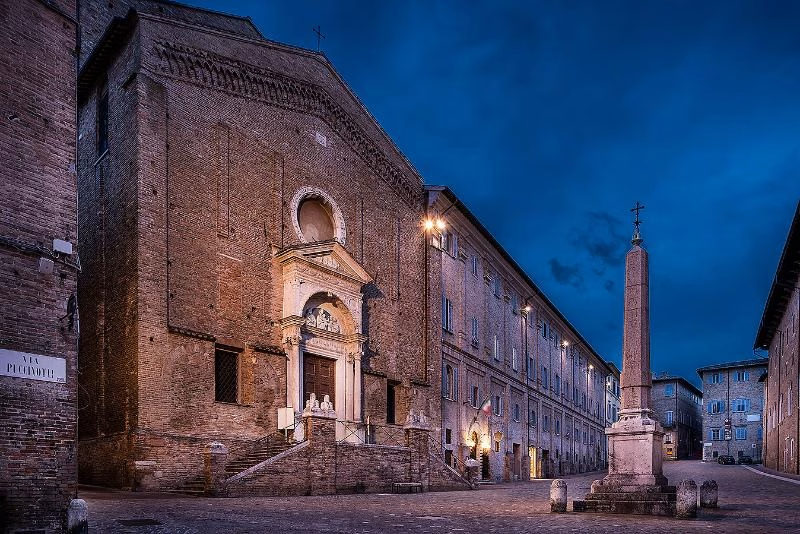
Dusk view of a small piazza in Urbino with a Baroque church façade, stone paving and warm street lighting.

Small piazzas and churches punctuate Urbino’s centre, revealing layers of Renaissance and Baroque history after dark.

Urbino in One or Two Days

You can see a great deal of Urbino in one full day.

A stay of two or three nights simply lets you slow down: revisit favourite corners, add a quiet church or oratory, and, if you have a car, dip into the nearby Montefeltro hills.

Suggested Rhythm for a Day Visit

  • Walk through the historic centre via Piazza della Repubblica to orient yourself.
  • Visit the Palazzo Ducale and Galleria Nazionale delle Marche.
  • Add one smaller highlight – for example the Oratory of San Giovanni Battista or Raphael’s house.
  • End with a stroll along or under the walls for views over the countryside.

How a 2–3 Night Stay Feels

• Arrival afternoon: settle into your hotel, wander up to Piazza della Repubblica and enjoy a first aperitivo with views towards the hills.


• Full day: focus on the palace and gallery in the morning, then explore backstreets, churches and viewpoints in the afternoon.


• Extra day: fit in the cathedral, one oratory and, if you have a car, a short loop through the nearby villages and valleys.

Because distances are short, there is no need to rush.

You can break up “serious” visits with coffee stops, slow lunches and time simply watching how the town works around its students.

Urbino Cathedral and Piazza della Repubblica at dusk, with brick facades, the obelisk and Renaissance architecture illuminated in the evening light.

Urbino’s cathedral and main piazza at dusk, when the city’s Renaissance geometry feels calm, lived-in and quietly theatrical.

The Historic Centre and Piazza della Repubblica

Urbino’s historic centre is UNESCO World Heritage.

Narrow, cobbled lanes wind between red-brick houses, small palaces and churches; streets rise and fall, opening suddenly onto views or tiny squares.

It feels coherent and contained rather than patched together.

Piazza della Repubblica is the town’s natural meeting point and a useful landmark.

From here you walk out towards the palace, cathedral, university buildings and main shopping streets.

The cafés and shops around the square serve locals and students as much as visitors, which is part of why Urbino never quite feels like a set piece.

Palazzo Ducale and the Galleria Nazionale delle Marche

The Ducal Palace is Urbino’s main sight and one of the most important examples of Renaissance architecture in Italy.

Built under Duke Federico da Montefeltro, with architects such as Luciano Laurana and Francesco di Giorgio Martini, it was conceived as an ideal residence and court, not just a fortress.

Inside, beyond the famous twin turrets, you move through the Cortile d’Onore, the intricately inlaid studiolo, ceremonial spaces such as the former Salone delle feste and rooms that once housed a renowned library of illuminated manuscripts.

Within the same complex, the Galleria Nazionale delle Marche holds a major collection of Renaissance painting.

Highlights include:

  • Piero della FrancescaFlagellation of Christ, Madonna di Senigallia, and the panel known as the Città Ideale (Ideal City).
  • RaphaelLa Muta and Saint Catherine of Alexandria.
  • Works by Tiziano, Paolo Uccello, Giovanni Santi and others.

The Città Ideale, probably painted between 1480 and 1490 by an anonymous central Italian artist, condenses the Renaissance fascination with proportion and perspective into a single imagined square.

Scholars still debate whether it was a perspective study, a decorative panel or a stage design, but for most visitors it simply expresses, in one image, the “ideal” town that Urbino itself partly represents.

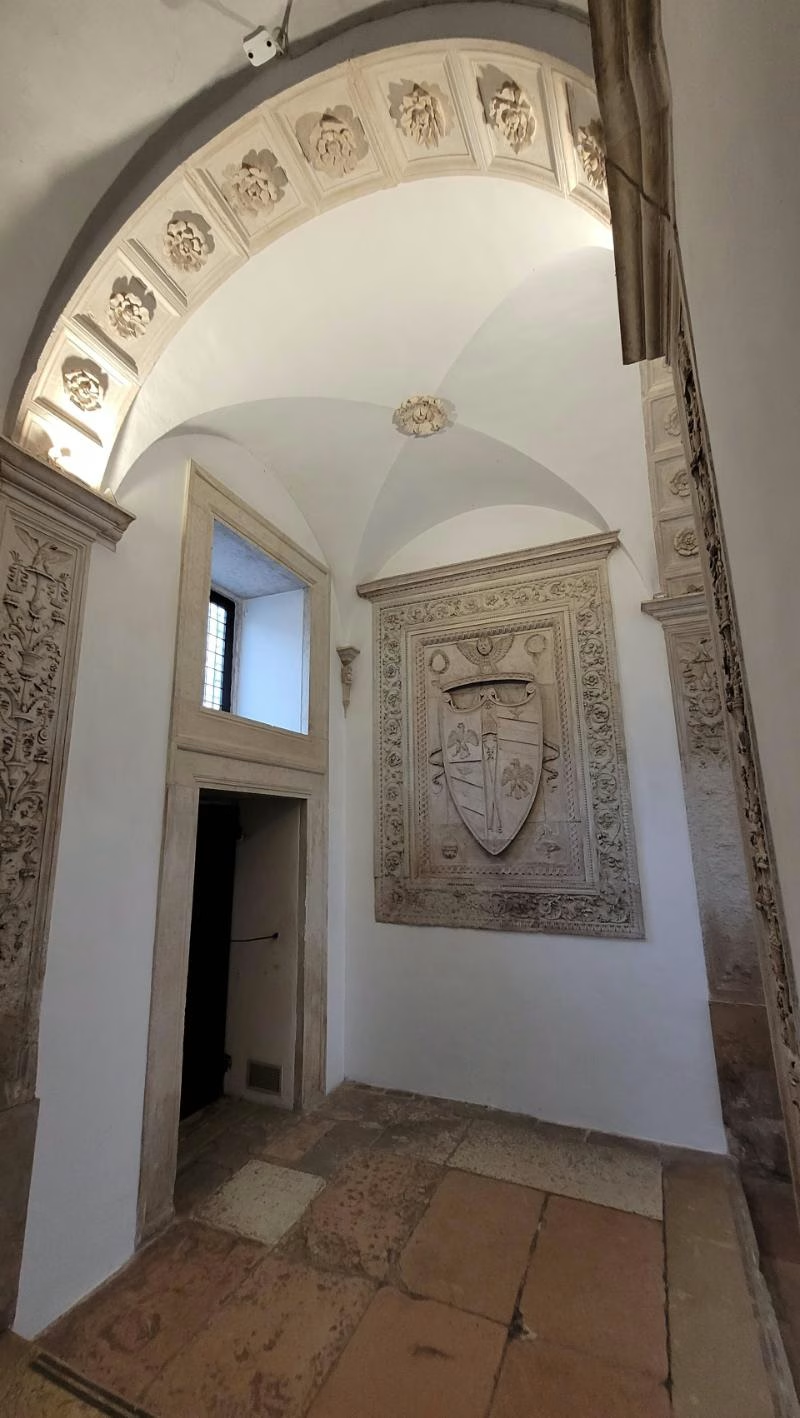
Interior detail of the Palazzo Ducale in Urbino showing carved stone heraldry, vaulted Renaissance ceilings and pale stone doorways.

Inside the Palazzo Ducale, Urbino’s Renaissance ideals are expressed in stone: measured proportions, carved heraldry and spaces designed for intellect as much as ceremony.

Raphael in Urbino

Urbino is the birthplace of Raphael (Raffaello Sanzio), and his presence is felt in two main ways:

  • in the Galleria Nazionale, where his paintings hang alongside those of his contemporaries;
  • in the Casa natale di Raffaello in Via Raffaello, his supposed birth house, now a small museum.

The house, with its street-level workshop, offers a more intimate scale than the palace.

Inside you find drawings, prints and a small Madonna with Child traditionally considered an early work, together with pieces linked to the studio.

It is not essential for every visitor, but for those with an interest in Raphael it rounds out the picture beyond the famous altarpieces seen elsewhere in Italy.

Cathedral and Museo Diocesano Albani

The Cathedral of Santa Maria Assunta stands just above the palace and has a long, layered history.

A cathedral has been recorded here since the early eleventh century; the version commissioned in the fifteenth century, under Federico da Montefeltro, was later damaged by an earthquake in 1789.

The present neoclassical structure was completed in the early 1800s under architect Giuseppe Valadier.

Inside, you can see works by Federico Barocci – including a Saint Sebastian, Saint Cecilia and a striking Last Supper – along with paintings by Carlo Maratta and Carlo Cignani.

Even a short visit gives a sense of how Urbino’s religious art continued to evolve beyond the high Renaissance.

Next door, the Museo Diocesano Albani houses a compact collection of religious art and objects: illuminated manuscripts, liturgical vestments, reliquaries, metalwork and the brass lectern associated with Federico da Montefeltro.

It is a good addition if you have a particular interest in church history or decorative arts.

Oratory of San Giovanni Battista

The Oratorio di San Giovanni Battista is one of Urbino’s most rewarding “small” sights.

Behind a modest exterior lies a fully frescoed interior dating from the late fourteenth and early fifteenth centuries.

The cycle by brothers Lorenzo and Jacopo Salimbeni includes a powerful Crucifixion and scenes from the life of John the Baptist.

Completed around 1416, it has retained much of its original intensity and colour.

A visit can be comfortably fitted into half an hour and is often one of the most memorable stops for guests who enjoy painting but prefer intimate spaces to huge galleries.

Night view across Urbino historic centre showing brick palaces, stairways and Renaissance buildings under soft lighting

Layered streets and stairways reveal Urbino’s compact, walkable Renaissance layout.

Walls, Views and the Orto Botanico

Part of Urbino’s charm lies in how clearly it relates to the landscape around it.

  • A stroll along or below the fifteenth-century walls gives long views over fields, farmhouses and distant ridges. Even short stretches are rewarding and make a good way to end the day.
  • The Orto Botanico, managed by the university, is a small, terraced botanical garden near the historic centre, founded in the early nineteenth century. Its mix of local species, medicinal plants and exotics offers a quiet change of pace from stone and fresco.

Urbino’s University: A Small City with a Big Campus


The Università degli Studi di Urbino “Carlo Bo” is one of Italy’s most respected historic universities, with roots in the early sixteenth century.


It attracts students from all over Italy and abroad, particularly in the humanities, law, communication and social sciences.


Many faculties and residences occupy historic buildings such as Palazzo Albani and Palazzo Battiferri, some with rooftop gardens now open to students and the public.


This keeps the centre lived-in and gently busy even outside the typical tourist season.


For visitors, the university adds three things: cafés and bars that feel genuinely local, a cultural calendar that runs beyond summer, and evenings animated more by students than by organised tour groups.

Urbania and the Montefeltro Hills


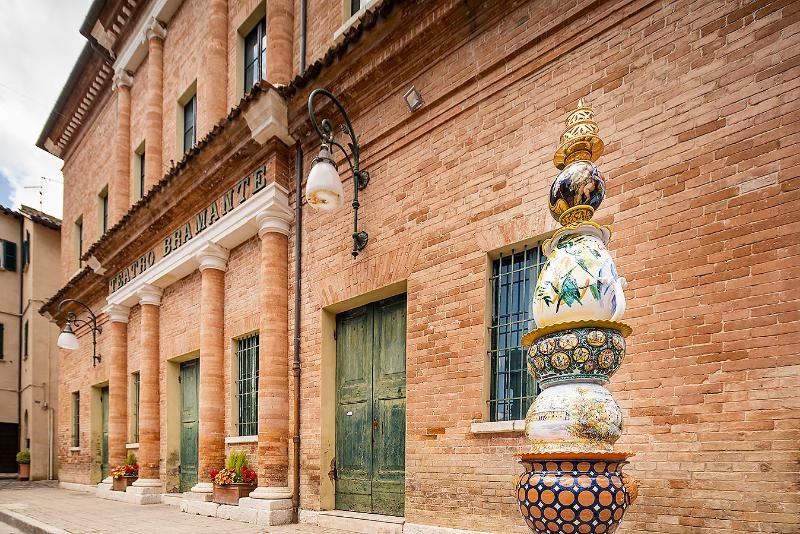
A short drive from Urbino, Urbania is a smaller hill town on a bend of the Metauro river, long known for its maiolica ceramics.
Workshops and studios in the centre display hand-painted plates, tiles and everyday pieces that still feel rooted in local tradition.


Combined with viewpoints over the Metauro and Foglia valleys, Urbania makes an easy half-day outing from Urbino for travellers who enjoy crafts, ceramics and quieter, very local towns.


It also gives a flavour of the wider Montefeltro landscape without requiring long drives.

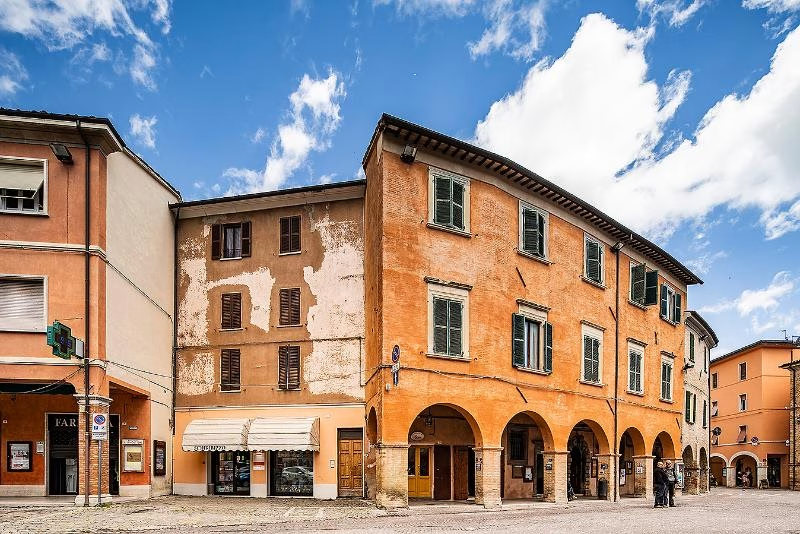
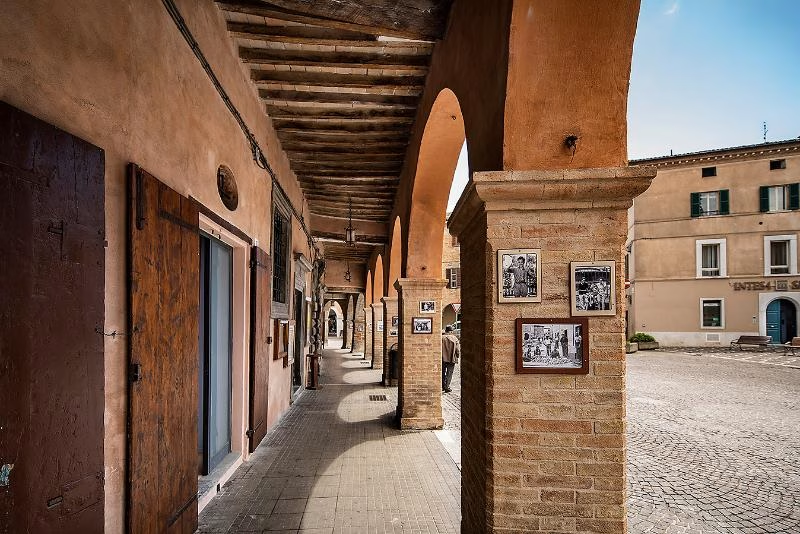
Street scene in Urbania with pastel buildings, arcades and a small piazza atmosphere.

A quick detour to Urbania adds a different rhythm: porticoes, workshops, and a long tradition of ceramics in everyday life.

Decorative ceramic column outside a brick building in Urbania, highlighting the town’s maiolica tradition.

Festivals and Events

If you enjoy travelling with a touch of local colour, Urbino offers a few events that can add another layer to your stay:

  • Festa del Duca – a Renaissance-themed celebration dedicated to Federico da Montefeltro, with processions in costume, flag-throwers, falconry displays and cultural events that temporarily turn the town into a living court.
  • Urbino Plays Jazz – summer jazz performances, usually between July and August, when piazzas and theatres become relaxed stages for Italian and international musicians.
  • Feast of San Crescentino – on 1 June, religious ceremonies and community events honour Urbino’s patron saint, giving a glimpse of the town’s devotional life.

Food, Wine and Evenings

Evenings in Urbino are generally low-key and local.

You might sit with a glass of Verdicchio or a Montefeltro red in a wine bar off the main square, try dishes based on truffles, game and farmhouse cheeses in a vaulted trattoria, or simply wander after dinner, watching the town wind down.

Compared with many Tuscan or Umbrian hotspots, prices remain fairly grounded and most places still feel geared towards residents first, which many guests appreciate.

Where We Usually Recommend Staying

Inside the Historic Centre

Staying within Urbino’s walls suits:

  • 2–3 night stays with a clear focus on town, art and architecture;
  • travellers who like to step straight out into streets and sights;
  • guests combining Urbino with a coastal base in Pesaro or a night or two in Bologna.

Small, characterful properties such as historic palazzi converted into guest accommodation work particularly well here, offering easy access on foot to the palace, cathedral and main squares.

In the Countryside Nearby

A countryside base within easy reach of Urbino works well if you:

  • want more space, views and often a pool;
  • are planning a longer holiday where Urbino is one of several focal points;
  • are comfortable with short, local drives through the hills to mix villages, coast and countryside.

In this case, Urbino becomes your main “town day”, combined with time in the northern Marche countryside, on the coast near Pesaro, or further afield in Umbria and Emilia-Romagna.

Getting to Urbino and Parking

Urbino has no railway station, which is part of why it has kept such a contained feel.

Most guests reach it by a combination of train, bus and road.

Arriving without a Car

  • From the north or south, take the main Adriatic line to Pesaro or Fano.
  • Continue up to Urbino by scheduled bus or pre-booked private transfer; journey times are usually around an hour from Pesaro, depending on traffic.
  • Once in town, everything is on foot: hotels, cafés, main sights and viewpoints all lie within the historic centre or just beyond the walls.
  • want more space, views and often a pool;
  • are planning a longer holiday where Urbino is one of several focal points;
  • are comfortable with short, local drives through the hills to mix villages, coast and countryside.

Arriving with a Car

If you are already driving in Le Marche or Umbria, Urbino sits within reach of places such as Pesaro, Gubbio and the wider Montefeltro area.

Roads are generally good but often winding and occasionally steep as you approach the town, so allow a little extra time.

Parking in Practice

For those arriving by car, these practical tips make parking much easier:

It is strongly recommended to leave your car in the multi-storey car parks at P.le Mercatale or Santa Lucia (3 hours’ free parking if you shop in the commercial area), as they have lifts up to the historic centre and you pay for your stay at the end (with a good-value daily rate).

It is not advisable to stop in the first car parks you see (including along the walls) because they all require pre-payment at the ticket machine,
are further from the monuments and have no lifts. They also force you to decide in advance exactly how long you will spend in Urbino.

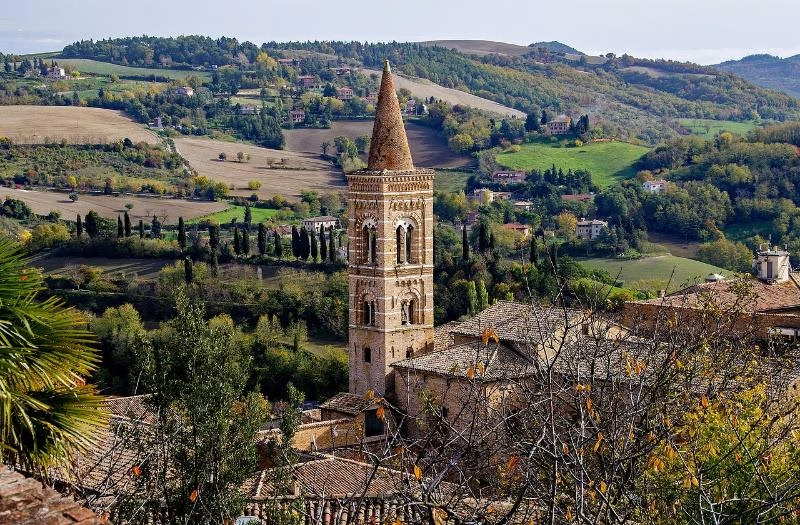
Bell tower of Urbino overlooking the rolling countryside of northern Le Marche

From Urbino’s heights, bell towers rise above a patchwork of fields and wooded hills — a reminder that this Renaissance city is inseparable from its countryside.

How Urbino Fits into a Wider Itinerary

Because distances in northern Le Marche are compact, Urbino rarely stands entirely alone. Typical combinations include:

  • Pesaro & Urbino – a seafront hotel on the Adriatic paired with two or three nights of Renaissance focus in the hills.
  • Urbino & a countryside estate – a night or two inside the walls followed by several days among fields, vines and olive groves.
  • Urbino, Frasassi and the Apennine foothills – for travellers comfortable with longer drives, a loop that adds caves and gorges to town and countryside views.

However you weave it in, Urbino tends to provide the structured, historic part of a northern Le Marche holiday:

a few days in which art, architecture and compact streets come to the fore, framed by the hills and fields that made this Renaissance court city possible in the first place.