WHEN RAIL TRAVEL BECOMES PART OF THE HOLIDAY

Rail travel in Italy is often simpler than people expect — and, used well, it becomes more than a way of moving between places.


For multi-centre and car-free holidays in particular, trains offer speed, comfort, and continuity. Distances between major cities are short, stations sit in the centre rather than on the edge, and travel times are measured in minutes rather than hours.


The result is a holiday that flows, where moving on feels like part of the experience rather than a disruption to it.

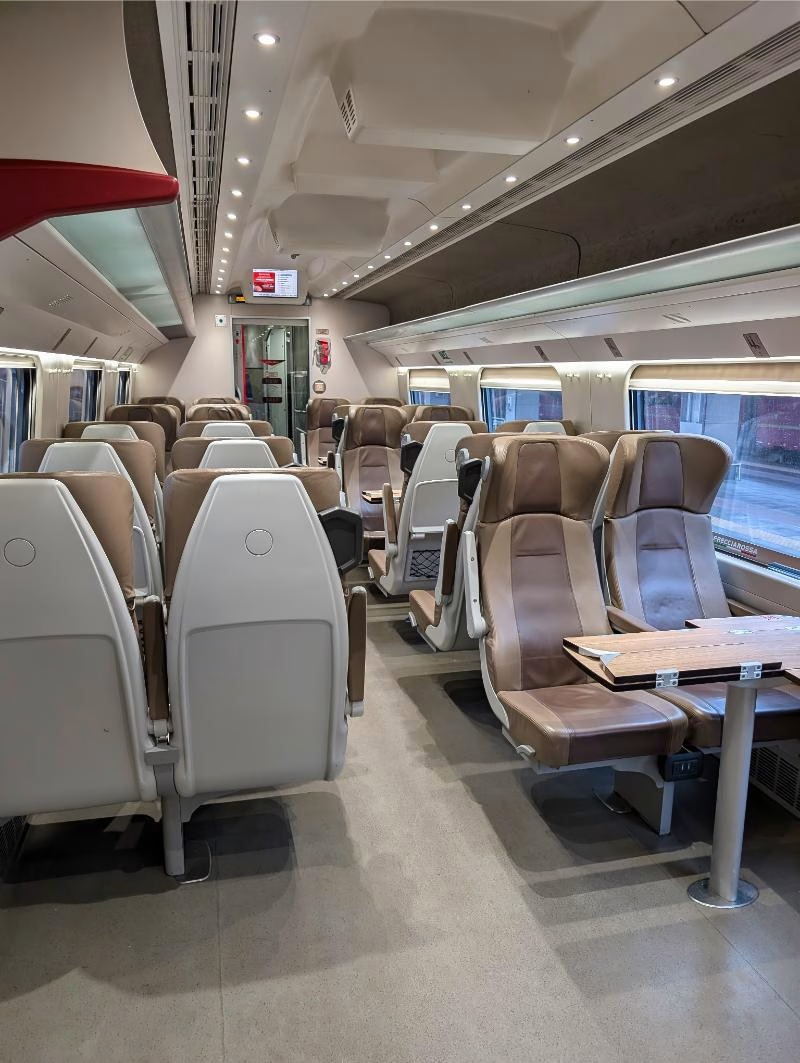
Frecciarossa standard class interior with seating and tables
Standard class on Italy’s high-speed trains is modern, spacious and designed for short, efficient journeys.

Rail travel in Italy: straightforward by design

Italian railway station with high-speed and regional trains at platformsng Italian suburbs
Italy’s major stations are central, busy and designed for frequent everyday travel.

Italy’s rail network is designed around everyday movement between cities and regions. Major stations are usually within walking distance of historic centres, or a short taxi ride at most. Services are frequent, timetables are predictable, and routes connect places people actually want to stay.


For travellers used to driving long distances or navigating airports between close-set destinations, rail often proves to be the calmer and more intuitive option — particularly when combining cities, regions, or coast and countryside.

The main train types you’ll encounter

High-speed services


Frecciarossa and Frecciargento trains connect Italy’s major cities quickly and comfortably, with journey times that are often far shorter than expected.


  • Rome → Naples: just over 1 hour
  • Turin → Milan: around 55 minutes
  • Bologna → Florence: about 30 minutes
  • Padua → Vicenza: under 20 minutes
  • Milan → Florence: approximately 1 hour 55 minutes


These services are modern, seat-assigned, and air-conditioned, designed for direct city-centre to city-centre travel. For most routes, the train is usually the most time-efficient option overall.


High-speed trains work particularly well for linking cities within a wider itinerary, keeping travel days short and leaving more time where it matters.


Long-distance classic routes


InterCity and certain Frecciargento services cover longer coastal and cross-country routes where full high-speed lines do not operate end to end.


They move at a gentler pace, often following coastlines or open landscapes that would be tiring to drive in a single stretch.


A good example is the Naples → Reggio Calabria route. While parts of the journey are served by Frecciargento trains, the overall experience reflects classic long-distance rail travel. The line follows the Tyrrhenian coast for long sections, turning what could be a demanding drive into a relaxed, unhurried journey.


Regional services


Regionale trains handle local travel, short connections, and day trips. Most operate with second class only and are designed for frequent, everyday use.


They are particularly useful when staying in one place and exploring outward — for example, moving between Tuscan towns, along the Ligurian coast, or between smaller centres near major cities.

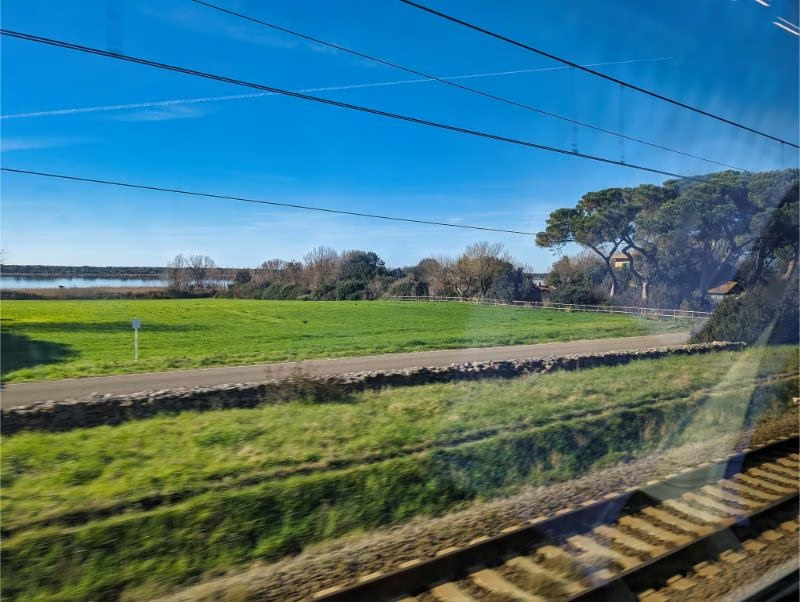
Italian countryside viewed from a moving train window
On longer routes, rail travel offers a calm way to cover distance while the landscape changes gradually.

Classes of travel: what actually matters

Italian rail journeys are generally short and efficient, which means comfort is largely built in. Choosing a higher class is therefore usually a matter of preference rather than necessity.


Regional trains


Most regional services operate with second class only. They are functional, widely used by locals, and entirely suitable for short hops, day trips, and everyday travel.


High-speed trains


On Frecciarossa and Frecciargento services, Standard class offers reserved seating, air-conditioning, and a smooth ride. Given journey times such as Rome–Naples (just over an hour) or Bologna–Florence (around 30 minutes), Standard class is more than sufficient for most travellers.

Premium, Business and Executive

Higher service levels offer more space, quieter carriages, and additional onboard service, with lounge access at the top end.

They tend to make the most sense on longer north–south journeys or when travellers want a more settled environment for several hours. On shorter routes, the practical difference is often marginal.

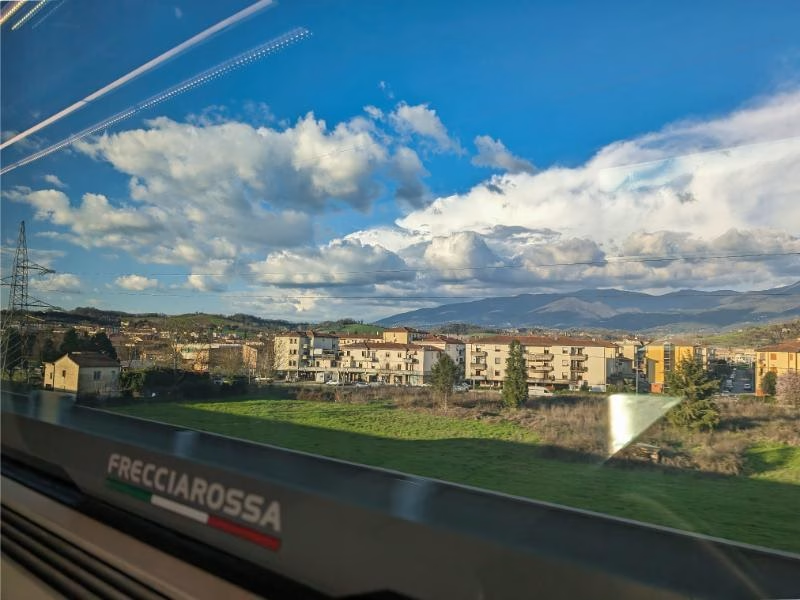
View from Frecciarossa train window passing Italian suburbs
High-speed rail connects city centres quickly, often in under an hour.

When rail travel makes the most sense

Twin-centre and multi-city breaks


Routes such as Florence → Rome, Venice → Verona, or Naples → Rome → Florence are faster and more relaxed by train than by car, without traffic, parking, or city access restrictions.


Car-free holidays


Rail allows travellers to stay in historic centres, lakeside towns, and coastal locations without hiring a car, while still moving easily between destinations.


Itineraries shaped around flow


Trains encourage a logical sequence — north to south, inland to coast, or city to countryside — without unnecessary backtracking or long transfer days.

When the journey becomes part of the experience

Some rail journeys are worth treating as highlights in their own right.


Routes such as the Bernina crossing, connections associated with the Glacier Express, or longer coastal journeys in southern Italy offer a sense of progression through landscape that would be fragmented or tiring by road.


In these cases, the train becomes a moment of pause and transition, allowing the holiday to breathe.

Rail day trips from a single base

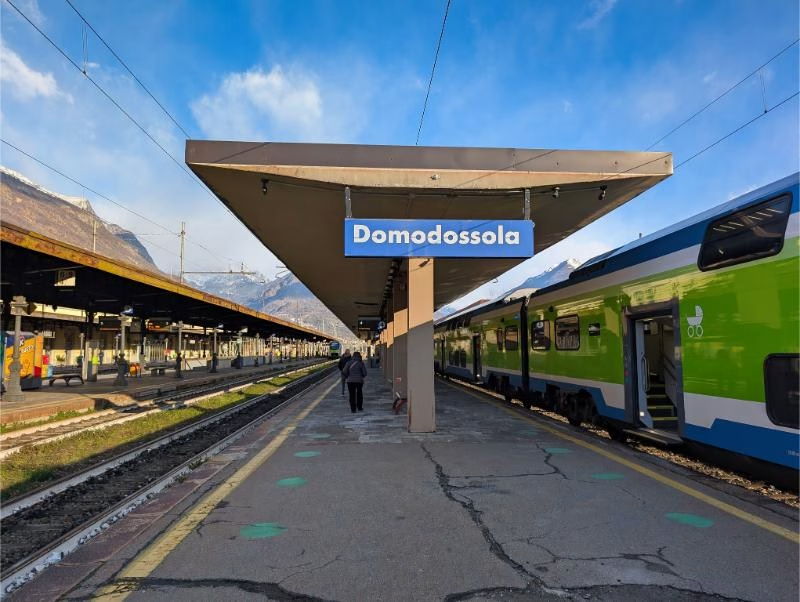
Domodossola railway station platform with regional trains high-speed and regional trains at platformsng Italian suburbs
Domodossola railway station with regional trains at the platforms

One of the most practical advantages of Italian rail travel is how easily it supports exploration without changing hotels.


  • Vigezzina–Centovalli line from Domodossola or Locarno
  • Castelli Romani line from Rome
  • Cinque Terre Express along the Ligurian coast
  • Local Tuscan routes from Florence
  • Paestum, reached in around 1 hour 40 minutes from Naples or Salerno


This approach suits travellers who enjoy variety during the day, but prefer returning to the same hotel each evening.

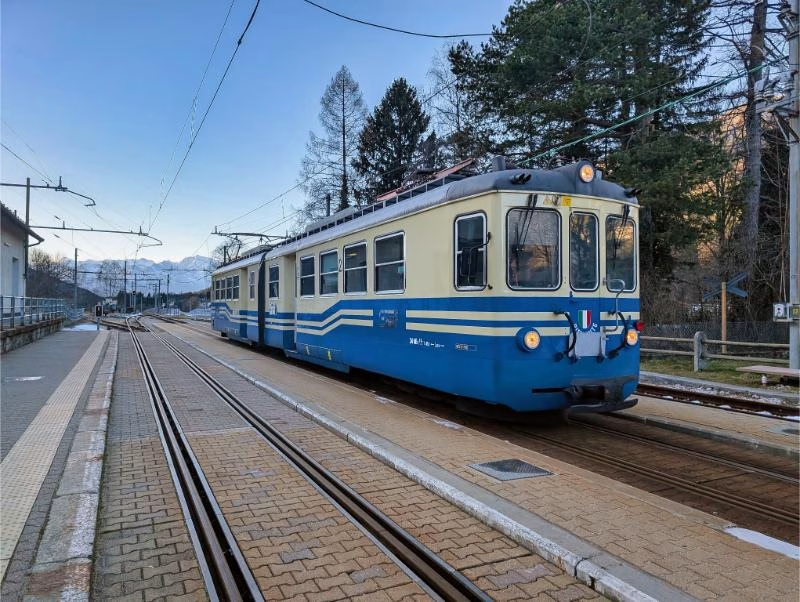
Vigezzina–Centovalli regional train at station between Domodossola and Locarno
A regional line that works as both transport and experience, linking Domodossola with the Centovalli and Lake Maggiore.
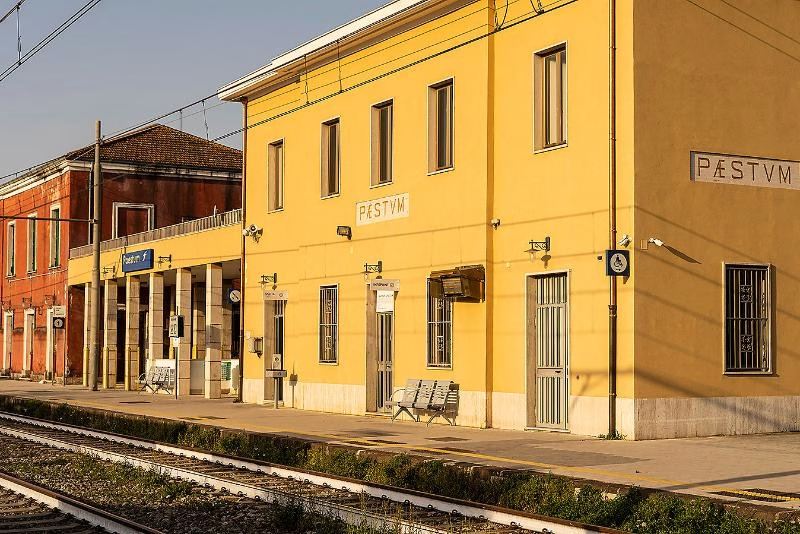
Paestum railway station in southern Italy with station building and tracks
Paestum is easily reached by train from Naples or Salerno, making it a straightforward rail day trip rather than a car-dependent excursion.

Historic and seasonal rail experiences

At certain times of year, Italy also offers historic and heritage rail experiences, where the railway itself is part of the landscape and history rather than simply a means of transport.


These routes are not daily commuter lines, and some services are seasonal or limited. When they align naturally with an itinerary, they add depth and perspective — but they work best as a considered layer, not the foundation of a holiday.


A particularly strong example is the Cuneo–Ventimiglia–Nice line, often referred to as the Ferrovia delle Meraviglie.


Built through the Maritime Alps, this extraordinary railway links Piedmont, Liguria, and the French Riviera, passing through remote valleys, stone viaducts, tunnels, and mountain villages that would be difficult to experience in a single journey by road. It is a line shaped as much by geography and history as by engineering.


Today, the route is valued not for speed, but for its continuity through landscape — a journey where the changing terrain tells its own story as the train descends from the Alps towards the coast.


Alongside routes like this, Italy also offers seasonal heritage services (Treni Storici), often operated with vintage rolling stock on selected dates. These may include:


Many of these initiatives are supported by organisations such as Fondo Ambiente Italiano, which works to protect and promote culturally significant landscapes and infrastructure.


For travellers already staying nearby, these journeys can add a distinctive dimension to a wider itinerary. In most cases, however, they are best treated as experiences to include thoughtfully, rather than routes to build a holiday around.

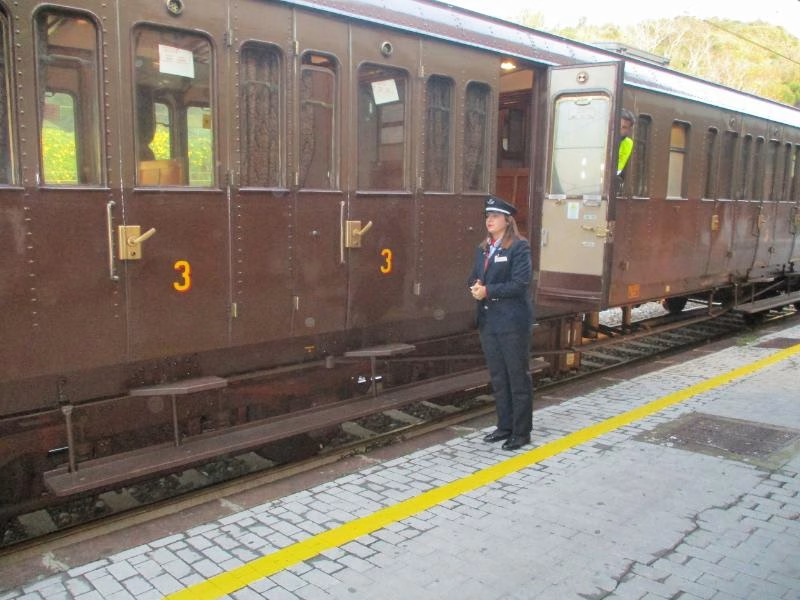
Historic Italian train carriage with railway staff on platform
Historic rail services operate on selected routes and dates, offering atmosphere rather than everyday transport.
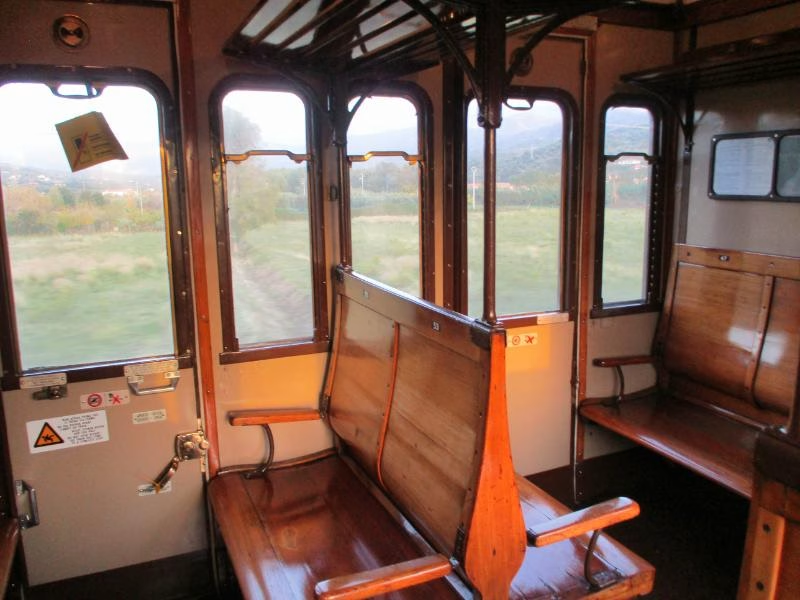
Interior of historic Italian train carriage with wooden seating
Vintage carriages are part of seasonal heritage services, best enjoyed as a characterful day experience.

Planning rail travel properly

Rail travel works best when it is integrated into the itinerary from the outset, rather than added later.


ExpertoItaly can arrange point-to-point tickets, coordinate multi-leg journeys, and organise rail travel for couples, families, and small groups.


The aim is not to maximise time on trains, but to use rail where it genuinely improves the rhythm of the holiday.

In summary

Rail travel in Italy is neither complicated nor restrictive. Used thoughtfully, it simplifies logistics, shortens travel days, and often enhances the experience of moving through the country.


When rail travel becomes part of the holiday, the journey stops feeling like time lost — and starts feeling like time well spent.

Tags :