The Roman–Medieval Heart of Naples: Where the Ancient City Never Stopped

Walk the Centro Storico and you’ll meet a city that kept its script. The Greeks drew the grammar; Roman Neapolis turned the streets into a stage—and the curtain never fell. Three east–west spines—Spaccanapoli, Via dei Tribunali, Via Anticaglia—still organise the day. Step onto these lines and the place explains itself.

Continuity you can stand on. When the empire ebbed, Naples stayed put. Temples became churches without changing address; markets moved downstairs rather than out of mind; faith layered over custom.

One grid, many centuries. Late antiquity opened the catacombs (San Gennaro, San Gaudioso); Byzantium kept a Greek voice alive; a medieval duchy traded on the same routes; later rulers set naves and cloisters exactly where the forum once breathed.

Old stones, new meanings. The Temple of the Dioscuri fronts today’s San Paolo Maggiore; forum logic reads now as Piazza San Gaetano.

Narrow vicolo in Naples’ Centro Storico with laundry strung above stone paving and old doorways—everyday life on the city’s living Roman–medieval grid.
 

A side lane of the Centro Storico where the ancient plan never retired: the Roman decumanus lines still set the width, doors and sightlines. Laundry, pot plants and votive corners share space with piperno and tufa—continuity measured in daily use, not museum labels. Walk here and you truly “follow an address” through two millennia.


“In Naples, you don’t chase history—you follow an address.”

Spaccanapoli — the straight line that still runs the show

What it is

Not an official street name but a locals’ nickname, Spaccanapoli (“Naples-splitter”) is the long, almost ruler-straight line of the lower east–west artery. It is the clearest place to feel how the ancient plan still organises today: cafes, churches, workshops and palazzi all hooked to one address.

Why it matters

One look, whole city. Stand near Piazza del Gesù Nuovo and you’ll see Spaccanapoli slice the quarter to the horizon. That line is the city’s logic made visible.

Layers without moving house. Along a single stroll you pass Gesù Nuovo (Renaissance palace turned Jesuit church), the majolica cloister of Santa Chiara, the scholarly calm of San Domenico Maggiore, and Piazzetta Nilo with the Roman Corpo di Napoli (Nile statue) still acting as a local guardian.

Everyday life on an ancient track. Votive corners twinkle, tailors and papermakers trade at the kerb, and doorways reveal courtyards where families have used the same stairwells for generations.

How to walk it

Start at Piazza del Gesù Nuovo and head east. Keep your pace conversational.

Pause at Santa Chiara for the cloister (church first, then cloister).

Glance up at balcony lines and washing strung above—modern life marking the same sightlines the Greeks and Romans fixed.

Divert a few metres when a lane tempts you—Sansevero and San Gregorio Armeno thread off Spaccanapoli like side-chapters and are covered in their own sections below.

What to notice (quick cues)

Stone underfoot: grey piperno and warm tufa in walls and thresholds—materials pulled from the same bedrock you visit in Napoli Sotterranea.

Stone underfoot: grey piperno and warm tufa in walls and thresholds—materials pulled from the same bedrock you visit in Napoli Sotterranea.

Soundtrack: scooter purr, clink of cups, church bells folding into street talk—no single voice dominates.

Façades as punctuation: big statements (Gesù’s diamond rustication) alternating with quiet palazzi; the rhythm keeps you moving without rush.

Practical weave

Best light: early morning or late afternoon when façades glow and the line reads cleanly.

Photo tip: frame the long vista from the railings at Piazza del Gesù; later, take a second shot looking back from Piazzetta Nilo—two arrows proving the same axis.

Eating: this is sip-and-stroll territory; save a sit-down for Via dei Tribunali (pizza a portafoglio or fritta) a block north.

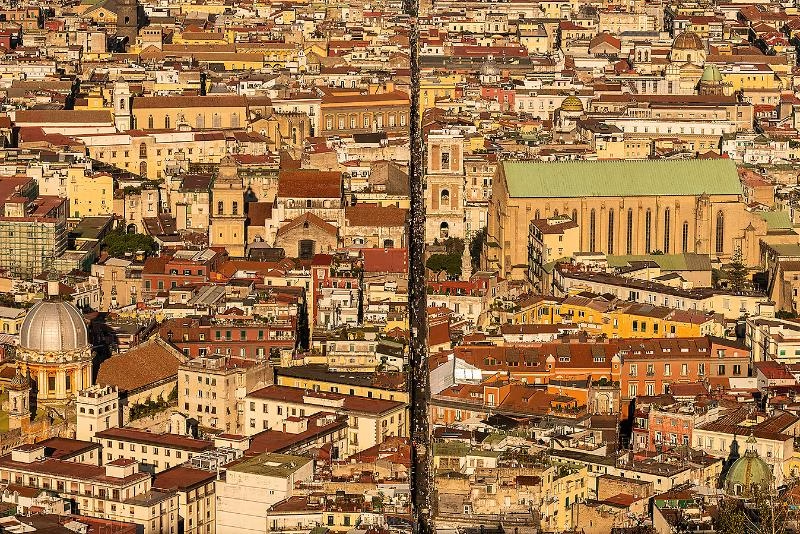
Aerial view of Spaccanapoli slicing the Centro Storico east–west, with Santa Chiara’s long roof and dense palazzi on either side.
 

One look, whole city. From this height the lower decumanus cuts the quarter cleanly in two. That line is Naples’ logic made visible—ancient planning still organising cafés, churches and workshops today. Start where the axis is clearest: Piazza del Gesù Nuovo.

 
Long street vista along Spaccanapoli with pedestrians, bollards and sunlit façades.
 

Step onto the line and the soundtrack clicks in: scooter purr, clink of cups, church bells folding into street talk. Underfoot, grey piperno and warm tufa—the same bedrock you’ll meet in Napoli Sotterranea. Keep the pace conversational; the street will do the guiding.

 
Piazza del Gesù Nuovo with crowds and the diamond-rusticated façade of Gesù Nuovo.
 

Begin here. The former palace wears its fortress-like piperno diamonds while the square opens the view straight down Spaccanapoli. Photo tip: frame your first shot from these railings; take the second later from Piazzetta Nilo to prove the same axis from both ends.

 
Night view of Piazza del Gesù with the illuminated Immacolata spire and people gathering.
 

Best light? Early morning or late afternoon—then linger into blue hour. The square glows, voices soften and the line reads even more cleanly. Spectacle without fuss: Naples’ favourite trick.

 
Outdoor tables at a café on Spaccanapoli; people talking beneath layered façades.
 

This is sip-and-stroll territory. Take five for an espresso, watch balcony lines above and notice votive corners twinkling at eye level. The grid keeps you moving without rush—big façades, quiet palazzi, punctuation all the way.


San Lorenzo Maggiore: Roman Market Below, Angevin Church Above

If one address can teach you Naples in a single gesture, it’s this one. At street level you meet a clean, soaring Gothic nave raised under Angevin rule; down a stair you step into the Roman city that never left.

Why it matters

Naples rarely demolishes a stage; it changes the play and keeps the audience. Here the join is visible. The friars set their thirteenth-century church directly over a second-century marketplace—arcaded lanes, small tabernae, marble counters still nicked by trade. Continuity isn’t a slogan; it is the staircase under your feet. You descend through time, rise with fresh eyes, and the square outside completes the lesson—students chatting, neighbours passing, a scooter’s polite horn. Past and present don’t take turns here; they share the shift.

What to look for

The nave’s logic: tall lancets, ribbed arches, and pale tufa piers that make purpose feel effortless.

The seam: note how the church footprint respects the antique street lines below—form carried forward, not erased.

Below ground: a compact Roman market quarter with paved lanes, shop fronts, counters and drains; it feels like the basement of the medieval city, not an isolated ruin.

Sala di Sisto V (chapter hall): a long frescoed vault where Renaissance allegories once presided over practical decisions—governance in paint.

Cloister & fragments: tomb slabs, fresco shards and carved capitals that read like footnotes to the main text.

How to visit

Church first, centre aisle. Let the space settle; walk to the crossing for the best read of the structure.

Down the stair. Take your time in the lanes; notice thresholds and water channels—everyday logistics from two millennia ago.

Back up, then the chapter hall. The frescoed vault clicks after you’ve seen the market: action above, supply lines below.

Pause in the square. Stand a minute and watch the modern crowd complete the scene.

When a city can stack eras without strain, it is showing civic muscle—renewal without erasure. Treat San Lorenzo as your decoder ring: use it once and the Centro Storico begins to read itself.

Gothic nave of San Lorenzo Maggiore in Naples, with pointed arches and a luminous apse; the Roman market (macellum) lies directly beneath.
 

Angevin Gothic in one breath: a clear, luminous nave where pointed arches and tall lancets keep the space spare and readable. A stair to the side drops to the Roman trading quarter preserved below, so the first lesson is scale and continuity—new worship held on old ground.

 
Close view of clustered Gothic piers inside San Lorenzo Maggiore, Naples, with ribbed arches, fresco fragments and a funerary slab; the Roman market lies directly below.
 

Closer in, clustered tufa piers and ribbed arches show the building’s logic. Fresco shards and a medieval tomb share the aisle like neighbours, and the load paths in stone trace the same lines the ancient grid set underfoot.

 
Medieval marble ambo with spiral columns and mosaic inlays inside San Lorenzo Maggiore, Naples; open timber roof and Gothic arcades beyond.
 

The marble ambo—spiral columns flecked with glass and porphyry—turned scripture into street talk. Under the open timber roof the words once carried cleanly to a quarter still working the same addresses. San Lorenzo’s message lands: keep the frame, renew the meaning, never move the doorstep.

 
Long, barrel-vaulted hall of the Sala di Sisto V at San Lorenzo Maggiore, Naples, its ceiling fully frescoed with allegories and framed panels; rows of seats below.
 

The former chapter hall of San Lorenzo stretches beneath a continuous, frescoed vault—Renaissance allegories marching arch to arch. Once a meeting room for friars, now used for talks and concerts, it keeps faith with the site’s story: civic life and worship layered at the same address.

 
Detail of frescoed vault in the Sala di Sisto V, San Lorenzo Maggiore, Naples—allegories labelled Gloria, Honore and Pace within ornate stucco-style frames and grottesche.
 

A close view of the Sala di Sisto V, where a late-Renaissance cycle turns virtues into actors—Gloria, Honore, Pace—framed by painted stucco and lively grottesche. It’s Naples’ habit in paint: classical language refreshed for a working monastery, one floor above the ancient city.


Piazza San Gaetano: The Forum That Never Stopped

Naples’ original stage is still playing to a full house.

In Roman Neapolis this was the forum—the civic heart where trade, worship and gossip ran as one ritual. Look around today and little has changed: stalls bustle, cool doorways invite conversation, and at either end stand the anchors of San Lorenzo Maggiore and San Paolo Maggiore.

Read the façades

At San Paolo Maggiore, the two Corinthian columns are survivors of the Temple of the Dioscuri. The church stands on the temple’s podium; inside, the foundations keep the dialogue going. Naples didn’t move belief elsewhere—it translated it. Same address, renewed meaning. Forum logic became piazza life; the stage stayed central; the crowd never left.

Do a 60-second sense check

-Baroque façade in front of you; a low scooter purr behind.

-Laughter from a doorway; a warm waft of yeast from a nearby oven.

-Your eye returns to the columns—punctuation that pauses the view and lends weight to whatever happens here.

That is what enduring structure does: it lets new speech land cleanly.

How to see it (and not rush it)

Resist treating the square as a pass-through. Make a slow 360° turn and let the continuity sink in. Naples’ trick—repeated all day—is spectacle without fuss. The square courts attention but never shouts: the confidence of a place that doesn’t need to move the goalposts to stay relevant.

Your next move

Leave deliberately: cross from San Lorenzo’s side to San Paolo’s, then slip along the edge towards Napoli Sotterranea. You’ll feel the narrative tighten. You’ve just watched a temple become a church without surrendering its bones; now you’ll drop under the city to see the plumbing that kept the whole performance running for millennia. Forum above, service corridors below—form and function in pact. A masterclass in carrying history forward without breaking stride.

Statue of San Gaetano on San Paolo Maggiore’s façade, framed by a surviving Roman column from the Temple of the Dioscuri, Piazza San Gaetano, Naples.
 

Saint Gaetano Thiene, founder of the Theatines, watches the old forum from San Paolo Maggiore’s façade while a Roman temple column stands guard. The square bears his name because the Theatines made this their Neapolitan base—proof that belief advanced here without changing address.

 
Busy Piazza San Gaetano on Via dei Tribunali, with the statue of Saint Gaetano before the grey-and-white façade of San Paolo Maggiore and crowds at market stalls.
 

At Naples’ old Roman forum, Piazza San Gaetano fuses past and present: Saint Gaetano watches over street traders, the church of San Paolo Maggiore anchors the scene, and the decumani pulse around it


Napoli Sotterranea: The City Below the City

Beneath the Centro Storico lies a honeycomb of quarries, tunnels, cisterns and galleries cut into soft yellow tufa. It isn’t theatre; it’s the service corridor that kept Roman and medieval Naples running—and still does quiet duty.

Why it matters

Greek cuts, Roman engineering. The earliest excavations were Greek; the Romans turned them into an aqueduct, threading channels under streets and courtyards to water the city.

Everyday infrastructure. For centuries the underground handled storage, drainage and craft—the practical work that allowed the surface to shine.

Wartime refuge. In 1943, during the Four Days of Naples, these spaces sheltered civilians from air raids; the walls still carry scratched names and dates.

What you’ll experience (tour from Piazza San Gaetano)

A descent of roughly 40 metres into cool, damp air.

Narrow squeezes that open suddenly into vast cisterns.

Candles picking out wet stone and tool marks.

Wartime graffiti lingering on the rock—history in pencil and soot.

How to visit (smart and swift)

Start at Piazza San Gaetano; guided tours run at set times.

Wear flat shoes; steps can be steep, floors uneven and lighting low.

If time is tight, choose the classic route under San Gaetano—it dovetails perfectly with a walk along the decumani.

Takeaway

Surface Naples is conversation; Napoli Sotterranea is the agreement that makes it possible. Once you’ve seen the plumbing—Greek cuts, Roman channels, medieval maintenance, wartime refuge—the streets above read with new clarity.

Underground cistern in tufa with turquoise water, walkway lights and a suspended amphora, Napoli Sotterranea.
 

Greek quarries, Roman engineering. This cool chamber held the water that kept surface Naples talking. The amphora test recalls the network’s purpose: service, not spectacle.

 
Lit stairways and intersecting tufa galleries carved beneath Naples, with tool marks visible on the walls.
 

Steps, galleries, tool marks—logistics in stone. Storage, drainage and craft lived down here for centuries, the quiet machinery that let the streets above perform.

 
Illuminated tufa cut leading to the gated entrance of the Tunnel Borbonico (Bourbon Tunnel), Naples.
 

Separate from the San Gaetano routes yet part of the same tufa underworld, the Bourbon Tunnel shows how Naples kept adapting its subsoil—from royal escape route to wartime refuge.

 
Visitors in the Bourbon Tunnel beside a sculpted caryatid; exhibition lighting along a rock-cut passage.
 

In 1943 these galleries sheltered civilians. Exhibits and recovered objects now tell the story in situ—everyday Naples, paused underground while the surface carried on.


Pio Monte della Misericordia — the charity, then the Caravaggio

This is not a museum that later discovered charity; it is a charity that happens to own great art—and uses it in the service of mercy.

The charity (1601–02)

Founded by seven young Neapolitan nobles, Pio Monte della Misericordia was designed to deliver practical help at street level—alms, dowries, care for the sick and imprisoned—run by lay rules and funded by members. They built a compact octagonal chapel on Via dei Tribunali and a headquarters that still finances social programs from the same address. Upstairs sit a historic Quadreria (picture gallery) and library; downstairs the chapel remains a working space for prayer and governance.

How a Caravaggio ended up here

After fleeing Rome in 1606, Caravaggio reached Naples under aristocratic protection. In January 1607 the new confraternity commissioned him for the high altarpiece. He answered with The Seven Works of Mercy (1607)—originally conceived as several panels, then fused by him into one surging night-time street scene that looks disarmingly like the alley outside. The work remains in situ above the altar.

Why this site is remarkable

Art with a job. Caravaggio’s locals-as-models, the street as stage, and light cutting through darkness became a touchstone for Neapolitan painting—and a manifesto for the house’s purpose: beauty in the service of mercy.

Continuity of function. Four centuries on, the confraternity still funds present-tense projects from this building. Your ticket supports today’s work.

A clear window onto Neapolitan governance. Like the Duomo’s civic pact with San Gennaro, Pio Monte shows how Naples keeps power close to the street: citizens organised, set rules, and make help operational.

What to look for

The torchlight that stitches the seven deeds together.

The woman secretly nursing a prisoner (a nod to “Roman Charity”).

A cloak cut in two to clothe the naked.

Faces that feel local—not idealised types.

How to visit

Chapel first, centre view to take the painting whole.

Climb to the coretto (gallery balcony) for the ideal angle—the diagonals click, the narrative reads at once.

Leave time for the Quadreria upstairs; it extends the story of mercy in action.

Takeaway: Pio Monte is Naples in one address—a functioning lay charity, a world-class Caravaggio left where it was meant to work, and a blueprint for turning belief into daily practice.

Baroque altar at Pio Monte della Misericordia, Naples, with Caravaggio’s Seven Works of Mercy framed by white stucco; chiaroscuro figures enact acts of charity in one street scene.
 

Founded by a lay brotherhood to fund real help for Naples’ poor, Pio Monte della Misericordia turned its mission into art with Caravaggio’s 1607 altarpiece. In one gripping night-time street tableau, Seven Works of Mercy folds feeding, clothing, visiting and burying the needy into a single narrative—an unmistakable manifesto: this house serves mercy, and this is what it looks like.

 
Quadreria at Pio Monte della Misericordia with piano, marble fireplace, vitrines of vestments, and a sequence of rooms beyond.
 

Upstairs from the octagonal chapel, the Quadreria reads like minutes in paint: gifts, governance and centuries of lay charity under one roof. Vitrines hold vestments and records of service; portraits line rooms still used for meetings. You’re not in a museum that later discovered charity—you’re inside a charity that happens to own art. Your ticket helps fund today’s programmes.


The Duomo and San Gennaro: A Roman Base, a Medieval Body, a Baroque Skin — and a Civic Contract

Naples’ cathedral is built like the city itself: Roman bones, a medieval body, a Baroque skin—and, uniquely, a contract with its patron saint.

Roman foundations. In the crypt and excavations you can trace columns and wall lines from the ancient city and early Christian basilicas.

Layered growth. The medieval cathedral rose around them; later centuries added chapels, marbles and frescoes.

A Neapolitan layer. The Cappella del Tesoro di San Gennaro turns devotion into governance.

The pact with San Gennaro

In 1527, amid plague and famine, the city’s leaders signed a notarial contract with San Gennaro: we build you a chapel; you protect Naples. A lay body—the Deputation of San Gennaro—still guards the treasure and runs the ritual independent of the Church. Three times a year (May, September, December) two vials of the saint’s blood are shown. If the blood liquefies, Naples rejoices; if it resists, the city argues with its saint—sometimes bluntly, even calling him Faccia Gialla (“yellow face”)—because the miracle is treated as obligation, not discretionary favour.

What to look for

The Tesoro chapel: silver, stone and civic pride in one blaze.

The contrast between sober medieval volumes and Baroque confidence.

In the excavations, the ancient grid that still underpins the quarter.

How to visit

Walk the nave to set the medieval scale.

Step into the Cappella del Tesoro to read the pact.

Finish in the crypt/excavations to see the Roman base that anchors it all.

Takeaway: The Duomo is Naples in one lesson—passionate and civic, renewing without erasing, and unafraid to negotiate even with heaven.

Medieval fresco beside an iron grille with a glimpse of a Baroque chapel inside the Duomo di Napoli.
 

A medieval wall painting in Santa Restituta looks through to Baroque riches beyond—Roman–early Christian base, medieval fabric, later splendour meeting at one doorway.

 
Neo-Gothic façade of the Duomo di Napoli lit by afternoon sun.
 

The 19th-century neo-Gothic front adds another layer to a much older core—proof that Naples updates the frame while keeping the address and meaning.

 
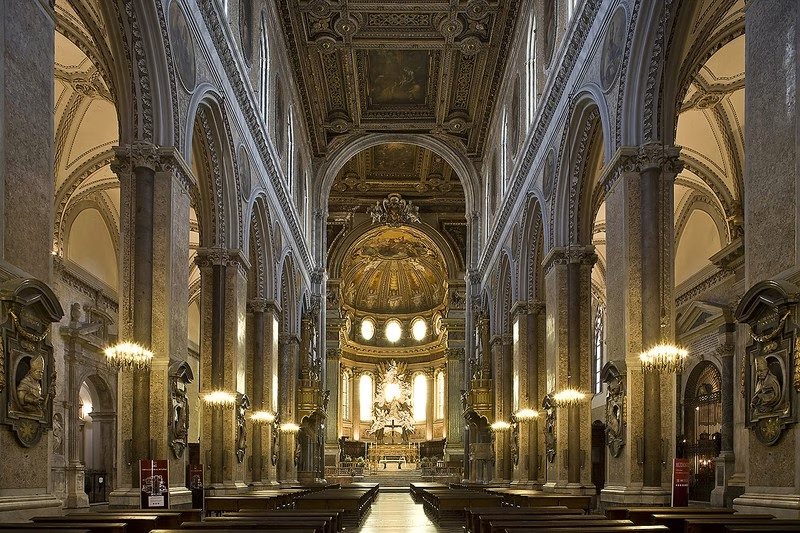
Central nave of Naples Cathedral with arcades, coffered ceiling and a luminous apse.
 

Walk the nave first to set the scale. The sober medieval volume holds later chapels and marbles—the city’s habit of renewal without erasure made architectural.

 
Aisles and reused Roman columns inside the early Christian Basilica of Santa Restituta, within the Duomo complex.
 

Here you read the Roman bones most clearly: an early Christian basilica woven into the cathedral, its columns and plan aligning with the ancient grid beneath.

 
Frescoed dome of the Cappella del Tesoro di San Gennaro with windows and gilded ribs.
 

The Deputation’s chapel rises like a public pledge: painted glory above the place where Naples keeps its pact with San Gennaro.

 
Interior of the Cappella del Tesoro di San Gennaro with altars, paintings and visitors.
 

Built after the 1527 notarial contract, the Tesoro is run by a lay Deputation. Three times a year the saint’s blood is shown here—miracle treated as obligation, not favour.

 
Gilded bronze bust of San Gennaro with mitre, detail from the chapel’s grille.
 

The patron faces his public from the silvered rail. Neapolitans rejoice—or remonstrate—because the relationship is contractual: city and saint in civic dialogue.


Cappella Sansevero: The Veiled Christ and the Taste for Marvel

A few lanes off Spaccanapoli, the Sansevero Chapel condenses a very Neapolitan habit: astonishment used as persuasion. Wonder here isn’t decoration; it makes the point.

Why it matters

In the mid-1700s Prince Raimondo di Sangro turned his family chapel into a laboratory of allegory and experiment. The result is Baroque theatre with a purpose: to move you first, then make you think. Crucially, it sits inside the medieval street plan, not apart from it—proof that Naples keeps wonder in the everyday walk.

What to look for

The Veiled Christ (Giuseppe Sanmartino, 1753): marble so finely worked the veil reads as breath and skin. Stand centreline, then step close to see how the folds carry light.

Modesty and Disillusion: two sermons in stone—chastity draped in a second marble veil; a man released from a carved net (cut from a single block).

Ceiling & symbols: the chapel’s painted vault and floor devices push the “science + faith” conversation that obsessed the prince.

The crypt: the Anatomical Machines—skeletons with intricate vascular systems—fuel the legend of alchemy and keep debate alive.

How to visit

Book ahead; timed entry keeps the space moving.

Enter, take one full minute at the centre to read the chapel as a whole, then circle clockwise to the side works; finish in the crypt.

Early or late slots give the calm these pieces deserve.

Takeaway: Sansevero shows how Naples communicates powerfully: surprise first, clarity next—and always at street level. You step out of marvel straight back into the daily market, carrying the charge with you.

Baroque interior of Cappella Sansevero seen from the gallery, with sculptures and a frescoed vault.
 

Prince Raimondo di Sangro set the tone: allegory, experiment, persuasion. Read the chapel whole first—vault, side statues, and altar—then let the centrepiece pull you in.

 
The Veiled Christ by Giuseppe Sanmartino resting before the high altar of Cappella Sansevero.
 

Sanmartino (1753) carves breath into marble. The body seems to rise beneath a gauze-thin shroud—astonishment first, clarity next, exactly as Naples likes to persuade.

 
Close view of the marble veil covering the Veiled Christ, with tassel and folds.
 

Step close: the shroud isn’t cast or added—it’s carved from the same block. Folds carry light like fabric, the trick that makes belief feel immediate.

 
Disillusion in Cappella Sansevero, a man freed from a marble net by a winged figure.
 

A single block becomes a rope net and a rescued soul. Technique serves allegory: knowledge cutting through error, another of Raimondo’s lessons in stone.

 
Anatomical Machine in the crypt of Sansevero, skeleton with preserved vascular network.
 

In the crypt the Machines keep the alchemy legend alive. Whether myth or method, they complete the message: Naples puts marvel on the street, not behind glass.


Santa Maria delle Anime del Purgatorio ad Arco: caring for the “forgotten souls”

On Via dei Tribunali, a Baroque portal crowned with bronze skulls opens onto one of Naples’ most affecting addresses: a glittering upper church and, beneath it, a dim crypt where memory is kept warm.

Why it matters

From the 1600s well into the 20th century, Neapolitans practised here the devotion to the anime pezzentelle—the “poor souls” in purgatory. Families and neighbours would “adopt” an anonymous skull (a capuzzella), polish it, give it a name, leave flowers or ribbons, and pray for favours in exchange for prayers for the soul’s relief. The best-known is “Princess Lucia”, veiled like a bride and sought out by visitors hoping for marriage or fertility.

This isn’t morbid; it is Mediterranean. Greek and Roman Naples honoured ancestors at home and at gravesides; Catholic Naples simply translated the habit through the idea of purgatory: help the souls and they will help you.

What to look for

The bronze-skull portal—memento and welcome at once.

The jewel-box upper church: marble, stucco and votive light.

The hypogeum: shelves of bones, handwritten notes, and a small chapel for private petitions—intimate rather than macabre.

How to visit

Entry is often by guided visit; check times on site.

Speak softly; photography may be restricted in the crypt.

A small donation supports conservation and community work.

Takeaway: Purgatorio ad Arco explains Naples in one descent—practical, tender, and unembarrassed by emotion. Even the forgotten are kept company; remembrance here is a civic duty as much as a prayer.

Baroque façade of Santa Maria delle Anime del Purgatorio ad Arco on Via dei Tribunali, with iron gate and street life.
 

On Via dei Tribunali a Baroque front crowned with bronze skulls signals the chapel’s purpose: remembrance as a public duty, kept in the very flow of the street.

 
Glittering upper church of Purgatorio ad Arco with marble altar and wooden chairs.
 

The small upper church gleams with marble and stucco—votive light for the living—before you descend to the quieter work of memory below.

 
Two shelves of skulls and bones in the crypt, with a rosary and fresh flowers.
 

Here the anime pezzentelle devotion took shape: families “adopted” a skull, polished it, named it, and exchanged prayers for favours—Mediterranean ancestor care translated through purgatory.

 
Bronze skull ornament on the church’s railings.
 

The bronze skulls at the gate are not macabre trophies but guides: remember, intercede, accompany—even the forgotten are not left alone in Naples.


San Gregorio Armeno: From Pagan Offerings to Presepi

One narrow lane shows how Naples carries skills forward: same hands, same street, different theology.

Why it matters

San Gregorio Armeno stands where a temple of Ceres once drew worshippers who left small terracotta votives. The craft never moved house. Over centuries the address shifted from pagan gifts to Christian presepi (nativity scenes). What you see today is a living supply chain of imagination—artisans translating belief and everyday life into clay, wood and cork.

What to look for

Botteghe at work: figurines modelled and painted on the bench—ask to see the brushes and moulds.

Classics of the Neapolitan crib: the shepherds, Benino the sleeper, the tavern-keeper, tiny produce and fish stalls—street life as theology.

Topical satire in December: politicians, footballers, pop stars—comic cameos woven into the nativity like a city’s gossip column.

Inside the convent: step through to the church and the citrus-scented cloister for a few quiet minutes away from the crush.

How to visit

Year-round is best; December is exhilarating but packed—go early.

Bring a little cash; many workshops are family-run. Ask for the artisan’s signature if you’re investing in a piece.

Mind the displays; photographs are welcome in most shops but ask first.

Takeaway: San Gregorio Armeno proves the city’s method: keep the address, keep the craft, change the story. Belief, humour and trade share the same counter.

San Gregorio Armeno — Baroque nave through the carved portal
 

The church sets the tone: marvel right from the threshold, where a carved door frames a nave built to dazzle—devotion staged like theatre.

 
San Gregorio Armeno — Baroque nave behind the carved doors
 

Step inside the convent church and the city hushes. Behind the street’s bustle, San Gregorio Armeno opens in marble and gold — a reminder that faith and craft have shared this address since the days when a temple of Ceres stood here.

 
Vaulted passage of the convent looking out to the street market.
 

Step through the vaults and the noise drops. The cloister gives you citrus-scented calm while the craft streets keep humming outside.

 
Overhead view of Via San Gregorio Armeno with bell tower beyond.
 

One tight axis, centuries of habit: the lane that once served a Roman temple still channels today’s pilgrimage for nativity art.

 
Ferrigno Marco workshop — presepe craft since 1836
 

On the street outside, ateliers like Ferrigno Marco keep the lineage alive. Terracotta saints stand beside footballers and comic characters — the old votive trade reborn as Naples’ nativity industry.

 
Handcrafted presepe figures — market life in miniature
 

The presepe isn’t just Bethlehem; it’s Naples in miniature. Bakers, fishmongers, and street musicians populate the scene, proof that the same hands on the same street still carve daily life into devotion


Gesù Nuovo — fortress skin, Baroque heart

A Renaissance palace (diamond-point piperno blocks) became a Jesuit church in the late 1500s. The façade reads like armour; step inside and you’re in a blaze of marble, fresco, and side chapels.

Devotion here is modern, too: crowds file past the tomb of physician-saint Giuseppe Moscati, leaving handwritten thanks. Those tiny symbols carved on the stones? Often sold as a secret “musical score,” more likely masons’ marks—either way, perfect for a city that loves hidden messages in plain sight.

Why it matters

the moment where medieval street plan meets Counter-Reformation spectacle.

Look for

diamond rustication; notes at Moscati’s shrine.

Practical

late-afternoon light makes the façade glow; pop back out to frame Spaccanapoli from the railings.

Gesù Nuovo — High Baroque, Jesuit Stage
 

Step inside the Jesuits’ fortress-church and the city switches to Baroque: swirling marble, a theatrical organ loft, and an altar made for persuasion as much as prayer.

 
Chapel of Relics — Faith in Small Pieces
 

Devotion here runs granular—saints’ fragments in a honeycomb of reliquaries, a Neapolitan way of keeping the heavenly close at hand.

 
Rusticated piperno stone facade of Gesù Nuovo with diamond-point blocks and a doorway on Piazza del Gesù.
 

Outside, the old palace skin remains: volcanic piperno cut into diamond points—a hard, urban face that hides a blaze of Baroque within.


Santa Chiara — Gothic bones, a majolica garden

Founded in 1313, Santa Chiara keeps its Angevin-Gothic body but wins hearts with its eighteenth-century majolica cloister: benches and pillars tiled with grape harvests, picnics and games—monastic calm meeting everyday Naples in colour. The church was bombed in 1943 and rebuilt to its clean medieval lines, so you read war, repair and continuity in one address.

Why it matters

a rare cloister where devotion and daily life share the same palette.

Look for

tiled benches and vine-wrapped pillars; the contrast between austere nave and playful garden.

Practical

midday gives even shade for photos in the cloister; pair with Gesù Nuovo across the square for a neat “hinge” between eras.

Hand-painted majolica bench tile at Santa Chiara’s cloister showing villagers dancing and working in a pastoral scene.
 

Daily life in baked color: the 18th-century majolica benches of Santa Chiara’s cloister turn grape harvests, dances, and picnics into meditation for the monks.

 
Long Gothic nave of Santa Chiara in Naples, rebuilt after 1943, with pointed arches, stained glass, and austere stone lit by warm lamps.
 

After wartime damage, the church was rebuilt to its medieval clarity: a sober Gothic nave that contrasts beautifully with the cloister’s exuberant tiles.


Street & Pop Art in Naples’ Centro Storico

Here, history and pop collide in broad daylight. Walk a few blocks and Naples turns its walls into a living script—sacred, cheeky, glamorous and gloriously hand-made.

Weathered bust of Pulcinella grinning from a stone niche in Naples’ historic centre, the comic mask catching side-light against rough tufa walls.
 

Pulcinella in the Niche


The city’s mischievous mask grins from carved stone: proof Naples was “pop” long before pop art—wit and survival etched into lava and legend.

 
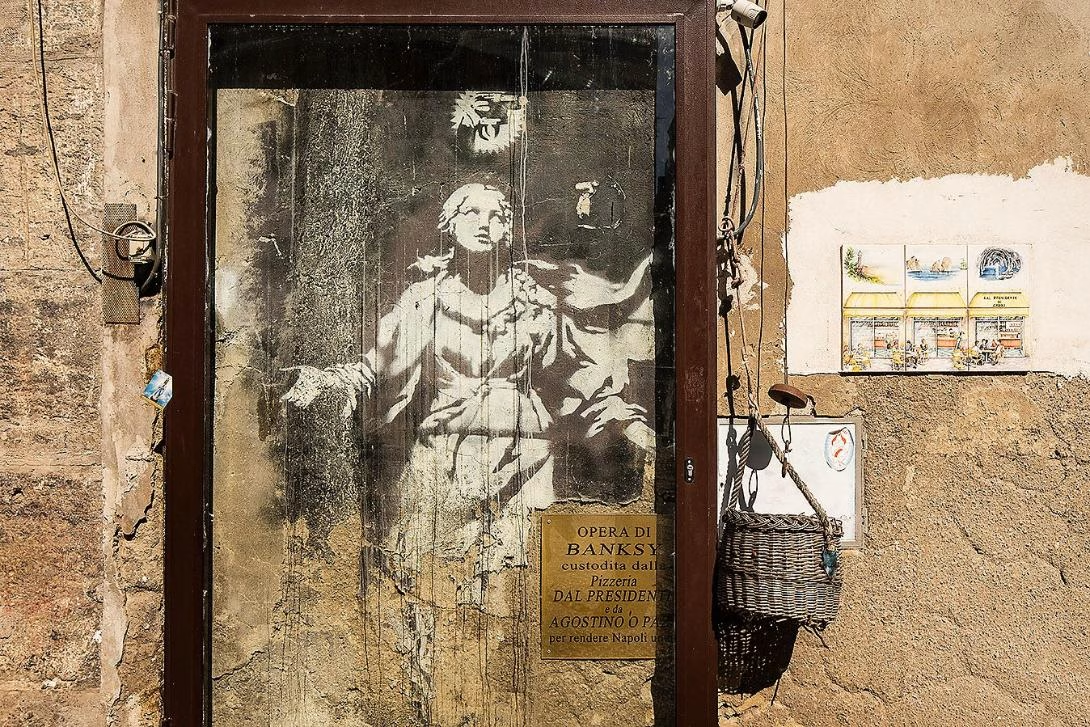
Stencilled Madonna with a pistol-shaped halo beside a brass wall crucifix; peeling plaster and pipes frame the stark black-and-white street piece.
 

Banksy by the Crucifix


“Madonna with a Gun” sits beside a street crucifix, a jolt of irony on a devotional wall: sacred and street argue, together, in public.

 
Framed images of Diego Maradona in a Napoli shirt and Saint Januarius (San Gennaro) side by side on a Neapolitan wall—football and faith as the city’s twin devotions.
 

Twin Patrons


Maradona and San Gennaro share a single frame—football and faith honoured together, Naples’ two guardians keeping watch from the same wall.

 
White-vaulted workshop crowded with colourful heads and figures, a large dark Pulcinella sculpture foregrounded amid paints, crates and tools.
 

The Bottega as Studio


Under a vaulted ceiling, heads, moulds and pigments crowd the worktables. Makers sell prints and point you to a fresh piece just round the corner.

 
Photorealistic mural of a classic Italian screen icon with poised expression and red lipstick on a weathered corner wall in the Centro Storico.
 

Sophia Loren on Stucco


The world icon—raised in nearby Pozzuoli and forever Naples’ own—lends red-carpet glamour to a rough wall. Stardust meets peeling plaster: this city turns everyday corners into cinema, and local pride into public art.

 
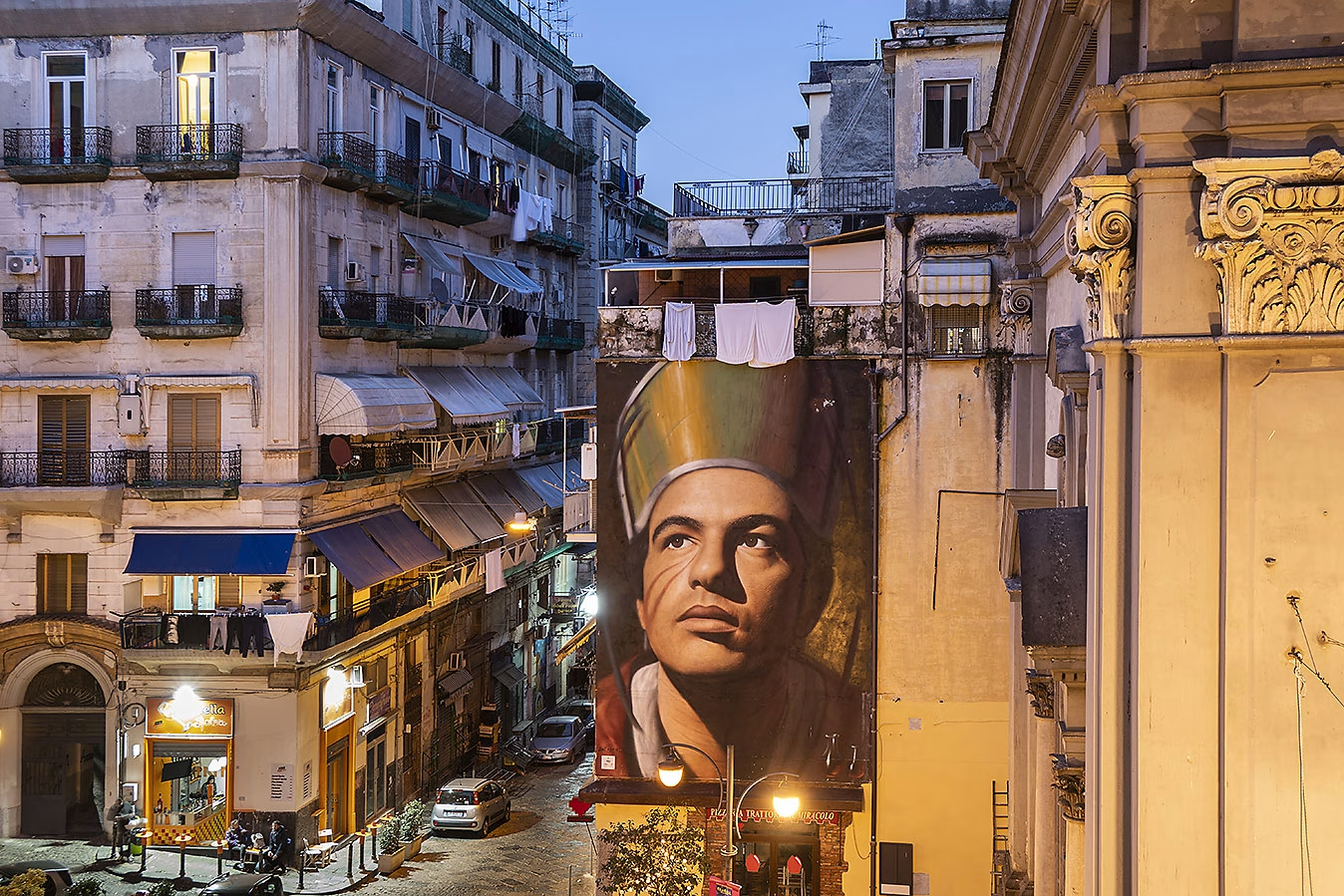
Towering mural of a haloed saint looking upward on a narrow side street; blue-hour light, balconies and washing lines frame the painted face.
 

Jorit’s San Gennaro


The patron saint watches Forcella like a neighbour: saint, citizen and billboard of belief in one patient gaze as the street lights up below.